
Emergent aquarium plants grow with roots submerged while leaves remain above water, enabling faster growth, stronger nutrient absorption, and superior filtration. This guide expands each section with deeper insight, real-world application, and decision clarity to help you build a high-performance, visually striking aquarium ecosystem.
What Are Emergent Aquarium Plants & Why Should You Use Them?
Emergent plants grow with roots in water and leaves above, enabling faster growth and superior nutrient removal.
Emergent plants operate in a hybrid biological zone where water and air intersect, creating a powerful advantage over fully submerged plants. Because their leaves access atmospheric CO₂, they bypass one of the biggest limitations in aquariums—carbon availability. This allows faster metabolism, accelerated growth, and more aggressive nutrient absorption. As a result, they act as natural stabilizers, reducing nitrate spikes and minimizing algae outbreaks in both beginner and advanced tanks.
From a system design perspective, emergent plants extend your aquarium beyond the glass box. They create a riparium-style ecosystem, where biological filtration is not just internal but visually integrated. This adds both function and depth, turning a static tank into a dynamic living system that evolves over time.
Key Benefits
- Rapid nitrate and toxin absorption
- Reduced algae growth through nutrient competition
- Enhanced oxygen exchange at surface level
- Low maintenance once established
- Adds vertical dimension to aquascape
Deeper Insight AND Decision Clarity
If your tank struggles with nitrate buildup or algae, emergent plants are not optional—they are a strategic upgrade. They reduce dependency on water changes and stabilize ecosystems long-term. For design-focused aquariums, they unlock a natural jungle aesthetic, which is currently dominating modern aquascaping trends.
Top 5 Emergent Plants for Aquariums (Expert Picks + Use Cases)
1. Pothos (Epipremnum aureum) — The Ultimate Filtration Plant
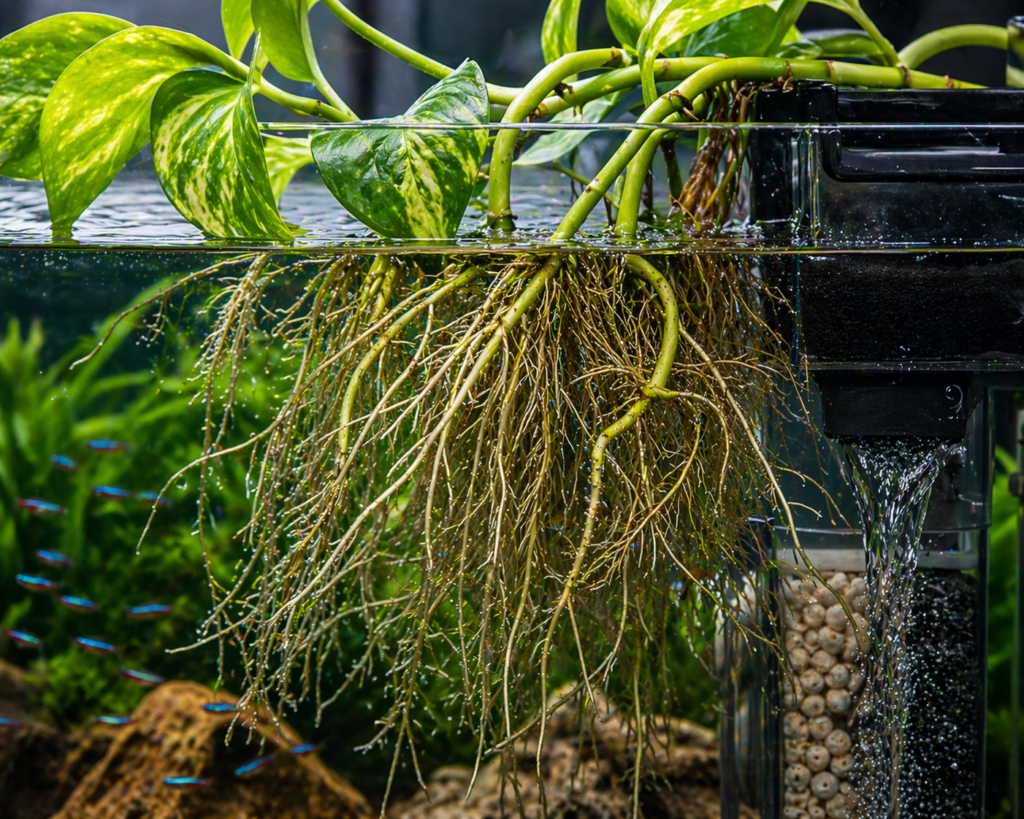
The fastest-growing and most effective emergent plant for nitrate removal.
Epipremnum aureum dominates due to its aggressive root system and unmatched adaptability. It thrives in low light, poor conditions, and rapidly absorbs nutrients from aquarium water.
In real-world setups, pothos is often placed in hang-on-back filters or allowed to trail from tank edges. Its roots act like a living filtration network, continuously pulling nitrates and dissolved waste. This makes it especially valuable in heavily stocked tanks where waste production is high.
Pros
- Extremely hardy and beginner-friendly
- Fast growth = fast nutrient removal
- Works in low to moderate lighting
Cons
- Requires trimming due to rapid growth
- Leaves must stay above water
Deeper Insight AND Decision Clarity
If you want a plug-and-play solution for water quality issues, pothos is the best choice. It delivers immediate results with minimal setup. For serious aquarists, combining pothos with mechanical filtration creates a hybrid system that dramatically improves stability and reduces maintenance.
2. Lucky Bamboo (Dracaena sanderiana) — Minimalist Elegance
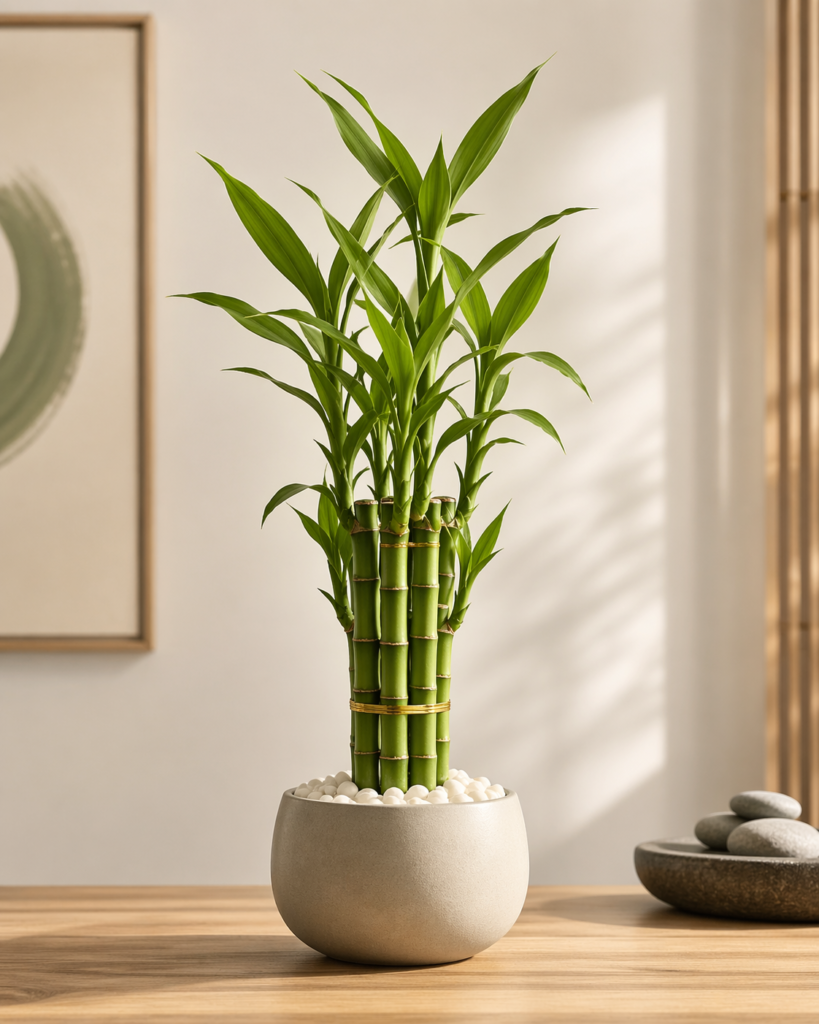
A slow-growing, decorative emergent plant ideal for minimalist aquascapes.
Dracaena sanderiana provides a structured, vertical aesthetic that contrasts with flowing aquatic plants. It is often used in nano tanks and betta aquariums to create a clean, balanced visual composition.
Unlike fast growers, lucky bamboo focuses more on design impact than filtration performance. It grows slowly and requires precise placement, making it ideal for controlled environments where aesthetics matter more than aggressive nutrient removal.
Pros
- Unique vertical structure
- Easy to maintain
- Perfect for small tanks
Cons
- Limited filtration capacity
- Sensitive to full submersion
Deeper Insight AND Decision Clarity
Choose lucky bamboo if your priority is visual composition and minimalism. It works best in tanks where water quality is already stable. Think of it as a design element first, filtration tool second.
3. Peace Lily (Spathiphyllum) — High-Power Natural Filter
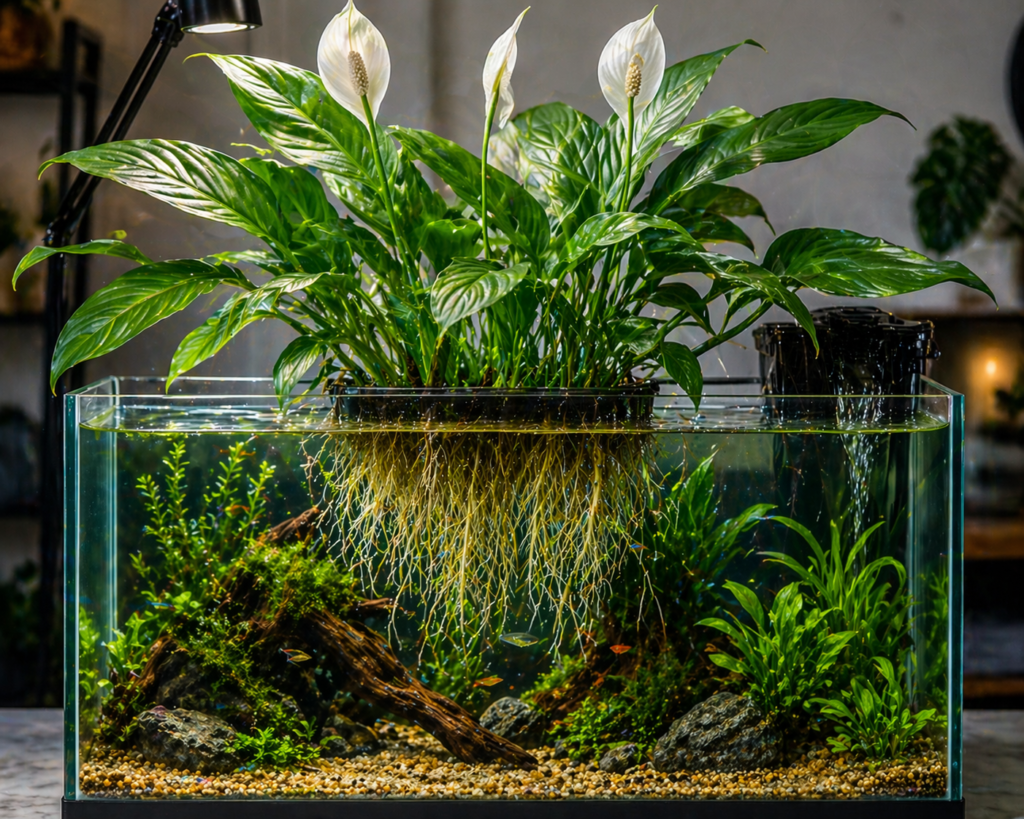
A powerful nutrient absorber with strong decorative appeal.
Spathiphyllum is widely used in ripariums due to its ability to handle high nutrient loads while maintaining lush, attractive foliage. It thrives in humid environments and adapts well to aquarium conditions.
In real-world applications, peace lilies are often used in medium to large tanks where they can significantly reduce nitrates within weeks. Their large root systems provide extensive surface area for nutrient absorption, making them highly efficient biological filters.
Pros
- Excellent filtration performance
- Attractive, broad leaves
- Thrives in humidity
Cons
- Requires moderate lighting
- Needs space for root expansion
Deeper Insight AND Decision Clarity
Peace lilies are ideal for aquarists who want both performance and aesthetics. They are especially useful in tanks with moderate to high bioload, where maintaining water quality is critical.
4. Spider Plant (Chlorophytum comosum) — Beginner-Friendly Performer
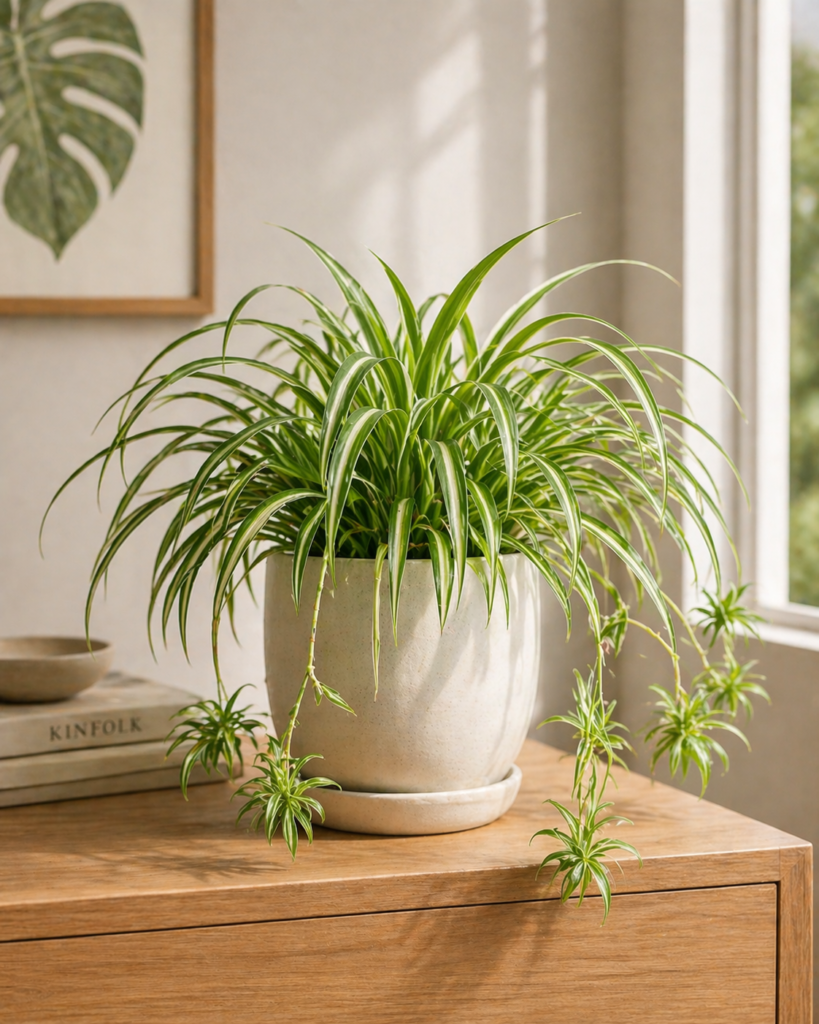
A fast-growing, adaptable plant perfect for beginners.
Chlorophytum comosum is known for its ability to quickly adapt from soil to water, making it one of the easiest emergent plants to establish.
Its propagation system (plantlets) allows aquarists to expand their setup without additional cost. This makes it ideal for budget-conscious beginners who want to experiment with emergent plants.
Pros
- Easy propagation
- Fast growth
- Highly adaptable
Cons
- Requires trimming
- Less visually dramatic
Deeper Insight AND Decision Clarity
Spider plants are the entry point into emergent aquascaping. If you’re testing the concept for the first time, this is a low-risk, high-reward option.
5. Philodendron (Philodendron hederaceum) — Balanced Beauty & Function
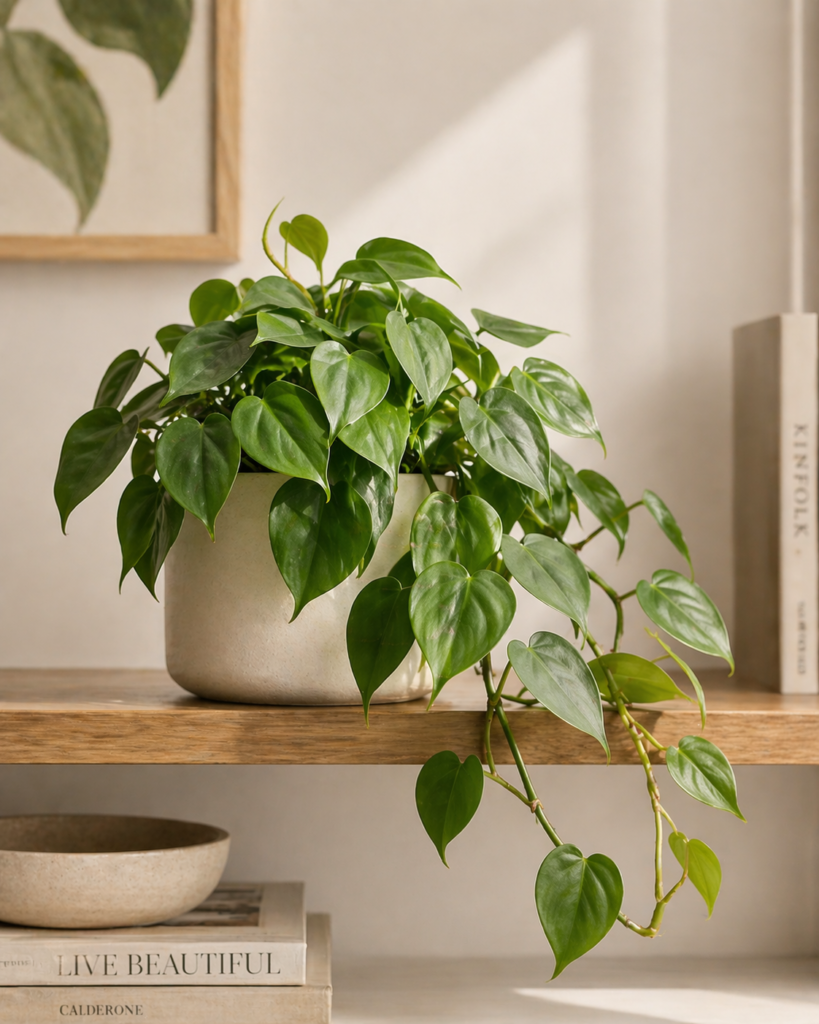
A versatile plant balancing aesthetics and filtration.
Philodendron hederaceum provides a softer, more decorative alternative to pothos while still offering solid nutrient absorption.
It is commonly used in aquascapes where visual harmony is important. Its trailing growth pattern creates a natural flow that enhances the overall design of the aquarium.
Pros
- Attractive foliage
- Moderate filtration ability
- Easy to maintain
Cons
- Slower growth than pothos
- Requires pruning
Deeper Insight AND Decision Clarity
Philodendron is the middle ground—not as aggressive as pothos but more visually refined. It’s the best choice when you want both function and aesthetics without compromise.
Comparison Table (Quick Decision Framework)
Compare growth, filtration, and difficulty to choose the right plant.
This table simplifies decision-making by aligning plant characteristics with user needs. Instead of guessing, you can quickly match your tank requirements with the right plant type.
Key Comparison Insights
- Fast growers = better filtration
- Slow growers = better control
- Larger plants = stronger ecosystem impact
Decision Clarity
- Choose pothos for performance
- Choose bamboo for aesthetics
- Choose peace lily for balance
Emergent Plants vs Submerged Plants (Full Comparison)
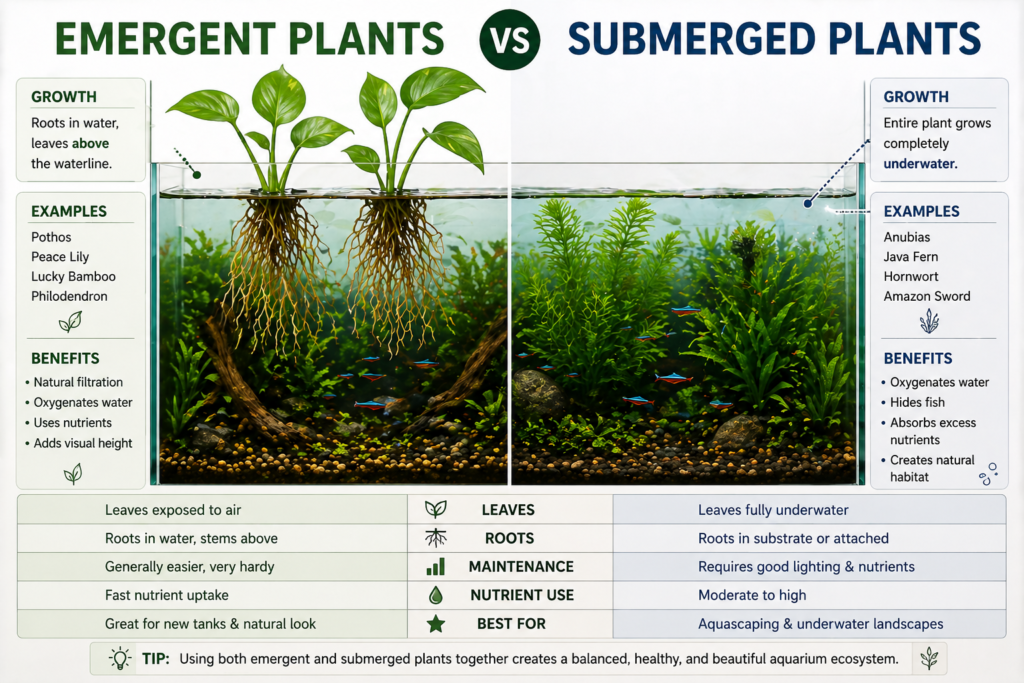
Emergent plants grow faster and remove nutrients more efficiently, while submerged plants are better for underwater aesthetics and oxygen distribution.
Emergent and submerged plants serve different roles in an aquarium ecosystem, and understanding this distinction is critical for system design. Emergent plants access atmospheric CO₂, which allows them to grow significantly faster than submerged plants that depend on dissolved CO₂ levels. This gives emergent plants a major advantage in nutrient absorption, particularly for nitrates and phosphates. However, submerged plants contribute more directly to underwater oxygenation and visual aquascaping.
From a practical standpoint, emergent plants are better suited for filtration and stability, while submerged plants are essential for aquascape structure and fish interaction. The most effective aquariums use both, creating a layered ecosystem where each type compensates for the other’s limitations.
Key Differences
- Emergent plants grow faster due to unlimited CO₂ access
- Submerged plants improve underwater oxygen distribution
- Emergent plants excel at nitrate removal
- Submerged plants enhance aquascape depth and realism
Deeper Insight AND Decision Clarity
If your goal is water stability and algae control, emergent plants should be prioritized. If your focus is visual aquascaping, submerged plants are essential. The best strategy is combining both for a balanced, high-performance ecosystem.
Common Mistakes That Kill Emergent Aquarium Plants
Micro-answer: Most failures happen due to submerging leaves, poor root cleaning, or incorrect placement.
Emergent plants are easy to maintain, but small mistakes can quickly lead to failure. The most common issue is submerging parts of the plant that should remain above water. Leaves and stems are not adapted for constant submersion, and doing so leads to rot, bacterial growth, and eventual plant death. Another critical mistake is failing to remove soil completely, which can introduce contaminants and disrupt water chemistry.
In real-world setups, beginners often underestimate placement. Plants positioned in stagnant water zones struggle to absorb nutrients effectively, slowing growth and reducing filtration benefits. Proper positioning near water flow—such as filter outflows—dramatically improves performance.
Common Mistakes
- Submerging leaves or stems
- Not removing soil from roots
- Poor placement with low water flow
- Overcrowding roots in small tanks
- Ignoring light requirements
Deeper Insight AND Decision Clarity
If your plant is not growing, the issue is rarely the plant—it’s the setup. Fixing placement and exposure often restores growth within days. Think of emergent plants as living filtration tools that require correct positioning to function properly.
Do Emergent Plants Replace Aquarium Filters?
No, but they significantly enhance biological filtration and reduce reliance on mechanical systems.
Emergent plants are powerful nutrient absorbers, but they do not fully replace traditional filtration systems. Mechanical filters remove debris and provide water circulation, while biological filters support beneficial bacteria that break down ammonia and nitrites. Emergent plants complement this system by absorbing the end products—primarily nitrates—creating a more complete filtration cycle.
In heavily planted setups, especially with fast-growing plants like pothos, aquarists often notice a reduced need for water changes. However, removing filtration entirely can lead to poor circulation and uneven nutrient distribution, which negatively affects both plants and fish.
What They Do Replace (Partially)
- Reduce nitrate buildup
- Lower frequency of water changes
- Support biological filtration
What They Do NOT Replace
- Mechanical debris removal
- Water circulation
- Oxygenation systems
Deeper Insight AND Decision Clarity
Think of emergent plants as a filtration upgrade, not a replacement. The best systems combine mechanical filters with emergent plants to create a hybrid ecosystem that is both efficient and stable.
Best Placement for Emergent Plants (Filter, Tank Edge, Sump
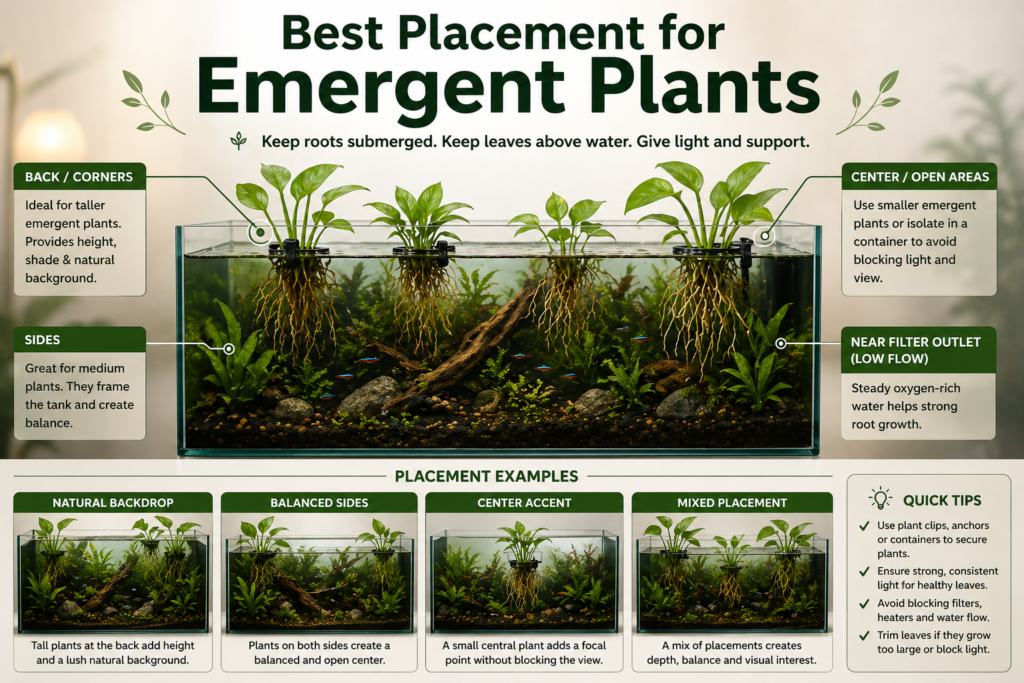
Placement near water flow zones maximizes nutrient absorption and growth.
Where you place emergent plants directly impacts their effectiveness. The most efficient placement is near filter outflows, where nutrient-rich water continuously flows past the roots. This ensures maximum exposure to nitrates and dissolved waste, accelerating absorption and growth. Tank edges are another popular placement, offering easy access to light and air while maintaining stable root conditions.
Advanced setups often use sumps or dedicated plant filters, where emergent plants are placed outside the main display tank. This creates a hidden filtration system that improves water quality without affecting the aquascape.
Placement Options
- Filter outflow: Maximum nutrient exposure
- Tank edge: Easy setup and maintenance
- Sump system: High-efficiency hidden filtration
- Floating holders: Flexible positioning
Deeper Insight AND Decision Clarity
If you want maximum performance, always prioritize water flow over convenience. A well-placed plant can outperform multiple poorly placed ones. Placement is not just aesthetic—it’s the difference between passive decoration and active filtration.
Do Emergent Plants Oxygenate Aquarium Water?
Indirectly yes, but not as effectively as submerged plants.
Emergent plants contribute to oxygen balance primarily through surface interaction rather than direct underwater oxygen release. Since their leaves are above water, they do not oxygenate the water column in the same way submerged plants do during photosynthesis. However, they improve overall gas exchange by stabilizing the environment and reducing organic waste buildup.
In real aquariums, oxygenation depends more on surface agitation and water movement than plant type alone. Emergent plants enhance this system indirectly by maintaining water quality, which supports healthier microbial and biological processes.
Oxygenation Role
- Indirect support through ecosystem stability
- Improved gas exchange at surface level
- Reduced oxygen demand via waste removal
Deeper Insight AND Decision Clarity
Do not rely on emergent plants for oxygenation alone. Pair them with surface movement and submerged plants for a fully balanced system. Their strength lies in filtration, not oxygen production.
Can Emergent Plants Grow Without Soil? (Hydroponic Reality)
Yes, emergent plants thrive in water without soil using hydroponic principles.
Emergent aquarium plants function similarly to hydroponic plants, relying on waterborne nutrients rather than soil. Fish waste provides essential nutrients such as nitrogen, phosphorus, and potassium, eliminating the need for traditional fertilizers. This makes aquariums a naturally self-sustaining hydroponic system when properly balanced.
In practice, removing soil completely is essential to prevent contamination and maintain water quality. Once adapted, plants develop specialized water roots that are more efficient at absorbing nutrients than soil roots.
Hydroponic Advantages
- No soil mess or contamination
- Direct nutrient absorption
- Faster root adaptation
- Cleaner system overall
Deeper Insight AND Decision Clarity
Emergent plants are essentially built-in hydroponic filters. If your tank has fish, you already have a nutrient system in place. Your job is simply to position plants correctly to take advantage of it.
Are Emergent Plants Safe for Fish, Shrimp & Aquatic Life?
Yes, but leaves should not be eaten as some plants can be toxic if ingested.
Most emergent plants are safe when used correctly, as only the roots interact with aquarium water. However, some plants (like pothos and philodendron) contain compounds that can be harmful if consumed. In most aquariums, fish do not eat these leaves because they are above water, making the risk minimal.
Shrimp and fish often benefit from the root systems, which provide shelter, grazing surfaces, and biofilm growth. This enhances biodiversity and creates a more natural environment.
Safety Considerations
- Keep leaves above water
- Avoid placing toxic plants within reach of herbivorous fish
- Monitor fish behavior
Deeper Insight AND Decision Clarity
Emergent plants are safe in 99% of setups when used properly. Their benefits far outweigh risks, especially in community tanks where fish interact more with roots than foliage
How to Choose the Right Emergent Plant (Decision Guide)
Select based on tank size, filtration needs, and visual goals.
Choosing the right emergent plant is not about preference—it’s about system compatibility. A small tank cannot support large root systems, while a high-bioload tank requires aggressive nutrient absorption.
Decision Framework
- High bioload → Pothos / Peace Lily
- Small tank → Lucky Bamboo
- Beginner → Spider Plant
- Aesthetic → Philodendron
Deeper Insight
Combining multiple plants creates layered filtration, improving both performance and visual depth.
How to Add Emergent Plants to Your Aquarium (Step-by-Step System)
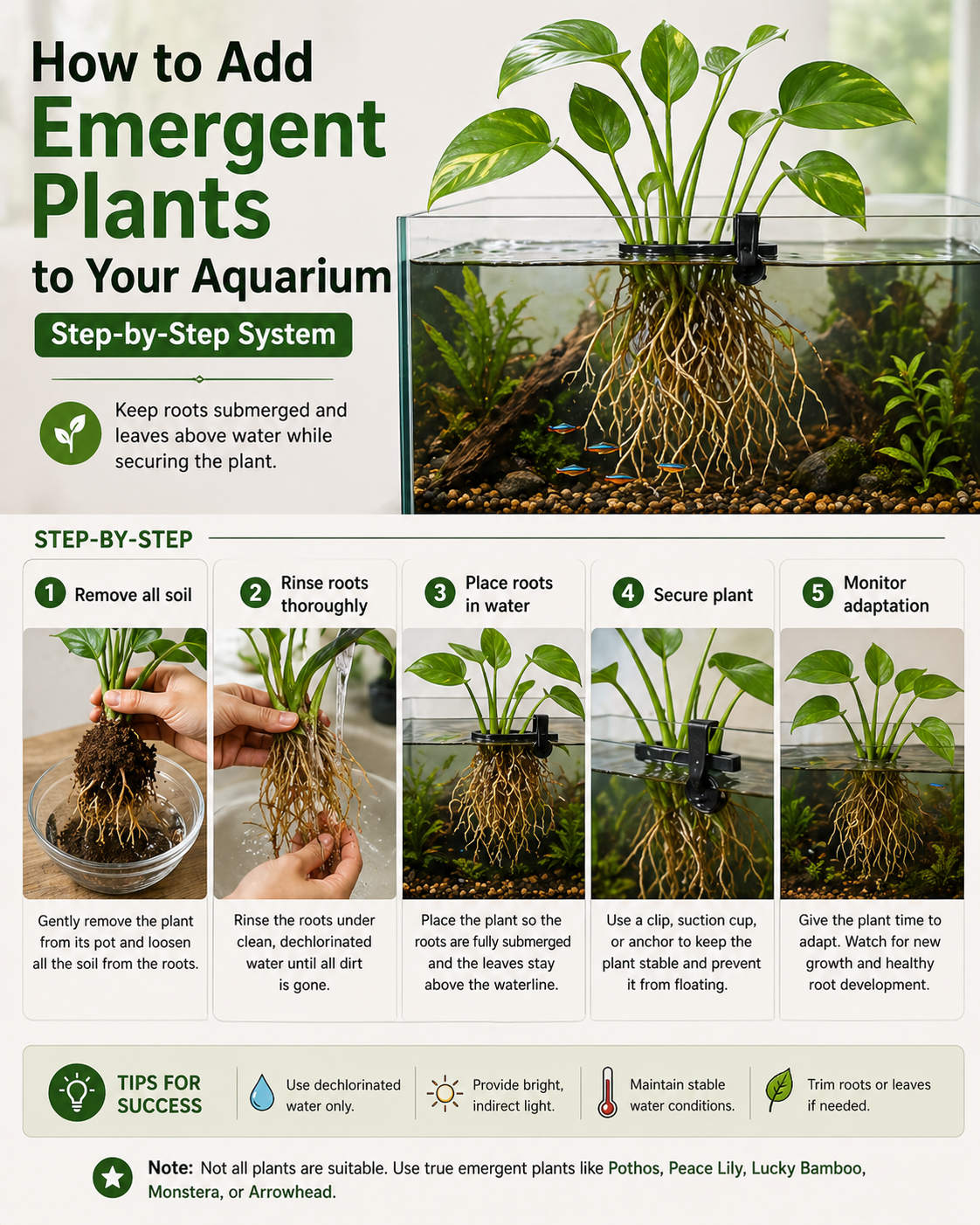
Keep roots submerged and leaves above water while securing the plant.
Adding emergent plants is simple but requires precision. Improper setup can lead to plant rot or contamination.
Step-by-Step
- Remove all soil
- Rinse roots thoroughly
- Place roots in water
- Secure plant
- Monitor adaptation
Common Mistakes
- Submerging leaves
- Introducing soil contaminants
- Blocking light
Deeper Insight AND Decision Clarity
Correct setup determines success. A properly placed plant can transform your aquarium into a self-regulating ecosystem, while poor placement leads to failure.
Advanced Setup Strategies (Pro-Level Optimization)
Optimize placement, lighting, and plant combinations.
Advanced setups focus on maximizing efficiency and aesthetics simultaneously. By placing roots near filter outflow, you increase nutrient exposure and improve absorption rates.
Pro Strategies
- Use filter zones for placement
- Combine fast + slow growers
- Increase root surface area
Real-World Insight
Professional aquarists often use emergent plants in sumps, creating hidden filtration systems that outperform traditional methods.
FAQS SECTION
How fast do emergent plants grow in aquariums?
Growth is usually fast, especially for pothos and spider plants. Visible root and leaf development can appear within days to weeks.
Do emergent plants reduce nitrates effectively?
Yes. Fast-growing plants like Epipremnum aureum can significantly reduce nitrate levels by absorbing excess nutrients.
Can emergent plants replace aquarium filters?
No, but they reduce the load on filters. They absorb nutrients but don’t replace mechanical filtration or water circulation.
Do emergent plants oxygenate aquarium water?
Not directly. Oxygenation mainly comes from surface movement and submerged plants, while emergent plants improve overall water quality.
Can emergent plants grow fully underwater?
No, most cannot survive full submersion. Only roots should remain underwater.
Do emergent plants need CO₂ injection?
No, they use atmospheric CO₂, making them easier to maintain than submerged plants.
Are emergent plants safe for fish and shrimp?
Yes, generally safe when used correctly. Roots benefit aquatic life, but leaves should not be eaten.
Where should I place emergent plants in an aquarium?
Place them near filter outflows or areas with strong water movement to maximize nutrient absorption.
Can I use emergent plants in small aquariums?
Yes, but choose compact plants like lucky bamboo to avoid overcrowding.
Why are my emergent plant roots turning brown?
This can indicate rot or poor water flow. Healthy roots are typically white or light-colored.
Do emergent plants need fertilizers in aquariums?
Usually not. Fish waste provides sufficient nutrients for growth.
How long do emergent plants take to adapt?
Most adapt within 1–2 weeks as they develop water roots and stabilize.
