Caudex plants are among the most fascinating plants for collectors because they combine survival intelligence with sculptural beauty. Unlike ordinary houseplants, they develop a swollen trunk, stem base, root crown, or underground storage organ that stores water and nutrients. This natural reservoir helps them survive drought, harsh sun, and seasonal dry periods in their native habitats.
For indoor growers, caudex plants offer lower watering needs, strong visual character, and long-term beauty. Their swollen base becomes thicker with age, their bark becomes more textured, and their shape becomes more architectural over time. But they need a different care approach from tropical plants or common succulents.
Caudex plants should not be watered on a fixed routine. They need strong light, fast-draining soil, careful seasonal watering, and respect for dormancy. Many failures happen because growers water too often or use dense soil. This guide explains how caudex plants work, which types to choose, and how to grow them successfully for years.
What Is a Caudex Plant and How Does It Work?
A caudex plant is any plant that develops a swollen storage structure used to hold water and nutrients. This structure may appear above the soil as a thick trunk or below the soil as a swollen root system. The caudex helps the plant survive dry conditions by storing moisture during active growth and using it during drought or dormancy.
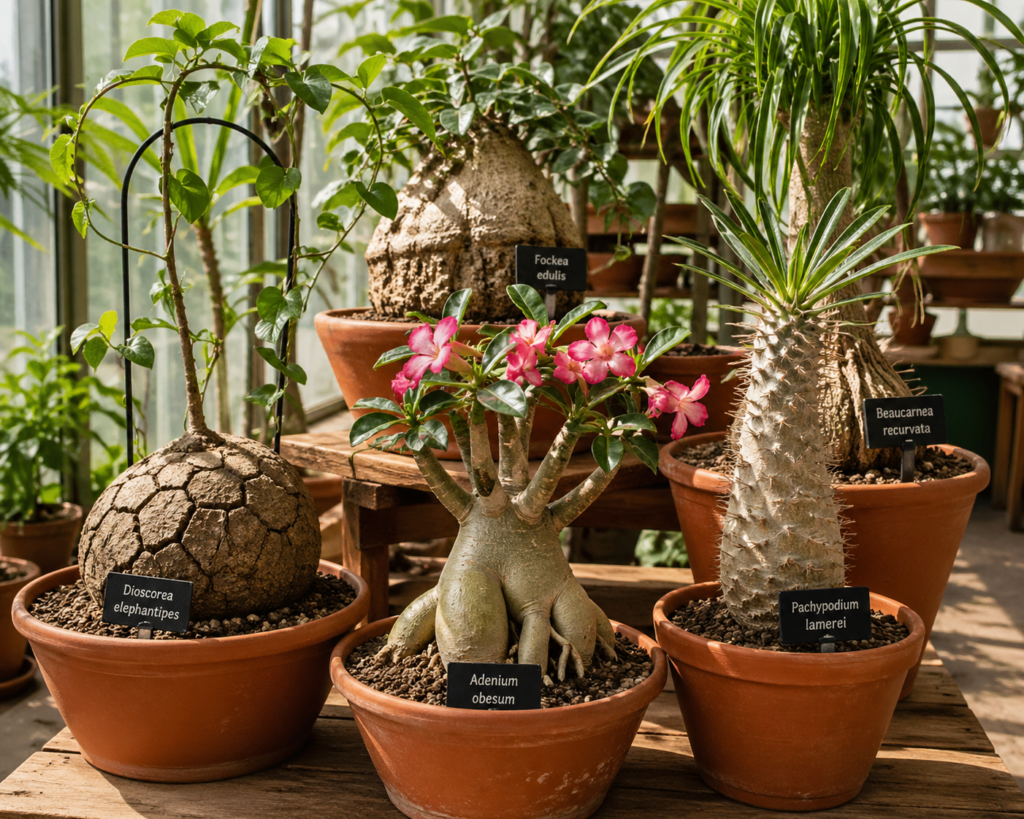
This storage organ is the reason caudex plants look so unique. In species like Adenium and Pachypodium, the swollen base becomes the main visual feature. In plants like Dioscorea elephantipes, the caudex develops a cracked, turtle-shell texture that makes the plant highly collectible.
Core characteristics of caudex plants include:
- Swollen water-storing trunk, stem, or roots
- Strong drought tolerance
- Seasonal dormancy
- Slow but long-term growth
- Mineral-heavy soil preference
- Sensitive roots
- High collector appeal
A healthy caudex usually feels firm when gently pressed. A wrinkled caudex often signals dehydration, while a soft or mushy caudex may indicate rot. This difference matters because dehydration is usually easier to fix than root rot.
If you want a plant that becomes more valuable and beautiful with age, caudex plants are one of the best long-term choices.
How Are Caudex Plants Different From Succulents?
Caudex plants are often grouped with succulents because both store water and tolerate dry conditions. However, they are not exactly the same. Most succulents store water in their leaves or stems, while caudex plants store water mainly in a swollen base, trunk, or root system.
This difference changes how they should be cared for. Succulents may tolerate lighter but more frequent watering depending on the species. Caudex plants need deeper watering during active growth, followed by a complete drying period. Their roots require strong oxygen flow, so dense soil can quickly cause rot.
Key differences include:
- Caudex plants store water in trunks, roots, or swollen bases.
- Succulents usually store water in leaves or fleshy stems.
- Caudex plants often have stronger seasonal dormancy.
- Caudex roots are usually more sensitive to wet soil.
- Caudex plants often grow slower but gain collector value with age.
- Caudex plants need more mineral-heavy, fast-draining soil.
For example, a jade plant may tolerate regular indoor watering, but a dormant Adenium may need very little water during winter. If you already grow succulents, you have a useful foundation, but caudex plants require stricter watering control and better drainage.
What Are the Most Popular Types of Caudex Plants?
The caudex plant world is broad, with species from deserts, dry forests, and seasonal climates. Some are beginner-friendly, while others are rare collector plants that require patience and precision. The best type depends on your experience, light conditions, and growing goals.
Adenium is one of the most popular caudex plants because it develops a swollen base quickly and produces beautiful flowers. It is ideal for growers who want both structure and color.
Beaucarnea recurvata, also called Ponytail Palm, is one of the easiest caudex-style plants for indoor growing. Its swollen base stores water, and it tolerates dry air and missed watering better than many other species.
Pachypodium is known for its thorny trunk, dramatic form, and strong architectural look. It is beautiful but more sensitive to overwatering and cold conditions.
Dioscorea elephantipes is a collector favorite because of its cracked, turtle-shell caudex. It grows slowly and can become expensive as it matures.
Fockea edulis combines a swollen caudex with fast-growing vines. It is excellent for growers who enjoy training, pruning, and shaping plants.
Caudex plant value often comes from age, structure, symmetry, rarity, and root health. A mature plant with a firm, well-shaped caudex is usually more desirable than a young plant with lots of leaves. If you are buying for collection value, choose structure and health over temporary foliage
Best Beginner Caudex Plants
Adenium
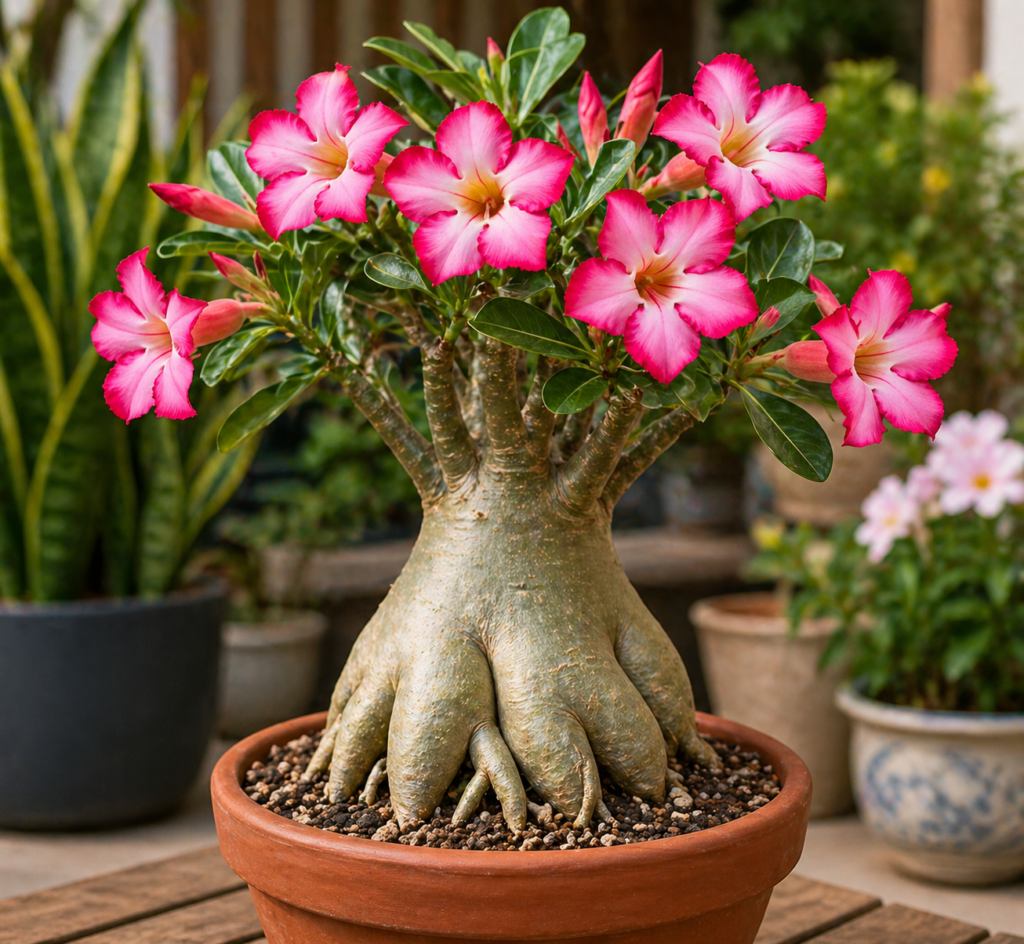
Adenium, also known as Desert Rose, is one of the best beginner caudex plants. It grows faster than many collector species, develops a swollen base early, and produces attractive flowers during the growing season. This makes it rewarding for new growers because progress is visible.
Adenium teaches the most important caudex care principles: strong light, controlled watering, mineral-rich soil, and seasonal adjustment. It performs best with direct sun, warm temperatures, and a fast-draining mix. When grown well, its trunk thickens, branches improve, and flowering becomes stronger.
Adenium care basics:
- Provide strong direct light.
- Water only after the soil fully dries.
- Use fast-draining mineral soil.
- Keep temperatures warm.
- Reduce watering during dormancy.
Beaucarnea recurvata
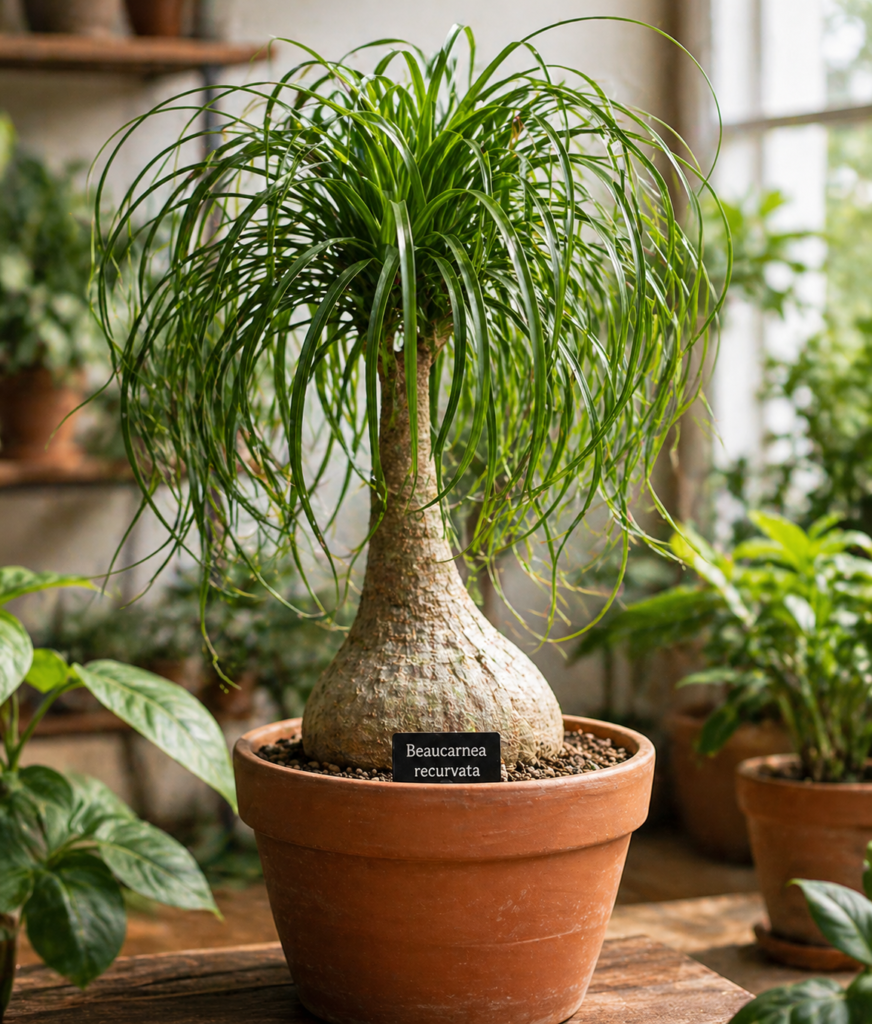
Beaucarnea recurvata, or Ponytail Palm, is even easier for indoor growers. It tolerates dry indoor air, missed watering, and lower maintenance routines. Its swollen base stores water, while its long arching leaves create a soft decorative look.
It does not need intense sun like Adenium, although it grows best in bright light. It also stays manageable indoors because it grows slowly. For beginners who struggle with watering discipline, Beaucarnea is one of the safest choices.
Beaucarnea care basics:
- Bright indirect light is usually enough.
- Light direct sun is helpful.
- Use a terracotta pot.
- Avoid overwatering.
- Let soil dry fully.
If this is your first caudex plant, start with Adenium for flowers or Beaucarnea for easy indoor care.
Advanced Collector Caudex Plants
Pachypodium
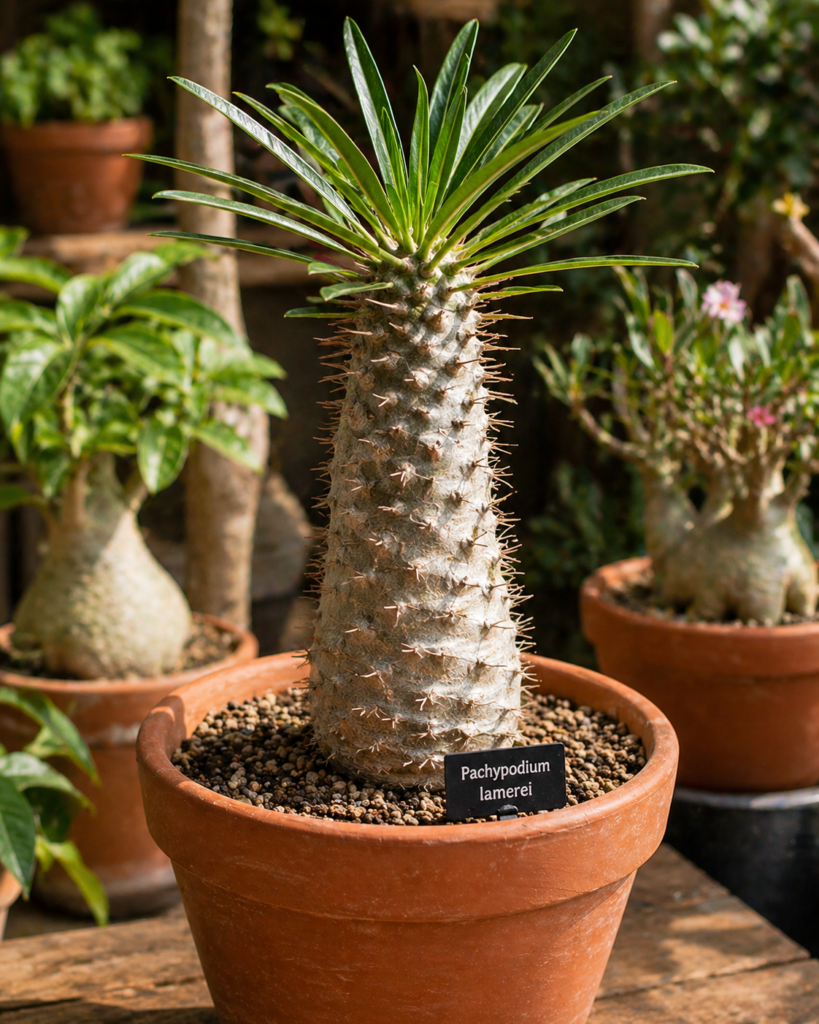
Pachypodium is a striking caudex plant with a thick thorny trunk and dramatic leaf growth. It appeals to growers who want a bold, architectural specimen. However, it is less forgiving than Adenium or Beaucarnea.
Its biggest weakness is root sensitivity. Pachypodium hates cold, wet soil. During dormancy, it may drop leaves and stop growing, which often causes beginners to panic-water. This is dangerous because dormant roots use very little moisture.
Best practices for Pachypodium:
- Give 6–8 hours of strong light.
- Use mineral-heavy soil.
- Water deeply but infrequently.
- Keep warm during dormancy.
- Avoid wet roots in winter.
Dioscorea elephantipes
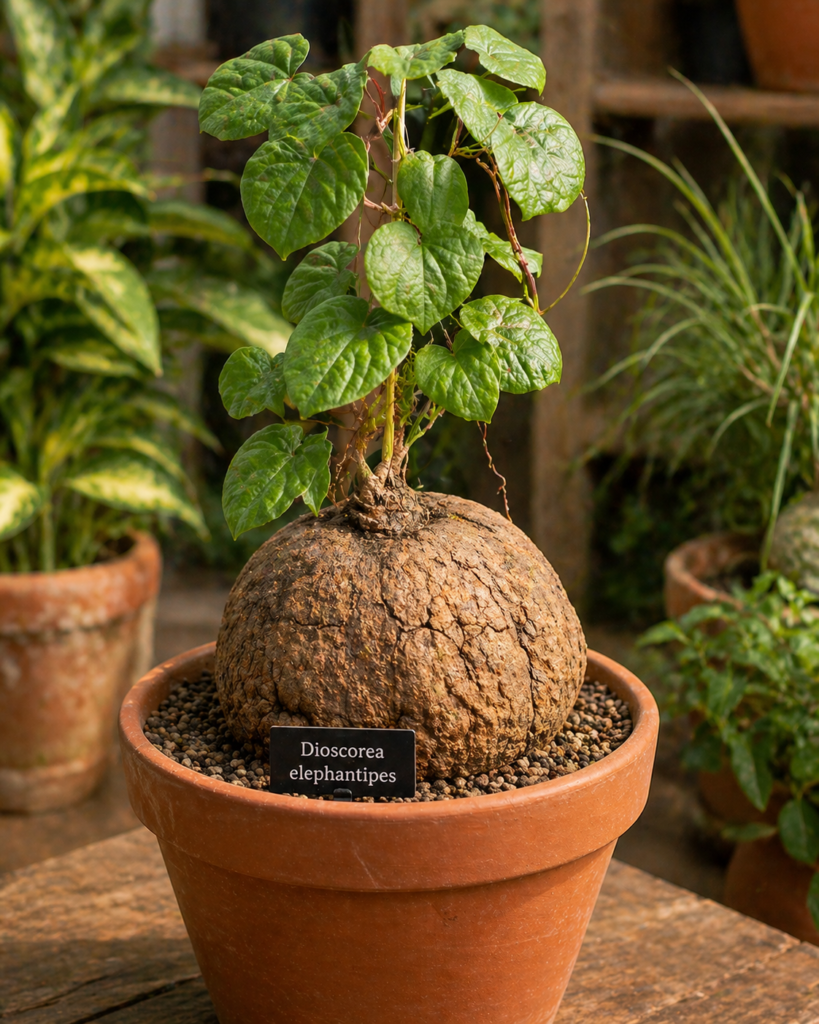
Dioscorea elephantipes is prized for its turtle-shell caudex. Its bark forms cracked plates that look like stone, armor, or reptile skin. This unique appearance makes it one of the most collectible caudex plants.
It grows very slowly, which increases its value. Older plants with mature bark texture can become expensive. It also has an unusual seasonal rhythm, often growing during cooler months and resting during warmer periods.
Care basics include:
- Bright indirect light
- Controlled watering
- Shallow pots
- Good airflow
- Species-specific dormancy awareness.
Fockea edulis
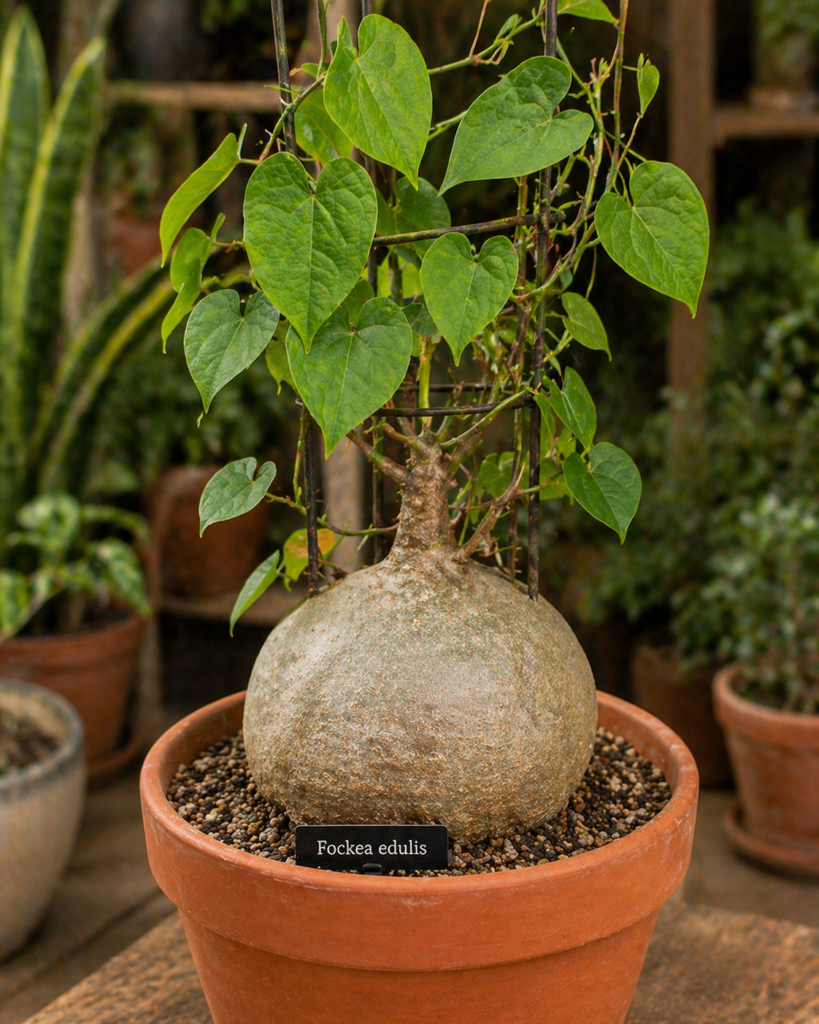
Fockea edulis is excellent for growers who enjoy shaping plants. It produces a swollen caudex and fast-growing vines that can be trained on supports, pruned, or allowed to trail naturally.
It is more active-looking than many caudex plants because its vines grow quickly during the active season. This makes it satisfying while the caudex slowly matures.
Choose advanced caudex plants only if you can manage dormancy, watering discipline, and strong drainage.
Light Requirements for Caudex Plants
Light is one of the most important factors in caudex plant success. Strong light supports photosynthesis, trunk swelling, root strength, and compact growth. Without enough light, caudex plants may become stretched, pale, weak, and slow to develop their swollen base.
Most caudex plants prefer bright light. Adenium and Pachypodium perform best with several hours of direct sunlight. Dioscorea elephantipes can handle bright indirect light. Beaucarnea recurvata is more adaptable and can grow well near a bright window.
Signs of low light include:
- Long stretched stems
- Pale leaves
- Weak growth
- Small leaves
- Poor caudex thickening
- Leaning toward the window
Best light setup:
- South-facing window where possible
- 6–8 hours of bright light
- Weekly rotation for even growth
- Supplemental grow light in dark rooms
Grow lights are very useful for indoor growers. Full-spectrum LED grow lights work best because they provide balanced light without too much heat. Position them about 8–18 inches above the plant, depending on intensity, and run them for 10–14 hours daily if natural light is weak.
If your home lacks strong natural light, buy a grow light before buying expensive collector caudex plants.
Best Soil Mix for Caudex Plants
Soil is the foundation of caudex plant health. These plants need airflow around their roots, not constantly wet soil. Most failures happen when growers use dense houseplant soil that holds moisture too long.
A good caudex mix should be gritty, loose, and fast-draining. Mineral ingredients help water pass through quickly while keeping enough structure for roots to breathe. Organic material can be included, but only in small amounts.
Ideal caudex soil recipe:
- 40% pumice
- 20% perlite
- 20% cactus soil
- 10% bark
- 10% lava rock
This mix gives the roots oxygen, reduces fungal risk, and prevents the soil from staying wet too long. For very sensitive species, increase the mineral content even more.
Avoid:
- Heavy peat soil
- Dense compost
- Garden soil
- Moisture-retentive potting mixes
- Soil that stays wet for several days
A useful rule is simple: if your soil stays wet longer than three days, it is probably too dense for most caudex plants.
How to Water Caudex Plants Correctly
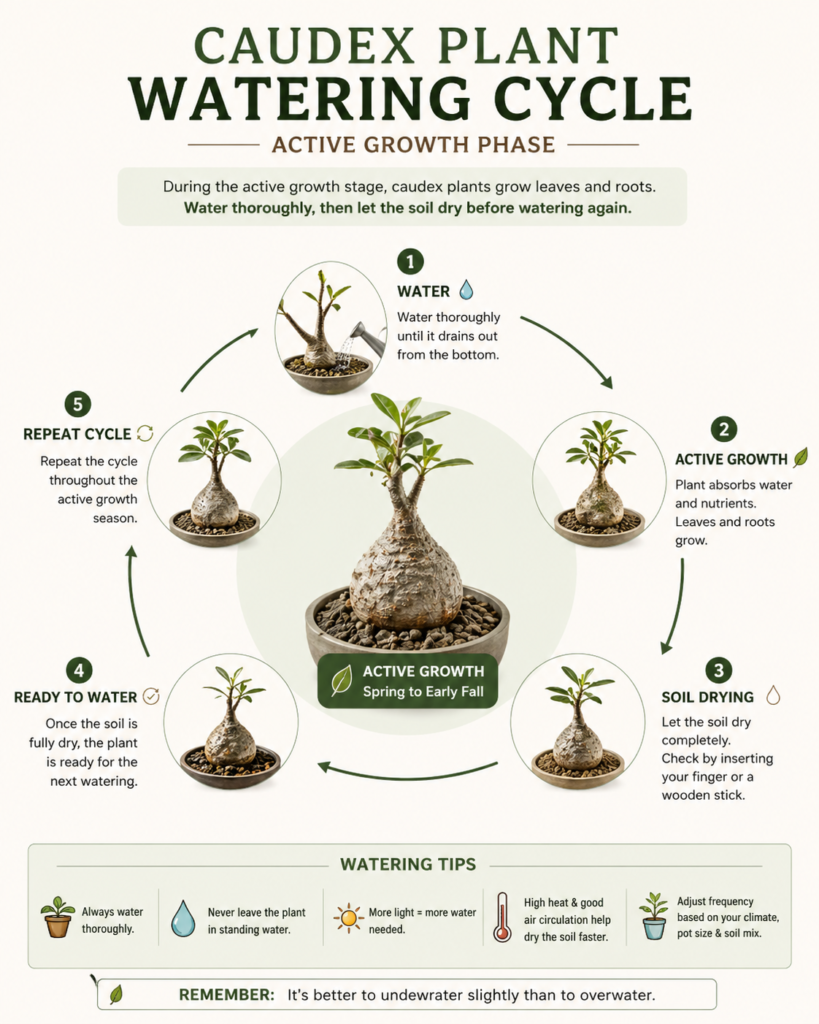
Watering is the most misunderstood part of caudex plant care. These plants store water in their swollen base, so they do not need constant moisture. A fixed weekly watering schedule is risky because water needs change with light, temperature, pot size, soil mix, and season.
During active growth, water deeply after the soil has fully dried. This supports roots, leaves, and caudex expansion. After watering, let excess water drain completely. Never allow the pot to sit in standing water.
During dormancy, water much less. The plant is using less energy, roots are less active, and wet soil becomes dangerous. Many caudex plants die because owners continue summer watering during winter dormancy.
Watering framework:
- Active season: water when soil is fully dry.
- Dormancy: water lightly only when needed.
- Warm bright conditions: water slightly more often.
- Cool low-light conditions: water much less.
Signs your plant needs water:
- Wrinkled caudex
- Fully dry soil
- Slight leaf drooping during active growth
- Slower active growth
Signs of overwatering:
- Soft or mushy base
- Yellow leaves
- Bad smell from soil
- Black or mushy roots
- Sudden collapse
Do not water when the plant is dormant, soil is still moist, weather is cold, roots were recently trimmed, or the caudex still feels firm. When unsure, wait two more days. A dry caudex is usually easier to save than a rotting one.
Understanding Dormancy in Caudex Plants
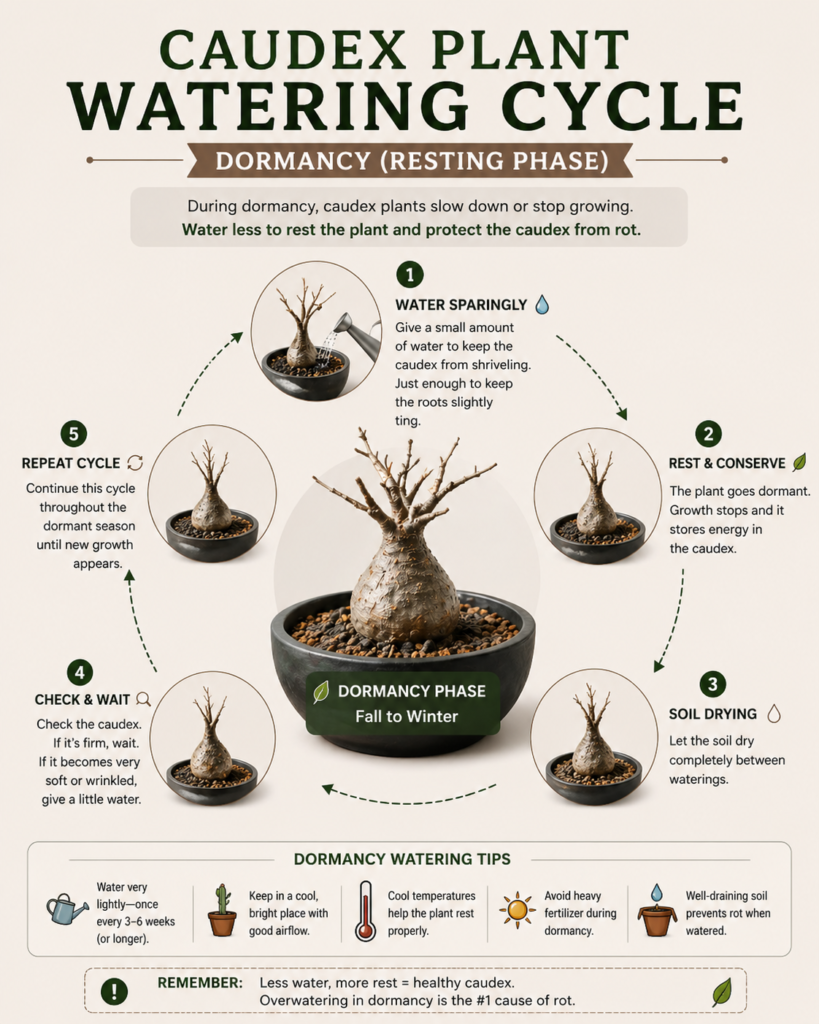
Dormancy is a natural rest period where growth slows or stops. Many caudex plants drop leaves, stop producing new growth, and reduce water use during this phase. To beginners, dormancy can look like decline, but it is often completely normal.
Different species rest at different times. Adenium may slow down in winter. Dioscorea elephantipes may rest in warmer months and grow during cooler months. This is why species-specific care is important.
Common dormancy signs:
- Leaf drop
- No visible growth
- Reduced water use
- Dry-looking stems
- Slower response to light and fertilizer
Dormancy care rules:
- Reduce watering heavily.
- Stop fertilizing.
- Keep the plant warm and stable.
- Maintain airflow.
- Avoid unnecessary repotting.
- Do not force growth.
The biggest mistake is panic-watering a dormant plant. If the caudex is firm, the plant is likely resting, not dying. Treat dormancy as part of the plant’s natural rhythm.
Temperature and Pot Selection
Temperature affects how quickly caudex plants use water. Most prefer warm conditions during active growth. A range of 18°C to 32°C is ideal for many species. Cold temperatures slow metabolism, reduce root activity, and make wet soil more dangerous.
The worst combination is cold and wet roots. Even a healthy caudex plant can rot if it sits in damp soil during cold weather. In winter, keep plants away from cold windows and reduce watering.
Temperature tips:
- Keep plants warm during active growth.
- Avoid frost.
- Reduce watering in cold rooms.
- Protect roots from cold wet soil.
Pot choice is equally important. Terracotta is usually best because it allows moisture to evaporate through the sides. Plastic pots hold moisture longer, which can be risky for beginners.
Best pot features:
- Drainage holes
- Breathable material
- Stable base
- Moderate width
- Shallow or snug shape
Avoid oversized pots because extra soil stays wet around the roots. A snug pot with fast-draining soil is safer than a large decorative pot with trapped moisture.
Seasonal Care Calendar for Caudex Plants
Caudex plants perform best when care changes with the seasons. Instead of treating them the same all year, adjust watering, light, and fertilizer according to growth activity.
| Season | Watering | Fertilizer | Growth Stage |
|---|---|---|---|
| Spring | Moderate | Yes | Active growth begins |
| Summer | Higher | Yes | Strongest growth |
| Autumn | Reduced | Light | Growth slows |
| Winter | Minimal | No | Dormancy |
Spring care:
- Increase watering gradually.
- Resume light feeding.
- Move plant into stronger light.
Summer care:
- Provide maximum safe light.
- Water after full drying.
- Watch for fast growth.
Autumn care:
- Reduce feeding.
- Watch for dormancy signs.
- Begin lowering water frequency.
Winter care:
- Water minimally.
- Stop fertilizer.
- Keep roots warm and dry.
Seasonal adjustment is what separates basic survival from long-term success.
Fertilizing and Repotting Caudex Plants
Caudex plants need nutrients, but not heavy feeding. In nature, many grow in poor mineral soils, so overfertilizing can cause weak, stretched growth. The goal is to support healthy development, not force fast growth.
Fertilizer guidelines:
- Feed only during active growth.
- Use liquid fertilizer.
- Apply every 4 weeks.
- Dilute to half strength.
- Stop during dormancy.
Balanced fertilizer works for most species. Adenium may benefit from flowering support, but heavy feeding is still unnecessary. Always water first before fertilizing because dry roots can burn.
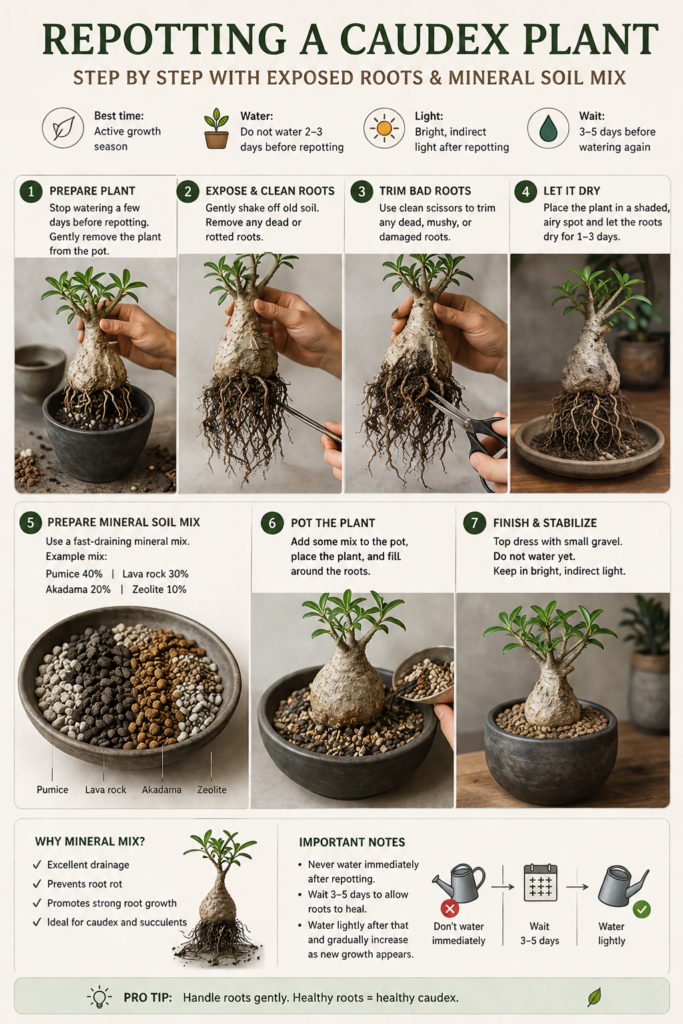
Repotting should also be done carefully. Caudex plants dislike unnecessary root disturbance. Repot only when roots outgrow the pot, soil breaks down, drainage fails, or rot must be treated.
Safe repotting steps:
- Remove the plant gently.
- Shake away old soil.
- Inspect roots.
- Trim soft or black roots.
- Let wounds dry.
- Repot into dry mineral soil.
- Wait 5–7 days before watering.
The best time to repot is at the start of active growth. Avoid repotting during dormancy unless there is rot or an emergency.
Propagation and Growing from Seed
Caudex plants can be propagated, but the method affects long-term quality. Seeds are usually the best method because seed-grown plants develop their caudex naturally from the beginning. This creates stronger roots, better symmetry, and higher collector value.
Cuttings can work for some species, but they may not form the same strong swollen base as seed-grown plants. Offsets can also be separated in certain species, but success depends on the plant type.
Propagation methods:
- Seeds
- Cuttings
- Offsets
Benefits of seed-grown caudex plants:
- Stronger natural caudex
- Better root structure
- More balanced growth
- Higher long-term value
Seed-growing tips:
- Use sterile fast-draining mix.
- Keep seeds warm.
- Maintain light moisture during germination.
- Provide bright light after sprouting.
- Avoid overwatering seedlings.
Seed growing is slower, but it produces the best long-term specimens. If your goal is collector quality, seed-grown plants are usually worth the patience.
Common Mistakes When Growing Caudex Plants
Most caudex plant failures are caused by repeated care mistakes, not because the plants are impossible to grow. The most common problem is overwatering, especially during dormancy or cold weather.
Common mistakes include:
- Watering too often
- Using dense soil
- Ignoring dormancy
- Placing plants in low light
- Using oversized pots
- Fertilizing during dormancy
- Repotting too frequently
- Treating caudex plants like tropical houseplants
How to avoid failure:
- Check soil before watering.
- Use mineral-heavy soil.
- Choose terracotta pots.
- Learn the species’ dormancy cycle.
- Prioritize strong light.
- Reduce care during rest periods.
The key lesson is simple: caudex care is often about doing less, but doing it correctly. More water, more fertilizer, and more repotting usually create more problems.
Where to Buy Healthy Caudex Plants
Healthy starting material makes caudex growing much easier. Buy from rare plant nurseries, succulent specialists, trusted online sellers, or collector exchanges. Avoid buying only because the leaves look full. Leaves can be temporary, but the caudex and roots determine long-term health.
Buying checklist:
- Firm caudex
- No soft spots
- Healthy roots
- No pests
- Correct species label
- Dry, clean soil
- Balanced shape
Avoid plants with mushy bases, wet soil, pest damage, weak stretched growth, or unclear labels. The best time to buy is near the beginning of active growth because the plant can recover from shipping or repotting more easily.
Buy for root health and caudex firmness, not temporary leaf fullness.
Are Caudex Plants Worth Growing?
Caudex plants are absolutely worth growing if you enjoy slow, sculptural, long-term plants. They are not the best choice for someone who wants instant lush foliage, but they are perfect for collectors, design-focused growers, and patient plant lovers.
Their beauty improves with age. The caudex thickens, bark texture develops, and the plant becomes more individual over time. Many species can live for decades with proper care.
Choose caudex plants if you want:
- Long lifespan
- Rare plant appeal
- Low watering needs
- Sculptural beauty
- Collector value
- A plant that improves with age
For quick decoration, choose tropical plants. For long-term character, caudex plants are one of the most rewarding categories to grow.
FAQs SECTION
What is a caudex plant?
A caudex plant stores water in a swollen stem, trunk, or root base. This helps it survive dry conditions and gives it a sculptural appearance.
How often should I water caudex plants?
Water only when the soil is fully dry during active growth. During dormancy, reduce watering heavily to avoid root rot.
Do caudex plants need direct sunlight?
Many caudex plants prefer strong bright light, and some need several hours of direct sun. Adenium and Pachypodium grow best in high light.
Why is my caudex plant wrinkling?
Wrinkling usually means dehydration or poor root absorption. Check the soil first, then inspect roots if the plant does not recover.
Why is my caudex plant soft?
A soft or mushy caudex often signals rot from overwatering. Remove the plant from the pot and inspect the roots immediately.
Can caudex plants grow indoors?
Yes, many caudex plants grow indoors if they receive strong light, fast-draining soil, and careful watering.
What is the best soil for caudex plants?
A gritty, mineral-rich mix is best. Use ingredients like pumice, perlite, cactus soil, bark, and lava rock.
Are caudex plants beginner-friendly?
Some are beginner-friendly. Adenium and Beaucarnea recurvata are the best starting choices for new growers.
Myra is the founder and lead writer of Plantsaholic. She shares practical, research-backed advice on indoor plants, outdoor gardening, flowers, herbs, succulents, and everyday plant care. Her goal is to help gardeners of all experience levels grow healthier plants through simple, easy-to-follow gardening guides.