Rare houseplants have transformed indoor gardening from a simple hobby into a thriving collector culture. While common houseplants remain popular for their ease of care, many enthusiasts eventually seek plants that offer unusual foliage, limited availability, and unique growing experiences.
However, rarity alone does not make a plant worth owning. The best rare houseplants combine striking appearance, manageable indoor care requirements, and long-term enjoyment. Understanding which species deserve a place in your collection can help you avoid costly mistakes while building an indoor plant display that remains healthy and impressive for years.
What Makes a Houseplant Rare?
A houseplant becomes rare when supply cannot easily meet demand. This rarity may result from slow propagation rates, limited natural distribution, conservation restrictions, unusual genetic traits, or sudden popularity among collectors.
Some plants become expensive because they are fashionable, while others remain genuinely uncommon due to biological or production limitations.
Several factors contribute to rarity:
- Slow growth and propagation
- Limited production
- Unique variegation
- Geographic restrictions
- Conservation concerns
- Strong collector demand
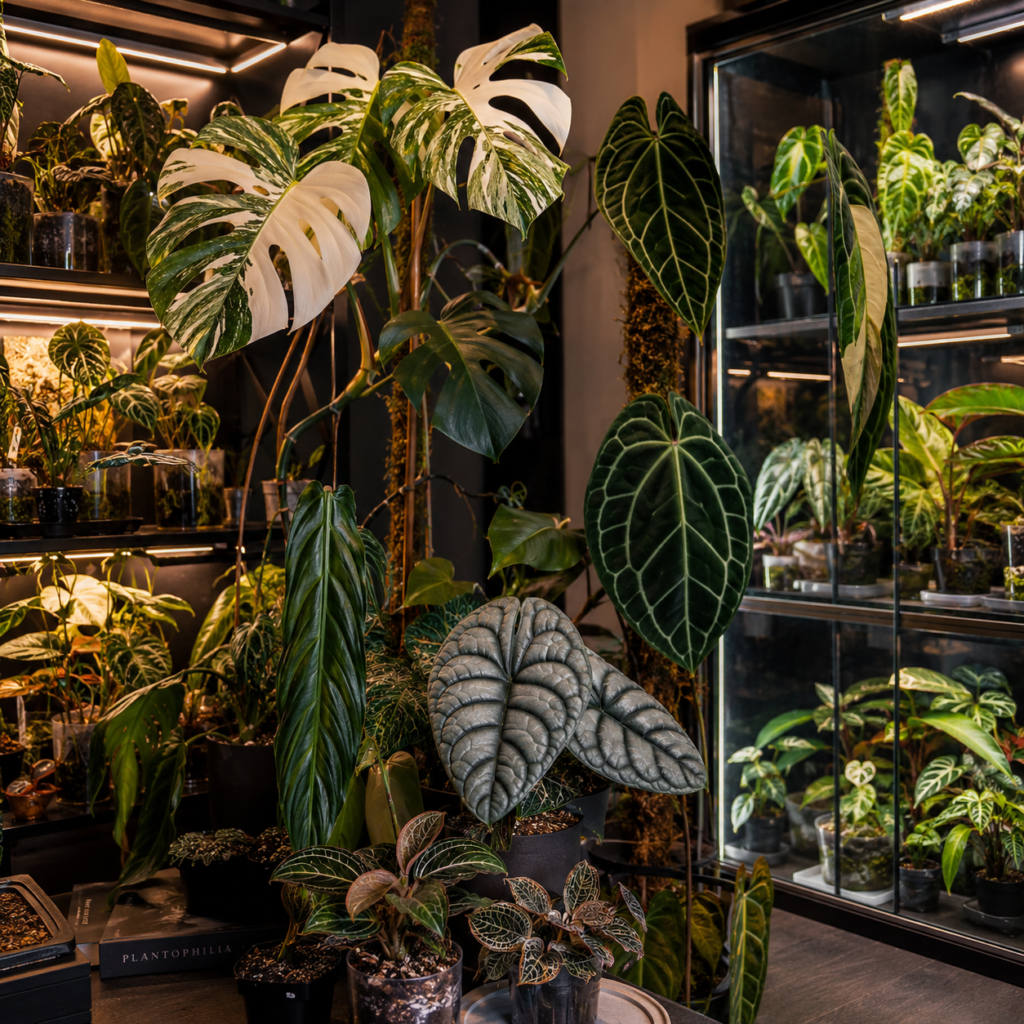
Variegated plants provide a good example. A Monstera Albo produces white variegation through genetic mutation. Because this mutation cannot always be replicated consistently, growers often rely on stem cuttings instead of mass production. This limits availability and increases collector interest.
Rarity is influenced by production speed, availability, and conservation status. Plants that grow slowly or are difficult to propagate typically remain harder to find and maintain stronger collector demand over time.
Additional rarity indicators include:
- Limited nursery production
- Slow maturation rates
- Specialized growing requirements
- Restricted export availability
- Historic collector demand
- Unstable variegation genetics
Why Are Rare Houseplants Popular?
They offer uniqueness, personal satisfaction, and the opportunity to build something highly individualized.
Rare plants also provide a deeper level of engagement with indoor gardening. Growing demanding species often requires learning about humidity, lighting, propagation, and environmental control. This educational aspect makes collecting more rewarding.
Collectors are often attracted to:
- Unique foliage
- Botanical rarity
- Conservation interest
- Breeding history
- Collection goals
Platforms filled with stunning photos of variegated Monsteras, rare Philodendrons, and exotic Anthuriums have exposed collectors worldwide to species they might never have encountered previously.
Another factor is achievement. Successfully growing a difficult collector plant often feels more rewarding than maintaining a common species. Many enthusiasts enjoy the challenge and take pride in mastering advanced care techniques.
Many collectors develop strong attachments to rare plants because obtaining and growing them requires research, patience, and specialized care. This deeper involvement often transforms indoor gardening into a long-term hobby focused on learning and achievement.
Best Rare Houseplants for Collectors
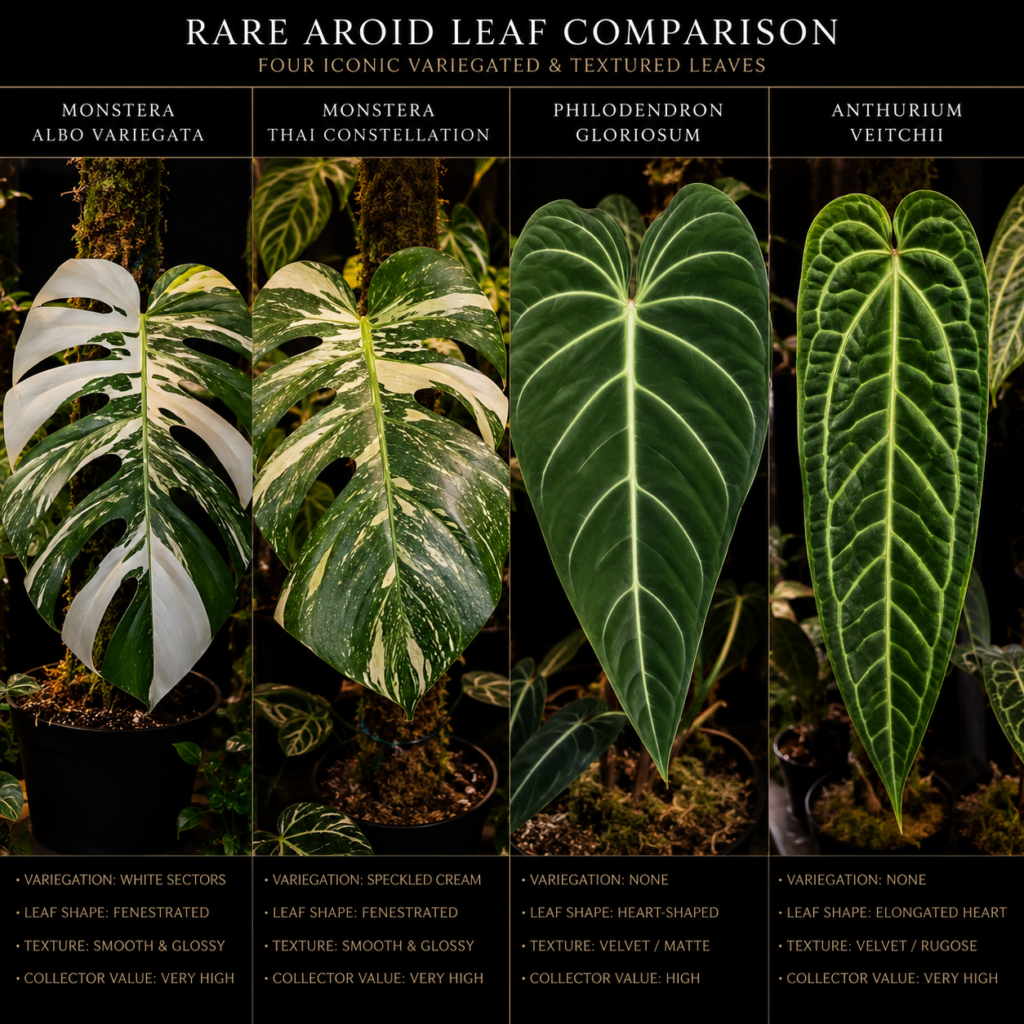
Not every rare plant deserves its reputation. Some are exceptionally difficult to grow, while others provide limited visual impact despite high prices. The following species consistently stand out among serious indoor plant collectors because they combine rarity, beauty, and long-term appeal.
Choosing collector plants should involve more than simply purchasing the rarest species available. The most rewarding collections balance rarity, visual impact, care requirements, and available growing space. A highly sensitive plant may look impressive online, but it can quickly become frustrating if its environmental needs exceed what the collector can realistically provide.
When evaluating a rare plant, consider:
- Indoor adaptability
- Growth speed
- Long-term mature appearance
- Humidity requirements
- Available space
Rare Houseplant Comparison
Choosing the right rare houseplant often depends on your experience level, available growing conditions, and maintenance expectations. Some species are surprisingly adaptable, while others require highly controlled environments to thrive. Comparing difficulty levels, humidity requirements, and beginner friendliness can help narrow down the best options for your situation.
| Plant | Difficulty | Humidity Needs | Beginner Friendly |
| Monstera Thai Constellation | Easy | Moderate | Yes |
| Monstera Albo Variegata | Moderate | Moderate | Yes |
| Philodendron Gloriosum | Easy | Moderate | Yes |
| Anthurium Veitchii | Moderate | High | Intermediate |
| Anthurium Warocqueanum | Difficult | Very High | No |
| Monstera Obliqua | Difficult | Very High | No |
| Alocasia Dragon Scale | Moderate | Moderate | Yes |
| Variegated Frydek | Moderate | High | Intermediate |
| Jewel Orchids | Moderate | High | Intermediate |
This comparison highlights an important reality: rarity does not automatically mean difficulty. Several collector favorites can thrive in typical indoor conditions, while others require advanced humidity management and environmental control.
Monstera Albo Variegata
Monstera Albo Variegata remains one of the most recognizable collector plants in the world. Its dramatic white variegation creates a striking contrast against deep green foliage, making every leaf unique.
Unlike tissue-cultured varieties, Monstera Albo is usually propagated through cuttings. This slower production process contributes to its continued collector demand.
Monstera Thai Constellation
Monstera Thai Constellation offers a more stable form of variegation compared to Monstera Albo. Cream-colored speckling appears throughout the leaves, creating a galaxy-like pattern that inspired its name.
Thai Constellation offers stable variegation, strong indoor performance, and large decorative foliage.
Philodendron Spiritus Sancti
Few collector plants generate as much excitement as Philodendron Spiritus Sancti. Native to a limited region of Brazil, this species is often considered one of the rarest Philodendrons in cultivation.
Its narrow, elongated leaves create an elegant appearance unlike almost any other indoor plant. Mature specimens can develop leaves measuring several feet long, producing a highly architectural effect.
Anthurium Veitchii
Often called the “King Anthurium,” Anthurium Veitchii is famous for its heavily corrugated leaves that can reach remarkable lengths under ideal indoor conditions.
The texture alone distinguishes this species from nearly every other houseplant. Deep ridges create a sculptural appearance that becomes more dramatic as the plant matures.
Collectors value Veitchii for its heavily textured foliage and dramatic mature size.
Anthurium Warocqueanum
Known as the “Queen Anthurium,” Anthurium Warocqueanum is one of the most admired foliage plants among serious collectors. Unlike flowering Anthuriums commonly found in garden centers, this species is grown almost entirely for its spectacular leaves.
Its long, velvety foliage can eventually reach several feet in length when mature. Prominent white veins contrast dramatically against dark green leaf surfaces, creating one of the most elegant appearances in the entire houseplant world.
New collectors often underestimate how important environmental stability is for long-term success.
While not impossible to grow in normal household conditions, providing higher humidity levels often produces healthier foliage and larger leaves.
Monstera Obliqua
Monstera Obliqua has become almost legendary among plant collectors. It is frequently confused with Monstera adansonii, but true Obliqua is significantly rarer and far more delicate.
The most recognizable feature is its extreme fenestration. Mature leaves contain more holes than actual leaf tissue, creating a lace-like appearance that looks almost unreal.
It requires consistent humidity, careful watering practices, and close environmental monitoring.
Because demand is so high, misidentification is common. Many plants sold as Obliqua are actually forms of Monstera adansonii. Collectors should verify identification before purchasing.
Philodendron Gloriosum
Philodendron Gloriosum proves that a plant does not need dramatic variegation to attract collectors. Its appeal comes from massive heart-shaped leaves covered in velvety texture and bright white veins.
Unlike climbing Philodendrons, Gloriosum is a crawling species. It spreads horizontally across the soil surface, producing increasingly large foliage as it matures.
Bright indirect light, moderate humidity, and proper drainage usually support healthy growth.
Alocasia Dragon Scale
Alocasia Dragon Scale has become increasingly popular due to its extraordinary leaf texture. The foliage resembles reptilian scales, creating a highly unusual appearance that immediately stands out within a collection.
Its silvery foliage and dark veining create an almost artificial appearance.
Dragon Scale thrives in warm environments with bright indirect light. Like many Alocasias, it appreciates consistent moisture but dislikes sitting in soggy soil.
Variegated Alocasia Frydek
Variegated Alocasia Frydek combines two characteristics collectors love: velvet foliage and dramatic variegation.
Each leaf develops unique green and white variegation patterns.
Because white leaf sections contain less chlorophyll, these plants typically require more careful management than standard Frydeks.
Collectors must balance adequate light exposure with protection from direct sunlight. Excessive light can damage delicate white tissue, while insufficient light may weaken overall growth.
Jewel Orchids
Not all rare plants are collected for large foliage. Jewel Orchids attract enthusiasts because of their remarkable leaf patterns rather than their flowers.
Unlike traditional orchids grown for blooms, Jewel Orchids display metallic veins that shimmer under light. Their foliage resembles intricate natural artwork.
Popular varieties include:
- Ludisia discolor
- Macodes petola
- Anoectochilus species
- Dossinia marmorata
These plants prefer higher humidity and evenly moist growing media. Their smaller size makes them ideal candidates for terrariums, display cabinets, or dedicated collector shelves.
Best Rare Houseplants for Beginners
In reality, several collector favorites adapt surprisingly well to indoor conditions.
The best beginner-friendly rare houseplants typically combine attractive foliage with relatively forgiving care requirements.
Top beginner choices include:
- Monstera Thai Constellation
- Philodendron Gloriosum
- Alocasia Dragon Scale
- Anthurium Veitchii
- Jewel Orchids
- Philodendron Melanochrysum
When starting a rare plant collection:
- Focus on one or two species first
Can You Propagate Rare Houseplants?
Propagation is one of the most rewarding aspects of collecting rare houseplants. Many collector species can be multiplied through stem cuttings, division, or node propagation, allowing growers to expand their collections without purchasing additional plants.
However, not every rare plant propagates equally. Some species root quickly and reliably, while others require patience and controlled conditions. Variegated plants introduce an additional challenge because new growth may not always maintain the same coloration patterns.
Common propagation methods include:
- Stem cuttings
- Node propagation
- Plant division
- Air layering
- Corm separation for Alocasias
- Offshoot removal
Collectors should remember that tissue culture is generally performed in laboratory environments and is not a practical home propagation method. Instead, most hobbyists achieve success through traditional techniques combined with stable humidity and consistent warmth. Propagation helps collectors expand their collections more affordably.
Are Rare Houseplants Hard to Care For?
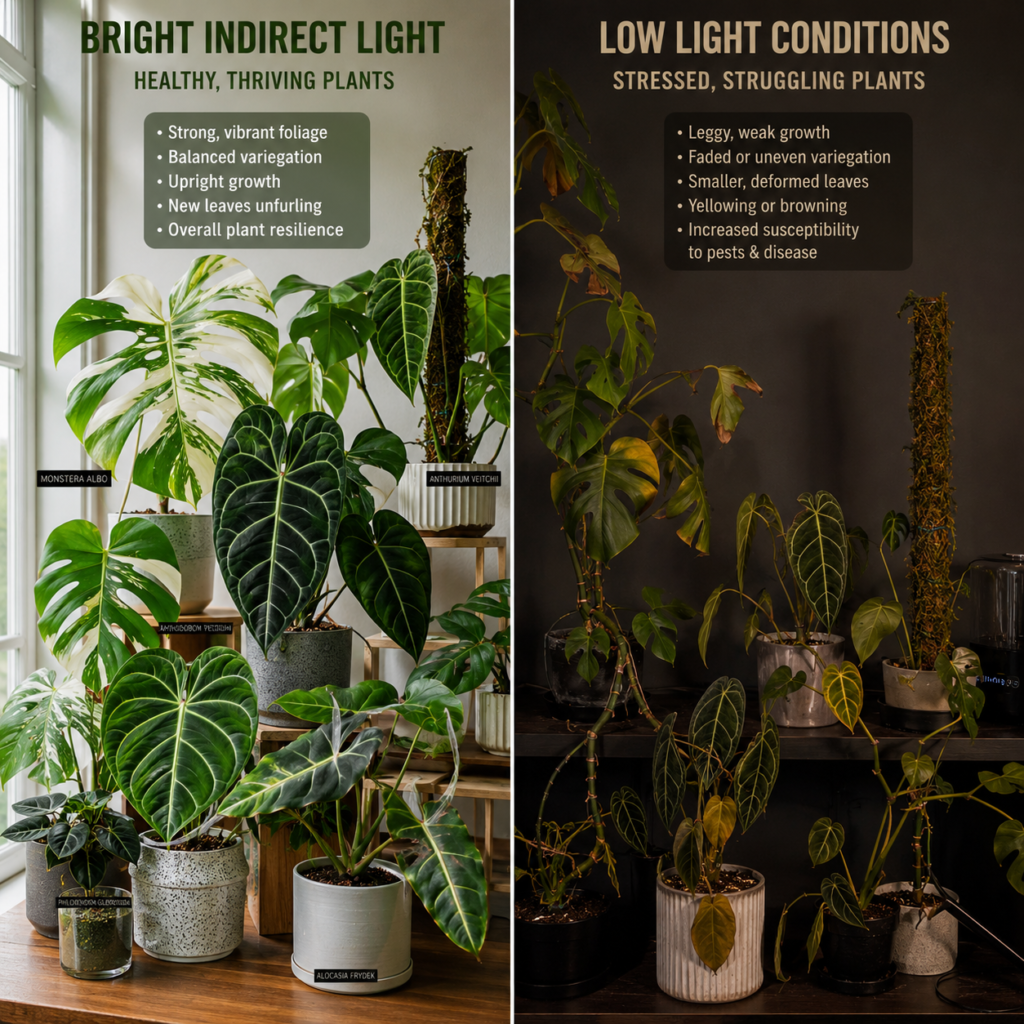
Rare plants are not automatically difficult. In many cases, rarity reflects limited availability rather than extreme care requirements.
Many people assume that rarity automatically means difficulty, but this is not always accurate. Some rare plants become collector favorites because they are visually unique rather than exceptionally demanding. Monstera Thai Constellation, Philodendron Gloriosum, and Alocasia Dragon Scale are good examples of species that offer collector appeal without requiring greenhouse-level care.
Some rare plants remain relatively easy:
- Monstera Thai Constellation
- Philodendron Gloriosum
- Anthurium Veitchii
- Dragon Scale Alocasia
Others require greater attention:
- Monstera Obliqua
- Anthurium Warocqueanum
- Philodendron Spiritus Sancti
- Certain variegated species
How Much Light Do Rare Plants Need?
Lighting is one of the most important factors affecting collector plant success.
Most rare tropical plants evolved beneath rainforest canopies where they receive filtered sunlight rather than intense direct exposure.
In general, rare houseplants prefer:
- Bright indirect light
- Morning sunlight
- Filtered window exposure
- Supplemental grow lights when necessary
Low light can cause:
- Slower growth
- Smaller leaves
- Reduced variegation
- Weak stems
- Increased disease susceptibility
Too much direct sunlight may result in:
- Leaf scorch
- Faded coloration
- Damaged variegation
- Heat stress
Many collectors eventually invest in grow lights to provide consistent lighting throughout the year. This becomes particularly useful during winter months or in homes with limited natural sunlight.
Do Rare Houseplants Need High Humidity?
Many collectors assume every rare houseplant requires greenhouse-level humidity, which is not always true.
The humidity needs of a plant depend largely on its natural habitat. When these plants are grown indoors, replicating at least part of that environment often improves growth, leaf size, and overall health.
Plants that typically appreciate higher humidity include:
- Anthurium Warocqueanum
- Anthurium Veitchii
- Monstera Obliqua
- Jewel Orchids
- Many rare Philodendrons
- Most Alocasia species
However, humidity should never be considered in isolation. High humidity without airflow can create fungal problems, bacterial issues, and pest outbreaks.
For most indoor collectors, maintaining humidity between 60% and 80% provides excellent results without creating excessive maintenance requirements.
Useful humidity solutions include:
- Humidifiers
- Plant cabinets
- Greenhouse shelving
- Pebble trays
- Plant grouping
- Closed terrariums for smaller species
Mistakes That Kill Rare Houseplants
Most rare plants die from basic care mistakes rather than because they are inherently difficult. Collectors often focus heavily on rarity while overlooking fundamental growing principles.
Overwatering remains the most common cause of plant decline. Many tropical plants enjoy moisture, but very few enjoy constantly saturated soil.
Common collector mistakes include:
- Overwatering
- Poor drainage
- Insufficient light
- Ignoring humidity
- Frequent relocation
- Excessive fertilization
- Using dense soil mixes
- Buying unhealthy plants
Consistent light, watering, and humidity prevent most problems.
How to Avoid Fake Rare Plants
As demand for rare plants has increased, so have scams and misidentified specimens. New collectors are particularly vulnerable because many rare species share similar appearances during juvenile stages.
Research remains the most effective defense against fraudulent purchases.
Before buying a rare plant:
- Study mature growth characteristics
- Compare multiple photos
- Learn species-specific features
- Verify seller reputation
- Request recent plant images
- Review customer feedback
- Ask about propagation history
Warning signs include:
- Unrealistically low prices
- Edited photographs
- Inconsistent descriptions
- Refusal to provide additional photos
- Lack of parent plant information
Variegated plants deserve particular scrutiny. Artificial editing can exaggerate coloration in photos, making plants appear more valuable than they actually are.
Collectors should also understand the difference between:
- Stable variegation
- Sectoral variegation
- Marbled variegation
- Temporary leaf mutations
Purchasing from reputable specialty nurseries often costs more initially but reduces the likelihood of disappointment and misidentification.
Should You Buy Ethically Sourced Plants?
As demand for uncommon species grows, some plants face pressure from illegal collection in their native habitats. Certain rare aroids, Anthuriums, and Philodendrons have experienced habitat loss and overharvesting because collectors are willing to pay premium prices for hard-to-find specimens. While most plants sold through reputable nurseries are propagated legally, buyers should understand where their plants originate before making a purchase.
Responsible collecting helps support conservation while ensuring that rare species remain available for future generations. Many modern nurseries now rely on tissue culture, cuttings, and controlled propagation rather than removing plants from the wild. This approach protects natural populations while still meeting collector demand. Choosing ethically sourced plants allows collectors to build impressive collections without contributing to environmental damage.
When evaluating a seller, consider:
- Nursery propagation practices
- Tissue-cultured availability
- Parent plant documentation
- Conservation status of the species
- Import and export compliance
- Seller transparency
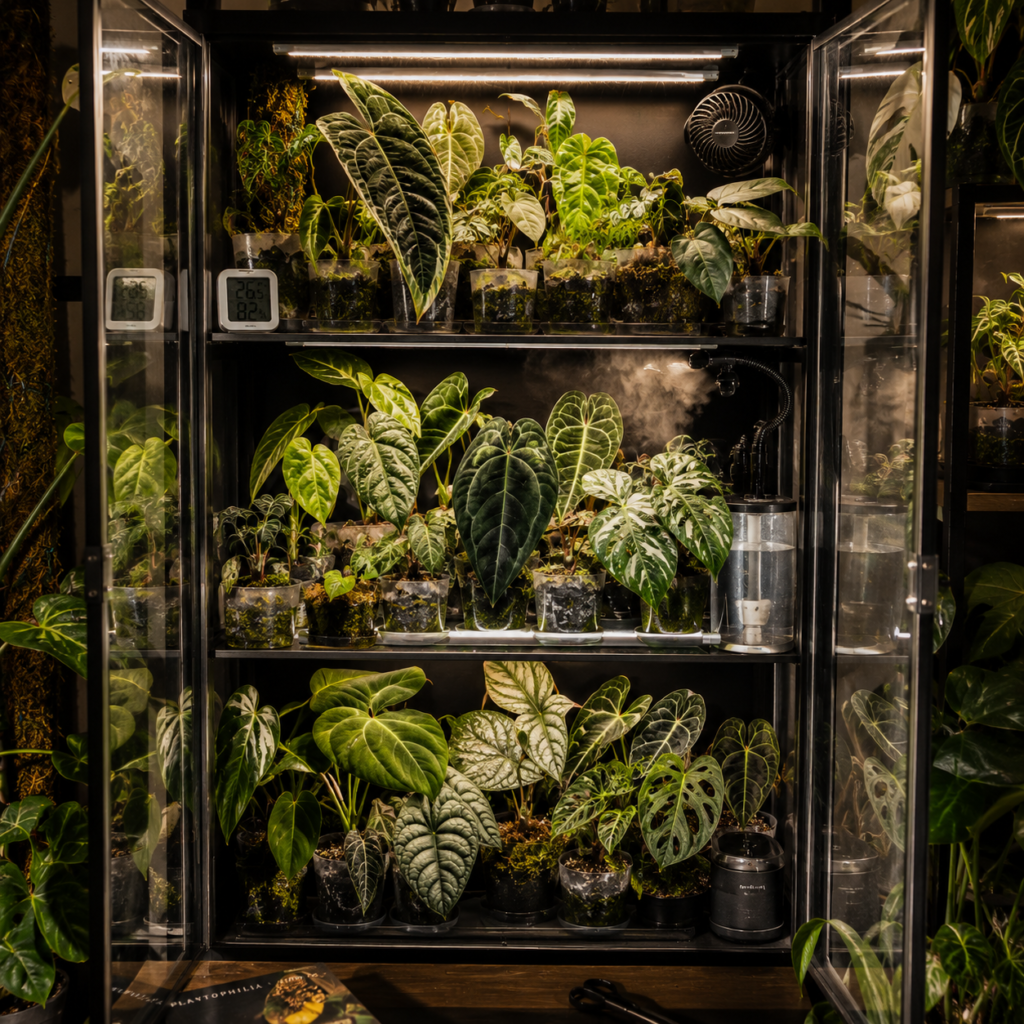
Equipment for Rare Houseplants
While rare plants can often survive with basic care, certain equipment can significantly improve growth and reduce environmental fluctuations.
The most useful collector tools include:
Hygrometers
A hygrometer measures humidity and temperature, helping collectors monitor indoor growing conditions more accurately.
Air Circulation Fans
Air circulation fans help prevent mold, fungal issues, bacterial problems, and stagnant humidity while improving overall growing conditions.
How to Display Rare Houseplants
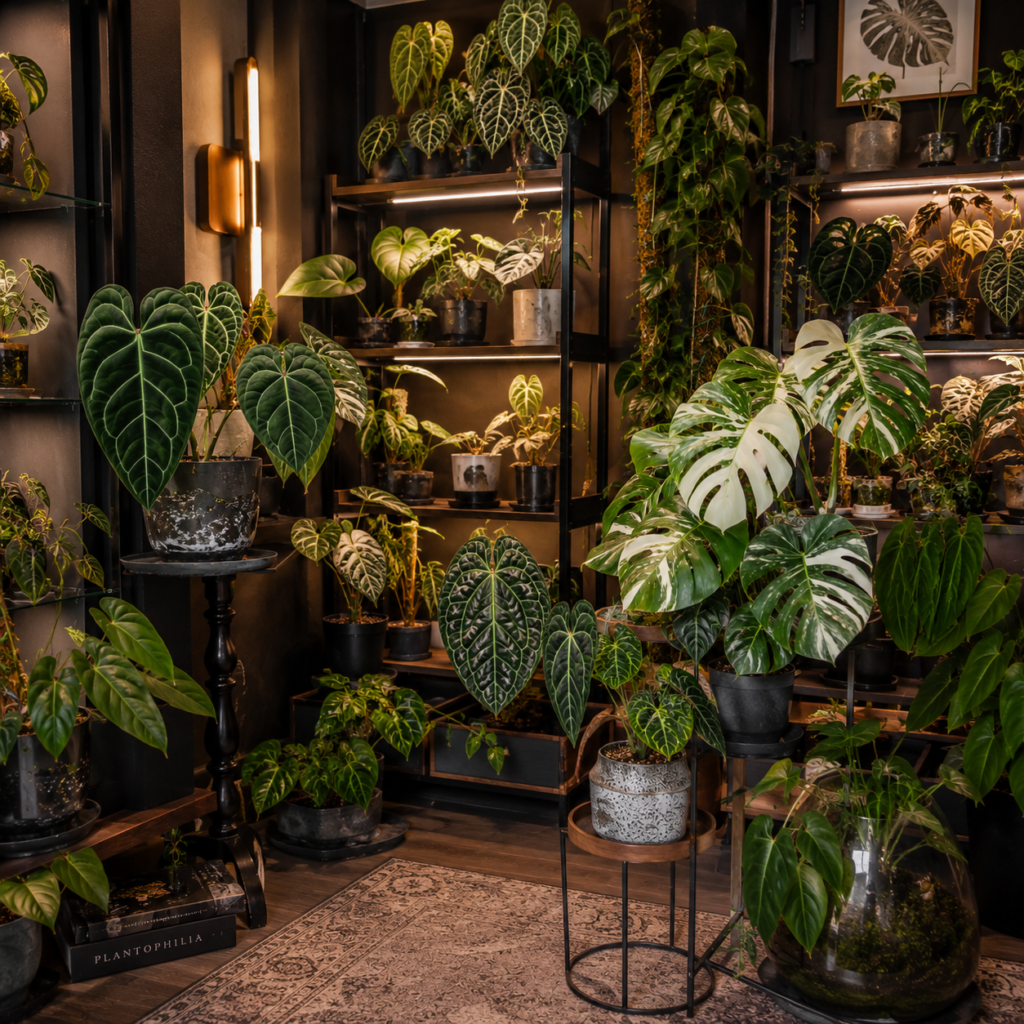
A well-designed plant display enhances both aesthetics and plant health. Collectors should think beyond simply placing plants wherever space is available.
Effective displays consider:
- Light access
- Airflow
- Growth habits
- Viewing angles
- Maintenance accessibility
Large statement plants often work best as focal points.
Examples include:
- Anthurium Veitchii
- Monstera Thai Constellation
- Monstera Albo
- Mature Philodendrons
Display strategies include:
- Floating shelves
- Plant stands
- Greenhouse cabinets
- Corner displays
- Window groupings
- Dedicated plant rooms
Best Rare Houseplants: Final Verdict
Rare houseplants continue to attract collectors because they offer something beyond ordinary indoor gardening.
For most collectors, the strongest overall choices include:
Best Overall Rare Houseplants
- Monstera Thai Constellation
- Monstera Albo Variegata
- Philodendron Gloriosum
- Anthurium Veitchii
- Alocasia Dragon Scale
Best Rare Plants for Beginners
- Monstera Thai Constellation
- Philodendron Gloriosum
- Dragon Scale Alocasia
- Jewel Orchids
Best Advanced Collector Plants
- Monstera Obliqua
- Anthurium Warocqueanum
- Philodendron Spiritus Sancti
FAQ section
Why are Monstera Albo plants so expensive?
Monstera Albo plants are typically propagated through cuttings rather than mass tissue culture, making production slower and limiting availability.
What is the easiest rare houseplant to grow?
Monstera Thai Constellation and Philodendron Gloriosum are often considered among the easiest rare houseplants for beginners.
Do rare houseplants grow slower than common plants?
Some rare plants grow slowly because of genetics or variegation, while others grow at rates similar to common tropical houseplants.
Can rare plants survive in normal household humidity?
Many rare plants can adapt to average indoor humidity, although higher humidity often improves growth and leaf quality.
Are Rare Houseplants Harder to Grow?
Not always. Many rare plants have similar care requirements to common tropical houseplants. Success usually depends more on consistency than rarity.
What Humidity Do Rare Plants Need?
Most rare tropical houseplants thrive between 60% and 80% humidity. However, several species can gradually adapt to average household conditions.
Can Rare Plants Grow Without a Cabinet?
Yes. Many rare plants grow successfully without a cabinet if they receive proper light, watering, and stable environmental conditions.
How can collectors avoid buying fake rare plants online?
Purchase from reputable sellers, request current photos, and research species characteristics before buying. Avoid listings with unrealistic prices or edited images.
Should collectors buy rare plants as an investment?
Rare plant values can change quickly as availability increases. Most experienced collectors recommend buying plants for enjoyment rather than financial gain.
Which Rare Plants Hold Value Best?
Plants with strong demand, slow propagation, and limited availability often retain value longer. Examples include Monstera Albo and Philodendron Spiritus Sancti.
Monstera Albo vs Thai Constellation
Monstera Albo has unstable white variegation and is usually propagated through cuttings. Thai Constellation has stable cream variegation and is produced through tissue culture.
Can rare houseplants be propagated at home?
Yes. Many rare plants can be propagated through stem cuttings, division, air layering, or node propagation depending on the species.
Are rare houseplants becoming more common?
Some rare plants are becoming more accessible due to improved propagation and tissue culture. Others remain difficult to obtain because of slow growth and limited supply.
What should a new collector buy first?
Monstera Thai Constellation, Philodendron Gloriosum, and Alocasia Dragon Scale are excellent starter choices. They combine collector appeal with relatively manageable care requirements.
Myra is the founder and lead writer of Plantsaholic. She shares practical, research-backed advice on indoor plants, outdoor gardening, flowers, herbs, succulents, and everyday plant care. Her goal is to help gardeners of all experience levels grow healthier plants through simple, easy-to-follow gardening guides.