To get rid of fungus gnats in indoor plants, target both the flying adults and the larvae living in damp potting soil. Let the top layer of soil dry, remove decaying plant debris, use yellow sticky traps for adults, and apply Bti or beneficial nematodes to control larvae.
Fungus gnats are one of the most frustrating indoor plant pests because they seem to appear out of nowhere. One day your houseplants look fine, and the next day tiny black flies are hovering around the soil, crawling on pot edges, or flying near your face when you water. Many plant owners spray the flying insects first, but that only treats the visible part of the problem.
The real issue is usually inside the potting mix. Fungus gnats breed in moist soil, where their larvae feed on fungi, decaying organic matter, algae, and sometimes tender plant roots. If you only kill the adult gnats, eggs and larvae can continue developing in the soil and create a new wave of adults within weeks.
The best way to remove fungus gnats is to make your potting soil less inviting, trap the adult gnats, and stop the larvae before they become new adults. This guide from Plantsaholic explains exactly how to identify fungus gnats, treat infested soil, protect your indoor plants, and prevent the problem from coming back. Fungus gnats often return when sticky traps catch adults but larvae remain in damp soil.
What Are Fungus Gnats?
Fungus gnats are tiny dark flies that live around damp indoor plant soil. The adults are mostly annoying, but the larvae in the potting mix can stress seedlings, cuttings, and weak houseplants.
Fungus gnats are small, mosquito-like insects often seen flying around houseplants, crawling over potting soil, or resting on pot rims. They are usually dark gray or black, with thin legs, delicate wings, and a weak flying pattern. Because they are so small, many people mistake them for fruit flies, drain flies, or random house flies. The biggest clue is location: fungus gnats stay close to damp soil, especially after watering.
In indoor plants, fungus gnats are strongly connected to moisture and organic matter. Adult gnats lay eggs in moist potting mix, especially where there is fungus, algae, compost, peat, bark, or decaying leaves. After the eggs hatch, the larvae stay in the upper soil layer and feed on fungi and decomposing material. In small numbers, they are usually more annoying than destructive. In large numbers, they can stress seedlings, cuttings, and plants with weak root systems.
You may have fungus gnats if you notice:
- Tiny black flies hovering around plant pots
- Gnats crawling across the soil surface
- Flies appearing after watering
- Small insects gathering near windows
- Sticky traps filling with tiny dark flies
- Seedlings or cuttings looking weak in damp soil
- Soil staying wet for too many days
Fungus Gnats vs Fruit Flies
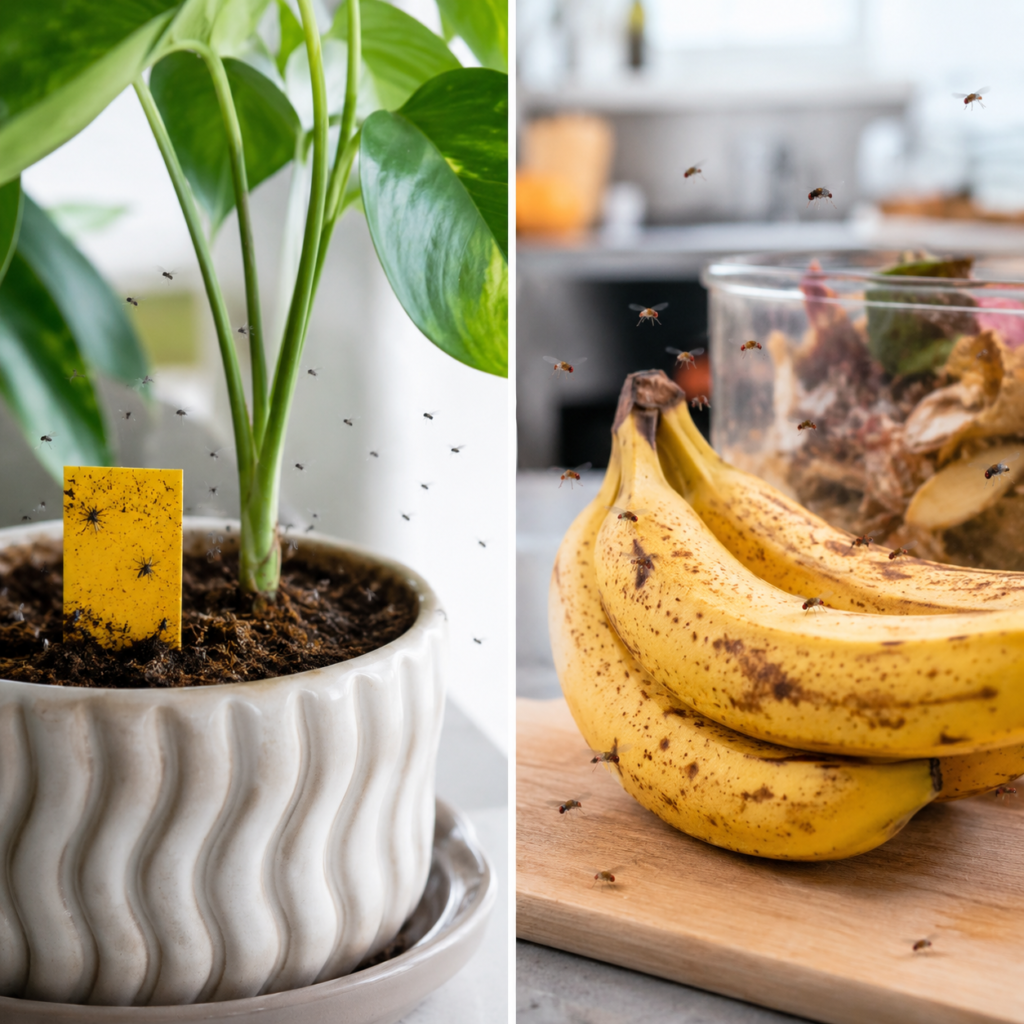
Fungus gnats usually stay near damp potting soil and look like tiny black mosquitoes. Fruit flies are rounder, often brown or tan, and gather around ripe fruit, food scraps, drains, or trash bins.
Correct identification matters because fungus gnats and fruit flies need different treatments. If the insects are breeding in your plant soil, cleaning the fruit bowl will not fix the problem. If they are fruit flies, treating houseplant soil will not solve the source. Before you start applying treatments, spend a few minutes watching where the insects gather and what attracts them.
Fungus gnats usually move around houseplants. You may see them crawling on the soil surface, resting on pot rims, or flying up when you disturb the plant. They are weak fliers, so they often stay close to the pot instead of flying strongly across the room. Fruit flies are more common in kitchens and dining areas. They are attracted to ripe bananas, apples, fermenting fruit, spilled drinks, trash, compost bins, and sink drains. Their bodies are usually rounder and may look brownish, tan, or yellowish instead of dark black.
| Feature | Fungus Gnats | Fruit Flies |
| Main location | Houseplant soil | Fruit, drains, trash |
| Body shape | Slim and mosquito-like | Rounder and compact |
| Color | Dark gray or black | Brown, tan, or yellowish |
| Main trigger | Wet potting mix | Fermenting food |
| Best control | Soil drying and larval treatment | Remove food source and clean drains |
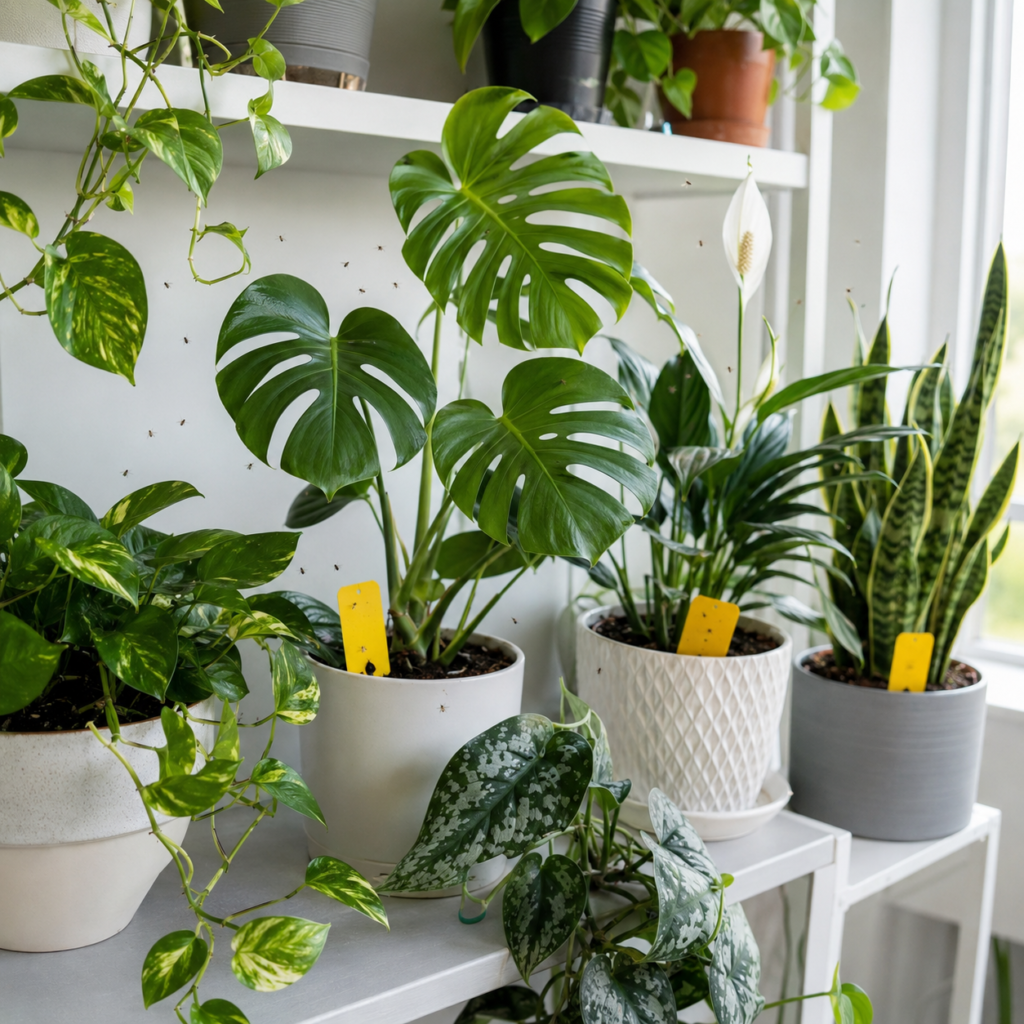
A simple test is to place yellow sticky traps near your plants. If the traps catch many tiny dark flies close to the soil, fungus gnats are likely. If the flies stay near the kitchen sink, fruit bowl, or trash, look for a food or drain source instead.
Decision clarity:
- Flies around soil = treat houseplant pots
- Flies around fruit = remove food source
- Flies around drains = clean drain buildup
- Flies everywhere = check both plants and kitchen sources
Do Fungus Gnats Harm Plants?
Fungus gnats are usually more annoying than dangerous, but heavy infestations can harm seedlings, cuttings, and weak plants. Larvae may feed around tender roots and worsen stress caused by wet soil.
A mature, healthy houseplant can usually survive a light fungus gnat problem. The adults are mostly a nuisance, and a few larvae in the soil may not cause visible damage. However, fungus gnats should not be ignored because they often point to a bigger plant care problem: the soil is staying too wet. That wet condition can lead to root stress, poor oxygen around roots, fungal growth, and root rot.
The larvae are the stage that matters most for plant health. They usually feed on fungi and decaying organic matter, but in high numbers they may feed around tender roots. This is more concerning for seedlings, fresh cuttings, young plants, recently repotted plants, and plants already weakened by overwatering. If the plant has a strong root system, the damage may be minor. If the root system is small or stressed, fungus gnat larvae can make the problem worse.
Plants at higher risk include:
- Seedlings
- Fresh cuttings
- Newly propagated plants
- Young plants with soft roots
- Weak or recently repotted plants
- Plants already suffering from root rot
- Moisture-sensitive plants in dense soil
Fastest Treatment Plan for Fungus Gnats
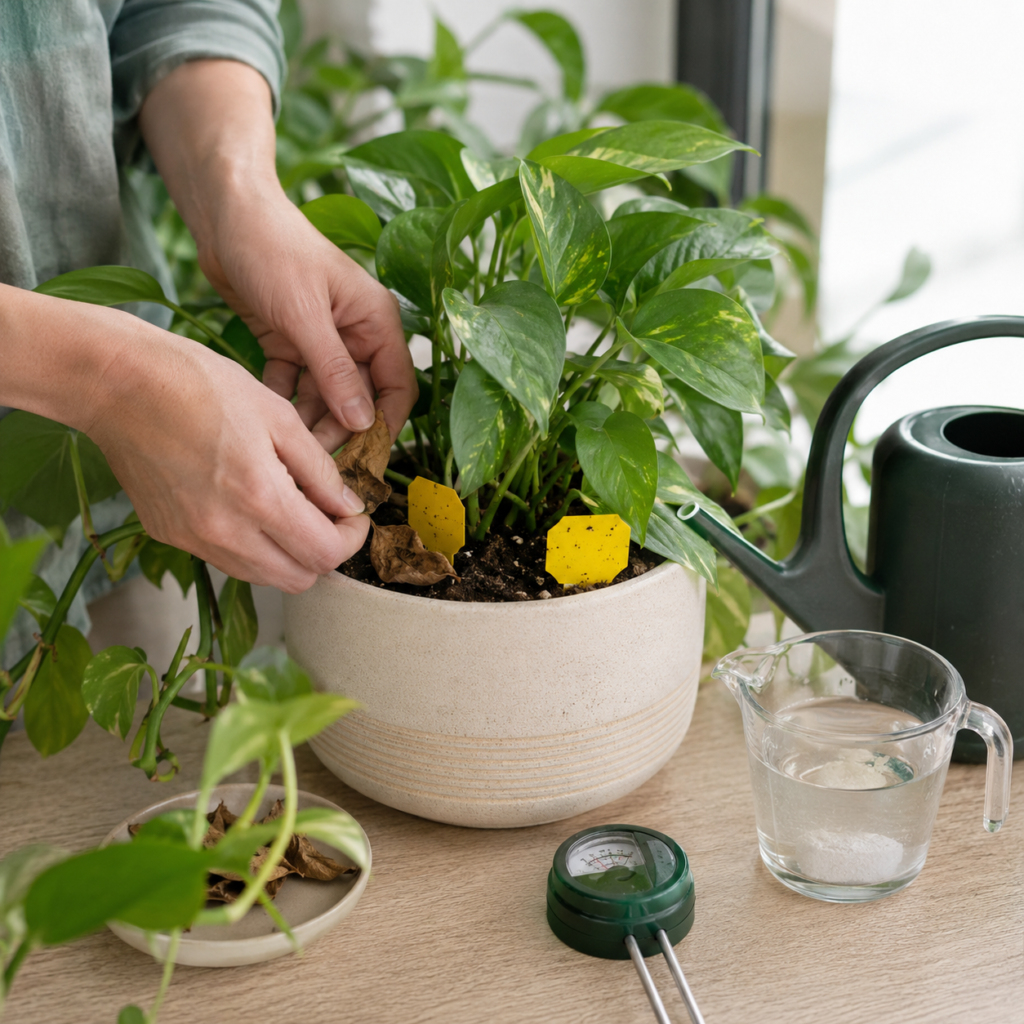
The fastest way to get rid of fungus gnats is to treat the soil environment, adult gnats, and larvae at the same time. Sticky traps help catch flying adults, but the real problem usually starts in damp potting mix where larvae feed and new gnats keep emerging.
Start by cleaning the soil surface and removing anything that keeps the pot damp. Then reduce watering, dry the top layer of soil, and add yellow sticky traps near the soil line. If gnats continue after several days, use Bti or beneficial nematodes to target larvae in the potting mix.
- Remove dead leaves, fallen flowers, moss, algae, and decaying material from the soil surface.
- Empty saucers and cachepots so the plant is not sitting in standing water.
- Let the top 1–2 inches of soil dry before watering again, if the plant type allows.
- Add yellow sticky traps close to the soil line to catch adult fungus gnats.
- Use Bti or beneficial nematodes if gnats continue emerging from the soil.
- Monitor sticky traps for 2–4 weeks and replace them as needed until the population drops.
You may see fewer adult gnats within the first week, but full control often takes 2–4 weeks because eggs, larvae, and adults can overlap. For long-term prevention, avoid overwatering, improve drainage, and remove dead plant debris before it becomes a breeding area.
Bti, Nematodes, or Sticky Traps?
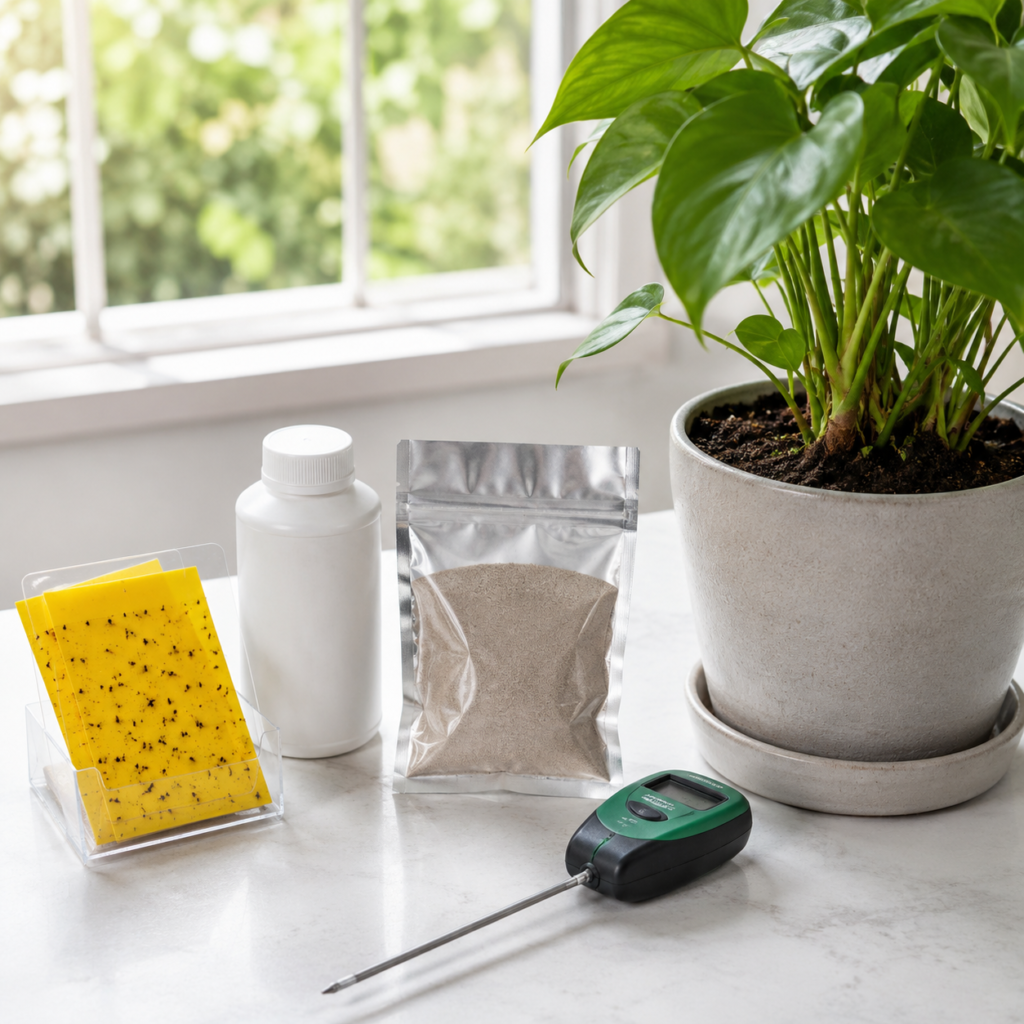
Yellow sticky traps catch adult fungus gnats, but they do not kill larvae in the soil. Use Bti when gnats keep emerging from damp potting mix, and use beneficial nematodes for heavier or repeated infestations.
| Treatment | Best For | Targets |
|---|---|---|
| Sticky traps | Flying gnats | Adults |
| Bti | Gnats emerging from soil | Larvae |
| Beneficial nematodes | Heavy infestations | Larvae |
| Soil drying | Prevention | Eggs and larvae habitat |
| Repotting | Bad or sour soil | Soil problem |
Best beginner choice: start with sticky traps, soil drying, and Bti. Repot only if the soil is compacted, sour, waterlogged, or staying wet too long.
Why Fungus Gnats Appear and How to Prevent Them
Fungus gnats appear in houseplant soil when the potting mix stays damp, rich in organic matter, and slow to dry. The most common causes are overwatering, poor drainage, dead leaves on the soil surface, dense potting mix, low light, and new nursery plants that already contain eggs or larvae.
They do not appear because your home is dirty. They appear because the plant pot gives them the exact conditions they need to breed. Indoor soil often dries more slowly than outdoor soil because there is less sunlight, less airflow, and less evaporation. When the top layer of soil stays moist for several days, adult fungus gnats can lay eggs there, and larvae can continue feeding in the damp mix.
The best prevention is to make the soil less attractive for egg-laying. Avoid watering on a fixed weekly schedule, and check the actual moisture level before adding more water. Let the top 1–2 inches of soil dry when the plant type allows, empty saucers and cachepots after watering, and avoid keeping plants in dark, damp corners where soil stays wet too long.
Use this prevention checklist:
- Avoid overwatering and water only when the plant actually needs it.
- Let the top 1–2 inches of soil dry for plants that tolerate it.
- Use pots with drainage holes so excess water can escape.
- Empty saucers and decorative cachepots after watering.
- Remove dead leaves, fallen flowers, moss, algae, and decaying material from the soil surface.
- Use fresh, well-draining potting mix instead of dense or broken-down soil.
- Avoid oversized pots because they hold extra moisture around small root systems.
- Move plants out of dark, damp corners if the soil stays wet for too long.
- Quarantine new nursery plants for 1–2 weeks before placing them near your collection.
- Add yellow sticky traps near new plants to catch early adult gnats.
New nursery plants are one of the easiest ways fungus gnats enter a home. Before adding a new plant to your plant shelf, inspect the soil surface and gently tap the pot. If tiny flies rise from the soil, isolate the plant and treat it before placing it near healthy houseplants.
Should Indoor Plant Soil Dry Out?
Yes, letting the top layer of soil dry helps stop fungus gnats because eggs and larvae need moisture. For many houseplants, wait until the top 1–2 inches are dry before watering again.
Drying the soil surface is one of the most important fungus gnat control steps. Fungus gnats love damp potting mix, especially when the surface stays wet for days. If the top layer dries regularly, adult gnats are less likely to lay eggs there and larvae have a harder time surviving. This does not mean you should neglect your plant. It means you should water based on soil moisture, not habit.
The right drying level depends on the plant. Drought-tolerant plants such as snake plants, ZZ plants, jade plants, cacti, and succulents can dry much more deeply. Tropical plants such as pothos, philodendron, and monstera usually prefer watering when the top layer dries. Moisture-loving plants such as ferns, calatheas, and peace lilies need more careful balance because they may suffer if allowed to dry too far.
| Plant Type | Watering Adjustment |
| Snake plant, ZZ plant, jade plant | Let soil dry deeply |
| Pothos, philodendron, monstera | Let top 1–2 inches dry |
| Peace lily, fern, calathea | Let surface dry slightly but avoid full collapse |
| Seedlings and cuttings | Keep evenly moist but use larval control |
| Cactus and succulents | Allow full dry-down between watering |
When Should You Repot
Repot a plant with fungus gnats only when the soil is old, compacted, sour-smelling, waterlogged, or severely infested. Mild cases can usually be treated without disturbing the roots.
Repotting can help, but it should not be your first move for every fungus gnat problem. Many houseplants dislike unnecessary root disturbance, especially if they are already stressed. If your plant looks healthy and the soil still drains well, start with traps, watering correction, debris removal, and larval control. These steps often solve mild to moderate infestations without shocking the plant.
- Soil stays wet for more than a week
- The pot has no drainage hole
- The plant smells sour or rotten
- Roots are brown, mushy, or weak
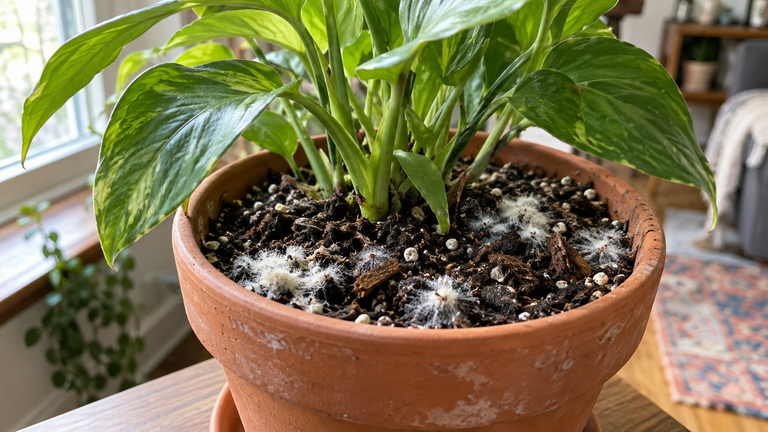
- The surface has algae or fungal growth
- Gnats return after repeated treatment
- The plant is in heavy outdoor garden soil
- The pot is too large for the root system
Do Home Remedies Work?
Some home remedies may reduce fungus gnats, but the most reliable methods are watering control, yellow sticky traps, Bti, beneficial nematodes, and better drainage. Be careful with harsh DIY soil drenches because they can damage sensitive roots.
Common home remedy notes:
- Cinnamon: Often suggested, but not reliable as a full fungus gnat cure.
- Sand top dressing: Can make egg-laying harder, but may trap moisture if applied too thickly.
- Hydrogen peroxide: Sometimes used, but can irritate roots if mixed or applied incorrectly.
- Apple cider vinegar traps: Usually better for fruit flies than fungus gnats.
- Bottom watering: Can help keep the soil surface drier, but must be done carefully.
- Neem products: May help in some routines, but should not replace moisture control.
Plant Safety Note
Avoid strong DIY soil drenches on seedlings, calatheas, ferns, peace lilies, fresh cuttings, and plants with weak roots. For sensitive indoor plants, start with safer controls like sticky traps, careful watering, debris removal, improved drainage, Bti, or beneficial nematodes.
Why Treatment Is Not Working
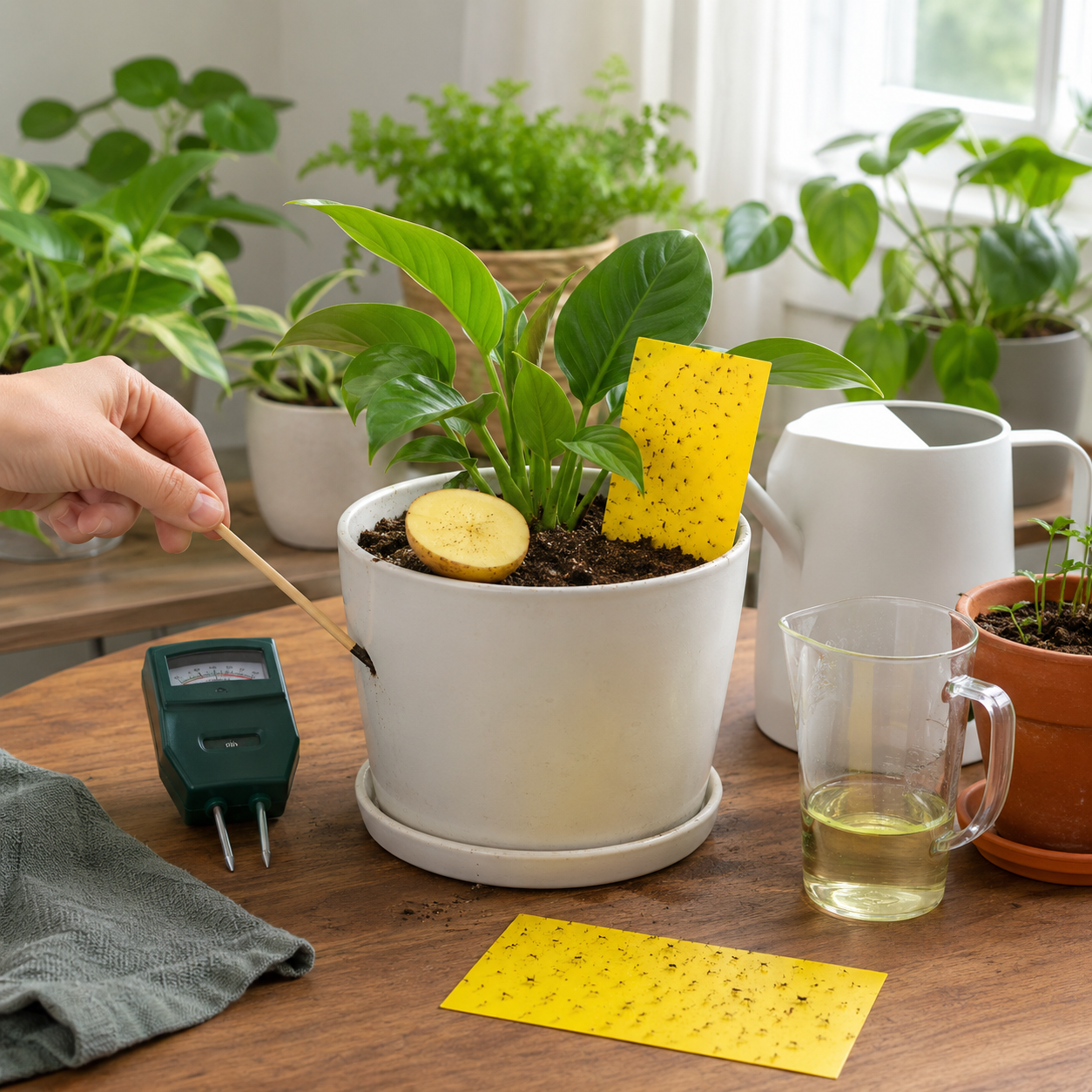
Fungus gnat treatment usually fails when it only catches adult flies but leaves larvae, wet soil, or nearby infested pots untreated. If gnats keep returning, inspect moisture, drainage, soil condition, and new plants.
| Problem | Likely Reason | Fix |
| Sticky traps fill quickly | Active larvae are still emerging | Add Bti or beneficial nematodes |
| Gnats return after watering | Soil surface stays too wet | Extend dry-down time |
| Gnats spread to other pots | Nearby damp pots are untreated | Inspect and monitor all plants |
| Plant smells sour | Soil is waterlogged | Repot into fresh mix |
| Gnats appear after buying plants | Nursery soil was infested | Quarantine new plants |
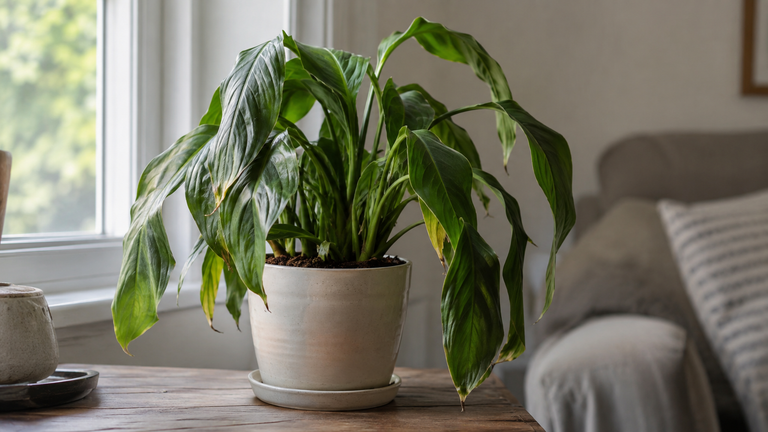
| Plant wilts in wet soil | Possible root rot | Inspect roots and repot if needed |
| Gnats return after repotting | New mix stays too wet | Improve drainage and watering |
| Traps catch adults for weeks | Larvae are not controlled | Treat soil directly |
Mistakes to Avoid
Avoid treating only adult gnats, watering too often, using pots without drainage, ignoring larvae, and applying harsh home remedies. The biggest mistake is not fixing the wet soil that caused the infestation.
Most fungus gnat failures happen because the treatment is incomplete. People catch adults on sticky traps and think the problem is solved, but larvae continue developing in the soil. A week later, new adults appear and the infestation feels endless. The issue is not that fungus gnats are impossible to remove. The issue is that the soil environment was never changed.
Another mistake is overcorrecting. Some plant owners stop watering completely and stress moisture-loving plants. The goal is not to dry every plant like a cactus. The goal is to reduce excess surface moisture while still meeting the plant’s needs. A fern, calathea, or peace lily needs a different moisture balance than a snake plant or ZZ plant. Good fungus gnat control is balanced, not extreme.
Avoid these common mistakes:
- Spraying only the flying gnats
- Watering on a fixed schedule
- Leaving dead leaves on the soil
- Keeping plants in decorative pots full of water
- Using heavy outdoor garden soil indoors
- Repotting into another dense mix
- Ignoring nearby plants
- Skipping larval treatment in severe cases
- Using strong DIY mixtures on delicate plants
- Assuming one treatment fixes every life stage
Be especially careful with seedlings, ferns, calatheas, peace lilies, and fresh cuttings. These plants may need more careful moisture management, so biological larval control can be better than extreme drying.
Real Example: Pothos With Fungus Gnats
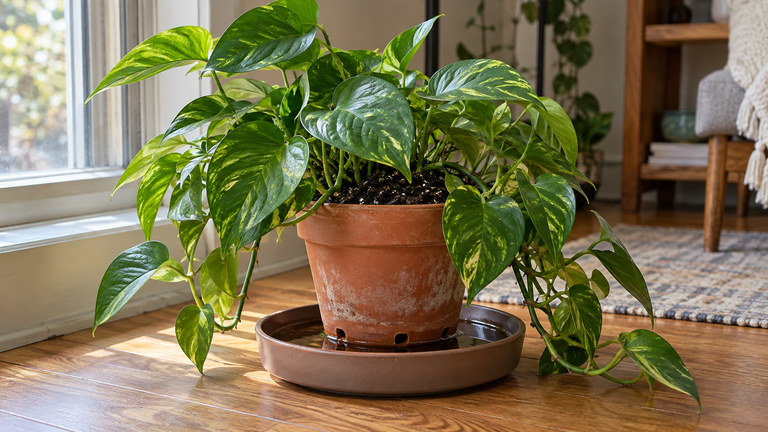
A pothos in a decorative pot kept attracting gnats because water collected inside the outer pot. The fix was simple: remove dead leaves, empty standing water, let the top soil dry, add sticky traps, and use Bti. Within a few weeks, the trap count dropped and the plant recovered.
FAQs
How do I get rid of fungus gnats in indoor plants fast?
Use yellow sticky traps for adult gnats and treat larvae in the soil with Bti or beneficial nematodes. Also let the top layer of soil dry and remove dead leaves.
What causes fungus gnats in indoor plants?
Fungus gnats usually appear because the soil stays too wet. Poor drainage, overwatering, and decaying leaves create the perfect breeding area.
Are fungus gnats a sign of overwatering?
Yes, they often mean the soil is staying damp for too long. Repeated moisture near the soil surface allows eggs and larvae to survive.
How do I kill fungus gnat larvae in soil?
Use Bti as a soil drench or apply beneficial nematodes. Letting the top soil dry also makes the pot less suitable for larvae.
Do yellow sticky traps get rid of fungus gnats?
Yellow sticky traps catch adult gnats, but they do not kill larvae in the soil. Use them with soil drying and larval treatment.
What is the best treatment for fungus gnats in houseplants?
The best treatment is a combined plan: sticky traps for adults, Bti or nematodes for larvae, and better watering habits to stop new eggs.
How long does it take to get rid of fungus gnats?
Most fungus gnat problems take 2–4 weeks to control. You may see fewer adults sooner if traps and larval treatment are working.
Should I repot my plant if it has fungus gnats?
Repot only if the soil is sour, compacted, old, waterlogged, or badly infested. Mild cases can usually be fixed without repotting.
Can fungus gnats spread to other indoor plants?
Yes, adult gnats can fly to nearby pots and lay eggs in damp soil. Check nearby plants and use sticky traps to monitor them.
Do fungus gnats damage indoor plants?
Light infestations are mostly annoying. Heavy larvae populations can stress seedlings, cuttings, weak plants, and overwatered roots.
Why do fungus gnats keep coming back?
They return when larvae remain in wet soil or nearby pots are untreated. Sticky traps alone cannot stop larvae already living in the potting mix.
How do I prevent fungus gnats from coming back?
Water only when needed, use drainage pots, remove dead leaves, and quarantine new plants. Keeping the top soil from staying wet is the main prevention step.

Myra is the founder and lead writer of Plantsaholic. She shares practical, research-backed advice on indoor plants, outdoor gardening, flowers, herbs, succulents, and everyday plant care. Her goal is to help gardeners of all experience levels grow healthier plants through simple, easy-to-follow gardening guides.