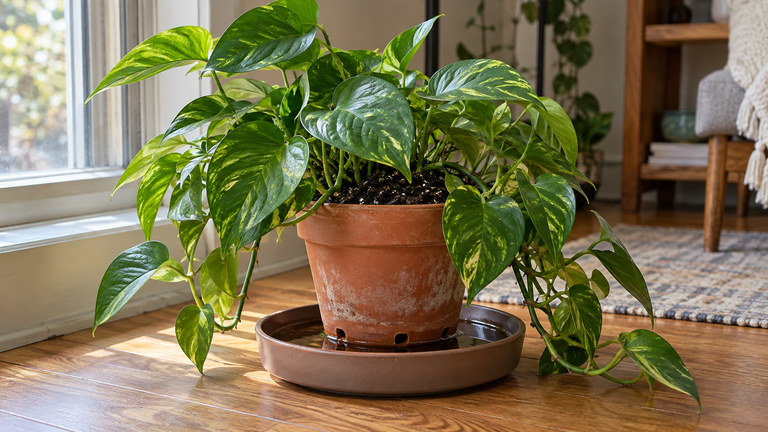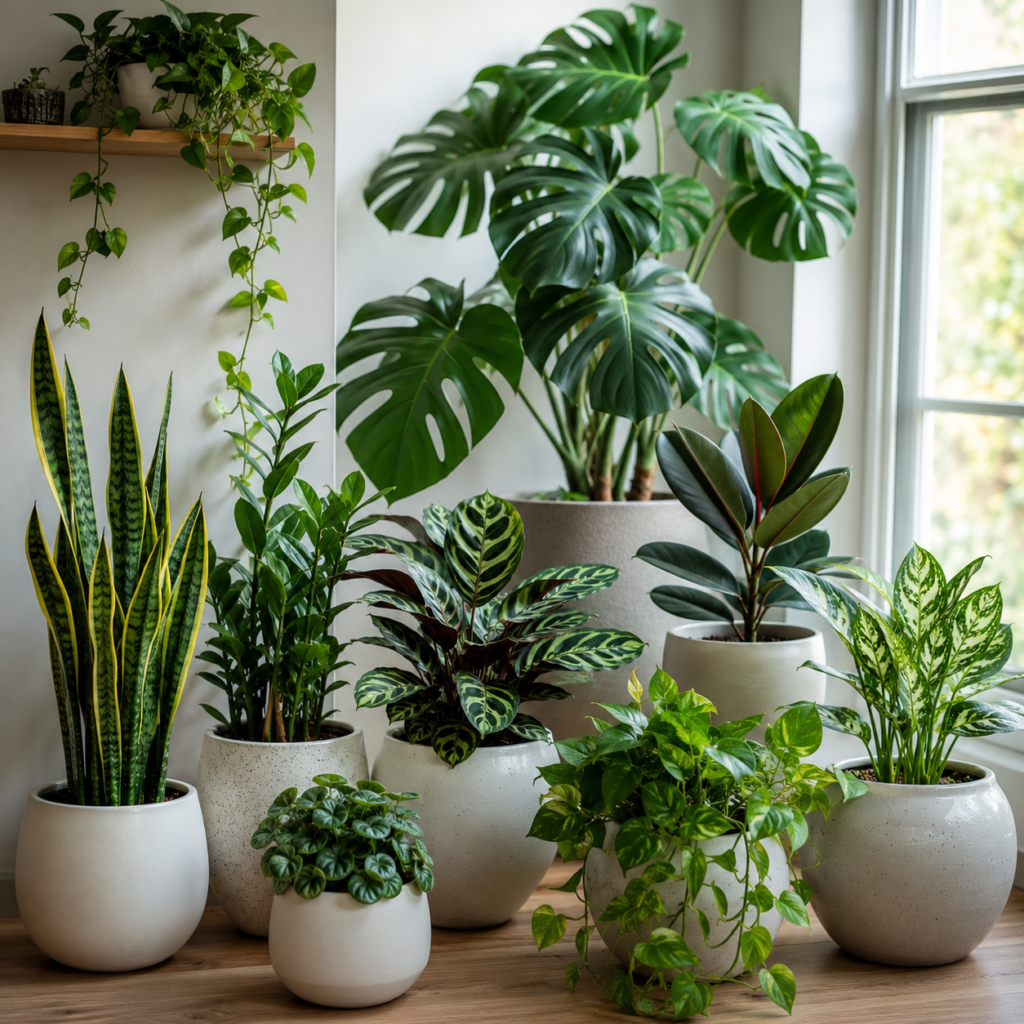
Foliage indoor plants are houseplants grown mainly for their leaves instead of flowers. The best choices include pothos, snake plant, ZZ plant, Chinese evergreen, monstera, calathea, philodendron, spider plant, peperomia, rubber plant, and dracaena because they add year-round greenery, texture, structure, and natural softness to indoor spaces.
Indoor foliage plants are one of the easiest ways to make a home feel calmer, fresher, and more styled. Unlike flowering plants, they do not depend on short bloom cycles to look beautiful. Their leaves provide color, shape, pattern, and visual interest every day.
This Plantsaholic guide explains how to choose foliage indoor plants by light, room, care level, size, pet safety, styling purpose, watering needs, and common problems so you can build a leafy plant collection that actually survives indoors.
The best foliage plant is not always the most popular one. It is the one that fits your room’s light, your watering habits, your available space, and your home environment. Use this table as a simple starting point before choosing a plant for your bedroom, office, living room, shelf, or bathroom.
| Need | Best Foliage Indoor Plants |
| Easiest for beginners | Snake plant, pothos, ZZ plant |
| Best for low light | ZZ plant, snake plant, cast iron plant |
| Best for desks | Peperomia, pilea, small pothos |
| Best for large rooms | Monstera, rubber plant, bird of paradise |
| Best colorful foliage | Chinese evergreen, calathea, croton |
| Best trailing plants | Pothos, heartleaf philodendron, scindapsus |
| Better for pet homes | Spider plant, parlor palm, peperomia |
| Best under grow lights | Pothos, philodendron, peperomia |
| Best modern look | Rubber plant, snake plant, ZZ plant |
| Best tropical look | Monstera, bird of paradise, calathea |
Quick Decision Rule
- Choose ZZ plant or snake plant if your room is darker.
- Choose pothos or philodendron if you want trailing vines.
- Choose peperomia or pilea for desks and shelves.
- Choose monstera or rubber plant for large visual impact.
- Choose spider plant or parlor palm if pet safety is a priority.
- Choose Chinese evergreen if you want easy color indoors.
What Are Foliage Indoor Plants?
Foliage indoor plants are houseplants grown mainly for their leaves, not their flowers. Their beauty comes from leaf shape, texture, color, size, growth habit, and pattern. This is why they are also called leafy indoor plants, foliage houseplants, decorative leaf plants, or indoor plants with attractive leaves.
These plants can look very different from each other. A snake plant has upright sword-like leaves, pothos has soft trailing vines, monstera has large split leaves, and calathea has patterned leaves that feel almost painted. Some foliage plants stay compact for desks, while others grow tall enough to fill an empty living room corner.
Best Uses for Foliage Indoor Plants
- Living rooms that need a natural focal point
- Bedrooms that need softer texture
- Office desks that need compact greenery
- Shelves that need trailing movement
- Bathrooms with light and humidity
- Small apartments that need vertical greenery
- Modern homes that need clean plant structure
Why Are Foliage Indoor Plants Popular?
Foliage indoor plants are popular because they offer year-round beauty without needing flowers. Their leaves stay attractive when the plant is healthy, which makes them more reliable for interior styling than plants that depend on short bloom periods. A leafy plant can improve a room even when it is not actively producing new growth.
They also fit modern homes very well. Many people want greenery, but they do not want a plant that needs daily care, exact humidity, or constant repotting. Easy foliage plants such as pothos, snake plant, ZZ plant, spider plant, and Chinese evergreen give beginners a strong chance of success while still adding real visual impact.
Foliage Plants vs Flowering Plants
Foliage plants are often better than flowering indoor plants for beginners because they give year-round beauty through their leaves. Flowering plants can be stunning, but many need brighter light, more precise care, and a proper bloom cycle to look their best. Foliage plants are more dependable because their leaves remain the main feature every day.
This does not mean flowering houseplants are bad. Orchids, peace lilies, anthuriums, and African violets can look beautiful indoors when conditions are right. But if your goal is easy styling, long-lasting greenery, and fewer seasonal changes, foliage plants are usually the safer first choice. A healthy pothos, snake plant, ZZ plant, rubber plant, or monstera can make a room look finished even without flowers.
Best Foliage Plants for Beginners
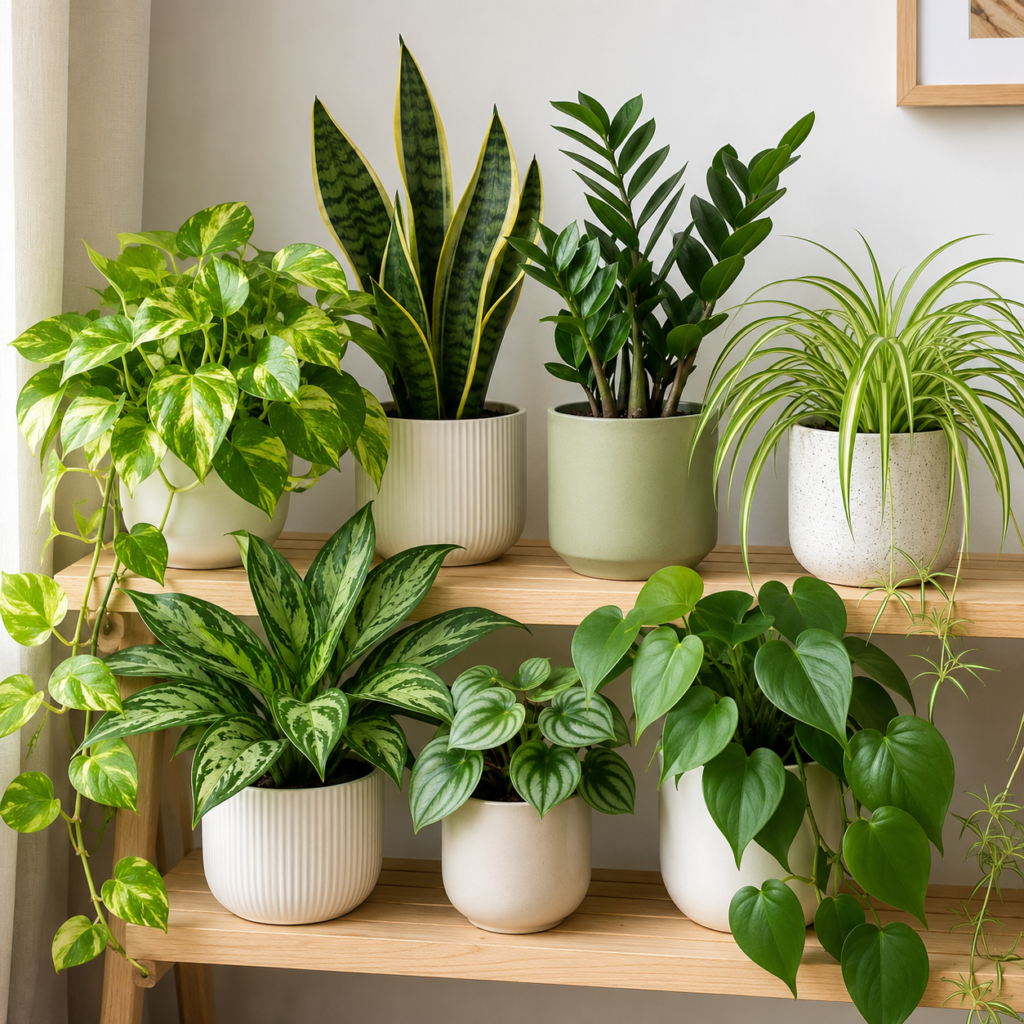
The best beginner foliage indoor plants are pothos, snake plant, ZZ plant, spider plant, Chinese evergreen, heartleaf philodendron, peperomia, and cast iron plant. These plants are easier because they tolerate normal indoor conditions better than delicate, rare, or humidity-sensitive plants.
A beginner-friendly foliage plant should survive small mistakes. It should not collapse if you miss one watering, place it slightly away from a window, or forget to fertilize for a while. Snake plant and ZZ plant are excellent for people who forget to water. Pothos and heartleaf philodendron are great for people who want trailing vines. Peperomia is ideal for desks and small spaces.
Chinese evergreen is one of the best choices if you want color without advanced care. Many varieties have green, silver, cream, pink, or red-toned leaves. Spider plant is also beginner-friendly because it grows quickly and produces baby plantlets, which makes it rewarding for new plant owners.
Best Beginner Choices
- Pothos for easy trailing vines
- Snake plant for upright structure
- ZZ plant for low-care glossy leaves
- Spider plant for fast growth
- Chinese evergreen for colorful foliage
- Heartleaf philodendron for soft vines
- Peperomia for desks and shelves
- Cast iron plant for shaded rooms
Start with one upright plant, one trailing plant, and one compact plant.
Best Low-Light Foliage Plants
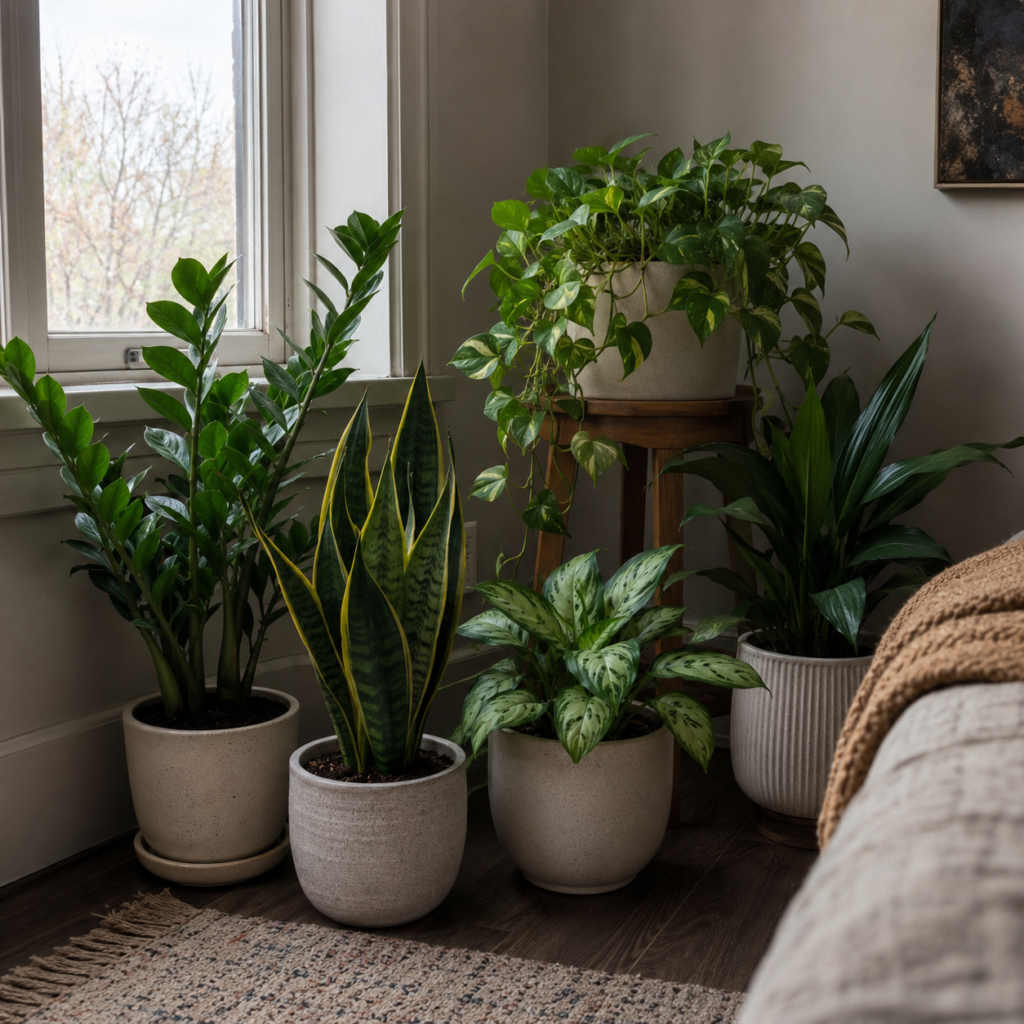
The best foliage indoor plants for low light are ZZ plant, snake plant, cast iron plant, pothos, Chinese evergreen, heartleaf philodendron, and some dracaena varieties. These plants tolerate lower indoor light better than many decorative houseplants, but low light does not mean no light.
A plant in low light grows more slowly because it receives less energy. It may use less water, produce smaller leaves, and show slower new growth. This is normal. The problem starts when people treat low-light plants like no-light plants. A dark room with no window usually needs a grow light if you want the plant to remain healthy long-term.
ZZ plant and snake plant are the safest choices for dim corners because they store moisture and do not need frequent watering. Cast iron plant is another strong option for shaded spaces, though it grows slowly. Pothos and heartleaf philodendron can handle lower light, but their vines may stretch if the room is too dark.
Good Low-Light Placements
- North-facing windows
- Bright rooms away from direct sun
- Offices with overhead lighting
- Bedrooms with filtered daylight
- Hallways near a window
- Shelves close to a grow light
- Corners that still receive daytime brightness
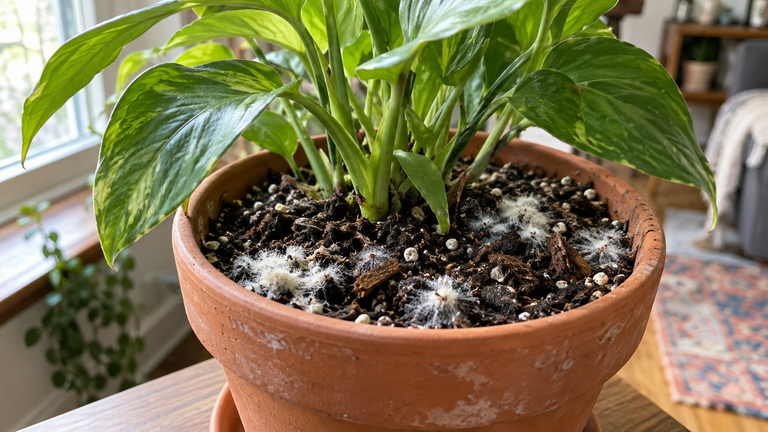
The most common low-light mistake is overwatering. In dim spaces, soil dries slowly. If you water on a strict weekly schedule, roots may stay wet too long. This can lead to yellow leaves, fungus gnats, soft stems, and root rot.
Low-light warning: Low-light tolerant does not mean happy in darkness. ZZ plant, snake plant, cast iron plant, pothos, and Chinese evergreen still need usable natural or artificial light to stay healthy long-term.
Low-Light Warning
- New leaves are smaller than older leaves
- Stems stretch toward the window
- Variegation fades
- Soil stays wet too long
Best Bright-Light Foliage Plants
Foliage plants that need bright indirect light include monstera, rubber plant, calathea, prayer plant, bird of paradise, fiddle leaf fig, alocasia, variegated pothos, and many philodendron varieties. These plants usually grow fuller, stronger, and more colorful when the light is bright but filtered.
Bright indirect light means the room is bright during the day, but harsh sun is not directly burning the leaves. This can come from an east-facing window, a sheer-curtained south-facing window, or a bright room where the plant sits a few feet away from the glass. It is one of the best light conditions for tropical foliage plants.
Monstera develops larger leaves and better splits when it receives enough light. Rubber plant grows stronger upright stems and glossy leaves. Bird of paradise needs strong filtered light to keep its tall structure. Variegated plants also need brighter light because their pale leaf sections contain less chlorophyll than green leaf sections.
The key mistake is confusing bright indirect light with direct sun. Direct afternoon sun through glass can scorch thin, patterned, or tropical leaves. Brown patches, faded color, crispy edges, and curled leaves may mean the plant is getting too much harsh light.
Best Large Foliage Plants
Large foliage plants that make a room look full include monstera, rubber plant, bird of paradise, fiddle leaf fig, dracaena, schefflera, large philodendron, areca palm, and mature snake plant. These plants add height, width, texture, and visual weight to indoor spaces.
A large foliage plant works best where a room feels empty or flat. Use it in an unused corner, beside a sofa, near a wide window, next to a cabinet, or against a plain wall. Instead of adding another chair, table, or decoration, one large leafy plant can make the room feel complete without cluttering the space.
Monstera is ideal for a tropical look because its split leaves create strong visual impact. Rubber plant suits modern rooms because the glossy leaves feel clean and structured. Bird of paradise works well in tall, bright rooms. Dracaena is good when you need height without too much width. Areca palm adds a soft, airy feel.
Best Small Foliage Plants
Small foliage plants for desks and shelves include peperomia, pilea, small pothos, spider plant, fittonia, baby rubber plant, compact philodendron, small snake plant, and mini ferns. These plants add greenery without taking over limited space.
A good desk plant should stay compact, tolerate indoor light, and avoid creating mess. Peperomia is one of the best choices because it comes in many leaf textures and shapes while staying manageable. Baby rubber plant has thick glossy leaves and a neat form. Small snake plant varieties are great for minimal desks because they grow upright instead of spreading wide.
Shelves work best with trailing or compact plants. Pothos and heartleaf philodendron soften hard shelf lines and make a bookcase feel more natural. Spider plant adds movement with arching leaves. Pilea works well on bright shelves where its round leaves can be seen clearly.
Best small foliage plants by placement:
- Work desk: peperomia
- Bookshelf: pothos
- Bedside table: small snake plant
- Bathroom shelf with light: spider plant
Best Colorful Foliage Plants
Colorful foliage indoor plants include calathea, Chinese evergreen, croton, rex begonia, fittonia, polka dot plant, prayer plant, stromanthe, variegated pothos, and variegated rubber plant. These plants add color, contrast, and pattern without depending on blooms.
Colorful foliage is useful when a room feels plain but you do not want bright furniture or wall art. Silver leaves can brighten dark shelves. Pink leaves soften modern interiors. Burgundy leaf undersides add depth. Cream variegation works well in neutral rooms. Deep green leaves with white or yellow markings create a fresh, clean effect.
Chinese evergreen is one of the easiest colorful choices because many varieties handle normal indoor conditions well. Calathea and stromanthe offer stronger patterns, but they need more humidity and steady moisture. Rex begonia has stunning texture, but it dislikes soggy soil and wet leaves. Croton can be very colorful, but it usually needs stronger light than beginners expect.
Best Colorful Foliage Options
- Chinese evergreen for easy color
- Calathea for patterned leaves
- Prayer plant for moving foliage
- Fittonia for veined leaves
How to Choose Plants by Room
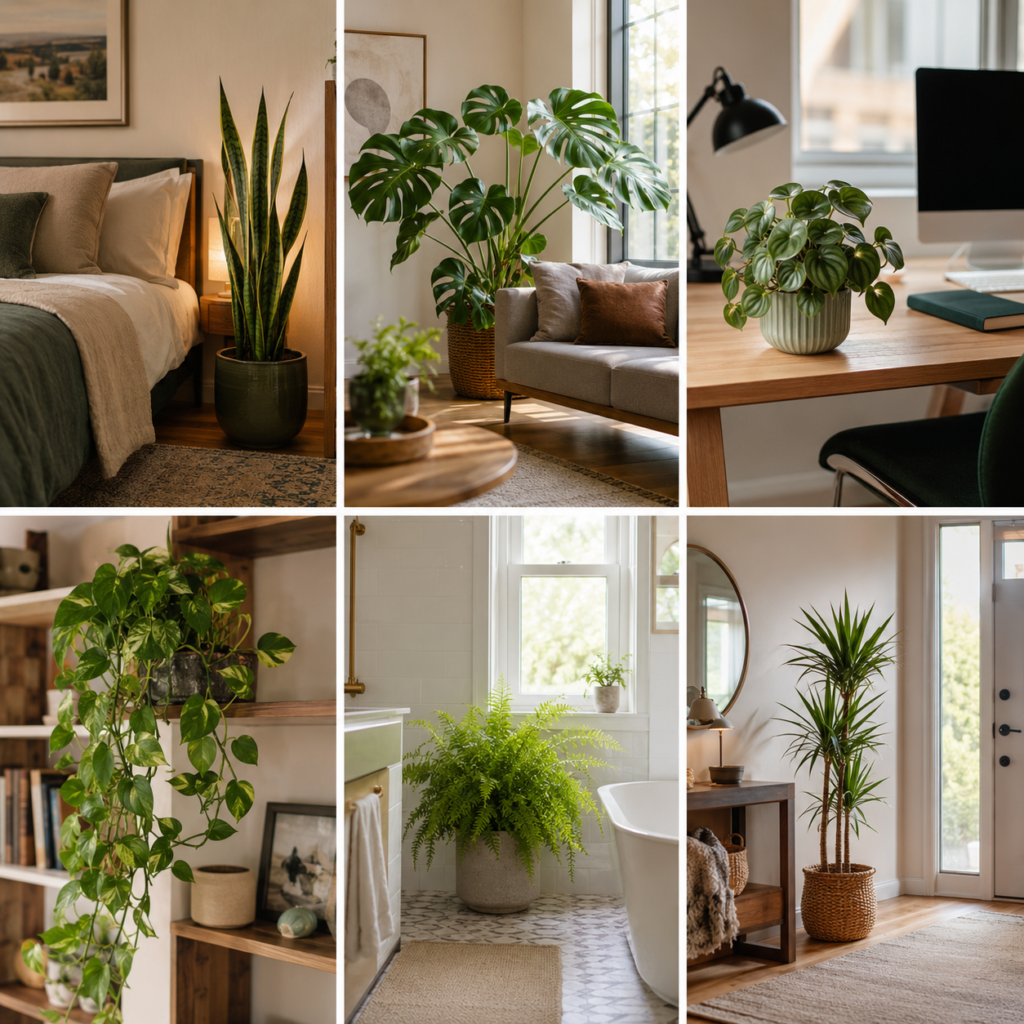
Choose foliage indoor plants by matching the plant to the room’s light, humidity, size, temperature, traffic, and daily use. The best plant is not always the most beautiful plant in the store. It is the plant that can live well in the exact room where you place it.
Start with light because light controls growth. A low-light bedroom needs ZZ plant, snake plant, cast iron plant, or pothos. A bright living room can support monstera, rubber plant, bird of paradise, or fiddle leaf fig. A bathroom can support ferns, calathea, spider plant, or peace lily only if there is enough light. Humidity helps, but it cannot replace light.
Next, choose by plant shape. Upright plants are best for narrow spaces. Trailing plants work well on shelves and hanging baskets. Broad-leaf plants suit larger rooms. Compact plants suit desks, nightstands, and windowsills. This makes the plant feel like part of the room instead of a random object.
Room-by-Room Plant Guide
- Bedroom: snake plant, ZZ plant, pothos
- Living room: monstera, rubber plant, bird of paradise
- Office desk: peperomia, small pothos, ZZ plant
- Bathroom with light: fern, spider plant, calathea
- Entryway: dracaena, cast iron plant, schefflera
- Shelf styling: pothos, philodendron, peperomia
- Pet home: spider plant, parlor palm, peperomia
- Small apartment: snake plant, pothos, pilea
How Much Light Do They Need?
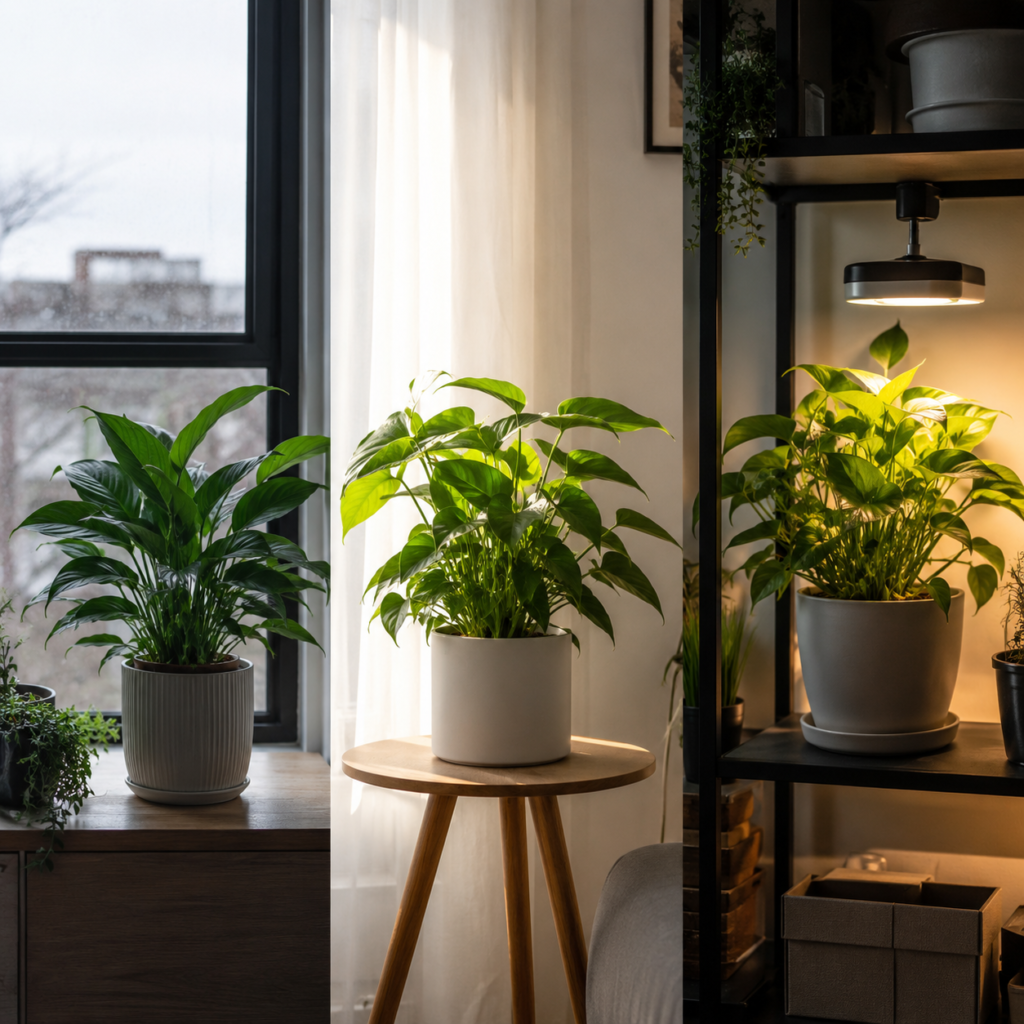
Most foliage indoor plants need medium to bright indirect light to grow well. Some tolerate low light, but very few thrive in truly dark rooms without artificial lighting. Light is the plant’s energy source, so it directly affects leaf size, growth speed, color, watering needs, and long-term health.
In bright indirect light, foliage plants usually grow fuller and hold better color. In low light, growth slows, water use drops, and soil stays wet longer. This is why the same plant may need water every week in a bright room but only every two or three weeks in a darker spot.
You can use a simple shadow test. During the day, place your hand above the plant. A soft shadow usually means medium or bright indirect light. Almost no shadow means low light. A sharp, hot shadow usually means direct sun, which may burn many foliage plants.
Light matching guide:
- Low light: ZZ plant, snake plant, cast iron plant
- Medium light: pothos, philodendron, Chinese evergreen
- Bright indirect light: monstera, rubber plant, calathea
- Very bright filtered light: bird of paradise, fiddle leaf fig
- Artificial light: peperomia, pothos, small philodendron
Artificial light can help in windowless offices, dark apartments, and winter conditions. However, weak decorative lamps are usually not enough. A proper grow light placed close enough to the plant gives better results.
How Often to Water Foliage Plants
Water foliage indoor plants when the soil has dried to the level that plant prefers. Most foliage plants should not be watered on a strict calendar because light, pot size, soil type, humidity, season, and plant size all change how fast soil dries.
Snake plant and ZZ plant prefer the soil to dry well between waterings. Pothos and philodendron usually like the top inch or two of soil to dry before watering again. Calathea, fern, and fittonia prefer more consistent moisture, but they still do not want soggy soil. This is why one watering rule cannot fit every foliage plant.
The best method is to check the soil before watering. Push your finger into the top layer. If the soil is still wet, wait. If it has dried to the right depth, water thoroughly until extra water drains out. Then empty the saucer or cachepot.
Watering decision guide:
- Thick leaves: water less often
- Thin leaves: check moisture more often
- Bright room: soil dries faster
- Low-light room: soil dries slower
- Small pot: dries faster
- Large pot: holds water longer
- Winter: reduce watering
- Active growth: check more often
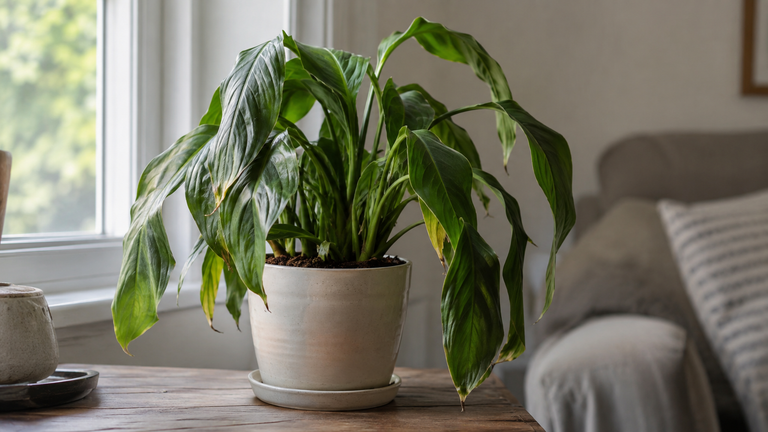
Overwatering is one of the biggest indoor plant problems. Yellow leaves, mushy stems, fungus gnats, sour-smelling soil, and black roots are warning signs. Underwatering can also cause crispy leaves, drooping, and dry soil pulling from the pot.
Best Soil and Pots for Foliage Plants
Foliage indoor plants grow best in a well-draining potting mix and a pot with drainage holes. Good indoor soil should hold enough moisture for the roots but still allow air movement. Roots need oxygen, and heavy wet soil can suffocate them.
Many foliage plants struggle indoors because the soil is too dense. Dense soil stays wet too long, especially in low light. Adding perlite, pumice, orchid bark, coco chips, or coarse material improves airflow. This is especially useful for pothos, philodendron, monstera, rubber plant, peperomia, and many tropical foliage plants.
A simple foliage plant soil mix can include indoor potting mix, perlite or pumice, and orchid bark. This creates a balance of moisture and drainage. Plants that like more moisture, such as ferns and calatheas, may need a mix that holds more water but still drains well.
pot and soil rules:
- Use pots with drainage holes
- Avoid heavy garden soil indoors
- Add perlite or pumice for airflow
- Use orchid bark for chunky tropical mixes
- Avoid oversized pots for small plants
- Repot only one size larger
- Keep nursery pots inside decorative cachepots
- Empty excess water after watering
The pot size matters. A small plant in a huge pot is more likely to sit in wet soil because the roots cannot use all the moisture. This creates root rot risk even if you water carefully.
Are Foliage Plants Safe for Pets?
Some foliage indoor plants are safe for cats and dogs, while others can cause irritation, drooling, vomiting, or more serious symptoms if chewed. Pet safety must be checked plant by plant because common names can be confusing and different plants may share similar names.
Pet-safer foliage choices often include spider plant, parlor palm, areca palm, calathea, prayer plant, Boston fern, peperomia, and pilea. These are better choices for homes where cats chew leaves or dogs bump into floor plants. Still, even non-toxic plants can cause mild stomach upset if pets eat large amounts.
Common foliage plants that may be toxic or irritating include pothos, philodendron, monstera, dieffenbachia, snake plant, ZZ plant, peace lily, alocasia, and many dracaena varieties. These plants are popular and beautiful, but they should be placed out of reach in pet homes.
If you have pets, use hanging planters, high shelves, closed plant cabinets, or rooms pets cannot access. Do not rely only on plant labels at stores. Always verify the exact plant before buying.
Pet safety note: Always verify the exact plant name before buying. Common names can overlap, and toxic or irritating plants should stay fully out of reach of pets.
How to Style Foliage Plants
Style foliage indoor plants by mixing height, leaf shape, pot texture, and placement. A room looks more intentional when each plant has a visual role instead of being placed randomly. The goal is not to fill every empty space. The goal is to create balance.
Start with one anchor plant. This is usually a large plant such as monstera, rubber plant, bird of paradise, dracaena, or mature snake plant. Place it in a corner, beside a sofa, near a cabinet, or close to a bright window. Then add medium plants for balance and compact or trailing plants for softness.
A good plant group uses contrast. Pair upright leaves with trailing vines. Pair large leaves with small leaves. Pair glossy leaves with textured leaves. This makes the plant collection look layered instead of crowded.
Easy Styling Formulas
- Empty corner: tall plant with simple pot
- Bookshelf: trailing pothos and compact peperomia
- Office: ZZ plant or peperomia near monitor
- Living room: monstera with smaller support plants
Why Do Foliage Leaves Turn Yellow?
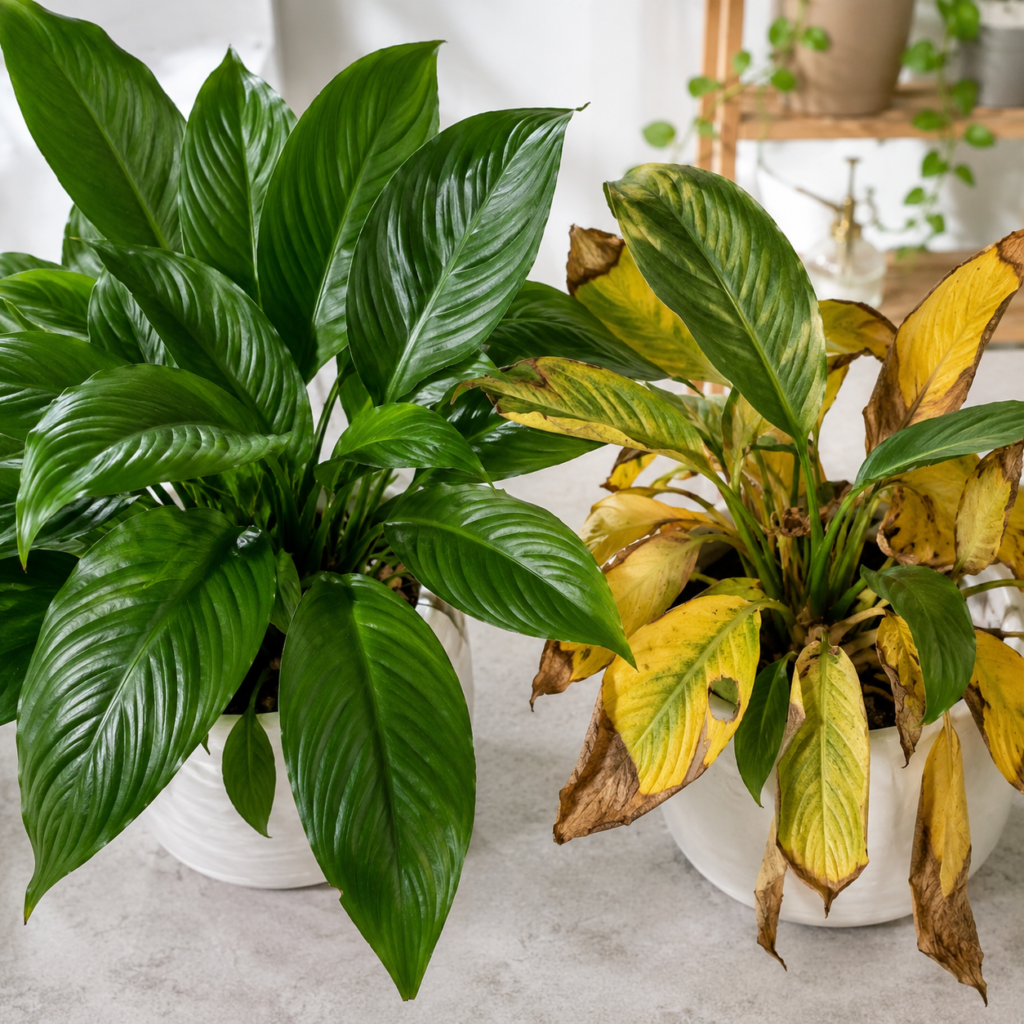
Foliage indoor plant leaves usually turn yellow because of overwatering, low light, poor drainage, root stress, nutrient imbalance, temperature shock, or natural aging. Yellow leaves are a clue, not a complete diagnosis, so the full plant condition must be checked.
Overwatering is the most common cause. When soil stays wet too long, roots cannot breathe properly. The plant may respond with yellow leaves, soft stems, wilting, or leaf drop. This happens more often in low-light rooms, oversized pots, and containers without drainage. Low light can also cause yellowing because the plant cannot make enough energy to support all its leaves.
Some yellowing is normal. Older lower leaves eventually die as the plant grows new ones. If one old leaf turns yellow while the rest of the plant looks healthy, it may not be a problem. But if several leaves yellow quickly, check the roots, soil, and light.
Yellow leaf checklist:
- Is the soil wet for many days?
- Does the pot have drainage?
- Is the plant in low light?
- Are roots crowded or rotting?
- Did the plant recently move?
- Are only old lower leaves yellowing?
- Are pests visible under leaves?
- Is the room too cold or drafty?
Do not fertilize immediately when leaves turn yellow. Fertilizer will not fix root rot, weak light, or soggy soil. First check moisture, drainage, and placement.
Why Do Foliage Leaves Get Brown Tips?
Brown tips on foliage plants usually come from dry air, inconsistent watering, salt buildup, direct sun, low humidity, or root stress. Leaf tips often dry first because they are the most sensitive part of the leaf and receive water last.
Plants such as calathea, prayer plant, fern, and peace lily show brown tips more easily in dry indoor air. Thick-leaved plants such as ZZ plant, snake plant, peperomia, and rubber plant usually tolerate dry air better. This is why matching the plant to your room’s humidity matters.
Inconsistent watering is another common reason. If soil becomes bone dry and then stays wet too long after watering, roots become stressed. Brown tips can appear even if you water often because the watering pattern is unstable. Mineral buildup from fertilizer or hard water can also create brown leaf edges over time.
Common brown tip causes:
- Dry indoor air
- Inconsistent watering
- Salt or mineral buildup
- Too much direct sun
- Root stress
- Low humidity
- Cold drafts
- Overfertilizing
The first fix is not always misting. Misting gives only temporary humidity and can leave some leaves wet, which may cause spotting on sensitive plants. A humidifier, pebble tray, plant grouping, or choosing tougher plants is often more practical.
When trimming brown tips, use clean scissors and follow the leaf’s natural shape. Do not cut deeply into healthy green tissue. Leave a tiny brown edge so the cut does not create a fresh dry line.
What Pests Attack Foliage Plants?
Common pests on foliage indoor plants include spider mites, mealybugs, scale, aphids, thrips, whiteflies, and fungus gnats. These pests can spread quickly indoors because there are fewer natural predators inside the home.
Spider mites often create fine webbing and tiny pale speckles on leaves. Mealybugs look like small white cottony clusters near leaf joints. Scale appears as small brown or tan bumps attached to stems or leaves. Aphids gather on soft new growth. Fungus gnats fly around soil and are often linked to constantly wet potting mix.
Pest problems often begin when a stressed plant becomes weaker. Poor light, overwatering, dry air, dusty leaves, and crowded plant placement can all make pests harder to control. New plants can also bring pests into your home if they are not inspected before being placed near your existing collection.
Pest prevention checklist:
- Inspect new plants before buying
- Quarantine new plants when possible
- Check leaf undersides weekly
- Avoid constantly wet soil
- Remove dead leaves from pots
- Wipe dusty foliage
- Improve airflow around crowded plants
- Use sticky traps for flying pests
- Isolate infested plants quickly
If you find pests, move the plant away from others first. Then identify the pest before treating. Rinse leaves if the plant can handle it, remove visible pests, and use a houseplant-safe treatment based on the pest type.
Can Foliage Plants Use Artificial Light?
Yes, many foliage indoor plants can grow under artificial light if the light is strong enough, close enough, and used consistently. Artificial light is useful for offices, dark apartments, winter months, shelves, and rooms where natural light is limited.
Not every lamp helps plants. A decorative lamp across the room usually does not provide enough usable light. Plants need proper intensity and duration. A real grow light placed close enough to the plant is much more effective than a weak lamp far away. Consistency also matters, so using a timer can help.
Good foliage plants for artificial light include pothos, philodendron, peperomia, ZZ plant, snake plant, spider plant, Chinese evergreen, and small ferns. High-light plants such as bird of paradise, fiddle leaf fig, and some variegated plants may need stronger grow lights to perform well.
Artificial light tips:
- Place plants close enough to the light
- Use a timer for consistency
- Start with 10–12 hours per day
- Watch for stretching or pale growth
- Keep leaves away from hot bulbs
- Rotate plants for even growth
- Reduce watering if growth slows
- Choose compact plants for shelves
How to Test Plant Placement
You can test the best spot for a foliage plant in 7 days by watching how the leaves, soil, and growth direction respond to the room. This is better than guessing because indoor light can be confusing. A corner may look bright to your eyes but still be weak for plant growth.
Start by placing the plant in bright indirect light, then observe it for one week before moving it again. Most foliage plants do not need daily changes. In fact, moving a plant too often can create stress. The goal is to watch small signals: leaf angle, soil drying speed, leaning, curling, fading, and overall firmness.
7-day foliage plant placement test:
- Day 1: Place the plant in bright indirect light.
- Day 2: Check if leaves are facing the light naturally.
- Day 3: Touch the soil and note how quickly it dries.
- Day 4: Look for curling, fading, or leaning.
- Day 5: Rotate the pot slightly for balanced growth.
- Day 6: Check if the soil is still wet or drying normally.
- Day 7: Decide whether to keep, move closer, or move farther from light.
Foliage Plants Beginners Should Avoid
Beginners may want to avoid calathea, alocasia, fiddle leaf fig, maidenhair fern, rare variegated plants, and some delicate begonias as first plants. These plants can be beautiful, but they often need more consistent light, humidity, and watering than beginners can easily provide.
Calathea and prayer plants can struggle with dry air, inconsistent watering, and mineral-heavy water. Alocasia reacts quickly to changes in light and moisture. Fiddle leaf fig can drop leaves after being moved or placed in weak light, while maidenhair fern needs steady moisture and humidity.
Rare variegated plants are also risky for beginners because they are often expensive, slower growing, and more sensitive to weak light. Since variegated leaves contain less green tissue, they usually need brighter conditions to stay strong.
Beginner Caution List
- Calathea: sensitive to dry air
- Alocasia: needs careful moisture balance
- Fiddle leaf fig: reacts to movement and stress
- Maidenhair fern: needs steady moisture
- Rex begonia: sensitive to wet leaves and soggy soil
- Rare variegated plants: expensive and light-sensitive
- Croton: needs bright light and stable care
This does not mean you should never buy these plants. It means you should learn your home’s light, humidity, and watering rhythm with easier foliage plants first.
Final Takeaway
Foliage indoor plants are one of the best choices for adding long-lasting greenery, texture, and natural style to indoor spaces. The best options depend on your room’s light, watering habits, available space, and pet safety needs.
For beginners, start with pothos, snake plant, ZZ plant, Chinese evergreen, spider plant, peperomia, or heartleaf philodendron. Choose the plant that fits your room first, then build your collection slowly.
FAQs About Foliage Indoor Plants
What are foliage indoor plants?
Foliage indoor plants are houseplants grown mainly for their leaves instead of flowers. Their beauty comes from leaf shape, color, texture, size, pattern, and growth habit.
What are the best foliage indoor plants for beginners?
The best beginner foliage indoor plants are pothos, snake plant, ZZ plant, spider plant, Chinese evergreen, peperomia, and heartleaf philodendron. They tolerate normal indoor conditions better than many delicate plants.
Which foliage indoor plants grow best in low light?
ZZ plant, snake plant, cast iron plant, pothos, Chinese evergreen, and heartleaf philodendron are good low-light foliage plants. They tolerate dim rooms but still need some natural or artificial light.
Can foliage plants survive in a room with no window?
Most foliage plants cannot stay healthy long-term in a windowless room without artificial light. Use a grow light with tough plants like ZZ plant, snake plant, pothos, or Chinese evergreen.
Do foliage indoor plants need direct sunlight?
Most foliage indoor plants do not need direct sunlight. Bright indirect light is usually safer because harsh sun can burn thin, tropical, patterned, or variegated leaves.
How often should you water foliage indoor plants?
Water foliage indoor plants when the soil dries to the level that plant prefers. Snake plant and ZZ plant need more drying time, while pothos and philodendron prefer the top soil to dry first.
Why are my foliage plant leaves turning yellow?
Yellow leaves usually come from overwatering, low light, poor drainage, root stress, pests, or natural aging. Check soil moisture, drainage, and light before fertilizing.
Why do foliage plant leaves get brown tips indoors?
Brown tips often come from dry air, inconsistent watering, salt buildup, direct sun, or root stress. Humidity-loving plants like calathea, ferns, and prayer plants show brown tips more easily.
What soil is best for foliage indoor plants?
Most foliage indoor plants grow best in a well-draining indoor potting mix. A good mix holds light moisture but still allows airflow around the roots.
Which foliage plants are safe for cats and dogs?
Common pet-aware choices include spider plant, parlor palm, areca palm, calathea, prayer plant, Boston fern, peperomia, and pilea. Always verify the exact plant before buying.
Which foliage indoor plants are best for desks?
Peperomia, pilea, small pothos, baby rubber plant, small snake plant, and compact philodendron are good desk plants. They stay manageable and add greenery without taking over the workspace.
Which foliage plants are best for bathrooms?
Spider plant, Boston fern, bird’s nest fern, calathea, pothos, and peace lily can work in bathrooms with enough light. Humidity helps, but it cannot replace natural or artificial light.
Can foliage indoor plants grow under artificial light?
Yes, many foliage plants can grow under artificial light if it is strong enough and used consistently. Pothos, philodendron, peperomia, ZZ plant, snake plant, and Chinese evergreen are good options.
Do foliage plants clean indoor air?
Foliage plants can make a room feel fresher, calmer, and more relaxing. However, they should not replace ventilation, cleaning, or air filtration.
Myra is the founder and lead writer of Plantsaholic. She shares practical, research-backed advice on indoor plants, outdoor gardening, flowers, herbs, succulents, and everyday plant care. Her goal is to help gardeners of all experience levels grow healthier plants through simple, easy-to-follow gardening guides.