The clearest signs of root rot in plants are wilting while the soil remains wet, yellow or dropping leaves, stalled growth, sour-smelling potting mix, a soft stem base, and roots that feel mushy, hollow, slimy, or fragile. Leaf symptoms alone cannot confirm root rot. The most reliable diagnosis comes from checking root texture, structural strength, feeder-root density, odor, and crown condition.
Root rot can make a plant look thirsty even when moisture surrounds its roots. When a plant droops in damp soil, inspect the soil, drainage, crown, and roots before adding more water.
| Diagnostic level | Evidence | Meaning |
|---|---|---|
| Possible | Yellow leaves, leaf drop, slow growth | General stress |
| Probable | Wilting in wet soil, sour odor, soft stem | Strong root-zone warning |
| Confirmed | Soft, hollow, slimy, or breaking roots | Direct deterioration |
Main Signs of Root Rot in Plants
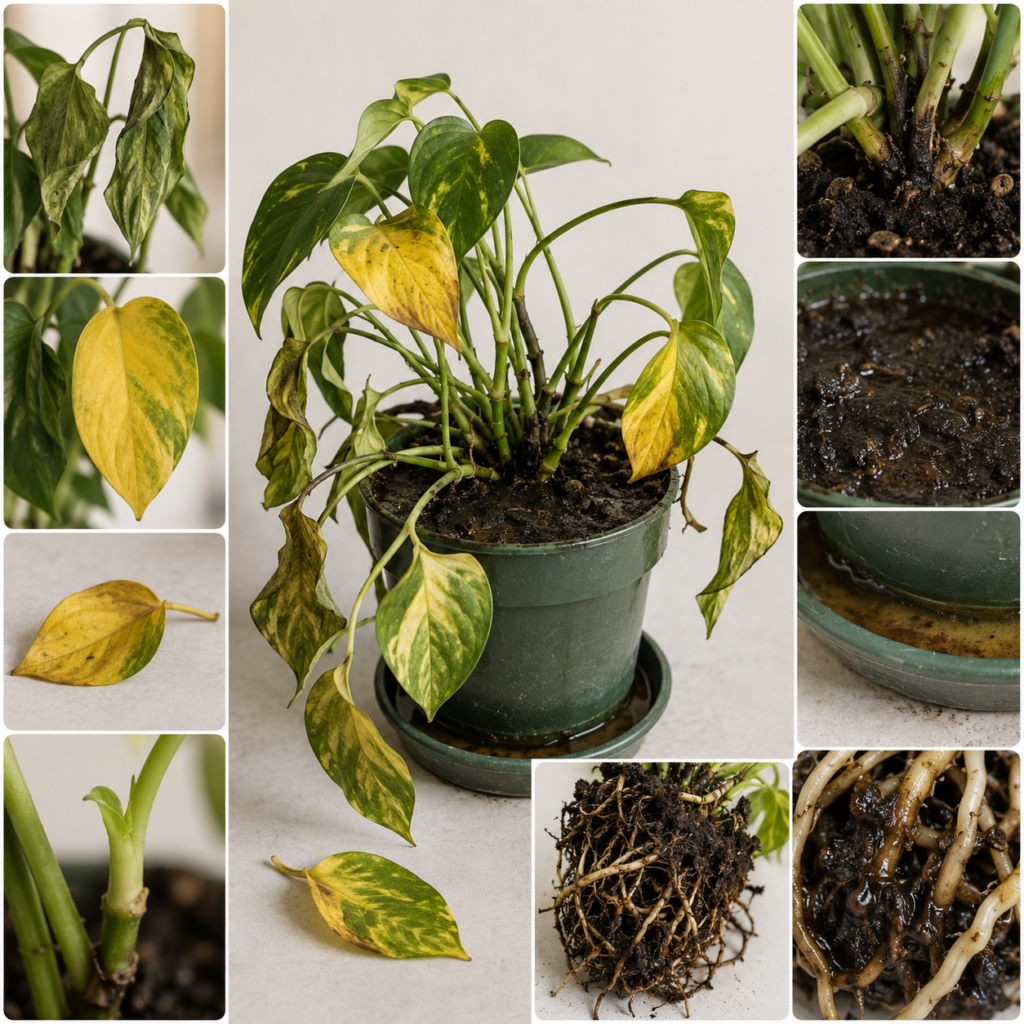
Root rot usually produces both above-ground decline and below-ground damage. The foliage may wilt, yellow, drop, or stop growing, while the roots become sparse, soft, dark, or structurally weak. One symptom is rarely enough; several signs appearing together provide much stronger evidence.
1. Wilting in Wet Soil
Wilting while the potting mix remains damp is one of the strongest warning signs. Damaged roots cannot move water normally, so the plant droops even when moisture is available.
Check several centimetres below the surface and lift the container. A wet pot usually feels heavier than a dry one. Do not water again when the deeper mix remains wet, leaves stay limp, and the crown or roots feel soft.
2. Several Leaves Turn Yellow
Root damage can reduce water and nutrient uptake, causing older or inner leaves to fade first. One yellow lower leaf may be normal; repeated yellowing combined with slow growth and wet soil is more concerning.
Do not diagnose root rot from foliage alone. Yellow leaves are a reason to investigate, not proof.
3. Leaves Drop Unexpectedly
A weakened root system may no longer support the plant’s full canopy. However, leaf loss can also follow relocation, cold drafts, repotting, pests, or seasonal light changes.
Root rot is more likely when leaf drop appears with wet soil, sour odor, slowed growth, or damaged roots.
4. Growth Slows or Stops
A plant with declining roots may stop producing leaves, form smaller growth, or fail to extend vines and stems. The symptoms can resemble nutrient deficiency, so applying fertilizer without checking the roots may increase stress.
Other causes include low light, cool temperatures, dormancy, pests, compacted soil, and root-bound conditions.
5. The Crown or Stem Base Feels Soft
Healthy crown, rhizome, tuber, and lower-stem tissue should feel firm. Dark, translucent, water-soaked, or mushy tissue near the soil line suggests that decay has moved beyond fine roots.
Check the relevant structure: the crown on peace lilies and orchids, rhizomes on snake and ZZ plants, the stem base on succulents, and lower nodes on vines. A firm crown improves recovery chances; a mushy crown indicates advanced damage.
6. The Soil Stays Wet Too Long
Slow-drying soil is a risk signal, not confirmation. It can result from an oversized pot, compacted mix, blocked drainage, lower light, cooler temperatures, or reduced root activity.
Judge drying time against the plant’s normal pattern. A sudden increase deserves investigation before more water is added.
7. The Soil Smells Sour
Healthy potting mix usually smells neutral or earthy. A sour, swampy, fermented, or decaying odor may indicate prolonged saturation.
Smell near the drainage holes as well as the surface. Odor strengthens the diagnosis when combined with wet-soil wilting, soft roots, or crown damage.
8. Roots Become Dark or Translucent
Rotten roots may become brown, black, grey, or translucent, but color alone is unreliable. Healthy roots may naturally be tan or stained by soil and bark.
A dark root that remains firm may still be healthy. A pale root that collapses or sheds its outer layer may be damaged.
9. Roots Feel Mushy or Fragile
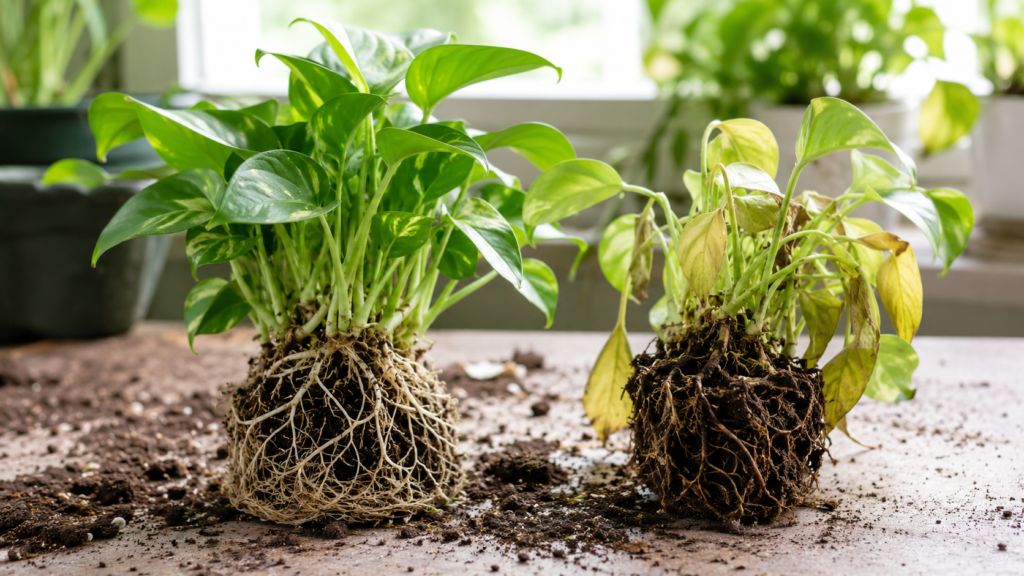
Texture is the most dependable home diagnostic clue. Healthy roots remain firm, attached, and structurally intact. Rotten roots may flatten, split, feel hollow, become slimy, or break with little pressure.
Strong confirmation includes:
- Outer tissue slipping away
- A thin central thread remaining
- Fine roots disappearing
- Roots breaking under light pressure
- Decaying odor
Several structurally damaged roots confirm root deterioration.
Root Rot Signs in Different Plants
The warning signs are similar across houseplants, garden plants, shrubs, and trees, but the safest confirmation method changes with plant size.
| Plant setting | Main warning | Best confirmation |
|---|---|---|
| Potted houseplant | Wilting in wet mix | Slide out and inspect roots |
| Garden plant | Repeated wilt or crown decline | Expose a small root section |
| Shrub | Sparse growth or dieback | Inspect root collar and surface roots |
| Mature tree | Canopy thinning or instability | Professional assessment |
Houseplants are easiest to inspect because the root ball can usually be removed. Garden plants require limited disturbance, while mature trees should not be excavated using houseplant methods.
Unexpected leaning, movement at the base, major dieback, or visible decay around a mature tree may indicate a structural risk. A qualified arborist should assess the plant when failure could harm people or property.
Early Signs of Root Rot
Early root rot may appear as reduced vigor rather than dramatic collapse. The plant may produce smaller leaves, lose leaf firmness, or use water more slowly than normal.
Watch for these changes:
- Slower growth during the active season
- Several lower leaves fading together
- Soil taking longer to dry
- Watering no longer restoring firmness
- One stem or crown declining before the rest
- Flower buds failing to develop
The most useful early clue is a change from the plant’s normal pattern. Before assuming disease, check whether light, temperature, pot size, season, or watering habits have changed.
Inspect the roots when no environmental explanation fits and the plant continues declining.
Healthy vs Rotten Roots
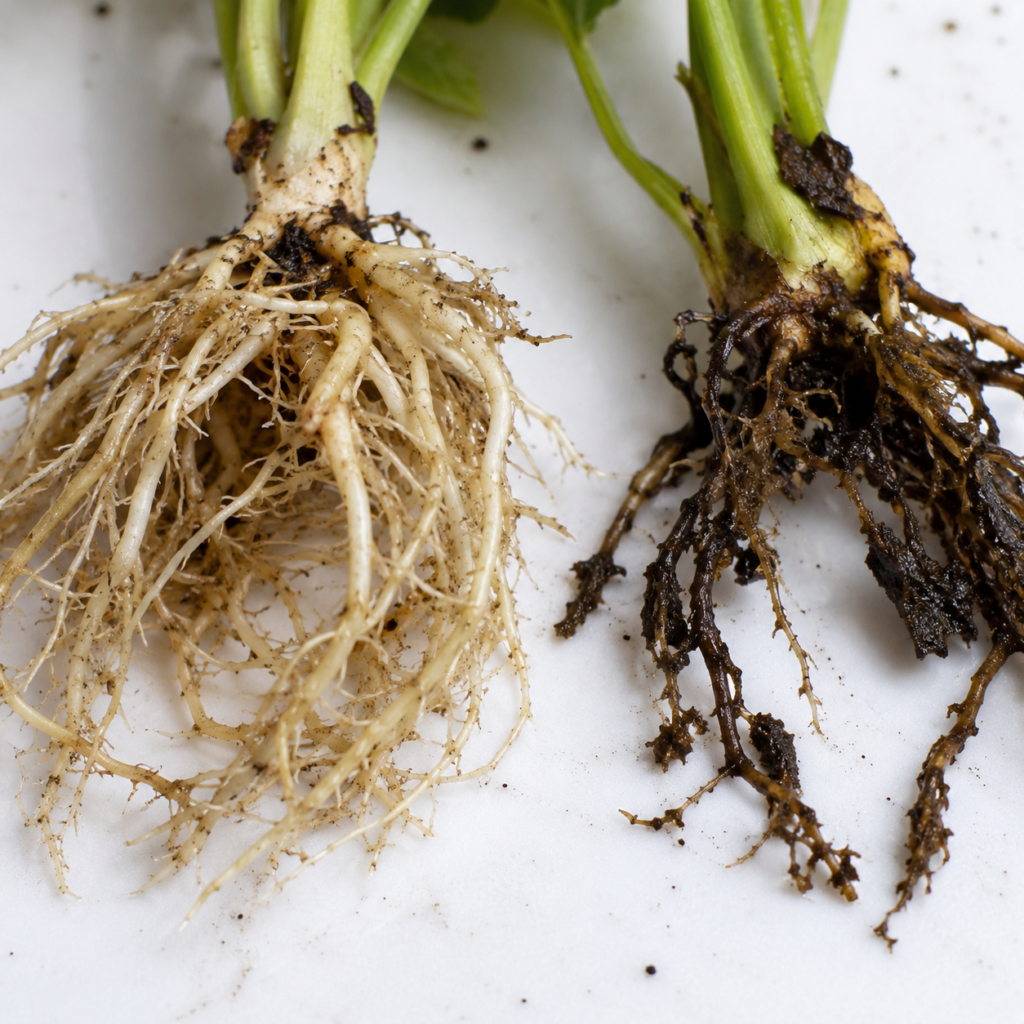
Root texture and structure provide stronger evidence than color.
| Attribute | Healthy roots | Rotten roots |
|---|---|---|
| Color | White, cream, tan, or species-specific | Dark brown, black, grey, or translucent |
| Texture | Firm and resilient | Soft, slimy, hollow, or brittle |
| Structure | Fine roots stay attached | Tissue slips, collapses, or breaks |
| Smell | Neutral or earthy | Sour or decaying |
| Crown | Firm | Water-soaked or mushy |
Use three simple checks:
- Pinch test: Press one questionable root lightly. Healthy tissue keeps its shape; rotten tissue may flatten or slip away.
- Bend test: Healthy roots flex without collapsing. Rotten roots fold, tear, or separate easily.
- Branching check: A sparse root ball with few feeder roots or active tips indicates reduced root function.
Plantsaholic evaluates root rot using five evidence groups: color, firmness, structural integrity, feeder-root density, and crown condition.
Color never stands alone. Structural failure and crown damage carry the most diagnostic weight.
5-Minute Root Rot Check
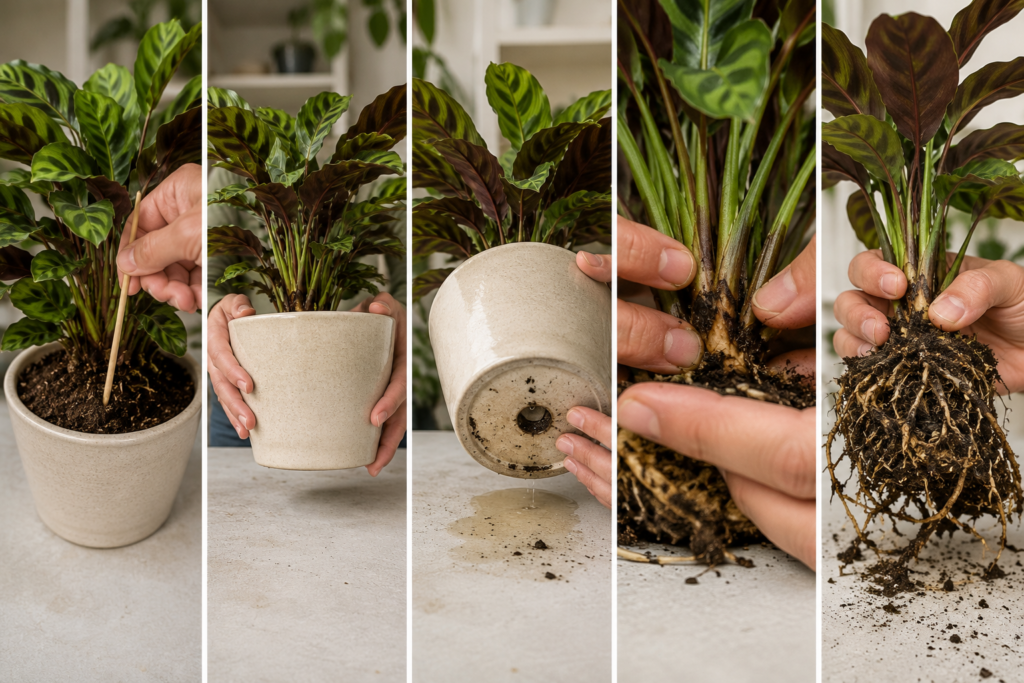
Begin with non-invasive checks and remove the plant only when the evidence justifies it.
Step 1: Check Deeper Moisture
Insert a finger, wooden skewer, or suitable moisture probe below the surface.
- Dry throughout: underwatering is more likely
- Slightly damp: compare with the plant’s needs
- Wet or saturated: do not water again
Step 2: Lift the Pot
A saturated pot remains heavier than a dry one. A sudden change in drying time suggests that water use or drainage has changed.
Step 3: Inspect Drainage
Check whether drainage holes are blocked, roots cover the openings, or water remains hidden inside a saucer or cachepot.
A container has functional drainage only when excess water can move through the growing medium and leave the outer pot.
Step 4: Smell and Test the Crown
Smell near the drainage holes and press the crown or stem base gently. Sour odor, dark tissue, and softness justify direct root inspection.
Step 5: Inspect the Root Ball
Slide the plant out carefully and examine the outside, bottom, center, and area beneath the crown. Decay may be concentrated inside the root ball even when outer roots look healthy.
| Root condition | Interpretation | Decision |
|---|---|---|
| Roots and crown firm | Rot not confirmed | Correct care and monitor |
| Roots firm, soil saturated | Overwatering risk | Pause watering |
| A few soft tips | Possible early damage | Inspect and monitor |
| Several soft roots | Root rot confirmed | Begin treatment |
| Most roots rotten, crown firm | Severe root loss | Treat and take cuttings |
| Roots and crown mushy | Advanced decay | Propagate or discard |
Root Rot Confidence Check
Give one point for each clearly confirmed finding:
- Plant wilts while deeper soil remains wet
- Pot dries much more slowly than normal
- Soil or roots smell sour
- Several roots feel soft or fragile
- Root covering slips away
- Fine feeder roots are missing
- Crown or lower stem feels soft
| Score | Meaning | Decision |
|---|---|---|
| 0–1 | Weak evidence | Correct care and monitor |
| 2–3 | Root-zone trouble likely | Inspect the complete root system |
| 4–5 | Root deterioration strongly supported | Begin treatment |
| 6–7 | Severe damage likely | Treat, propagate, or discard |
This is a practical editorial tool, not a laboratory test. Direct root evidence matters more than foliage symptoms, and crown condition determines how realistic recovery is.
Root Rot or Another Problem?
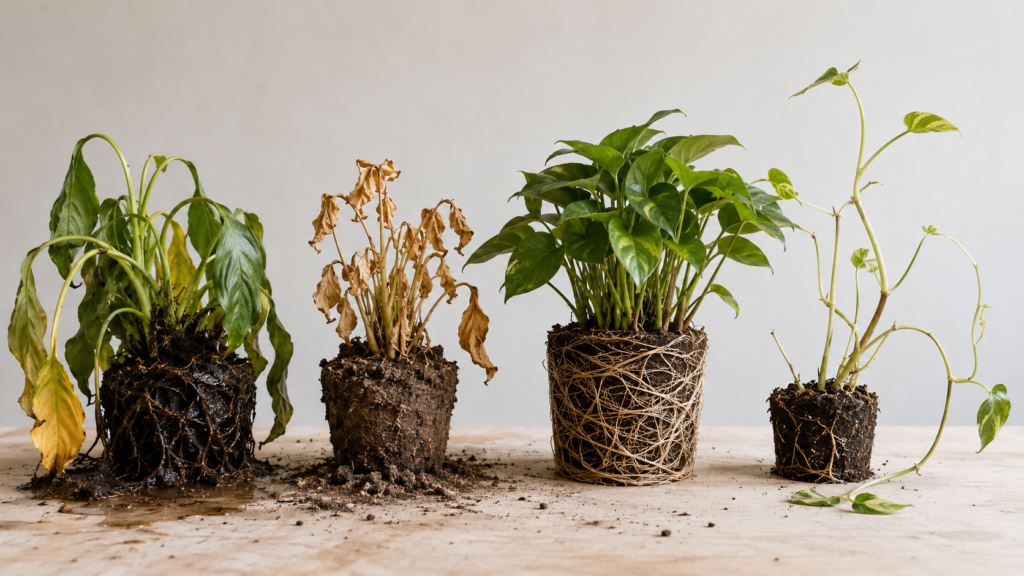
Several common plant problems resemble root rot.
| Problem | Soil | Roots | Main clue |
|---|---|---|---|
| Root rot | Wet or waterlogged | Soft or breaking | Wilt in wet soil |
| Overwatering without rot | Wet | Firm | Improves as mix dries |
| Underwatering | Dry and light | Usually firm | Improves after watering |
| Root-bound stress | Dries quickly | Dense but firm | Roots circle the pot |
| Low-light stress | Dries slowly | Usually firm | Pale or stretched growth |
| Fertilizer damage | Variable | Firm with injured tips | Salt crust or recent heavy feeding |
| Transplant shock | Variable | Usually firm | Decline follows repotting |
| Natural aging | Normal | Healthy | One old leaf declines |
Overwatering describes a moisture problem; root rot means tissue has already deteriorated. A plant can be overwatered without having root rot when its roots remain firm.
A root-bound plant has many densely packed but firm roots. A root-rotted plant often has fewer functioning feeder roots and soil that remains wet for longer.
Fungus gnats indicate moist organic growing media but do not confirm root damage.
Root Rot Stages
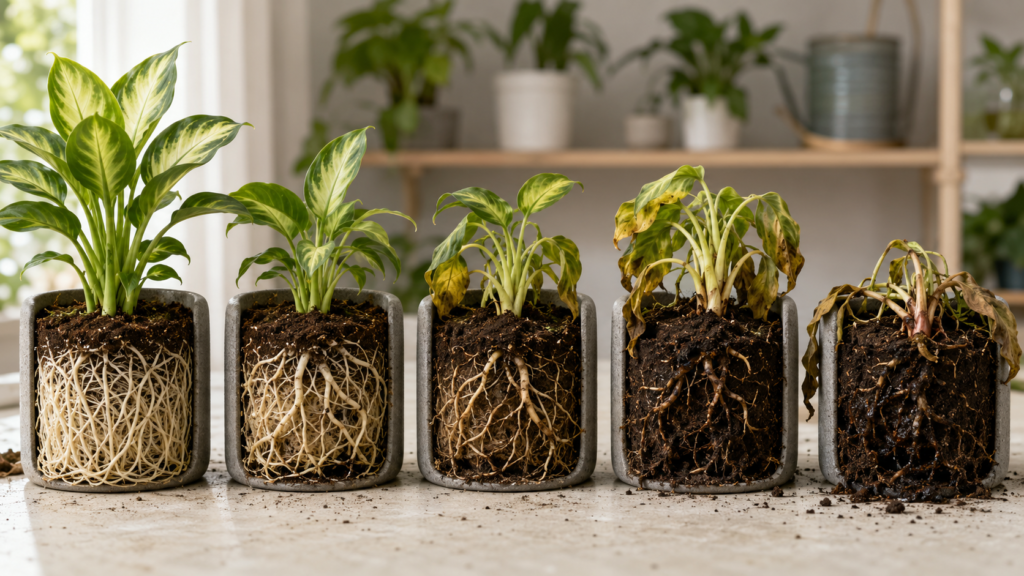
Root rot usually progresses through five stages:
- Root-zone stress: Soil remains wet, but roots are still firm.
- Localized damage: A few root tips soften or darken.
- Developing rot: Feeder roots disappear and the plant wilts in damp soil.
- Advanced root loss: Roots break easily and anchorage weakens.
- Crown collapse: Central tissues become mushy and the plant falls apart.
A plant with firm roots needs environmental correction. A plant with several soft roots needs treatment. A plant with severe root loss but a firm crown may still recover.
A mushy crown sharply reduces the chance of saving the original plant.
Can the Plant Recover?
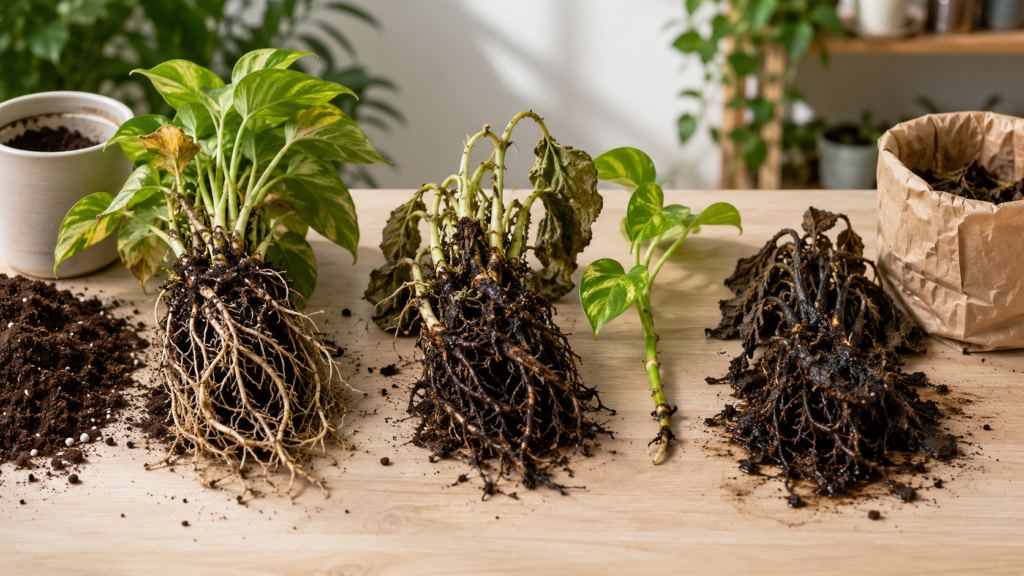
A plant can recover when some roots remain firm and the crown, rhizome, tuber, or lower stem is still viable. Rotten tissue cannot become healthy again, but living tissue can produce new roots after damaged material and unsuitable conditions are addressed.
A rescue attempt is reasonable when:
- Some roots remain firm
- The crown is solid
- Healthy nodes or divisions remain
- Damage is localized
- The growing environment can be corrected
Propagation may be safer when most roots are gone but healthy stems, leaves, or nodes remain. This often works for pothos, philodendron, Monstera, Syngonium, Tradescantia, Hoya, Peperomia, snake plants, and ZZ plants.
Recovery is unlikely when nearly every root and the crown are mushy or no viable propagation material remains.
Confirmed Root Rot? Use the Treatment Guide
Once root damage is confirmed, follow Plantsaholic’s How to Fix Root Rot in Houseplants guide for root pruning, pot cleaning, fresh soil, repotting, and recovery care.
This article owns diagnosis. The treatment guide should own the complete rescue process.
What Causes Root Rot?
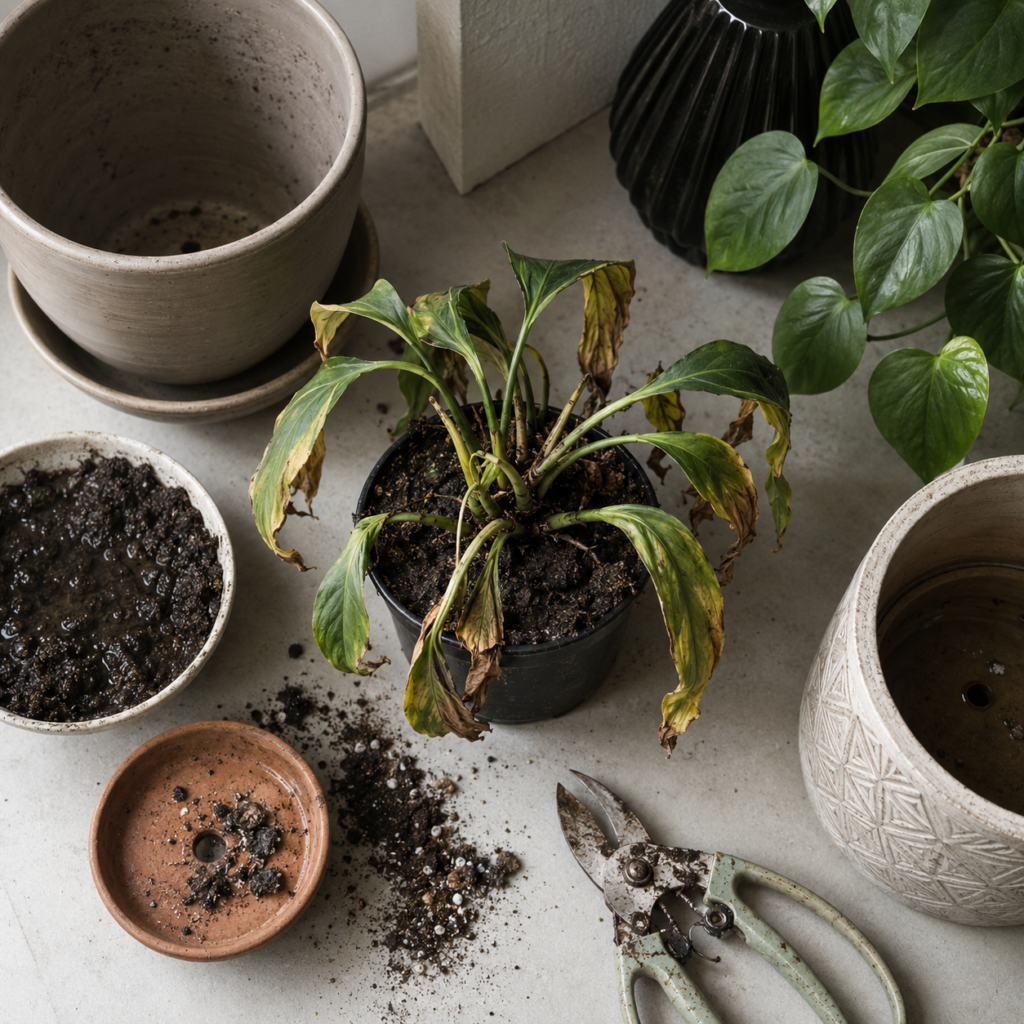
Root rot commonly develops when roots remain wet and poorly aerated for too long.
Excess moisture or poor drainage → reduced oxygen → root stress → tissue deterioration → visible plant decline
Common risk factors include:
- Dense or compacted potting mix
- Blocked drainage holes
- Water trapped in a cachepot
- Oversized containers
- Low light
- Cool temperatures
- Root injury
- Contaminated soil, runoff, pots, or tools
Root rot is a disease category rather than one single organism. Groups associated with root disease include Pythium, Phytophthora, Rhizoctonia, and Fusarium.
A home inspection can confirm damaged roots, but exact pathogen identification may require professional testing.
When to Isolate or Discard
Isolate a plant when runoff, soil, tools, or plant debris could expose nearby plants. This is especially important when containers share trays or several plants begin declining together.
Discard the plant when:
- Roots and crown are both mushy
- No healthy node or division remains
- The plant repeatedly collapses
- Keeping it risks a valuable collection
- Almost no viable tissue remains
Place severely decayed material and old soil in a sealed bag. Clean reusable pots and tools, and do not reuse suspect growing medium.
For trees and large shrubs, contact a qualified arborist when the plant leans, rocks at the base, develops major dieback, or could damage people or property.
Root Rot Checklist
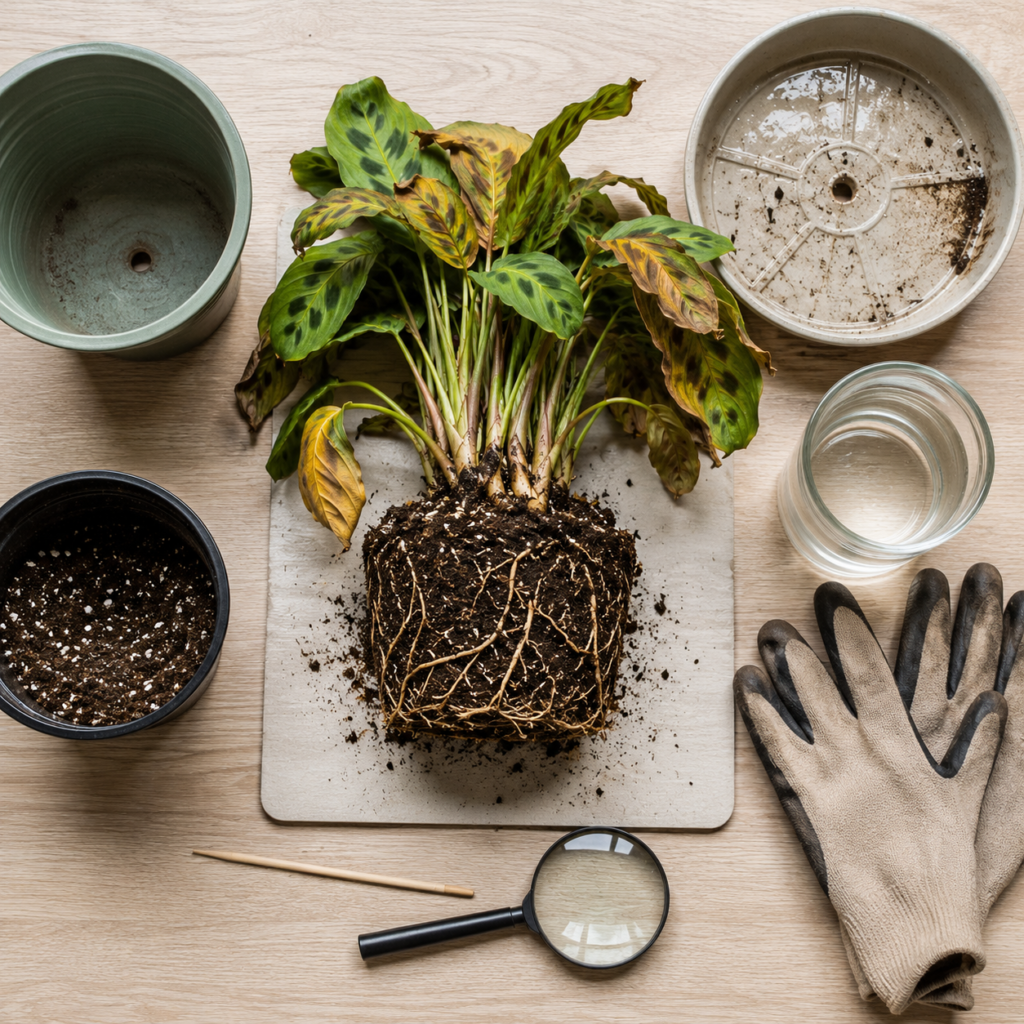
Above the Soil
- Wilting in damp soil
- Several yellow leaves
- Rapid leaf drop
- Slowed growth
- Soft lower stem
- Plant feels loose in the pot
Soil and Container
- Pot stays wet too long
- Container remains heavy
- Water is trapped in a cachepot
- Drainage is blocked
- Soil smells sour
- Pot is oversized
Direct Root Evidence
- Several roots are soft
- Feeder roots are missing
- Outer tissue slips away
- Roots feel hollow or slimy
- Roots break easily
- Crown is deteriorating
Few boxes checked: Investigate light, water, temperature, pests, and pot size.
Roots firm despite wet soil: Correct the moisture problem and monitor.
Several direct-root boxes checked: Root deterioration is confirmed.
Roots and crown affected: Propagate healthy material or discard the plant.
Sources and Editorial Standards
Plantsaholic separates general plant stress from confirmed root deterioration by prioritizing root firmness, structure, feeder-root density, odor, and crown condition.
The Evidence Levels, 5-Minute Check, and Confidence Check are editorial decision tools, not laboratory tests. This guide draws on horticultural guidance from university extension services and the Royal Horticultural Society.
Visual inspection can confirm deteriorating roots, but it usually cannot identify the exact organism involved. Seek professional diagnosis for valuable collections, recurring outbreaks, commercial production, or structurally unstable trees.
FAQs
How Can You Tell if a Plant Has Root Rot?
Look for wilting in wet soil, slow growth, sour odor, and soft roots. Confirm the problem through root texture and structure, not leaf symptoms alone.
What Do Rotten Roots Look Like?
Rotten roots may be dark, grey, or translucent and often feel soft, hollow, slimy, or fragile. Their outer tissue may slip away.
Can Healthy Roots Be Brown?
Yes. Healthy roots may be brown from age, species, or soil staining. Firmness is more reliable than color.
What Is the Earliest Sign of Root Rot?
Slower growth, reduced leaf firmness, and longer soil-drying time may appear before obvious root decay.
Is Root Rot the Same as Overwatering?
No. Overwatering means the soil stays too wet; root rot means the root tissue has already deteriorated.
Do Fungus Gnats Mean Root Rot?
No. Fungus gnats indicate moist soil but do not confirm root damage.
Can a Plant Recover From Root Rot?
Yes, when some roots and the crown remain firm. Recovery is unlikely when both roots and central tissue are mushy.
When Is Root Rot Too Advanced to Treat?
It is usually too advanced when nearly all roots and the crown are soft and no healthy propagation material remains.
Confirming Root Rot
The most useful sign of root rot is the contradiction between the plant and its root zone: the plant looks dehydrated, but the soil remains wet.
Use this evidence hierarchy:
- Yellowing, leaf drop, and slow growth are warnings.
- Wet-soil wilting, sour odor, and a soft stem base make root damage more likely.
- Soft, hollow, slimy, or structurally weak roots confirm deterioration.
- A firm crown supports recovery; a mushy crown signals advanced damage.
Diagnose first. Then correct the growing conditions, begin treatment, preserve healthy propagation material, or discard a plant that no longer contains viable tissue.

Myra is the founder and lead writer of Plantsaholic. She shares practical, research-backed advice on indoor plants, outdoor gardening, flowers, herbs, succulents, and everyday plant care. Her goal is to help gardeners of all experience levels grow healthier plants through simple, easy-to-follow gardening guides.