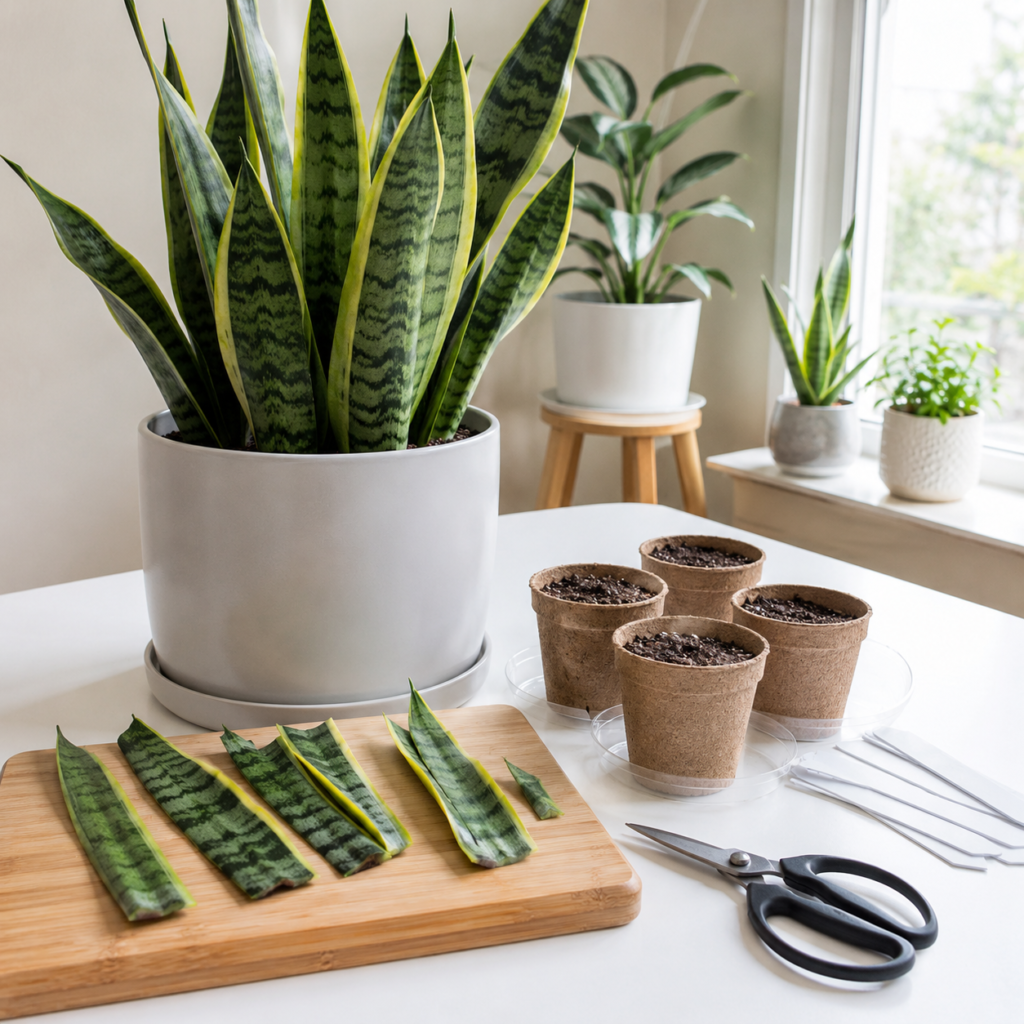
You can propagate a snake plant without killing it by using a healthy mother plant, clean tools, dry callused cuttings, fast-draining soil, and very careful watering. Division is the safest method because each new plant already has roots. Leaf cuttings also work, but they rot easily when planted too wet, upside down, or before the cut end has dried.
Snake plant propagation looks easy, but it fails when beginners treat the plant like a soft tropical houseplant. Snake plants have thick, water-storing leaves and underground rhizomes. That means they can handle dryness better than wet soil. A cutting with no roots does not need frequent watering. It needs a clean wound, oxygen, warmth, and time.
The safest propagation method depends on your goal. If you want the fastest result with the lowest risk, divide a rooted pup. If you want several plants from one leaf, use soil cuttings. If you want to see roots grow, try water propagation, but watch closely for rot. If your plant has yellow edges or rare variegation, use division because leaf cuttings may not keep the same pattern.
Snake plant is also called Sansevieria, Dracaena trifasciata, and mother-in-law’s tongue. These names refer to the same common houseplant in most care guides.
Quick Answer
The safest way to propagate snake plant without killing it is to divide a healthy rooted pup from the mother plant. Division works best because the new plant already has roots, leaves, and a rhizome section. That means it does not have to survive as a rootless cutting while waiting for new roots to form.
If you want more plants from one leaf, use soil cuttings instead of rushing into water propagation. Let every leaf section dry for 24–48 hours, plant the correct bottom end into fast-draining soil, and keep the pot in bright indirect light. Water only when the mix is nearly dry because snake plant cuttings rot faster from excess moisture than they fail from slight dryness.
Quick method picker:
| Your Goal | Best Method | Why It Works |
| Safest method | Division | New plant already has roots |
| Fastest result | Division | Less waiting and lower rot risk |
| More plants from one leaf | Soil cuttings | One leaf can become several sections |
| Visible root growth | Water cuttings | Roots are easy to monitor |
| Keep yellow edges | Division | Variegated leaf cuttings may revert |
| Rescue a broken leaf | Soil cutting | Firm healthy pieces can still root |
Best Time to Propagate
Propagate snake plant during warm active growth, usually in spring or early summer. Warmth, brighter indoor light, and active plant energy help the mother plant recover faster and help new cuttings root before they rot. A mature snake plant can survive low light for a long time, but propagation is different. A cutting or fresh division needs stronger conditions because it is recovering, sealing wounds, or forming new roots.
Keep cuttings in bright indirect light, around 65–75°F, and away from cold windows or harsh afternoon sun.
Season decision guide:
- Spring: best time for all methods.
- Early summer: excellent for fast rooting.
- Late summer: still good if warmth continues.
- Autumn: possible but slower.
- Winter: risky unless your home is warm and bright.
Tools and Soil Needed
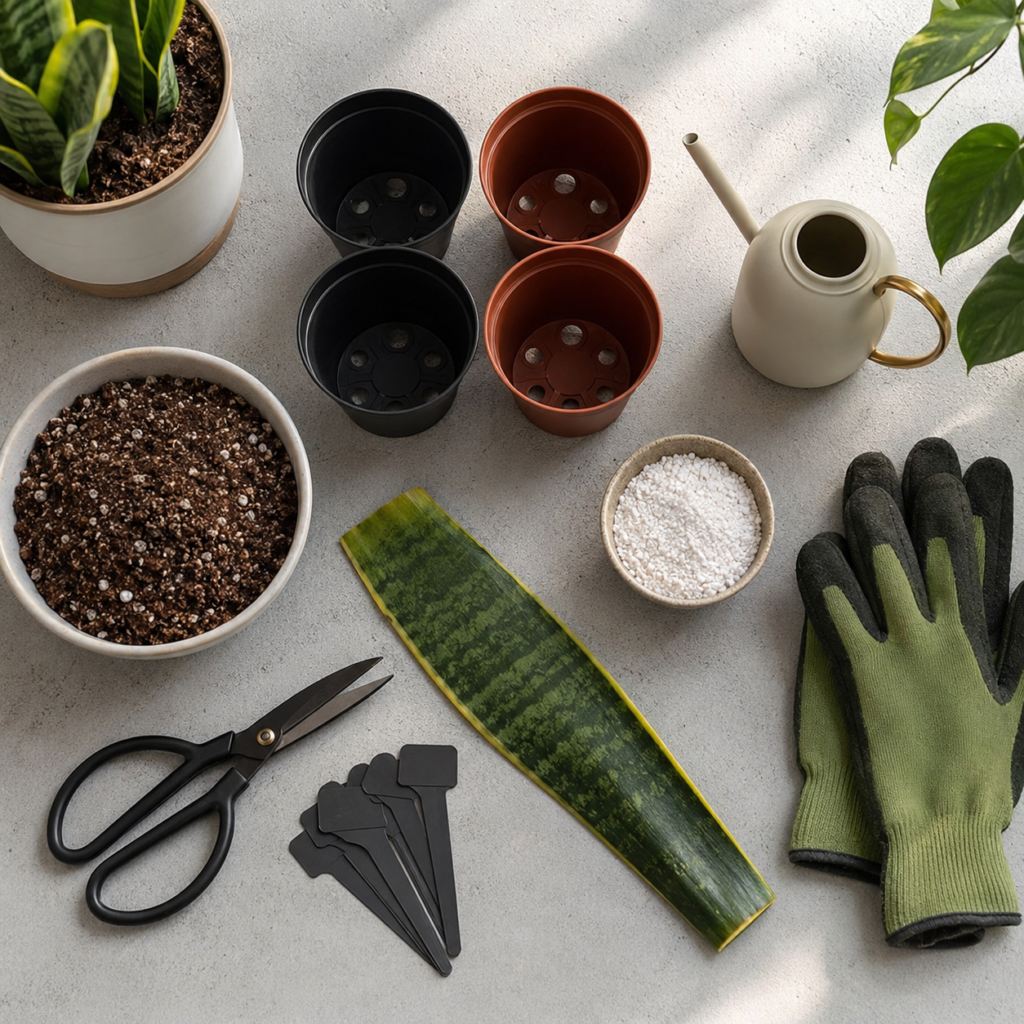
You need clean sharp scissors or a knife, small pots with drainage holes, a fast-draining potting mix, gloves, and a clean dry surface for callusing cuttings. These basic tools matter because snake plant propagation often fails before the cutting even has a chance to root. A dirty blade can damage tissue. A large pot can hold too much water. Dense soil can suffocate the base of the cutting.
Use this setup:
- Clean sharp knife, scissors, or pruning shears.
- Small nursery pots with drainage holes.
- Cactus mix or indoor potting mix with added perlite.
- Perlite, pumice, or coarse sand for extra drainage.
- A dry tray or paper towel for callusing cuttings.
Simple soil mix:
- 2 parts indoor potting mix.
- 1 part perlite or pumice.
- Extra perlite for humid homes.
- Avoid dense garden soil.
- Avoid pots that trap standing water.
Check Before Cutting
Before-cut checklist:
- Leaves feel firm, not soft.
- No black mushy tissue near the base.
- Soil is not wet or sour-smelling.
- Pups have visible roots if dividing.
- Tools are clean before cutting.
- Pots have drainage holes ready.
Propagate by DivisioN
To propagate snake plant by division, remove the plant from its pot, separate a rooted pup or rhizome section, let fresh cuts dry briefly, and replant each section into a small pot with fast-draining soil. Division is the most reliable method because you are not starting with a rootless leaf. You are separating a living section that already has roots, stored energy, and an active growing point.
This method is ideal when the snake plant is crowded, pushing against the pot, or producing pups around the base. These pups are young plants connected to the mother plant through rhizomes. If a pup already has its own roots, it can usually grow as an independent plant after separation. The main risk is not the division itself. The risk comes from burying it too deeply, watering too heavily, or damaging too many roots during separation.
Step-by-step division method:
- Slide the plant gently out of the pot.
- Find a pup with its own roots.
- Separate it by hand if possible.
- Use a clean sharp knife if the rhizome is tight.
- Let fresh cut areas dry for several hours.
- Replant in a small pot with gritty soil.
- Keep the crown near the same soil level.
- Water lightly only after the soil begins to dry.
Propagate Cuttings in Soil
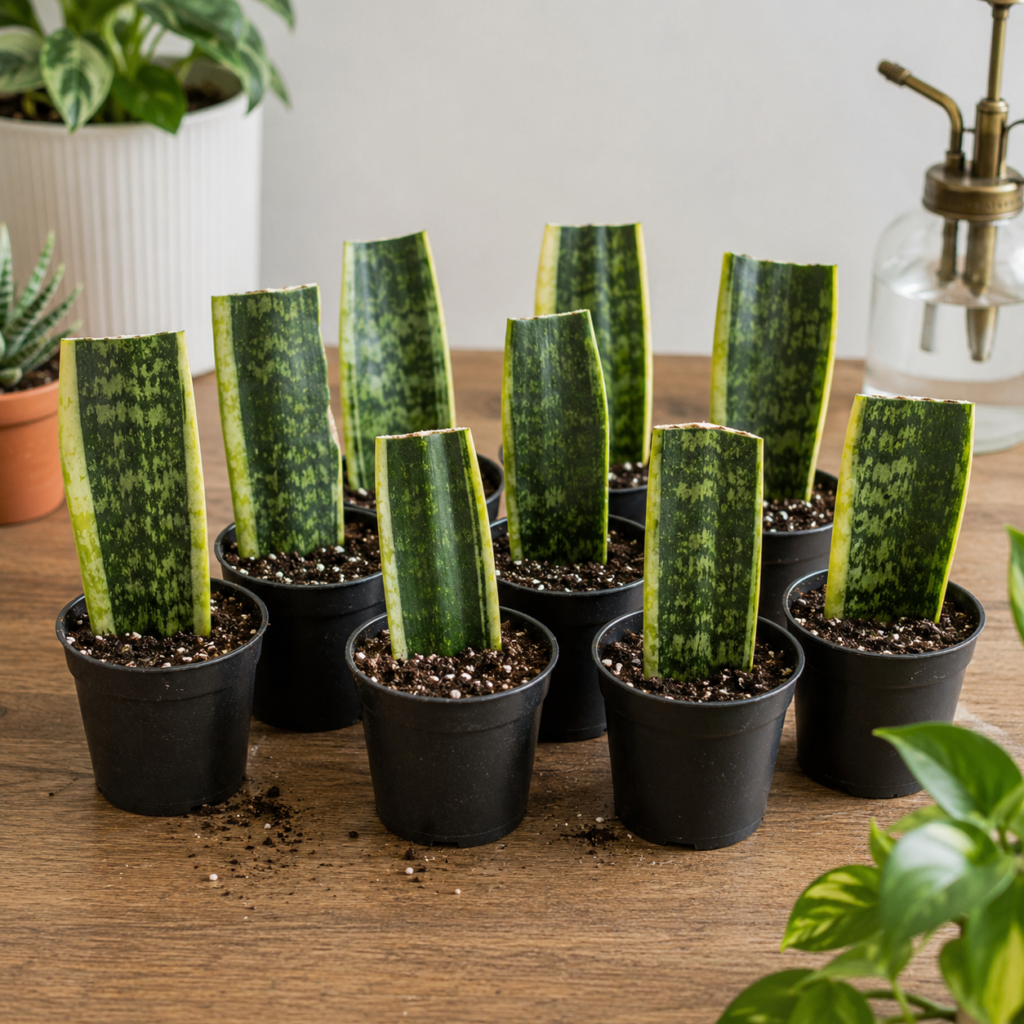
To propagate snake plant cuttings in soil, cut a healthy leaf into sections, mark the bottom end, let the pieces callus, then plant the bottom end into a fast-draining mix. Soil propagation is a strong method because the cutting grows roots directly in the same medium where it will continue living. This avoids the transition shock that sometimes happens when water-grown roots are moved into soil.
The most important detail is direction. Every leaf section has a top and a bottom. The bottom end is the part that was closest to the soil when the leaf was still attached to the plant. That bottom end must go into the potting mix. If you plant the section upside down, the cutting may sit there for weeks without rooting properly. Marking the bottom with an angled cut or small notch prevents this mistake.
Step-by-step soil cutting method:
- Cut the leaf near the base with a clean blade.
- Cut it into 2–4 inch sections.
- Mark the bottom end of every section.
- Let the cut pieces dry for 24–48 hours.
- Plant the bottom end about 1 inch deep.
- Firm the soil gently around the cutting.
- Water lightly and let extra water drain.
- Do not pull the cutting out to check roots.
How Deep Should Cuttings Be Planted?
Snake plant cuttings should usually be planted about 1 inch deep in fast-draining soil. Taller 3–4 inch leaf sections can go around 1.5–2 inches deep if they need extra support. Avoid burying the cutting too deeply because trapped moisture around the base can increase rot risk. The cutting should stand upright, but the soil should still allow airflow and drainage. Stable, shallow planting is safer than deep planting in wet or dense potting mix.
Use Rooting Hormone?
Rooting hormone is optional for snake plant cuttings. It may help soil leaf cuttings form roots, especially when you are working with several sections, but it is not required for healthy cuttings. Clean cuts, correct orientation, fast-draining soil, and moisture control matter more than hormone powder.
- Use it for soil leaf cuttings.
- Skip it for division because rooted pups already have roots.
- Do not use it on mushy or rotting cuttings.
- Focus first on clean cuts, drainage, warmth, and light watering.
Root Cuttings in Water
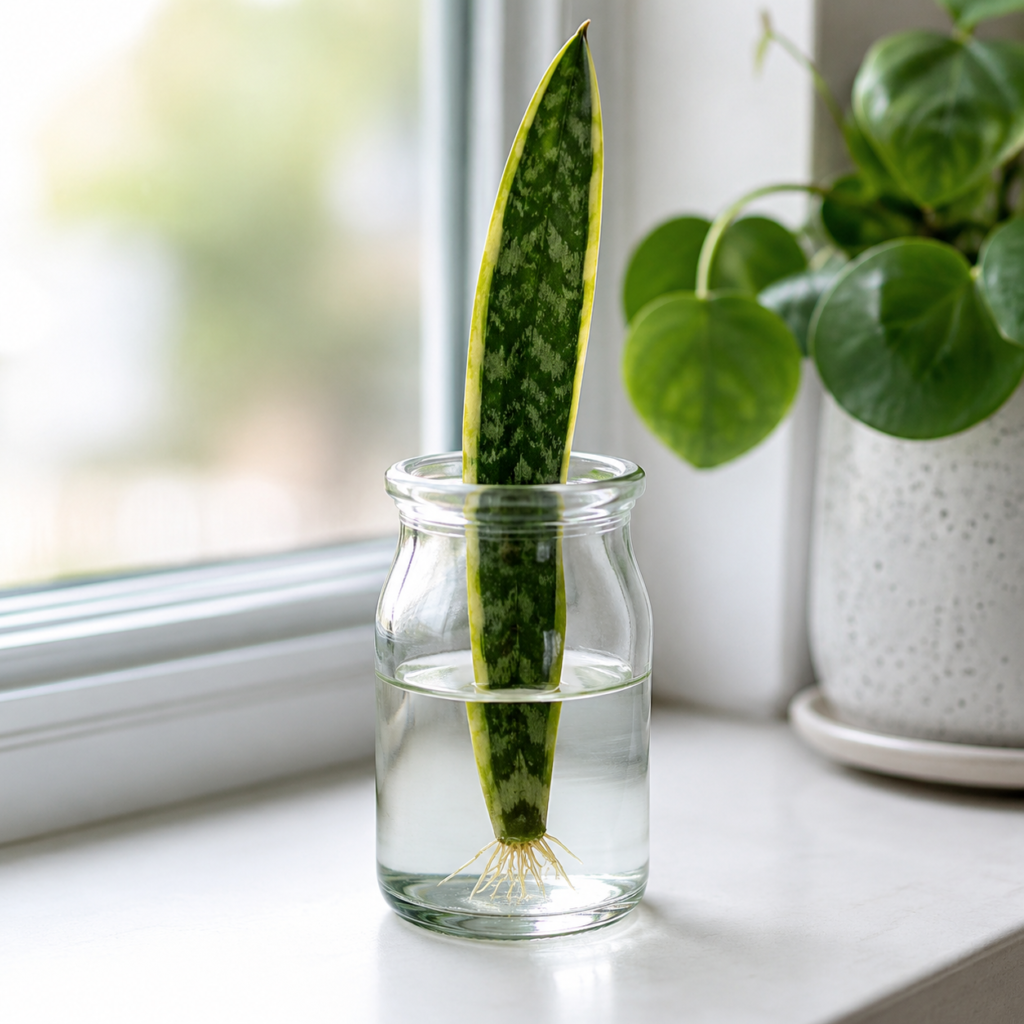
To root snake plant cuttings in water, place the correct bottom end of a dried leaf section into a clean jar with shallow water. Keep only the bottom part in water, change the water regularly, and move the cutting to soil once roots are a few inches long. Water propagation is popular because it lets you see the root development, which makes the process feel easier and more exciting for beginners.
In water, the cut base stays wet all the time. If the water becomes cloudy, deep, stagnant, or warm, the base can turn soft and slimy. Water roots can also be delicate, so the cutting may pause after being moved into soil.
Step-by-step water method:
- Cut a firm healthy snake plant leaf.
- Slice it into sections if needed.
- Mark the original bottom end.
- Let the pieces dry for 24–48 hours.
- Add 1–2 inches of clean water to a jar.
- Place only the bottom end in water.
- Keep the leaf upright.
- Change water every few days.
- Rinse the jar if water becomes cloudy.
- Move to soil when roots are 1–2 inches long.
Keep Snake Plant Variegation
Division is the best propagation method for keeping snake plant variegation. Leaf cuttings can root successfully, but the new pups may lose yellow edges or return to greener growth, especially with yellow-edged snake plant varieties. This is a major point for readers who bought a snake plant because of its pattern, not just because it is easy to grow.
A division includes part of the original plant’s rhizome, roots, and growing point. That gives the new plant a much better chance of matching the parent plant. Leaf cuttings are different because the new pup grows from the cut section, and some variegated patterns do not carry through reliably from leaf cuttings. The cutting may survive, but the baby plant may not look like the plant you expected.
Use division for yellow-edged, rare, expensive, compact, or decorative snake plants; use leaf cuttings only when exact appearance does not matter.
Propagation Timeline
Snake plant propagation can take several weeks to several months. Division gives the fastest result because the new plant already has roots. Leaf cuttings are slower because they must seal the wound, form roots, and then produce new pups. Many beginners think their cutting failed because nothing appears above the soil for a long time, but snake plants often work quietly below the surface first.
Typical timeline:
- Division: roots already present.
- Division: new growth may appear in a few weeks.
- Soil cutting: roots may take 4–8+ weeks.
- Soil cutting: pups may take 2–4+ months.
- Water cutting: roots may take 3–8+ weeks.
- Rescue cutting: timing is unpredictable.
Why Cuttings Rot
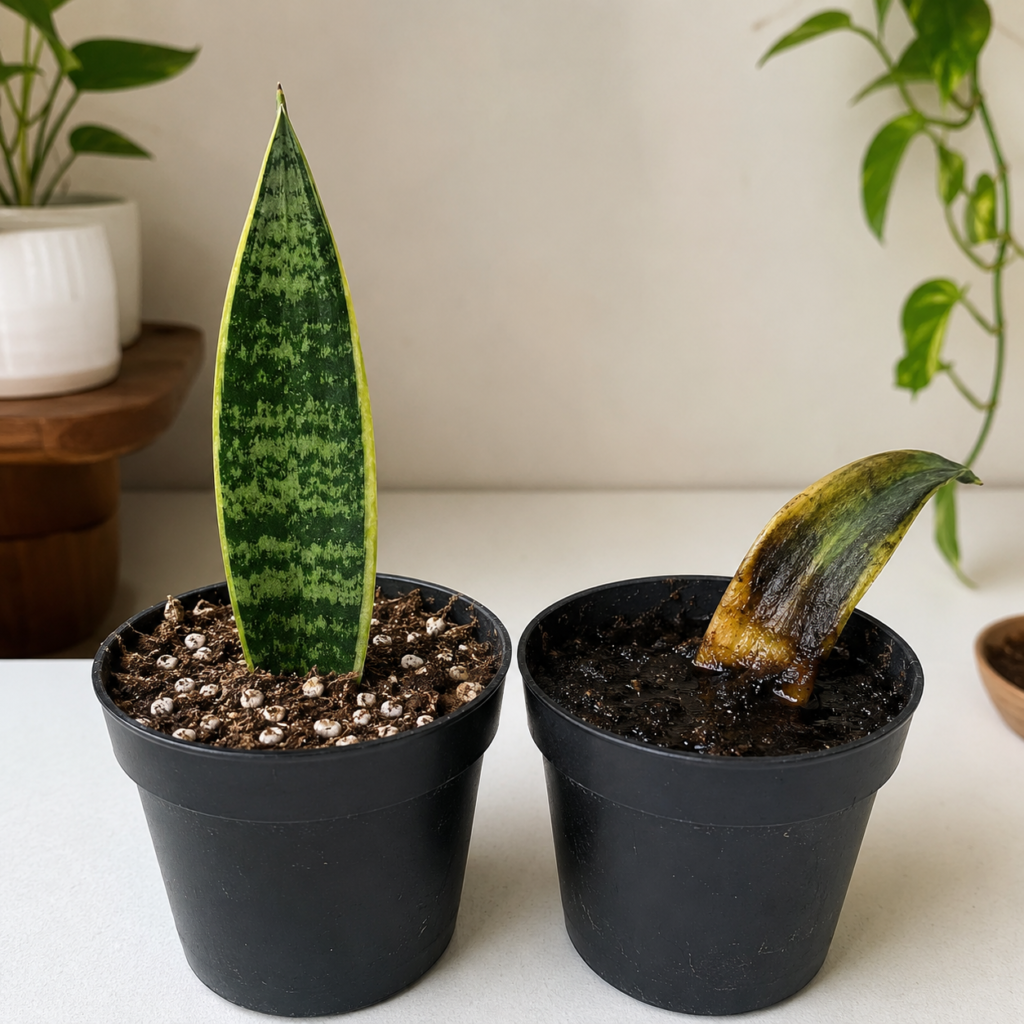
Snake plant cuttings rot when the cut base stays too wet, the soil holds too much moisture, the cutting was planted before callusing, or the room is too cold and dark. Rot is usually not bad luck. It is usually a moisture, airflow, or timing problem. Snake plants store water in thick leaves, so a fresh cutting does not need constant moisture to survive.
A cutting has no roots at first, which means it cannot use much water. If the base is buried in wet soil, it sits like a wounded piece of plant tissue in a damp environment. That is when the base turns black, slimy, transparent, or foul-smelling. The goal is to keep the cutting dry enough to heal but lightly moist enough to encourage rooting later.
Common rot triggers:
- Planting immediately after cutting.
- Skipping the callus stage.
- Using dense potting soil.
- Using a pot without drainage.
- Watering on a fixed schedule.
- Keeping cuttings in low light.
- Placing cuttings in cold rooms.
- Planting the leaf upside down.
- Using weak or diseased leaves.
- Covering cuttings with plastic and trapping moisture.
Care for New Snake Plants
Care for new snake plant babies by keeping them in bright indirect light, watering only when the potting mix is mostly dry, and avoiding fertilizer until stable new growth appears. A new snake plant may look strong, but its root system is still young. Too much water, too much pot space, or too much fertilizer can stress it before it becomes established.
Aftercare checklist:
- Keep in bright indirect light.
- Avoid harsh afternoon sun.
- Use a pot with drainage holes.
- Water only when soil is mostly dry.
- Avoid fertilizer until new growth appears.
- Do not repot immediately after rooting.
- Keep the plant base above soggy soil.
- Rotate occasionally for even growth.
- Keep away from pets and children.
Propagate a Dying Snake Plant
You can sometimes propagate a damaged snake plant if part of the leaf, pup, rhizome, or root system is still firm and healthy. Propagation only works with living tissue, so do not use mushy, smelly, black, collapsed, or watery sections. If the plant has one healthy pup with roots, division is the safest rescue method. If only the upper leaf sections are still firm, leaf cuttings can be a backup option.
Before propagating, inspect the plant carefully. Firm leaves, healthy pups, solid rhizomes, and roots with no sour smell may still be saved. Discard mushy leaf bases, black slimy roots, collapsed leaves, or tissue with spreading rot. A stressed snake plant can recover from damage, but rotten tissue should not be planted because it can spread failure into the new cutting.
Propagate From a Broken Leaf
Yes, you can propagate a broken snake plant leaf if the broken section is still firm, green, and free from rot. Trim torn edges cleanly, cut the leaf into 2–4 inch sections, mark the bottom end, and let the cuttings dry for 24–48 hours before planting. Do not use broken leaves that feel mushy, watery, black, or foul-smelling.
Mistakes THAT Kill CUTTINGS
The mistakes that kill snake plant during propagation are overwatering, using dense soil, skipping the callus stage, planting cuttings upside down, using weak leaves, and separating pups without enough roots. Most failures happen because beginners try to help too much. They water too often, check roots too early, fertilize too soon, or move the cutting around repeatedly.
Avoid these mistakes:
- Do not water daily.
- Do not plant in soggy soil.
- Do not use pots without drainage.
- Do not bury cuttings too deeply.
- Do not plant before the cut end dries.
- Do not use dirty or dull tools.
- Do not use mushy leaves.
- Do not place cuttings in harsh sun.
- Do not fertilize unrooted cuttings.
- Do not pull cuttings out to check roots.
- Do not expect fast pups.
- Do not propagate cold-stressed plants.
30-Day Propagation Plan
The best 30-day snake plant propagation plan focuses on clean cutting, drying, correct planting, bright indirect light, and moisture control. In the first month, success is measured by firmness and no rot, not by fast visible growth. This mindset helps beginners avoid panic when the cutting does not produce a pup immediately.
For division, the first 30 days are about recovery. For leaf cuttings, the first 30 days are about survival and early root formation. Do not pull cuttings out to inspect roots. New roots are delicate and can break easily. A gentle stability check is enough. If the cutting stands firm, does not smell, and does not turn mushy, it may still be progressing.
30-day plan:
- Day 1: choose firm healthy plant material.
- Day 1: cut or divide with clean tools.
- Day 1–2: let leaf cuttings callus.
- Day 3: plant in gritty soil.
- Day 7: check soil dryness.
- Day 14: rotate the pot for even light.
- Day 21: water only if soil is dry.
- Day 30: check for stability, not visible pups.
Signs Propagation Is Working
Snake plant propagation is working if the cutting stays firm, does not smell bad, does not turn mushy, and begins to resist gentle movement after several weeks. New pups are the clearest sign, but they may appear much later. Beginners often expect fast visible growth, but snake plants usually root quietly below the soil first.
Positive signs:
- The cutting remains firm.
- The base stays dry and stable.
- The cutting stands upright.
- No black or wet tissue appears.
- The soil does not smell sour.
- Slight resistance develops.
- A small pup eventually emerges.
Pet Safety
Snake plant propagation is not fully pet-safe because snake plants can be toxic to cats and dogs if chewed or eaten. Loose cuttings, small pots, and water jars are easier for pets to reach than a mature plant, so keep all propagation materials in a controlled space. If a pet chews a snake plant cutting, contact a veterinarian for proper guidance.
- Dry cuttings on a high shelf.
- Keep water jars away from pets.
- Do not place new pots on the floor.
- Discard rotten pieces quickly.
Plantsaholic Propagation Tip: A firm snake plant cutting is usually still viable, even if no pup is visible yet. Avoid extra watering, tugging, moving, or fertilizing too early. Slow growth is normal because roots often form below the soil first. Mushy texture, sour smell, or wet soil are stronger warning signs than no visible growth.
Written by Maira, founder of Plantsaholic, for indoor plant owners who want beginner-safe propagation guidance based on practical houseplant care and horticulture-backed principles.
FAQs
What is the easiest way to propagate a snake plant?
The easiest way is division. Separate a healthy pup with roots, replant it in fast-draining soil, and water lightly after the soil begins to dry.
Can you propagate snake plant from one leaf?
Yes, one healthy snake plant leaf can be cut into sections. Let the pieces dry for 24–48 hours, then plant the correct bottom end in soil or water.
Is it better to propagate snake plant in water or soil?
Soil is usually better for long-term success. Water propagation is easier to watch, but soil reduces transplant shock and supports stronger growth.
How long does snake plant take to propagate?
Division gives the fastest result because it already has roots. Leaf cuttings may take 4–8 weeks to root and several months to grow pups.
Why is my snake plant cutting not growing?
It may be growing roots below the soil first. If the cutting is firm, upright, and not mushy, it may still be healthy.
Why is my snake plant cutting rotting?
Rot usually happens from too much moisture, dense soil, poor drainage, or planting before the cut end dries. Use gritty soil and water lightly.
Should snake plant cuttings dry before planting?
Yes, let snake plant cuttings dry for 24–48 hours before planting. This helps the cut end callus and reduces rot risk.
Can you propagate snake plant from a broken leaf?
Yes, if the broken leaf is still firm and healthy. Trim the damaged edge, let it dry, and plant the correct bottom end in gritty soil.
Can you plant snake plant cuttings upside down?
No, the original bottom end must go into the soil or water. Mark each section after cutting so you do not lose the correct direction.
What is the biggest mistake when propagating snake plant?
The biggest mistake is overwatering. Snake plant cuttings usually fail from wet soil, poor drainage, or too much attention, not from slight dryness.

Myra is the founder and lead writer of Plantsaholic. She shares practical, research-backed advice on indoor plants, outdoor gardening, flowers, herbs, succulents, and everyday plant care. Her goal is to help gardeners of all experience levels grow healthier plants through simple, easy-to-follow gardening guides.