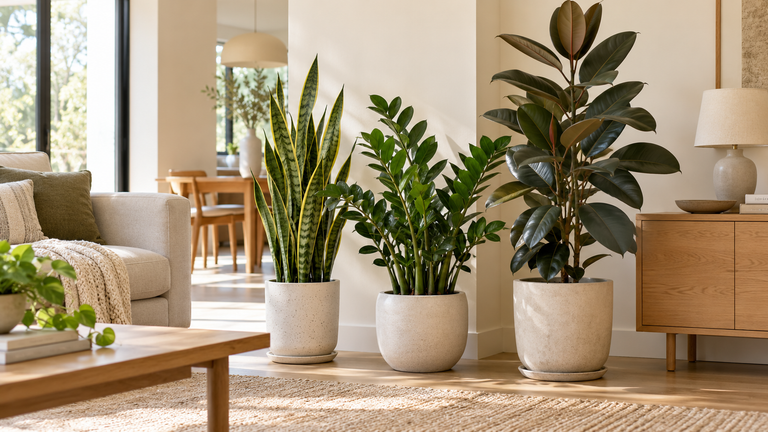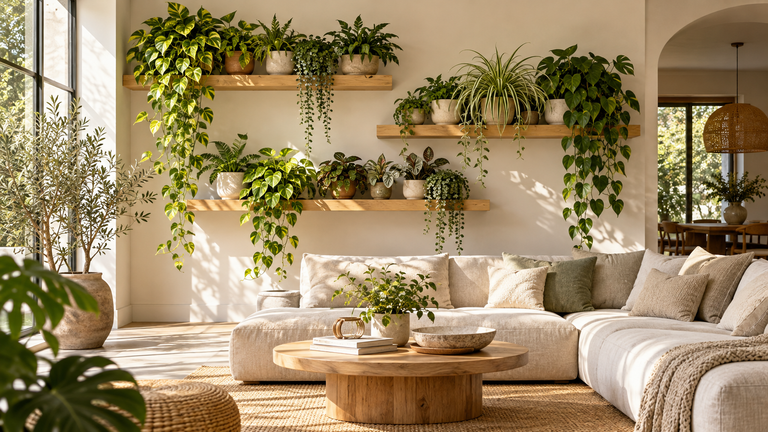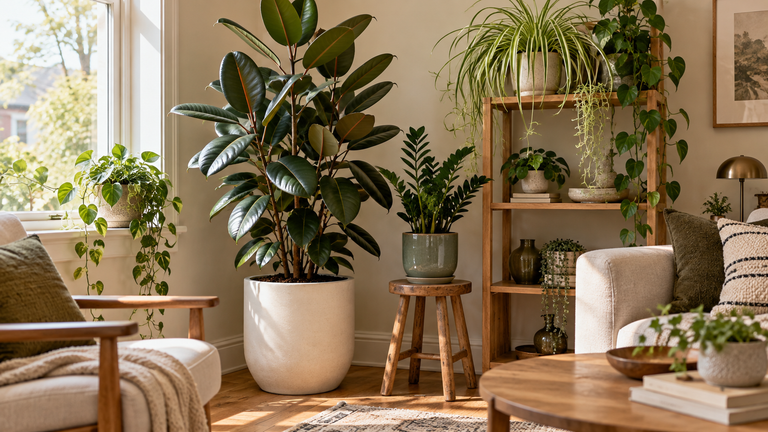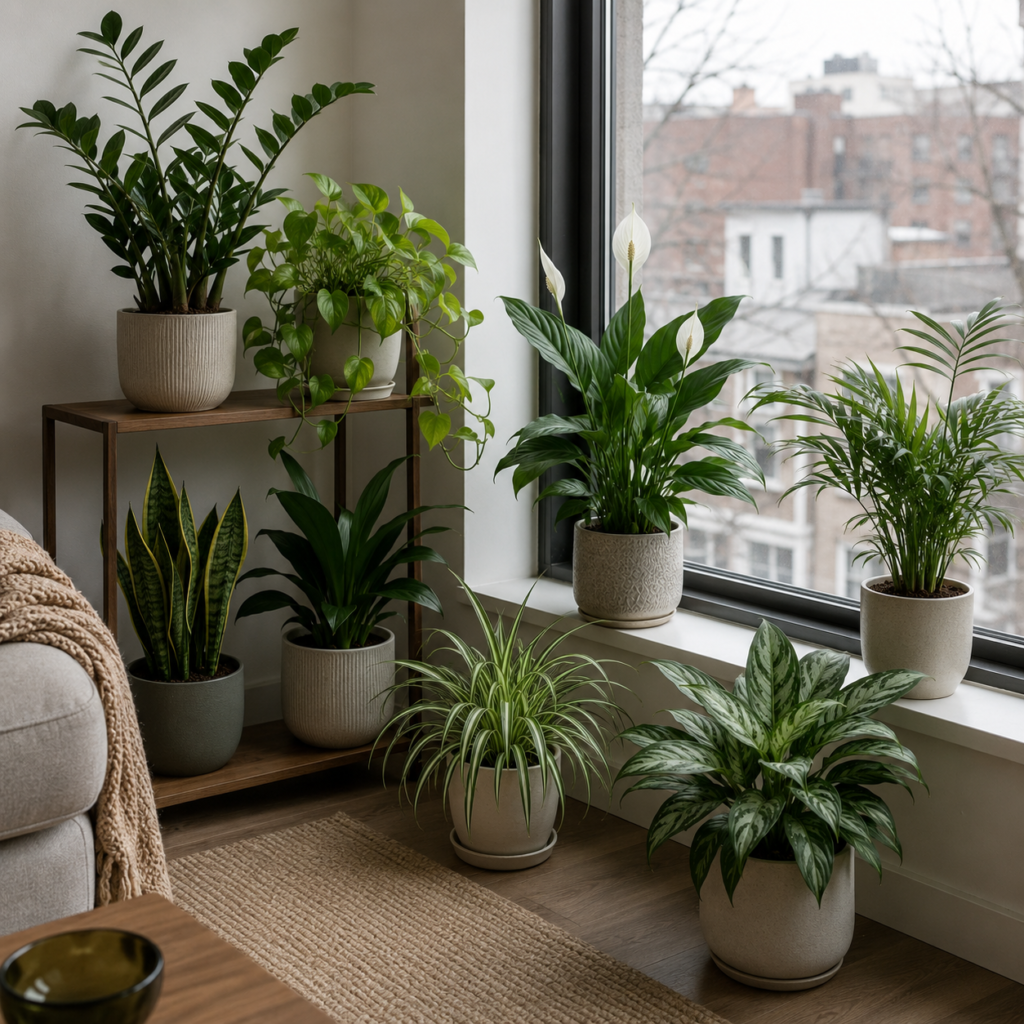
Indoor plants for a north-facing window should tolerate soft indirect light, slower growth, and lower water use. The best choices include ZZ plant, pothos, snake plant, cast iron plant, peace lily, parlor palm, spider plant, Chinese evergreen, heartleaf philodendron, and ferns.
A north-facing window is not a bad place for plants. It is simply a lower-light location that needs the right plant match. Many popular houseplants come from shaded tropical environments, where they naturally grow below taller plants instead of receiving harsh direct sun.
Quick answer: For a north-facing window, choose low-light tolerant foliage plants such as ZZ plant, pothos, cast iron plant, snake plant, parlor palm, peace lily, Chinese evergreen, and heartleaf philodendron. Keep them close to the window, water less often than sun-loving plants, and avoid cacti, succulents, herbs, and citrus unless you use a grow light.
Best North-Window Plants
- Best overall: ZZ plant
- Best for beginners: ZZ plant
- Best hanging plant: pothos
- Best tall plant: parlor palm
- Best dark-room plant: cast iron plant
- Best upright plant: snake plant
- Best colorful foliage plant: Chinese evergreen
- Best bathroom plant: Boston fern
- Best flowering option: peace lily
- Best low-maintenance decorative option: cast iron plant
Are North Windows Good for Plants?
Yes, north-facing windows are good for indoor plants that tolerate low light, soft indirect light, and slower growth. They are not ideal for plants that need several hours of direct sun every day. A north-facing window usually gives gentle light without harsh afternoon heat, which makes it useful for foliage plants such as ZZ plant, pothos, cast iron plant, parlor palm, and peace lily. These plants can stay attractive because they are grown mostly for leaves, not heavy flowers or fruit. The important point is expectation. A plant near a north-facing window may stay healthy, but it may not grow quickly or produce dramatic new leaves every week.
The real-world result depends on the room. A large clean north-facing window in a bright apartment can support more plants than a small window blocked by trees, balconies, buildings, curtains, or tinted glass. If the room feels bright enough to read during the day without turning on a lamp, many low-light indoor plants can work near the window. If the room feels dull even at noon, choose only the toughest plants or use a grow light.
- Best for foliage plants, not sun-loving plants
- Avoid treating a north window like a bright south window
Is Your North Window Too Dark?
The easiest way to judge the space is to observe the room during daytime. If you can comfortably read near the window without turning on a lamp, many low-light plants may work there. If the room feels gloomy even at noon, only the toughest plants are likely to do well without extra lighting. A plant that leans heavily toward the glass, produces tiny leaves, develops long gaps between leaves, or stops growing for a long time may be signaling that the light is too weak. For more accuracy, readers can also use a basic light meter or phone app to compare spots in the room. The exact number does not need to be perfect. What matters is understanding that a windowsill is often dramatically brighter than a shelf across the room.
- Good sign: room feels naturally usable during the day
- Warning sign: plant leans strongly toward the window
- Warning sign: leaves become smaller or farther apart
- Weak-light fix: move plant closer to the glass
- Best backup option: add a grow light
Best Plants for North Windows
The best indoor plants for north-facing windows are low-light tolerant houseplants with strong foliage, flexible growth habits, and forgiving care needs. The safest choices are ZZ plant, pothos, cast iron plant, snake plant, parlor palm, peace lily, spider plant, Chinese evergreen, heartleaf philodendron, and Boston fern. These plants are useful because they can handle indirect light better than most sun-loving plants. They also give different design options. ZZ plant and snake plant give upright structure, pothos and philodendron trail beautifully, parlor palm adds softness, and Chinese evergreen adds color without needing strong sun.
| Goal | Best Plant | Why It Works |
|---|---|---|
| Lowest maintenance | ZZ plant | Handles low light and missed watering |
| Darkest room | Cast iron plant | Very tolerant of shade and slow growth |
| Hanging basket | Pothos | Trails well and adapts easily |
| Upright modern look | Snake plant | Strong vertical leaves and low water needs |
| Soft floor plant | Parlor palm | Adds height without needing direct sun |
| Colorful foliage | Chinese evergreen | Offers pattern and color in low light |
| Bathroom humidity | Boston fern | Enjoys humidity if light is adequate |
| Soft foliage + bloom potential | Peace lily | Tolerates low light better than many flowering plants |
How to Choose the Right Plant
Before buying an indoor plant for a north-facing window, match the plant to your actual room and your real care habits instead of choosing only by appearance. A plant may look full, glossy, and perfect in a nursery or store because it was grown in greenhouse conditions with bright filtered light, ideal watering, and professional care. Once that same plant is brought into a lower-light room, its behavior can change completely. This is why plant buying should begin with practical questions: How bright is the room? How often do you water? Do you want a hanging plant, a floor plant, or a small shelf plant? Do you have pets? The better your answers, the better your buying decision.
- For hanging display: pothos or heartleaf philodendron
- For pet-conscious homes: check toxicity before buying
- Best buying rule: match the plant to your lifestyle, not just the photo
Best Beginner Plant
ZZ plant is the best beginner plant for a north-facing window because it tolerates low light, missed watering, dry indoor air, and slow indoor growth better than most common houseplants. It stores water in thick underground rhizomes, which helps it survive when the soil dries out. This makes it ideal for people who forget to water or worry about killing plants. In a north-facing window, ZZ plant will not grow very fast, but it can stay neat, glossy, and healthy with very little attention. That slow growth is actually useful because it means less pruning, less repotting, and fewer care problems.
Can Snake Plants Grow There?
Yes, snake plants can grow in a north-facing window, but they usually grow slowly. They are popular because they tolerate neglect, low light, and dry soil better than many indoor plants. Their upright leaves also make them perfect for bedrooms, offices, narrow corners, and modern interiors. In a north-facing window, a snake plant can stay alive for a long time if the soil drains well and the plant is not overwatered. However, it is important to understand that tolerance is not the same as preference. A snake plant may survive low light, but it often grows better in brighter indirect light.
For best results, place the snake plant close to the window instead of deep inside the room. A snake plant two feet from the glass will usually do better than one across the room in a dark corner. Watering should be careful because snake plants store moisture in their leaves and dislike soggy soil. Use a pot with drainage holes and let the soil dry well before watering again. In winter, it may need very little water.
Can Pothos Grow There?
Yes, pothos can grow in a north-facing window, especially green varieties such as jade pothos and golden pothos. It is one of the best trailing indoor plants for soft indirect light because it adapts well to many indoor conditions. Pothos can grow from a hanging basket, shelf, bookcase, wall hook, or plant stand, which makes it useful for small rooms where floor space is limited. In a north-facing window, it may not grow as quickly as it would in brighter indirect light, but it can still stay attractive if placed close to the window and watered correctly.
The biggest decision is variety. Green pothos varieties usually perform better in dim spaces than highly variegated varieties. Very white or heavily marbled pothos may lose contrast, grow slowly, or produce smaller leaves when the light is weak. If your pothos becomes thin, stretched, or has long gaps between leaves, it probably needs more light. Move it closer to the window or add a grow light. Water only when the top part of the soil feels dry, because pothos can develop yellow leaves and soft stems if the soil stays wet too long. For a fuller plant, prune long vines and propagate cuttings back into the pot.
Best Tall Plants for North Windows
The best tall indoor plants for a north-facing window include parlor palm, cast iron plant, mature snake plant, dracaena, rubber plant, and larger Chinese evergreen varieties. In north-facing rooms, the goal is to choose tall plants that can handle soft light without collapsing, stretching badly, or dropping leaves quickly. Parlor palm is one of the best choices because it has a soft, classic indoor look and can tolerate lower light better than many dramatic tropical plants. Cast iron plant is another strong option because its upright leaves stay elegant with minimal care.
Decision clarity matters here because many people buy tall plants based on social media photos. Fiddle leaf fig, bird of paradise, and many large tropical statement plants usually need brighter light than a typical north-facing window provides. They may look beautiful at first but then drop leaves, lean, or stop growing. Rubber plant and dracaena can work if the room is still bright, but they should be placed close to the window. For very dim rooms, choose cast iron plant, ZZ plant, or snake plant instead. If you want a tall plant across the room, use a grow light or choose a very tough plant with realistic growth expectations.
Best Hanging Plants for North Windows
The best hanging plants for north-facing windows are pothos, heartleaf philodendron, spider plant, English ivy, and trailing peperomia. Pothos is the safest hanging choice because it tolerates lower light, grows easily, and can be trimmed whenever vines become too long. Heartleaf philodendron is another excellent option with softer, heart-shaped leaves and graceful trailing stems. Both are strong choices for shelves, baskets, hooks, and wall-mounted planters near the window.
Placement is the main success factor. Many hanging plants fail because they are hung too high or too far from the window, where they receive much less light than expected. A hanging basket above the window frame may look pretty, but the leaves may sit in shade most of the day. Hang plants beside the window or slightly below the top frame so the foliage still receives usable indirect light. Spider plant can work if it is close to the glass, though it may produce fewer baby plants in low light. English ivy can tolerate indirect light but may attract pests in dry indoor air, so check it regularly. Trailing peperomia works best in brighter north-facing rooms with careful watering.
Which Plants Should You Avoid? Plants to Avoid
Avoid plants that need strong direct sun, fast-drying soil, or high light to stay compact and healthy. North-facing windows are usually too dim for most cacti, succulents, citrus trees, lavender, rosemary, basil, jade plant, bird of paradise, and many flowering plants. These plants may survive for a short time, but they often stretch, lean, fade, stop blooming, or slowly decline. Succulents are one of the most common mistakes because they look small and easy, but most need much stronger light than a north-facing window provides. Without enough light, they become leggy and lose their natural shape.
Best Distance from the Window
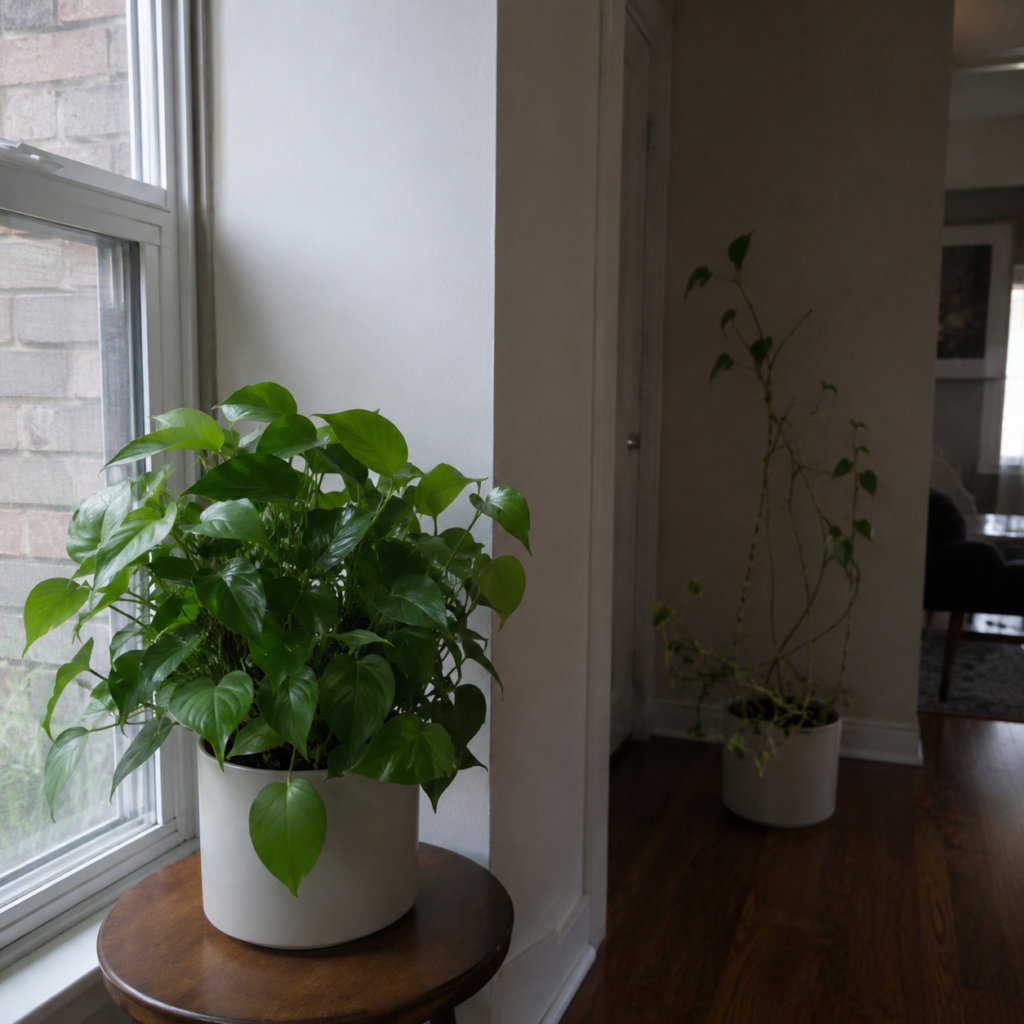
Use distance as a decision tool. Windowsills are best for smaller plants like spider plant, peperomia, small pothos, and small Chinese evergreen. One to three feet from the window works for ZZ plant, pothos, peace lily, parlor palm, and Chinese evergreen. Three to six feet away should be reserved for tougher plants such as ZZ plant, cast iron plant, and snake plant. Across the room is risky unless the space is still bright or you use a grow light. Curtains, dust, tinted glass, and furniture also reduce usable light. Keep leaves clean, open curtains during the day, and rotate plants every two to four weeks so growth stays balanced.
- Best placement: windowsill or 1–3 feet from glass
- Across-room placement usually needs a grow light
- Rotate pots every 2–4 weeks for even growth
How Often Should You Water?
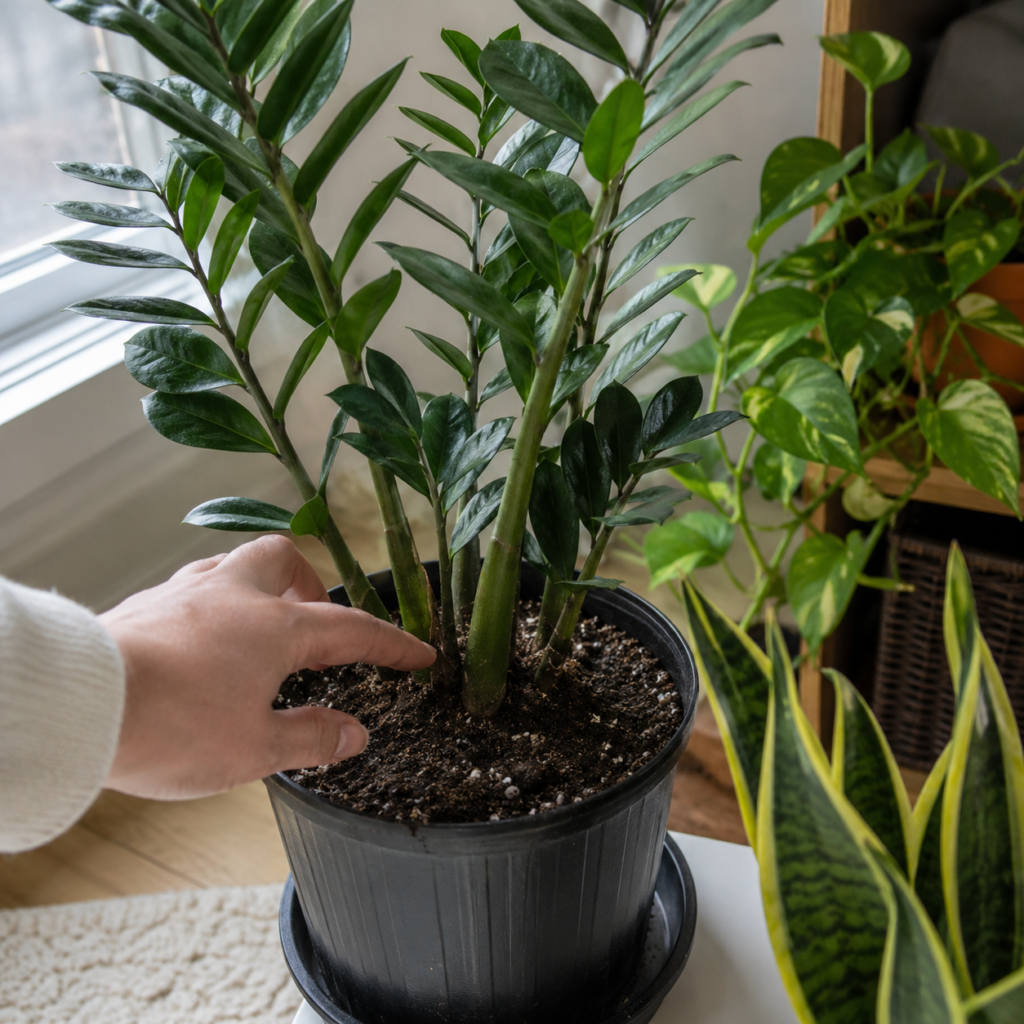
Pot choice matters as much as watering frequency. Always use a pot with drainage holes, even if it sits inside a decorative outer pot. After watering, empty any water sitting in the saucer or cachepot. Wet soil plus low light is one of the fastest ways to damage roots. Signs of overwatering include yellow leaves, soft stems, fungus gnats, sour-smelling soil, and leaves dropping while the soil is still wet. Signs of underwatering include crispy edges, dry soil, and wilting when the pot feels light. In winter, reduce watering even more because shorter days and cooler temperatures slow growth.
- Do not water on a fixed schedule
- Check soil before watering
- Use drainage holes
- Yellow leaves with wet soil often mean overwatering
Why Is My Plant Not Growing?
Growth problems become serious when slow growth appears with other symptoms. Long gaps between leaves usually mean the plant is reaching for more light. Yellow leaves with wet soil often point to overwatering. Pale foliage, leaning stems, and smaller new leaves can also signal that the plant needs a brighter position. First, move the plant closer to the window and open curtains during the day. Second, check the soil and drainage. Third, look at pot size because oversized pots hold too much wet soil around small roots. Do not try to fix low light with heavy fertilizer. Fertilizer cannot replace light and may stress a slow-growing plant.
- Leggy stems usually mean weak light
- Yellow leaves with wet soil suggest overwatering
- Avoid heavy fertilizer when light is weak
Do You Need a Grow Light?
Use a grow light if your plant becomes leggy, produces smaller leaves, loses variegation, leans strongly, or stops growing for a long time. Place the grow light above the plant rather than far across the room because light weakens with distance. A practical schedule is 8 to 12 hours per day using a timer. Do not leave the light on all day and night because plants also need a dark period. If you do not want a grow light, choose tougher plants such as ZZ plant, cast iron plant, green pothos, or snake plant. For colorful plants, flowering plants, or plants far from the window, a grow light gives much better decision clarity.
- Place light above the plant
- Use 8–12 hours daily with a timer
- Do not leave grow lights on 24 hours
Best Plants by Room
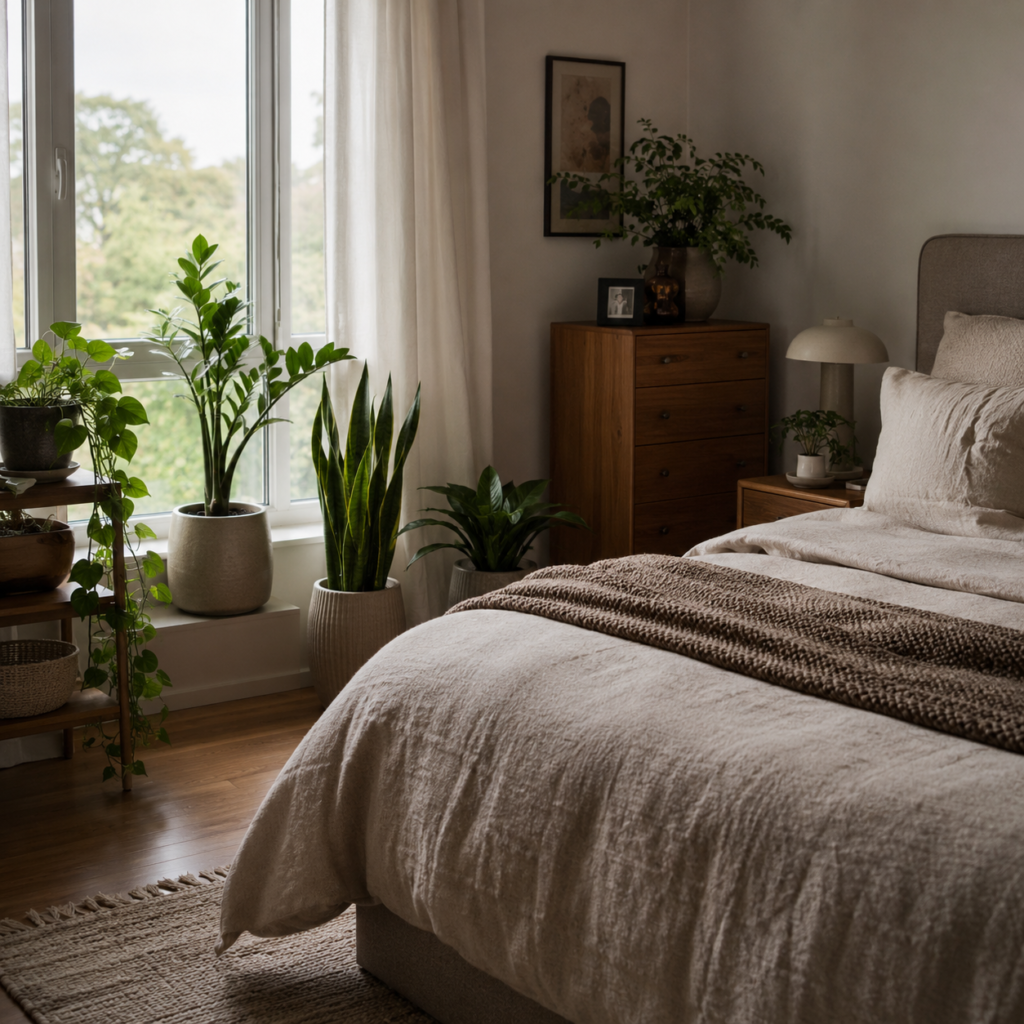
For bedrooms, choose ZZ plant, snake plant, pothos, cast iron plant, or peace lily. For bathrooms, choose Boston fern, bird’s nest fern, peace lily, or pothos if the room has some natural light. For offices, choose ZZ plant, cast iron plant, pothos, snake plant, or Chinese evergreen because they handle neglect better. For living rooms, use parlor palm, rubber plant near a bright window, cast iron plant, Chinese evergreen, pothos, or peace lily. For kitchens, choose pothos, spider plant, peperomia, or heartleaf philodendron instead of herbs unless you add a grow light.
North-Window Plant Care
Use weekly checking, not weekly watering. Look at the leaves, feel the soil, lift the pot, and check if the plant is leaning. Wipe broad leaves monthly because dust blocks already-limited light. Rotate plants every two to four weeks so all sides receive some light. Do not fertilize heavily when growth is slow. Fertilizer supports growth, but it cannot create growth without light. Repot only when roots truly need more space because oversized pots hold too much wet soil. If the room becomes darker in winter, reduce watering and consider a grow light.
- Use pots with drainage holes
- Check soil before watering
- Rotate plants every 2–4 weeks
- Wipe dusty leaves monthly
- Add a grow light if growth becomes weak
Which Plants Survive Best?
Use the score as a buying filter. If your room is dark and you want the safest plant, choose ZZ plant or cast iron plant. If you want trailing growth, choose pothos or heartleaf philodendron. If you want a floor plant, choose parlor palm or cast iron plant. If you want flowers, choose peace lily but accept fewer blooms. If you want a bathroom plant, Boston fern can work, but only if the bathroom has humidity and some natural light. The score gives decision clarity because it separates “can survive” from “will look good with your care routine.”
| Plant | Low-Light Survival | Growth Speed | Beginner Safety | Best Use |
| ZZ plant | 5/5 | Slow | 5/5 | Beginners |
| Cast iron plant | 5/5 | Slow | 5/5 | Dark rooms |
| Pothos | 4/5 | Medium | 5/5 | Hanging baskets |
| Snake plant | 4/5 | Slow | 5/5 | Upright corners |
| Peace lily | 4/5 | Medium | 4/5 | Soft foliage |
| Parlor palm | 4/5 | Slow | 4/5 | Floor plant |
| Chinese evergreen | 4/5 | Medium | 4/5 | Colorful foliage |
| Heartleaf philodendron | 4/5 | Medium | 4/5 | Trailing vines |
| Spider plant | 3/5 | Medium | 4/5 | Windowsills |
| Boston fern | 3/5 | Medium | 2/5 | Humid bathrooms |
Plantsaholic Care Note
In real indoor setups, the easiest plant is not always the one that grows the fastest. This is an important point because many beginners assume a healthy plant should constantly push out new leaves. In a north-facing window, that is not always realistic. Some of the strongest plant choices, such as ZZ plant, cast iron plant, and snake plant, may stay visually stable for long periods with only slow change. That stability is actually a strength. These plants often continue looking healthy even when growth is minimal. On the other hand, pothos and heartleaf philodendron often show light problems more quickly through stretched vines, wider leaf gaps, or smaller leaves, which makes them helpful “indicator plants” for readers trying to judge light quality.
Pet Safety
Many popular indoor plants can be toxic to cats, dogs, or children if chewed. This includes pothos, peace lily, snake plant, philodendron, and several other common houseplants. Pet safety is important because many of the best north-facing window plants are also common household plants that curious pets may bite. A plant can be perfect for light conditions but still wrong for a home where pets chew leaves. This does not mean pet owners cannot enjoy indoor plants. It means plant choice and placement should be part of the decision before buying.
- Keep pothos, peace lily, snake plant, and philodendron away from pets
- Choose safer plants if pets chew leaves
- Contact a vet if a pet eats a toxic plant
FAQs
What are the best indoor plants for a north-facing window?
ZZ plant, pothos, snake plant, cast iron plant, peace lily, parlor palm, spider plant, Chinese evergreen, heartleaf philodendron, and Boston fern are the best choices.
Is a north-facing window good for plants?
Yes, it is good for low-light tolerant plants. It is not suitable for plants that need strong direct sun.
What is the easiest plant for a north-facing window?
ZZ plant is the easiest choice. It tolerates low light, missed watering, dry air, and slow growth.
Can snake plants live in a north-facing window?
Yes, snake plants can live there. They grow slowly, so keep them close to the glass and avoid overwatering.
Can pothos grow in a north-facing window?
Yes, pothos grows well there, especially green varieties. Highly variegated pothos may lose color in very dim rooms.
Do north-facing window plants need less water?
Yes, they usually need less water because low light slows growth. Always check the soil before watering.
What plants should I avoid in a north-facing window?
Avoid cacti, succulents, citrus, lavender, rosemary, basil, bird of paradise, jade plant, and many flowering plants.
Why are my north-window plants turning yellow?
Yellow leaves often mean overwatering or poor drainage. Check soil moisture before watering again.

Myra is the founder and lead writer of Plantsaholic. She shares practical, research-backed advice on indoor plants, outdoor gardening, flowers, herbs, succulents, and everyday plant care. Her goal is to help gardeners of all experience levels grow healthier plants through simple, easy-to-follow gardening guides.