Brown tips on plant leaves usually happen because the plant is stressed by inconsistent watering, dry indoor air, mineral-heavy tap water, fertilizer salt buildup, harsh sunlight, poor drainage, or root damage. The brown part will not turn green again, but you can stop new brown tips by fixing the cause early.
For most indoor plants, brown leaf tips are not an instant death warning. They are an early signal that something in the plant’s care routine needs adjustment. The key is to look at the whole plant, not just one brown edge. Dry soil, yellow leaves, crispy texture, soft stems, white crust on soil, or browning on new growth can all point to different problems.
Plantsaholic Note
In our experience, brown leaf tips are most often linked to watering habits rather than disease. Many plant owners respond by watering more, but the better first step is checking soil moisture and drainage. Understanding whether the roots are too dry or too wet usually solves the mystery faster than adding fertilizer, changing soil, or moving the plant repeatedly.
By focusing on root health first, you can avoid the most common mistake: treating the symptom instead of fixing the cause.
Quick Brown Tip Diagnosis
The fastest way to diagnose brown leaf tips is to look beyond the leaf itself. Brown tips are a symptom, not a cause. The condition of the soil, roots, light, humidity, and water source usually reveals the real problem. Many plant owners assume brown tips automatically mean underwatering, but overwatering, fertilizer buildup, and poor water quality can create the same symptom.
A quick inspection can often narrow the problem down within minutes. Check whether the soil feels dry or wet, look for yellow leaves, inspect the pot for drainage holes, and think about any recent changes in your plant care routine. New fertilizer, a move to a sunnier window, winter heating, or a recent repot can all trigger brown tips.
Use This Quick Diagnosis Guide
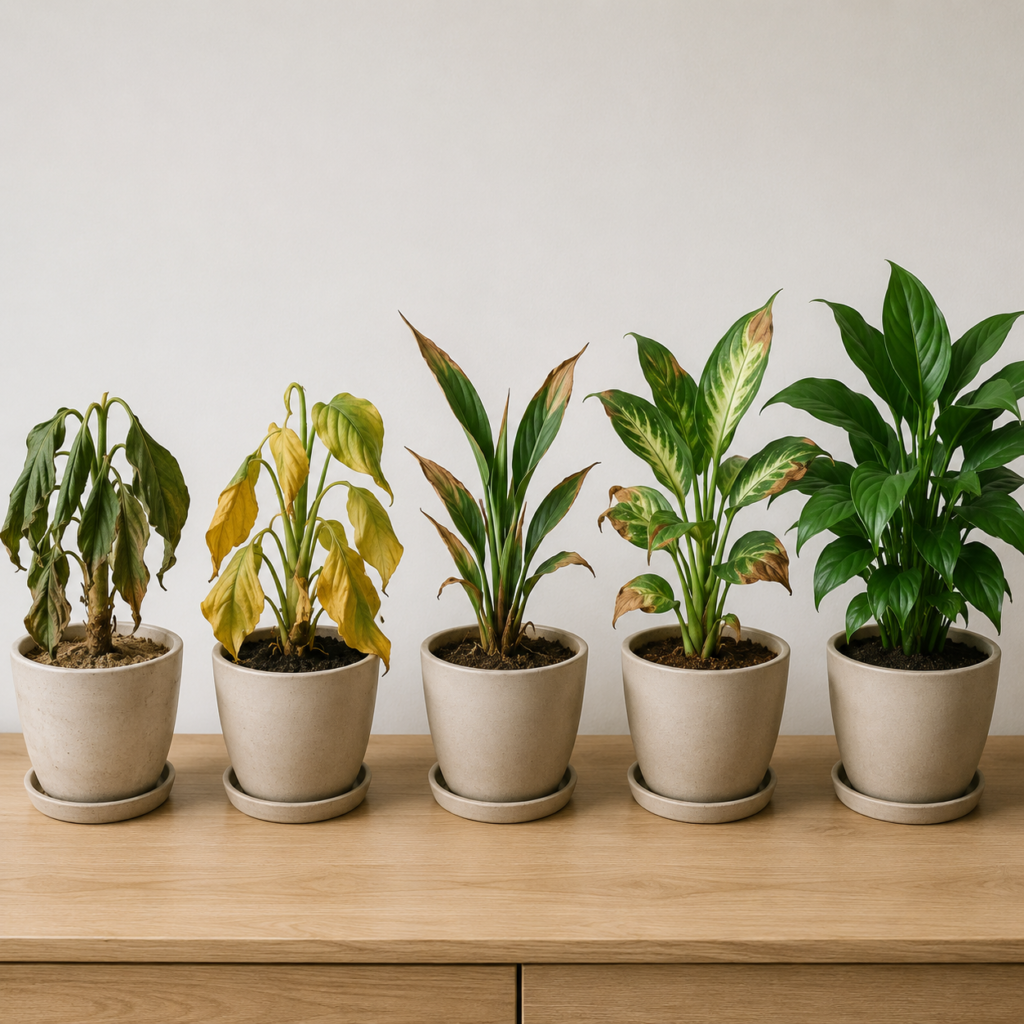
| Check This First | Most Likely Cause |
| Soil is dry and pot feels light | Underwatering |
| Soil is wet and leaves are yellow | Overwatering |
| Brown tips on spider plant or dracaena | Tap water minerals |
| White crust on soil surface | Salt or fertilizer buildup |
| Brown leaves facing a sunny window | Sunburn |
| New leaves browning first | Active care problem |
| Tropical plant in dry room | Low humidity |
| Plant dries out every few days | Rootbound plant |
Are Brown Tips Serious?
Brown leaf tips do not always mean your plant is dying. In many cases, they are an early stress warning. If the plant still has strong stems, mostly green leaves, and new growth, it can usually recover once the care problem is corrected. The damaged brown tissue will stay brown, but future leaves can grow clean and healthy.
Brown tips become more serious when they appear with yellowing leaves, mushy stems, wet soil, bad-smelling roots, or fast leaf drop. These symptoms suggest a deeper root, watering, or disease problem. If only one or two older leaves have brown tips, it may simply be normal aging.
More serious warning signs include:
- New leaves opening with brown tips
- Yellow leaves plus brown edges
- Soft or mushy stems
- Wet soil for many days
- Black, brown, or smelly roots
- Leaves dropping quickly
- Brown patches spreading fast
Decision clarity: if the plant has healthy new growth, focus on improving care. If the plant has mushy roots, soggy soil, and yellowing leaves, inspect the roots immediately. Brown tips alone are manageable; brown tips with root rot symptoms need faster action.
Underwatering and Brown Tips
Underwatering is one of the most common reasons plant leaves develop crispy brown tips. When soil becomes too dry, the plant cannot send enough moisture to the farthest parts of the leaves. The tips dry first, then the edges may become brittle, curled, or papery. This is common in plants kept near sunny windows, heaters, fans, or small pots that dry quickly.
The mistake many beginners make is giving small surface splashes instead of deep watering. A plant may look watered on top, but the lower root ball can remain dry. This causes hidden dehydration, especially in compacted or peat-heavy soil that repels water after drying out.
Signs of underwatering include:
- Crispy brown tips
- Dry soil
- Wilting leaves
- Curling leaves
- Pot feels very light
- Soil pulling away from pot edges
- Slow or weak growth
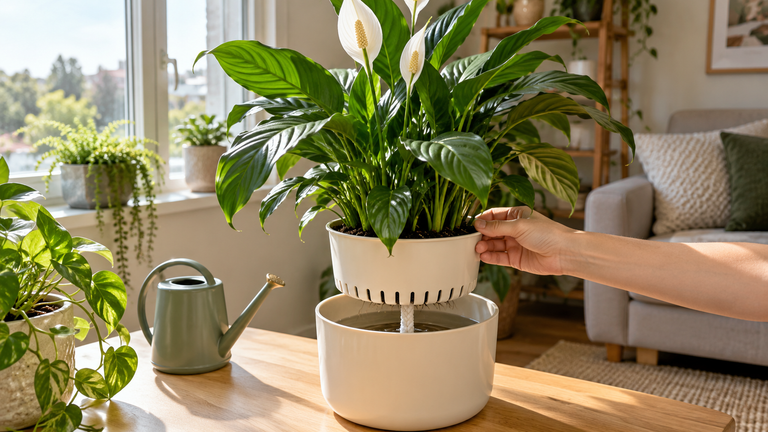
The fix is to water deeply when the plant actually needs it. For many houseplants, water when the top 1–2 inches of soil feel dry. Soak the soil until water drains from the bottom. If water runs straight through, bottom-water the pot for 20–30 minutes so the dry root ball can rehydrate properly.
Overwatering and Brown Tips
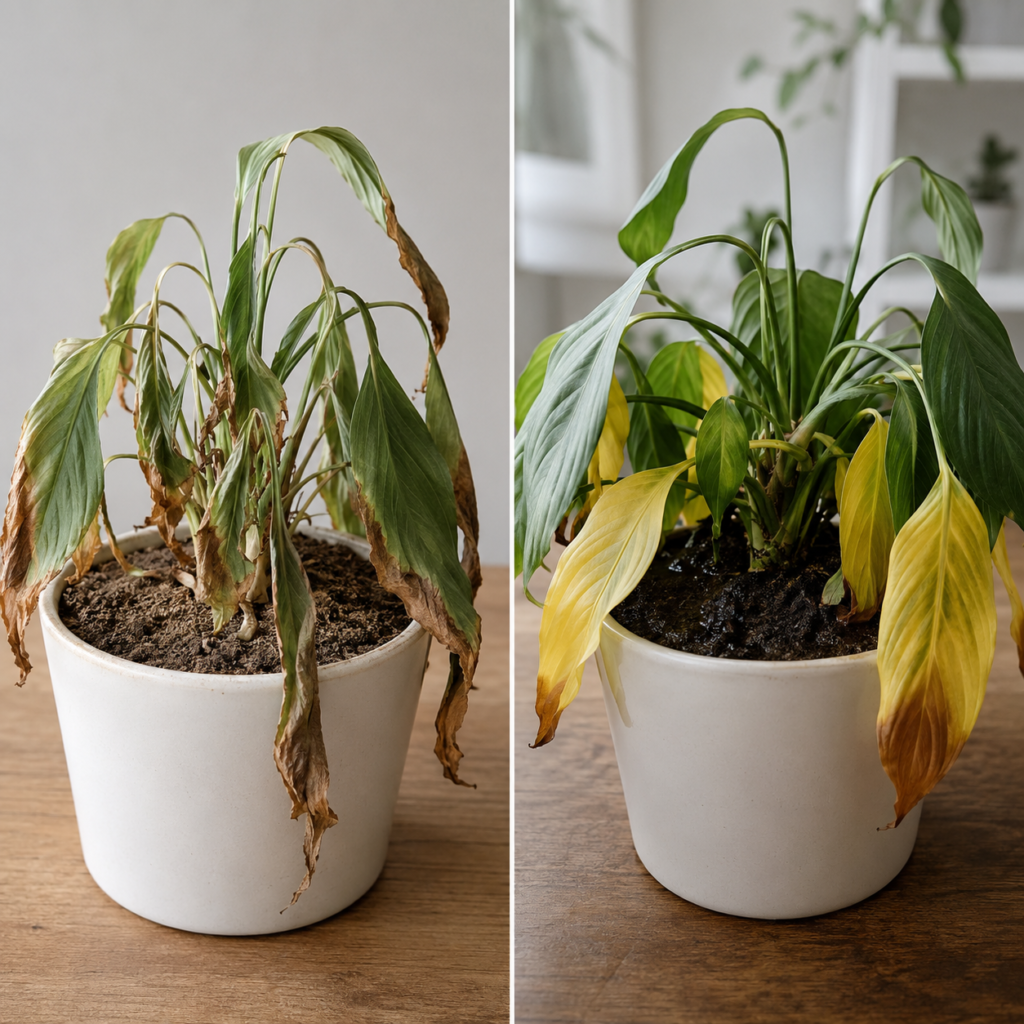
Yes, overwatering can also cause brown tips, even though the tips may look dry. This happens because constantly wet soil suffocates the roots. Damaged roots cannot absorb oxygen or move water correctly, so the leaf tips dry out while the soil remains wet. This is why overwatered plants can look thirsty even when the pot feels heavy.
Overwatering usually appears with yellow leaves, soft stems, fungus gnats, or soil that stays wet for several days. It is more common in pots without drainage holes, oversized pots, dense soil, and low-light rooms where plants use water slowly.
Signs of overwatering include:
- Brown tips with yellow leaves
- Wet soil for many days
- Mushy stems
- Fungus gnats
- Bad soil smell
- Drooping after watering
- Black or soft roots
Decision clarity: if the soil is dry and leaves are crispy, underwatering is more likely. If the soil is wet and leaves are yellow or soft, overwatering is more likely. Stop watering until the top soil dries, check drainage holes, and inspect roots if the plant keeps declining.
Low Humidity and Brown Tips
Low humidity is a major cause of brown leaf tips on tropical indoor plants. Many popular houseplants come from humid environments, but indoor air is often dry because of heaters, air conditioners, fans, and closed rooms. When air is too dry, leaves lose moisture faster than the roots can replace it, and the tips or edges turn brown first.
This problem is especially common in calatheas, peace lilies, ferns, palms, spider plants, prayer plants, and some philodendrons. These plants may be watered correctly but still develop brown tips because the air around them is too dry. Winter often makes the problem worse.
Humidity stress often looks like:
- Crispy brown tips
- Brown leaf edges
- Curling leaves
- Dry leaf texture
- Browning on delicate tropical plants
- Faster damage during winter
A humidifier is the best solution for sensitive plants. Grouping plants together, moving them away from vents, and placing them in naturally humid rooms can also help. Misting gives only temporary relief and is not enough for serious humidity problems.
Tap Water and Brown Tips
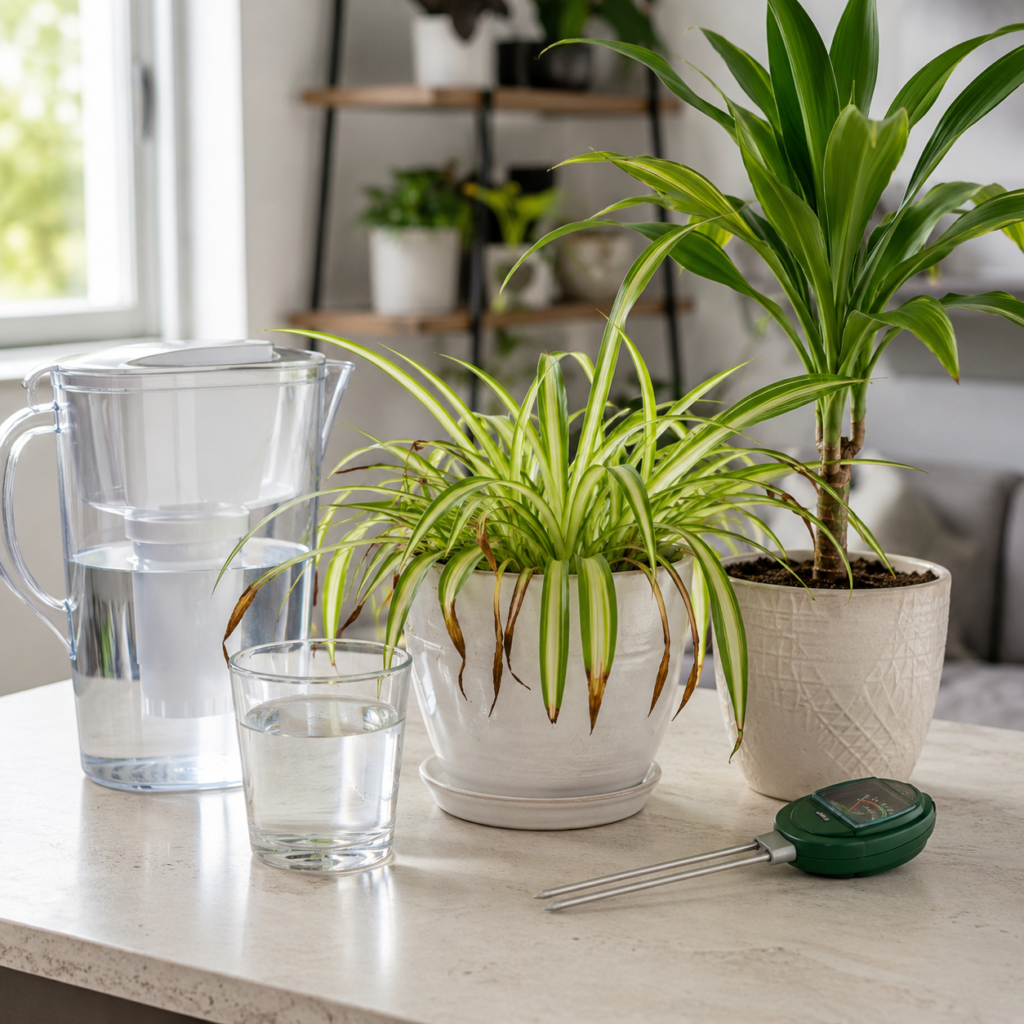
Tap water can cause brown tips on sensitive plants because it may contain fluoride, chlorine, dissolved salts, or minerals. These substances can build up in the soil over time and damage leaf tips or roots. The plant may look healthy overall, but the tips keep browning again and again after each new leaf matures.
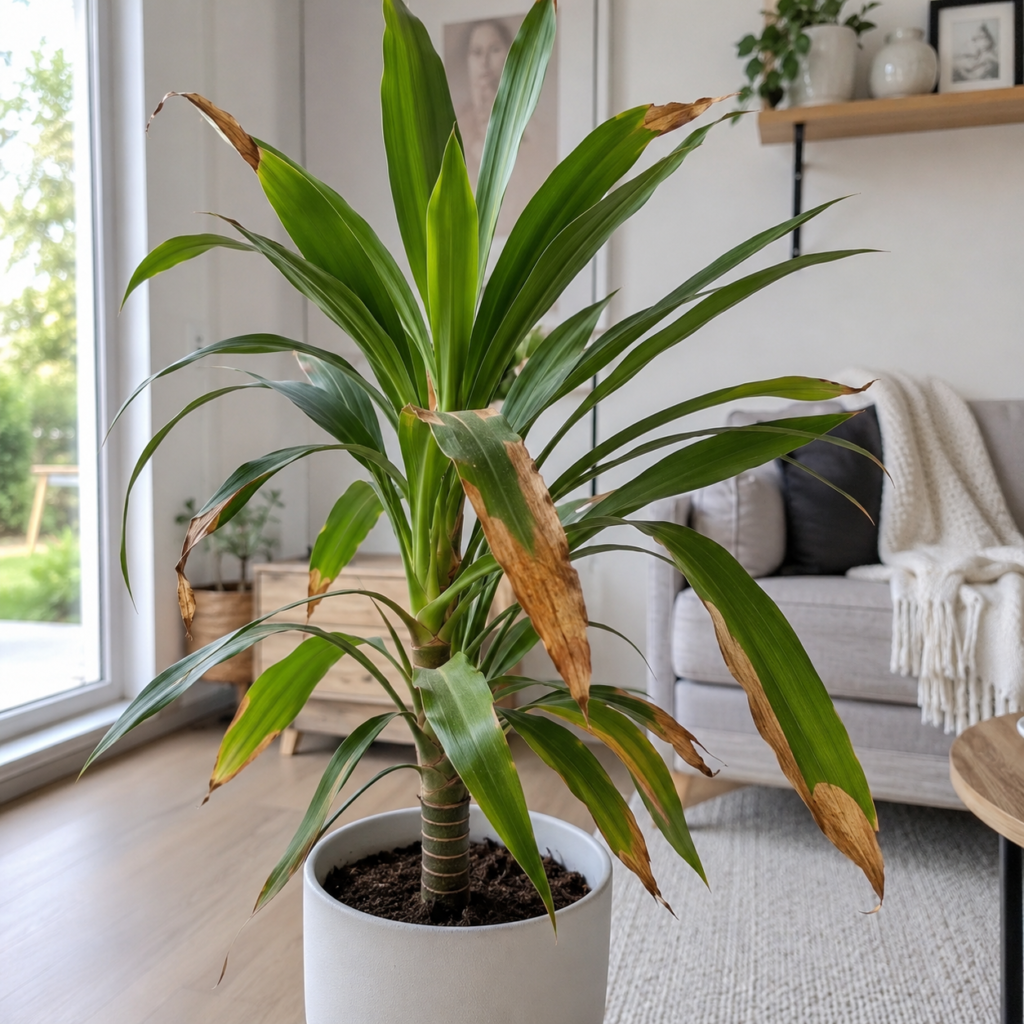
Spider plants, dracaena, peace lilies, calatheas, prayer plants, and some palms are more sensitive to water quality. Dracaena and spider plants are especially known for brown tips when mineral buildup or fluoride is present. If your watering routine seems correct but brown tips keep returning, the water source is worth checking.
Signs tap water may be the cause:
- Brown tips keep returning
- White crust appears on soil
- Leaf edges burn on sensitive plants
- Soil has mineral buildup
- Plant improves with filtered water
- Damage appears slowly over time
Switch to filtered water, rainwater, or distilled water for sensitive plants. Avoid softened water if it contains sodium because sodium can build up in soil. You can also flush the soil occasionally by running water through the pot and letting it drain fully. If the soil has heavy white crust, repotting may be better than flushing.
Fertilizer Burn and Brown Tips
Fertilizer burn happens when excess fertilizer salts build up in the soil and damage the roots. Instead of helping the plant grow, too much fertilizer pulls moisture away from root tissue and causes leaf tips to turn brown. This often happens when fertilizer is used too often, applied too strongly, or added to dry soil.
Brown tips from fertilizer burn may appear after feeding, especially on plants that were already stressed. Many indoor plants do not need heavy feeding. In low light or winter, they grow slowly and use fewer nutrients, so fertilizer builds up faster.
Signs of fertilizer burn include:
- Brown or burnt leaf tips
- White crust on soil surface
- Leaf edge browning
- Wilting despite moist soil
- Slow growth after feeding
- Root stress
- Damage after recent fertilizing
Stop fertilizing for several weeks if you suspect fertilizer burn. Flush the soil with clean water if the pot drains well, or repot if the soil is heavily crusted.
Sunburn and Brown Tips
Too much direct sun can burn leaf tips, edges, or full patches of the leaf. This is common when a plant that prefers bright indirect light is placed in harsh afternoon sun or against a hot window. The leaf tissue overheats, loses moisture quickly, and turns brown, tan, or crispy.
Sunburn often appears on the side of the plant facing the window. The damage may look bleached at first, then turn brown. Plants moved suddenly from low light to bright direct sun are especially vulnerable because their leaves are not adjusted to strong light.
Signs of sun stress include:
- Brown tips or patches near the window
- Faded or bleached leaves
- Crispy leaf edges
- Damage on sun-facing leaves
- Soil drying very quickly
- Leaves curling away from light
Move the plant into bright indirect light instead of harsh direct sun. A sheer curtain can soften strong light while keeping brightness high. Grow lights can also cause tip burn if they are too close or too strong.
Poor Drainage and Brown Tips
Poor drainage causes brown tips because roots need oxygen as much as they need water. When water sits at the bottom of a pot, the root zone becomes soggy and oxygen-starved. Over time, roots weaken, rot, and stop sending enough water to the leaves. The tips then turn brown even though the soil is wet.
This is common in decorative pots without drainage holes. The top soil may feel dry, but hidden water can remain trapped near the bottom. Dense soil also creates drainage problems because it holds too much water and compacts around the roots.
Poor drainage signs include:
- Soil stays wet too long
- Brown tips with yellow leaves
- Mold on soil surface
- Fungus gnats
- Heavy pot
- Bad smell
- Roots turning brown or black
Use pots with drainage holes whenever possible. If you use a decorative cachepot, keep the plant in a nursery pot and empty extra water after watering. Add perlite, orchid bark, or pumice to improve airflow in the soil.
Root Problems and Brown Tips
Root problems can make leaf tips brown because roots control water and nutrient movement. If roots are damaged, crowded, rotten, or dried out, the leaves cannot receive steady moisture. Brown tips may continue even when watering looks correct because the real issue is underground.
A rootbound plant may dry out very quickly because the pot is full of roots and has little soil left to hold moisture. A root-rotted plant may stay wet but still look thirsty because damaged roots cannot absorb water. Both situations can cause brown tips, but they require different fixes.
Common root problems include:
- Root rot
- Root crowding
- Compacted soil
- Dry root ball
- Damaged roots after repotting
- Soil pest damage
- Poor oxygen around roots
Check roots if brown tips continue after correcting water, light, and humidity. Healthy roots are firm and usually light-colored. Rotten roots are soft, black, brown, or smelly. Rootbound plants need a slightly larger pot. Root-rotted plants need damaged roots trimmed and fresh soil.
Will Brown Tips Spread?
Brown leaf tips may or may not continue spreading depending on whether the underlying cause has been corrected. The brown tissue that already exists will remain damaged, but healthy green tissue nearby can stay unaffected if the plant receives proper care moving forward.
If the cause remains active, the damage often expands along the edges of the leaf. What starts as a small brown tip may gradually become a larger brown margin. In severe cases, entire leaves can become yellow, dry, or fall off. New growth may also begin showing damage if the stress continues.
Brown tips are more likely to spread when:
- The soil repeatedly becomes too dry
- Roots remain waterlogged
- Humidity stays very low
- Fertilizer salts continue accumulating
- Tap water minerals build up
- Root rot remains untreated
- The plant stays in excessive direct sun
The best indicator of recovery is not the old damaged leaf. It is the condition of the next new leaf. If new growth appears green and healthy, the problem is likely under control. If every new leaf develops brown tips, the original stress factor is still present and needs further investigation.
A good rule is to monitor the plant for two to four weeks after making corrections. Improvement often appears first in new growth rather than in older leaves.
Should You Cut Brown Tips?
Yes, you can cut brown tips off plant leaves, but trimming only improves appearance. It does not fix the cause. The brown tissue is dead and will not turn green again, so removing it is safe if the rest of the leaf is healthy. Use clean, sharp scissors to avoid spreading bacteria or damaging the plant.
Cut only the brown part and follow the natural shape of the leaf. Avoid cutting deeply into healthy green tissue because this creates a fresh wound and reduces the plant’s ability to photosynthesize. If many leaves are damaged, remove the worst leaves gradually instead of stripping the plant at once.
Safe trimming steps:
- Clean scissors with rubbing alcohol
- Cut only dry brown tissue
- Follow the leaf shape
- Avoid healthy green areas
- Remove fully dead leaves at the base
- Do not over-prune a stressed plant
When to Repot Brown-Tip Plants
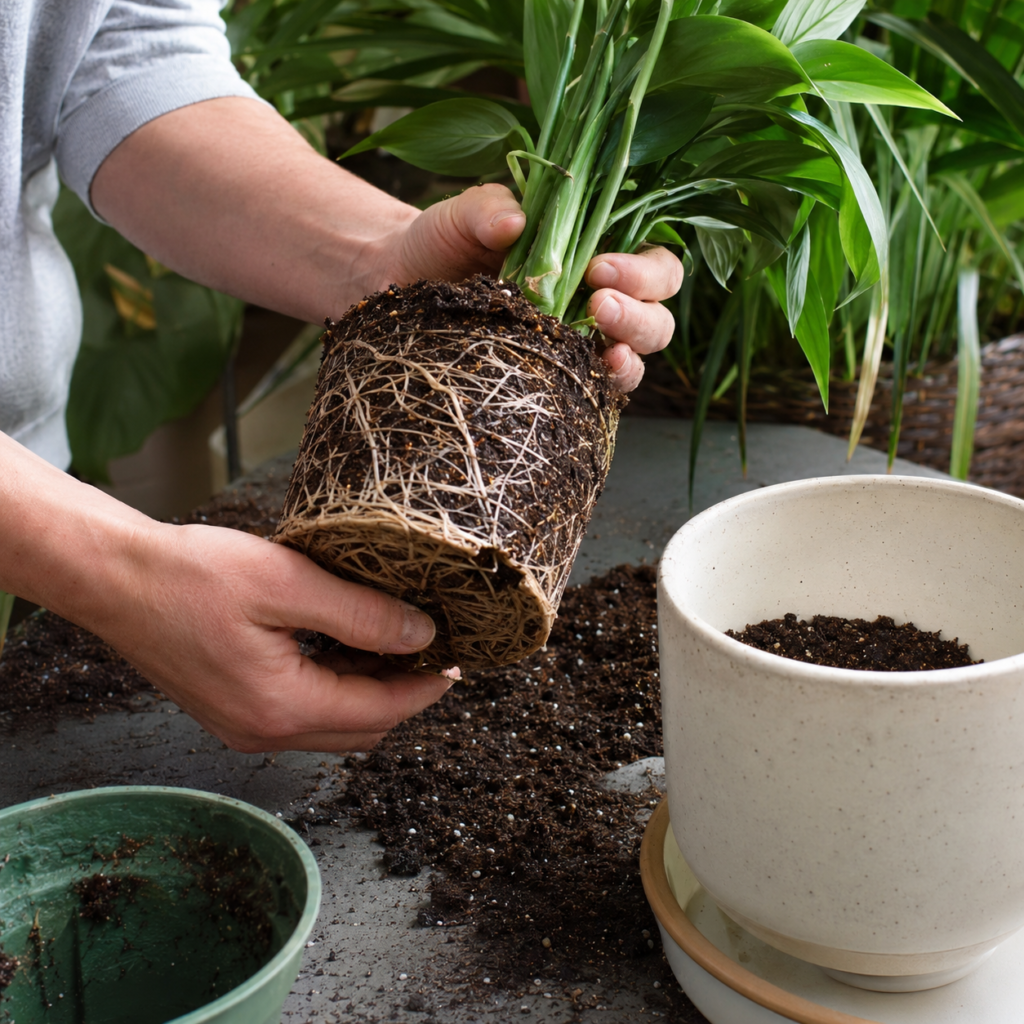
Repotting can solve brown tip problems in some situations, but it is not always necessary. Many brown tip issues come from watering habits, humidity, fertilizer buildup, or water quality. Repotting should only be considered when the root system or soil condition is contributing to the problem.
Plants that have become rootbound often dry out quickly because there is very little soil left to hold moisture. Compacted soil can also prevent water and oxygen from reaching the roots properly. In these situations, repotting gives the roots more space and restores healthy growing conditions.
You should consider repotting when:
- Roots circle heavily around the pot
- Roots grow out of drainage holes
- Soil dries extremely fast
- Soil has become compacted
- Root rot is present
- Water runs straight through without soaking in
- Growth has slowed despite proper care
Avoid repotting simply because one or two leaves have brown tips. Repotting itself can stress a plant, especially during winter or when the plant is already weak. If the roots look healthy and the soil drains properly, focus on correcting watering, humidity, or water quality first.
When repotting, choose a container only one size larger than the current pot. Oversized pots hold excess moisture and can increase the risk of root rot.
How to Stop New Brown Tips
To stop new leaves from turning brown, correct the active stress before it reaches new growth. New leaves are the best recovery signal. If new growth appears clean, green, and firm, your care changes are working. If new leaves open with brown tips, the problem is still active.
Start with the most likely causes. Check soil moisture before watering. Make sure the pot drains. Move the plant away from harsh sun. Improve humidity for tropical plants. Use filtered water for sensitive plants. Stop fertilizing until the plant stabilizes. Inspect roots if nothing improves.
Use this prevention checklist:
- Water only when the plant needs it
- Use pots with drainage holes
- Avoid soggy soil
- Keep humidity stable
- Use filtered water for sensitive plants
- Fertilize lightly during active growth
- Keep plants away from vents
- Avoid harsh direct sun
- Repot rootbound plants
- Remove mineral buildup from soil
Brown Tips by Plant Type
Different plants develop brown tips for different reasons. A peace lily with brown tips may need more consistent watering, while a dracaena may be reacting to fluoride or mineral buildup. This is why plant-specific diagnosis is important. The symptom looks similar, but the cause can change based on the plant’s natural needs.
Use the plant type as a clue. Tropical plants often react to humidity. Thin-leaved plants react quickly to dry air. Sensitive plants react to tap water. Succulents and drought-tolerant plants are more likely to suffer from overwatering than dry air.
Peace Lily Brown Tips
Peace lilies often get brown tips from inconsistent watering, dry air, too much fertilizer, or mineral-heavy water. They like lightly moist soil but not soggy roots.
Spider Plant Brown Tips
Spider plants commonly develop brown tips from fluoride, salts, low humidity, or irregular watering. Filtered water often helps.
Dracaena Brown Tips
Dracaena plants are sensitive to fluoride and mineral buildup. Use filtered or distilled water and avoid heavy fertilizer.
Calathea Brown Tips
Calatheas need stable moisture, gentle light, high humidity, and clean water. Dry air and tap water often cause brown edges.
Palm Brown Tips
Indoor palms may brown from low humidity, underwatering, salt buildup, or pests. Check both soil moisture and leaf undersides.
Tools to Prevent Brown Tips
The right tools can make plant care more consistent and help prevent many of the conditions that lead to brown leaf tips. While healthy plants do not require expensive equipment, a few simple tools can reduce guesswork and improve long-term results.
Many brown tip problems happen because plant owners rely on assumptions rather than measurements. A moisture meter can prevent both overwatering and underwatering. A humidifier can solve dry-air issues that frequently affect tropical houseplants. Filtered water can reduce mineral buildup on sensitive plants.
Helpful tools include:
- Moisture meter for checking soil moisture
- Small humidifier for tropical plants
- Filtered water pitcher
- Sharp pruning scissors
- Pots with drainage holes
- Well-draining potting mix
- Pebble trays for humidity support
- Plant care journal or watering tracker
- Grow lights for dark rooms
- Root inspection tools during repotting
These tools are not a substitute for observation, but they help create consistency. Consistent watering, proper humidity, healthy soil, and good drainage are the foundations of preventing brown tips.
FAQs
Why are my plant leaves turning brown at the tips?
Brown tips usually come from watering stress, dry air, tap water minerals, fertilizer buildup, sun stress, or root problems. Check soil moisture first before changing care.
Can brown leaf tips turn green again?
No, brown tips cannot turn green again because the tissue is dead. You can trim them, but only new leaves can grow healthy and green.
Do brown tips mean my plant needs more water?
Not always. Brown tips can happen from both underwatering and overwatering, so check whether the soil is dry or wet before watering.
Why do brown tips keep coming back?
Brown tips return when the real cause is still active. Common causes include poor watering, low humidity, tap water minerals, fertilizer salts, or root stress.
Can tap water cause brown leaf tips?
Yes, tap water can cause brown tips on sensitive plants. Spider plants, dracaenas, calatheas, and peace lilies often react to minerals or fluoride.
Why do spider plant tips turn brown?
Spider plant tips often turn brown from tap water minerals, dry air, salt buildup, or inconsistent watering. Filtered water can help reduce new damage.
Why do peace lily leaves get brown tips?
Peace lilies usually get brown tips from inconsistent watering, low humidity, fertilizer burn, or mineral-heavy water. Keep soil lightly moist, not soggy.
Can overwatering cause brown leaf tips?
Yes, overwatering can damage roots and stop them from absorbing water properly. This can cause brown tips even when the soil feels wet.
Does low humidity cause brown tips?
Yes, dry indoor air often causes brown tips on tropical plants. Calatheas, ferns, palms, and prayer plants are especially sensitive.
Should I cut off brown leaf tips?
Yes, you can trim brown tips with clean scissors. Cut only the brown part and avoid removing healthy green leaf tissue.
Will brown leaf tips spread?
They can spread if the cause continues. If new leaves grow healthy after care changes, the problem is likely under control.
When should I repot a plant with brown tips?
Repot only if the plant is rootbound, soil is compacted, drainage is poor, or root rot is present. One brown tip alone does not require repotting.
How do I stop new leaves from turning brown?
Keep watering consistent, improve humidity, use clean water, avoid excess fertilizer, and check root health. New healthy growth means recovery.
Are brown tips normal on older leaves?
A few brown tips on older leaves can be normal. If new leaves also turn brown, the plant likely has an active care issue.
Myra is the founder and lead writer of Plantsaholic. She shares practical, research-backed advice on indoor plants, outdoor gardening, flowers, herbs, succulents, and everyday plant care. Her goal is to help gardeners of all experience levels grow healthier plants through simple, easy-to-follow gardening guides.