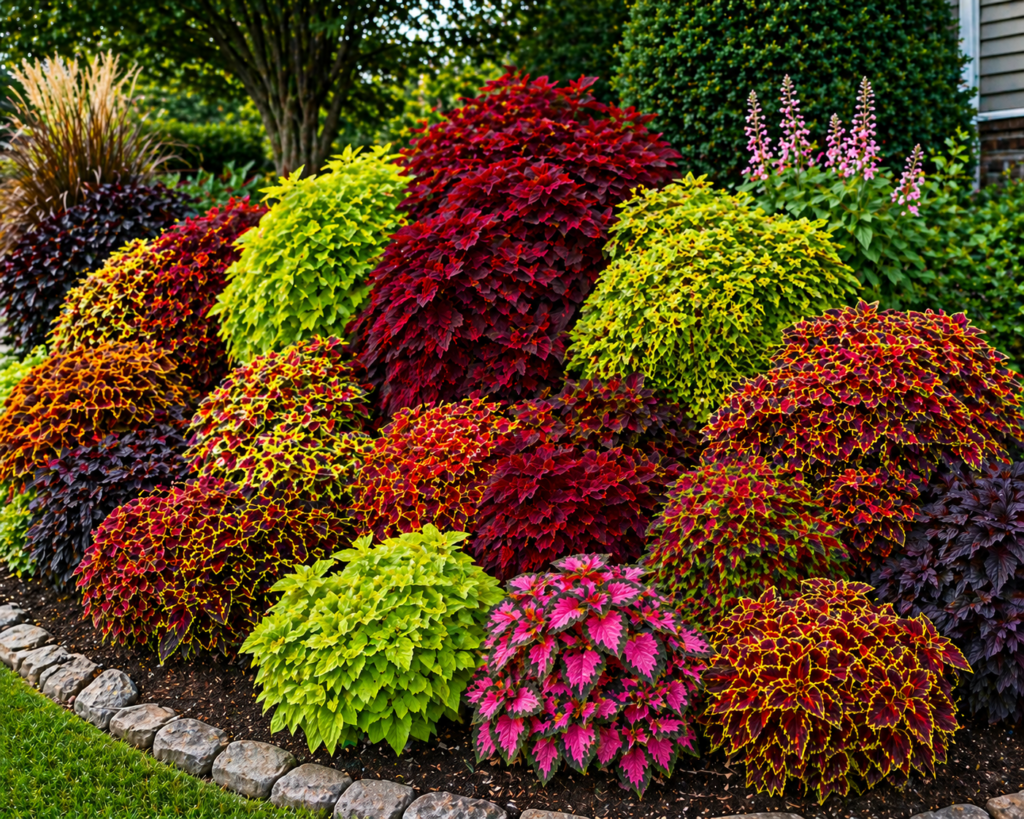
Coleus plants are among the most colorful ornamental foliage plants in gardening. Unlike flowering plants that depend on bloom cycles for beauty, coleus provides season-long color through its leaves alone. That makes it one of the most reliable decorative plants for containers, borders, patios, indoor spaces, and landscape beds.
Coleus foliage can include deep burgundy, lime green, yellow, red, purple, pink, orange, bronze, and nearly black shades. Many varieties have dramatic leaf patterns such as contrasting edges, painted centers, bright veins, and feathered color transitions. This natural diversity gives coleus a strong advantage in decorative garden design.
Coleus is also practical. It grows fast, roots easily from cuttings, handles pruning well, and adapts to both indoor and outdoor environments. A single plant can be propagated into multiple new plants, making it budget-friendly for gardeners.
Coleus works well in:
- Containers
- Borders
- Shade beds
- Sunny beds
- Hanging baskets
- Patios
- Window boxes
- Indoor rooms
- Tropical-style landscapes
For best results, coleus needs:
- Rich well-draining soil
- Consistent moisture
- Warm temperatures
- Correct light exposure
- Regular pruning
- Balanced feeding
- Good airflow
This guide covers everything you need to know about coleus care, plant types, propagation, pruning, indoor growing, winter survival, and landscape design.
What Is a Coleus Plant?
Coleus is a tropical ornamental perennial grown mainly for its foliage. It belongs to the mint family, which explains its square stems and branching growth habit. Native to tropical Asia, coleus naturally thrives in warm, humid environments.
In warm climates, coleus can live for multiple years. In colder climates, it is often treated as an annual or moved indoors before frost.
Older coleus varieties were mainly shade plants. Modern breeding changed that. Today, gardeners can choose from sun-tolerant, heat-resistant, compact, giant, and trailing varieties.
Common leaf features include:
- Multi-color centers
- Contrasting margins
- Speckled pigmentation
- Bright veins
- Serrated edges
- Velvet textures
Coleus flowers are usually small and less decorative than the foliage. Most gardeners remove flower spikes to keep energy focused on leaf production.
Why Are Coleus Plants So Popular?
Coleus remains popular because it provides strong ornamental value without relying on flowers. Many flowering plants look attractive only during bloom periods, but coleus stays decorative all season through foliage.
Coleus is ideal for:
- Long-season color beds
- Porch planters
- Balcony displays
- Window boxes
- Indoor décor
- Tropical-style gardens
Its biggest advantage is speed. A small nursery coleus can become full and bushy within a few weeks under warm conditions.
Coleus is beginner-friendly because it:
- Handles pruning well
- Roots easily from cuttings
- Recovers from minor stress
- Shows clear watering signals
- Adapts to pots and beds
This combination of beauty, speed, and flexibility makes coleus one of the most practical ornamental plants available.
Coleus Plant Care at a Glance
Light: Partial shade to full sun
Water: Keep soil evenly moist
Soil: Rich and well-draining
Soil pH: 6.0–7.0
Temperature: 65–85°F
Humidity: Moderate to high
Fertilizer: Every 2–4 weeks
Pruning: Every 2–3 weeks
Propagation: Stem cuttings
Pet safety: Mildly toxic
This quick guide helps simplify coleus care.
Main Types of Coleus Plants
Coleus varieties can be grouped by growth habit and light tolerance.
Shade Coleus
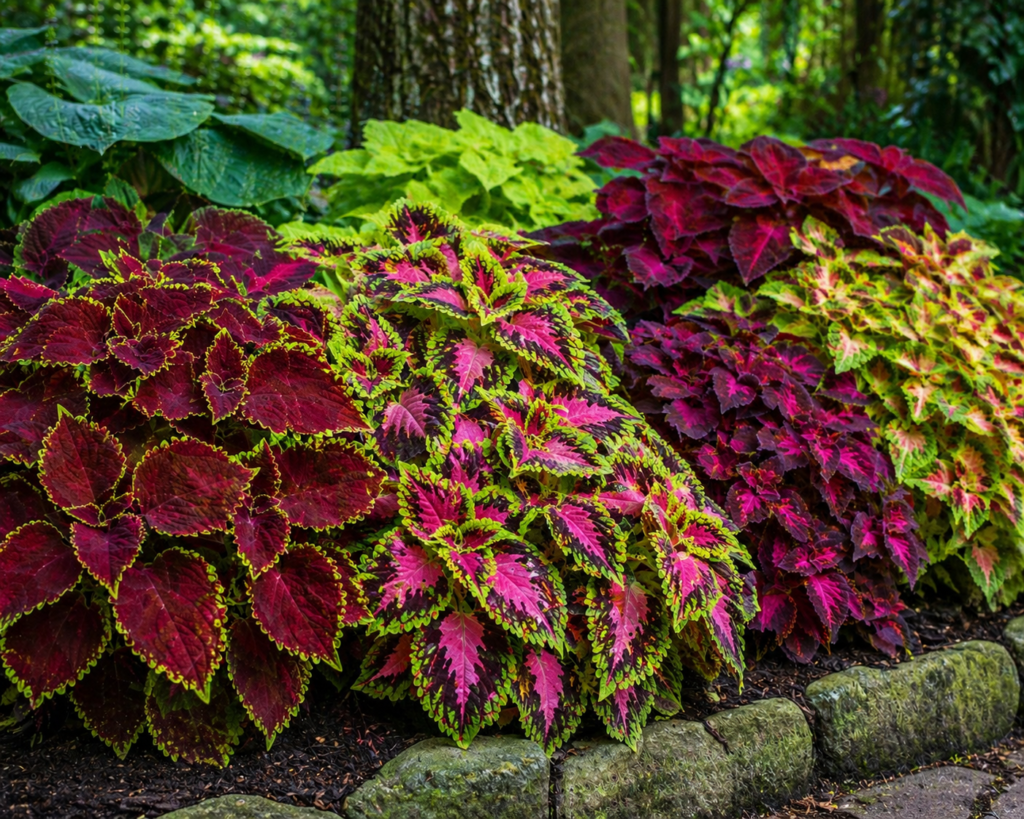
Traditional shade coleus grows best in filtered light or morning sun with afternoon shade.
Best for:
- Covered patios
- Indoor bright rooms
- Tree-shaded beds
- Porch containers
Popular examples:
- Wizard Jade
- Kong Rose
- Black Dragon
- Fishnet Stockings
Shade coleus often develops stronger pigmentation in softer light.
Sun Coleus
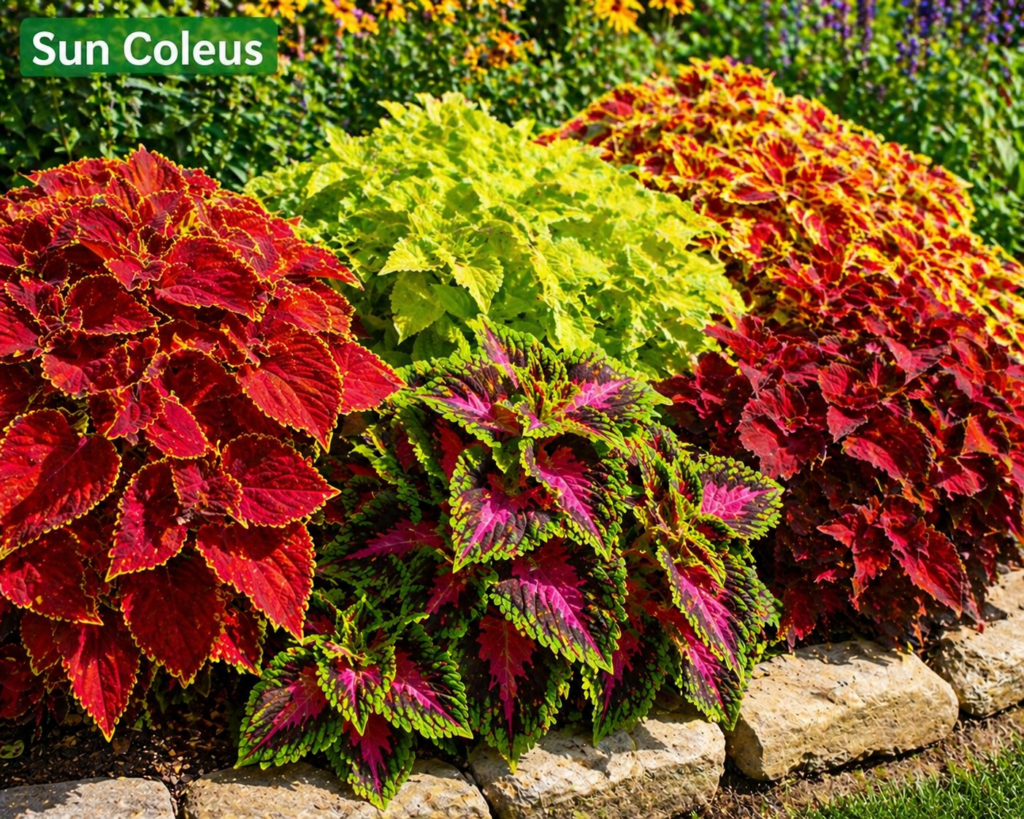
Sun coleus varieties tolerate stronger sunlight and heat.
Best for:
- Full-sun beds
- Hot patios
- Open landscapes
- Bright containers
Popular examples:
- Campfire
- Redhead
- Wasabi
- ColorBlaze varieties
Sun coleus expands planting options significantly.
Giant Coleus
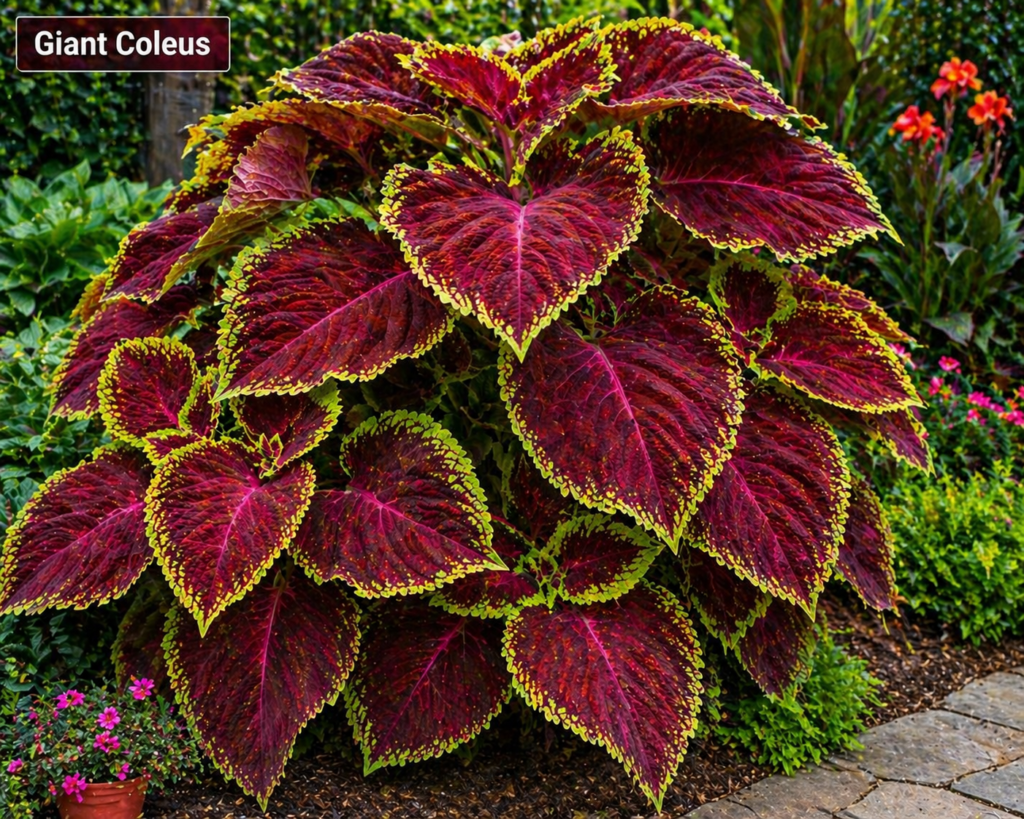
Giant coleus produces large leaves and bold structure.
Best for:
- Statement planters
- Tropical garden themes
- Back-row planting
- Focal displays
These varieties create strong visual weight.
Compact Coleus
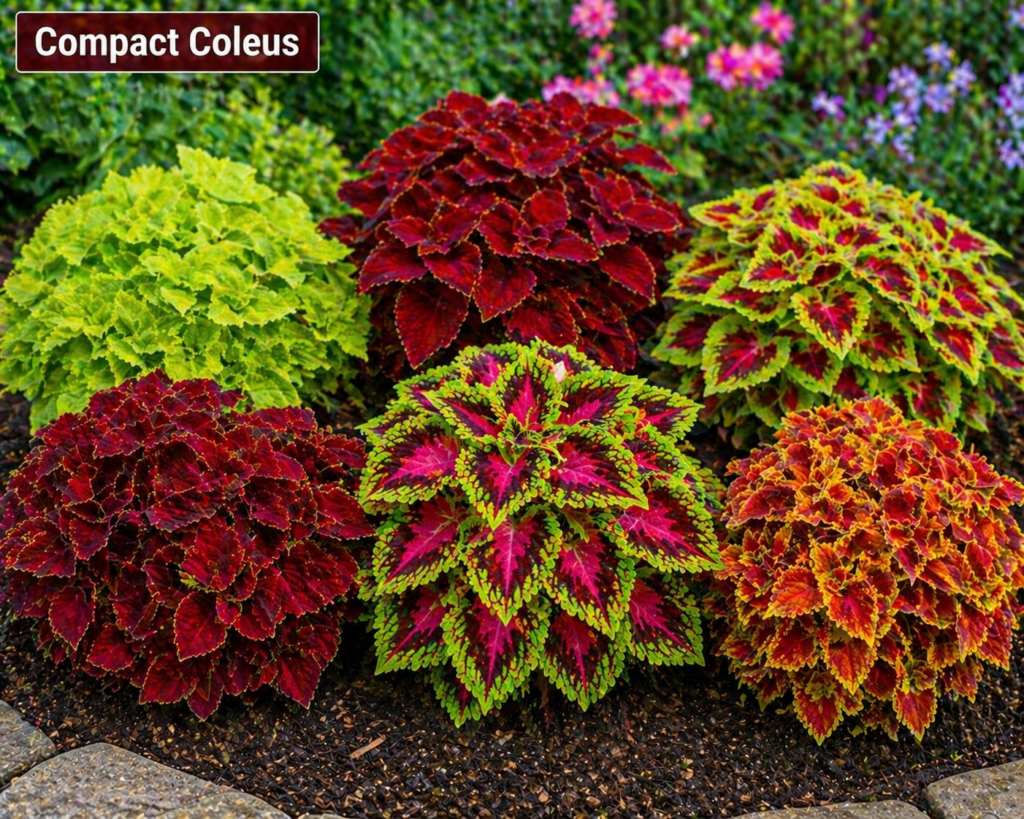
Compact coleus stays smaller and denser.
Best for:
- Small pots
- Indoor containers
- Border fronts
- Tabletop displays
These varieties require less maintenance.
Trailing Coleus
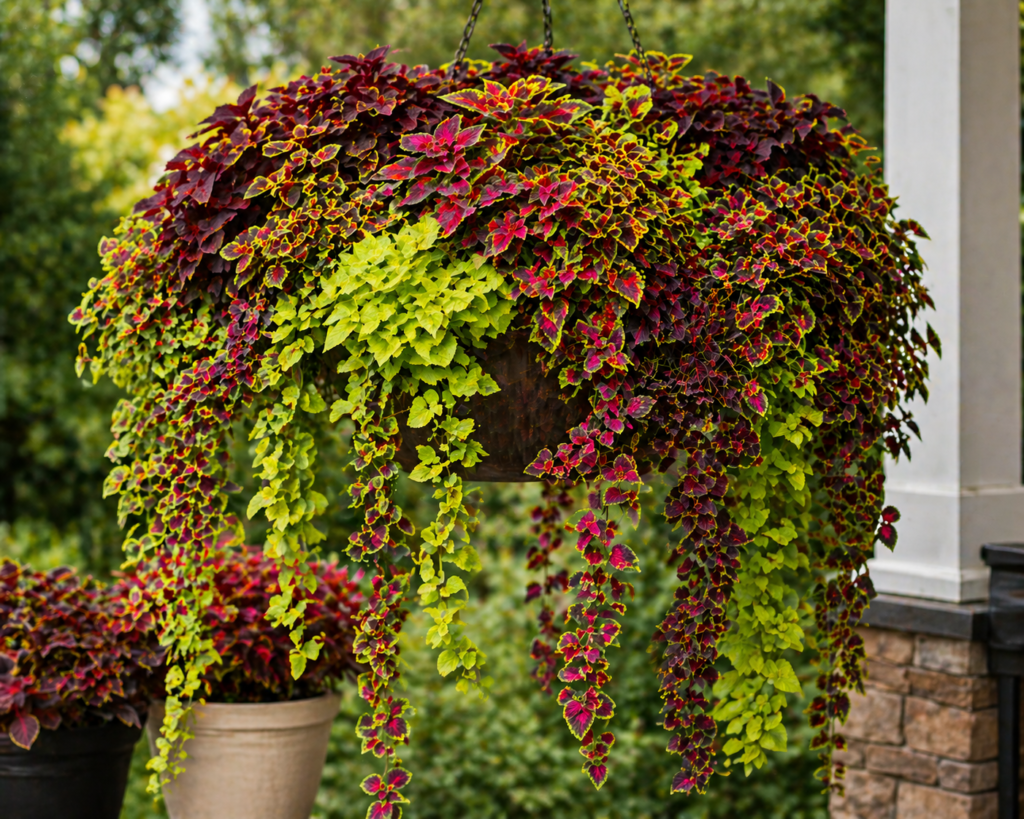
Trailing coleus spreads or cascades.
Best for:
- Hanging baskets
- Window boxes
- Container edges
- Mixed arrangements
Trailing coleus adds movement and layering.
How to Choose the Right Coleus Variety
Start with environment first.
Ask:
- How much sunlight is available?
- Is the area hot or cool?
- Indoor or outdoor?
- Pot or ground planting?
- Small accent or large focal point?
Traditional coleus performs best in partial shade. Sun coleus handles stronger exposure.
Buying checklist:
- Strong stems
- Healthy roots
- No pests
- Compact shape
- Good color saturation
- No leaf damage
Smaller nursery plants often establish faster than oversized mature plants.
What USDA Zones Can Grow Coleus?
Coleus grows as a perennial in USDA Zones 10–11.
In colder zones (3–9), it is usually grown as:
- Annual bedding plant
- Seasonal container plant
- Indoor winter plant
- Propagated cutting
Frost usually kills coleus quickly.
Cold-climate gardeners should:
- Take cuttings before frost
- Bring plants indoors
- Use greenhouse protection
Understanding your zone helps long-term planning.
How Big Do Coleus Plants Get?
Size depends on variety and care.
General size:
- Compact: 8–12 inches
- Medium: 12–24 inches
- Large: 24–36 inches
- Giant: 36+ inches
Factors affecting size:
- Light quality
- Root space
- Water consistency
- Fertilizer
- Pruning
Ground-planted coleus usually grows larger than container-grown coleus.
Pruning encourages width over height.
How Much Sun Do Coleus Plants Need?
Light affects color, branching, and growth speed.
Traditional coleus prefers:
- Morning sun
- Bright filtered light
- Partial shade
- Afternoon protection
Sun coleus often tolerates:
- 6–8 hours of direct sunlight
Signs of too much sun:
- Burnt edges
- Bleached leaves
- Curling
- Dry margins
Signs of too little light:
- Faded color
- Leggy growth
- Weak branching
- Large spaces between leaves
General rule:
Dark foliage usually handles more sun.
Light foliage often prefers more shade.
What Soil Is Best for Coleus Plants?
Coleus needs rich, loose, moisture-balanced soil.
Ideal soil should provide:
- Moisture retention
- Drainage
- Root oxygen
- Organic nutrition
- Loose texture
Best pH:
6.0–7.0
Strong soil mix:
- 40% compost
- 30% coco coir
- 20% perlite
- 10% bark fines
Avoid:
- Heavy clay
- Waterlogged soil
- Hard-packed soil
Healthy roots create stronger foliage.
How to Grow Coleus in Containers
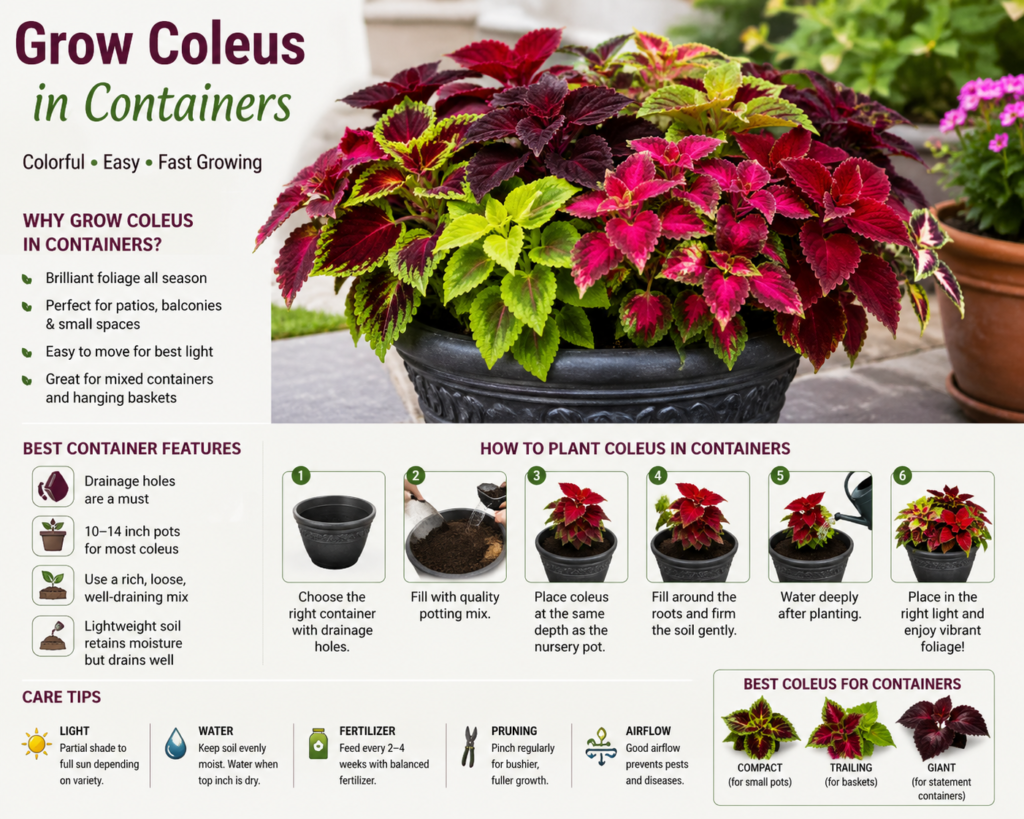
Coleus performs exceptionally well in pots.
Best container features:
- Drainage holes
- Stable root space
- Lightweight soil
- Good moisture retention
Recommended size:
- 10–14 inches minimum
Best pot materials:
- Ceramic
- Resin
- Plastic
Avoid pots without drainage.
Container coleus needs:
- More frequent watering
- More regular feeding
- More monitoring in heat
Containers offer strong design flexibility.
How Often Should You Water Coleus?
Coleus likes moisture consistency.
Watering depends on:
- Temperature
- Pot size
- Sun exposure
- Wind
- Root density
- Humidity
General watering guide:
Outdoor containers:
3–5 times weekly
Garden beds:
1–2 deep waterings weekly
Indoor pots:
Water when top inch dries.
Signs of underwatering:
- Drooping
- Dry soil
- Crispy edges
Signs of overwatering:
- Yellow leaves
- Soft stems
- Root odor
Water deeply, not lightly.
How Do You Plant Coleus Properly?
Plant after frost risk has passed.
Planting steps:
- Choose correct location
- Improve soil
- Dig wide hole
- Loosen roots
- Plant at original depth
- Water deeply
- Mulch lightly
Spacing:
Small coleus:
12 inches
Large coleus:
18–24 inches
Avoid tight spacing.
Good airflow reduces disease.
How to Reduce Coleus Transplant Shock
Transplant shock causes temporary stress.
Reduce it by:
- Planting in cooler hours
- Watering deeply
- Avoiding strong sun
- Skipping fertilizer initially
- Keeping soil stable
Symptoms:
- Drooping
- Mild yellowing
- Slow growth
Recovery often takes 3–7 days.
Coleus Growth Timeline
Coleus grows fast.
Week 1:
Root adjustment
Weeks 2–3:
New leaves
Weeks 4–6:
Branching improves
Weeks 6–10:
Plant becomes fuller
Late season:
Flower spikes appear
Growth depends on warmth, light, water, and pruning.
How Do You Fertilize Coleus for Better Color?
Coleus benefits from balanced feeding.
Good fertilizer options:
- 10-10-10
- 20-20-20
- Slow-release blends
- Liquid feed
- Organic fertilizers
Feed every:
2–4 weeks
Container coleus may need more feeding.
Avoid excessive nitrogen.
Too much nitrogen may reduce color intensity.
Signs of nutrient deficiency:
- Pale leaves
- Slow growth
- Smaller leaves
Signs of overfeeding:
- Burnt edges
- Salt buildup
- Weak stems
Moderate feeding works best.
Why Does Coleus Change Color?
Color changes are normal.
Main causes:
- Light changes
- Temperature shifts
- Fertilizer changes
- Water stress
- Plant age
More sun often deepens reds and purples.
More shade often increases green.
Low light causes dull color.
Too much sun causes bleaching.
Color changes often signal environmental shifts.
How Do You Prune Coleus for Fuller Growth?
Pruning keeps coleus dense and bushy.
Best method:
Pinching
Pinching removes the growing tip and encourages side growth.
Benefits:
- More branches
- More leaves
- Better shape
- Better density
Start when plants reach:
6–8 inches tall
Repeat every:
2–3 weeks
Remove:
- Top tips
- Weak stems
- Leggy growth
- Flower spikes
Regular pruning dramatically improves appearance.
Do Coleus Flowers Mean the Plant Is Dying?
No.
Flowering usually means:
- Maturity
- Stress
- Seasonal response
Flowering shifts energy into seed production.
This may reduce:
- Leaf size
- Branching
- Color intensity
For foliage performance, remove flowers.
Should You Remove Coleus Flowers?
Usually yes.
Benefits:
- Better foliage
- More branching
- Longer decorative season
- Better shape
- Better color
Check weekly and remove flower spikes early.
Can You Grow Coleus Indoors?
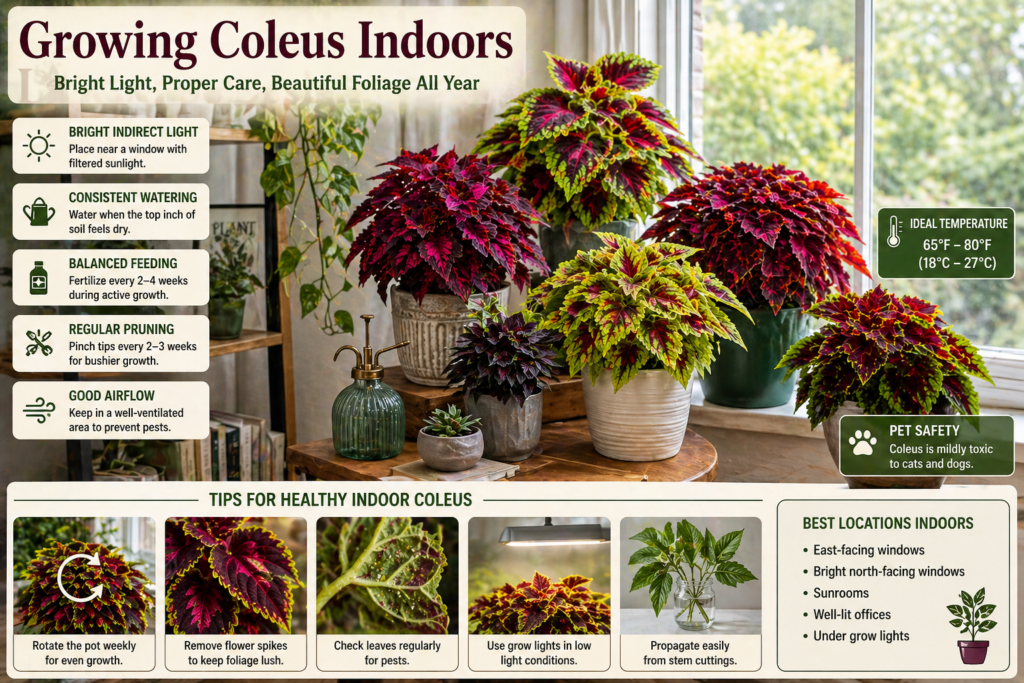
Yes.
Coleus grows well indoors.
Best indoor locations:
- East-facing windows
- Bright north-facing windows
- Filtered south-facing windows
- Sunrooms
- Offices
Ideal indoor temperature:
65–80°F
Best humidity:
40–60%
Indoor care tips:
- Rotate weekly
- Pinch regularly
- Avoid drafts
- Avoid heating vents
- Watch pests
Low light causes stretching.
Best Grow Lights for Indoor Coleus
Grow lights improve winter growth.
Best options:
- Full-spectrum LED
- White spectrum lights
- Adjustable hanging lights
Best schedule:
12–14 hours daily
Best distance:
8–12 inches above foliage
Signs a grow light is needed:
- Leggy growth
- Weak stems
- Slow growth
- Color fading
Grow lights improve indoor performance.
How Do You Propagate Coleus?
Coleus propagates easily from cuttings.
Best cutting size:
4–6 inches
Steps:
- Cut below a node
- Remove lower leaves
- Place in water or soil
- Provide warmth
- Give bright indirect light
- Wait for roots
Rooting time:
7–14 days
Cuttings preserve exact plant genetics.
Can Coleus Grow From Seed?
Yes.
But seed-grown coleus may vary.
Best for:
- Budget planting
- Bulk planting
- Color experimentation
- Learning propagation
Start:
8–10 weeks before last frost
Method:
- Surface sow
- Keep warm
- Keep moist
- Provide light
Germination:
10–14 days
Cuttings are better for exact copies.
Why Are My Coleus Leaves Losing Color?
Usually caused by light imbalance.
Other causes:
- Poor nutrition
- Root stress
- Water inconsistency
- Aging leaves
- Temperature stress
Low-light symptoms:
- Dull leaves
- Extra green
- Stretching
Sun-stress symptoms:
- Burn spots
- Pale centers
- Crispy edges
Fixes:
- Adjust light
- Improve watering
- Feed properly
- Prune weak growth
Coleus Problems Diagnosis Guide
Leaves fading:
Wrong light
Yellow leaves:
Overwatering
Crispy edges:
Heat stress or dryness
Leggy stems:
Low light
Sticky leaves:
Pests
Drooping:
Water stress
Soft stems:
Root rot
Quick diagnosis improves recovery.
What Pests Affect Coleus Plants?
Common pests:
- Aphids
- Spider mites
- Whiteflies
- Mealybugs
- Fungus gnats
Signs:
- Sticky leaves
- Webbing
- Curled leaves
- Distorted growth
- Speckled foliage
Treatments:
- Neem oil
- Insecticidal soap
- Manual wiping
- Isolation
- Better airflow
Inspect weekly.
What Diseases Affect Coleus?
Most disease problems come from moisture imbalance.
Common issues:
- Root rot
- Stem rot
- Downy mildew
- Leaf spots
Prevention:
- Improve drainage
- Water at soil level
- Space plants properly
- Increase airflow
- Remove infected leaves
Prevention is easier than treatment.
Is Coleus Toxic to Pets?
Yes.
Coleus is mildly toxic to cats and dogs.
Symptoms:
- Vomiting
- Drooling
- Diarrhea
- Lethargy
Safer placement:
- Hanging baskets
- High shelves
- Elevated pots
Contact a veterinarian if ingested.
Coleus Seasonal Care Calendar
Spring:
- Plant after frost
- Start feeding
- Start pruning
- Increase watering
Summer:
- Support active growth
- Water more
- Watch pests
- Remove flowers
Fall:
- Take cuttings
- Reduce feeding
- Prepare indoor transfer
Winter:
- Keep indoors
- Reduce watering
- Maintain light
- Watch humidity
Seasonal care improves performance.
Can Coleus Survive Winter?
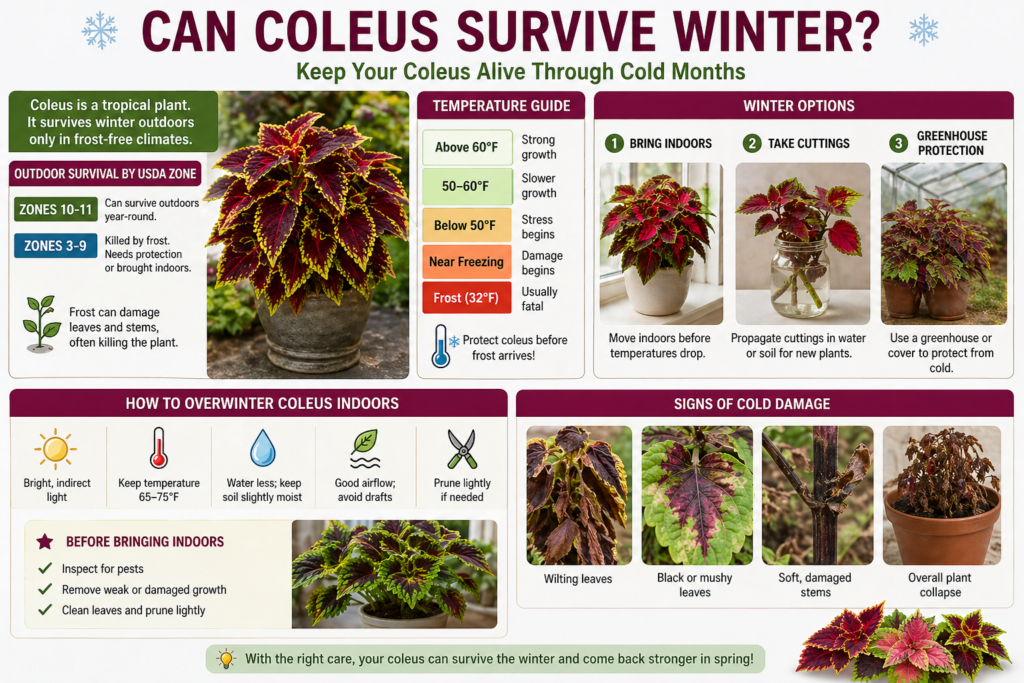
Only in frost-free climates.
Temperature guide:
Above 60°F:
Strong growth
50–60°F:
Slower growth
Below 50°F:
Stress begins
Near freezing:
Damage begins
Frost:
Usually fatal
Winter options:
- Bring indoors
- Take cuttings
- Use greenhouse
- Replace next season
Protect before frost.
How Do You Overwinter Coleus Indoors?
Bring indoors early.
Before bringing in:
- Inspect pests
- Prune lightly
- Clean foliage
Best winter conditions:
- 65–75°F
- Bright indirect light
- Reduced watering
- Moderate humidity
Avoid overwatering.
Backup plan:
Take cuttings.
How Do You Use Coleus in Landscape Design?

Coleus acts like color architecture.
Best uses:
- Border framing
- Color blocking
- Focal points
- Path edging
- Tropical beds
- Container centerpieces
Design tips:
- Dark coleus adds depth
- Bright coleus adds energy
- Compact types fit front borders
- Giant types anchor beds
- Trailing types soften edges
Coleus can be:
- Thriller
- Filler
- Spiller
Few plants are this flexible.
What Plants Pair Well With Coleus?
Good companion plants:
- Caladium
- Begonia
- Impatiens
- Sweet potato vine
- Ferns
Why they work:
- Texture contrast
- Color contrast
- Similar water needs
- Similar light needs
Pairing rules:
- Match moisture
- Match light
- Contrast texture
- Contrast height
Good pairing improves design.
Coleus vs Caladium: Which Is Better?
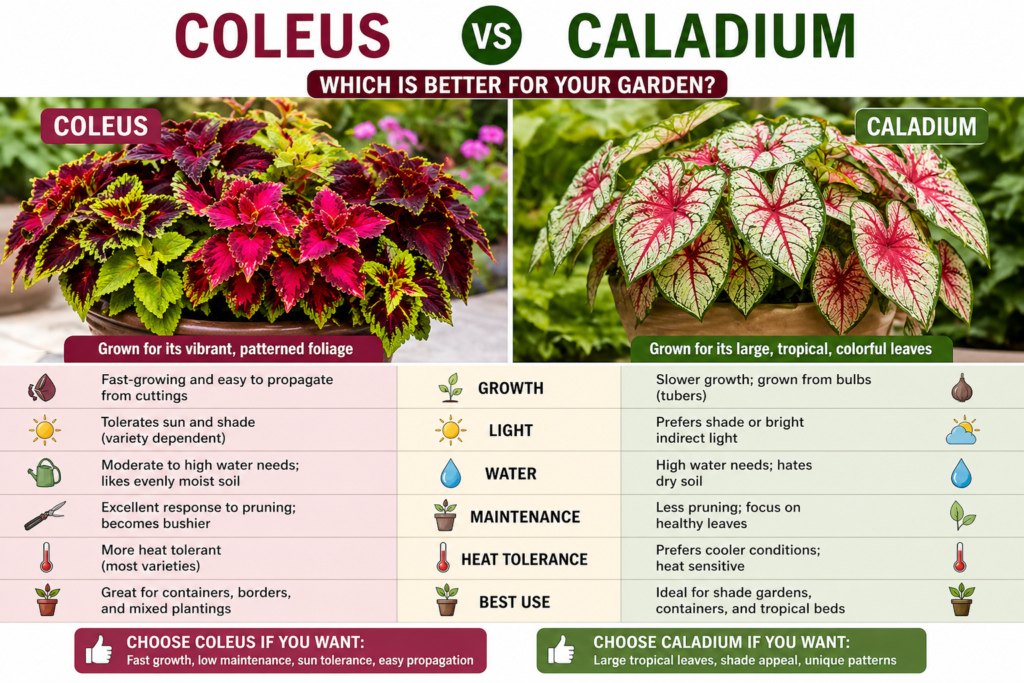
Both are foliage plants.
Coleus advantages:
- Faster growth
- Easier propagation
- Better pruning response
- Better heat tolerance
- More control
Caladium advantages:
- Softer texture
- Larger leaves
- Strong shade beauty
Choose coleus for speed and flexibility.
Choose caladium for softer tropical texture.
Many gardeners use both.
Common Coleus Growing Mistakes
Common mistakes:
- Overwatering
- Wrong light
- No pruning
- Poor drainage
- Tight spacing
- Ignoring pests
- Letting flowers mature
- Overfeeding nitrogen
Prevention checklist:
- Match variety to location
- Improve drainage
- Pinch regularly
- Feed moderately
- Remove flowers
- Monitor pests
Basics matter most.
Are Coleus Plants Worth Growing?
Yes.
Coleus offers:
- Fast growth
- Strong color
- Easy propagation
- Flexible design
- Easy care
Best for:
- Beginners
- Indoor growers
- Outdoor gardeners
- Collectors
- Container designers
Coleus gives season-long color without relying on flowers.
That makes it one of the best foliage plants for decorative gardening.
FAQ SECTION
How long do coleus plants live?
Several years in frost-free climates.
Do coleus come back every year?
Only in warm frost-free climates.
Can coleus grow in full sun?
Yes, if it is a sun-tolerant variety.
How often should I water coleus?
When the top layer starts drying.
Should I remove coleus flowers?
Yes, for better foliage growth.
Can coleus grow indoors year-round?
Yes, with enough light.
Can coleus root in water?
Yes, very easily.
Why is my coleus turning green?
Usually low light.
Why are leaves drooping?
Usually water stress.
Is coleus toxic to pets?
Mildly toxic.
Can coleus survive winter outdoors?
Only in frost-free climates.
Best fertilizer for coleus?
Balanced fertilizer like 10-10-10.
How do you make coleus bushier?
Pinch the tips regularly.
Does coleus prefer shade or sun?
Depends on variety.
Can coleus grow from seed?
Yes, but cuttings are better for exact replication.
How fast does coleus grow?
Very fast in warm weather.

Myra is the founder and lead writer of Plantsaholic. She shares practical, research-backed advice on indoor plants, outdoor gardening, flowers, herbs, succulents, and everyday plant care. Her goal is to help gardeners of all experience levels grow healthier plants through simple, easy-to-follow gardening guides.