Indoor air quality has become a major concern for homeowners, renters, apartment dwellers, and remote workers in 2025. Modern homes often trap pollutants from furniture, paints, carpets, cleaning products, plastics, cooking fumes, and poor ventilation. These airborne compounds may not always be visible, but they can affect how fresh, dry, dusty, or comfortable a room feels.
Indoor plants can support better indoor air by absorbing some volatile organic compounds, improving humidity, trapping dust on leaves, and making rooms feel calmer. However, they do not replace ventilation, HEPA air purifiers, or proper cleaning habits. The smartest approach is to use plants as part of a complete indoor air-support system.
A good indoor air plant should be easy to keep alive, suitable for your room light, safe for your household, useful for humidity or dust control, and matched to your maintenance habits. The best plant is not always the most popular. It is the one that survives in your actual space.
Which Indoor Plants Are Best for Air Purification in 2025?
The best indoor plants for air purification are the ones that balance practical survivability with environmental support. A plant that performs well in theory but dies in two months offers no real value. That is why practical indoor plants matter more than laboratory rankings.
Top indoor air-support plants include:
- Snake Plant
- Spider Plant
- Peace Lily
- Areca Palm
- Boston Fern
- Aloe Vera
- English Ivy
- Rubber Plant
- ZZ Plant
- Pothos
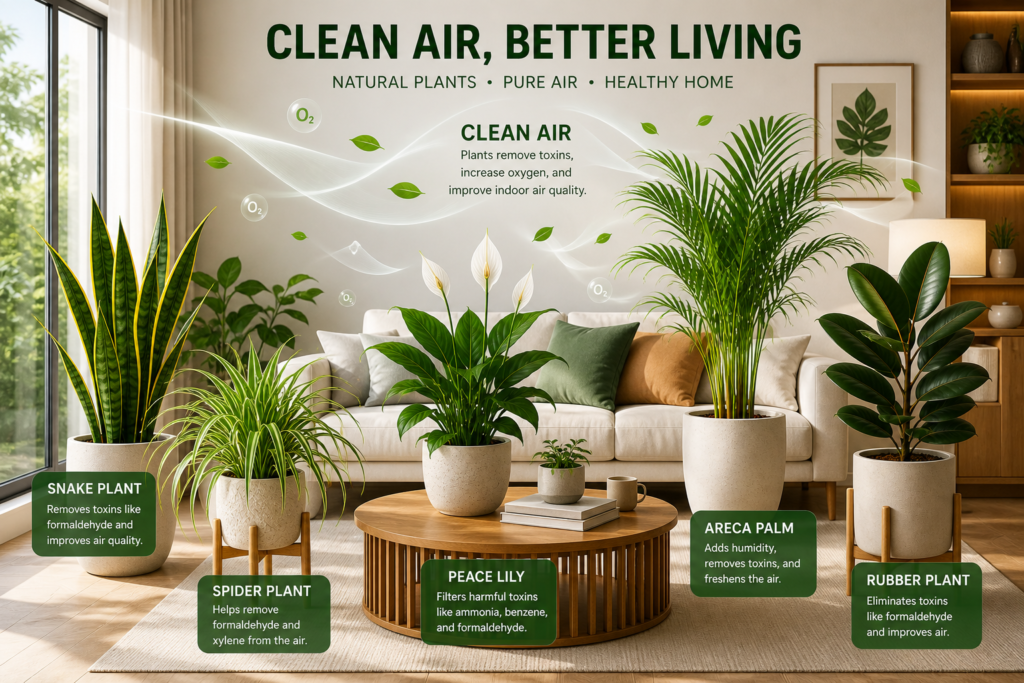
Each plant supports indoor air differently. Snake Plant is beginner-friendly and low-light tolerant. Spider Plant is safer for pet homes. Peace Lily creates fuller foliage. Areca Palm adds humidity. Boston Fern works in moist rooms. Rubber Plant traps visible dust.
Best by situation:
- Low light → Snake Plant, ZZ Plant
- Pet-friendly → Spider Plant
- Dry air → Areca Palm
- Bathroom → Boston Fern
- Sunny window → Aloe Vera
- Decorative → Rubber Plant
- Flowering → Peace Lily
Decision clarity: start with one easy plant and expand gradually.
Why Does Indoor Air Get Polluted So Easily?
Indoor air gets polluted because modern homes trap airborne compounds in enclosed spaces. Outdoor air has wind and space to dilute pollutants, but indoor air often recirculates repeatedly. This is common in apartments, energy-efficient homes, closed bedrooms, and rooms with weak ventilation.
Common pollution sources include:
- New furniture
- Paints
- Cleaning sprays
- Air fresheners
- Carpets
- Plastic storage
- Cooking fumes
- Poor airflow
Pressed wood furniture can release formaldehyde. Cleaning sprays may release chemical solvents. New carpets and plastics may off-gas for weeks. Cooking can add particles, odors, and moisture.
Plants help by interacting with the indoor environment. They support moisture balance, trap dust, and improve room comfort. They cannot remove every pollutant, but they can make rooms feel fresher when used with ventilation and cleaning.
Decision clarity: plants are most useful in low-ventilation spaces with newer materials.
How Do Indoor Plants Support Better Air Quality?
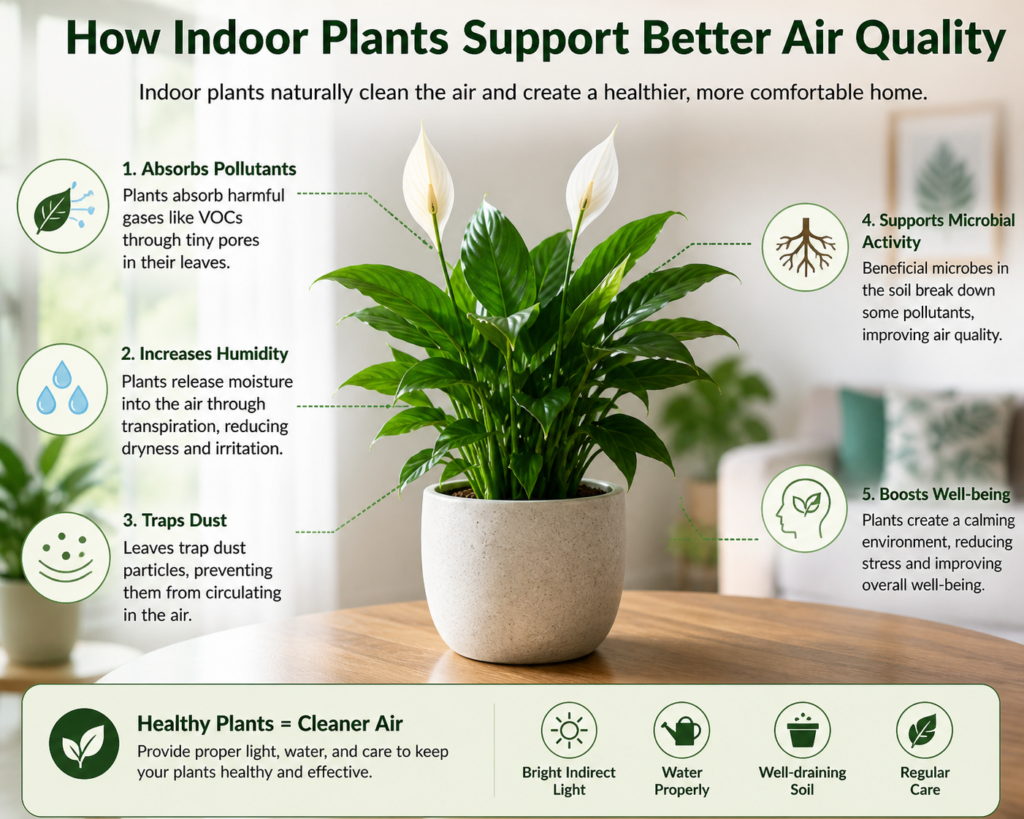
Indoor plants support air quality through natural biological processes. They absorb gases through leaf pores, release moisture, trap dust, and support microbial activity around the roots.
Main plant functions include:
- VOC interaction
- Root-zone microbial support
- Humidity release
- Dust collection
- Environmental comfort
The leaf system matters, but so does the soil. Healthy roots and soil microbes help plants perform better. This makes plant health important. A stressed plant with weak roots does not support the indoor environment as well as a healthy one.
Broad-leaf plants like Rubber Plant and Peace Lily collect more visible dust. That dust can be removed through cleaning instead of circulating in the room. Moisture-loving plants like Areca Palm and Boston Fern can also help rooms feel less dry.
Decision clarity: healthy plants are more useful than stressed plants.
Do Air-Purifying Plants Actually Work in Real Homes?
Yes, but expectations should stay realistic. Much of the popularity around indoor air plants comes from the NASA Clean Air Study. That study showed plants removing airborne chemicals in sealed environments.
Real homes are different. Air constantly moves through doors, windows, and ventilation systems. That means plants cannot clean air as fast as mechanical filtration. Their real value is supportive, not medical-grade or purifier-level.
What plants can do:
- Add humidity
- Trap dust
- Improve room comfort
- Support minor VOC interaction
- Improve visual calm
What plants cannot replace:
- HEPA filters
- Exhaust systems
- Ventilation
- HVAC systems
- Mold remediation
Decision clarity: use plants as support, not replacement.
Does the NASA Clean Air Study Still Matter in 2025?
Yes, but it should be understood correctly. The NASA study showed plant potential under laboratory conditions. It remains important because it identified plant-pollutant interaction and helped popularize indoor greenery as part of healthier spaces.
But homes are dynamic. Airflow changes constantly. That means the study supports plant usefulness but does not prove that plants replace modern filtration.
Best indoor air strategy:
- Indoor plants
- HEPA purifier
- Ventilation
- Reduced chemical cleaners
- Exhaust fans
A room with several healthy plants and one purifier usually performs better than a room depending on plants alone.
Decision clarity: the NASA study supports plants, but real-home expectations must stay practical.
Which Indoor Plants Help With Specific Air Pollutants?
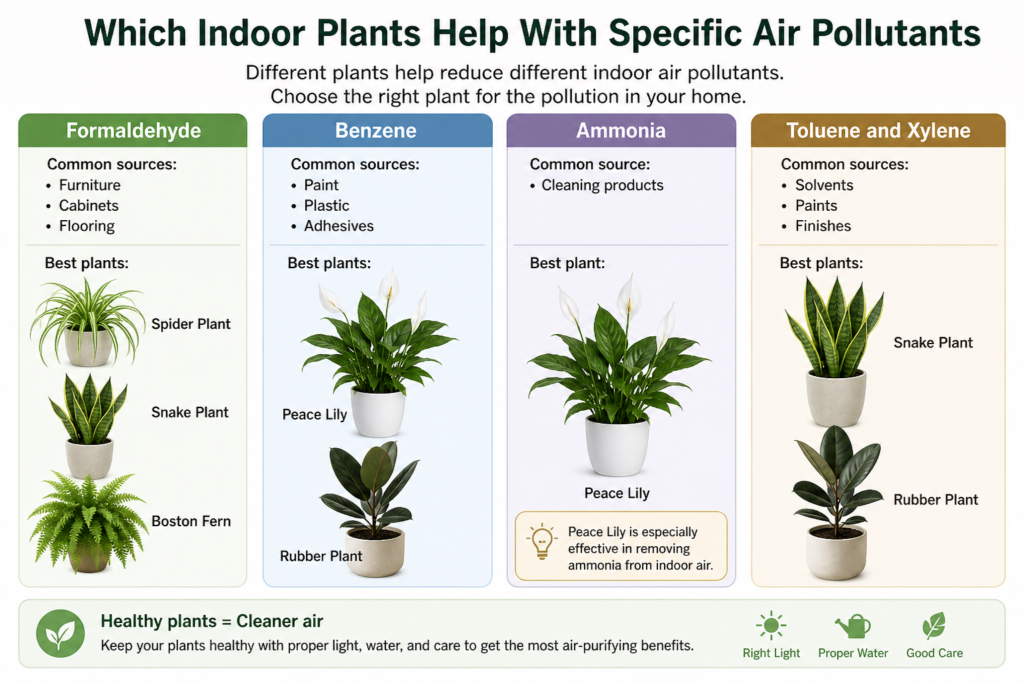
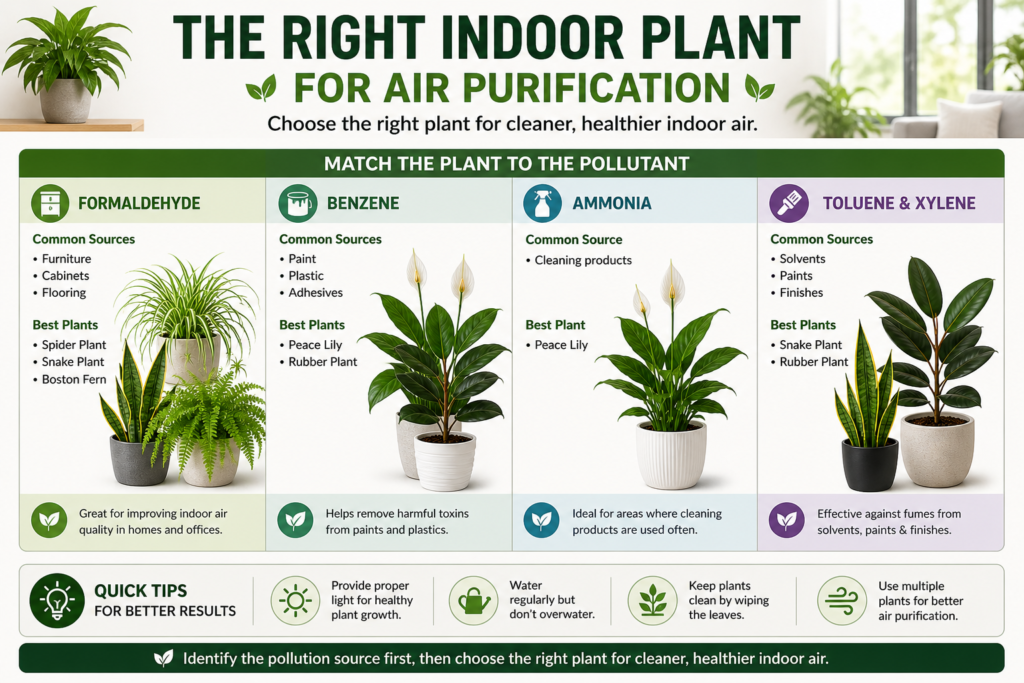
Different plants support different pollutant types. Matching plants to pollutant sources makes buying more practical.
Formaldehyde
Common sources:
- Furniture
- Cabinets
- Flooring
Best plants:
- Spider Plant
- Snake Plant
- Boston Fern
Benzene
Common sources:
- Paint
- Plastic
- Adhesives
Best plants:
- Peace Lily
- Rubber Plant
Ammonia
Common source:
- Cleaning products
Best plant:
- Peace Lily
Toluene and Xylene
Common sources:
- Solvents
- Paints
- Finishes
Best plants:
- Snake Plant
- Rubber Plant
Decision clarity: identify the pollution source first, then choose the plant.
Which Indoor Plant Purifies Air the Most?
The strongest all-around indoor air-support plant is Snake Plant. The reason is simple: survivability. A living plant provides ongoing support. A dead plant does not.
Snake Plant is not the only useful plant, but it is one of the easiest to maintain. Peace Lily has fuller foliage, Areca Palm supports humidity, and Rubber Plant catches dust well. The best choice depends on your room.
| Plant | Best Strength | Care Level |
|---|---|---|
| Snake Plant | Best overall | Easy |
| Spider Plant | Pet-friendly | Easy |
| Peace Lily | Broad foliage | Moderate |
| Areca Palm | Humidity | Moderate |
| Boston Fern | Moist rooms | Higher |
| Aloe Vera | Utility | Easy |
| Rubber Plant | Dust trapping | Moderate |
Decision clarity: best depends on your room and habits.
How Many Indoor Plants Do You Need Per Room?
One small plant in a large room creates limited effect. Plant quantity matters, but placement matters more.
Room guide:
- Small room → 2–3 plants
- Medium room → 4–6 plants
- Large room → 6–10 plants
Bedrooms usually need two medium plants. Living rooms often benefit from one larger plant and smaller support plants. Apartments can use vertical space through shelves, corners, and hanging baskets.
Do not overcrowd. Too many plants increase maintenance, reduce airflow, and raise the risk of overwatering.
Decision clarity: start with fewer plants and build gradually.
Why Is Snake Plant the Best Beginner Air Plant?
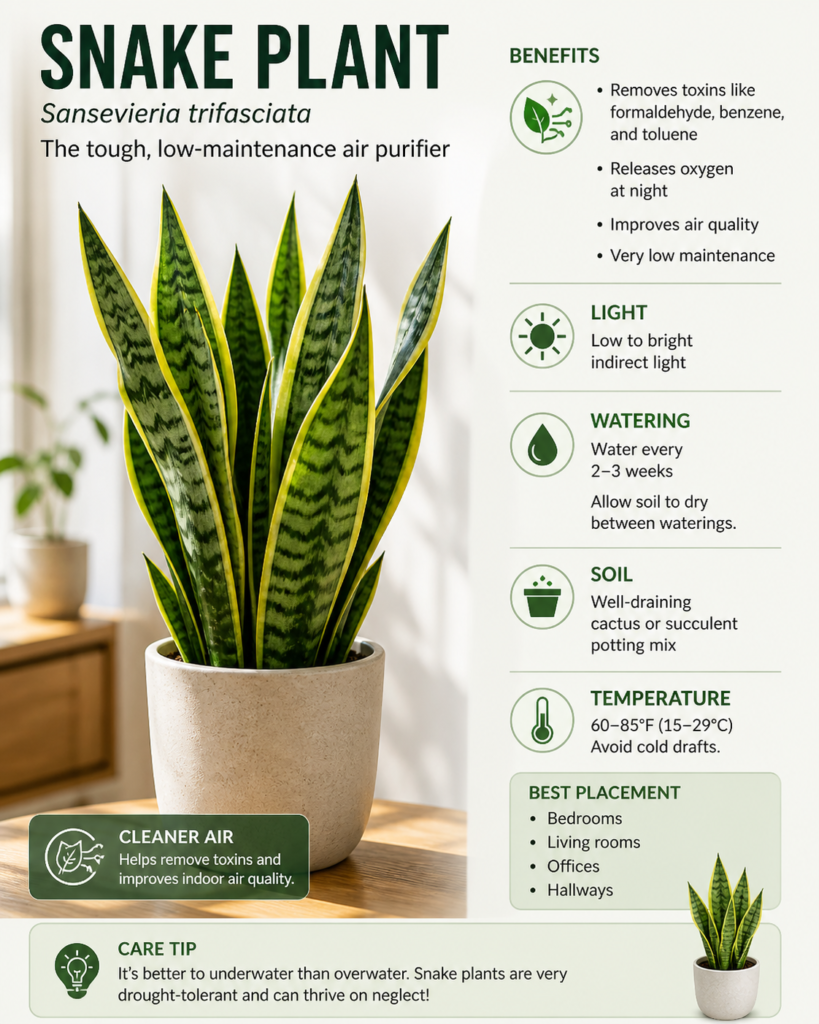
Snake Plant is forgiving. It tolerates low light, dry air, and missed watering better than most indoor plants. That makes it ideal for beginners, busy homeowners, offices, dorm rooms, and apartments.
Its thick leaves store water, reducing watering pressure. It also grows slowly, which reduces repotting needs. Unlike moisture-loving plants, it does not need constant humidity.
Best beginner conditions:
- Low to medium light
- Water every 2–3 weeks
- Dry air tolerance
- Minimal fertilizer
- Well-draining soil
Best placements:
- Bedroom
- Office
- Hallway
- Apartment corner
Decision clarity: beginner success often starts with Snake Plant.
Is Snake Plant Good for Bedrooms?
Yes. Bedrooms usually have lower light, smaller spaces, and stable temperatures. Snake Plant fits these conditions well.
It is compact, easy to care for, and creates visual calm. It is also commonly recommended for bedrooms because it needs little attention. While oxygen claims are often exaggerated online, its real benefit is simplicity.
Best bedroom benefits:
- Compact shape
- Low maintenance
- Less watering
- Easy placement
- Clean appearance
Best placement:
- Corner
- Shelf
- Near indirect light
- Away from AC vents
Decision clarity: one medium Snake Plant is usually enough.
Is Spider Plant Better for Families and Pet Owners?
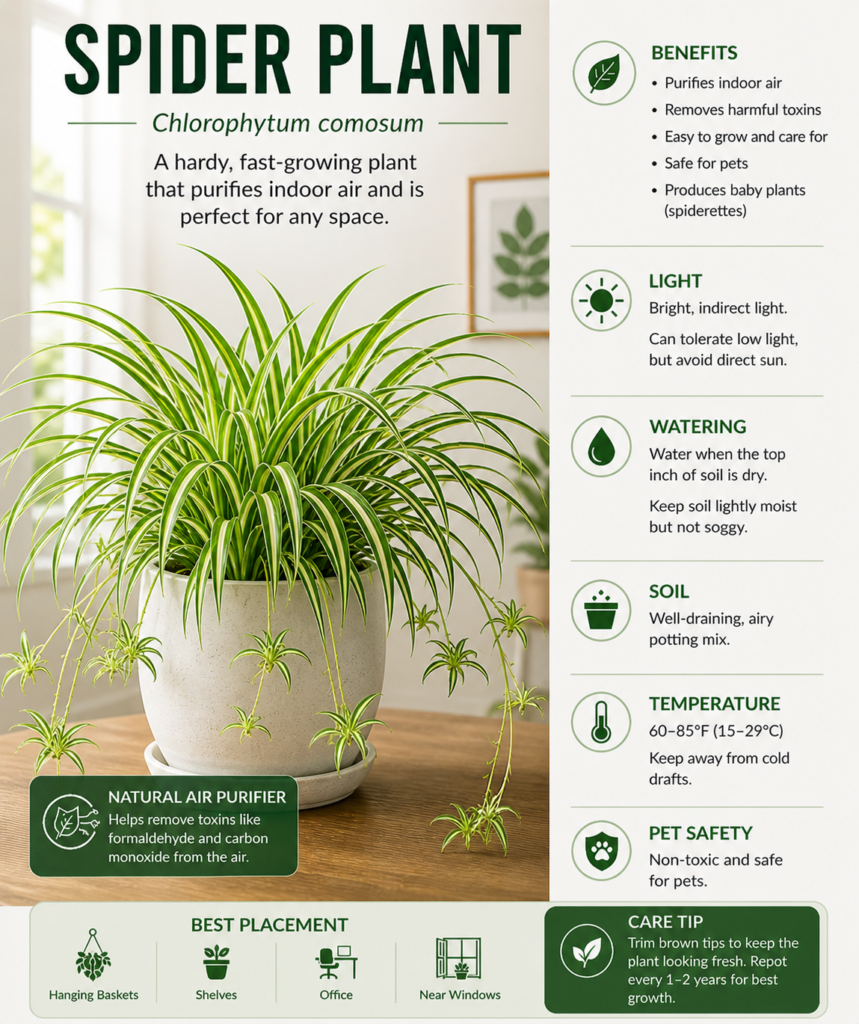
Spider Plant is one of the safest practical choices for families with pets. Safety often matters more than purification claims, especially when cats or dogs chew leaves.
Spider Plant also grows quickly and produces baby plants, making it cost-effective. It works well in hanging baskets, shelves, kitchens, and bright indirect spaces.
Best strengths:
- Pet-friendlier
- Fast growth
- Easy propagation
- Affordable
- Hanging-friendly
- Good for shelves
Decision clarity: for pet homes, Spider Plant is often the smarter first choice.
Is Peace Lily Stronger for Pollutant Absorption?
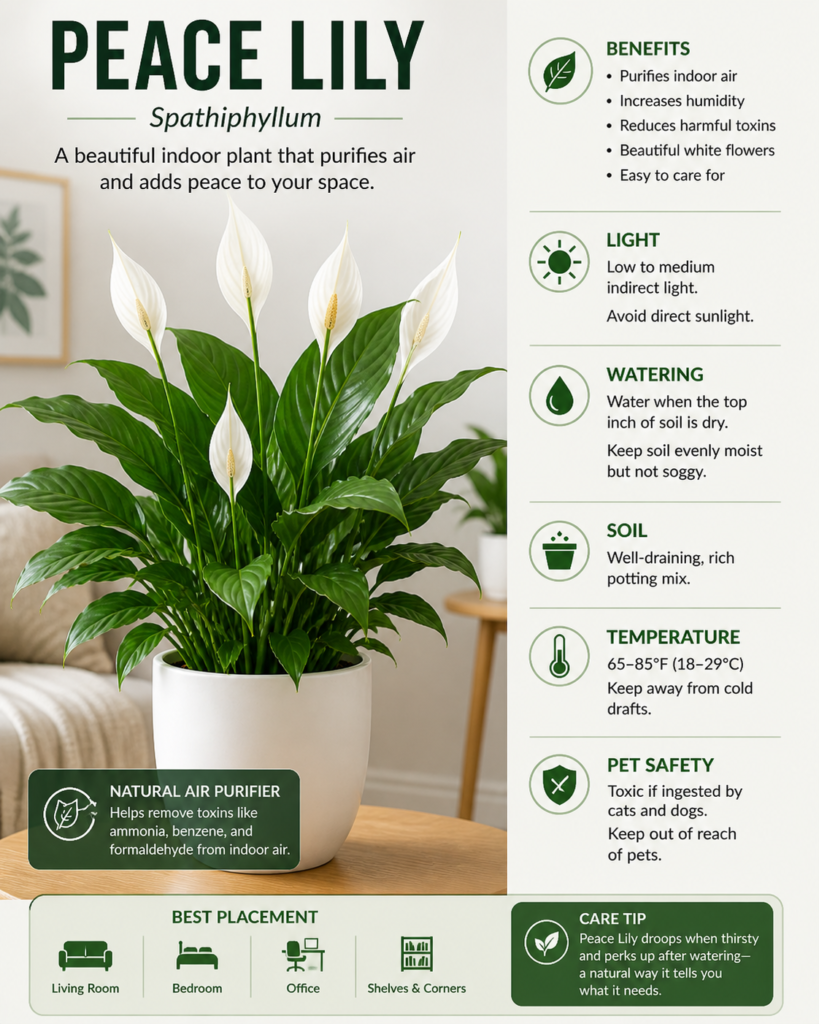
Peace Lily has fuller foliage and strong decorative appeal. Its larger leaf mass helps with dust collection, humidity support, and air interaction. It also produces flowers, which makes it more attractive than many foliage-only plants.
But it requires more consistent watering and balanced light. It can droop quickly when thirsty, and it is toxic to pets if chewed.
Best reasons to choose:
- Flowers
- Larger foliage
- Decorative softness
- Better room presence
- Humidity support
Best for:
- Living rooms
- Offices
- Decorative corners
- Homes without chewing pets
Decision clarity: choose Peace Lily for aesthetics, Snake Plant for easier survival.
Is Areca Palm One of the Best Indoor Plants for Air Quality?
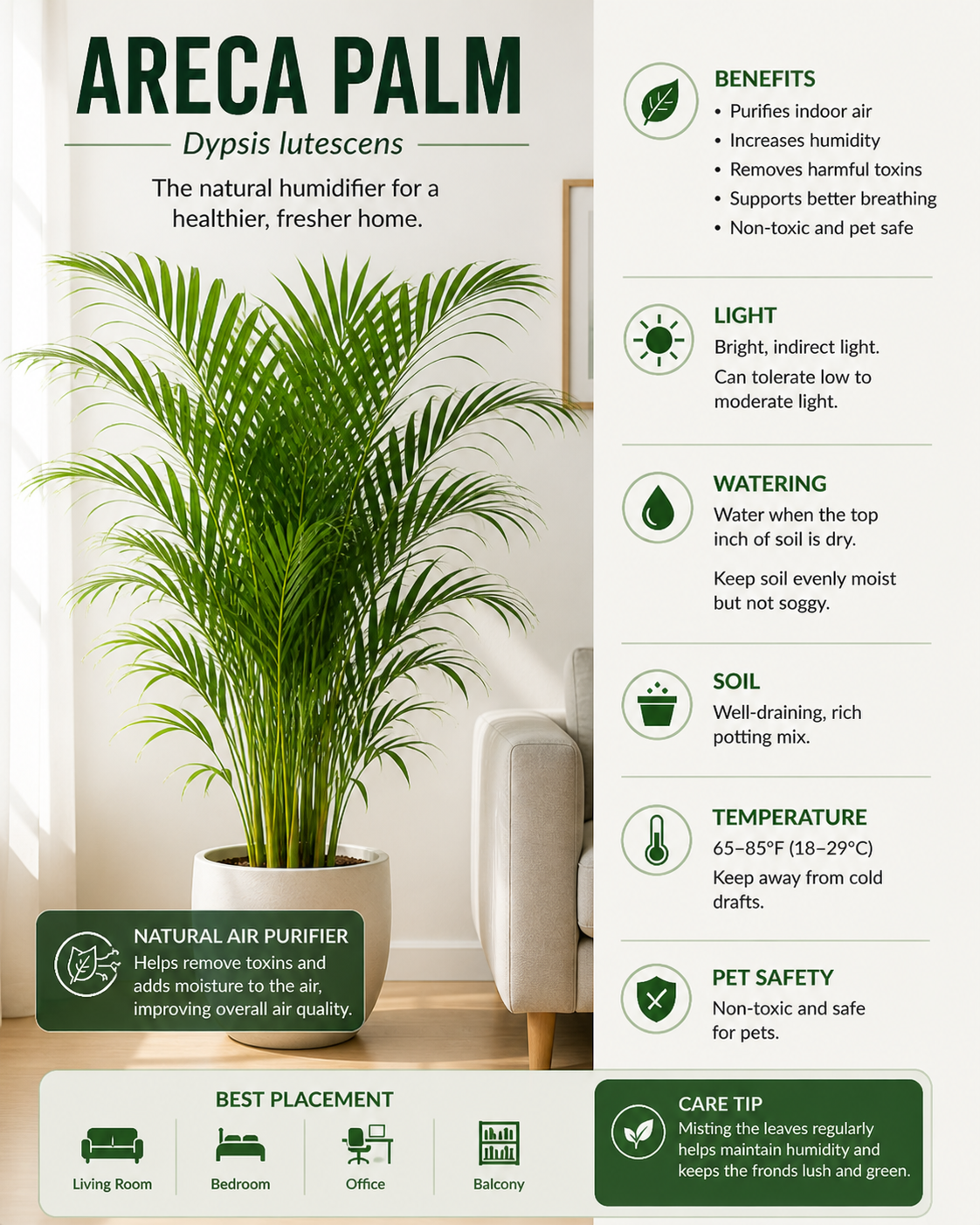
Areca Palm is one of the strongest humidity-support plants. It is especially useful in dry homes where heating and cooling remove moisture from indoor air.
Its feathery leaves release humidity and soften room comfort. It also creates a larger visual presence, which helps living rooms and offices feel more natural and comfortable.
Best reasons:
- Humidity support
- Decorative impact
- Better comfort in dry rooms
- Larger room presence
- Pet-friendlier than many plants
Best placements:
- Living room
- Reading area
- Office corner
- Bright indirect window
Decision clarity: choose Areca Palm for dryness, not low light.
Is Boston Fern Better for Humidity and Dust Reduction?
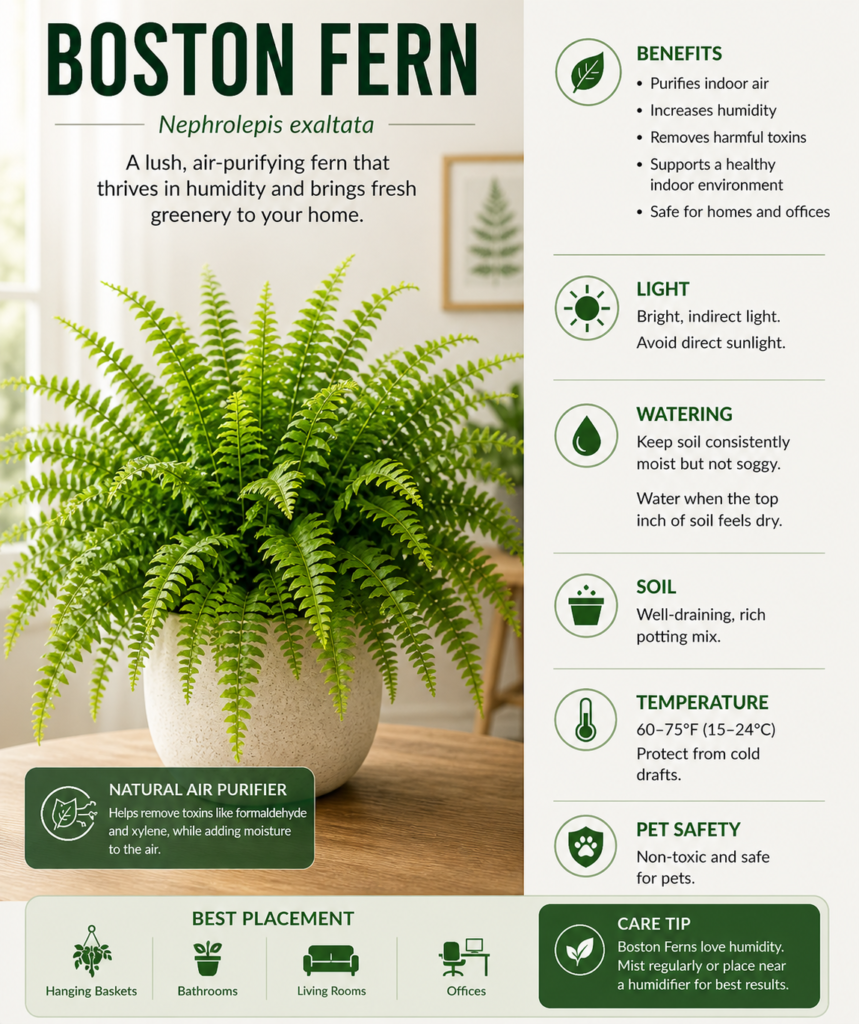
Boston Fern performs well in humid spaces like bathrooms and laundry rooms. Its dense leaves create strong dust-trapping potential and support moisture-rich environments.
But it dries quickly and needs consistent watering. It is not ideal for people who forget plant care or live in very dry indoor conditions.
Best for:
- Bathrooms
- Laundry rooms
- Kitchens
- Humid rooms
Best strengths:
- Humidity support
- Dust trapping
- Soft texture
- Bathroom compatibility
Decision clarity: only choose Boston Fern if you can maintain moisture.
Does Aloe Vera Improve Indoor Air?
Aloe Vera provides moderate air-support value but is stronger as a practical utility plant. Its gel is useful for minor burns, and it handles dry conditions well.
Aloe prefers bright light and dry soil. It is not ideal for dark rooms or heavy watering.
Best strengths:
- Easy care
- Drought resistant
- Functional use
- Compact size
- Sunny-window performance
Best placements:
- Kitchen window
- Bedroom window
- Office window
- Sunny shelf
Decision clarity: Aloe Vera is best for sunny spaces.
Is English Ivy Good for Small or Damp Spaces?
English Ivy is useful for vertical growth and compact spaces. It trails or climbs, making it suitable for shelves, hanging baskets, bathroom shelves, laundry rooms, and window edges.
It is often used in moisture-heavy areas because it adapts to moderate humidity and indirect light. However, English Ivy is toxic to pets if chewed.
Best reasons to choose:
- Vertical growth
- Shelf-friendly habit
- Compact footprint
- Fast growth
- Flexible placement
Decision clarity: English Ivy is efficient for small spaces, but avoid it in pet-heavy homes.
Is Rubber Plant Good for Cleaner Indoor Living Rooms?
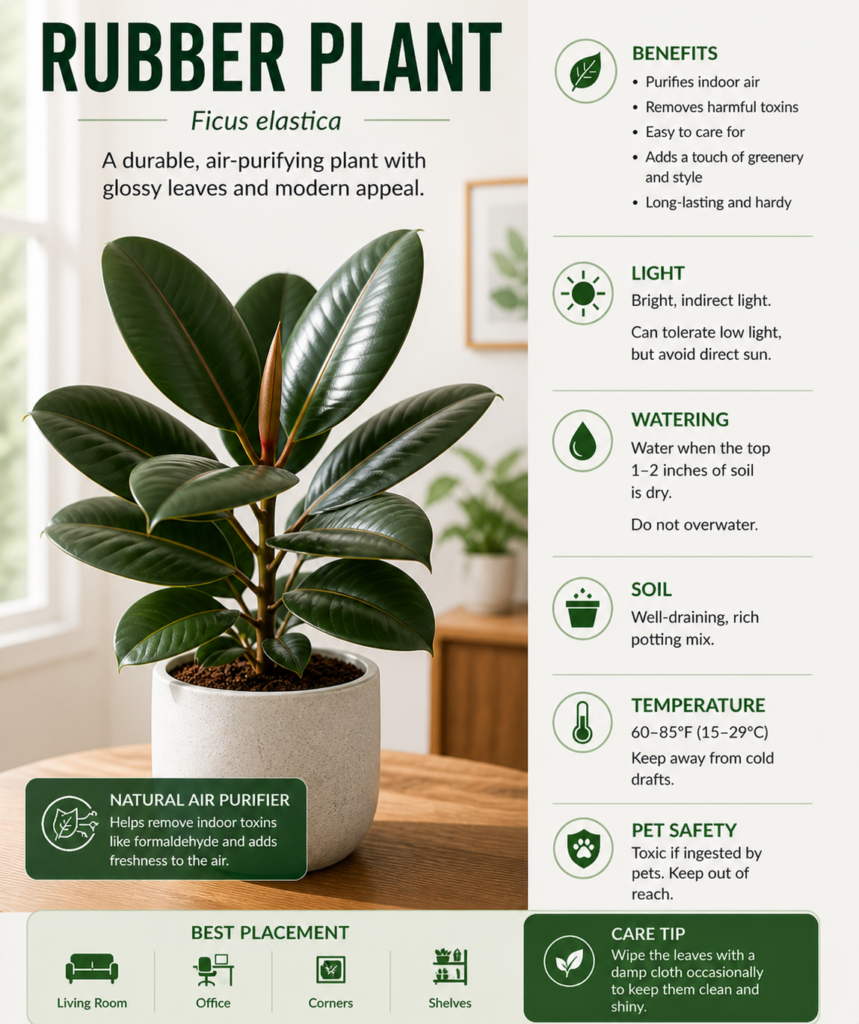
Rubber Plant is excellent for living rooms because of its broad dust-catching leaves. Its glossy leaves are easy to wipe clean, making maintenance simple.
It also creates strong room structure and works well as a decorative anchor plant.
Best strengths:
- Dust trapping
- Decorative impact
- Strong room structure
- Easy leaf cleaning
- Moderate care needs
Best placements:
- Living room corners
- Entryways
- Offices
- Reading areas
Decision clarity: one Rubber Plant creates strong decorative and practical value.
Which Indoor Air Plants Are Toxic to Pets and Children?
Safety matters when pets or children interact with plants. Some plants are safer, while others may irritate the mouth, stomach, or skin if chewed or handled.
| Plant | Safety |
|---|---|
| Spider Plant | Safer |
| Areca Palm | Safer |
| Boston Fern | Safer |
| Snake Plant | Mild risk |
| Peace Lily | Toxic |
| English Ivy | Toxic |
| Aloe Vera | Risk to pets |
| Rubber Plant | Irritating sap |
Safer choices:
- Spider Plant
- Areca Palm
- Boston Fern
Decision clarity: safety should guide plant buying in active pet homes.
Which Plants Work Best in Small Apartments?
Apartments need compact, adaptable plants. Light may be inconsistent, airflow may be weaker, and floor space is often limited.
Best apartment plants:
- Snake Plant
- Spider Plant
- Aloe Vera
- Pothos
- ZZ Plant
- English Ivy
Apartment strategy:
- Use vertical space
- Choose compact pots
- Avoid oversized plants
- Use shelves and windowsills
- Start with 2–3 plants
Decision clarity: apartment success depends on placement.
Best Indoor Air Plants for Low Light, Medium Light, and Bright Rooms
Light matching determines survival. Low light does not mean no light, but some plants tolerate lower indoor brightness better than others.
Low-light plants:
- Snake Plant
- ZZ Plant
- Peace Lily
Medium-light plants:
- Spider Plant
- Rubber Plant
- Pothos
- Philodendron
Bright-light plants:
- Aloe Vera
- Areca Palm
- Boston Fern near filtered light
Decision clarity: always match light first.
How Do You Choose the Right Indoor Plant for Air Purification?
Choose based on your real room conditions, not just online recommendations.
Consider:
- Light
- Watering habits
- Humidity
- Pet safety
- Available space
- Maintenance level
Quick guide:
- Low light → Snake Plant
- Dry room → Areca Palm
- Sunny window → Aloe Vera
- Pet home → Spider Plant
- Living room décor → Rubber Plant
- Bathroom → Boston Fern
Decision clarity: room conditions should decide.
How Much Do Air-Purifying Indoor Plants Cost in 2025?
Prices vary by size, maturity, pot type, nursery quality, and region. Smaller healthy plants often adapt better than large expensive plants.
Average price ranges:
- Snake Plant → $10–50
- Spider Plant → $8–35
- Peace Lily → $15–60
- Areca Palm → $20–90
- Boston Fern → $12–50
- Aloe Vera → $8–35
- Rubber Plant → $15–80
- ZZ Plant → $15–60
- Pothos → $8–40
Decision clarity: buy healthy, not oversized.
Where Should You Buy Indoor Plants?
The best source is usually a local nursery because you can inspect plant health before buying. Garden centers and specialty online stores are also useful.
Best sources:
- Local nurseries
- Garden centers
- Specialty online stores
- Plant markets
Avoid plants with:
- Drooping leaves
- Pest damage
- Sour soil smell
- Mushy stems
- Yellow-heavy foliage
Healthy signs:
- Firm leaves
- Stable stems
- Clean foliage
- Moist but not soaked soil
Decision clarity: inspect before buying whenever possible.
How Often Should You Water Indoor Air Plants?
Watering depends on soil moisture, not routine. Overwatering kills more houseplants than underwatering.
General guide:
- Snake Plant → every 2–3 weeks
- Spider Plant → every 7–10 days
- Peace Lily → every 5–7 days
- Areca Palm → every 5–8 days
- Boston Fern → 2–3 times weekly
- Aloe Vera → every 2–3 weeks
- Rubber Plant → every 7–10 days
- ZZ Plant → every 2–3 weeks
- Pothos → every 7–10 days
Best rule:
Check soil first.
If damp, wait.
Decision clarity: water based on soil, not calendar habit.
What Are the Biggest Indoor Plant Care Mistakes?
Most indoor plant failures are preventable. The biggest mistakes are usually simple care problems repeated over time.
Common mistakes:
- Overwatering
- Wrong light
- No drainage
- Dusty leaves
- Ignoring pests
- Heavy soil
- Buying too many plants at once
Fixes:
- Check soil
- Use drainage pots
- Clean leaves
- Inspect weekly
- Match plant to light
Decision clarity: routine prevents problems.
Plants vs Air Purifiers: Which Should You Prioritize?
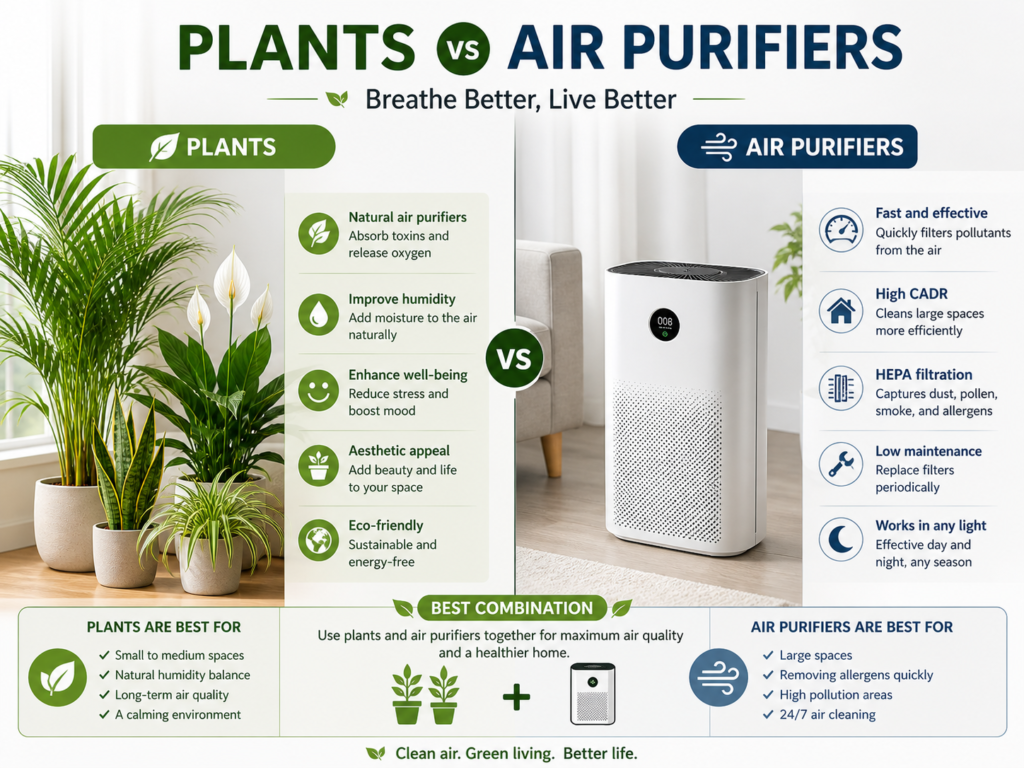
Plants and air purifiers solve different problems. Plants help with comfort, humidity, and mild VOC interaction. Purifiers are better for measurable particle filtration.
Plants help with:
- Humidity
- Comfort
- Dust settling
- Mild VOC interaction
- Visual wellness
Purifiers help with:
- Allergens
- Smoke
- Fine particles
- Dust filtration
Best setup:
- 2–5 plants
- 1 HEPA purifier
- Ventilation
- Reduced chemical products
Decision clarity: plants plus purifiers create the strongest system.
Are Indoor Plants Good for Allergies?
Plants may help by trapping dust and improving humidity, but poor care can create mold and fungus gnats.
Best habits:
- Avoid overwatering
- Clean leaves
- Use airflow
- Remove dead leaves
- Use well-draining soil
Better allergy-friendly plants:
- Snake Plant
- Spider Plant
- Rubber Plant
- ZZ Plant
Decision clarity: healthy plants help more than neglected ones.
Final Thoughts: Which Indoor Air Plant Should You Buy First?
If you are buying your first indoor air-support plant, start with Snake Plant. It is durable, low-maintenance, and adapts to most indoor spaces.
If you have pets, start with Spider Plant. If your home feels dry, choose Areca Palm. If you want decorative impact, choose Rubber Plant. If you want flowers, choose Peace Lily. If your room is sunny, choose Aloe Vera.
Best first-buy decisions:
- Beginner → Snake Plant
- Pet owner → Spider Plant
- Dry home → Areca Palm
- Decorative → Rubber Plant
- Sunny room → Aloe Vera
- Bathroom → Boston Fern
The best indoor plant is the one that survives in your room and your routine.
FAQ section
Do indoor plants really purify air?
Yes. They support air quality through humidity, dust trapping, and mild VOC interaction, but they do not replace filtration.
Which indoor plant purifies air the most?
Snake Plant is the best all-around option for survivability and practical indoor use.
Which plant removes formaldehyde best?
Spider Plant, Snake Plant, and Boston Fern are commonly recommended for formaldehyde support.
Are indoor air-purifying plants safe for pets?
Some are. Safer options include Spider Plant, Areca Palm, and Boston Fern.
Can indoor plants replace an air purifier?
No. Plants support air quality, but purifiers filter particles faster and better.
Which indoor plant is best for bedrooms?
Snake Plant is one of the best bedroom plants because it is compact and easy-care.
Which indoor plant is best for low light?
Snake Plant and ZZ Plant are among the strongest low-light options.
Do indoor plants attract bugs?
They can if overwatered or neglected. Proper care reduces pest issues.

Myra is the founder and lead writer of Plantsaholic. She shares practical, research-backed advice on indoor plants, outdoor gardening, flowers, herbs, succulents, and everyday plant care. Her goal is to help gardeners of all experience levels grow healthier plants through simple, easy-to-follow gardening guides.