Indoor plants often struggle more during summer than many plant owners expect. Summer heat, stronger sunlight, and dry indoor air can quickly stress indoor plants, making watering, humidity, airflow, and light management more important.
The safest summer routine is simple: check soil before watering, protect plants from harsh afternoon sun, increase humidity for tropical species, keep air moving gently, and reduce extra stress during heatwaves.
Why Does Summer Heat Stress Indoor Plants?
Containers heat faster than garden soil, especially near sunny windows. Overheated roots absorb water less efficiently, which can cause wilting even when some soil moisture remains.
Key signs of summer heat stress include:
- Wilting leaves despite recent watering
- Brown or crispy leaf edges
- Curled or folded foliage
- Yellowing leaves
- Dropping flower buds or older leaves
- Slowed or paused new growth
- Pale, faded, or scorched patches
Real-world decision clarity: if a plant wilts during summer, avoid watering automatically. First check the soil 1–2 inches deep. If it still feels wet, move the plant away from direct heat and improve airflow. If the soil is dry, water deeply and allow excess water to drain completely.
Why Root Temperature Matters More Than Air Temperature
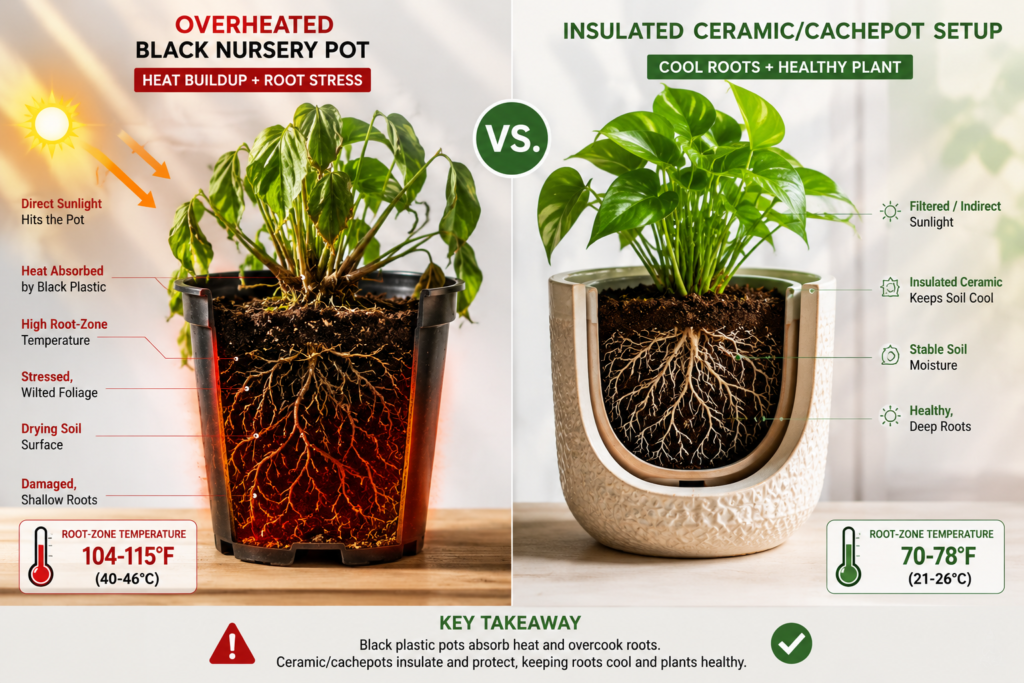
Root temperature often affects indoor plant health more than room temperature during summer.
Overheated roots can mimic underwatering because stressed roots absorb moisture less efficiently. Tropical plants are especially vulnerable since indoor containers provide far less insulation than natural forest soil.
Real-world decision clarity: if your plant wilts every afternoon despite moist soil, check the pot temperature with your hand. If the container feels hot, move the plant farther from the window, add a light-colored cachepot, or improve airflow around the root zone instead of watering repeatedly.
How Hot Is Too Hot for Indoor Plants?
Most indoor plants prefer temperatures between 65°F and 80°F. Once indoor temperatures stay above 85°F, many tropical houseplants begin showing stress, especially when humidity is low.
Heat stress depends on the plant’s immediate environment, not just the thermostat. Windows, balconies, and poorly ventilated shelves often become much hotter than the rest of the room.
Higher-risk indoor hot spots include:
- Window sills
- West-facing windows
- South-facing windows in summer
- Enclosed balconies
- Sunrooms
- Shelves behind blinds
- Rooms with poor ventilation
- Black plastic nursery pots in direct light
Decision clarity: if your home regularly reaches 85°F or higher for several hours daily, move sensitive plants away from direct window exposure. Above 90°F indoors, prioritize shade, airflow, and humidity support. Heat-tolerant plants like snake plants, ZZ plants, aloe vera, jade plants, and pothos handle warmth better, while delicate tropical plants need additional protection.
What Should You Do During an Indoor Plant Heatwave?
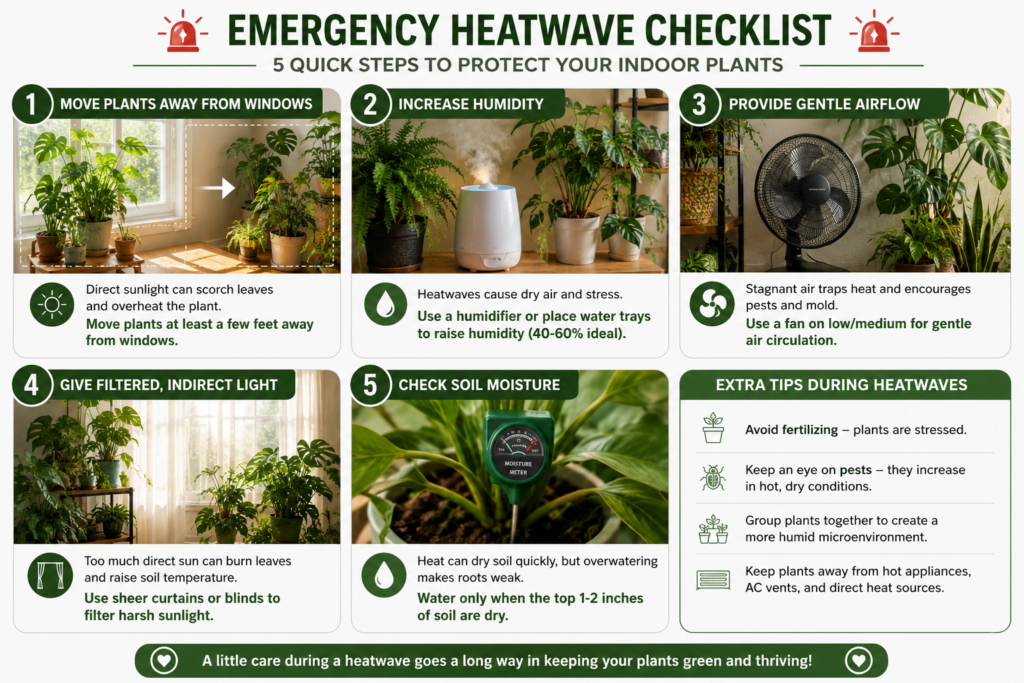
The first priority is reducing stress, not fertilizing, pruning, or repotting.
Emergency indoor plant heatwave checklist:
- Move sensitive plants away from windows
- Add sheer curtains to reduce sunlight intensity
- Water only if soil is appropriately dry
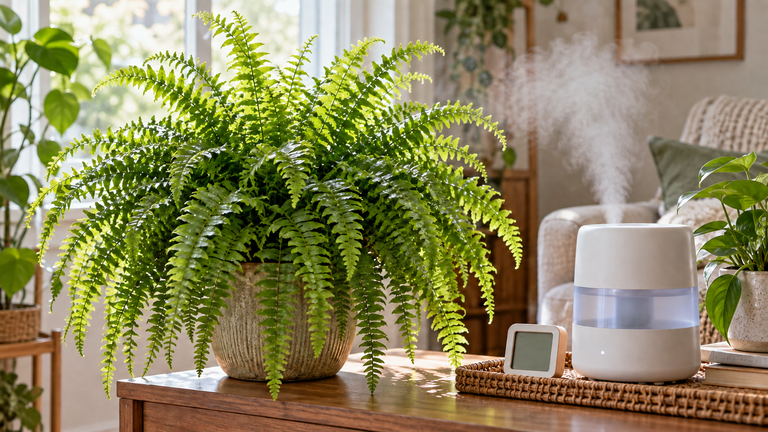
- Increase humidity with a humidifier
- Improve gentle airflow
- Pause fertilizer temporarily
- Check plants twice daily during peak heat
- Avoid repotting stressed plants
Real-world decision clarity: if multiple plants decline at the same time during a heatwave, the issue is usually environmental rather than species-specific. Focus on improving room conditions before changing individual plant routines.
How Often Should Indoor Plants Be Watered During Summer?
Indoor plants usually need more frequent watering in summer, but they should never be watered on a fixed daily schedule without checking the soil. Summer heat and dry indoor air make soil dry faster, but overwatering remains dangerous because warm, soggy soil can suffocate roots.
Insert your finger 1–2 inches into the soil or use a moisture meter. If the soil is still damp, wait. If the top layer is dry and the plant type prefers regular moisture, water deeply until excess water drains from the bottom.
General summer watering guidance:
- Tropical foliage plants: every 3–5 days
- Ferns: every 2–4 days
- Succulents: every 10–20 days
- Cacti: every 2–4 weeks
- Large floor plants: usually weekly
- Small pots: often more frequently
If leaves droop and soil is dry, water. If leaves droop and soil is wet, do not add more water. Move the plant to cooler indirect light and check for root stress instead.
Why Heat Stress Looks Similar to Overwatering
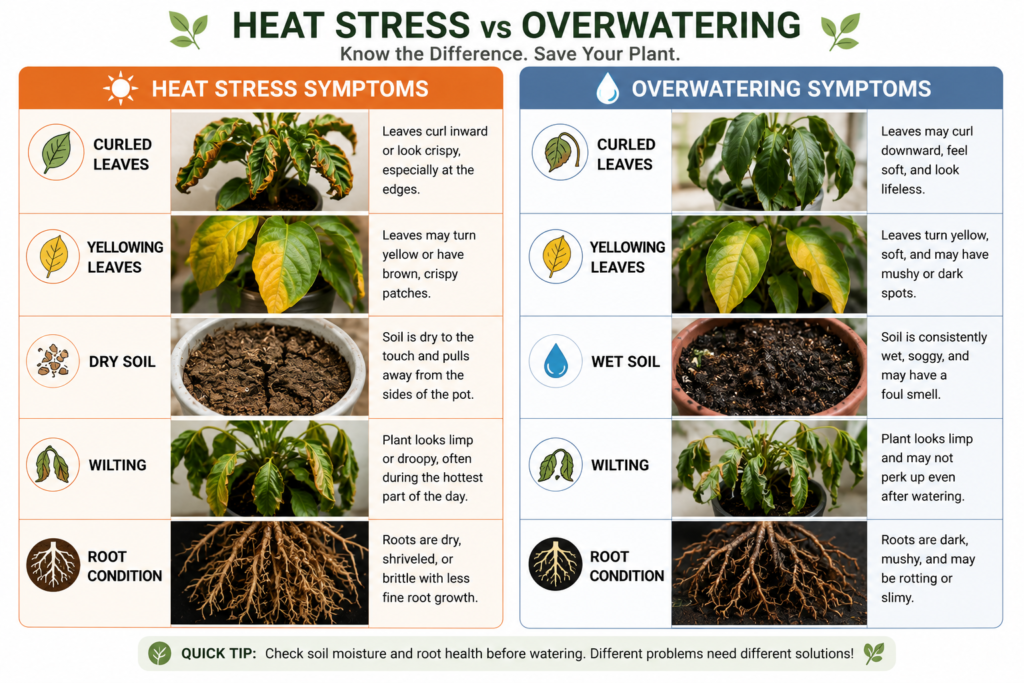
Heat stress and overwatering often produce nearly identical symptoms, which is why many indoor plants decline further after well-meaning owners add extra water.
Symptoms that overlap:
| Symptom | Heat Stress | Overwatering |
| Wilting | Yes | Yes |
| Yellow leaves | Yes | Yes |
| Curling | Yes | Sometimes |
| Slow growth | Yes | Yes |
| Brown tips | Yes | Sometimes |
Helpful ways to tell the difference:
Heat Stress Clues
- Soil may still feel moist
- Symptoms worsen in afternoon heat
- Leaves recover slightly overnight
- Plant sits near strong sun or hot windows
Overwatering Clues
- Soil stays wet for long periods
- Mushy stems appear
- Fungus gnats increase
- Yellowing spreads gradually
If a plant wilts every afternoon but improves at night, suspect heat stress before overwatering. If the soil remains wet for several days and leaves continue yellowing, root oxygen problems are more likely.
Why Does Soil Dry Out Faster in Summer?
Summer heat, stronger light, and longer daylight hours increase evaporation and plant water use, causing soil to dry much faster than during cooler seasons.
Factors that make soil dry faster:
- Terracotta containers
- Small nursery pots
- Root-bound plants
- Direct window sunlight
- Low humidity from air conditioning
- Bright grow lights placed too close
- Warm shelves or window sills
- Fast-draining potting mix
Decision clarity: if soil dries within one day, the plant may need a larger pot, less direct light, higher humidity, or a less exposed location. If soil stays wet for a full week during summer, improve drainage and airflow.
Can Too Much Sunlight Harm Indoor Plants in Summer?
Yes, too much sunlight can harm indoor plants during summer, especially through south- and west-facing windows. Sunburn usually appears as pale or crispy patches on the window-facing side of leaves.
Useful summer light adjustments include:
- Add sheer curtains
- Move plants 2–4 feet from hot windows
- Avoid direct afternoon sun
- Rotate plants weekly
- Keep leaves away from hot glass
- Use bright indirect light instead of harsh exposure
- Watch west-facing windows carefully
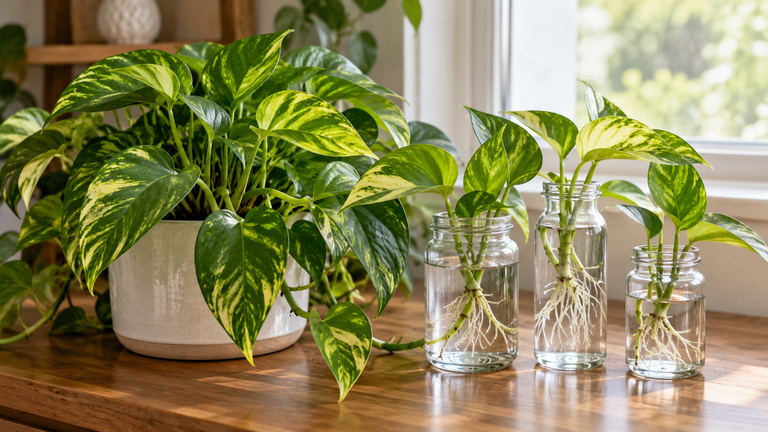
Real-world example: if a pothos looks pale and crispy on the window-facing side, it probably needs filtered light, not more water. If a calathea curls every afternoon but improves overnight, the light and heat intensity are likely too strong.
Decision clarity: keep succulents, jade plants, aloe, and cacti closer to bright windows. Move tropical foliage plants into filtered light when summer sun becomes intense.
Why Different Rooms Affect Indoor Plants Differently in Summer
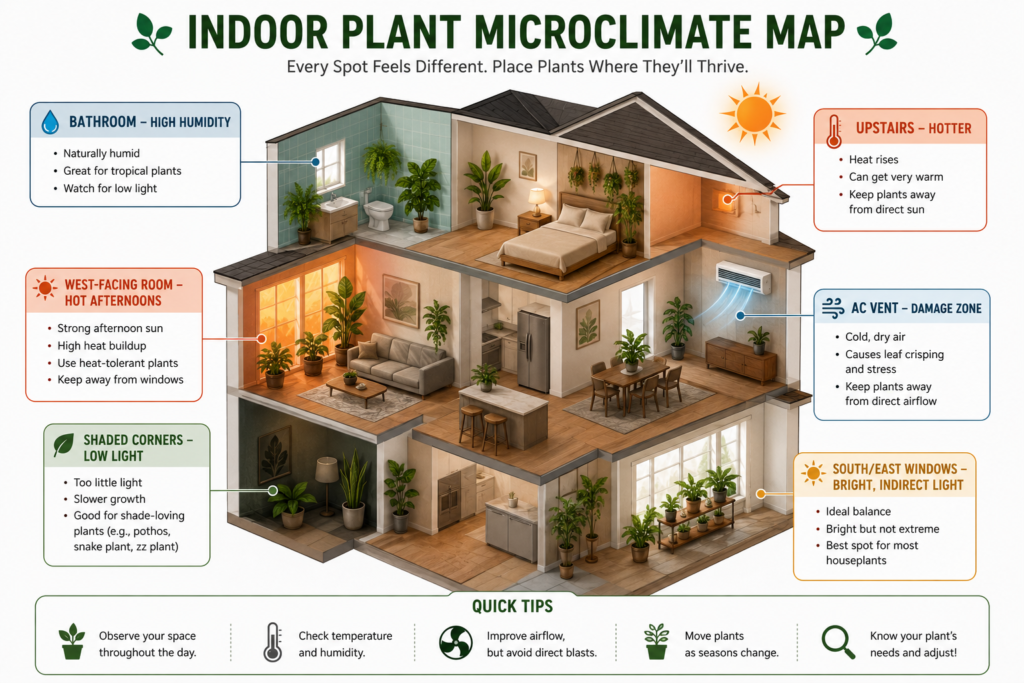
Indoor conditions vary significantly between rooms, affecting temperature, humidity, airflow, and sunlight exposure.
Common indoor summer microclimates include:
| Room Type | Common Condition |
| Bathroom | Higher humidity |
| Kitchen | Extra heat |
| Upstairs rooms | Heat accumulation |
| Window shelves | Intense light and heat |
| Air-conditioned rooms | Dry air |
| Hallways | Lower light stability |
Real-world decision clarity: if a calathea struggles in a living room but thrives in a bathroom, humidity is likely the issue rather than watering. If a pothos dries rapidly near a west-facing window, relocation may help more than increasing watering frequency.
How Can You Increase Humidity for Indoor Plants During Summer?
Indoor humidity often drops during summer because air conditioning dries the air, causing crispy leaves, curling, slower growth, and higher spider mite risk on tropical plants.
Best Humidity Methods
- Use a small room humidifier
- Group tropical plants together
- Place humidity-loving plants in bright bathrooms
- Use pebble trays for minor support
- Keep plants away from AC vents
- Monitor humidity with a hygrometer
If only one plant develops brown tips, check watering and root health first. If several tropical plants develop crispy edges at the same time, low humidity is usually the main problem.
Why Is Airflow Important for Indoor Plants in Summer?
Airflow helps regulate leaf temperature, reduce fungal risk, and prevent stagnant heat around indoor plants during summer.
Airflow should stay gentle rather than harsh. Strong drafts from AC vents or fans may dry leaves too quickly, especially on tropical plants. Soft, steady circulation works best for maintaining healthier summer growing conditions.
Good airflow helps with:
- Cooling leaves naturally
- Reducing fungal disease
- Preventing stagnant moisture
- Strengthening stems
- Slowing pest buildup
- Improving evaporation balance
Avoid placing plants:
- Directly under AC vents
- Beside heaters
- In front of strong fans
- In sealed, hot rooms
- Behind closed blinds with no circulation
If your plant shelf feels warm, humid, and still, improve airflow. If leaf damage appears mainly on the side facing a fan or vent, move the plant away from direct drafts.
Should Fertilizer Be Reduced During Heatwaves?
Smart Summer Fertilizer Rules
- Use half-strength fertilizer during hot months
- Avoid feeding wilted plants
- Do not fertilize bone-dry soil
- Flush salt buildup monthly if needed
- Pause feeding during severe heatwaves
- Resume only after healthy new growth appears
Signs of Fertilizer Stress
- White crust on soil
- Burned leaf tips
- Sudden yellowing
- Weak new growth
- Crispy leaf margins after feeding
If a plant continues producing healthy new leaves, light fertilizer is usually safe during summer. If the plant is drooping, scorched, curled, or recovering from heat stress, prioritize hydration, shade, humidity, and airflow before feeding.
Which Indoor Plants Handle Summer Heat Best?
Best Summer-Tolerant Indoor Plants
- Snake plant
- ZZ plant
- Aloe vera
- Jade plant
- Pothos
- Rubber plant
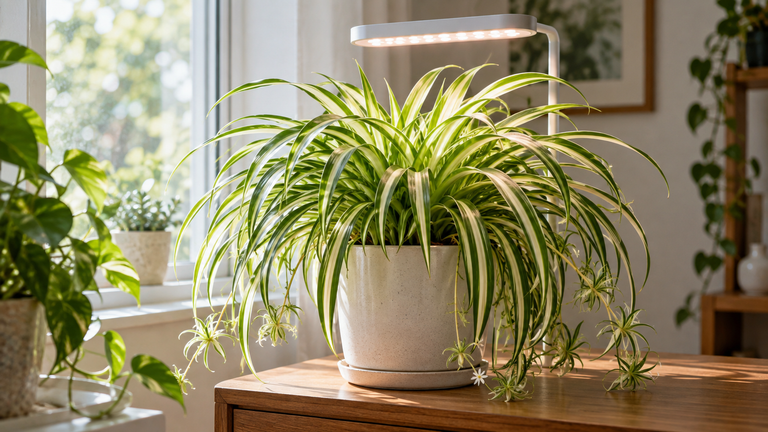
- Spider plant
- Some philodendrons
Plants That Need Extra Summer Protection
- Calathea
- Maidenhair fern
- Fittonia
- Peace lily
- Prayer plant
- Some orchids
- Thin-leaved begonias
Match plant placement to heat tolerance. Succulents, snake plants, and ZZ plants usually handle brighter, warmer rooms better, while calatheas, ferns, and fittonias prefer stable humidity and filtered light. In consistently hot, dry homes, resilient species are usually easier to maintain long-term.
How Do You Prevent Spider Mites and Summer Pests?
Spider mites often spread unnoticed under leaves until visible webbing appears.
Dry, dusty leaves are more vulnerable, so regular cleaning is part of summer pest prevention. Inspect leaf undersides weekly for pale speckling, webbing, weak growth, or tiny moving pests, especially on thin-leaved tropical plants.
Summer pest prevention checklist:
- Inspect leaves weekly
- Wipe dusty foliage
- Increase humidity around tropical plants
- Improve gentle airflow
- Quarantine new plants
- Avoid overwatering soil
- Remove dead leaves from pots
- Check stressed plants first
Warm, wet soil encourages larvae. Let the top layer dry when appropriate, improve drainage, and empty saucers.
If leaves show pale speckles and fine webbing, suspect spider mites. If tiny flies appear around soil, suspect fungus gnats. Spider mites need leaf-focused treatment and humidity support. Fungus gnats require soil moisture correction.
Should Indoor Plants Be Repotted During Summer?
The best time to repot in summer is early morning during a mild weather period. Choose a pot only slightly larger than the current one, use a suitable well-draining potting mix, and keep the plant in bright indirect light afterward. Avoid fertilizing immediately after repotting, especially if the roots were disturbed.
Repot in summer if:
- The plant is severely root-bound
- Soil dries out within one day
- Roots circle tightly around the pot
- Water runs straight through
- Growth has stalled despite good care
Avoid repotting if:
- The plant is heat-stressed
- Leaves are severely wilted
- The room is extremely hot
- Roots may already be rotting
- The plant recently moved locations
If the plant is healthy but root-bound, repot carefully. If the plant is suffering from heat stress, stabilize it first. Moving, pruning, repotting, fertilizing, and heat exposure all add stress. During summer, solve the biggest environmental issue before adding another major change.
How to Prepare Indoor Plants Before Summer Starts
Indoor plants handle summer heat better when environmental adjustments happen before temperatures peak. Areas near windows often become much hotter by midsummer, even if they seemed safe during winter or spring.
Late spring is the best time to inspect plants for pests, evaluate root health, improve humidity support, and identify rooms that trap excess heat before summer stress begins.
Smart Pre-Summer Preparation Steps
- Clean dusty leaves
- Inspect for spider mites
- Rotate plants gradually toward brighter light
- Test humidity levels
- Check drainage holes
- Repot root-bound plants early
- Install sheer curtains before heatwaves
- Monitor window heat zones
Tropical plants usually need more humidity support during summer, while succulents often tolerate brighter, warmer conditions with less frequent watering.
If your home becomes extremely hot during summer, move sensitive plants away from direct afternoon sun before heatwaves arrive. Preventive adjustments are usually easier than recovering severely scorched foliage.
How Do You Revive Heat-Stressed Indoor Plants?
To revive a heat-stressed indoor plant, move it away from excessive heat, improve humidity and airflow, and pause fertilizer temporarily.
Dry plants may need deep watering, while plants sitting in wet soil usually recover better with cooler conditions and reduced heat exposure.
Recovery Steps
- Move plants to bright indirect light
- Check soil moisture before watering
- Trim fully dead leaves
- Increase humidity gradually
- Maintain gentle airflow
- Pause fertilizer temporarily
- Avoid repotting unless necessary
- Monitor plants for pests after stress
A peace lily drooping in a hot room may recover quickly if the soil is dry. If the soil is already wet and the plant still wilts, heat stress, root stress, or poor root oxygen are more likely causes.
Use water for dry soil, relocation for excessive heat exposure, humidity support for crispy edges, and separate treatment for pests. Recovery may take several weeks, especially for sensitive tropical plants.
Summer Indoor Plant Care Checklist
Daily summer care should focus on monitoring soil moisture, sunlight exposure, and early stress symptoms rather than automatic watering. Weekly care should include rotating pots, cleaning leaves, inspecting for pests, and checking drainage trays.
Daily summer tasks:
- Check soil moisture
- Watch for leaf curling
- Notice afternoon sun exposure
- Monitor wilting
- Check plants near hot windows
Weekly summer tasks:
- Rotate plants
- Clean dusty leaves
- Inspect undersides for pests
- Empty saucers
- Check humidity readings
- Remove dead foliage
During heatwaves:
- Move sensitive plants away from glass
- Increase humidity
- Reduce or pause fertilizer
- Water in the morning
- Improve gentle airflow
- Shade plants from afternoon sun
If you can only do three things during extreme heat, prioritize watering based on soil moisture, moving plants away from harsh sun, and raising humidity for tropical plants. These three actions prevent most summer indoor plant failures.
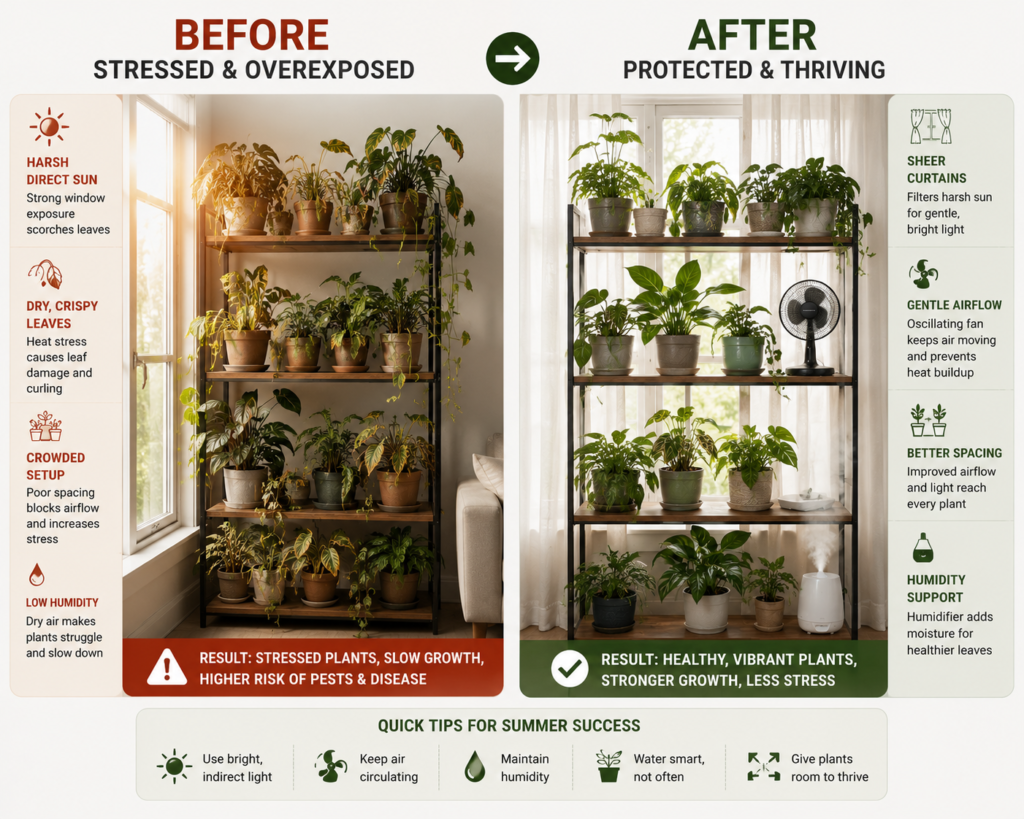
Mini Case Study — Indoor Plant Shelf Near a West-Facing Window
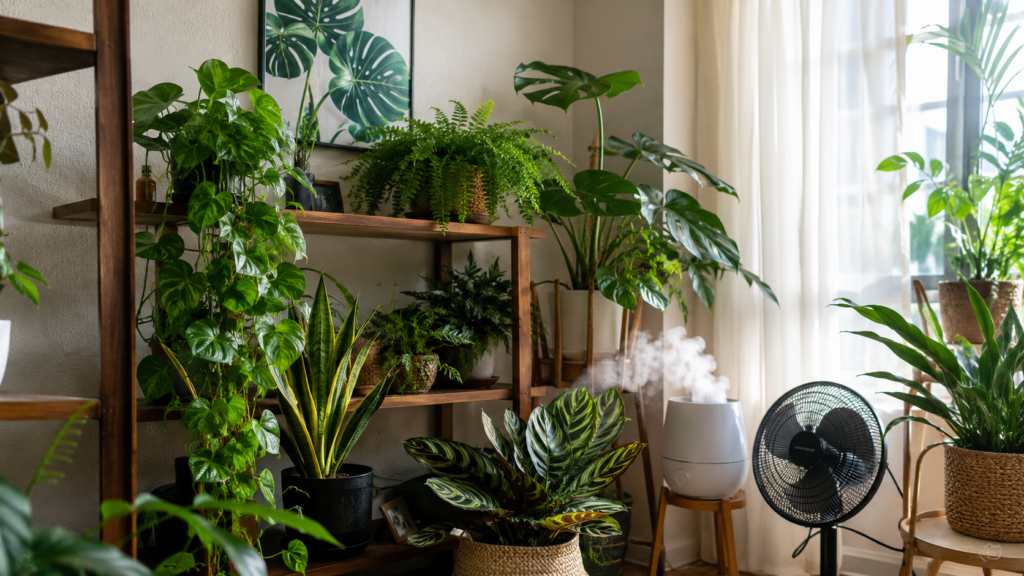
A west-facing apartment plant shelf had recurring summer problems: brown leaf edges, spider mites, rapid soil drying, and afternoon wilting. The shelf included pothos, calatheas, and philodendrons. Extra watering alone did not solve the problem.
Improvement came from several environmental adjustments working together. Sheer curtains reduced direct sunlight. Plants were moved about three feet from the glass. A small humidifier raised local humidity. An oscillating fan improved gentle circulation. Dark nursery pots were placed inside lighter cachepots to reduce heat absorption.
Changes made:
- Added sheer curtains
- Moved plants away from glass
- Used a humidifier
- Added gentle airflow
- Reduced fertilizer during heat
- Checked soil before watering
- Cleaned leaves weekly
Results after 30 days:
- Less leaf scorch
- Fewer spider mite signs
- Slower soil drying
- Better foliage color
- Healthier new growth
- Reduced afternoon wilting
Decision clarity: if several plants decline at once, the issue is usually environmental, not individual plant failure. Look at light, humidity, heat, airflow, and watering together. Summer plant care works best when the whole growing environment is adjusted.
Expert Indoor Plant Summer Care Tips
Experienced plant owners adjust care based on indoor microclimates instead of using the same routine for every plant.
Expert summer care tips:
- Protect roots from overheating
- Use bright indirect light for tropical plants
- Reduce fertilizer during stress
- Monitor humidity with a hygrometer
- Avoid watering only by schedule
- Keep leaves clean
- Inspect for pests weekly
- Use airflow without direct drafts
Thin-leaved tropical plants usually need humidity and filtered light, while succulent-type plants need stronger drainage and careful watering. If several plants show crispy edges, check humidity and airflow before changing fertilizer.
FAQ Section
Can indoor plants survive extreme summer heat indoors?
Yes, many indoor plants can survive short periods of extreme heat if watering, humidity, and airflow stay balanced. Tropical plants near hot windows or dry AC vents are usually the most vulnerable during summer heatwaves.
How do I know if my indoor plant is suffering from heat stress?
Common signs include curled leaves, drooping foliage, crispy edges, pale color, and slowed growth. Heat stress often happens even when the soil still feels moist.
Why do indoor plants wilt even when the soil is wet?
Wet-soil wilting usually happens because overheated or oxygen-starved roots cannot absorb water properly. Heat stress and overwatering can create similar symptoms.
Should indoor plants be watered every day during hot weather?
Most indoor plants should not be watered daily unless conditions are extremely hot and dry. Always check soil moisture before watering to avoid root rot.
Is morning or evening better for watering indoor plants in summer?
Morning is usually best because plants hydrate before peak heat arrives. It also reduces prolonged dampness around roots overnight.
Can sunlight through windows burn indoor plants?
Yes, strong summer sunlight through glass can scorch sensitive houseplants. West-facing windows are especially harsh during hot afternoons.
Why do brown leaf tips appear more often during summer?
Brown tips usually happen because heat and low humidity increase moisture loss through leaves. Dry air, underwatering, and hot windows can all contribute.
Which indoor plants tolerate summer heat the best?
Snake plants, ZZ plants, pothos, jade plants, aloe vera, and rubber plants generally handle summer heat and dry indoor air very well.
How can I increase humidity for indoor plants during summer?
Humidifiers work best for increasing humidity around tropical plants. Grouping plants together and using pebble trays can also help slightly.
Does air conditioning harm indoor plants?
Yes, dry AC airflow can dehydrate tropical plants and cause curled leaves or brown edges. Avoid placing plants directly near vents.
Why does soil dry out so quickly in summer?
Warm temperatures increase evaporation and plant water usage. Small pots, terracotta containers, and strong sunlight dry soil even faster.
What should I do during an indoor plant heatwave?
Move sensitive plants away from harsh sunlight, increase humidity, improve airflow, and reduce fertilizer until temperatures stabilize.
Why is my indoor plant drooping in the afternoon but recovering at night?
This usually indicates heat stress rather than severe underwatering. High daytime temperatures increase moisture loss temporarily.
Can humidifiers help indoor plants during summer?
Yes, humidifiers are one of the best ways to support tropical plants during summer because they replace moisture removed by heat and air conditioning.
Why do spider mites appear more often in summer?
Spider mites thrive in hot, dry indoor conditions with low humidity. Early signs include pale speckling and fine webbing under leaves.
Should I fertilize indoor plants during extreme heat?
It is usually safer to reduce or pause fertilizer during severe heatwaves because stressed roots cannot process nutrients efficiently.
Can indoor plant roots overheat near windows?
Yes, roots can overheat quickly near hot windows, especially inside dark nursery pots exposed to afternoon sunlight.
Why do different rooms affect indoor plants differently in summer?
Every room develops a different microclimate based on sunlight, humidity, airflow, and heat buildup. Bathrooms are usually more humid, while upstairs rooms are often hotter.
Should indoor plants be repotted during summer?
Repotting is possible during mild summer conditions, but avoid doing it during severe heatwaves because stressed roots recover more slowly.
How long does it take indoor plants to recover from heat stress?
Mild heat stress may improve within days, while severe damage can take several weeks before healthy new growth appears.
Myra is the founder and lead writer of Plantsaholic. She shares practical, research-backed advice on indoor plants, outdoor gardening, flowers, herbs, succulents, and everyday plant care. Her goal is to help gardeners of all experience levels grow healthier plants through simple, easy-to-follow gardening guides.