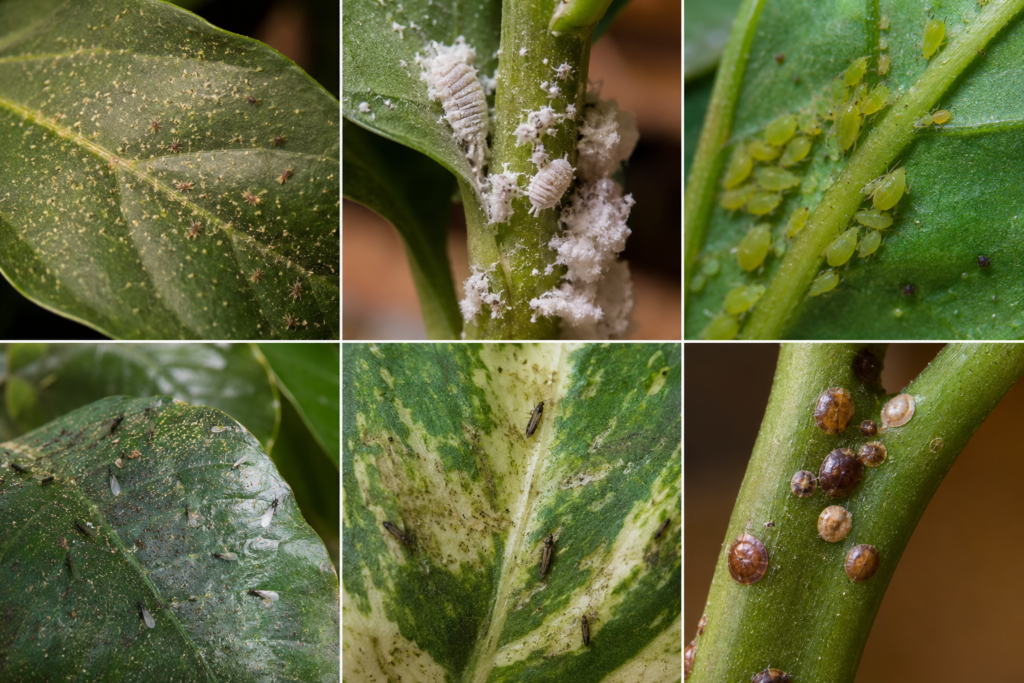
Indoor plants often decline slowly when pest infestations remain unnoticed during the early stages. Common houseplant pests feed on sap, damage roots, weaken stems, distort foliage, and reduce overall plant health over time. The most common indoor plant pests include spider mites, fungus gnats, mealybugs, aphids, thrips, whiteflies, and scale insects. Each pest leaves different visual symptoms, feeding marks, residue patterns, and plant damage that help identify the infestation correctly before serious damage develops.
Early pest identification is important because different houseplant pests require different treatment methods, cleaning routines, and environmental adjustments for effective long-term control. Regular plant inspections, proper watering habits, clean containers, and quarantining newly purchased plants can help reduce infestation risks while protecting tropical plants, flowering houseplants, succulents, vines, and foliage plants from ongoing pest damage.
Why Early Identification Matters?
Early identification helps plant owners distinguish pest damage from common watering, lighting, or nutrient problems that often produce similar symptoms. Yellow leaves, curling foliage, brown spots, drooping stems, and slowed growth are frequently mistaken for overwatering or underwatering when pests are actually feeding on the plant. Correct identification prevents unnecessary watering adjustments or fertilizer use that may worsen plant stress instead of solving the infestation.
Different pests also leave different evidence patterns, including sticky residue, webbing, black specks, distorted leaves, or visible insects around stems and soil. Recognizing these symptoms early improves treatment accuracy because spider mites, fungus gnats, mealybugs, thrips, and scale insects all require different control methods. Many professional nurseries routinely isolate new plants and inspect foliage undersides before placing plants near healthy inventory because early detection greatly reduces long-term plant damage and maintenance problems.
Benefits of early identification include:
- Preventing pest spread
- Reducing plant damage
- Easier treatment and recovery
- Less reliance on pesticides
- Better protection for sensitive houseplants
What Are the Most Common Houseplant Pests?
The most common houseplant pests include spider mites, fungus gnats, mealybugs, aphids, thrips, whiteflies, and scale insects. Each pest damages plants differently depending on where it feeds and which plant areas it targets most often.
Spider mites and whiteflies usually gather underneath leaves, fungus gnats develop inside moist potting soil, and mealybugs hide around stem joints and protected plant crevices. Thrips commonly damage young leaves, while aphids cluster around soft developing shoots and flower growth.
Common Indoor Plant Pest Categories
| Pest | Damage Type | Main Target Area |
| Spider mites | Sap removal | Leaf undersides |
| Fungus gnats | Root disturbance | Soil and roots |
| Mealybugs | Sap feeding | Stem joints |
| Aphids | New growth feeding | Young shoots |
| Thrips | Surface scraping | Young leaves |
| Scale insects | Continuous sap extraction | Stems and veins |
| Whiteflies | Sap feeding + honeydew | Leaf undersides |
Plants Frequently Affected by Indoor Pests
- Calathea
- Ficus
- Peace lilies
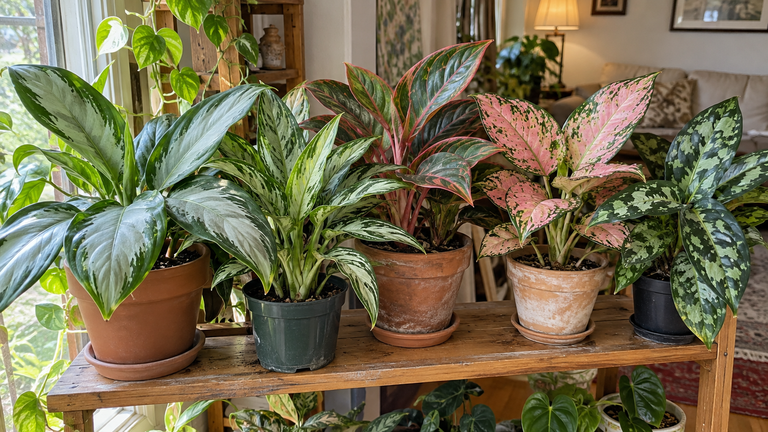
Spider mites especially target thin-leaf tropical plants growing in dry indoor air.
Decision clarity: Correct pest identification improves treatment accuracy because different pests respond to different cleaning methods, watering adjustments, and environmental changes.
Which Indoor Conditions Attract Specific Pests?
Different indoor conditions favor different houseplant pests. Wet soil commonly attracts fungus gnats, while dry foliage conditions favor spider mites. Dense foliage and tender new growth also increase pest activity on indoor plants.
| Pest | Common Indoor Trigger |
| Spider mites | Dry foliage |
| Fungus gnats | Wet soil |
| Mealybugs | Dense growth |
| Aphids | Tender new growth |
| Thrips | Crowded foliage |
| Scale insects | Older stems |
Real-world insight: Crowded indoor shelves often make pest detection more difficult because insects hide between overlapping leaves.
Which Houseplants Are Most Vulnerable?
Some houseplants experience pest problems more frequently because of their leaf texture, moisture needs, or dense growth habits. Soft foliage, moisture-retaining soil, and tender new growth often make infestations easier to establish and harder to notice early.
Houseplants Commonly Affected by Indoor Pests
| Plant Type | Common Pest Risks |
| Calatheas & Marantas | Spider mites, thrips |
| Pothos & Philodendrons | Mealybugs, scale |
| Peace Lilies | Fungus gnats |
| Herbs & Flowering Plants | Aphids, whiteflies |
| Ficus Trees | Scale insects, spider mites |
| Orchids | Mealybugs, thrips |
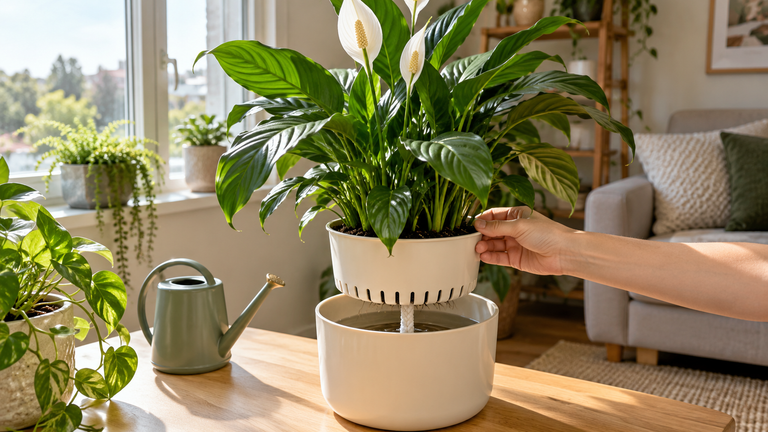
Fungus gnats frequently appear in moisture-retaining soil around peace lilies and other water-loving plants.
Real-world insight: Large indoor plant collections usually require routine inspections because pests often remain unnoticed until visible foliage damage appears.
How Do Spider Mites Damage Indoor Plants?
Spider mites are among the most destructive indoor plant pests because they reproduce rapidly and remain difficult to detect during early infestation stages. These microscopic arachnids pierce leaf cells and extract fluids from plant tissue, slowly reducing chlorophyll production and weakening photosynthesis.
Spider mites are tiny sap-feeding pests that usually hide underneath leaves and create fine webbing across affected foliage.
Damage usually begins as tiny pale yellow dots scattered across foliage surfaces. As feeding intensifies, leaves become bronzed, faded, curled, crispy, or dusty-looking. Fine silk webbing appears between stems and leaves once colonies grow larger. Many plant owners first mistake early spider mite damage for nutrient deficiency because the pale speckling resembles mineral imbalance rather than insect feeding.
Common Spider Mite Symptoms
- Tiny yellow or pale speckles
- Fine silk webbing
- Dry leaf texture
- Curled foliage
- Crispy edges
- Premature leaf drop
- Weak new growth
- Dusty-looking leaves
Plants Commonly Attacked by Spider Mites
- Calatheas
- Ficus
Spider mites spread extremely quickly indoors because female mites lay large numbers of eggs within short reproductive cycles. One unnoticed colony can multiply into thousands within weeks under favorable conditions. Plants near heating vents or direct airflow often experience severe infestations first because dry air accelerates reproduction.
Real-world insight: Indoor plant owners often discover spider mites after noticing thin webbing around leaf joints when sunlight hits the foliage from certain angles.
Decision clarity: Increasing humidity and improving airflow usually matters just as much as direct pest treatment during spider mite control.
How Can You Tell the Difference Between Pest Damage and Watering Problems?
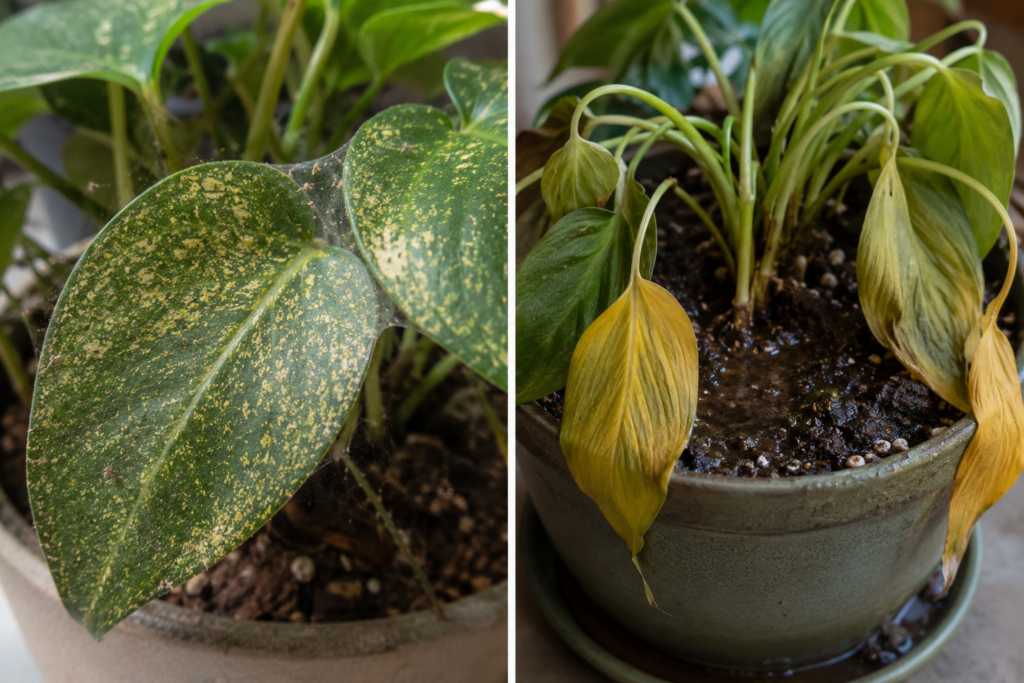
Many indoor plant problems look almost identical during the early stages, which makes diagnosis difficult for beginners. Yellow leaves, curling foliage, brown edges, drooping stems, and slow growth can result from pests, overwatering, underwatering, poor drainage, root rot, nutrient imbalance, or lighting stress simultaneously. The key difference is that pest damage usually creates irregular patterns, feeding marks, sticky residue, webbing, or visible insect activity, while watering problems often affect the plant more uniformly across older foliage or root systems.
Spider mites create tiny pale stippling dots that appear scattered randomly across leaves, while underwatering usually causes dry crispy edges and limp foliage without speckled feeding marks. Thrips leave silvery scars and distorted emerging growth, whereas sunburn creates broader bleached patches exposed directly to intense sunlight. Fungus gnats often appear alongside consistently wet soil and weak roots, while root rot creates foul smells and black mushy roots rather than flying insects near containers.
Pest Damage vs Watering Problem Comparison
| Symptom | Pest Cause | Non-Pest Cause |
| Yellow speckles | Spider mites | Nutrient deficiency |
| Sticky leaves | Aphids/mealybugs | Rare in watering issues |
| Curled new growth | Thrips/aphids | Underwatering |
| Wilting in wet soil | Fungus gnats/root stress | Root rot |
| Silver streaks | Thrips | Sun scorch |
| Cotton-like residue | Mealybugs | Mineral buildup |
Signs the Problem Is Likely Pest-Related
- Visible insects or webbing
- Sticky honeydew residue
- Damage concentrated on new growth
- Random feeding patterns
- Tiny moving dots under leaves
- Black specks or silver scars
Real-world insight: Many plant owners overwater pest-damaged plants because stressed foliage looks dehydrated even when roots remain constantly wet.
Decision clarity: If unusual patterns appear alongside visible residue, insects, webbing, or flying pests, the issue is usually pest-related rather than purely environmental.
What Causes Fungus Gnats Around Indoor Plants?
Fungus gnats are tiny flying insects linked to constantly moist soil and poor drainage. Adults hover around pots and trays, while larvae damage delicate feeder roots beneath the soil surface.
Overwatering, dense organic soil, weak airflow, low light, and decorative cachepots commonly create ideal breeding conditions indoors.
Fungus Gnat Signs
- Tiny black flies around pots
- Insects flying when soil moves
- Constant soil activity
- Weak seedlings
- Yellow leaves
- Root stress
- Wilting despite moist soil
Conditions That Encourage Fungus Gnats
| Condition | Risk |
|---|---|
| Wet soil | Very high |
| Poor drainage | High |
| Dense organic soil | High |
| Weak airflow | Moderate |
| Low light | Moderate |
Young plants suffer most because delicate roots damage easily. Fungus gnats usually indicate excess moisture problems rather than insects alone.
How Can You Identify Mealybugs on Houseplants?
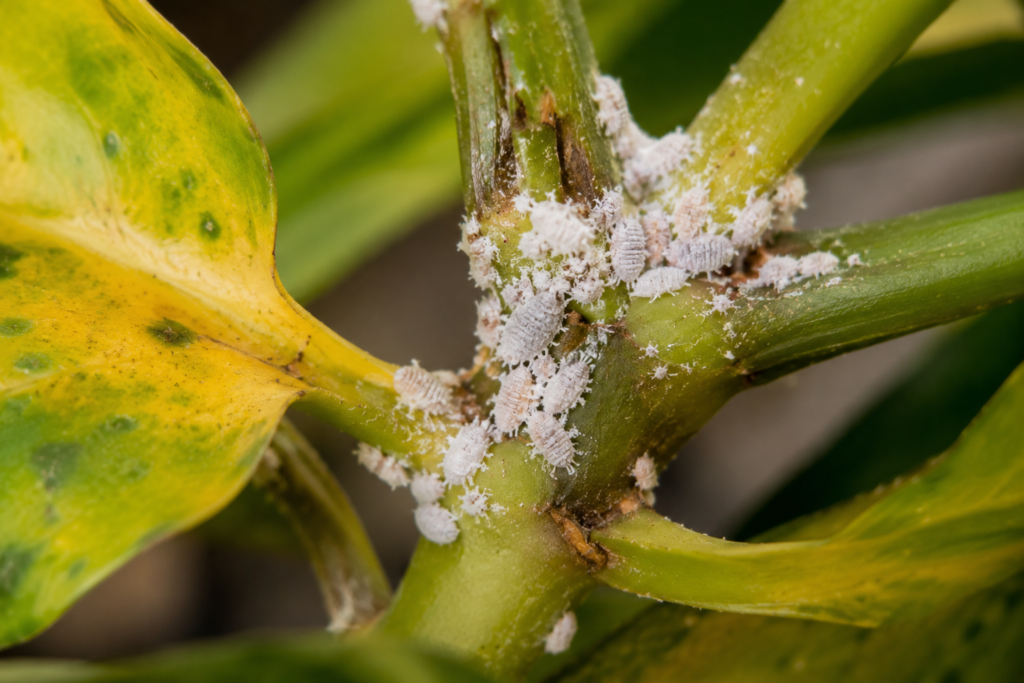
Mealybugs are white wax-covered sap-feeding insects that resemble cotton clusters around stems and leaf nodes. They weaken plants slowly by removing sap and spreading sticky honeydew residue.
Early infestations appear as fuzzy white masses near stem joints or under leaves. Severe outbreaks cause yellow foliage, black sooty mold, weak growth, and stunted development.
Common Mealybug Symptoms
- White cotton-like masses
- Sticky residue
- Yellow leaves
- Curled foliage
- Black mold
- Weak growth
- Stunted development
Plants Commonly Affected
- Orchids
- Pothos
- Ficus
Root mealybugs remain hidden below soil level and often survive incomplete cleaning treatments.
Where Do Houseplant Pests Usually Hide First?
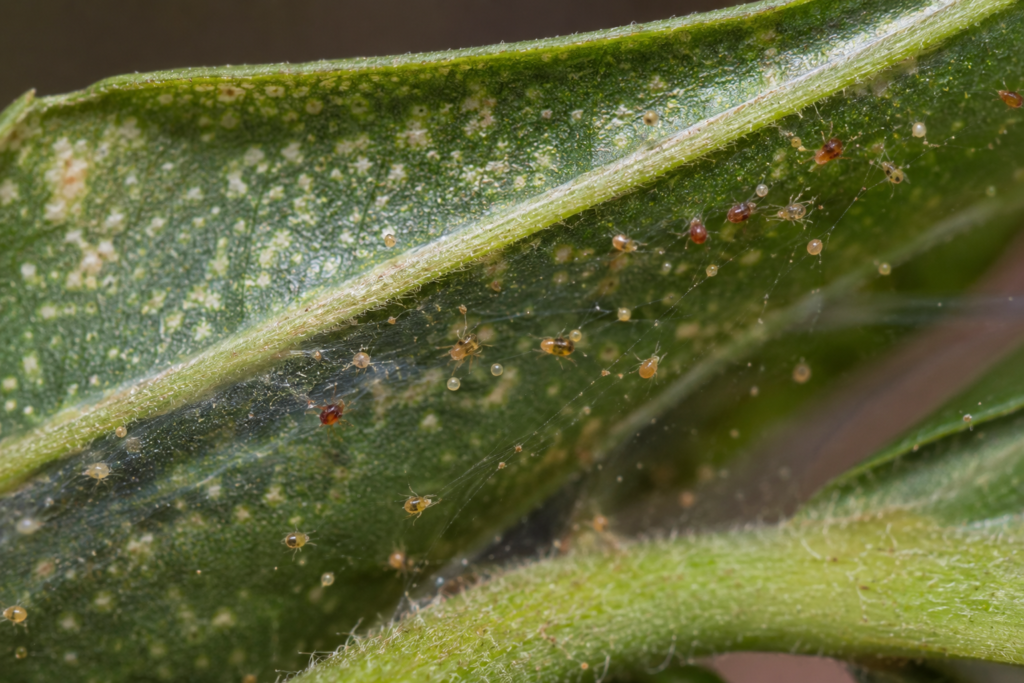
Most houseplant pests hide underneath leaves, around stem joints, inside dense foliage, or near moist soil where infestations stay hidden early.
- Spider mites: leaf undersides
- Mealybugs: stem joints
- Scale insects: stems and veins
- Fungus gnats: moist soil
- Thrips: folded leaves and flowers
Decorative pots and crowded plants make infestations harder to detect.
What Damage Do Aphids Cause Indoors?
Aphids are fast-reproducing sap-feeding insects that cluster around fresh growth. Heavy infestations distort leaves, twist stems, and leave sticky honeydew residue.
Common Aphid Symptoms
- Clusters of insects
- Curled leaves
- Sticky residue
- Twisted stems
- Distorted growth
- Black mold buildup
Plants Frequently Attacked
- Herbs
- Hibiscus
- Indoor roses
- Pepper plants
- Tropical flowering plants
Excess fertilizer often increases aphid outbreaks by producing soft new growth.
How Do Thrips Affect Houseplants?
Thrips are tiny insects that scrape leaf surfaces and suck plant fluids. They hide inside folded leaves and flowers, making early detection difficult.
Thrip feeding creates silver streaks, bronze scars, black specks, curled leaves, and distorted new growth.
Common Thrip Symptoms
- Silver streaks
- Bronze scarring
- Black specks
- Curled growth
- Crispy edges
- Flower damage
Plants Commonly Damaged
- Philodendron
- Orchids
- Peace lilies
Silver scarring combined with damaged emerging leaves strongly points toward thrips.
Which Houseplant Pests Spread the Fastest Indoors?
Some pests spread rapidly because they stay hidden and move easily between nearby plants. Spider mites and thrips usually become destructive fastest indoors.
| Pest | Why It Spreads Fast |
|---|---|
| Spider mites | Hidden webbing |
| Thrips | Active movement |
| Aphids | Dense colonies |
| Whiteflies | Flying adults |
| Fungus gnats | Soil movement |
| Mealybugs | Hidden clusters |
Spider mites and thrips often require the fastest response because delayed treatment quickly leads to widespread damage.
What Are Scale Insects and Why Are They Dangerous?
Scale insects are sap-feeding pests protected by hard shell-like coverings attached to stems and leaf veins. Their protective shells make infestations difficult to remove and easy to overlook.
These pests slowly weaken plants by draining sap, causing yellow leaves, sticky residue, black mold, weak stems, and leaf drop over time.
Common Scale Symptoms
- Brown shell-like bumps
- Sticky residue
- Yellow foliage
- Weak stems
- Black mold
- Leaf drop
Plants Commonly Affected
- Citrus trees
- Ficus
- Rubber plants
- Dracaena
- Schefflera
Scale insects often hide along stems, veins, and woody growth where infestations stay unnoticed early.
Decision clarity: Effective control requires removing both adult scale insects and newly emerging crawler stages.
Severe Infestation Signs
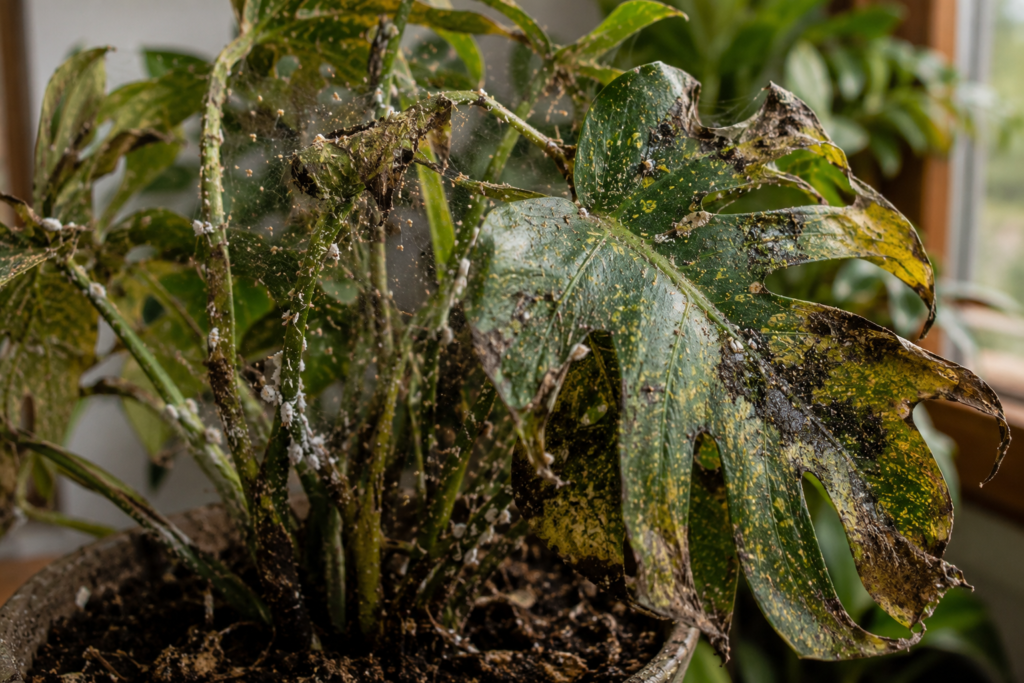
Small pest problems often become easier to identify once visible plant damage increases across leaves, stems, roots, or developing growth. Severe infestations usually cause ongoing foliage decline, distorted growth, discoloration, sticky residue buildup, webbing, or visible insect clusters that remain active despite routine cleaning or watering adjustments. Recognizing these warning signs early helps prevent permanent plant damage and improves treatment accuracy.
Common Signs of Severe Houseplant Pest Infestations
| Severe Symptom | Common Pest Association |
| Fine webbing across leaves | Spider mites |
| Sticky residue or honeydew | Aphids, whiteflies |
| Black mold on leaves | Honeydew-producing pests |
| Distorted new growth | Thrips, aphids |
| Yellowing with visible insects | Multiple sap-feeding pests |
| Wilting despite moist soil | Fungus gnats/root damage |
| Brown shell-like bumps | Scale insects |
| White cotton clusters | Mealybugs |
Spider mites often create widespread stippling and visible webbing underneath leaves, while thrips commonly leave silver streaks and distorted emerging foliage. Fungus gnat infestations may lead to declining root health and persistent wilting despite adequate watering. Sticky residue, black mold, visible insect colonies, or repeated leaf drop usually indicate that pest activity has progressed beyond isolated early-stage damage.
Real-world insight: Plant owners frequently mistake severe pest symptoms for watering problems because yellowing, drooping, and slowed growth often resemble root or nutrient issues.
Decision clarity: Visible residue, webbing, distorted growth, or persistent decline usually signals that immediate pest treatment is necessary.
How Should You Inspect Indoor Plants for Pests?
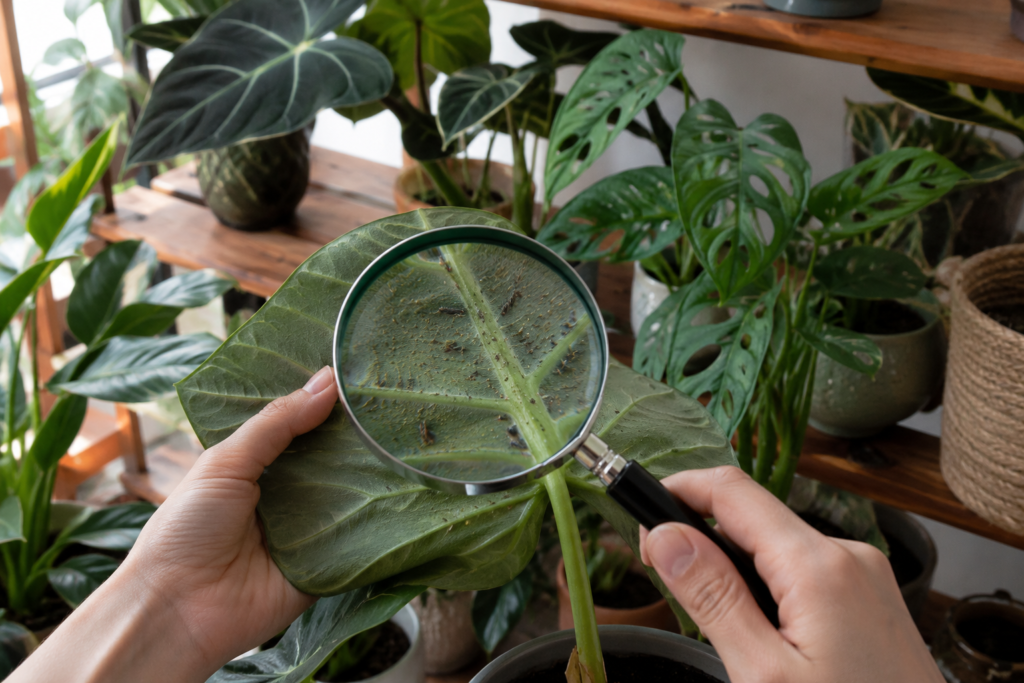
A consistent inspection routine helps detect houseplant pests before infestations spread across nearby indoor plants. Weekly inspections are usually enough for most indoor collections, although newly purchased plants, recovering plants, and tropical humidity-loving species may require more frequent monitoring. Early detection allows faster treatment while reducing long-term foliage stress, distorted growth, and widespread infestations.
Professional indoor plant inspections follow a simple top-to-bottom workflow that keeps the process fast and organized without missing high-risk areas. Rather than randomly checking leaves, experienced growers inspect plants in the same sequence every time to improve consistency and spot subtle changes earlier.
A simple professional inspection workflow includes:
- Checking new growth first for distortion or discoloration
- Inspecting leaf surfaces for spots, residue, or stippling
- Examining stems and node areas for clusters or scale buildup
- Monitoring soil surfaces for fungus gnats or excess moisture
- Reviewing nearby plants if one infestation is discovered
Useful inspection tools include:
- LED flashlight for darker foliage areas
- Magnifying glass for tiny pests like spider mites or thrips
- Yellow sticky traps for monitoring flying insects
- Soft cloth for cleaning leaves during inspections
- Pruning scissors for removing damaged foliage immediately
The best time to inspect indoor plants is during daytime natural lighting when leaf damage, discoloration, and movement become easier to notice. Combining weekly inspections with proper airflow, balanced watering, and plant spacing greatly reduces the chance of severe indoor pest outbreaks.
Why Do Houseplant Pest Problems Increase During Winter?
Indoor pest problems often increase during winter because heating systems create drier air while cooler temperatures slow soil evaporation. Dry indoor air strongly encourages spider mites on tropical foliage plants, while persistently damp soil commonly increases fungus gnat activity around roots and containers.
Common Winter Pest Triggers Indoors
| Winter Condition | Common Pest Risk |
| Dry heated air | Spider mites |
| Slower soil drying | Fungus gnats |
| Less frequent inspections | Delayed detection |
Spider mites commonly appear on calatheas, palms, ivy, and other thin-leaf tropical plants during winter because dry air favors mite activity. Fungus gnats also become more common when watering routines remain too frequent during colder months and soil stays wet for longer periods.
Real-world insight: Many plant owners continue summer watering habits during winter, which often leads to persistently damp soil and increased fungus gnat activity indoors.
How Can You Prevent Common Houseplant Pests?
Preventing indoor plant pests starts with stable plant care habits and routine monitoring. Most infestations become easier to control when plants remain healthy, properly spaced, and free from excessive moisture stress. Simple prevention practices usually reduce the risk of spider mites, fungus gnats, mealybugs, aphids, thrips, and scale insects before severe infestations develop.
The most effective prevention methods include:
- Quarantining new plants for 1–2 weeks before placing them near existing plants
- Avoiding consistently waterlogged soil conditions
- Improving airflow around crowded indoor plant shelves
- Managing humidity carefully for tropical plants
- Performing weekly inspections on leaves, stems, and soil surfaces
- Removing damaged or heavily infested foliage quickly
- Cleaning dust buildup from leaves regularly
Healthy indoor growing conditions help reduce long-term pest pressure while improving plant recovery and overall foliage quality.
What Treatments Work Best for Common Houseplant Pests?
Treatment success depends on identifying the correct pest early and using targeted control methods before infestations spread across multiple plants. Mild infestations are often manageable with physical removal, moisture correction, pruning, or insecticidal treatments.
| Pest | Common Treatment |
| Spider mites | Insecticidal soap, leaf washing, humidity adjustment |
| Fungus gnats | Reduced watering, sticky traps, soil drying |
| Mealybugs | Alcohol swabs, pruning, insecticidal soap |
| Aphids | Water spray, neem oil, insecticidal soap |
| Thrips | Sticky traps, pruning, insecticidal treatment |
| Scale insects | Manual removal, neem oil, horticultural oil |
Severe infestations may require isolating affected plants to prevent additional indoor spread.
Final Thoughts on Identifying Common Houseplant Pests
Most houseplant pests become easier to control when identified early. Spider mites, fungus gnats, thrips, mealybugs, aphids, whiteflies, and scale insects all create different damage patterns and hiding spots that help narrow identification quickly.
Regular inspections under leaves, around stem joints, and near moist soil help catch infestations before severe plant decline develops. Proper watering, airflow, quarantine, and routine cleaning also reduce long-term pest problems.
Decision clarity: Correct pest identification improves treatment success far more than applying random treatments first.
Houseplant Pest Identification Quick Decision Tree
| If You See | Most Likely Pest |
|---|---|
| Fine webbing | Spider mites |
| Yellow speckles | Spider mites |
| Flying insects near wet soil | Fungus gnats |
| White cotton clusters | Mealybugs |
| Sticky residue | Aphids, scale, or mealybugs |
| Silver streaks | Thrips |
| Brown shell-like bumps | Scale insects |
| Distorted new growth | Thrips or aphids |
| Black specks | Thrips |
| Wilting with wet soil | Fungus gnats |
| White flying insects | Whiteflies |
| Sticky yellow leaves | Aphids or scale |
| Dry foliage with webbing | Spider mites |
Quick Diagnosis Tips
- Check leaf undersides first
- Wet soil usually indicates fungus gnats
- Silver scarring suggests thrips
- Sticky leaves point to sap-feeding pests
- Fine webbing usually means spider mites
Fastest Inspection Areas
- Leaf undersides
- Stem joints
- New growth
- Soil surface
- Drainage holes
- Decorative pots
Decision clarity: Always identify the pest first because different infestations require different treatment methods.
FAQ SECTION
How do I identify houseplant pests?
Different pests leave different signs such as webbing, sticky residue, distorted growth, flying insects, or white cotton-like clusters. Checking leaves, stems, and soil surfaces usually helps identify the infestation type.
What is the most common indoor plant pest?
Spider mites, fungus gnats, mealybugs, aphids, thrips, and scale insects are among the most common pests affecting indoor tropical and foliage plants.
Why do fungus gnats appear in houseplants?
Fungus gnats usually appear when potting soil stays consistently moist for long periods. Damp soil creates favorable conditions for larvae development near plant roots.
How can I prevent indoor plant pests naturally?
Routine inspections, balanced watering, proper airflow, quarantining new plants, and cleaning foliage regularly help reduce indoor pest problems naturally.
Where do houseplant pests hide first?
Most pests hide underneath leaves, around stem joints, inside dense foliage, or near the soil surface during early infestations.
Which houseplants attract pests most often?
Calathea, pothos, philodendron, ficus, orchids, and peace lilies commonly experience indoor pest problems because of dense foliage and moisture preferences.

Myra is the founder and lead writer of Plantsaholic. She shares practical, research-backed advice on indoor plants, outdoor gardening, flowers, herbs, succulents, and everyday plant care. Her goal is to help gardeners of all experience levels grow healthier plants through simple, easy-to-follow gardening guides.