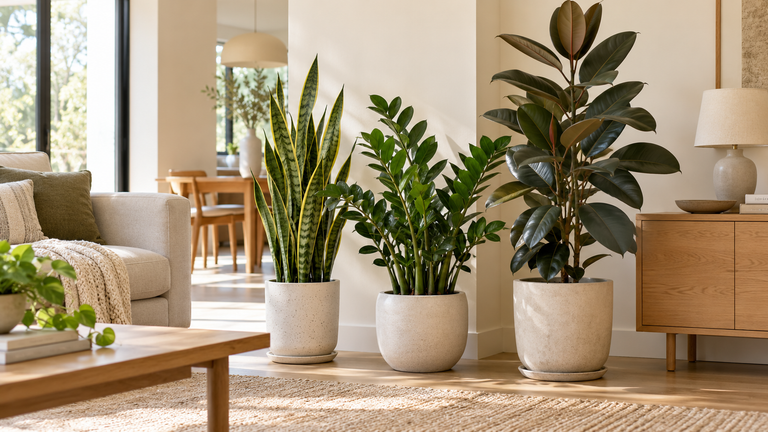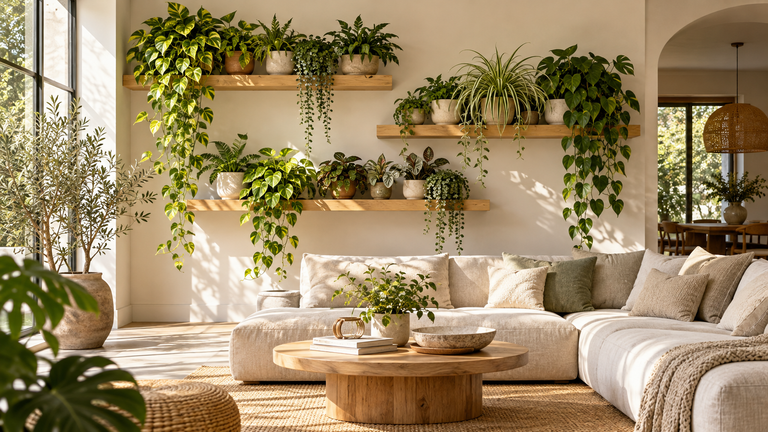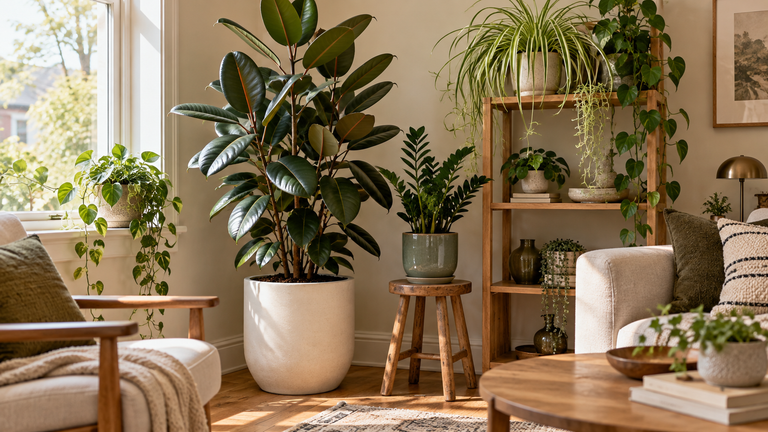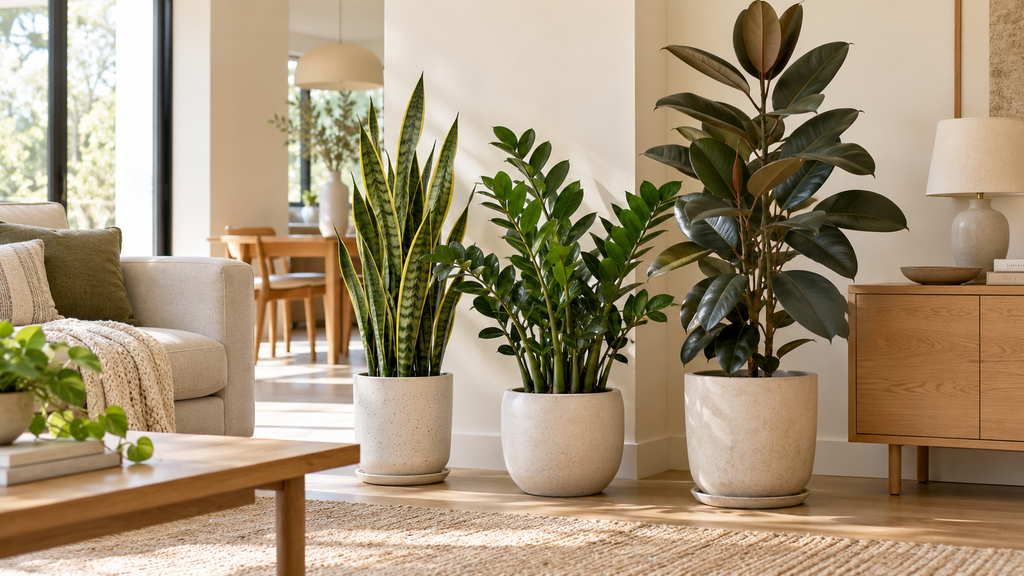
The best minimalist indoor plants combine clean growth habits, manageable mature size, and care requirements that suit your room. ZZ plants and snake plants are versatile choices, Peperomia works on smaller surfaces, and rubber plants create larger focal points. Select plants by light, available space, and upkeep before choosing their appearance.
Minimalist decorating gives each plant a purpose and enough space to remain attractive as it grows. A healthy specimen with a clear role usually looks calmer than several unrelated pots.
What Makes Minimalist Indoor Plants Different?
A minimalist indoor plant is not a botanical category. It is a houseplant whose growth habit, foliage, proportions, and maintenance needs suit a visually restrained room.
Look for four practical qualities: a recognizable silhouette, a mature footprint that fits the location, manageable growth, and compatibility with the actual light.
Visual weight matters more than plant height alone. Upright sword-shaped leaves often occupy less apparent space than broad, outward-facing leaves. Minimalism is about deliberate placement, not a strict maximum number of pots.
How Do You Choose Minimalist Indoor Plants?
Choose by the conditions of the exact spot, not the room’s general appearance. A bright room can still contain a dim corner. Check what the plant will encounter throughout the year.
Before buying, record the window direction, distance from daylight, available width, clearance above the leaves, and whether heating or air-conditioning drafts reach the position. Look at the location when the sun moves across the room, not just at one convenient hour. Include children and plant-chewing pets in the decision.
Use this sequence: light → mature footprint → maintenance → household safety → growth form → appearance. Each condition removes unsuitable species before you begin comparing shapes and colors.
| Your space | First plants to consider | Check before buying |
|---|---|---|
| Narrow floor position | Snake plant, Dracaena marginata | Height and leaf spread |
| Moderately dim room | ZZ plant, cast iron plant | Adequate usable light |
| Small desk or shelf | Peperomia, Haworthia | Light and pot stability |
| Open bright corner | Rubber plant, Monstera | Future canopy width |
| Bright windowsill | Jade, bishop’s cap cactus | Direct-sun exposure |
| High shelf | Pothos | Vine control and access |
Which Indoor Plants Should You Avoid?
Eliminate plants that cannot fit your space or care habits, even if they look appealing in photographs. Vigorous climbers are poor choices if you never want to train or prune vines. Broad foliage is inconvenient beside narrow walkways, and large floor plants can overwhelm small desks.
Avoid placing sun-loving cacti or jade plants in persistently dark corners. Similarly, skip species sensitive to excess moisture if you regularly leave water standing in decorative containers.
Do not assume that a small nursery specimen will remain small. Some indoor plants eventually need larger pots, wider clearance, or support.
What Are the Best Minimalist Indoor Plants?
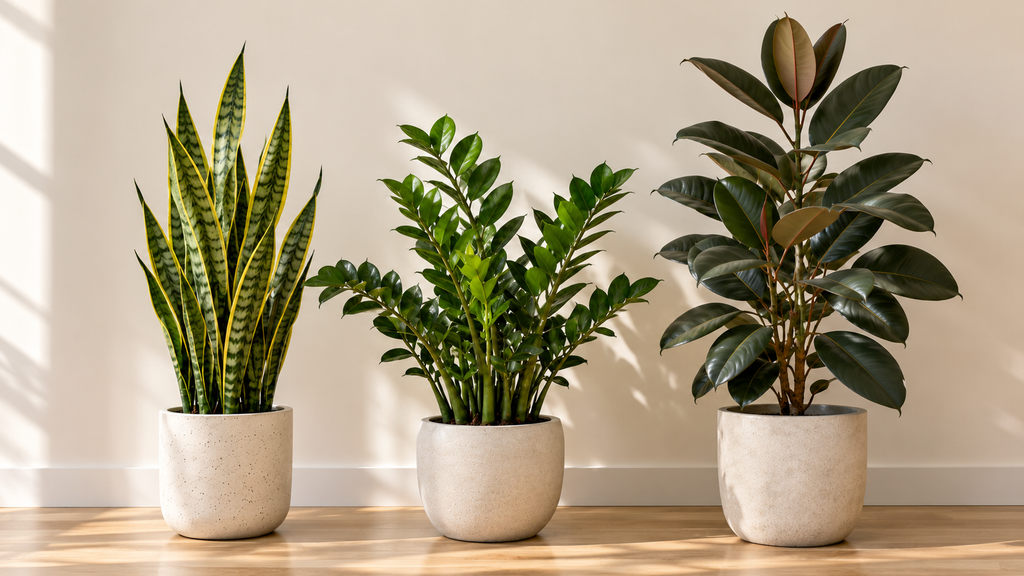
These 15 houseplants cover upright, compact, trailing, and statement forms. No single species is best for every room. Compare its natural shape and likely maintenance with the space you actually have, then use the individual descriptions below.
| Plant | Main visual role | Key limitation |
|---|---|---|
| ZZ plant | Glossy, arching structure | Waterlogged soil |
| Snake plant | Strong vertical accent | Poor drainage |
| Rubber plant | Broad-leaved focal point | Increasing size |
| Cast iron plant | Restrained clumping foliage | Slow growth |
| Peperomia obtusifolia | Compact tabletop accent | Excess moisture |
| Bird’s nest snake plant | Low architectural rosette | Saturated potting mix |
| Haworthia | Tiny geometric accent | Weak light |
| Jade plant | Miniature tree silhouette | Insufficient sun |
| Ponytail palm | Sculptural swollen trunk | Arching leaf spread |
| Dracaena marginata | Tall, fine-textured shape | Drafts and tip browning |
| Monstera deliciosa | Dramatic split leaves | Large footprint |
| Pothos | Controlled trailing line | Unmanaged vines |
| Chinese evergreen | Soft, patterned foliage | Species-specific sensitivity |
| Bishop’s cap cactus | Compact geometric form | Low light |
| Philodendron ‘Birkin’ | Striped upright foliage | Ingestion risk |
1. ZZ Plant
Zamioculcas zamiifolia has glossy oval leaflets arranged along thick, upright-to-arching stalks. Its repeated leaf pattern adds polish without looking busy, making it useful beside a sofa, on a sturdy console, or in a medium-sized corner.
Its water-storing rhizomes make frequent watering unnecessary. Let the growing medium dry appropriately and never leave the pot sitting in water. They are unsuitable within reach of pets that chew foliage.
2. Snake Plant
Dracaena trifasciata, formerly Sansevieria trifasciata, is an excellent option when you need height without much horizontal spread.
Snake plants tolerate a range of indoor light levels and favor freely draining soil. Allow the soil to dry between waterings, especially in cooler or dimmer conditions. Their foliage contains compounds toxic to cats and dogs; choose another plant if chewing is likely.
3. Rubber Plant
Ficus elastica makes a strong focal point with large, glossy leaves and a tree-like habit. One well-positioned specimen can give a spacious living room sufficient greenery without a collection of small pots.
Provide bright indirect light and enough distance from furniture for the canopy to develop. The plant’s milky sap can irritate skin, while ingestion may harm pets.
4. Cast Iron Plant
Aspidistra elatior produces broad, upright leaves from a clumping base.
It tolerates lower indoor light and often grows slowly, which helps preserve a stable arrangement. Protect it from harsh direct sun and avoid keeping the roots continually wet. The ASPCA lists this species as non-toxic to cats and dogs.
5. Peperomia Obtusifolia
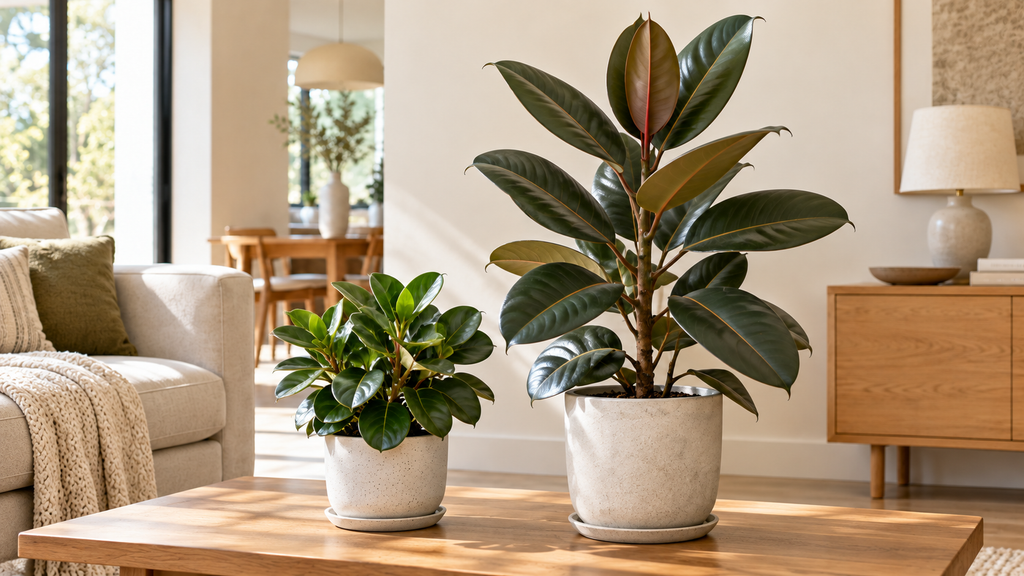
Peperomia obtusifolia, sometimes called baby rubber plant, has rounded, glossy leaves on short branching stems.
Bright indirect light suits it well, although green forms can tolerate some lower-light conditions. Avoid prolonged saturation and protect it from cold drafts. Unlike Ficus elastica, this baby rubber plant belongs to a different genus; it is listed as non-toxic to cats and dogs.
6. Bird’s Nest Snake Plant
Bird’s nest snake plant, often sold as Dracaena trifasciata ‘Hahnii’, keeps the recognizable snake-plant leaf pattern in a low, spreading rosette.
Choose a well-drained pot and allow the growing medium to dry between waterings. It can tolerate less light but remains healthier with appropriate illumination. Like other snake plants, it is toxic to cats and dogs.
7. Haworthia
Haworthia species form small rosettes of fleshy leaves, sometimes marked with translucent windows or raised white patterns.
These succulents need suitable light and a fast-draining growing medium. They generally appreciate bright conditions but may scorch under intense direct sun, depending on species and climate. Water when the medium has dried sufficiently. Haworthia species are listed as non-toxic to pets by the ASPCA.
8. Jade Plant
Crassula ovata forms thick leaves on branching stems that can resemble a miniature tree.
Jade requires considerably brighter conditions than ZZ plants or cast iron plants. An appropriately sunny window and excellent drainage are important; a dark shelf will usually produce weak, stretched growth. Let the growing medium dry between waterings and protect the plant from cold glass in winter. Jade plants are toxic to cats and dogs, so avoid accessible locations around chewers.
9. Ponytail Palm
Beaucarnea recurvata has a swollen, water-storing trunk topped with long, narrow leaves that cascade outward. Despite its common name, it is not a true palm.
Give it bright light and well-draining soil, allowing adequate drying between waterings. Although the trunk remains narrow, the leaf fountain needs sideways clearance; avoid pressing it against walls or walkways. This species is listed as non-toxic to cats and dogs.
10. Dracaena Marginata
Often sold as Dracaena marginata, the Madagascar dragon tree grows slender stems topped with narrow, arching leaves.
Place it in moderate to bright indirect light, away from cold drafts and heating vents. Leaf-tip browning can relate to moisture stress, salts, or unsuitable conditions, so investigate before cutting or watering more. This is not a suitable chewable plant for pets, and tall specimens need a stable base.
11. Monstera Deliciosa
Monstera deliciosa has large, naturally split leaves and a climbing growth habit.
Allow generous width, bright indirect light, and space for an appropriate support as stems develop. A moss pole or sturdy plank can help organize growth, but the support must be secure. Monstera contains irritating calcium oxalate crystals, making it unsuitable within reach of pets that chew plants.
12. Pothos
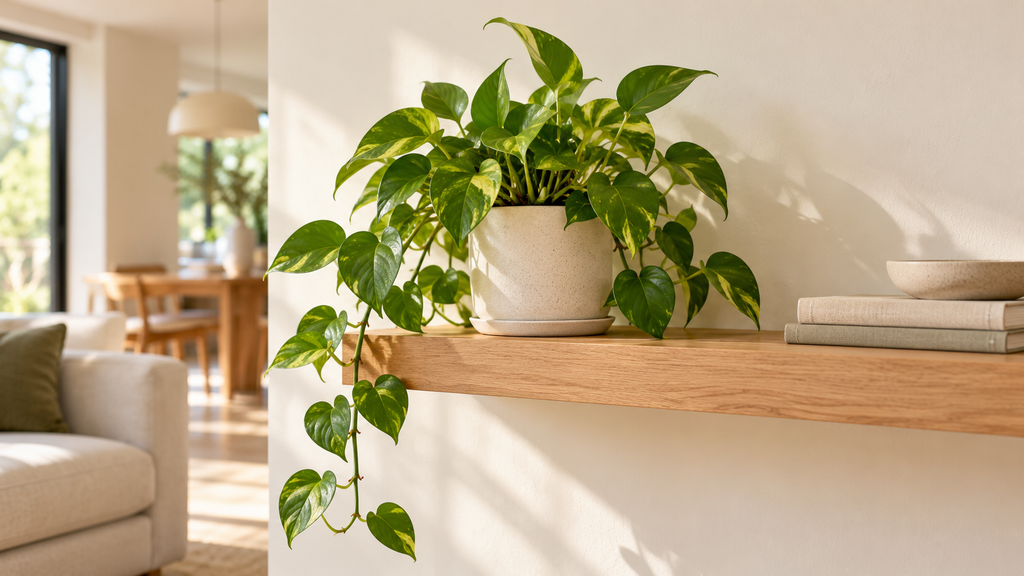
Epipremnum aureum offers a flexible trailing or climbing form with heart-shaped leaves.
Pothos grows in indirect light but typically becomes fuller with adequate brightness. Decide its route early: let it fall along one edge, train it upward, or trim stems before they cross neighboring objects. Pothos is toxic to cats and dogs if chewed.
13. Chinese Evergreen
Aglaonema species and cultivars produce clusters of leaves in green, silver, and sometimes pink patterns.
Many green cultivars tolerate relatively low light; strongly colored varieties may need more indirect light to maintain their appearance. Keep soil appropriately moist but never waterlogged, and avoid cold drafts. Aglaonema contains irritating compounds and should remain inaccessible to pets that chew plants.
14. Bishop’s Cap Cactus
Astrophytum myriostigma develops a distinctive ribbed, usually spineless or nearly spineless body with a geometric outline.
Provide strong light with gradual adjustment to direct sunshine, a mineral-rich free-draining mix, and restrained watering. This cactus is not appropriate for a dark desk, even if its compact size seems perfect. Protect it from standing water and cold, damp conditions.
15. Philodendron ‘Birkin’
Philodendron ‘Birkin’ is a compact, self-heading houseplant with dark green leaves marked by fine cream-colored striping.
Give it bright indirect light, suitable drainage, and space for leaves to emerge without rubbing against nearby objects. Avoid prolonged waterlogging. Like other philodendrons, it contains irritating calcium oxalate crystals and should be kept away from chewing pets.
How Will These Plants Grow Indoors?
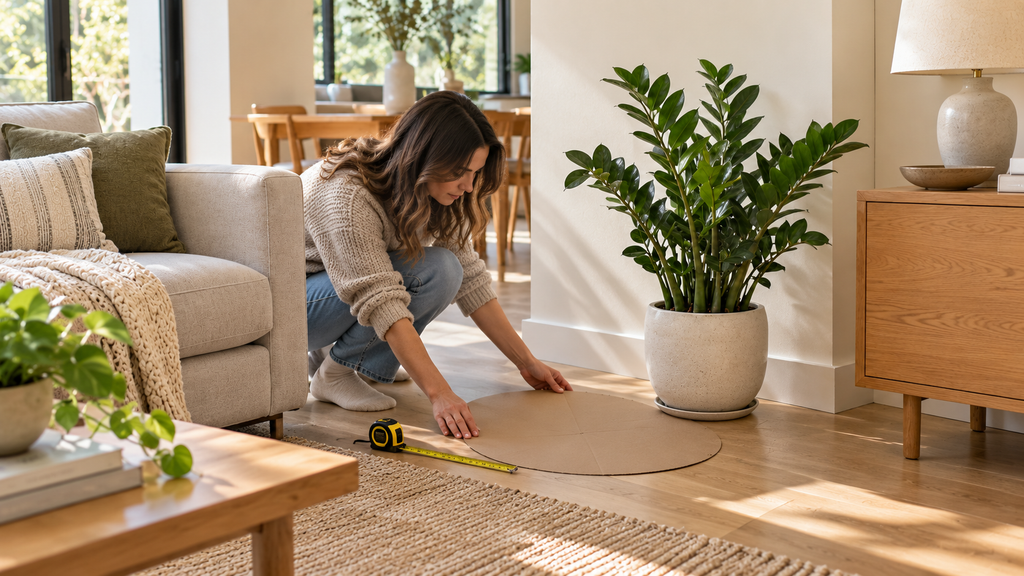
Plan for the mature silhouette rather than the nursery-pot diameter. Snake plants mainly extend upward, ZZ plants arch outward, rubber plants build a canopy, and Monstera can spread substantially as its stems climb. Pothos may start as a small pot but eventually reach beyond an entire shelf.
A simple five-minute fit test helps: measure the available width, then place a book or cardboard template representing the foliage’s anticipated spread. Check whether you could still open drawers, sit comfortably, and reach the pot for watering. For a tall plant, mark the expected leaf height against the wall with removable tape. Leave a little clearance so leaves do not rub doors or furniture. These outlines are planning aids, not measurements of how quickly a particular plant will grow.
What Are the Best Small Minimalist Indoor Plants?
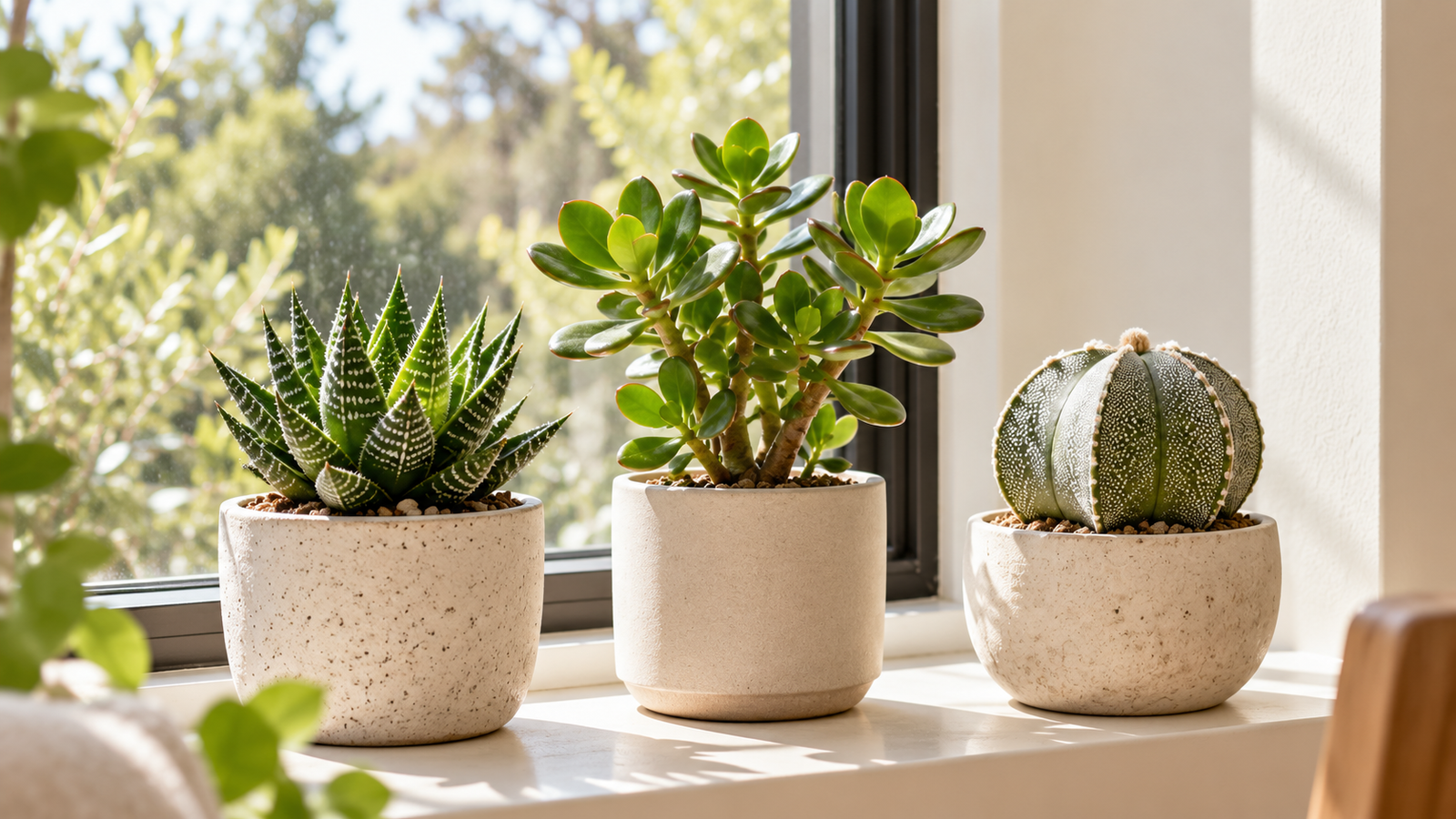
Peperomia, Haworthia, bird’s nest snake plants, and young jade plants are practical choices for small surfaces. They differ considerably in light needs: Haworthia and jade generally need brighter positions, while Peperomia offers more flexibility on desks with good indirect light.
Use a single compact pot as an accent, not a collection of tiny plants on every surface. Leave enough room to inspect leaves and lift the container safely.
Which Minimalist Plants Need the Least Care?
ZZ plants, snake plants, and cast iron plants are good starting points when your goal is a consistent appearance without frequent pruning. Peperomia can also be manageable when its light and moisture needs are met.
Use containers with drainage holes, check moisture before watering, and empty standing water from outer pots. Do not water all species on the same calendar day. Jade, Haworthia, and other succulents need a different moisture approach from many leafy tropical plants. Maintaining fewer incompatible care routines is often more useful than simply owning fewer plants.
How Much Light Do Minimalist Plants Need?
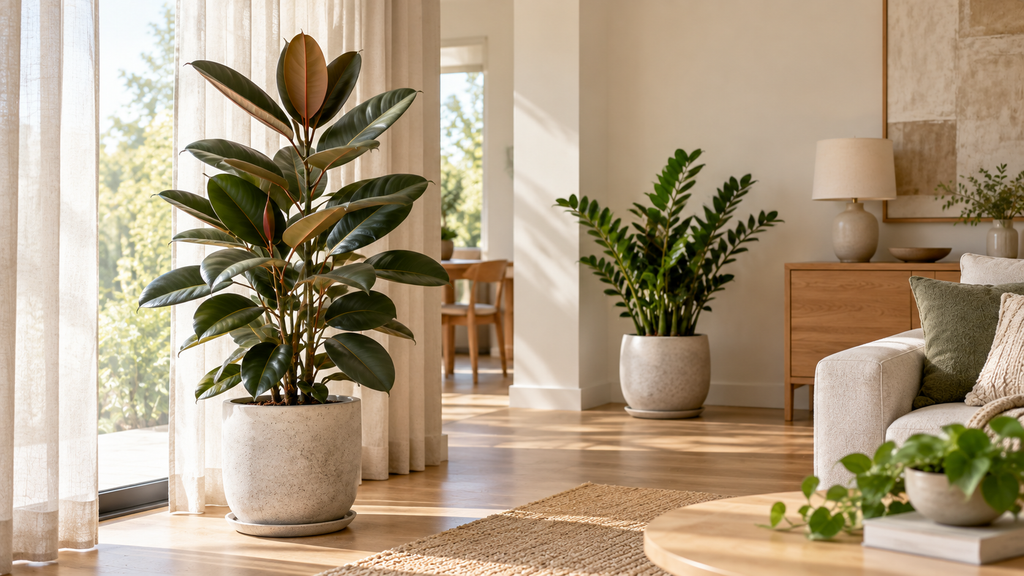
Light tolerance varies by species and location. ZZ plants, snake plants, and cast iron plants can tolerate comparatively dim interiors, whereas jade plants and cacti need much brighter placement. Rubber plants and Monstera generally appreciate bright indirect light.
Check how daylight reaches the exact leaf position, including curtains, neighboring buildings, and the season. A shelf several feet from a window may receive much less light than the windowsill. Observe the spot at different times of day, particularly in winter. An inexpensive light meter can help compare positions, but a single reading cannot capture the entire daily light exposure. For a useful overview, consult University of Minnesota Extension’s indoor plant lighting guide.
Lower-light tolerance is not the same as thriving without light. If a location has virtually no natural daylight, use appropriate supplemental grow lighting or select a different spot.
Which Plant Shape Fits Your Space?
Match foliage direction to the available footprint. Use snake plants or dragon trees for narrow vertical spaces, Peperomia for compact furniture, and ZZ plants where arching leaves have room to extend. Choose rubber plants or Monstera for open positions that need one dominant focal point.
Trailing pothos works only when its vines have a deliberate route and remain accessible for trimming. The best form is the one that remains practical after new growth appears.
How Do You Style Minimalist Indoor Plants?
Give each plant a clear role: vertical accent, compact detail, soft trailing line, or focal point. Keep negative space between foliage and objects so individual shapes remain visible. A simple room can contain multiple plants without looking crowded if their positions have purpose.
Repeat a restrained palette of planters, such as warm white, clay, or muted stone, rather than combining many unrelated finishes. Coordinate scale as well as color: a large rubber plant beside a sofa may need only one small tabletop companion. For more room-by-room arrangements, see how to style indoor plants.
Which Pots Work Best for Minimalist Plants?
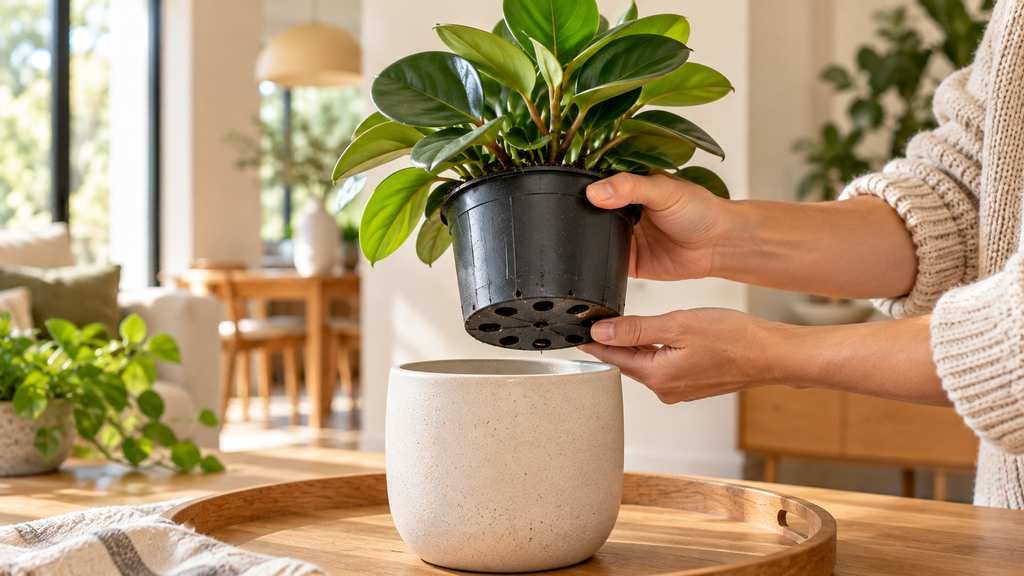
Simple ceramic cylinders, understated terracotta, and stone-textured planters complement most minimalist interiors. Select a shape that supports the plant’s proportions and remains stable when foliage becomes taller or heavier.
Drainage matters more than decorative finish. If you prefer an outer pot without holes, keep the plant in a draining nursery pot inside it and remove collected water. Do not let the inner pot sit in runoff. Use a saucer to protect furniture, and choose a sturdy container for top-heavy snake plants and tall dragon trees.
Are Minimalist Indoor Plants Safe for Pets?
Pet safety depends on the botanical species, not a plant’s minimalist appearance. The ASPCA toxic and non-toxic plant directory lists Peperomia obtusifolia, Aspidistra elatior, Haworthia species, and Beaucarnea recurvata as non-toxic to cats and dogs. Even non-toxic plants may cause stomach upset if an animal eats a large amount.
ZZ plants, snake plants, pothos, Monstera, philodendrons, and several other popular houseplants can cause problems when chewed. Jade plants are also toxic to cats and dogs. Check each scientific name before purchase; similar common names can describe unrelated plants. Keep potentially harmful plants inaccessible, and contact a veterinarian promptly if you suspect ingestion.
Why Does Minimalist Plant Styling Fail?
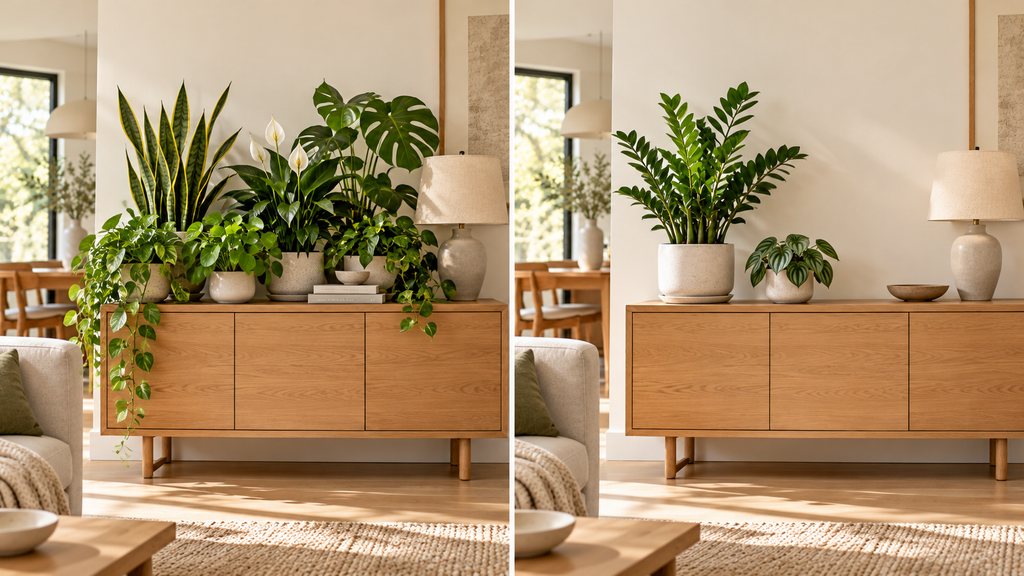
Most failures begin with the wrong match between plant and room. A specimen may grow into a walkway, lean toward a distant window, or decline because water is trapped around its roots. Use the visible problem to investigate its cause rather than buying a replacement immediately.
| Problem | Likely issue | Better response |
|---|---|---|
| Leaves reach across a walkway | Natural spread | Move plant or choose upright form |
| Stems lean toward the window | Uneven light | Improve placement; rotate if suitable |
| Shelf looks crowded | Too many competing objects | Remove or regroup items |
| Leaves yellow | Moisture, light, or root stress | Inspect conditions before watering |
| Vines cover nearby objects | Uncontrolled growth | Prune or train one defined route |
| Water collects in decorative pot | Poor drainage practice | Empty runoff; use inner drainage pot |
Avoid exaggerated claims that houseplants meaningfully purify ordinary indoor air or solve household mold problems. Healthy ventilation, moisture control, and appropriate cleaning are more important. A thriving plant in the right spot is a better minimalist feature than an impressive-looking specimen that constantly needs rescuing.
How Do You Choose Your First Minimalist Plant?
Start with the space you want to improve. Diagnose daylight, measure the usable footprint, and decide whether the room needs height, softness, or one larger focal point. Eliminate unsuitable species using care requirements and pet safety. Only then compare foliage and planter finishes.
For a moderately lit desk, start with Peperomia obtusifolia. For a narrow corner, consider a snake plant if pets cannot reach it. For a larger bright space, consider a rubber plant. For lower-light placement and a pet-conscious household, a cast iron plant may be a stronger fit than a ZZ plant.
After positioning the plant, observe its growth and soil moisture for several weeks. Take a simple phone photo from the same viewpoint after a month; it can help you notice leaf direction or crowding without claiming that one month reveals mature growth.
FAQs About Minimalist Indoor Plants
What are the best minimalist indoor plants?
ZZ plants, snake plants, rubber plants, Peperomia, and cast iron plants are reliable choices for different spaces. Match each species to available light, mature footprint, and your willingness to prune or water.
Which minimalist plants need the least maintenance?
ZZ plants, snake plants, and cast iron plants generally need little pruning and tolerate a range of indoor conditions. They still require suitable light, drainage, and watering based on soil moisture.
What minimalist plants tolerate low light?
ZZ plants, snake plants, and cast iron plants tolerate relatively dim rooms. They grow better with usable light, however, and no living houseplant can survive indefinitely in complete darkness.
What are the best small minimalist houseplants?
Peperomia, Haworthia, bird’s nest snake plants, and appropriately sized jade plants fit desks and shelves. Choose brighter spots for jade and most Haworthia, and do not judge future size by the nursery pot alone.
Is ZZ plant better than snake plant for minimalist decor?
ZZ plants have glossy, arching leaves that suit wider corners. Snake plants provide a narrower, more vertical silhouette. Both need drainage and are unsuitable where pets may chew them.
Can Monstera work in a minimalist living room?
Yes. A single Monstera can be an effective focal point when there is enough space around its broad foliage. Plan for support, future leaf size, and safe placement around pets.
How many plants should a minimalist room have?
There is no fixed number. Start with one intentional plant and add others only when they improve balance without blocking furniture, daylight, or walkways.
Do minimalist plant pots need to match?
No. Repeating one material, finish, or muted color is enough to create continuity. Prioritize drainage, stable proportions, and protection for furniture over identical decorative containers.
Which Minimalist Indoor Plant Should You Choose?
Choose the plant that best solves your room’s real constraint. ZZ is versatile when you have moderate width and want an easy architectural shape. Snake plant is useful for vertical space; Peperomia suits small surfaces; cast iron plant handles comparatively dimmer positions; rubber plant makes a stronger large focal point.
Choose jade or bishop’s cap cactus only where light is sufficiently strong. Use pothos when you are happy to guide and trim vines, and reserve Monstera for spaces where large leaves can remain the feature.
At Plantsaholic, the guiding principle is straightforward: choose fewer plants more deliberately, position them for healthy growth, and let their natural forms carry the design.
Myra is the founder and lead writer of Plantsaholic. She shares practical, research-backed advice on indoor plants, outdoor gardening, flowers, herbs, succulents, and everyday plant care. Her goal is to help gardeners of all experience levels grow healthier plants through simple, easy-to-follow gardening guides.