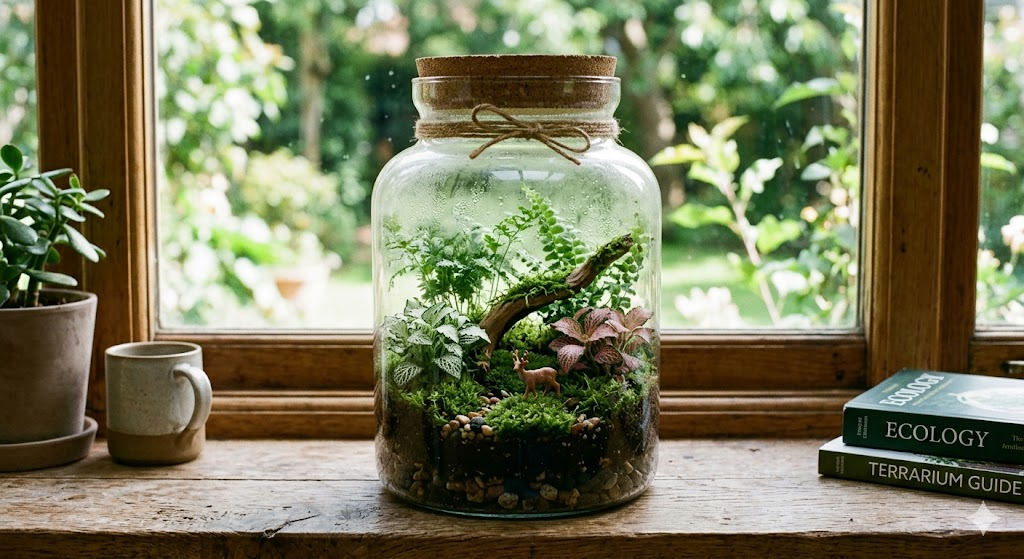
Jarrarium plants are small plants grown inside sealed or open glass containers that create a self-sustaining ecosystem. Common plants include Moss, Fittonia, and Pilea. These systems recycle moisture, require minimal watering, and thrive in bright indirect light, making them ideal for low-maintenance indoor setups.
Jarrariums are one of the most efficient and visually appealing ways to grow plants indoors. They combine natural biological cycles with compact design, allowing plants to thrive in a controlled environment. Unlike traditional pots, jarrariums create a miniature ecosystem where resources are reused.
This makes them perfect for people who want low-maintenance greenery without constant care. With the right setup, a jarrarium can remain stable for months or even years.
What Are Jarrarium Plants?
Jarrarium plants are plants grown inside glass containers where environmental conditions are controlled and recycled. These setups can be fully sealed or partially open, depending on the type of plants used. The key concept behind a jarrarium is creating a self-contained ecosystem that mimics natural processes.
Inside the jar, plants interact with moisture, air, and light in a closed loop. Water evaporates from the soil and leaves, condenses on the glass, and returns to the soil. This reduces the need for external watering and creates a stable growing environment.
Key characteristics of jarrarium plants:
- Grown in enclosed or semi-enclosed glass containers
- Self-sustaining moisture cycle
- Minimal external watering
- Stable microclimate environment
- Decorative and space-efficient
Jarrariums function as mini ecosystems that recycle their own resources.
How a Jarrarium Ecosystem Works
A jarrarium ecosystem operates through a continuous cycle of evaporation, condensation, and absorption. When light enters the container, it warms the air and soil, causing moisture to evaporate. This vapor rises and condenses on the cooler glass surface, forming droplets that fall back into the soil.
At the same time, plants release oxygen and absorb carbon dioxide, maintaining a balanced internal atmosphere. This closed-loop system allows plants to survive with minimal intervention, as long as the initial setup is correct.
Ecosystem cycle explained:
- Water evaporates from soil and plant surfaces
- Moisture condenses on glass walls
- Water returns to soil
- Air remains balanced inside container
- Plants recycle nutrients and gases
This cycle creates a self-regulating environment for plant survival.
Best Jarrarium Plants
Selecting the right plants is essential for long-term success. Jarrarium plants should be small, slow-growing, and capable of thriving in high humidity conditions. Large or fast-growing plants can disrupt the balance of the system.
Moisture-loving plants perform best in closed setups, while drought-tolerant plants are better suited for open jars. Choosing compatible plants ensures stability and reduces maintenance needs.
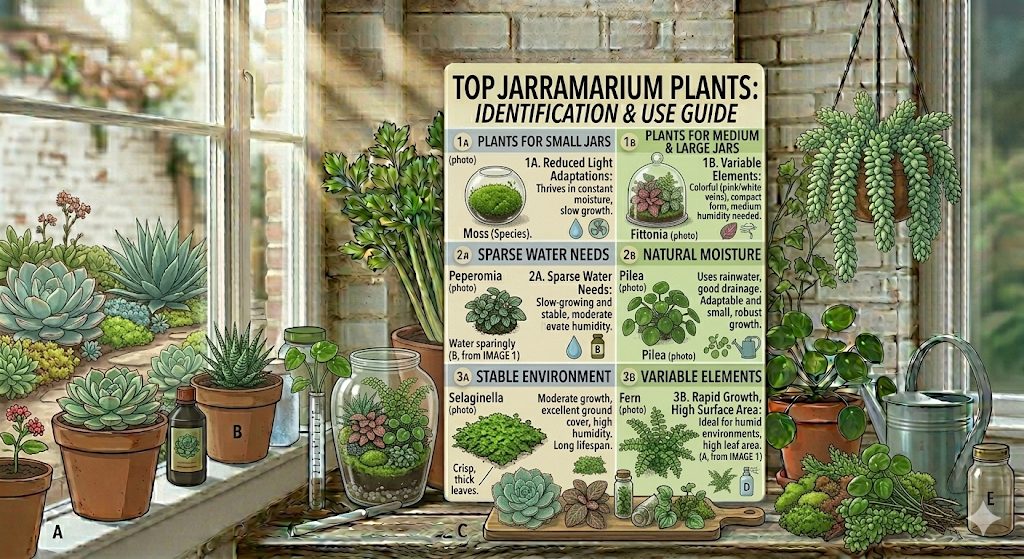
Top jarrarium plants:
- Moss: thrives in constant moisture
- Fittonia: colorful and compact
- Pilea: adaptable and small
- Ferns: ideal for humid environments
- Peperomia: slow-growing and stable
- Selaginella: excellent ground cover
Proper plant selection ensures long-term ecosystem balance.
Types of Jarrariums (Closed vs Open)
Jarrariums can be classified into closed and open systems, each with different care requirements and plant compatibility. Closed jarrariums are sealed environments that rely on internal moisture recycling, while open jarrariums allow airflow and require occasional watering.
Closed systems are ideal for tropical plants that thrive in humidity. Open systems are better suited for plants that prefer drier conditions, although they require more maintenance.
Types of jarrariums:
- Closed jarrariums (self-sustaining systems)
- Open jarrariums (require manual care)
- Tropical setups (high humidity)
- Dry setups (limited use for succulents)
- Decorative arrangements
Choosing the right type determines maintenance level and plant compatibility.
Light Requirements for Jarrarium Plants
Light is a critical factor in maintaining a healthy jarrarium. Since the container traps heat and moisture, direct sunlight can cause overheating and damage the plants. Bright indirect light provides enough energy for growth without creating excessive heat.
Positioning the jarrarium near a window with filtered light is ideal. Monitoring temperature inside the jar helps prevent stress and ensures stable conditions.
Lighting guidelines:
- Use bright indirect light
- Avoid direct sunlight
- Place near windows with filtered light
- Rotate container occasionally
- Monitor internal temperature
Proper lighting prevents overheating and maintains plant health.
Watering and Moisture Control
Watering a jarrarium requires careful balance. Closed systems rely on internal moisture recycling, meaning they rarely need additional water. Open systems require occasional watering but still need less than traditional plants.
Observing condensation levels is the best way to determine moisture balance. Too much condensation indicates excess water, while a completely dry jar may require slight watering.
Watering tips:
- Add minimal water during setup
- Monitor condensation levels
- Avoid overwatering
- Adjust based on environment
- Maintain moisture balance
Moisture control is essential for long-term stability.
How to Set Up a Jarrarium
Setting up a jarrarium involves creating layers that support drainage, filtration, and plant growth. Each layer plays a role in maintaining the ecosystem and preventing issues like root rot or odor buildup.
A well-constructed setup ensures that the system remains balanced and requires minimal maintenance over time.
Setup steps:
- Add drainage layer (gravel or stones)
- Add charcoal layer (filters impurities)
- Add soil layer (supports plant growth)
- Place plants carefully
- Add decorative elements
- Seal or leave open depending on type
Proper setup ensures long-term ecosystem success.
Common Problems and Fixes
Jarrariums are generally low-maintenance, but problems can arise if the internal balance is disrupted. Most issues are related to moisture, light, or overcrowding.
Identifying and correcting these problems early helps maintain the health of the system.
Common problems:
- Excess condensation from overwatering
- Mold growth due to poor airflow
- Plant decay from overcrowding
- Yellowing leaves from light imbalance
- Slow growth from nutrient limitations
Fixes:
- Reduce moisture levels
- Improve light conditions
- Remove damaged plants
- Allow airflow if needed
- Maintain balanced setup
Most issues are caused by imbalanced environmental conditions.
Jarrarium vs Regular Potted Plants
Jarrariums differ significantly from traditional potted plants. While regular plants depend on external watering and environmental conditions, jarrariums create a controlled microclimate that reduces maintenance.
This makes them ideal for people who want a self-sustaining system with minimal effort.
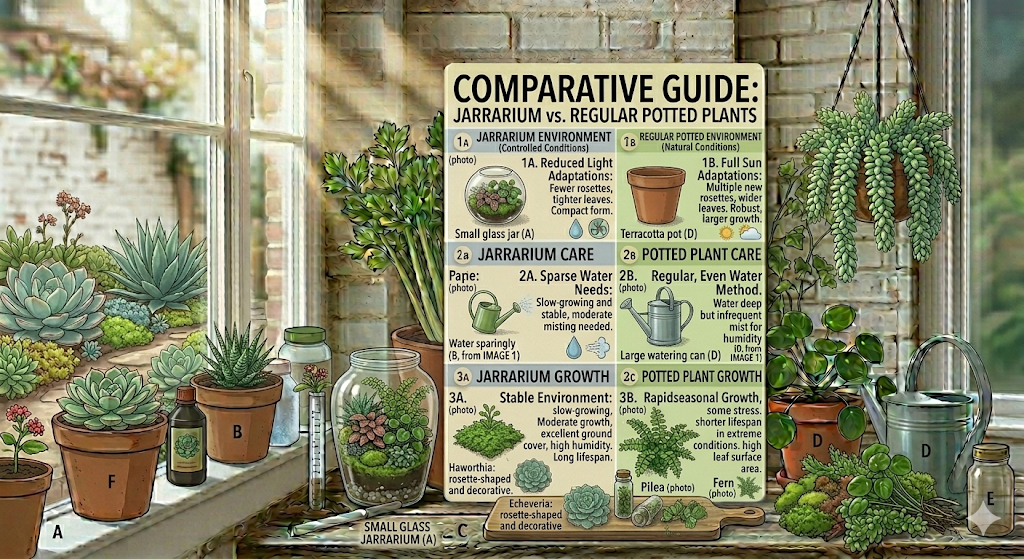
Comparison insights:
- Jarrariums require less watering
- Regular plants need frequent care
- Jarrariums create stable microclimates
- Regular plants rely on external factors
- Jarrariums are more decorative
Jarrariums combine efficiency with aesthetic appeal.
How Air Circulates in a Closed Jarrarium (Oxygen Cycle)
A closed jarrarium does not rely on external air because it maintains its own internal gas balance through photosynthesis and respiration. During the day, plants absorb carbon dioxide and release oxygen through photosynthesis. At night, the process reverses, and plants consume oxygen while releasing carbon dioxide.
This continuous exchange creates a stable internal atmosphere. As long as the plant load is balanced and the jar is not overcrowded, oxygen levels remain sufficient for plant survival. This is what allows sealed jarrariums to function without ventilation.
Gas exchange process:
- Plants absorb carbon dioxide during daylight
- Oxygen is released as a byproduct
- At night, plants consume oxygen
- Carbon dioxide is released again
- Balance is maintained within the system
This cycle allows a jarrarium to sustain life without external airflow.
How to Read Condensation (Perfect Moisture Balance)
Condensation is the most important visual indicator of a jarrarium’s health. It reflects how well moisture is cycling within the ecosystem. A properly balanced jarrarium will show light condensation on the glass, especially in the morning.
Too much condensation indicates excess moisture, while no condensation suggests the system is too dry. Understanding these signals helps you adjust watering without disturbing the balance.
Condensation indicators:
- Light misting on glass = ideal balance
- Heavy droplets = too much water
- Completely dry glass = insufficient moisture
- Morning condensation is normal
- Constant fogging indicates imbalance
Condensation acts as a natural moisture gauge.
How to Fix a Failing Jarrarium
A jarrarium can fail if its internal balance is disrupted. Common signs include mold growth, plant decay, or excessive moisture. These issues often result from overwatering, poor plant selection, or lack of light.
Fixing a failing jarrarium requires identifying the root cause and making targeted adjustments. In some cases, partial resetting of the system may be necessary.
Steps to fix a failing system:
- Remove moldy or decaying plants
- Reduce excess moisture
- Increase indirect light exposure
- Open jar temporarily for airflow
- Rebuild layers if damage is severe
Early correction prevents complete ecosystem collapse.
Which Plants Should Not Be Mixed
Not all plants are compatible in a jarrarium environment. Mixing plants with different moisture or light requirements can disrupt the ecosystem and lead to plant failure.
For example, moisture-loving plants like Moss should not be mixed with drought-tolerant plants like succulents. Each plant type requires a different environment, making compatibility critical.
Plants to avoid mixing:
- Succulents with tropical plants
- Fast-growing plants with slow growers
- Large plants in small jars
- Low-light plants with high-light plants
- Plants with different humidity needs
Compatibility ensures long-term ecosystem stability.
How to Control Growth in a Closed Jar
Plant growth inside a jarrarium must be managed to maintain balance. Without control, plants can overcrowd the container, leading to reduced airflow and increased competition for resources.
Regular trimming helps maintain size and prevents plants from dominating the space. Choosing slow-growing species also reduces the need for frequent intervention.
Growth control strategies:
- Prune plants regularly
- Choose slow-growing species
- Avoid overcrowding during setup
- Monitor plant expansion
- Remove excess growth when needed
Controlled growth maintains ecosystem balance and longevity.
Temperature & Placement Strategy
Temperature plays a major role in jarrarium stability. Since glass containers trap heat, placing a jarrarium in direct sunlight can cause overheating. This can lead to excessive moisture buildup and plant damage.
The ideal placement is in a location with stable temperature and indirect light. Avoid areas with sudden temperature changes, such as near windows with drafts or heating vents.
Placement guidelines:
- Keep in bright indirect light
- Avoid direct sunlight
- Maintain stable room temperature
- Avoid heat sources
- Protect from cold drafts
Proper placement ensures stable internal conditions.
How Long Do Jarrariums Last?
A well-maintained jarrarium can last for years without major intervention. The longevity depends on initial setup, plant selection, and environmental balance. Closed systems often last longer because they rely on internal cycles rather than external input.
Over time, plants may need trimming or replacement, but the ecosystem itself can remain stable. Proper care ensures that the system continues functioning efficiently.
Factors affecting lifespan:
- Quality of initial setup
- Plant compatibility
- Moisture balance
- Light conditions
- Maintenance practices
Longevity depends on consistency and balance.
Healthy vs Failing Jarrarium (Visual Signs)
Recognizing the difference between a healthy and failing jarrarium is essential for maintaining its stability. Healthy systems show balanced condensation, vibrant plant growth, and no signs of decay.
Failing systems, on the other hand, display mold, excessive moisture, or plant deterioration. These visual cues help you identify problems early and take corrective action.
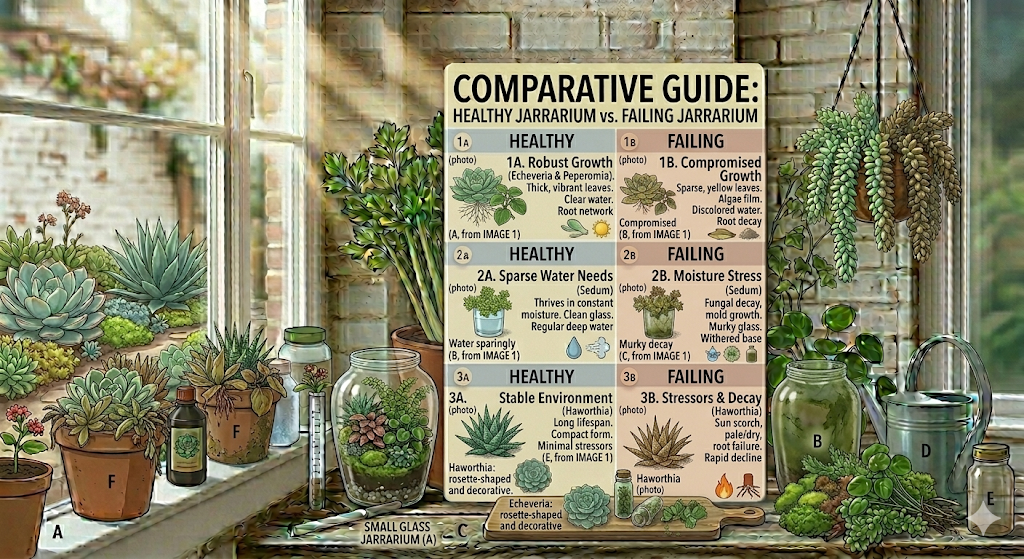
Visual indicators:
- Healthy: light condensation, green plants
- Failing: mold or decay
- Healthy: balanced moisture levels
- Failing: excessive water or dryness
- Healthy: steady growth
- Failing: plant collapse
Visual observation is key to maintaining ecosystem health.
Are Jarrarium Plants Beginner-Friendly?
Jarrariums are suitable for beginners because they require minimal ongoing care once established. However, the initial setup must be done correctly to ensure long-term success.
Starting with simple plant combinations and avoiding overcrowding helps beginners maintain balance and avoid common mistakes.
Beginner tips:
- Start with closed jarrarium
- Choose moisture-loving plants
- Avoid overcrowding
- Monitor condensation
- Keep setup simple
Simplicity leads to better long-term results.
Expert Insight: Balance Creates Sustainability
The success of a jarrarium depends entirely on balance. Light, moisture, and plant selection must work together to maintain stability. Any imbalance can disrupt the ecosystem and lead to problems.
Too much water = mold and decay
Too little light = weak growth
Final Thoughts
Jarrarium plants offer a unique combination of science and design. Their self-sustaining nature makes them both practical and visually appealing, especially for indoor environments.
With proper setup and care, they can thrive for long periods with minimal intervention, making them an excellent choice for modern plant lovers.
FAQ Section
What are jarrarium plants?
Plants grown in a sealed or open glass container ecosystem.
Do jarrariums need watering?
Closed systems rarely need water, open systems occasionally do.
What plants are best for jarrariums?
Moss, Fittonia, and small ferns are ideal.
Can succulents grow in jarrariums?
Only in open setups with proper drainage.
Are jarrariums easy to maintain?
Yes, if properly set up.
Myra is the founder and lead writer of Plantsaholic. She shares practical, research-backed advice on indoor plants, outdoor gardening, flowers, herbs, succulents, and everyday plant care. Her goal is to help gardeners of all experience levels grow healthier plants through simple, easy-to-follow gardening guides.