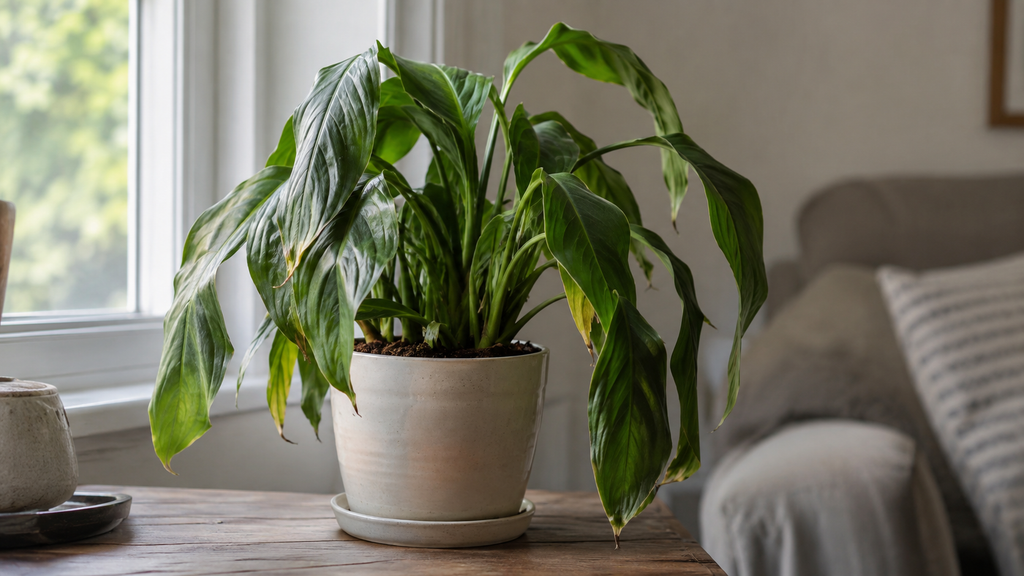
Plant leaves droop when they lose normal firmness or when water is not moving through the plant efficiently enough to support the foliage. The cause may be dry soil, overly wet roots, poor drainage, damaged roots, heat, low humidity, repotting, temperature stress, pests, or normal leaf movement. Before watering again, check the root zone because both too little and too much water can cause drooping.
If you are wondering why are my plant leaves drooping, look at where the drooping appears, when it started, whether the leaves are actually limp, how wet the root zone is, and what recently changed.
| What you notice | Check first |
| Whole plant suddenly droops | Root zone and recent environmental change |
| One stem droops | Local stem or physical damage |
| Bottom leaves droop | Leaf age and root-zone condition |
| New growth droops | Roots, pests, temperature |
| Window-facing leaves droop | Heat or direct light |
| Pot feels very light | Dry root zone |
| Pot stays heavy and wet | Drainage and roots |
| Water runs straight through | Uneven root-ball wetting |
| Leaves move daily but stay firm | Natural movement |
| Drooping with soft yellow leaves | Wet root zone or root stress |
| Drooping with crispy edges | Dryness, heat, airflow, or salts |
| Drooping with webbing or stippling | Pests |
What Does Drooping Mean?
The drooping leaves meaning is usually that a leaf, petiole, stem, or whole plant is hanging below its normal position. In many cases, plant tissues have lost some of the internal water pressure, called turgor, that helps keep leaves firm.
Drooping is a symptom, not a diagnosis. A dry plant may droop because its roots cannot access enough water. A plant in wet soil may also droop if unhealthy roots cannot absorb or transport water effectively.
Drooping and wilting are also slightly different. Drooping describes position, while wilting usually involves loss of firmness. A leaf can point downward because of its natural shape, age, physical damage, or daily movement without being unhealthy.
Before treating the plant, ask:
- Is the leaf actually limp?
- Is one leaf or the entire plant affected?
- Does the position change naturally later?
- Are yellowing, browning, or root problems also present?
The root zone and symptom pattern provide more useful information than leaf position alone.
Where Is the Plant Drooping?
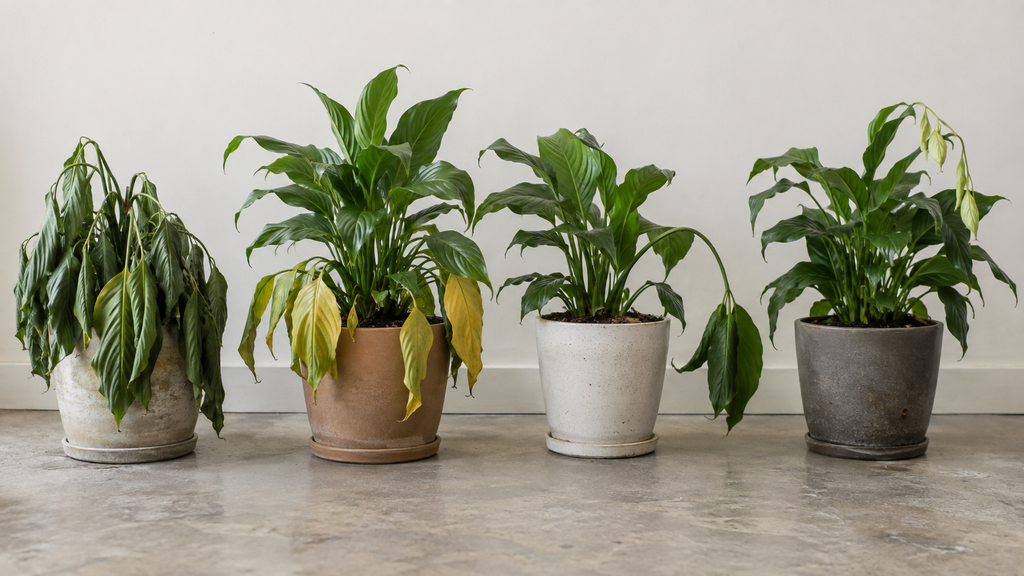
The location of the drooping helps show whether the issue affects the whole plant or only one area.
If every leaf and stem becomes limp at roughly the same time, investigate a whole-plant problem such as root-zone moisture, temperature, or a major environmental change. If only one stem hangs while everything else remains firm, inspect that stem for bending, breakage, or localized damage before changing the watering routine.
Use these patterns:
- Only lower leaves: natural aging may contribute, especially when new growth is healthy.
- Only new leaves: inspect growing points, roots, temperature, and pests.
- Window-facing foliage: heat or direct sunlight becomes more relevant.
- One side only: inspect local stems, roots, or environmental exposure.
- Leaf blades only: consider normal posture or leaf damage.
- Petioles and stems also limp: investigate whole-plant water balance.
A bent monstera petiole does not mean the entire root zone needs more water. Start the diagnosis at the same scale as the symptom.
When Did the Drooping Start?
Timing can eliminate incorrect explanations. A plant that suddenly droops within hours probably experienced a different trigger from one declining slowly over several weeks.
Sudden drooping makes dryness, strong heat, cold exposure, physical damage, or relocation more relevant. Gradual drooping directs attention toward roots, potting mix, container size, repeated watering patterns, or pests.
Useful timing clues include:
- After watering: check root-ball moisture and root health.
- After repotting: consider disturbed roots and new growing-medium behavior.
- Every afternoon: check heat, direct light, and airflow.
- Every morning: consider overnight temperature and normal leaf movement.
- After moving the plant: compare old and new conditions.
- After heavy feeding: fertilizer salts become more relevant.
- Slow decline: inspect roots, pot size, old growing media, and pests.
Ask what changed immediately before the plant changed.
What Does the Root Zone Tell You?
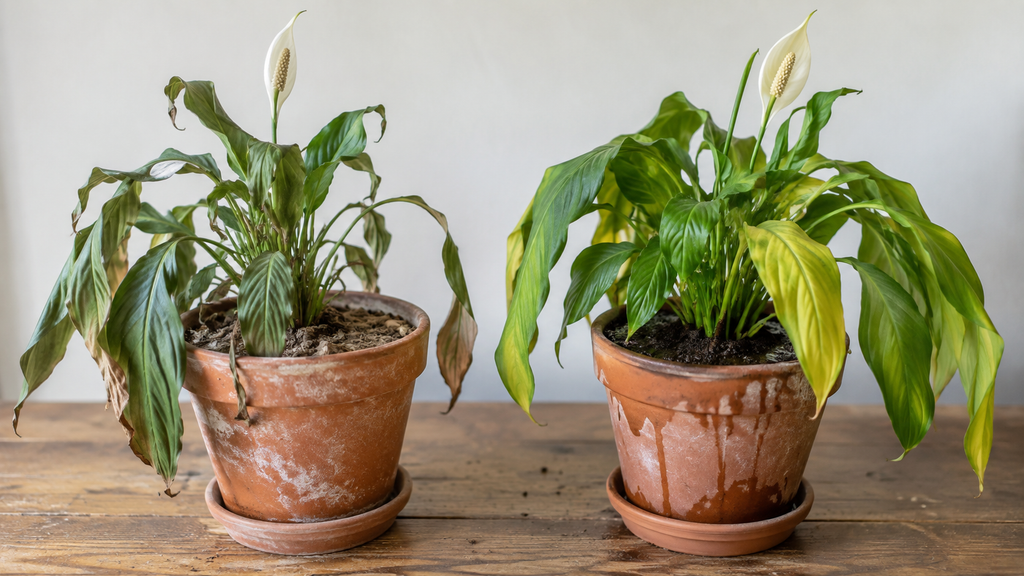
The root zone is the most important checkpoint because similar-looking drooping can occur in dry, wet, or normally moist soil.
What If the Root Zone Is Dry?
If the pot feels unusually light and the growing medium is dry well below the surface, inadequate moisture becomes more likely.
Supporting signs include:
- soil pulling away from the pot wall;
- dry or crispy margins;
- rapid drying after watering;
- increased heat or stronger light;
- a heavily root-bound plant.
Water should reach the full active root zone rather than only wetting the surface. Avoid relying solely on a fixed schedule because water use changes with light, temperature, season, container type, and plant growth.
What If the Root Zone Is Persistently Wet?
A continuously wet root zone changes the diagnosis. Roots need both moisture and air. When potting mix remains saturated for too long, root function can decline.
Look for:
- a pot that stays heavy for many days;
- water trapped in an outer pot;
- soft yellowing leaves;
- slow drying;
- dark or soft roots;
- an oversized container;
- compacted growing medium.
Do not add more water simply because the leaves look thirsty.
What If the Root Zone Is Normally Moist?
Investigate heat, light, cold drafts, repotting, physical damage, pests, natural movement, or root problems that are not visible from the surface.
Why Is My Plant Drooping After Watering?
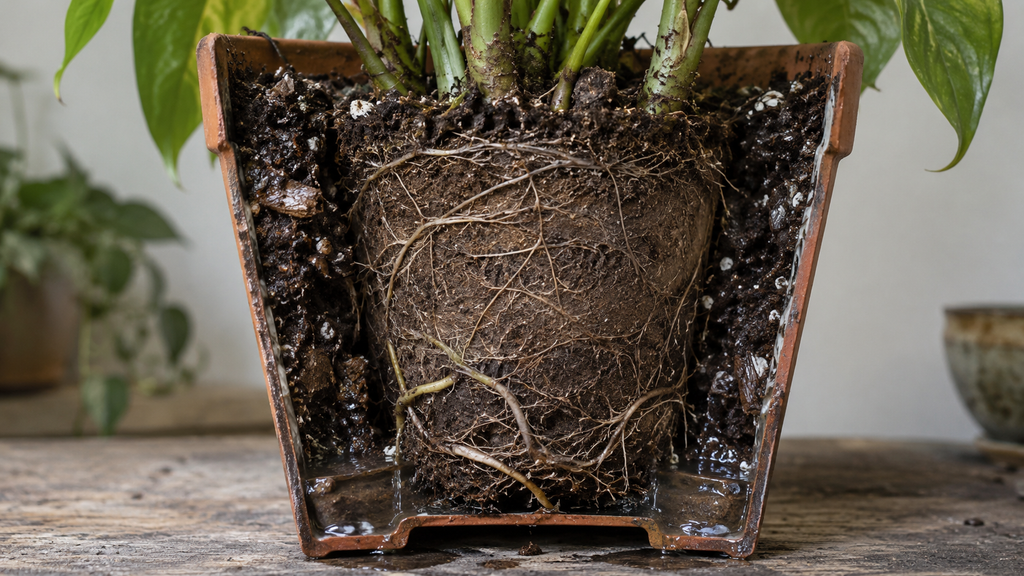
If you are asking why is my plant drooping even after watering, the water may not have reached the entire root ball, the roots may be damaged, or watering may not have been the correct treatment.
Very dry potting mix can shrink away from the container wall. Water may travel through those gaps and leave through the drainage holes while the center remains dry.
Check:
- Does the pot still feel surprisingly light?
- Is the center still dry?
- Did water exit almost immediately?
- Has the soil pulled away from the pot wall?
Extremely dry peat- or bark-based media can become water-repellent. Fast drainage therefore does not always mean good hydration.
If the root zone is thoroughly moist but the plant remains limp, inspect roots and environmental conditions before watering again.
Can the Pot or Drainage Cause Drooping?
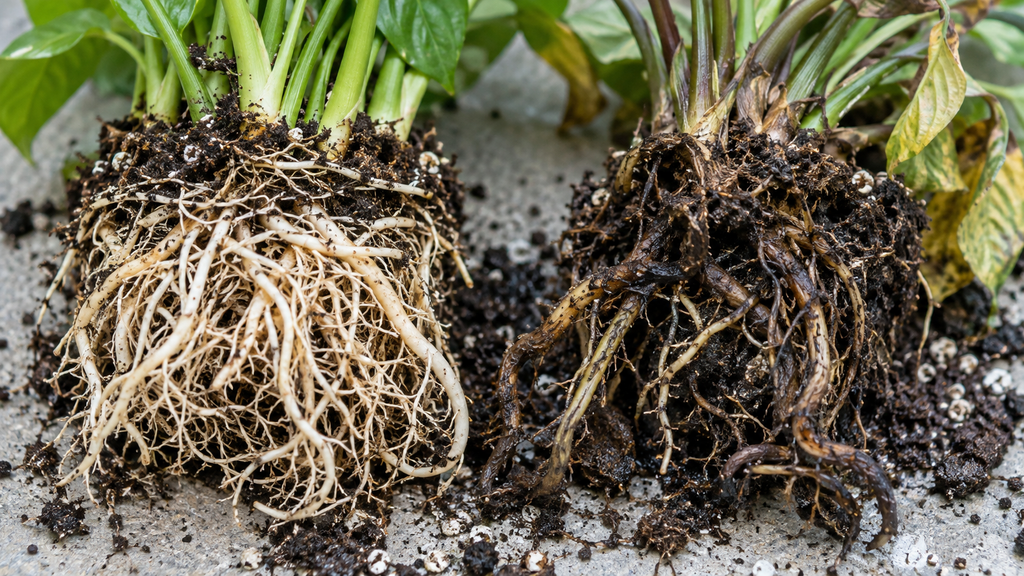
The pot changes how water behaves around the roots. Two similar plants can develop different moisture conditions even when watered at the same time.
Terracotta usually dries faster than plastic or glazed ceramic because moisture can escape through its porous walls. A small pot can dry rapidly, while a much larger container can hold more water than a small root system can use efficiently.
Check for:
- standing water inside a cachepot;
- blocked drainage holes;
- an oversized pot;
- a very small pot that dries rapidly;
- old compacted potting medium;
- a container that now dries differently than before.
Poor drainage describes the whole root environment, not only the presence or absence of drainage holes.
Can Root Problems Cause Drooping?
Yes. Damaged roots may be unable to move enough water into the plant even when soil moisture appears adequate.
Healthy roots are generally firm and intact. Root problems become more concerning when large portions of the root system become soft, mushy, hollow, or decomposed.
Root rot becomes more plausible when several signs appear together:
- soil stays wet for unusually long periods;
- the plant continues wilting despite available moisture;
- lower leaves increasingly yellow or drop;
- growth slows;
- roots become dark and soft;
- lower stems or the crown begin to soften.
Do not diagnose root rot from drooping alone. Persistent wetness is a reason to inspect the roots, not proof of root rot.
Can a Root-Bound Plant Droop?
Yes. A heavily root-bound plant may dry rapidly because little potting medium remains to store water.
Look for:
- dense circling roots;
- very little loose growing medium;
- rapid drying;
- recurring drooping soon after watering;
- slowed growth;
- roots heavily emerging through drainage holes.
One visible root does not prove the plant needs immediate repotting. Look at the full pattern.
Can Repotting Cause Drooping?
Temporary drooping can occur after repotting because fine absorbing roots may be disturbed. The new growing medium may also hold water differently from the old one.
Avoid responding to mild transplant stress by changing everything at once. Repeated watering, heavy fertilization, pruning, and relocation can make recovery harder to evaluate.
Mild drooping that gradually stabilizes while stems and leaves remain healthy may simply reflect adjustment. Progressive drooping with wet soil, yellow leaves, or soft stems deserves closer inspection.
Also consider pot size. Moving a plant into a much larger moisture-retaining container can make the previous watering schedule unsuitable.
Can Heat, Light, Humidity, or Temperature Cause Drooping?
Yes. Environmental conditions affect how quickly plants lose water and how effectively roots replace it.
Heat and Strong Light
A plant may look firm in the morning, droop during a hot afternoon, and recover later without watering. That pattern suggests temporary heat stress may be involved.
Check whether:
- symptoms occur mainly during hot hours;
- the soil remains adequately moist;
- window-facing leaves are most affected;
- scorched or bleached patches are appearing.
Low Humidity
Low humidity can increase water loss, particularly in humidity-sensitive plants.
It becomes more relevant when drooping occurs with:
- crispy tips;
- dry margins;
- curling;
- appropriate soil moisture;
- symptoms worsening near heating vents.
Temperature Changes
Sudden cold or heat can also cause drooping. Check for cold windows, open doors, air-conditioning, radiators, relocation, or sharp overnight temperature changes.
If the root zone is already moist, correct the environmental problem rather than automatically adding more water.
Why Are My Plant Leaves Drooping in the Morning?
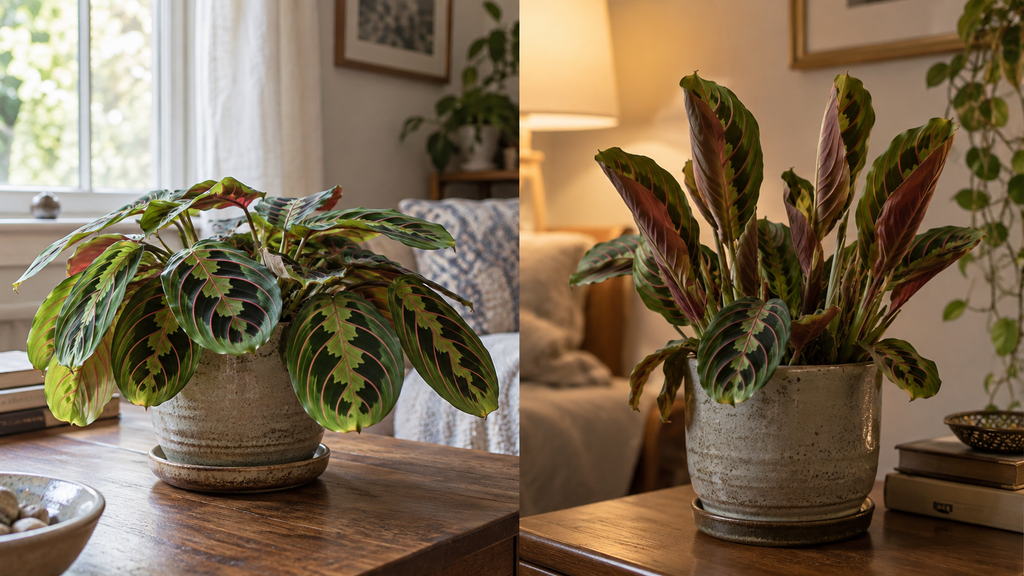
If you are asking why are my plant leaves drooping in the morning, first decide whether the leaves are truly wilted or simply changing position naturally.
Morning drooping may relate to dry soil, cold overnight conditions, damaged roots, or another stress. However, some plants naturally move their leaves between day and night.
Prayer plants and related species are well known for this behavior, called nyctinasty.
Normal movement usually means:
- leaves stay firm;
- movement follows a predictable pattern;
- the plant remains otherwise healthy;
- leaves reposition later.
True wilt is more likely when tissue becomes limp, remains down throughout the day, or occurs with abnormal root-zone moisture or discoloration.
Normal movement changes leaf angle; wilting changes leaf firmness.
Why Are My Leaves Wilting and Curling?
Leaves wilting and curling together indicate stress, but the combination does not identify one specific cause.
Use the additional evidence:
- dry + crispy: investigate dryness, heat, and airflow;
- wet + soft or yellow: inspect the root zone;
- stippled: check for pests;
- distorted new growth: inspect growing points;
- sun-facing damage: assess direct light.
Curling is supporting evidence rather than a diagnosis by itself. Your dedicated curling-leaf guide should handle the deeper troubleshooting while this article keeps the focus on drooping.
What Do Leaf Color and Texture Tell You?
Color and texture can narrow the diagnosis.
| Added symptom | Check next |
| Crispy margins | Dryness, heat, airflow, salts |
| Soft yellow leaves | Wet root zone, roots, aging |
| Brown tips plus white crust | Soluble salts |
| Stippling | Pests |
| Distorted new leaves | Pests or environmental stress |
| Water-soaked tissue | Temperature or tissue damage |
| One old yellow leaf | Natural aging |
| Many yellow leaves plus drooping | Whole-plant stress |
One symptom rarely proves the cause. The strongest diagnosis combines leaf appearance, root-zone moisture, timing, and symptom distribution.
Can Pests Cause Drooping Leaves?
Yes, but pest damage should be confirmed.
Inspect leaf undersides, stems, growing points, and leaf joints for:
- fine webbing;
- pale stippling;
- sticky residue;
- cotton-like material;
- attached bumps;
- distorted new growth;
- visible insects.
Pests become more likely when direct feeding damage accompanies the drooping.
If the root zone is saturated and the roots are clearly unhealthy, pest treatment will not correct the primary problem. Treat the evidence you actually find.
Does Plant Type Affect Drooping?
Yes. Plant identity changes how you interpret drooping because species differ in normal leaf position, root structure, moisture needs, humidity sensitivity, and natural movement.
Someone searching for a droopy plant name may need to identify the plant before diagnosing it.
For example:
- peace lilies can wilt dramatically when dry;
- pothos can droop under dry or overly wet conditions;
- snake plants with soft collapsing leaves in wet soil need root inspection;
- prayer plants naturally change leaf angle;
- succulents should not be managed like thin-leaved tropical plants.
Once identified, compare the plant’s normal requirements with its actual environment.
What If the Cause Isn’t Obvious?
If moisture appears appropriate, roots remain mostly firm, and no obvious environmental or pest problem fits, investigate less common factors.
Fertilizer and Salt Buildup
Excess soluble salts can interfere with water uptake and damage fine roots.
Possible clues include:
- white mineral crust;
- brown tips;
- reduced growth;
- repeated strong fertilization;
- damaged fine roots.
Aging Potting Medium
Potting media change over time. Organic components break down, particles become finer, and the balance between air and water changes.
A watering routine that worked previously may stop working as the medium ages or roots fill the container.
Structural Damage
Inspect stems and petioles for bends, creases, soft areas, or other localized injury, particularly when only one section of the plant droops.
Use second-stage explanations only after the more likely causes have been checked.
How to Fix Drooping Leaves on Plants
The safest way to fix drooping leaves on plants is to match treatment to the evidence.
Use this sequence:
1. Locate the droop. Is the whole plant affected or only one area?
2. Check when it started. Sudden and gradual problems suggest different triggers.
3. Test the root zone. Is it dry, wet, or normally moist?
4. Add supporting evidence. Inspect roots, leaf texture, heat exposure, pests, and recent changes.
5. Correct the strongest confirmed problem. Avoid changing everything simultaneously.
6. Observe the response. Stabilization provides useful feedback before you intervene again.
A useful Plantsaholic framework is:
Locate → Time → Test → Interpret → Act → Observe
Will Droopy Leaves Recover?
Will droopy leaves recover? Often, yes, if the tissue is still alive and the underlying cause is corrected before permanent damage occurs.
Signs of recovery include:
- leaves becoming firmer;
- new damage stopping;
- stems remaining healthy;
- normal root-zone drying;
- healthy new growth;
- reduced leaf loss.
Completely brown, crispy, rotten, or dead tissue will not become healthy again.
Do not expect every older damaged leaf to become perfect. Healthy new growth is a better long-term sign of recovery.
Should You Remove Drooping Leaves?
Do not remove a leaf simply because it is temporarily drooping.
Keep green, structurally intact foliage while the plant recovers. Remove leaves that are completely dead, severely rotten, extensively brown, or damaged beyond recovery.
Correct the underlying cause first. Pruning does not solve root stress, poor drainage, heat, or pests.
When Is Drooping More Serious?
Drooping requires deeper investigation when it becomes rapidly progressive, destructive, highly localized, or does not match the root-zone conditions.
Investigate further if you see:
- rapid whole-plant collapse;
- a mushy crown or stem base;
- extensive decomposing roots;
- one branch repeatedly wilting;
- dark damaged stems;
- persistent wilt despite suitable moisture;
- continued decline after the suspected cause is corrected.
At that point, look for a more specific root, stem, disease, pest, or structural problem.
How to Prevent Drooping Leaves
Prevention depends on understanding how the plant behaves in its actual container and environment rather than following a rigid schedule.
Useful habits include:
- identify the plant and know its basic needs;
- check root-zone moisture before watering;
- empty standing water from cachepots;
- adjust watering with seasonal changes;
- monitor root crowding;
- inspect new growth and leaf undersides;
- acclimate plants gradually to stronger light;
- avoid extreme heat and cold drafts;
- avoid heavy fertilizer on stressed plants.
The long-term rule remains:
Locate → Time → Test → Interpret → Act → Observe.
FAQs About Drooping Plant Leaves
Should I Water a Plant as Soon as Its Leaves Droop?
No. Check the soil first because both dry and overly wet root zones can cause drooping. Water only when the root zone actually needs moisture.
Why Is My Plant Drooping but the Soil Is Still Moist?
Moist soil with drooping leaves can indicate poor root function, slow drainage, heat stress, or another environmental issue. Check how long the soil stays wet and inspect roots if the problem continues.
Why Is My Plant Drooping Even After Watering?
Water may have bypassed a dry root ball, or damaged roots may be unable to use it properly. Check whether the middle of the pot is actually moist before watering again.
How Do I Know if Drooping Is From Too Much or Too Little Water?
Dry soil, a light pot, and crispy foliage support underwatering. Persistently wet soil, a heavy pot, yellowing leaves, and damaged roots make excess moisture more likely.
Will Droopy Leaves Recover?
Often, yes, when the tissue is alive and the cause is corrected. Completely brown, crispy, rotten, or dead tissue will not recover.
Why Does My Plant Droop in the Afternoon?
Heat and strong light can increase water loss. If the plant recovers later without watering, temporary heat stress may be involved.
Why Are Only the Bottom Leaves Drooping?
One older lower leaf may simply be aging. If several lower leaves droop or yellow together, check root-zone moisture and overall plant health.
Why Is Only One Side of My Plant Drooping?
One-sided drooping can point to localized light, heat, stem damage, or another problem affecting one part of the plant.
Can Fertilizer Make Plant Leaves Droop?
Yes. Excess fertilizer salts can interfere with water uptake and damage fine roots. Brown tips, mineral crust, and reduced growth can support this diagnosis.
Can Drooping Leaves Mean Root Rot?
Yes, but drooping alone does not confirm root rot. Wet soil combined with dark, soft, deteriorating roots makes root rot more likely.
Can a Drooping Plant Be Saved?
Often, yes. Recovery is more likely when healthy roots, stems, or growing points remain and the underlying cause can be corrected.

Myra is the founder and lead writer of Plantsaholic. She shares practical, research-backed advice on indoor plants, outdoor gardening, flowers, herbs, succulents, and everyday plant care. Her goal is to help gardeners of all experience levels grow healthier plants through simple, easy-to-follow gardening guides.