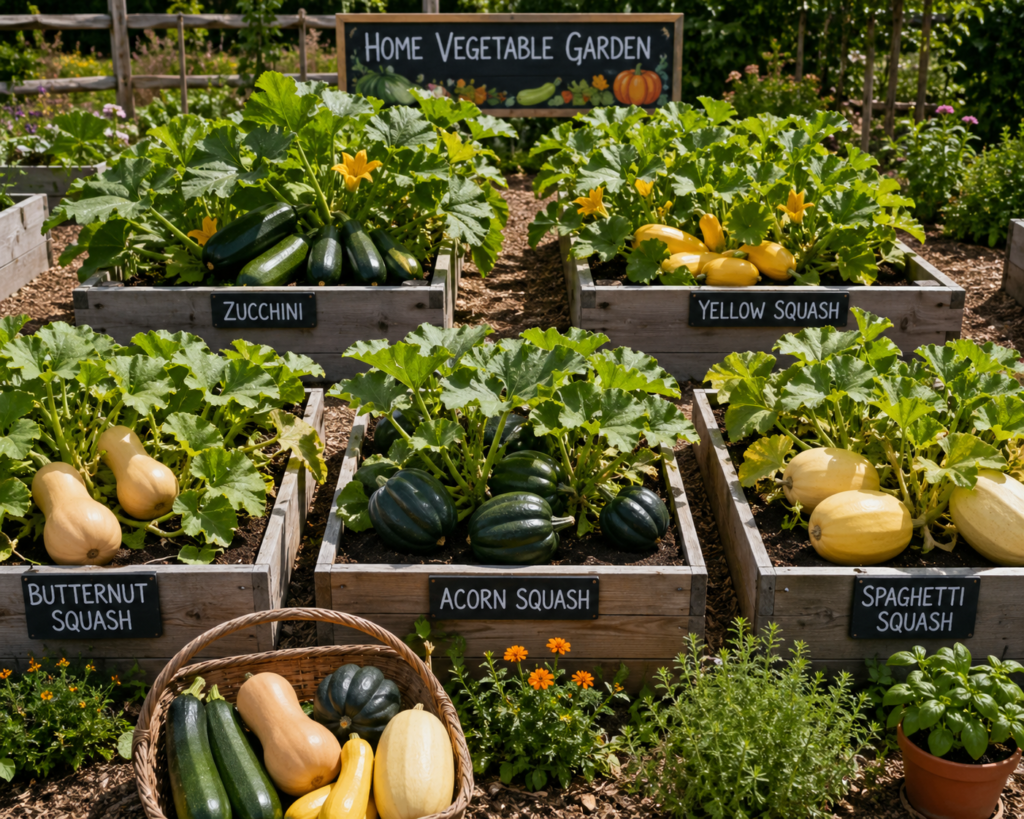
Squash is one of the highest-yielding crops a home gardener can grow. It produces quickly, feeds families well, and offers both fresh summer harvests and long-term winter storage. Whether you want zucchini for daily cooking, butternut squash for soups, or compact bush varieties for small gardens, choosing the right squash plant makes your garden more productive and easier to manage.
Squash belongs to the Cucurbita family, which includes summer squash, winter squash, pumpkins, and gourds. The best squash for your garden depends on space, sunlight, climate, pest pressure, and how you plan to use the harvest. Some squash plants stay compact, while others spread aggressively across beds. Some mature in 45 days, while others need 100 days or more.
This guide explains the best squash plants to grow, how to choose the right type, how to improve yield, and how to avoid common problems.
What Are Squash Plants and Why Should You Grow Them?
Squash plants are warm-season vegetables known for fast growth, large leaves, bright flowers, and heavy fruit production. They grow best in full sun, rich soil, and warm temperatures. Many gardeners grow squash because it gives a strong return for the space and effort invested.
Summer squash is harvested young, while the skin is still tender. Winter squash is harvested mature, after the rind hardens for storage. This makes squash useful for both fresh cooking and long-term food storage.
Squash is worth growing because it offers:
- Fast growth from seed
- High yield per plant
- Strong kitchen versatility
- Pollinator-friendly flowers
- Good storage options
- Easy beginner success
- Raised bed and ground-growing potential
Squash plants also help the garden ecosystem. Their large leaves shade soil, reduce moisture loss, and suppress some weeds. Their flowers attract bees and other pollinators, which can improve production across the garden.
Decision clarity:
Grow squash if you want a productive vegetable crop that gives large harvests without complicated care.
What Are the Main Types of Squash Plants?
Squash is mainly divided into two groups: summer squash and winter squash. The difference is not only season, but harvest stage, texture, and storage ability.
Summer squash is harvested immature. It has soft skin, tender flesh, and a short storage life. It grows quickly and usually produces within 45–60 days.
Common summer squash includes:
- Zucchini
- Yellow squash
- Pattypan squash
- Cousa squash
Winter squash is harvested mature. It has a hard rind, dense flesh, and stores for months when cured correctly. It usually needs 80–120 days to mature.
Common winter squash includes:
- Butternut squash
- Acorn squash
- Spaghetti squash
- Delicata squash
- Hubbard squash
Key differences:
- Summer squash grows faster
- Winter squash stores longer
- Summer squash has soft skin
- Winter squash has hard skin
- Summer squash needs frequent harvesting
- Winter squash matures fully on the vine
Decision clarity:
Choose summer squash for fast meals. Choose winter squash for storage, soups, roasting, and food security.
Which Are the Best Summer Squash Plants to Grow?
Summer squash is best for gardeners who want quick harvests and continuous production. These plants produce early and keep fruiting when harvested often. They are ideal for beginners, raised beds, and kitchen gardens.
The best summer squash varieties combine speed, flavor, disease resistance, and manageable growth.
1. Zucchini
Zucchini is the most productive summer squash for most gardens. It matures quickly, produces heavily, and works in many recipes.
Best traits:
- Matures in 45–55 days
- Produces continuously
- Easy to grow from seed
- Good for beginners
- Works in grilling, baking, frying, and sautéing
2. Yellow Squash
Yellow squash is reliable, attractive, and slightly sweeter than zucchini. It performs well in warm climates and produces steadily with regular harvesting.
Best traits:
- Good heat tolerance
- Mild sweet flavor
- Tender texture
- Strong fresh-cooking use
3. Pattypan Squash
Pattypan squash has a unique round, scalloped shape. It is both ornamental and edible, making it useful for gardeners who want beauty and production.
Best traits:
- Compact growth
- Fast fruiting
- Great for stuffing
- Attractive harvests
Real-world insight:
Harvest summer squash every 2–3 days. Leaving oversized fruits on the plant slows future production.
Decision clarity:
Choose zucchini for yield, yellow squash for heat tolerance, and pattypan squash for compact ornamental value.
Zucchini vs Yellow Squash: Which Is Better?
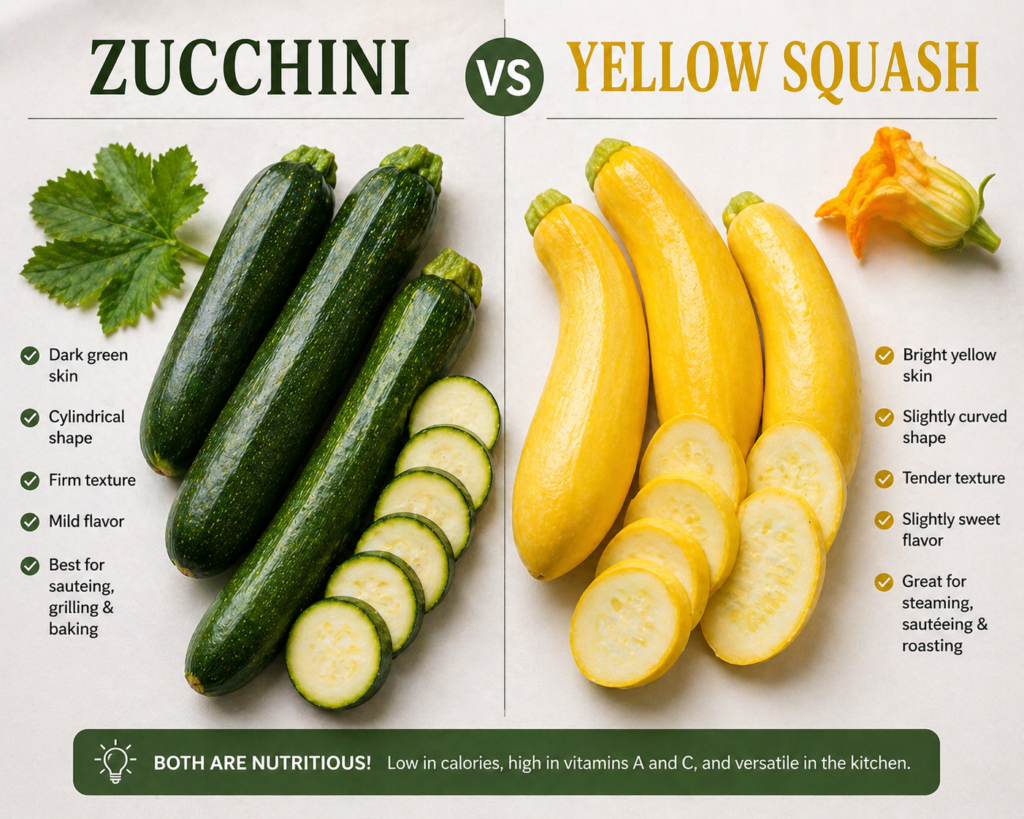
Zucchini usually produces more and grows faster, while yellow squash often handles heat better and has a slightly sweeter flavor. Both are excellent summer squash choices.
Zucchini is usually the better beginner crop because it is vigorous, forgiving, and widely available in disease-resistant varieties. It also produces heavily when harvested often. Yellow squash is a strong choice for hot climates because it often handles heat stress better.
Quick comparison:
- Yield winner: Zucchini
- Heat tolerance: Yellow squash
- Flavor sweetness: Yellow squash
- Growth speed: Zucchini
- Beginner-friendly: Zucchini
- Best for grilling: Both
Choose zucchini if:
- You want maximum yield
- You are a beginner
- You want easy variety options
Choose yellow squash if:
- You garden in high heat
- You prefer softer texture
- You want slightly sweeter flavor
Decision clarity:
For most gardeners, zucchini is the best overall summer squash. For very hot gardens, yellow squash may perform better.
Which Are the Best Winter Squash Plants to Grow?
Winter squash is best for gardeners who want long-term storage, richer flavor, and dense harvests. These plants need more time than summer squash, but they reward patience with fruits that can last for months.
1. Butternut Squash
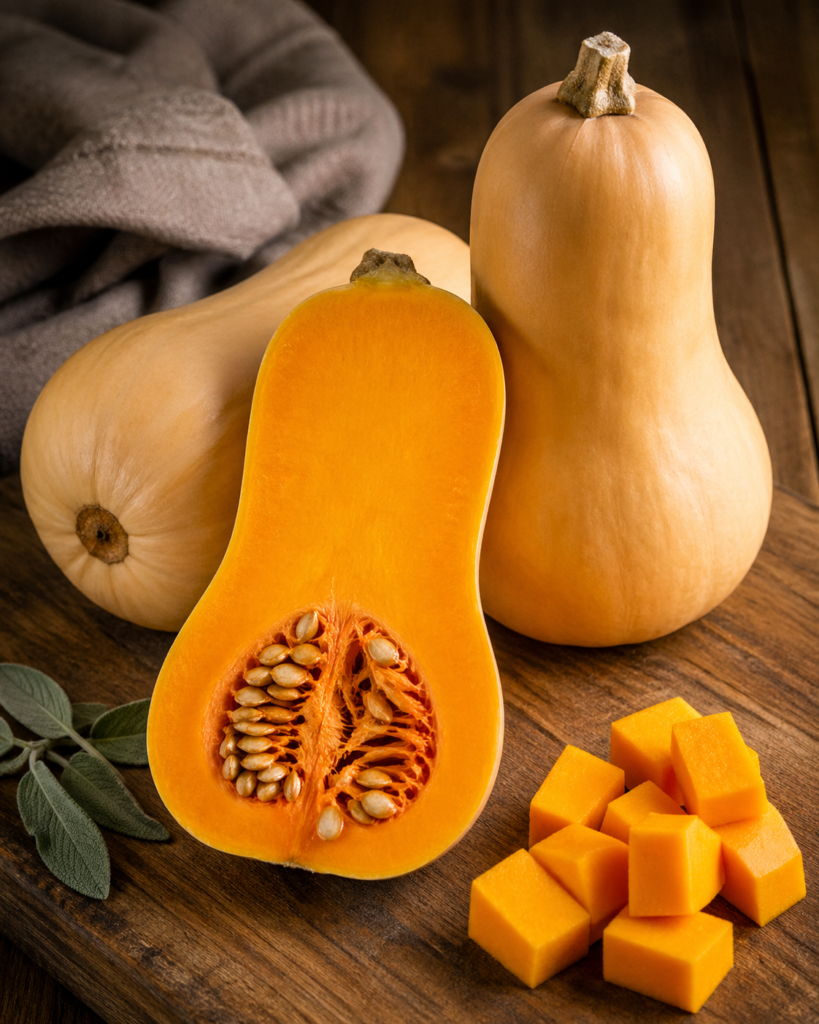
Butternut squash is one of the best all-around winter squash varieties. It has sweet flesh, smooth texture, and excellent storage life.
Best traits:
- Stores 4–6 months
- Great for soup and roasting
- Strong flavor
- Smaller seed cavity
- Good disease resilience
2. Acorn Squash
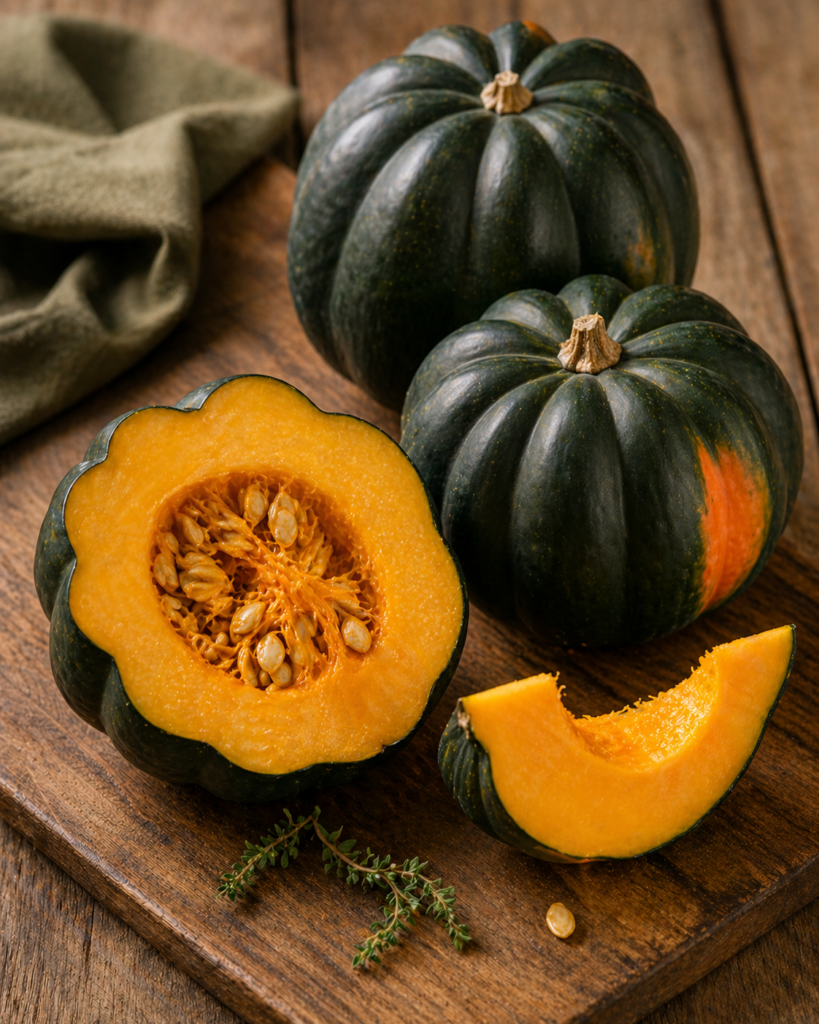
Acorn squash is compact, productive, and faster than many winter squash types. Its natural bowl shape makes it excellent for stuffing.
Best traits:
- Good for small gardens
- Faster maturity
- Mild sweet flavor
- Easy portion size
3. Spaghetti Squash
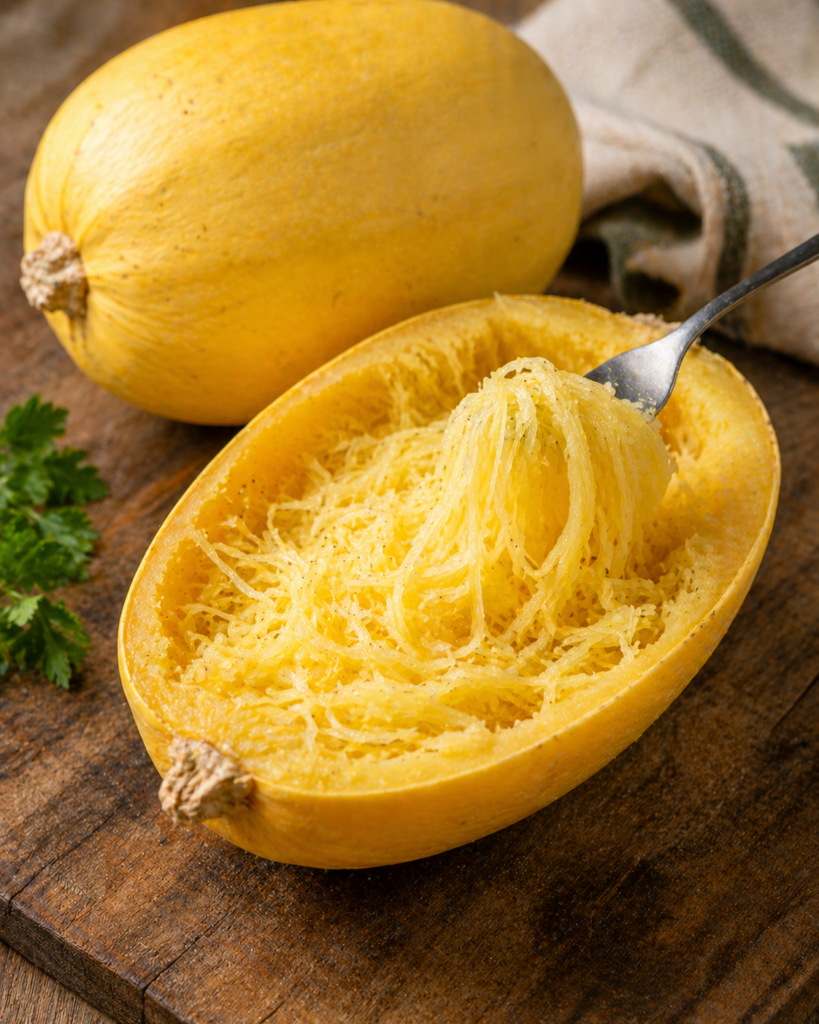
Spaghetti squash is popular because its cooked flesh separates into noodle-like strands. It is useful for low-carb meals and meal prep.
Best traits:
- Unique texture
- Good storage
- Strong kitchen demand
- Reliable yields
4. Delicata Squash
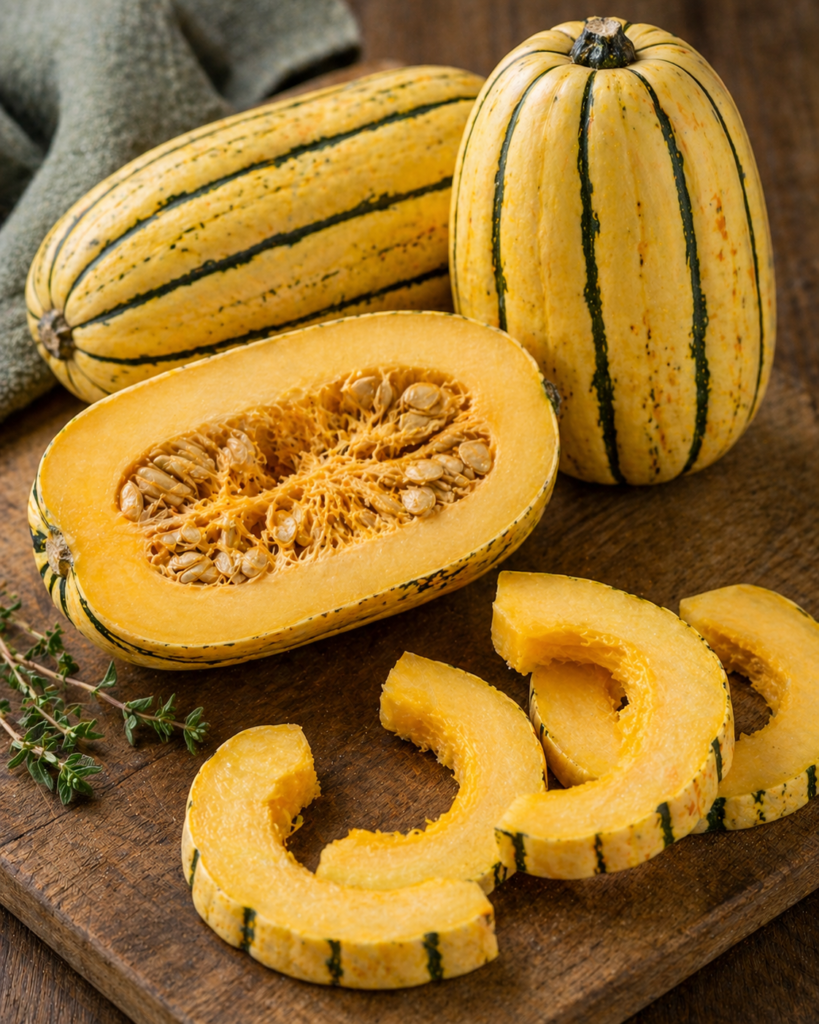
Delicata squash is known for excellent flavor and edible skin. It does not store as long as butternut, but it is one of the best-tasting squash types.
Best traits:
- Sweet flavor
- Creamy texture
- Thin edible skin
- Easy roasting
Decision clarity:
Choose butternut for storage, acorn for small gardens, spaghetti squash for versatility, and delicata for flavor.
Butternut vs Acorn Squash: Which Should You Grow?
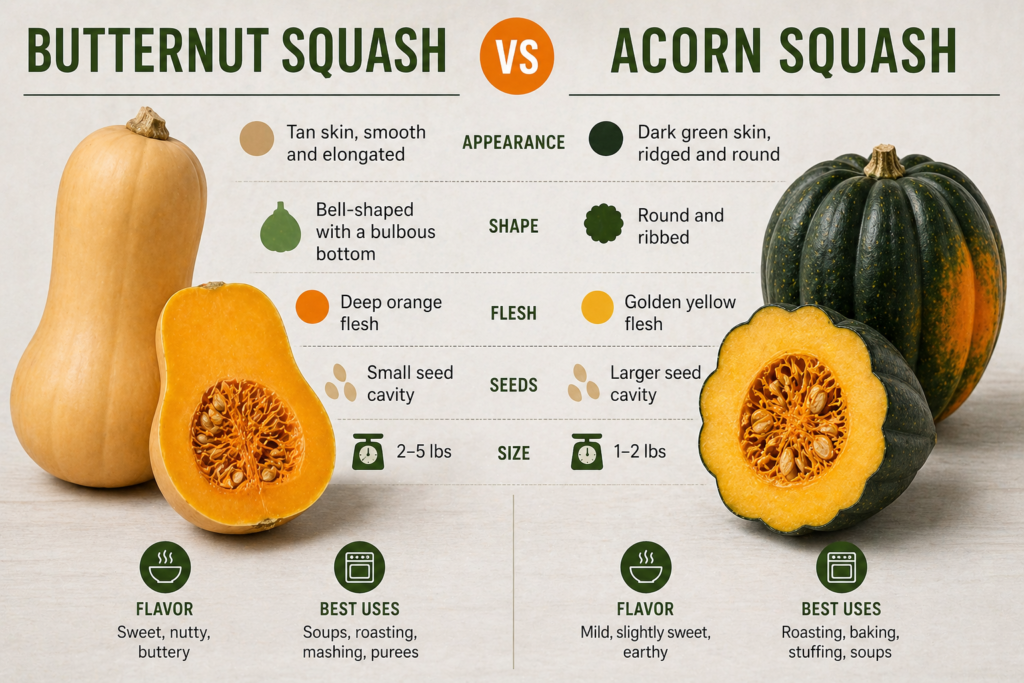
Butternut squash offers better storage and smoother flesh, while acorn squash matures faster and fits smaller spaces.
Butternut is better if your goal is long-term use. It stores longer, has more usable flesh, and works well in soups, roasting, and purees. Acorn squash is better when space or season length is limited. It produces smaller fruits and matures faster than many winter squash varieties.
Comparison:
- Storage winner: Butternut
- Faster maturity: Acorn
- Best for soup: Butternut
- Best for stuffing: Acorn
- Small-space winner: Acorn
- Food storage winner: Butternut
Choose butternut if:
- You want long storage
- You cook soups or purees
- You want dense edible flesh
Choose acorn if:
- Your garden is small
- Your season is shorter
- You want easy single-serving squash
Decision clarity:
Butternut is better for long-term value. Acorn is better for compact gardens and faster harvests.
Which Squash Varieties Are Most Disease Resistant?
Disease-resistant squash varieties are important in humid climates or gardens with recurring fungal problems. Resistance helps plants stay productive longer, especially against powdery mildew, vine stress, and common squash diseases.
Disease resistance does not mean immunity, but it reduces risk. If your garden has repeated squash failure, choosing stronger varieties is often better than trying to fix problems later.
Strong disease-resistant choices include:
Dunja Zucchini
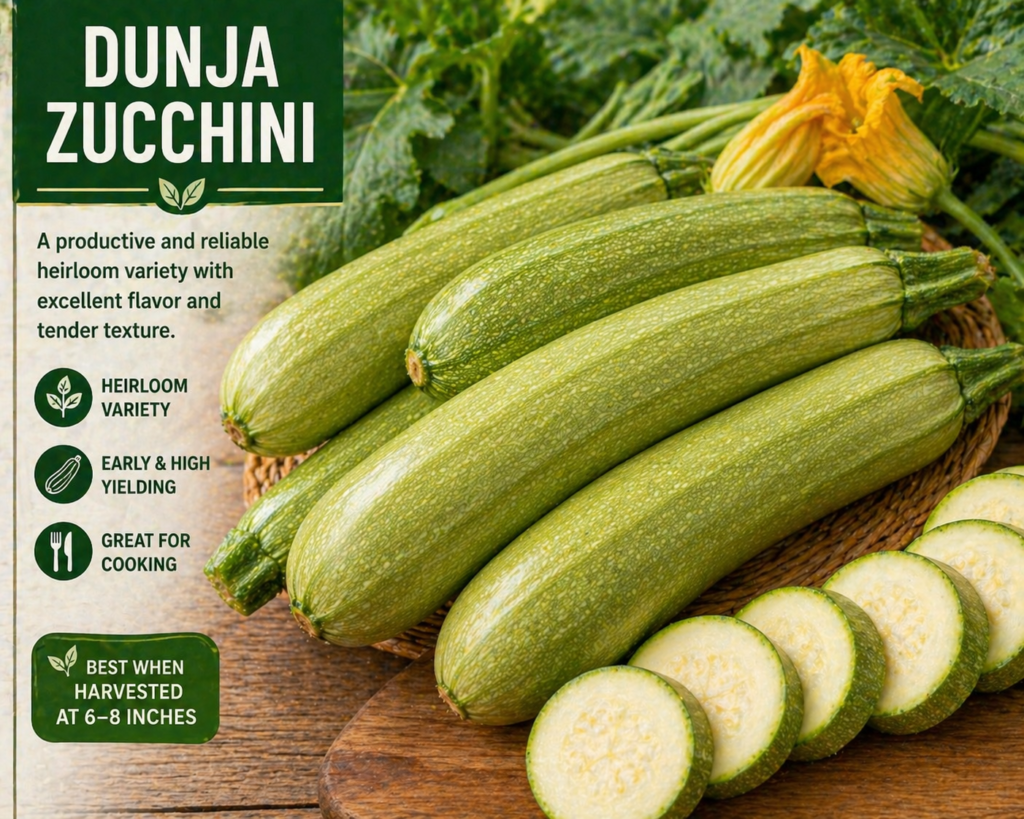
Dunja is known for mildew resistance and strong production.
Benefits:
- Good leaf health
- Reliable harvests
- Strong summer production
Tromboncino Squash
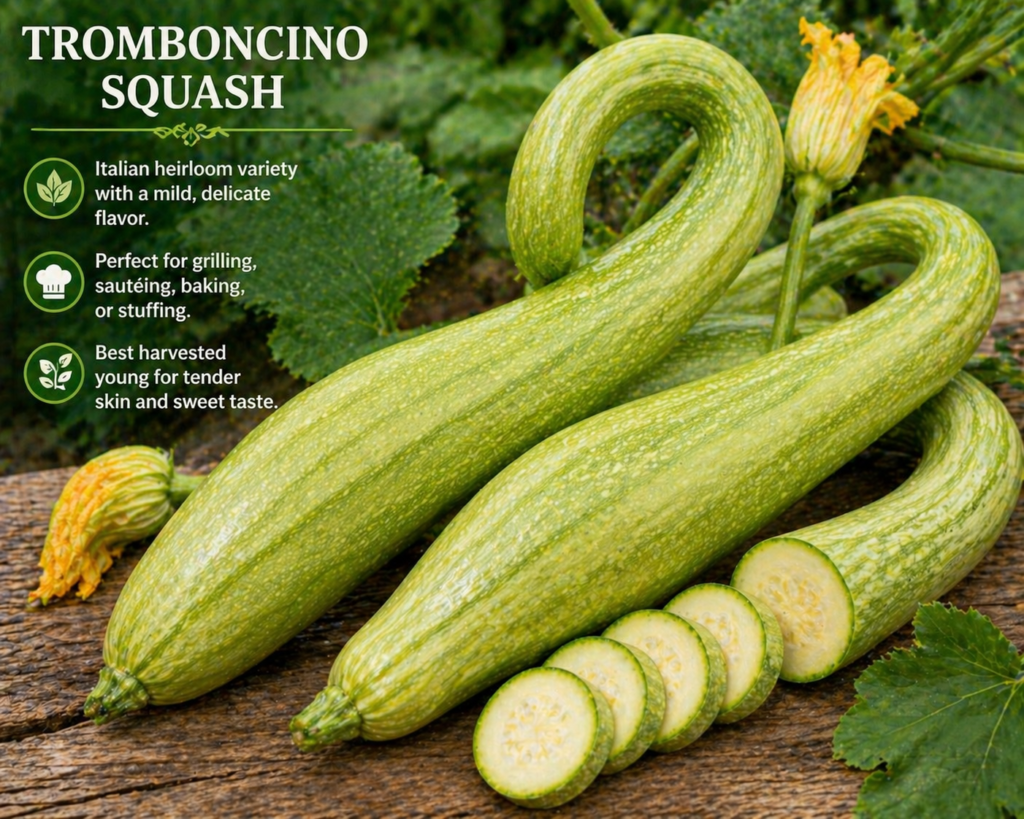
Tromboncino is useful because it is naturally more resistant to squash vine borers than many standard squash types.
Benefits:
- Vigorous vines
- Long harvest season
- Can be used young or mature
Waltham Butternut
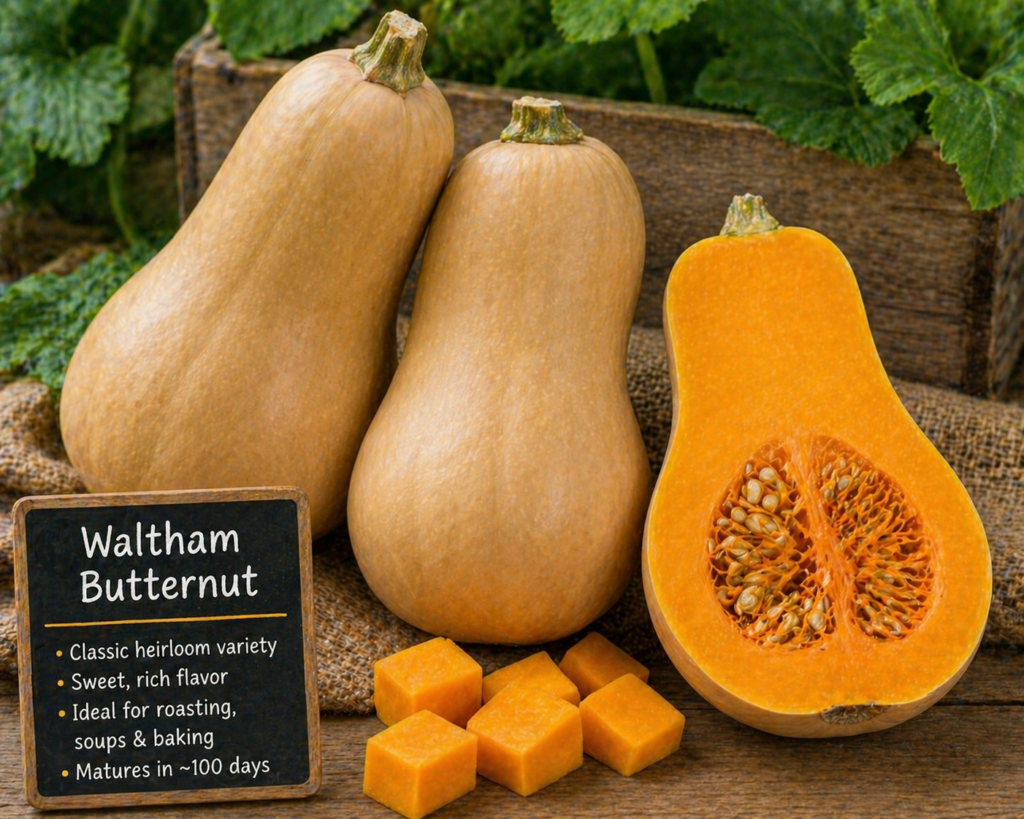
Waltham Butternut is a reliable winter squash with good storage and strong garden performance.
Benefits:
- Better fungal resilience
- Long storage
- Stable harvests
Decision clarity:
If disease pressure is common, prioritize resistant varieties over appearance or novelty.
Which Squash Plant Is Best for Beginners?
Zucchini is the easiest squash plant for beginners. It germinates quickly, grows aggressively, and produces visible results fast. This gives new gardeners confidence and a reliable first harvest.
Zucchini tolerates small mistakes better than many vegetables. It can recover from minor watering inconsistency, responds well to compost, and produces even when conditions are not perfect.
Why beginners should start with zucchini:
- Germinates in 5–10 days
- Harvests in 45–60 days
- Produces heavily
- Easy to identify harvest size
- Works in many recipes
Beginner mistakes to avoid:
- Planting too many plants
- Overcrowding
- Harvesting too late
- Ignoring squash bugs
- Watering too shallowly
Best beginner setup:
- Start with 1–2 plants
- Space plants about 3 feet apart
- Use full sun
- Add compost before planting
- Harvest every few days
Decision clarity:
Start with zucchini first. Add winter squash later once you understand space, watering, and pest management.
How Many Squash Plants Should You Grow?
Most households only need 2–4 squash plants. Squash is highly productive, and beginners often plant too many.
For fresh eating, 1–2 zucchini plants can produce enough for a small family. For storage, winter squash needs more plants because each vine produces fewer fruits than summer squash.
General planting guide:
- 1 person: 1 zucchini plant
- 2–3 people: 2 summer squash plants
- Family of 4: 2–4 mixed squash plants
- Storage gardening: 3–4 butternut vines
- Large garden: 4–6 mixed squash plants
Best balance:
- 1–2 summer squash plants
- 2–3 winter squash plants
Factors to consider:
- Cooking frequency
- Garden size
- Storage space
- Freezing or preserving plans
- Family appetite
Decision clarity:
Start small. It is better to grow fewer healthy squash plants than overcrowd your garden.
What Are the Best Squash Plants for Small Gardens?
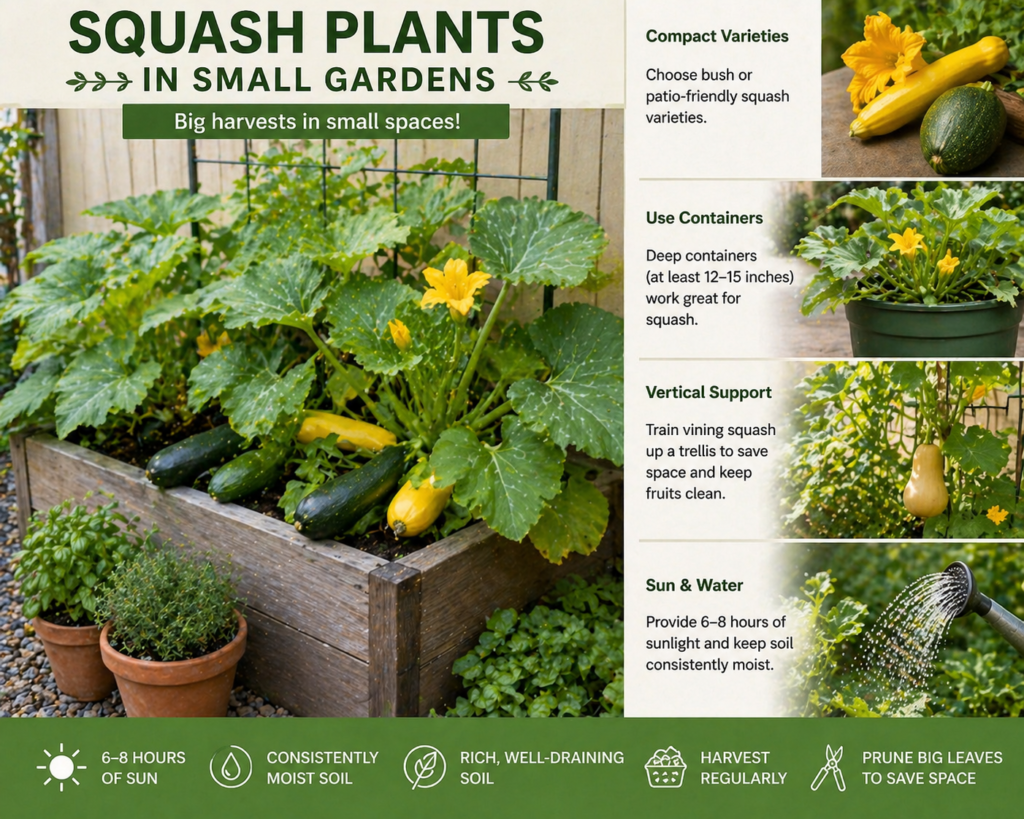
Small gardens need compact squash varieties. Traditional vining squash can spread quickly and overwhelm beds, so bush types are usually better.
Best squash for small gardens includes:
Bush Zucchini
Bush zucchini is the safest compact choice. It produces heavily without taking over the whole garden.
Best for:
- Raised beds
- Containers
- Small plots
- Beginner gardens
Butterbush Butternut
Butterbush Butternut gives winter squash benefits in a more compact growth habit.
Best for:
- Small edible gardens
- Storage-focused growers
- Limited-space winter squash growing
Bush Acorn Squash
Bush acorn squash gives good fruit set with less spread than standard vines.
Best for:
- Compact beds
- Shorter seasons
- Small-space winter harvests
Small-space tips:
- Use vertical support when possible
- Keep 24–36 inches of spacing
- Feed regularly
- Remove damaged leaves for airflow
- Avoid overcrowding
Decision clarity:
For small gardens, choose bush zucchini first. If you want storage squash, choose Butterbush Butternut.
Which Squash Produces the Highest Yield?
Zucchini produces the most fruit by count, while butternut squash is stronger for storage weight. Yield depends on how you measure it: number of fruits or total usable food.
Zucchini can produce 20–40 fruits per plant in a strong season. Butternut may produce fewer fruits, but each fruit stores longer and gives dense flesh.
Top yield choices:
Zucchini
Best for:
- Fresh harvests
- Continuous picking
- High fruit count
Yield potential:
- 20–40 fruits per plant
Butternut Squash
Best for:
- Storage
- Soups
- Roasting
- Food preservation
Yield potential:
- 8–20 fruits per vine under good conditions
Spaghetti Squash
Best for:
- Meal prep
- Larger fruits
- Steady production
Yield potential:
- 6–12 fruits per plant
Yield boosters:
- Full sun
- Deep watering
- Compost-rich soil
- Regular harvesting
- Good pollination
- Pest monitoring
Decision clarity:
Choose zucchini for fast volume. Choose butternut for long-term food value.
How Do You Choose the Right Squash for Your Climate?
Climate affects squash success more than many gardeners realize. Heat, humidity, rainfall, pest pressure, and frost-free days all determine which varieties perform best.
Hot climates usually favor zucchini, yellow squash, cousa squash, and butternut. Cool climates often perform better with acorn and delicata because they mature faster. Humid climates need disease-resistant varieties and strong airflow.
Best squash by climate:
Hot climates
Choose:
- Zucchini
- Yellow squash
- Cousa squash
- Butternut squash
Cool climates
Choose:
- Acorn squash
- Delicata squash
- Fast-maturing zucchini
Humid climates
Choose:
- Dunja zucchini
- Waltham Butternut
- Mildew-resistant hybrids
Dry climates
Use:
- Mulch
- Deep irrigation
- Heat-tolerant varieties
Climate checklist:
- How many frost-free days do you have?
- Does your garden stay humid?
- Do squash bugs appear yearly?
- Is summer extremely hot?
- Can you water deeply?
Decision clarity:
Match squash maturity days to your growing season before choosing any variety.
How Much Sun Do Squash Plants Need?
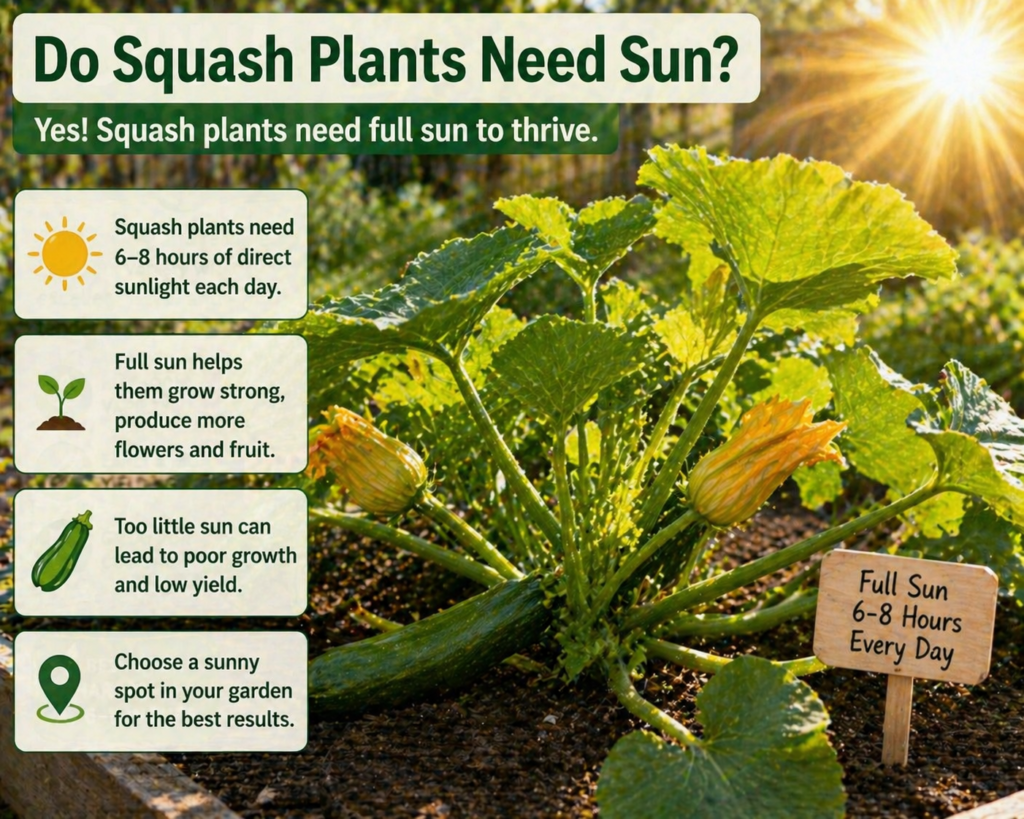
Squash needs full sun for strong production. Most varieties need at least 6 hours of direct sunlight daily, but 8–10 hours is better.
Light affects flowering, pollination, and fruit size. Low light often causes weak vines, fewer flowers, and poor yields. Many gardeners blame fertilizer when the real issue is not enough sun.
Ideal sunlight:
- Minimum: 6 hours daily
- Best: 8–10 hours daily
- Strongest location: open, sunny beds
Benefits of full sun:
- Faster growth
- More flowers
- Better pollination
- Larger fruit
- Lower disease pressure
Signs of low sunlight:
- Thin vines
- Pale leaves
- Weak flowering
- Small fruit
- Slow growth
Best placement:
- South-facing beds
- Open vegetable plots
- Away from tall crops
- Good airflow areas
Decision clarity:
If your garden gets less than 6 hours of sun, grow bush zucchini instead of long-season winter squash.
What Is the Best Soil for Growing Squash?
Squash grows best in rich, loose, well-draining soil with high organic matter. Because squash is a heavy feeder, poor soil leads to weak vines, fewer flowers, and small fruits.
The ideal soil holds moisture without staying soggy. Compost improves both fertility and structure, making it one of the best amendments for squash.
Best soil conditions:
- pH: 6.0–6.8
- Loose texture
- Good drainage
- High organic matter
- Moist but not waterlogged
Best amendments:
- Compost
- Aged manure
- Worm castings
- Leaf mold
- Organic vegetable fertilizer
Avoid:
- Heavy compacted clay
- Poor sandy soil
- Standing water
- Low-nutrient beds
Simple soil formula:
- 50% native soil
- 30% compost
- 20% aeration material
Decision clarity:
Improve soil before planting. Squash can tolerate some mistakes, but poor soil limits yield from the beginning.
How Often Should You Water Squash Plants?
Squash needs consistent deep watering. Most gardens need about 1–2 inches of water per week, but hot climates may need more frequent watering.
Watering should reach deep roots. Shallow watering creates weak roots and unstable production. Water at soil level to keep leaves dry and reduce disease risk.
Best watering practices:
- Water deeply 2–3 times per week
- Water in the morning
- Avoid wetting leaves
- Increase water during fruiting
- Use mulch to hold moisture
Signs of underwatering:
- Wilting in the morning
- Flower drop
- Small fruit
- Dry soil
Signs of overwatering:
- Yellow leaves
- Mushy stems
- Slow growth
- Root rot smell
Decision clarity:
Water deeply and consistently. In very hot weather, increase frequency rather than flooding the soil.
Should You Fertilize Squash Plants?
Yes, squash plants need regular feeding because they grow fast and produce heavily. Without enough nutrients, plants may grow leaves but produce fewer fruits.
Early growth needs nitrogen for leaves and vines. Flowering and fruiting need phosphorus and potassium. Too much nitrogen later in the season can cause leafy plants with poor fruit production.
Best feeding schedule:
At planting:
- Compost
- Balanced organic fertilizer
Before flowering:
- Light nitrogen support
During fruiting:
- More phosphorus
- More potassium
Good fertilizer options:
- Compost tea
- Fish emulsion
- Bone meal
- Organic vegetable blends
Avoid:
- Too much nitrogen
- Fertilizing dry soil
- Chemical salt buildup
- Ignoring container plants
Decision clarity:
Feed lightly in rich soil. Feed more often in containers because nutrients wash out faster.
How Do Squash Flowers Affect Production?
Squash plants produce male and female flowers. Male flowers provide pollen, while female flowers develop into fruit. If female flowers are not pollinated, small squash fruits may yellow, rot, or fall off.
Male flowers often appear first. This is normal and does not mean the plant is failing. Female flowers usually appear later when the plant is ready to fruit.
Male flower signs:
- Thin stem
- No tiny fruit behind flower
Female flower signs:
- Small fruit shape behind flower
- Needs pollination to develop
Pollination tips:
- Plant flowers nearby
- Avoid pesticides
- Encourage bees
- Hand pollinate in the morning if needed
Good pollinator plants:
- Marigold
- Lavender
- Borage
- Nasturtium
Decision clarity:
If your squash flowers but does not fruit, check pollination before changing fertilizer or watering.
What Are the Most Common Squash Problems?
Squash is productive, but pests and diseases can affect growth. Most problems are easier to prevent than fix.
Common squash problems include powdery mildew, squash vine borers, squash bugs, aphids, and fruit rot from poor pollination or inconsistent watering.
Powdery Mildew
Signs:
- White powdery coating on leaves
- Weak leaf growth
- Reduced production
Prevention:
- Improve airflow
- Avoid overcrowding
- Water at soil level
Squash Vine Borer
Signs:
- Sudden wilting
- Holes in stems
- Sawdust-like frass
Prevention:
- Inspect stems weekly
- Wrap lower stems
- Remove affected vines early
Squash Bugs
Signs:
- Yellow leaf spots
- Wilting leaves
- Egg clusters under leaves
Prevention:
- Hand-pick eggs
- Remove debris
- Monitor often
Blossom End Rot
Cause:
- Usually inconsistent watering
Fix:
- Keep soil moisture stable
Decision clarity: In humid gardens, prioritize airflow and disease-resistant varieties over dense planting.
Should You Grow Squash Vertically?
Yes, vining squash can grow vertically on strong supports. Vertical growing saves space, improves airflow, keeps fruits cleaner, and makes harvesting easier.
This method works best for vining types, not bush squash. Heavy fruits may need slings for support.
Best squash for vertical growing:
- Butternut squash
- Delicata squash
- Spaghetti squash
- Tromboncino squash
Best supports:
- Cattle panels
- Strong trellis
- Netting
- Wooden A-frame
Benefits:
- Saves garden space
- Improves airflow
- Reduces mildew risk
- Keeps fruit off soil
- Easier pest inspection
Challenges:
- Heavy fruits need support
- Weak trellises can fail
- Vines need training
Decision clarity:
Grow squash vertically if space is limited or fungal disease is common in your garden.
What Are the Best Companion Plants for Squash?
Companion planting helps squash by attracting pollinators, reducing pests, and improving garden biodiversity.
Best squash companions include marigolds, nasturtiums, beans, corn, borage, and herbs that attract beneficial insects.
Good companion plants:
Marigold
Benefits:
- Attracts pollinators
- Helps reduce pest pressure
Nasturtium
Benefits:
- Trap crop for aphids
- Supports pollinators
Beans
Benefits:
- Improve soil nitrogen
- Work well in mixed gardens
Corn
Benefits:
- Traditional Three Sisters companion
- Adds vertical structure
Avoid planting squash near:
- Potatoes
- Crowded root crops
- Plants that block sunlight
Decision clarity:
If pests are common, plant marigolds and nasturtiums near squash beds.
When Should You Harvest Squash?
Harvest timing depends on squash type. Summer squash should be harvested young and tender. Winter squash should mature fully on the vine.
Summer squash harvest:
- Best size: 6–8 inches
- Pick every 2–3 days
- Skin should be tender
- Fruit should feel firm
Winter squash harvest:
- Rind should be hard
- Stem should begin drying
- Color should be mature
- Harvest before frost
Do not leave summer squash too long. Oversized fruits become seedy and watery, and the plant may slow production.
Do not harvest winter squash too early. Immature winter squash does not store well.
Decision clarity:
Harvest summer squash early for tenderness. Harvest winter squash late for storage.
How Do You Store Squash After Harvest?
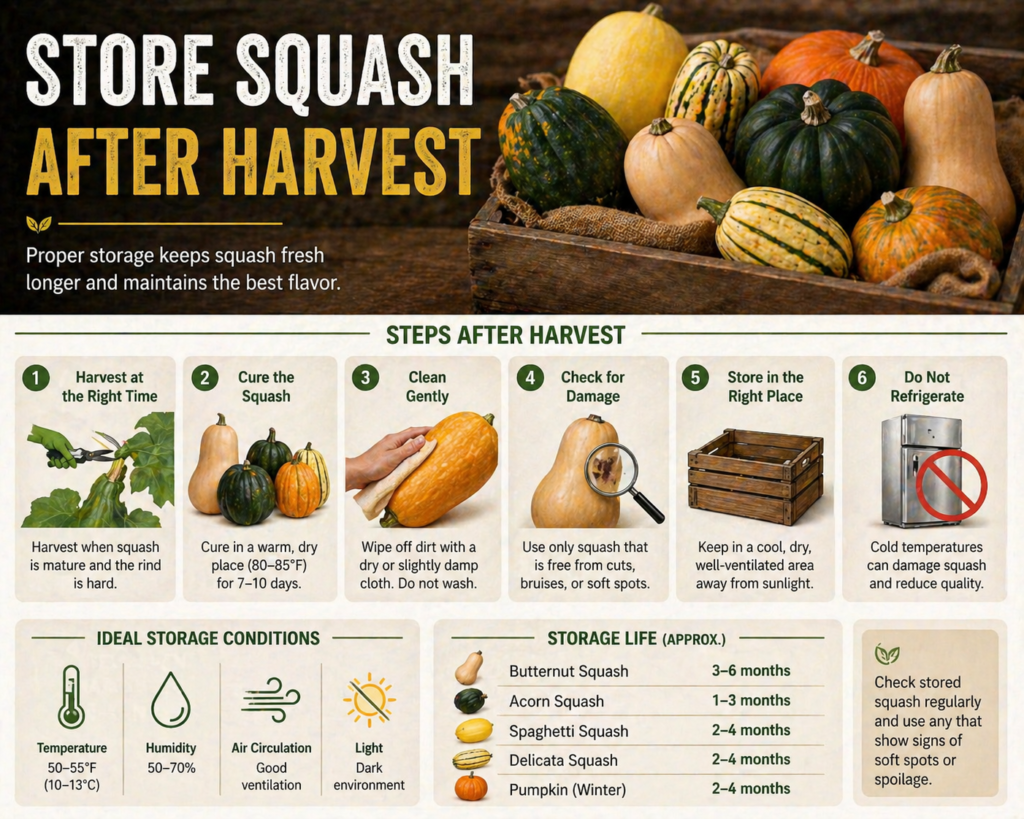
Summer squash and winter squash need different storage methods. Summer squash is perishable and should be refrigerated. Winter squash should be cured and stored in a cool, dry place.
Summer squash storage:
- Refrigerate immediately
- Keep dry
- Store unwashed
- Use within 7–14 days
Winter squash curing:
- Cure for 10–14 days
- Keep in a warm, dry place
- Provide good airflow
- Avoid damaged fruits
Winter squash storage:
- Store at 50–60°F
- Keep dry and dark
- Check regularly for soft spots
Storage life:
- Butternut: 4–6 months
- Acorn: 2–3 months
- Hubbard: 5–6 months
Decision clarity:
If storage matters, grow winter squash and cure it properly after harvest.
Can You Save Squash Seeds for Next Season?
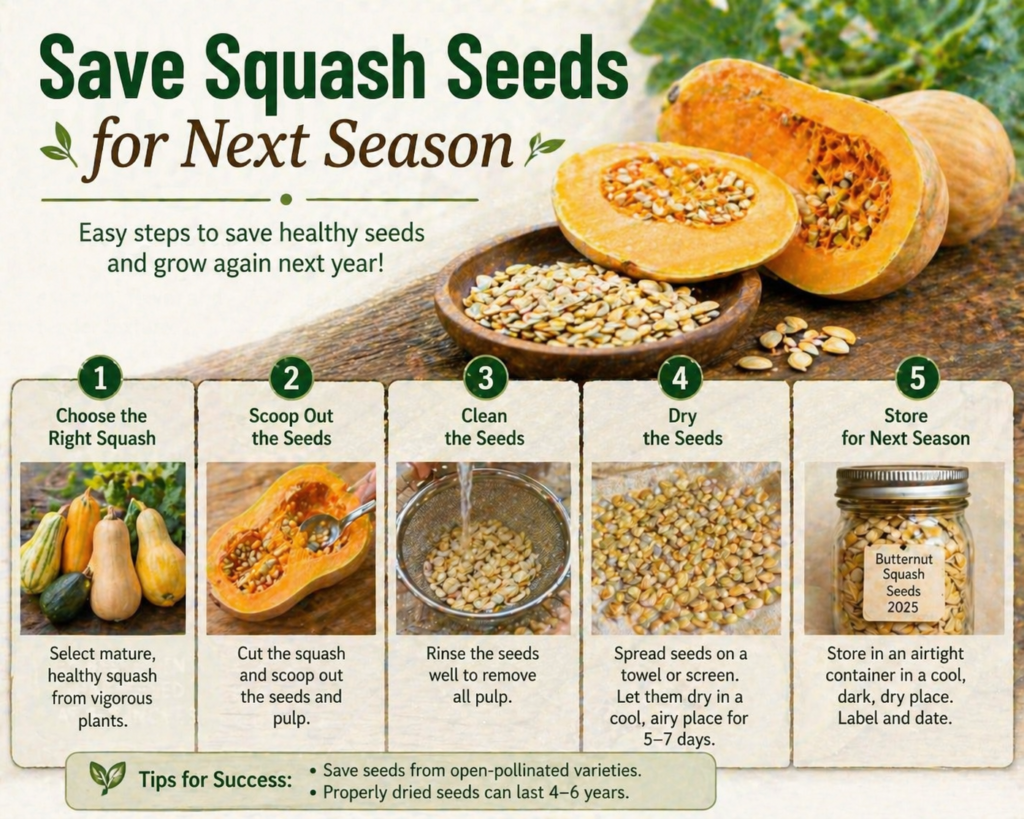
Yes, squash seeds can be saved, but heirloom or open-pollinated varieties are best. Hybrid squash seeds may grow unpredictably next season.
Squash can cross-pollinate with related varieties, especially within the same species. This does not affect the current fruit, but it can affect seeds saved for future planting.
Seed-saving steps:
- Use mature squash
- Scoop out seeds
- Wash away pulp
- Dry seeds for 7–10 days
- Store in a dry container
Best seed-saving choices:
- Heirloom zucchini
- Heirloom acorn squash
- Heirloom delicata squash
Avoid saving seeds from:
- Hybrid varieties
- Diseased plants
- Immature fruits
Decision clarity:
If seed-saving matters, start with heirloom squash varieties.
Which Squash Plant Has the Best Flavor?
Delicata squash is often considered one of the best-tasting squash varieties because it is sweet, creamy, and easy to roast. Butternut squash is also excellent because of its smooth texture and rich flavor.
Best flavor choices:
Delicata Squash
Best for:
- Roasting
- Sweet flavor
- Edible skin
Butternut Squash
Best for:
- Soup
- Puree
- Roasting
Acorn Squash
Best for:
- Stuffing
- Baking
- Single servings
Zucchini
Best for:
- Quick cooking
- Grilling
- Baking
Decision clarity:
Choose delicata for sweetness, butternut for creamy texture, acorn for stuffing, and zucchini for everyday cooking.
What Is the Best Overall Squash Plant to Grow?
The best overall squash plant for most gardeners is zucchini. It is fast, productive, beginner-friendly, and useful in many recipes.
However, the best strategy is usually to grow both summer and winter squash. Summer squash gives quick harvests, while winter squash provides storage food.
Best choices by goal:
- Best overall: Zucchini
- Best beginner squash: Zucchini
- Best storage squash: Butternut
- Best flavor: Delicata
- Best small garden squash: Bush zucchini
- Best compact winter squash: Acorn
- Best vertical squash: Tromboncino or butternut
- Best food-security squash: Winter squash mix
Best planting strategy:
- Grow 1–2 summer squash plants
- Grow 2–3 winter squash vines
- Add disease-resistant types if needed
- Use vertical support in small spaces
Final decision clarity:
Start with zucchini if you are new. Add butternut or delicata when you want storage, flavor, and a more complete squash harvest.
FAQs section
What is the easiest squash to grow?
Zucchini is the easiest squash to grow because it germinates fast, grows strongly, and produces continuously.
Which squash grows fastest?
Summer squash varieties like zucchini and yellow squash are usually ready in 45–60 days.
Which squash stores the longest?
Butternut squash and Hubbard squash store for several months when cured and kept in a cool, dry place.
Can squash grow in containers?
Yes. Bush squash varieties grow well in large containers with rich soil and full sun.
Why are my squash flowers falling off?
This often happens because of poor pollination or normal male flower drop.
Do squash plants need bees?
Yes. Bees and other pollinators improve fruit set and overall squash production.
Can squash be grown vertically?
Yes. Vining squash varieties grow well on strong trellises or cattle panels.
Which squash plant produces the most?
Zucchini usually produces the most fruits, especially when harvested every few days.
Why does my squash rot before it grows?
Small squash often rots because it was not fully pollinated or the plant had inconsistent watering.
When should I harvest squash?
Harvest summer squash young and tender. Harvest winter squash when the rind hardens and the stem dries.
Myra is the founder and lead writer of Plantsaholic. She shares practical, research-backed advice on indoor plants, outdoor gardening, flowers, herbs, succulents, and everyday plant care. Her goal is to help gardeners of all experience levels grow healthier plants through simple, easy-to-follow gardening guides.