Water scarcity is no longer only a regional problem in the United States. From Arizona and Nevada to Texas, Utah, New Mexico, and inland California, homeowners are replacing traditional lawns with xeriscape landscapes because high-water yards are becoming expensive, difficult to maintain, and less practical in dry climates.
Xeriscaping is often misunderstood as “desert landscaping,” but it is much more than gravel and cactus. A successful xeriscape uses drought-tolerant plants, soil preparation, mulch, smart irrigation, and water zoning to create a landscape that survives heat while still looking attractive.
The best xeriscape plants do more than survive drought. They provide structure, flowers, fragrance, pollinator support, erosion control, and year-round visual interest. This guide covers the 10 best xeriscape plants for arid states of America and explains how to choose, arrange, and maintain them for long-term success.
What Is Xeriscaping and Why Is It Important in Arid States?
Xeriscaping is a landscape design method focused on reducing water use through climate-adapted plants, improved soil, mulch, and efficient irrigation. Instead of depending on thirsty turfgrass and high-maintenance ornamentals, xeriscaping uses plants that can survive with minimal supplemental watering once established.
In dry states like Arizona, Nevada, Texas, Utah, and New Mexico, this matters because long summers, low rainfall, high evaporation, and watering restrictions make traditional lawns difficult to maintain. A conventional lawn may require frequent irrigation, mowing, fertilizing, and weed control. A xeriscape landscape can reduce those demands significantly.
A well-designed xeriscape can offer:
- Lower water bills
- Reduced mowing and trimming
- Better drought survival
- Lower fertilizer needs
- Less maintenance
- More pollinator activity
- Stronger curb appeal in dry regions
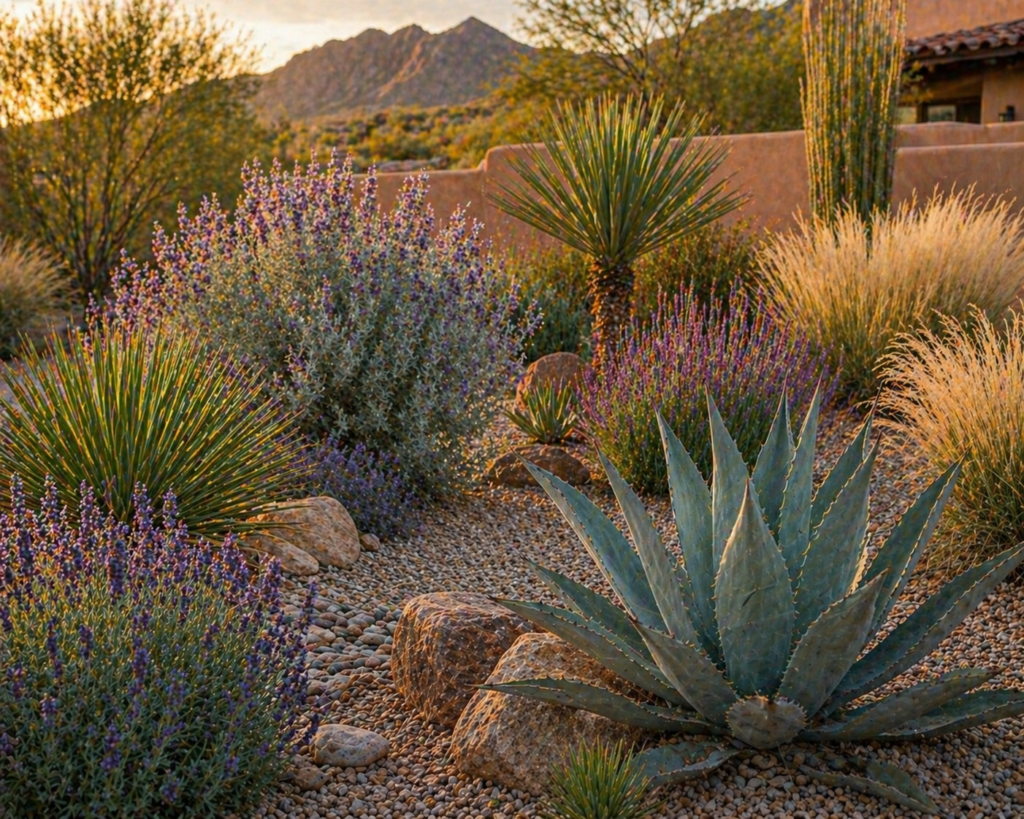
The biggest misconception is that xeriscaping looks barren. In reality, a proper xeriscape can be colorful, layered, fragrant, and full of texture. By combining plants like Agave, Yucca, Lavender, Texas Sage, Blue Grama, Penstemon, and Pink Muhly Grass, homeowners can create a low-water landscape that still feels alive and beautiful.
How Do You Choose the Right Xeriscape Plants for Dry Climates?
Choosing xeriscape plants requires more than picking anything labeled “drought tolerant.” Not every drought-tolerant plant works in every arid region. A plant that thrives in Phoenix may struggle in high-desert Colorado or northern Utah because winter temperatures, soil type, and elevation are different.
Start with your USDA hardiness zone. This helps determine whether a plant can survive your winter conditions. Then evaluate soil drainage. Many xeriscape plants hate wet, compacted soil. Even drought-tolerant plants can die from root rot if placed in heavy clay without drainage improvement.
Sun exposure is also critical. Most xeriscape plants need full sun, usually six or more hours of direct sunlight per day. Some can handle partial shade, but many flowering xerics become weak, leggy, or less colorful without enough light.
Use this decision framework:
- Match the plant to your USDA zone
- Check soil drainage before planting
- Evaluate full sun versus partial shade
- Study mature size before spacing
- Choose deep-rooted species for extreme drought
- Group plants by water needs
- Prioritize native or climate-proven plants
The best xeriscape plant is not always the most popular one. It is the one that fits your climate, soil, sunlight, and maintenance expectations.
What Makes a Plant Good for Xeriscaping?
A true xeriscape plant has natural adaptations that help it survive dry conditions. These adaptations may include water-storing leaves, deep roots, waxy foliage, silver leaf color, small leaves, drought dormancy, or slow growth.
Succulents like Agave store water in thick leaves. Plants like Lavender use narrow, aromatic leaves to reduce moisture loss. Texas Sage has silvery foliage that reflects sunlight. Native grasses like Blue Grama develop root systems that help them survive dry periods with far less water than turfgrass.
Strong xeriscape traits include:
- Thick or narrow leaves
- Waxy or silver foliage
- Deep root systems
- Heat tolerance
- Low fertilizer needs
- Drought dormancy
- Ability to handle poor soil
- Low long-term irrigation demand
A good xeriscape plant should be able to survive dry spells after establishment without constant watering. It should also handle reflected heat from walls, driveways, gravel, and sidewalks.
Which Xeriscape Plants Are Safe for Pets?
Pet safety matters in xeriscaping, especially if dogs or cats use the yard daily. Some drought-tolerant plants have sharp spines, irritating sap, or toxic compounds. Agave, Aloe, and Lantana should be placed carefully if pets chew plants or run freely through beds.
Pet-friendlier xeriscape options include:
- Rosemary
- Blue Grama
- Pink Muhly Grass
- Salvia
- Some Lavender varieties when used carefully
Higher-caution plants include:
- Agave
- Aloe vera
- Lantana
If you have young pets or chewing-prone dogs, prioritize grasses, woody herbs, and soft perennials over spiny succulents. Plant placement is just as important as plant choice. Place sharp or irritating plants away from play zones, walkways, and pet paths.
Which Xeriscape Plants Grow Fastest?
Some xeriscape plants grow slowly, especially structural succulents like Agave and Yucca. Others establish faster and help fill space quickly. Fast-growing xeriscape plants are useful when you want privacy, quick curb appeal, erosion control, or faster ground coverage.
Fast-growing xeriscape plants include:
- Lantana
- Texas Sage
- Pink Muhly Grass
- Red Valerian
- Rosemary
Slower xeriscape plants include:
- Agave
- Yucca
Fast growers usually need more water during the first growing season, but once established, they become much more drought tolerant. The trade-off is maintenance. Faster growth can mean more pruning and shaping.
Choose fast-growing xeriscape plants if you want quick results, but balance them with slower structural plants for long-term design stability.
10 Best Xeriscape Plants for Arid States of America
1. Agave
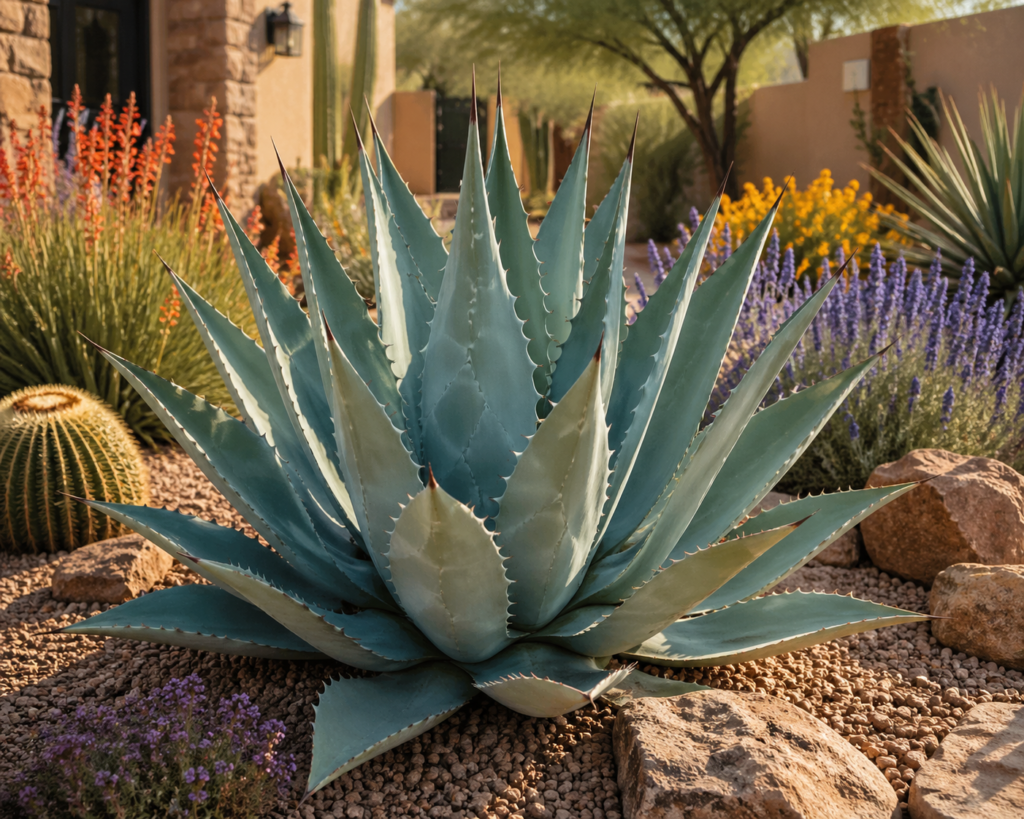
Agave is one of the best xeriscape plants for arid states because it stores water in thick, fleshy leaves and survives extreme heat with very little care. It is especially useful in hot desert regions such as Arizona, Nevada, southern New Mexico, and inland California.
Agave works beautifully as a focal point. Its bold shape gives structure to dry landscapes and makes the garden look intentional rather than empty. Landscapers often use Agave near entryways, gravel beds, boulders, and modern desert-style designs.
Best Agave strengths:
- Extreme drought resistance
- Strong architectural form
- Very low watering needs
- Excellent heat endurance
- Long lifespan
- Minimal maintenance
Popular varieties include Agave americana, Agave parryi, and Agave victoriae-reginae.
Choose Agave if you want a dramatic, low-maintenance plant that can handle intense sun and dry soil. Avoid it in wet soil, tight spaces, or areas where pets and children may brush against sharp leaf tips.
2. Yucca
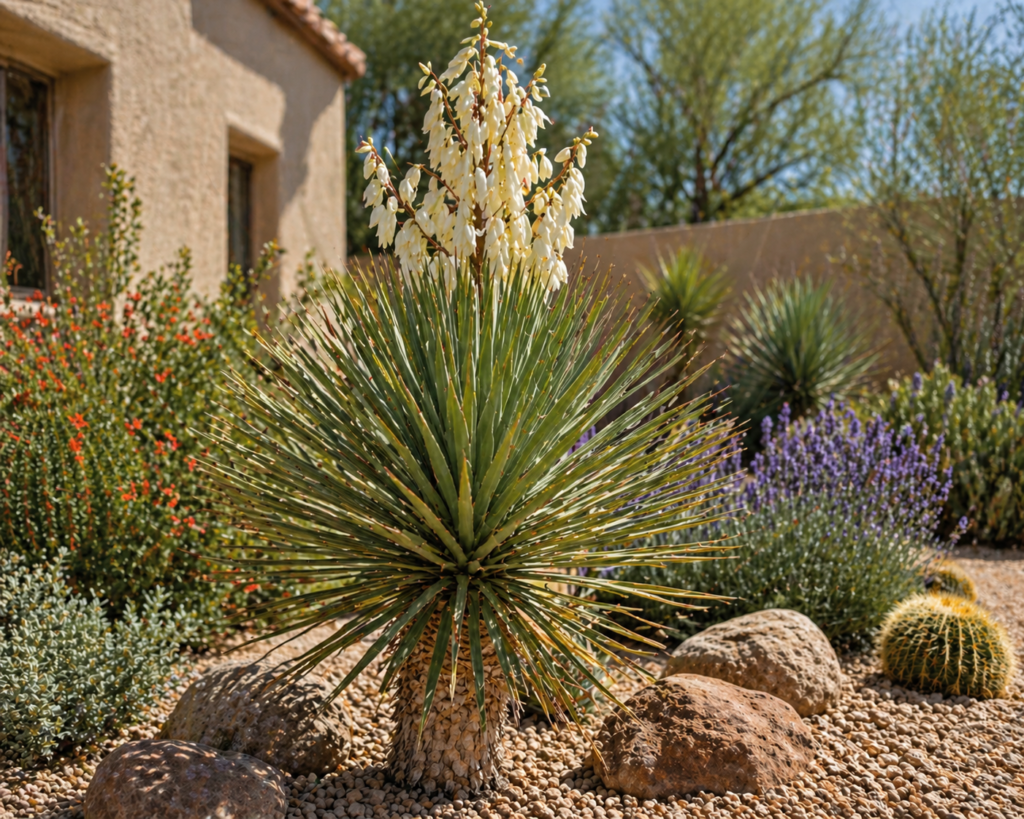
Yucca is one of the most reliable xeriscape plants because it combines drought tolerance, cold tolerance, and strong structure. Unlike many desert plants, Yucca can perform well in both low desert and high desert landscapes.
Its sword-like leaves create vertical contrast, while its tall white flower spikes add seasonal beauty. Yucca is also useful for erosion control because its roots help stabilize dry soil.
Yucca advantages:
- Evergreen structure
- Heat and cold tolerance
- Low watering needs
- Poor soil tolerance
- Seasonal flowering
- Strong drought survival
Yucca works well in Utah, New Mexico, Texas, Arizona, and high-desert regions where winters can be colder. It is ideal for borders, foundation plantings, entryways, and accent areas.
Choose Yucca if you need a tough, reliable plant that gives year-round structure with very little maintenance.
3. Lavender
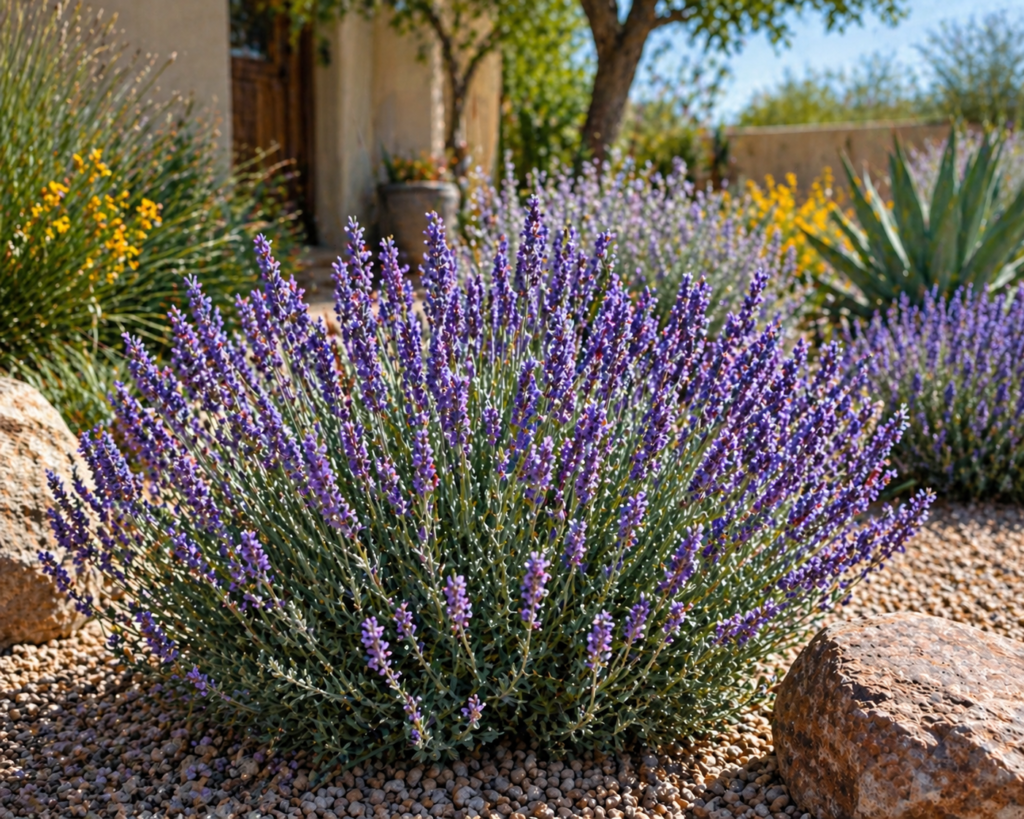
Lavender is one of the best xeriscape plants for fragrance, pollinators, and soft color. It thrives in dry, sunny conditions with sharp drainage. Its silver-green foliage reflects heat, while its fragrant flowers attract bees and beneficial insects.
Lavender is especially useful when a xeriscape feels too hard or rocky. It softens gravel, stone, succulents, and structural plants with color and fragrance.
Lavender strengths:
- Strong fragrance
- Pollinator support
- Drought resistance
- Long bloom season
- Deer resistance
- Attractive silver foliage
Lavender performs best in full sun and fast-draining soil. It does not like wet clay or humid conditions. Many lavender failures happen because the soil stays too wet, not because the plant lacks water.
Use Lavender near walkways, patios, borders, and pollinator gardens where its fragrance can be enjoyed.
4. Texas Sage
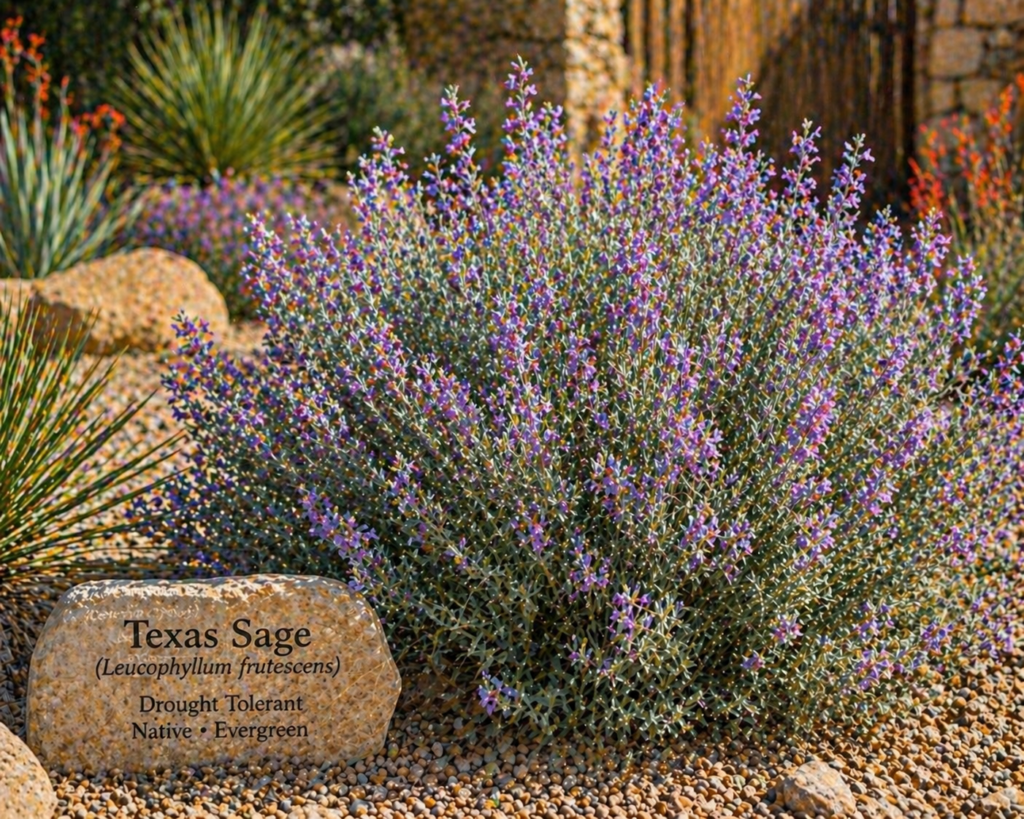
Texas Sage is one of the strongest xeriscape shrubs for hot, dry landscapes. It is highly valued in Texas, Arizona, and the Southwest because it handles heat, poor soil, drought, and reflected sunlight.
Its silvery foliage gives the landscape a cool-toned appearance, while its purple blooms add seasonal color. Texas Sage can also work as a privacy shrub, hedge, or border plant.
Texas Sage benefits:
- Excellent heat survival
- Dense growth
- Low water needs
- Purple flowering cycles
- Wind tolerance
- Strong shrub structure
Texas Sage is a smart replacement for high-water shrubs in dry climates. It looks best when allowed to keep its natural shape, so avoid heavy pruning unless necessary.
Choose Texas Sage for privacy, structure, hot full-sun areas, and low-maintenance shrub borders.
5. Blue Grama Grass
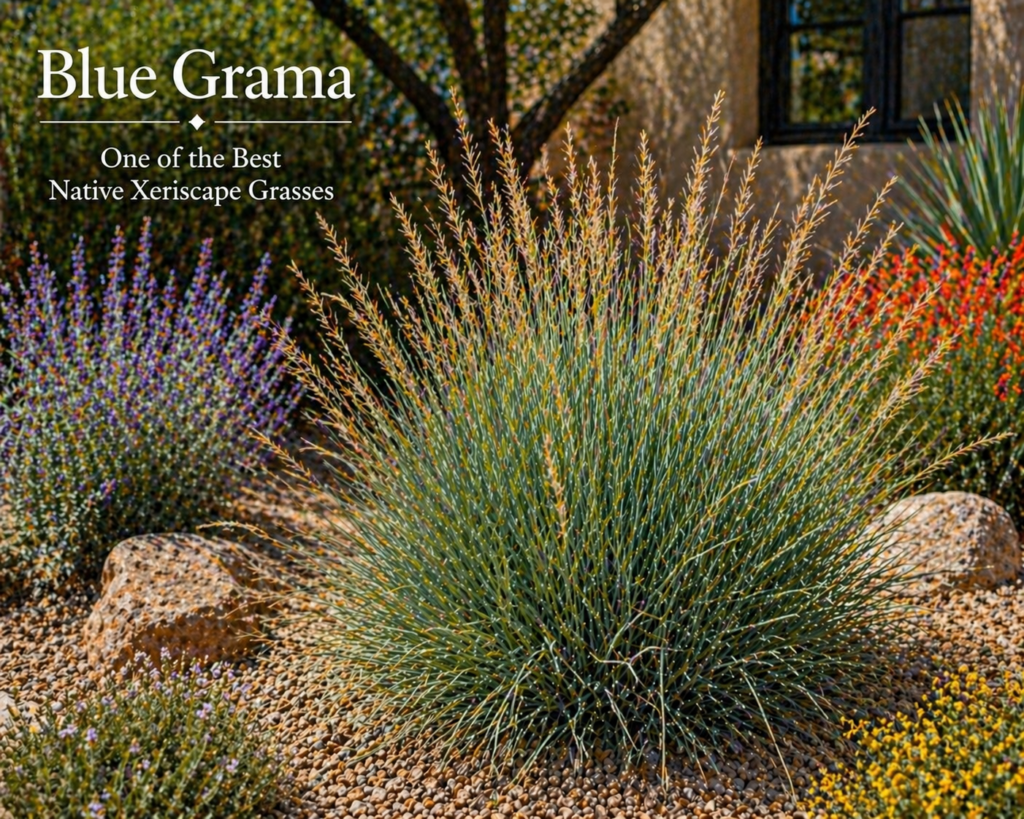
Blue Grama is one of the best native grasses for xeriscaping because it gives the softness of grass without the heavy water demand of turfgrass. It is especially useful in Colorado, New Mexico, Utah, and prairie-style dry landscapes.
Unlike traditional lawns, Blue Grama does not need frequent irrigation once established. It can be used as a low-water lawn alternative, meadow grass, or textural filler.
Blue Grama benefits:
- Native drought adaptation
- Low mowing needs
- Wind tolerance
- Habitat value
- Soft landscape movement
- Lower water demand than turfgrass
Its distinctive seed heads add visual interest and movement. Choose Blue Grama if you want a more natural, ecological, low-water landscape instead of a formal lawn.
6. Penstemon
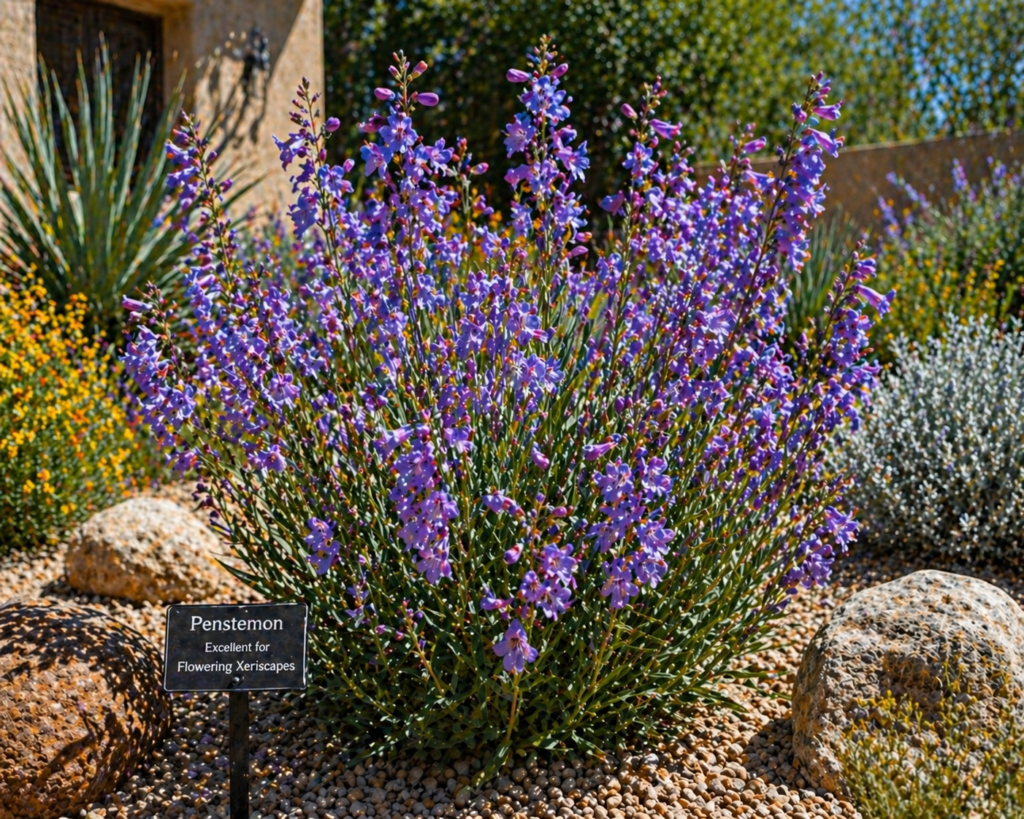
Penstemon is one of the best flowering xeriscape plants for dry regions. It offers strong color without the heavy watering demands of many traditional flowers. Native Penstemon species are especially valuable because they are adapted to dry soils, heat, and pollinator ecosystems.
Its tubular flowers attract hummingbirds, bees, and butterflies. Penstemon works well in rocky soil, gravel beds, native gardens, and pollinator borders.
Penstemon benefits:
- Strong flowering
- Heat tolerance
- Pollinator support
- Native adaptation
- Low water needs
- Excellent color in dry beds
Use Penstemon when you want flowers but do not want to increase irrigation demand. It pairs well with grasses, Yucca, Agave, Blackfoot Daisy, and gravel mulch.
7. Lantana
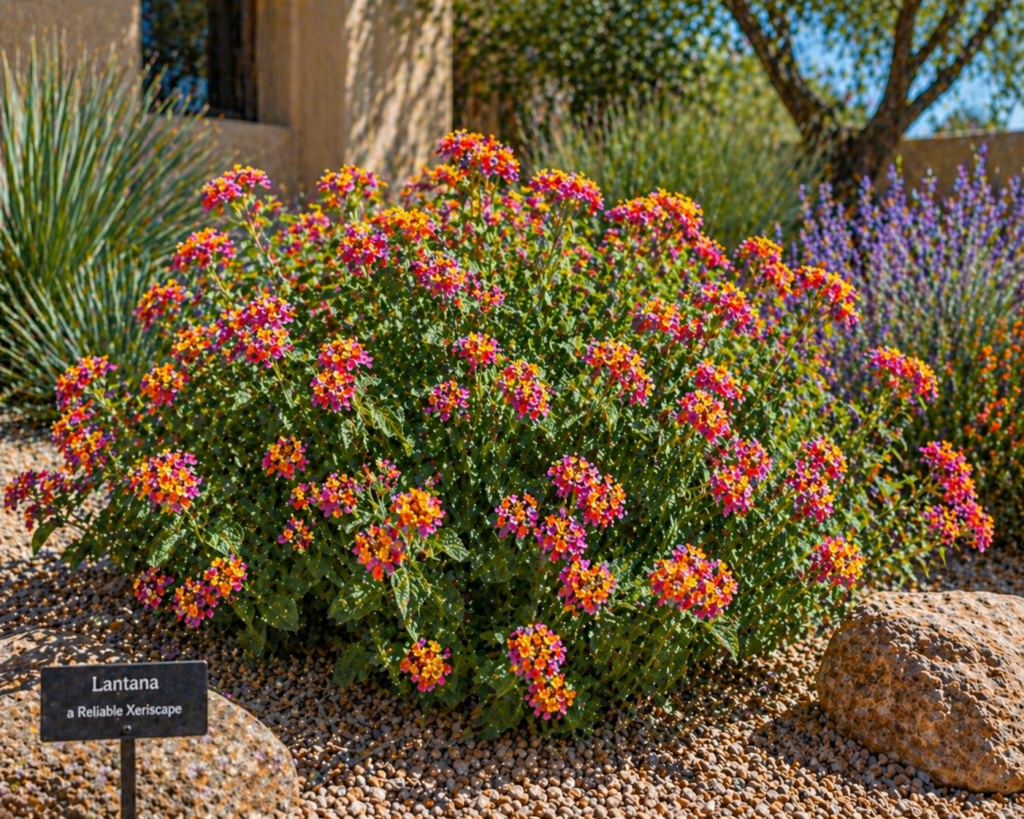
Lantana is one of the toughest flowering plants for hot xeriscape landscapes. It blooms for months and handles intense summer heat better than many ornamental flowers.
Lantana spreads well, making it useful as a colorful ground cover or border plant. Butterflies are strongly attracted to its flowers, which makes it valuable for pollinator-friendly xeriscapes.
Lantana benefits:
- Long bloom season
- Heat tolerance
- Fast spread
- Butterfly attraction
- Strong color
- Useful ground coverage
Lantana is excellent for Texas, Arizona, and hot southern landscapes. However, it should be used carefully around pets because some parts of the plant can be toxic if eaten.
Choose Lantana for long-lasting color, hot full sun, and fast coverage.
8. Blackfoot Daisy
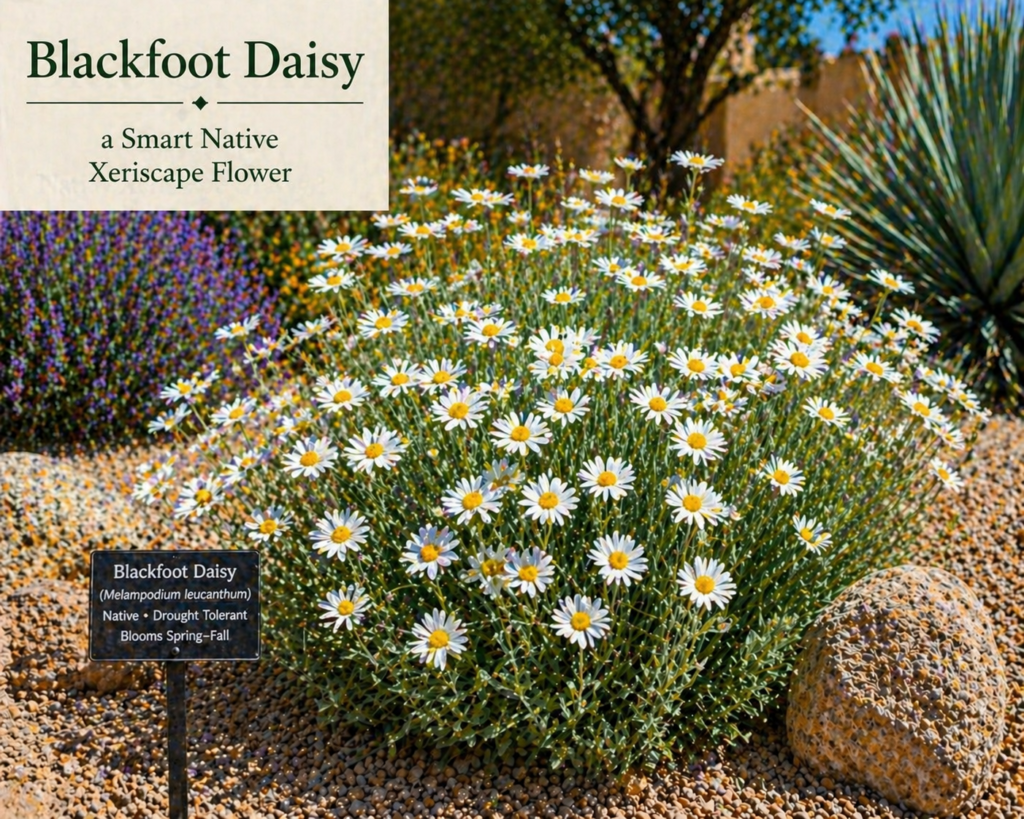
Blackfoot Daisy is a smart native xeriscape flower for dry gardens. It stays compact, blooms for a long period, and handles poor soil well. Its small white flowers brighten gravel beds, borders, rock gardens, and native pollinator landscapes.
Blackfoot Daisy benefits:
- Native resilience
- Compact growth
- Long bloom period
- Pollinator support
- Good heat tolerance
- Low water needs
This plant performs best with minimal attention. Overwatering or rich soil can reduce performance. It is ideal for homeowners who want a flowering plant that still fits a low-maintenance xeriscape system.
Use Blackfoot Daisy along paths, rock edges, dry borders, and native garden zones.
9. Red Valerian
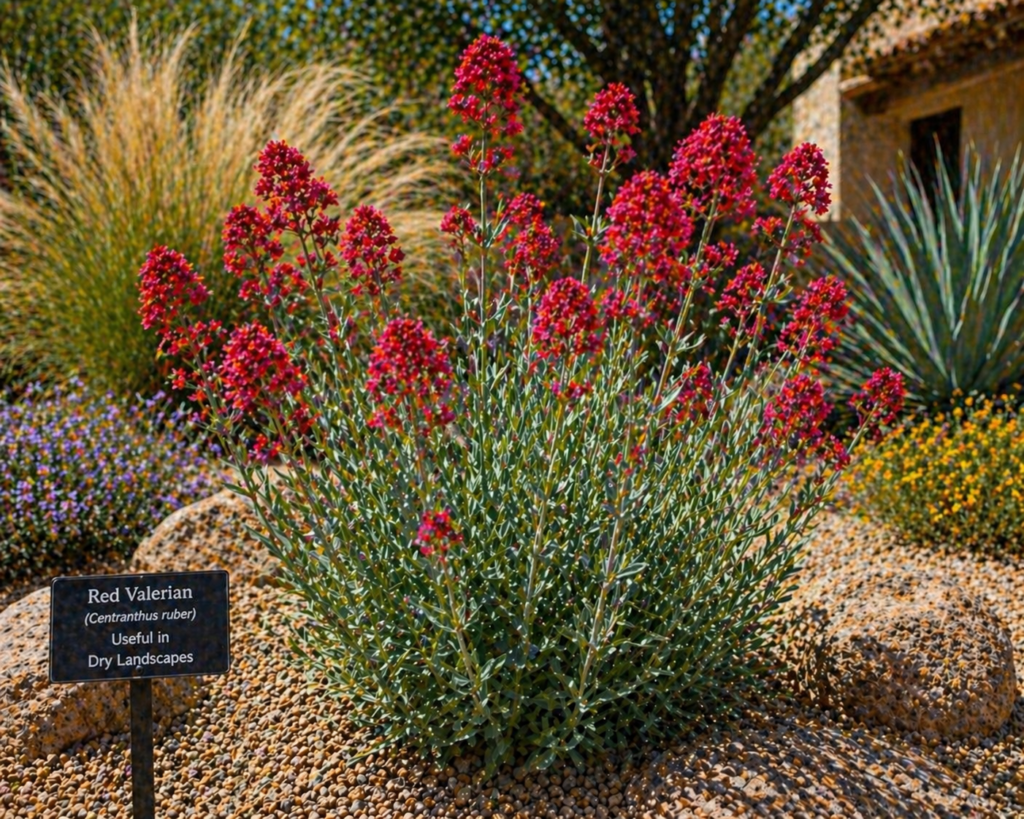
Red Valerian is an underrated xeriscape plant for rocky, dry, and difficult areas. It establishes quickly and produces long-lasting flowers, making it useful for slopes, walls, and poor soil areas where other plants struggle.
Red Valerian benefits:
- Fast establishment
- Long flowering period
- Pollinator support
- Rocky soil tolerance
- Useful for slopes
- Good drought performance
It is especially helpful in dry hillside gardens because its roots help stabilize soil. Red Valerian is not always the first plant people think of for xeriscaping, but it is highly practical where quick coverage and flowers are needed.
Choose Red Valerian for difficult terrain, walls, slopes, and informal dry gardens.
10. Pink Muhly Grass
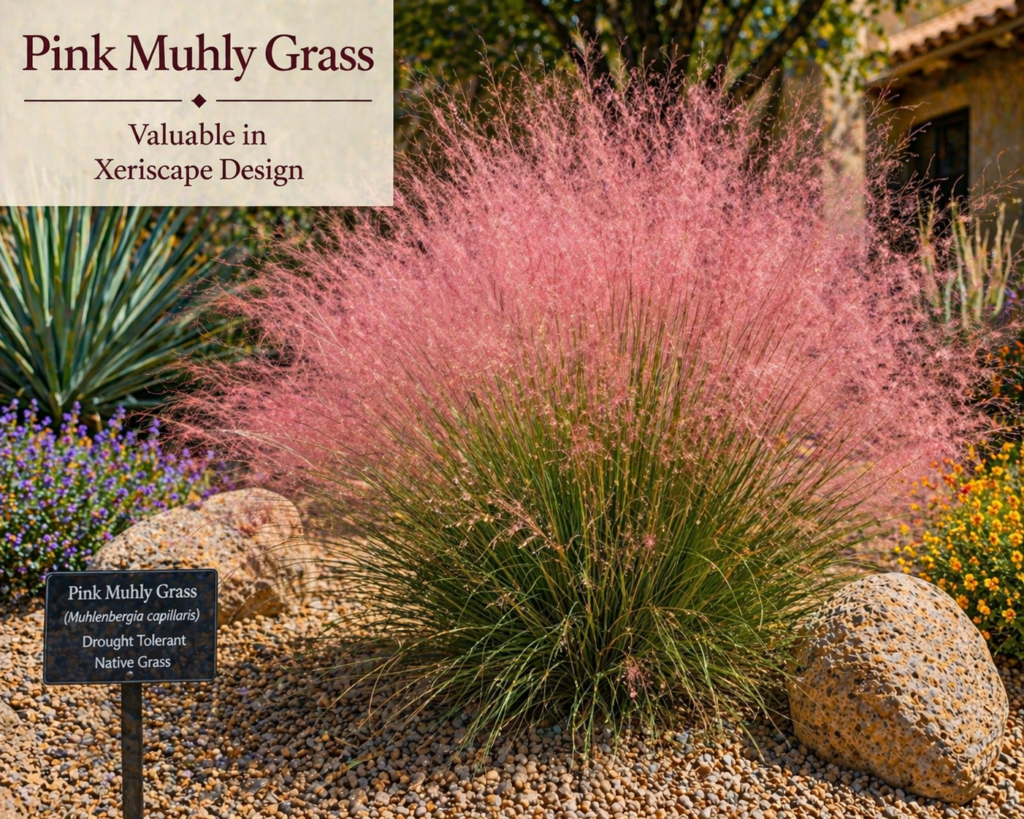
Pink Muhly Grass adds softness, movement, and seasonal drama to xeriscape design. Its fine-textured foliage contrasts beautifully with bold plants like Agave and Yucca. In bloom, it creates airy pink clouds that make dry landscapes feel colorful and elegant.
Pink Muhly Grass benefits:
- Dramatic seasonal plumes
- Heat resistance
- Drought survival
- Soft texture
- Low maintenance
- Excellent mass-planting effect
It works well in modern xeriscapes, front yards, borders, and large planting beds. Use it in groups for the strongest visual impact.
Choose Pink Muhly Grass if your xeriscape needs movement, softness, and seasonal color.
Best Xeriscape Plants by Goal
Choosing plants by goal makes xeriscape design easier.
Best for structure:
- Agave
- Yucca
Best for privacy:
- Texas Sage
Best for flowers:
- Penstemon
- Lantana
- Blackfoot Daisy
Best for fragrance:
- Lavender
- Rosemary
Best for grass texture:
- Blue Grama
- Pink Muhly Grass
Best for rock gardens:
- Agave
- Yucca
- Sedum
- Blackfoot Daisy
- Salvia
Best for pollinators:
- Lavender
- Penstemon
- Lantana
- Blackfoot Daisy
Choose plant function first. Then choose appearance. This creates a stronger and more efficient landscape.
Which Xeriscape Plants Work Best in Front Yards?
Front-yard xeriscaping should focus on curb appeal, structure, neatness, and year-round interest. Because front yards are visible, plant choices should look intentional and organized.
Best front-yard xeriscape plants:
- Agave for focal points
- Texas Sage for hedging
- Lavender for fragrance and softness
- Pink Muhly Grass for movement
- Blackfoot Daisy for borders
- Yucca for structure
A strong front-yard xeriscape uses layers. Place tall structural plants in the back, shrubs in the middle, and flowers or grasses near the front. This creates depth while keeping water use low.
Best front-yard strategy:
- Use structure near walls or entries
- Use shrubs for mass and privacy
- Use flowers near paths
- Use gravel or mulch to reduce evaporation
- Avoid random scattered planting
Layered xeriscaping looks more professional than simply placing drought plants across gravel.
Which Xeriscape Plants Work Best in Rock Gardens?
Rock gardens and xeriscaping work naturally together because both favor drainage, heat resilience, and low maintenance. Rocks reduce erosion, improve visual structure, and help create planting pockets for drought-adapted plants.
Best xeriscape plants for rock gardens:
- Agave
- Yucca
- Sedum
- Blackfoot Daisy
- Salvia
- Desert Marigold
- Penstemon
Rock garden advantages:
- Better drainage
- Lower weed pressure
- Stronger heat retention
- Better soil stability
- Attractive low-water design
Choose compact plants for rock gardens so they do not overcrowd stone features. Avoid plants that need constantly moist soil.
How Should You Arrange Xeriscape Plants for Maximum Water Efficiency?
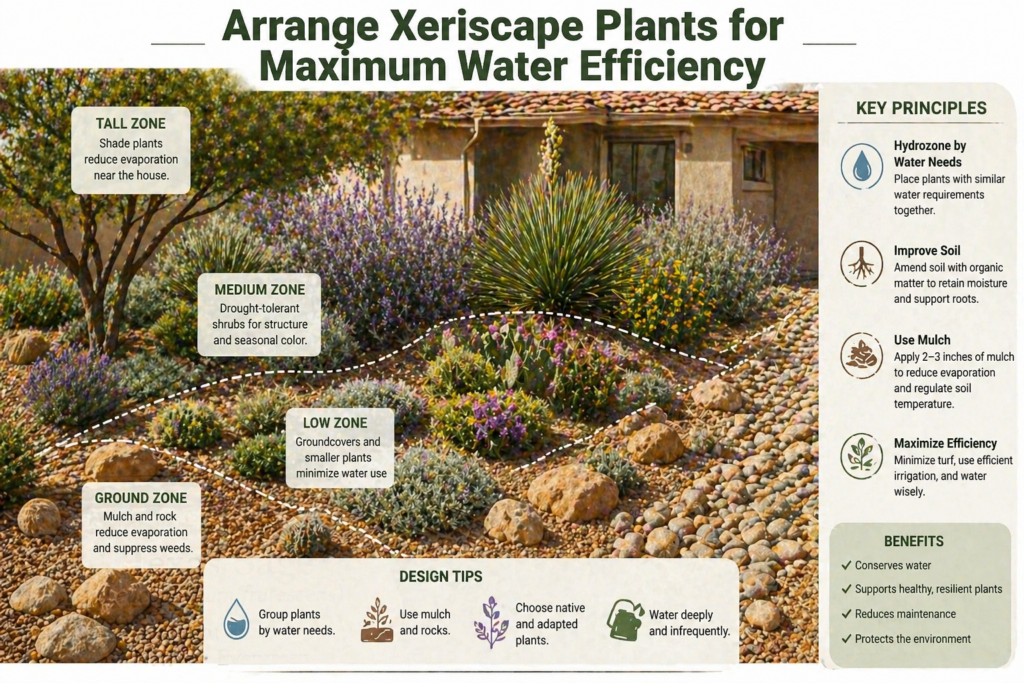
The best xeriscape landscapes are designed by water zones. This is called hydrozoning. It means grouping plants with similar watering needs together.
Low-water zone:
- Agave
- Yucca
- Texas Sage
Medium-low water zone:
- Lavender
- Penstemon
- Blackfoot Daisy
Slightly higher establishment-water zone:
- Lantana
- Pink Muhly Grass
- Red Valerian
Hydrozoning prevents overwatering. Many xeriscape plants fail because they are placed next to higher-water plants and receive too much irrigation.
Design for water behavior first. Beauty follows function.
What Are the Most Common Xeriscaping Mistakes?
Most xeriscape failures happen because homeowners treat drought plants like regular garden plants.
Common mistakes include:
- Overwatering
- Poor soil drainage
- Planting in the wrong sun exposure
- Crowding plants too closely
- Using too much fertilizer
- Ignoring mature plant size
- Skipping mulch
- Mixing high-water and low-water plants together
The biggest mistake is overwatering. Xeriscape plants need water during establishment, but once roots develop, many prefer deep and infrequent watering.
Xeriscaping succeeds when you do less, but do it correctly.
Nursery Buying Checklist for Healthy Xeriscape Plants
Healthy plants establish faster and survive drought better. Many failures begin at the nursery because weak or root-bound plants struggle once planted in dry soil.
Before buying, check:
Roots:
- Healthy roots are white or light tan
- Avoid dark, mushy, rotten roots
Stems:
- Stems should be firm
- Avoid soft or collapsing stems
Leaves:
- Avoid pest damage
- Avoid fungal spots
- Avoid severe yellowing
Pot condition:
- Avoid severely root-bound plants
- Avoid plants with circling roots
Smaller plants often establish better than oversized mature plants because their roots adapt more easily to native soil.
Never buy xeriscape plants based only on flowers. Root health matters more.
How Much Does a Xeriscape Landscape Cost?
Xeriscaping can cost more upfront than simple sod installation, but it usually saves money long term through lower water bills and reduced maintenance.
Average cost ranges:
DIY small front yard:
- $500–$2,500
Medium landscape conversion:
- $2,500–$8,000
Full-property xeriscape redesign:
- $8,000–$25,000+
Main cost factors:
- Plant quantity
- Plant size
- Decorative stone
- Mulch type
- Irrigation system
- Labor
- Soil preparation
The smartest approach is to think long term. Xeriscaping is often a higher upfront investment but a lower long-term maintenance system.
Root Depth Comparison for Xeriscape Plants
Root depth affects watering strategy. Deep-rooted plants need deeper but less frequent watering. Shallow or medium-rooted plants may need more attention during establishment.
| Plant | Root Depth | Water Retention Ability |
|---|---|---|
| Agave | Medium | High |
| Yucca | Deep | High |
| Lavender | Medium | Medium |
| Texas Sage | Deep | High |
| Blue Grama | Deep | Medium |
| Penstemon | Medium | Medium |
| Lantana | Shallow to medium | Medium |
| Pink Muhly Grass | Medium | Medium |
Deep-rooted plants are better for extreme drought and long dry periods. Root depth should guide irrigation frequency.
Seasonal Bloom Calendar for Xeriscape Plants
A good xeriscape should not look attractive in only one season. Bloom sequencing helps maintain year-round color and supports pollinators longer.
| Plant | Spring | Summer | Fall |
|---|---|---|---|
| Lavender | Yes | Yes | Partial |
| Penstemon | Yes | Yes | No |
| Lantana | Yes | Yes | Yes |
| Blackfoot Daisy | Yes | Yes | Yes |
| Texas Sage | Partial | Yes | Yes |
| Desert Marigold | Yes | Yes | Partial |
| Pink Muhly Grass | No | Partial | Yes |
For best results, combine spring bloomers, summer bloomers, and fall-interest plants. This prevents the landscape from becoming dull after one bloom cycle.
What We Noticed Testing Xeriscape Plants in Hot Climates
Across dry-climate planting systems, establishment speed often matters more than drought tolerance alone. Plants like Yucca and Texas Sage usually adapt faster to poor soil than Lavender, which is more sensitive to drainage problems.
Plant losses are often caused by:
- Overwatering
- Compacted soil
- Poor spacing
- Wrong plant placement
- Irrigation mismatch
Agave performs best when planted in sharp drainage and left mostly undisturbed. Grasses often recover quickly after heat stress. Flowering xeriscape plants attract more pollinators than many homeowners expect.
The practical takeaway is simple: xeriscape success is less about watering more and more about watering correctly.
Final Verdict: Which Xeriscape Plant Is Best Overall?
No single xeriscape plant is best for every yard. The strongest xeriscape landscapes combine several plant types.
Best by function:
- Best structure: Agave
- Best cold-hardy structure: Yucca
- Best shrub: Texas Sage
- Best flower: Penstemon
- Best long-blooming color: Lantana
- Best fragrance: Lavender
- Best native grass: Blue Grama
- Best texture: Pink Muhly Grass
- Best compact native flower: Blackfoot Daisy
- Best slope plant: Red Valerian
A complete xeriscape should include structural anchors, flowering fillers, native grasses, pollinator plants, and seasonal texture.
The best xeriscape landscapes are not just plant collections. They are low-water ecosystems designed for survival, beauty, and long-term efficiency.
FAQ SECTION
What is the best xeriscape plant for Arizona?
Agave and Yucca are among the best xeriscape plants for Arizona because they tolerate extreme heat, drought, and poor desert soil with very little maintenance.
What is the easiest xeriscape plant for beginners?
Agave, Yucca, and Lantana are beginner-friendly because they tolerate heat, irregular watering, and dry conditions once established.
Which xeriscape plant needs the least water?
Agave usually needs the least water because it stores moisture in thick leaves. Once established, it can survive long dry periods with minimal irrigation.
What is the fastest-growing xeriscape plant?
Lantana and Texas Sage are among the fastest-growing xeriscape plants. They are useful for quick coverage, privacy, and curb appeal.
Which xeriscape plants bloom the longest?
Lantana, Blackfoot Daisy, and Lavender have some of the longest bloom periods in warm, dry climates.
Can xeriscape plants survive winter?
Yes, if matched to the correct USDA zone. Yucca and Blue Grama are especially useful in colder dry regions.
Can xeriscape plants grow in clay soil?
Yes, but drainage must be improved first. Texas Sage and Yucca tolerate heavier soils better than moisture-sensitive succulents.
Are xeriscape plants safe for dogs and cats?
Some are safer than others. Rosemary, Blue Grama, and Pink Muhly Grass are more pet-friendly choices. Agave, Aloe, and Lantana should be used carefully.
What is the best mulch for xeriscape plants?
Gravel mulch is often best for xeriscape plants because it improves drainage, reduces evaporation, and suits dry-climate design.
Can xeriscaping increase property value?
Yes. In drought-prone areas, xeriscaping can improve curb appeal, reduce water bills, and make a property more attractive to buyers looking for low-maintenance landscaping.

Myra is the founder and lead writer of Plantsaholic. She shares practical, research-backed advice on indoor plants, outdoor gardening, flowers, herbs, succulents, and everyday plant care. Her goal is to help gardeners of all experience levels grow healthier plants through simple, easy-to-follow gardening guides.