Outdoor plants thrive most successfully when they are matched to the climate conditions they naturally evolved to survive. Temperature extremes, humidity levels, rainfall patterns, intense sunlight, harsh winds, and soil drainage all powerfully influence whether a plant flourishes beautifully or constantly struggles to survive.
Many frustrating gardening failures happen because plants are chosen purely for appearance instead of environmental compatibility. Climate-smart gardening creates stronger landscapes, dramatically reduces maintenance stress, improves flowering performance, and lowers watering demands over time. Understanding how outdoor plants react to different climate conditions helps gardeners build breathtaking landscapes that remain vibrant, resilient, and easier to maintain through constantly changing seasons.
Why Climate Shapes Outdoor Plant Survival
Climate is one of the main factors controlling outdoor plant survival because it influences temperature, rainfall, humidity, wind exposure, and seasonal changes. These factors affect how plants absorb water, develop roots, produce flowers, and maintain healthy growth. Plants often struggle when placed outside their preferred climate, such as tropical plants in dry heat or succulents in wet soil.
This can lead to repeated plant loss, higher maintenance, and declining landscapes over time.
Important climate-related factors include:
- Intense summer heat exposure
- Winter frost duration
- Humidity levels
- Rainfall consistency
- Soil moisture retention
- Wind exposure
- Seasonal sunlight changes
- Drainage quality
Quick Climate-to-Plant Matching Guide
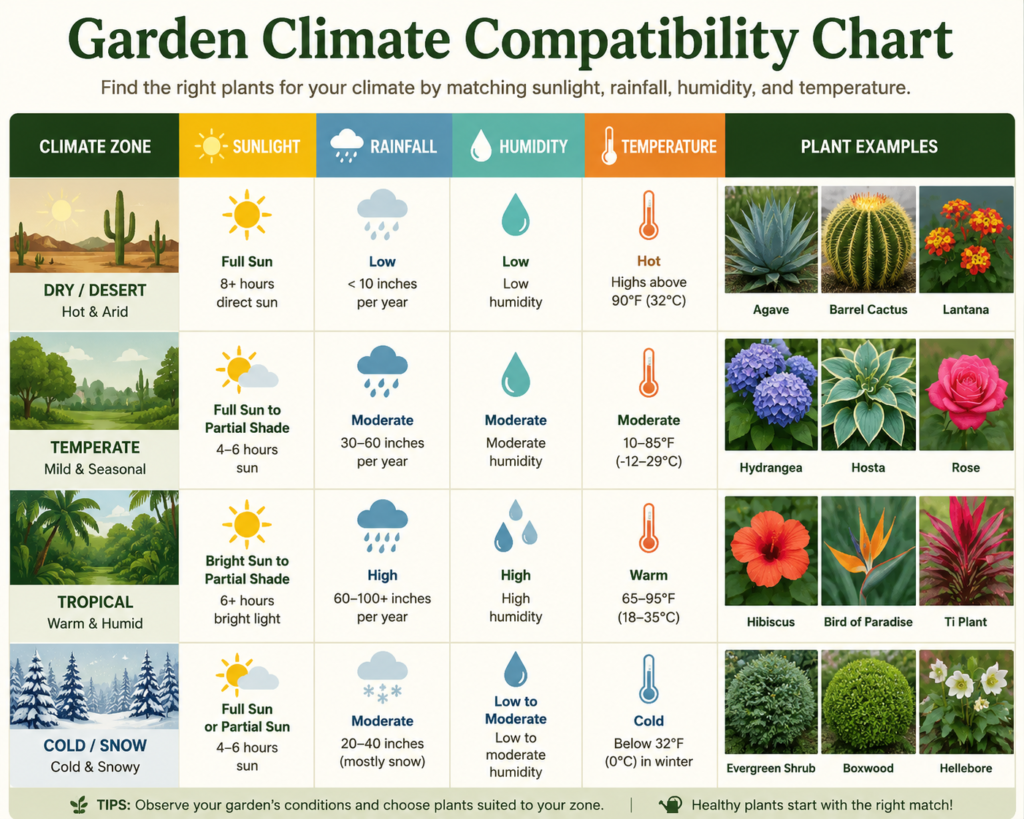
Choosing outdoor plants becomes easier when gardeners use a climate-matching strategy. Matching plants to suitable conditions improves plant survival, lowers watering demands, and creates healthier outdoor landscapes.
This practical system connects major climate conditions with plants naturally suited to those environments. Instead of forcing moisture-loving plants into dry heat or placing desert plants into soggy soil, gardeners can focus on species already adapted to local growing conditions.
Quick Climate-to-Plant Matching Table
| Climate Type | Best Plant Types |
|---|---|
| Hot + Dry | Agave, Yucca, Lavender |
| Humid + Warm | Hibiscus, Ferns, Elephant Ear |
| Cold + Frost | Juniper, Spruce, Hellebore |
| Coastal + Windy | Ornamental grasses, Rugosa rose |
| Wet + Rainy | Iris, Cannas, Swamp Milkweed |
| Temperate | Hydrangeas, Coneflowers, Roses |
Helpful matching strategies include:
- Group plants with similar watering demands
- Prioritize climate-adapted species
- Observe thriving local gardens
- Avoid forcing tropical plants into freezing climates
- Match drainage conditions carefully
Main Types of Outdoor Plant Climates
Outdoor plant climates are generally categorized by temperature, humidity, rainfall, and seasonal patterns. Different climates create different growing conditions, which is why some plants thrive in one region but struggle in another.
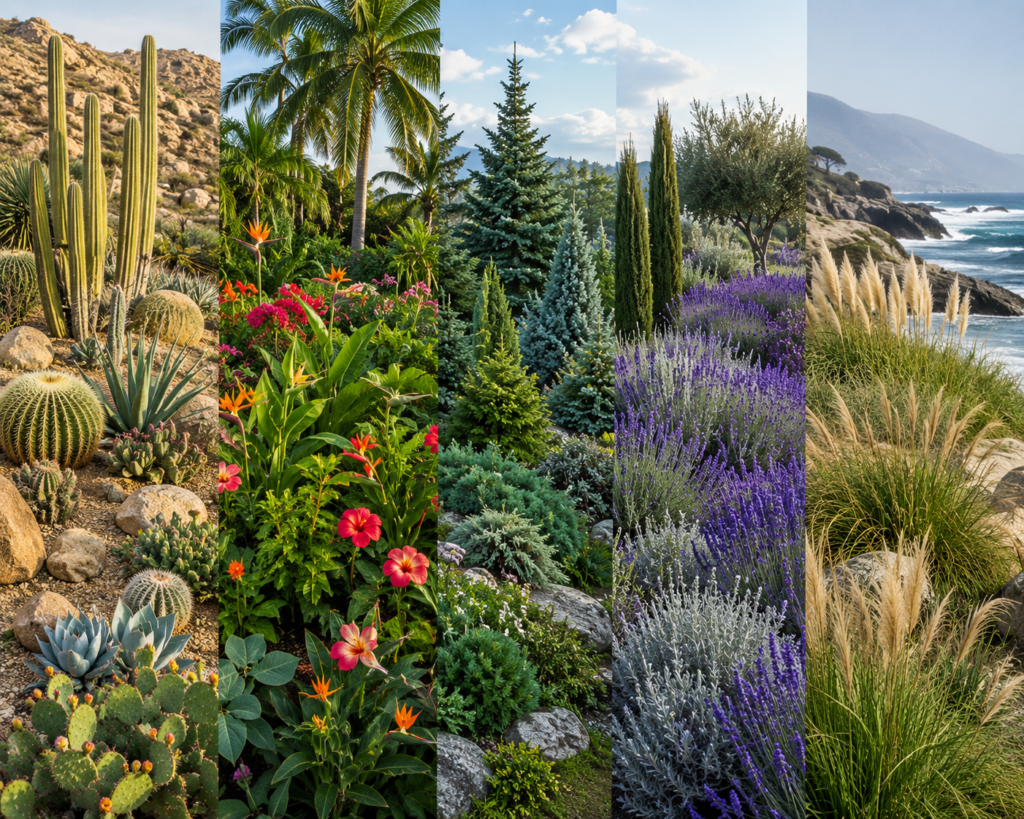
Tropical climates stay warm and humid throughout the year, supporting fast-growing plants. Desert climates receive intense sunlight and limited rainfall, favoring drought-tolerant species. Temperate climates experience moderate seasonal changes and support a wide range of flowering plants and trees. Mediterranean climates have dry summers and mild winters that suit many herbs and low-water plants.
Cold climates require frost-hardy plants, while coastal climates expose plants to wind and salty air. Wet climates create consistently damp conditions that affect drainage and plant health.
Major outdoor climate categories include:
- Tropical and humid climates
- Dry desert climates
- Temperate climates
- Mediterranean climates
- Cold and frost climates
- Coastal climates
- Wet and rainy climates
How to Identify Your Gardening Climate
Understanding your gardening climate helps you choose plants that grow more successfully in your outdoor conditions. Climate affects watering needs, flowering, winter survival, and overall plant health. Factors such as rainfall, humidity, wind, elevation, and nearby surfaces can all influence growing conditions.
Many gardeners use USDA hardiness zones as a starting point, but rainfall, humidity, drainage, and summer heat also affect plant performance.
Powerful ways to identify your gardening climate include:
- Observe how rapidly soil dries after rainfall
- Monitor frost duration during winter
- Notice intense heat reflection from walls or pavement
- Track humidity levels during warmer seasons
- Watch for strong drying winds
- Observe standing water after storms
- Compare thriving nearby landscapes
Quick Climate Signal Guide
| Condition | Climate Signal |
| Soil dries extremely fast | Harsh dry or desert climate |
| Frost lasts several weeks | Severe cold climate |
| Leaves frequently develop mildew | Heavy humid climate |
| Strong salty winds | Coastal exposure zone |
| Constant soggy ground | Rain-heavy wet climate |
| Intense reflected heat | Urban heat island |
Best Outdoor Plants for Hot and Dry Climates
Hot and dry climates create difficult growing conditions because plants must survive intense sunlight, limited rainfall, extreme heat, and rapid moisture loss. Plants that thrive in these environments often develop features such as thick leaves, deep root systems, waxy surfaces, and water-storing tissues.
Many plants suited to dry climates evolved in desert and Mediterranean regions with low rainfall and long periods of heat.
Some of the best outdoor plants for hot and dry climates include:
- Agave
- Yucca
- Lavender
- Rosemary
- Aloe
- Cactus
- Sedum
- Russian sage
Agave and cactus species store water efficiently and survive with minimal watering. Lavender and rosemary grow well in dry environments with fast-draining soil. Yucca plants tolerate strong sunlight and windy conditions, making them suitable for low-maintenance landscapes.
One of the most common mistakes in dry-climate gardening is overwatering. Excess moisture and poor drainage can quickly damage plants adapted to dry soil conditions.
Best Outdoor Plants for Humid Tropical Climates
Tropical and humid climates support fast plant growth and long flowering seasons because of warm temperatures and regular rainfall. These conditions are ideal for moisture-loving plants, but they can also increase fungal diseases and pest activity when plants are poorly suited to humidity.
Plants adapted to tropical climates often grow quickly due to long warm seasons and minimal frost exposure. Many develop large leaves and dense growth suited to humid conditions.
Popular tropical and humidity-loving outdoor plants include:
- Hibiscus
- Bird of Paradise
- Elephant Ear
- Bougainvillea
- Tropical palms
- Cannas
- Crotons
- Ferns
Hibiscus plants produce large blooms continuously in warm weather, while Bird of Paradise adds bold foliage and distinctive flowers. Elephant Ear plants create dramatic texture around ponds and shaded gardens. Bougainvillea performs well in warm climates with long growing seasons.
Poor airflow in humid gardens can increase mildew and leaf spot problems.
Helpful tropical gardening strategies include:
- Improving airflow between plants
- Using mulch carefully
- Watering early in the morning
- Avoiding compacted soil
- Choosing humidity-tolerant species
Tough Outdoor Plants for Cold Climates
Cold climates expose plants to freezing temperatures, snow, ice, strong winds, and long dormant seasons. Successful cold-climate gardening depends on choosing frost-hardy plants that can survive winter and recover during spring growth.
Plants adapted to cold weather often develop features that help limit cold damage. Evergreen trees and shrubs use needle-like foliage or waxy leaves to reduce moisture loss, while many perennials survive winter through dormancy.
Reliable outdoor plants for freezing climates include:
- Juniper
- Spruce
- Pine
- Boxwood
- Hellebore
- Sedum
- Coneflowers
- Daylilies
Juniper and spruce trees provide year-round structure while tolerating snow and frost. Hellebores bloom during colder months when many plants remain dormant. Coneflowers and sedums survive freezing winters while still producing dependable seasonal flowers.
Helpful winter protection strategies include:
- Applying mulch around roots
- Watering deeply before ground freeze
- Installing wind barriers
- Avoiding late-season fertilization
- Choosing cold-hardy native species
Best Plants for Wet Soil and Heavy Rain
Wet climates and rain-heavy environments can create difficult growing conditions because saturated soil reduces oxygen around plant roots. While many plants struggle in soggy ground, species adapted to wetlands and rainy regions often grow successfully in these conditions.
Plants suited to wet soil usually tolerate prolonged moisture better than drought-adapted species.
Some of the best outdoor plants for wet conditions include:
- Iris
- Canna Lily
- Ferns
- Swamp Milkweed
- Cardinal Flower
- Marsh Marigold
- Astilbe
- Japanese Iris
Iris plants tolerate damp soil while producing colorful seasonal blooms. Ferns naturally grow in humid woodland environments with consistently moist ground. Swamp Milkweed supports butterflies and pollinators near ponds and drainage areas. Canna Lilies add bold foliage and grow well in rainy climates.
Wet gardens still benefit from healthy soil structure because standing water can damage roots over time. Raised beds and organic matter can help improve soil balance.
Helpful wet-garden strategies include:
- Building raised garden beds
- Improving soil aeration
- Adding organic compost
- Avoiding unnecessary watering during rainy periods
- Choosing moisture-tolerant plants
Best Outdoor Plants for Coastal Gardens
Coastal and wind-exposed environments can be difficult for many plants because strong winds increase moisture loss, while salty air may damage sensitive foliage and roots. Sandy coastal soil also drains quickly, causing plants to dry out faster. Plants suited to these conditions are typically tolerant of salt exposure, wind, and fast-draining soil.
Reliable outdoor plants for coastal and windy landscapes include:
- Sea thrift
- Rugosa rose
- Ornamental grasses
- Juniper
- Yucca
- Lavender
- Agave
- Coastal rosemary
Ornamental grasses bend well in strong winds instead of breaking. Rugosa roses tolerate salty air while producing fragrant flowers. Sea thrift naturally grows along rocky coastlines and performs well in exposed areas.
Wind exposure can affect plants through:
- Rapid moisture loss
- Torn foliage
- Stem breakage
- Weak root stability
- Reduced flowering
Coastal gardens often perform best when wind-tolerant plants help shelter more delicate species.
Helpful coastal gardening strategies include:
- Planting windbreak shrubs
- Grouping salt-tolerant plants together
- Using mulch to retain moisture
- Avoiding delicate broad-leaf plants
- Improving sandy soil with organic matter
Native vs Exotic Outdoor Plants
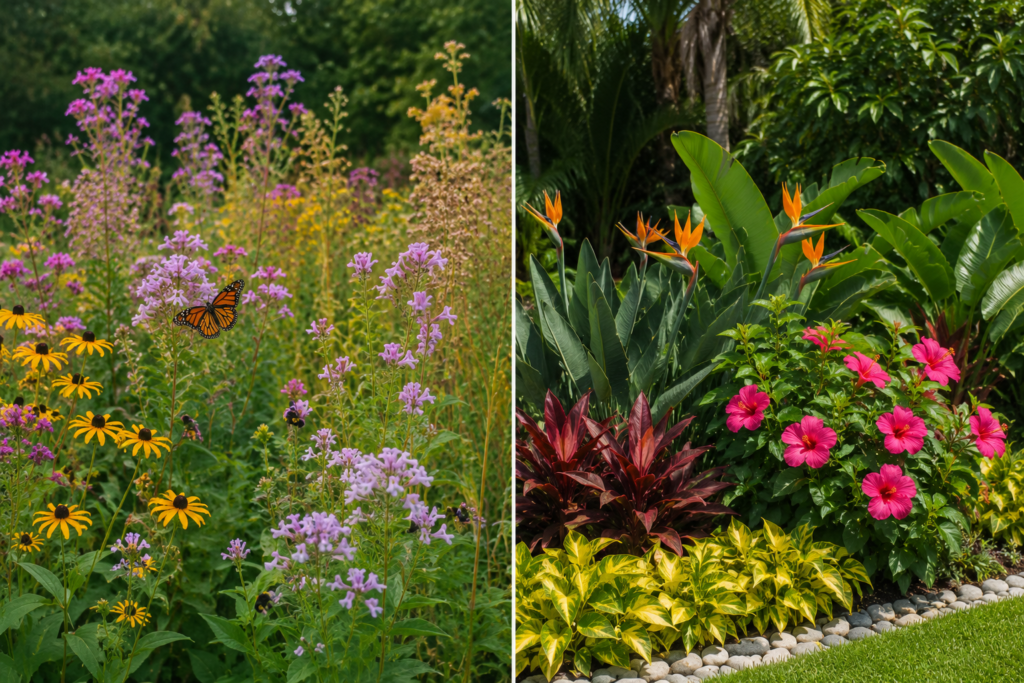
Native outdoor plants grow naturally within a specific region, while exotic plants come from different geographic areas. Both can grow successfully in outdoor landscapes, but native plants are usually better suited to regional weather, soil, rainfall, and seasonal patterns.
Native plants often require less maintenance because they naturally fit the surrounding climate. Many also resist regional pests and diseases better than non-native species. Landscapes built around native plants typically need less watering and fertilizer while supporting pollinators, birds, and beneficial insects.
Major benefits of native outdoor plants include:
- Better climate compatibility
- Lower watering needs
- Stronger pest resistance
- Wildlife and pollinator support
- Easier maintenance
- Reduced upkeep costs
Exotic plants can add unusual colors, textures, and bold visual appeal to outdoor landscapes. Some may require extra care if conditions differ from their natural habitat.
Popular reasons gardeners choose exotic plants include:
- Rare flower colors
- Unique foliage shapes
- Tropical-style appearance
- Longer blooming seasons
- Collector appeal
Some exotic plants adapt very well when climate conditions closely match their original habitat.
Easiest Outdoor Plants for Beginners
Beginner gardeners usually succeed fastest with outdoor plants that tolerate occasional mistakes, changing weather, and inconsistent care.
Beginner-friendly outdoor plants often tolerate:
- Irregular watering
- Sudden temperature changes
- Basic soil conditions
- Minor pruning mistakes
- Seasonal weather changes
Excellent beginner outdoor plants include:
- Lavender
- Marigolds
- Coneflowers
- Ornamental grasses
- Daylilies
- Sedum
- Black-eyed Susans
- Rosemary
Lavender and rosemary grow well in sunny areas with minimal watering once established. Coneflowers and Black-eyed Susans tolerate summer heat while attracting butterflies and pollinators. Ornamental grasses are popular because they require very little pruning or maintenance.
Common beginner gardening mistakes include:
- Overwatering plants
- Ignoring sunlight needs
- Planting too closely together
- Using poorly drained soil
- Over-fertilizing
How Sunlight and Soil Affect Plant Growth
Climate alone does not determine outdoor plant survival because sunlight exposure and soil structure also affect how plants absorb water, nutrients, oxygen, and energy. Even climate-compatible plants may struggle in poor lighting or unhealthy soil conditions.
Different plants require different light levels. Full-sun plants need several hours of direct sunlight daily, while shade-loving plants grow better in indirect or filtered light. Soil quality also affects drainage, moisture retention, and root health.
Common sunlight categories include:
- Full sun
- Partial shade
- Filtered light
- Full shade
Plants such as lavender, rosemary, and cactus grow best in bright sunlight, while ferns, hostas, and woodland plants usually prefer shaded conditions.
Soil conditions strongly influence:
- Drainage speed
- Root oxygen levels
- Moisture retention
- Nutrient absorption
- Beneficial microbial activity
Fast-draining soil supports succulents and Mediterranean plants, while moisture-retentive soil benefits tropical and wetland species. Poor drainage may lead to root rot in dense soil.
Helpful soil-improvement strategies include:
- Adding compost to soil
- Improving aeration
- Using mulch carefully
- Preventing soil compaction
- Matching plants to natural soil conditions
How Do Microclimates Dramatically Affect Outdoor Plant Growth?
Microclimates are localized areas that behave differently from the surrounding regional climate. Even within the same yard, some spots may stay warmer, cooler, wetter, windier, or more shaded than others. These small environmental differences can strongly affect plant growth and often explain why plants thrive in one area but struggle nearby.
Many gardeners overlook microclimates, but experienced landscapers use them to place plants more effectively. South-facing walls can create warmer areas, while tree canopies provide shade and reduce moisture loss.
Common microclimate influences include:
- Heat reflection from walls
- Wind tunnels between buildings
- Shade from mature trees
- Moisture pockets near drainage zones
- Raised beds warming faster
- Concrete retaining heat
- Low spots trapping cold air
Microclimates also affect watering needs because windy areas usually dry out faster than protected spaces. Sheltered locations may also help certain plants survive winter more successfully.
Real-World Microclimate Examples
| Garden Feature | Microclimate Effect |
|---|---|
| South-facing wall | Increased warmth |
| Large tree canopy | Cooler shaded zone |
| Concrete patio | Higher heat retention |
| Windy fence gap | Faster dehydration |
| Raised garden bed | Earlier spring warming |
Successful gardeners often design landscapes around localized conditions instead of treating the entire yard as one uniform climate.
Common Outdoor Plant Selection Mistakes
Many outdoor gardening problems happen because plants are chosen without considering climate, soil, drainage, or sunlight conditions. Even healthy plants can struggle or die when placed in unsuitable environments.
One of the most common mistakes is choosing plants without understanding their climate needs. Tropical plants may struggle in cold or dry regions, while drought-tolerant plants often fail in constantly wet soil.
Frequent outdoor plant-selection mistakes include:
- Ignoring climate compatibility
- Overwatering drought-tolerant plants
- Choosing incorrect sunlight conditions
- Planting too closely together
- Ignoring mature plant size
- Using poorly drained soil
- Mixing plants with different watering needs
Many plants grow much larger over time, and overcrowding can reduce airflow while increasing competition for water and nutrients.
Incorrect sunlight placement can weaken plants. Shade-loving species may scorch in direct sun, while full-sun plants often struggle in low-light conditions. Poor drainage can also damage roots in wet soil.
Helpful ways to avoid plant-selection problems include:
- Researching climate zones carefully
- Reading plant labels thoroughly
- Observing successful local landscapes
- Grouping plants with similar needs
- Choosing adaptable plant species
What Kills Outdoor Plants Most Often
Many outdoor plants fail because growing conditions damage roots, foliage, and overall plant health over time. Most plant deaths are linked to preventable gardening mistakes rather than rare diseases or unusual weather. Understanding the most common causes of plant failure helps gardeners avoid repeated problems and unnecessary plant loss.
One of the biggest causes of plant death is climate mismatch. Plants suited to dry environments may fail in constantly wet soil, while tropical plants often struggle in dry heat. Overwatering is another common issue because saturated soil can suffocate roots and encourage fungal disease. Incorrect sunlight placement can also weaken plants, with shade plants scorching in direct sun and sun-loving plants becoming weak in low light.
The most common causes of outdoor plant death include:
- Overwatering
- Poor drainage
- Climate incompatibility
- Incorrect sunlight exposure
- Root suffocation
- Frost damage
- Extreme heat
- Wind dehydration
Outdoor Plant Failure Diagnostic Table
| Symptom | Likely Cause |
|---|---|
| Yellow leaves + wet soil | Overwatering |
| Crispy brown edges | Heat stress |
| Black mushy stems | Frost damage |
| Weak flowering | Low sunlight |
| Mold or mildew | Excess humidity |
| Wilting in wet soil | Root rot |
Successful gardening often depends on identifying the real cause of plant decline instead of reacting only to visible symptoms. Decision clarity improves when gardeners evaluate watering, drainage, sunlight, and airflow together.
How to Build a Climate-Friendly Garden
Climate-friendly outdoor gardens are designed to work with natural environmental conditions instead of constantly fighting against them. These landscapes use plants adapted to local temperatures, rainfall, humidity, wind, and soil conditions.
The first step in building a climate-friendly garden is understanding your local growing conditions. Temperature changes, sunlight exposure, drainage, rainfall, and wind patterns all affect which plants will grow successfully. Gardens usually perform better when plant choices naturally match the surrounding environment.
Helpful climate-friendly gardening strategies include:
- Identifying local climate conditions
- Choosing adaptable plant species
- Grouping plants by watering needs
- Improving soil health naturally
- Using mulch carefully
- Prioritizing native foundation plants
- Reducing unnecessary irrigation
Grouping plants with similar moisture needs helps simplify watering and prevent overwatering. Native plants often support stronger ecological balance because they are already suited to local conditions. Layered planting with trees, shrubs, and groundcovers can also improve shade and moisture balance.
Climate-friendly landscapes often prioritize:
- Sustainable gardening practices
- Lower maintenance needs
- Pollinator-friendly habitats
- Water conservation
- Healthy soil structure
Seasonal Tips for Healthier Outdoor Gardens
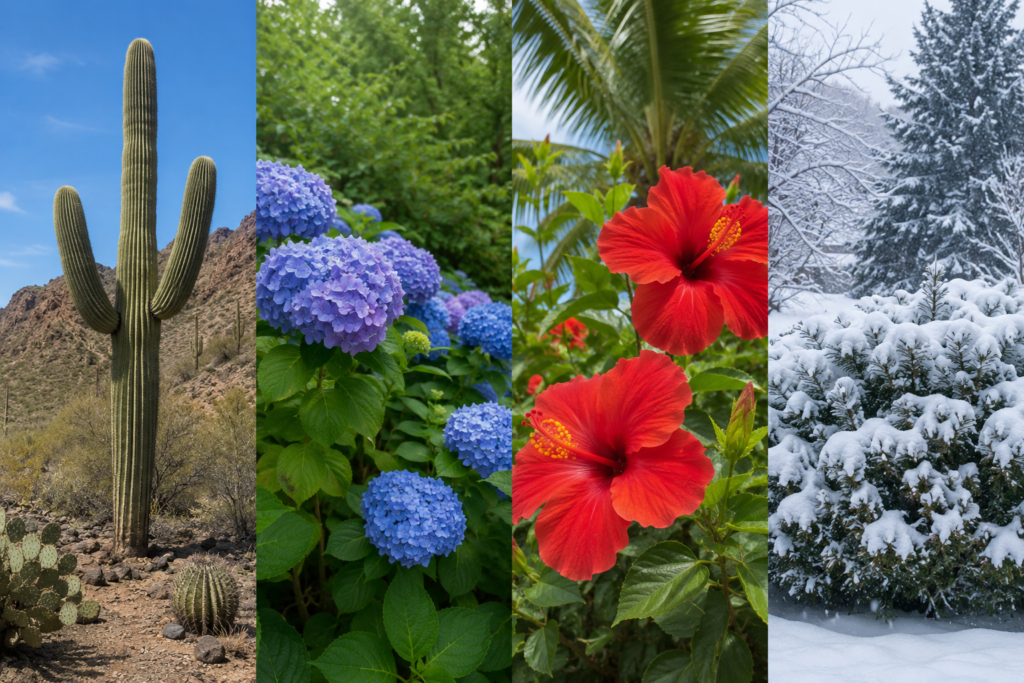
Outdoor gardens change throughout the year, and plants respond differently to shifts in temperature, rainfall, humidity, and sunlight. Healthy gardens depend not only on choosing suitable plants, but also on adjusting care routines throughout the seasons.
Summer often increases heat and moisture loss, while winter brings frost and frozen soil. Spring encourages new growth, and autumn helps plants prepare for colder weather ahead.
Helpful seasonal gardening strategies include:
- Applying mulch before winter for root protection
- Deep watering before heat waves
- Reducing fertilizer in late autumn
- Pruning carefully during spring growth
- Protecting exposed roots from frost
- Improving airflow during humid weather
Mulch helps protect roots during colder months, while deep watering supports stronger root growth during heat. Excess fertilizer late in autumn may encourage weak growth before winter.
Seasonal Garden Care Guide
| Season | Priority Focus |
|---|---|
| Spring | Recovery, renewal, and pruning |
| Summer | Heat protection and moisture management |
| Autumn | Root development and winter preparation |
| Winter | Frost protection and dormancy care |
Final Thoughts on Climate-Smart Gardening
Outdoor gardening becomes significantly easier when plants are selected according to real environmental conditions rather than trends alone. Climate compatibility affects every aspect of plant health, including growth speed, flowering, pest resistance, water needs, and long-term survival.
Hot dry climates favor drought-tolerant species such as agave and lavender, while humid tropical regions support lush plants like hibiscus and elephant ear. Cold climates require frost-hardy evergreens and resilient perennials, while coastal gardens need salt-tolerant and wind-resistant plants.
What Makes Climate-Smart Gardens More Sustainable?
- Climate-adapted plants
- Proper sunlight matching
- Healthy soil structure
- Native plant integration
- Smart watering practices
Understanding how climate influences plant behavior helps gardeners create healthier landscapes that remain attractive, resilient, and easier to maintain throughout changing seasons.
faq section
What are the best outdoor plants for hot climates?
Agave, cactus, lavender, yucca, and rosemary thrive in hot dry climates because they tolerate intense sunlight and drought conditions well.
Which outdoor plants survive winter frost?
Juniper, spruce, pine, boxwood, and hellebore survive freezing winter temperatures and recover strongly after dormancy.
How do I know which plants fit my climate?
Check your hardiness zone, rainfall levels, humidity, sunlight exposure, and soil drainage before choosing outdoor plants.
What kills outdoor plants most often?
Overwatering, root rot, poor drainage, frost damage, and severe environmental stress destroy outdoor plants most frequently.
Are native outdoor plants easier to maintain?
Yes. Native plants adapt naturally to local weather, rainfall, pests, and soil conditions, reducing long-term maintenance needs.
Which outdoor plants need the least maintenance?
Lavender, agave, rosemary, sedum, juniper, and ornamental grasses require very little watering, pruning, or care once established.
What outdoor plants grow best in humid climates?
Hibiscus, elephant ear, tropical ferns, crotons, and bird of paradise thrive in warm humid environments.
Which outdoor plants survive heavy rain and wet soil?
Iris, canna lilies, ferns, swamp milkweed, and astilbe grow successfully in wet soil and rainy climates.
What plants grow best in coastal gardens?
Sea thrift, ornamental grasses, lavender, yucca, and rugosa roses tolerate salt spray, sandy soil, and strong coastal winds.
Which outdoor plants are easiest for beginners?
Lavender, marigolds, coneflowers, rosemary, and ornamental grasses are beginner-friendly because they tolerate common gardening mistakes.
Why do outdoor plant leaves turn yellow?
Yellow leaves often signal overwatering, poor drainage, root stress, nutrient imbalance, or excessive moisture around roots.
What is the easiest way to build a climate-friendly garden?
Choose climate-adapted plants, improve soil drainage, group similar watering needs together, and reduce unnecessary irrigation.
How does sunlight affect outdoor plant growth?
Sunlight controls flowering, moisture use, growth speed, and overall plant strength. Different plants require different light levels.
Why is soil drainage important for outdoor plants?
Good drainage protects roots from excess moisture, fungal disease, oxygen loss, and destructive root rot problems.
Do outdoor plants need different care during each season?
Yes. Outdoor plants require seasonal adjustments in watering, pruning, mulching, and protection throughout the year.
Myra is the founder and lead writer of Plantsaholic. She shares practical, research-backed advice on indoor plants, outdoor gardening, flowers, herbs, succulents, and everyday plant care. Her goal is to help gardeners of all experience levels grow healthier plants through simple, easy-to-follow gardening guides.