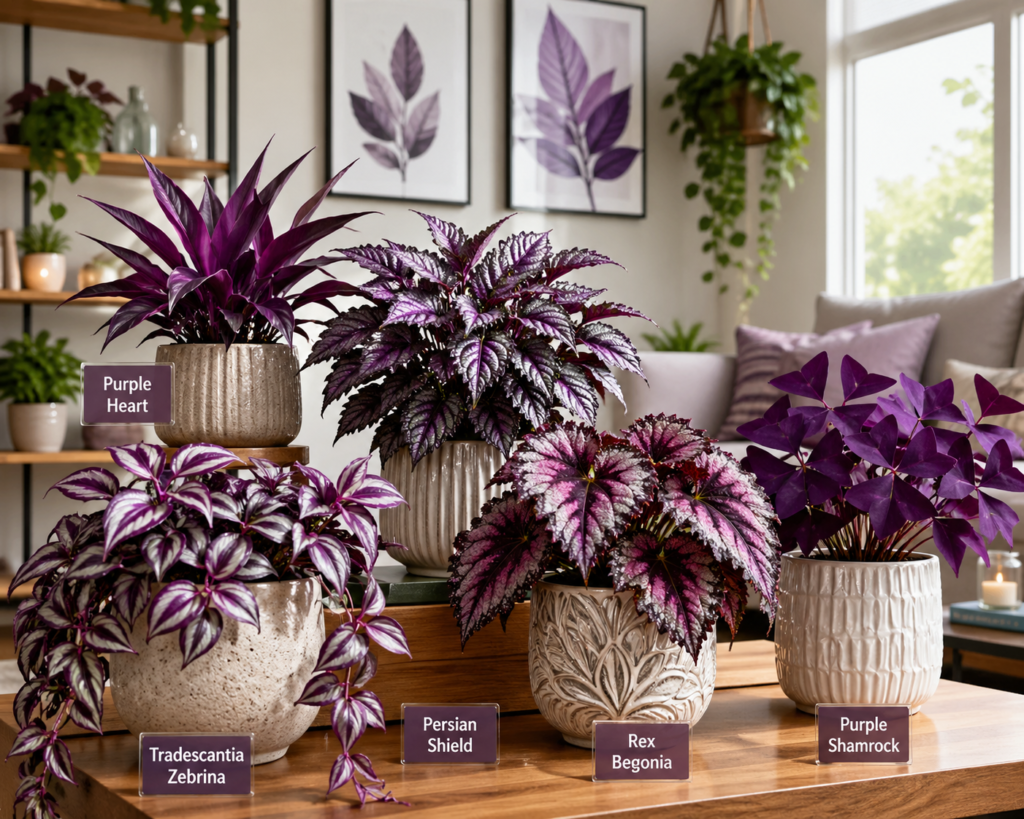
Indoor purple leaf plants bring color into interior gardening without relying on flowers. While most houseplants are valued for green foliage, purple foliage creates stronger contrast, deeper visual layering, and year-round decorative value. Their leaf colors range from lavender and burgundy to deep violet, metallic purple, and nearly black-purple.
These plants work especially well indoors because they create constant color. A purple foliage plant can brighten a shelf, frame a window, soften a workspace, or act as a statement piece in living rooms and offices.
Their unique coloration comes from anthocyanins, natural pigments that protect leaves from light stress. Indoors, these pigments also help signal plant health. When purple leaves fade, turn green, curl, or lose their shine, it often points to weak light, poor watering, low humidity, or root stress.
This guide covers the best indoor purple leaf plants, how to care for them, how to choose the right type, and how to use them in home styling.
What Are Indoor Purple Leaf Plants and Why Are Their Leaves Purple?
Indoor purple leaf plants are houseplants that naturally produce purple, burgundy, violet, plum, or near-black foliage. Their color comes from anthocyanins, pigments that work alongside chlorophyll.
Chlorophyll creates green color and drives photosynthesis. Anthocyanins add red, purple, and blue tones depending on genetics, light intensity, and plant conditions.
Purple pigmentation is not just visual.
It helps plants:
- protect against intense light
- reduce environmental stress
- shield sensitive leaf tissue
- improve light management
This explains why many purple plants show stronger color in brighter light. When light drops too low, chlorophyll becomes more dominant, and the purple fades into green.
Common purple foliage styles include:
- solid deep purple
- silver-purple striped leaves
- metallic purple leaves
- dark purple with pink veins
- purple triangular foliage
Unlike flowering plants, purple foliage stays decorative all year, making these plants practical long-term indoor design plants.
What Types of Indoor Purple Leaf Plants Exist?
Not all indoor purple leaf plants grow the same way. Understanding plant type helps you choose based on placement and maintenance.
Purple foliage plants generally fall into four categories:
Trailing Purple Plants
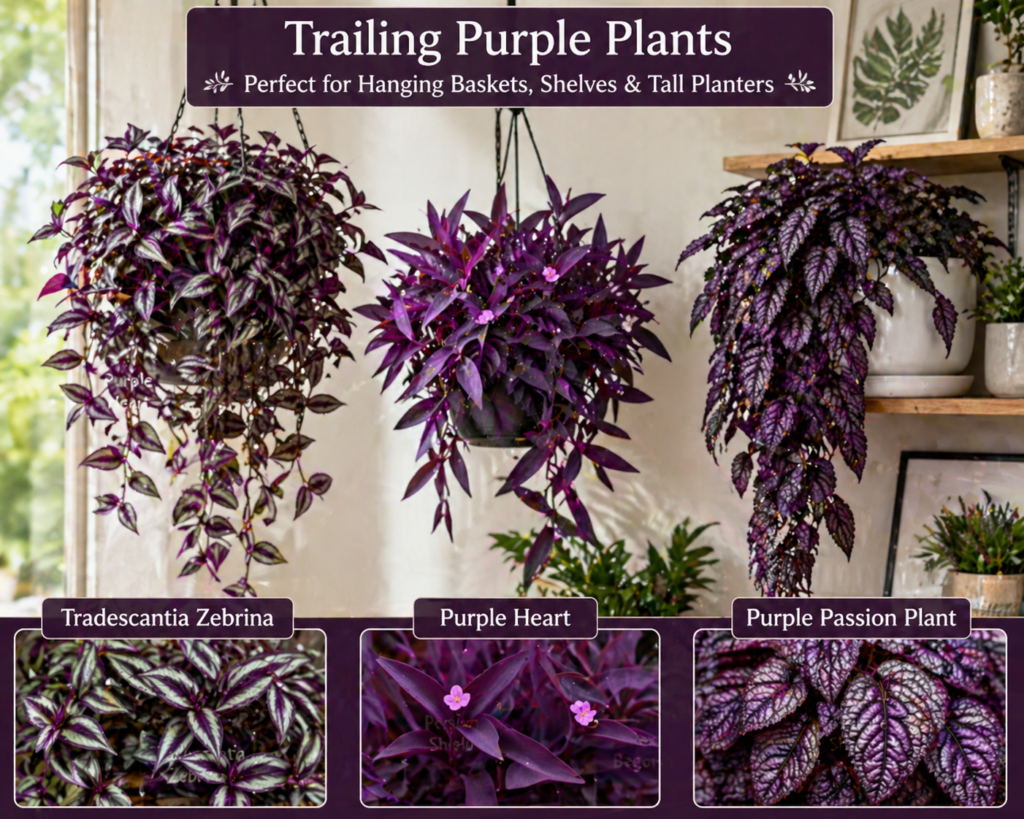
Best for:
- shelves
- hanging baskets
- wall planters
These create movement and soften hard indoor lines.
Examples:
- Tradescantia Zebrina
- Tradescantia Pallida
Upright Purple Plants
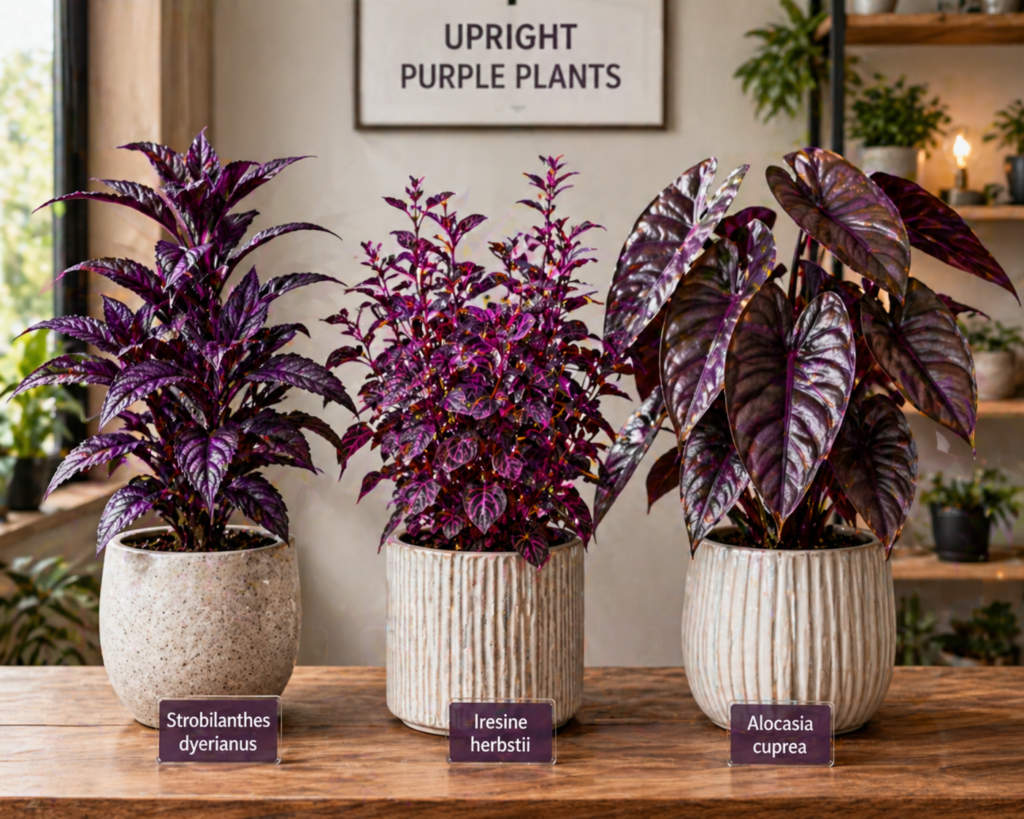
Best for:
- corners
- floor pots
- statement styling
These create stronger structure indoors.
Examples:
- Persian Shield
- Iresine Herbstii
- Alocasia Cuprea
Patterned Purple Plants
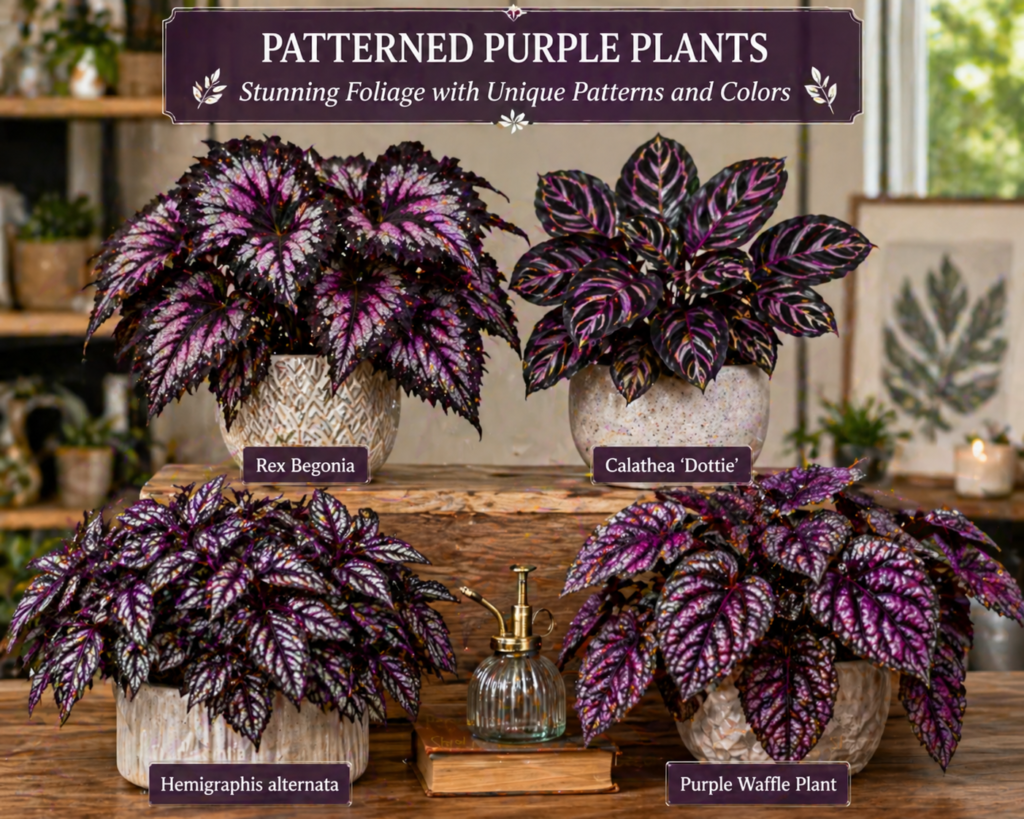
Best for:
- collectors
- decorative displays
- tabletop styling
These add detail and texture.
Examples:
- Rex Begonia
- Calathea Dottie
- Purple Waffle Plant
Bulb-Based Purple Plants
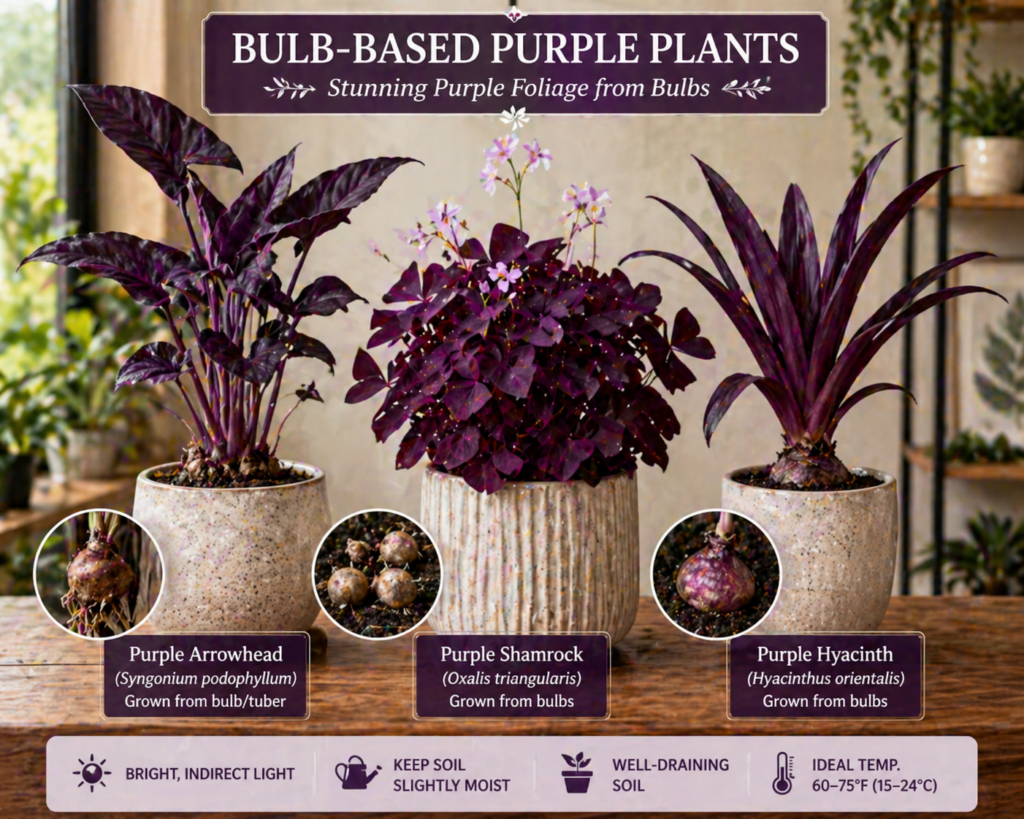
Best for:
- desks
- windowsills
- compact styling
Example:
- Purple Shamrock
Choose based on placement first, then appearance.
Which Indoor Purple Leaf Plants Are Best for Beginners?
The best beginner purple plants are forgiving, fast-growing, and easy to recover.
Tradescantia Zebrina
Best beginner choice.
Why:
- fast growth
- easy propagation
- quick recovery
- low maintenance
Works best in hanging baskets.
Purple Heart
Best for strong solid purple color.
Why:
- drought-tolerant
- resilient
- bright color
Best for sunny shelves.
Purple Shamrock
Best for unique shape.
Why:
- unusual triangular leaves
- compact size
- easy bulb division
Best for desks.
Purple Passion Plant
Best for texture.
Why:
- fuzzy purple foliage
- compact growth
Rex Begonia
Best for moderate-care beginners.
Why:
- decorative patterns
- collector appeal
Beginners should start with Tradescantia Zebrina because it balances beauty, speed, and simplicity.
Which Purple Plant Fits Your Lifestyle Best?
The best plant depends on your lifestyle.
| Situation | Best Plant |
|---|---|
| Beginner | Tradescantia Zebrina |
| Pet owner | Calathea Dottie |
| Hanging basket | Purple Heart |
| Collector | Rex Begonia |
| Low light | Calathea Dottie |
| Fast growth | Tradescantia Zebrina |
| Statement plant | Persian Shield |
| Small desk | Purple Shamrock |
Quick decision guide:
Choose Tradescantia if you want:
- easy care
- fast growth
- propagation
Choose Rex Begonia if you want:
- decorative leaves
- stronger visual detail
Choose Calathea if you have pets.
Choose Purple Heart if you want bold solid purple.
Match your plant to your routine, not just your taste.
Which Purple Leaf Plants Perform Best in Low Light?
Purple plants prefer bright indirect light, but some tolerate lower light better.
Low light usually weakens purple color rather than killing the plant.
Best low-light purple plants:
Calathea Dottie
Best low-light performer.
Strengths:
- filtered-light adaptation
- decorative leaves
Purple Shamrock
Works well near soft-filtered windows.
Rex Begonia
Good in bright rooms without direct sun.
Tradescantia Zebrina
Survives low light but loses strong color.
Low-light decision:
- office → Calathea
- shelf → Tradescantia
- tabletop → Rex Begonia
- windowsill → Purple Shamrock
Low light is survival light, not color light.
Are Purple Leaf Plants Harder to Care for Than Green Plants?
Not always.
Purple plants are simply more visually responsive.
A green plant may stay attractive while stressed.
A purple plant often shows stress faster.
Comparison:
| Factor | Purple Plants | Green Plants |
|---|---|---|
| Light sensitivity | Higher | Lower |
| Color fading risk | Higher | Lower |
| Decorative impact | Higher | Moderate |
| Stress visibility | Higher | Lower |
Purple plant advantages:
- stronger contrast
- richer styling value
- better focal impact
Green plant advantages:
- wider tolerance
- easier recovery
If you can monitor light and watering, purple plants are not harder.
How Much Light Do Purple Leaf Houseplants Need?
Most indoor purple leaf plants need bright indirect light.
Best light levels:
- low light → survival only
- medium light → acceptable
- bright indirect light → ideal
- harsh direct sun → risky
Best placements:
- east-facing windows
- filtered south-facing windows
Signs of low light:
- fading purple color
- stretched stems
- weak growth
- smaller leaves
Signs of too much light:
- burned edges
- curled leaves
- crispy patches
Bright filtered light keeps purple pigments strongest.
Where Should You Place Purple Plants Indoors?
Placement controls survival and appearance.
Best indoor placements:
East-facing windows
Best overall.
Good for:
- Tradescantia
- Rex Begonia
- Purple Shamrock
Filtered south-facing windows
Best for stronger color.
Good for:
- Purple Heart
- Persian Shield
Bathrooms
Best for humidity.
Good for:
- Calathea
- Begonia
Office desks
Best for compact plants.
Good for:
- Oxalis
- Calathea
Avoid:
- heaters
- AC vents
- dark corners
Good light with bad airflow still creates problems.
How Often Should You Water Indoor Purple Leaf Plants?
Water based on soil dryness, not schedule.
General rule:
Water when the top 1–2 inches feel dry.
Plant-specific watering:
- Tradescantia → light regular watering
- Purple Heart → partial drying
- Rex Begonia → lightly moist
- Persian Shield → steady moisture
- Purple Shamrock → partial drying
- Calathea → avoid full dryness
Watering checklist:
- check soil first
- use drainage holes
- empty saucers
- reduce winter watering
Overwatering kills more purple plants than underwatering.
Do Indoor Purple Plants Need High Humidity?
Some do.
Tropical purple plants often prefer higher humidity.
Higher humidity plants:
- Calathea Dottie
- Rex Begonia
- Persian Shield
- Purple Waffle Plant
Normal humidity-tolerant plants:
- Tradescantia Zebrina
- Purple Heart
- Purple Passion Plant
Signs humidity is low:
- crispy edges
- curling
- brown tips
- slower growth
Ways to improve humidity:
- humidifier
- pebble tray
- grouped plants
- bathroom placement
If you want low maintenance, choose Tradescantia.
What Soil Mix Works Best for Purple Foliage Plants?
Purple plants need airy, draining soil.
Good indoor mix:
- 40% potting soil
- 30% perlite
- 20% coco coir
- 10% orchid bark
Best match:
Tradescantia + Purple Heart:
- airy
- faster draining
Calathea + Persian Shield:
- moisture balanced
Rex Begonia:
- lighter fine-textured soil
Avoid:
- heavy soil
- garden soil
- compacted mixes
Roots need oxygen for strong foliage color.
When Should You Repot Purple Indoor Plants?
Repot when roots outgrow space.
Typical repotting:
every 12–18 months
Faster growers like Tradescantia may need sooner.
Signs:
- roots out of drainage holes
- fast drying soil
- stunted growth
- compact roots
Best repotting season:
spring
Repotting checklist:
- go 1–2 inches larger
- refresh soil
- inspect roots
- trim rot
- water after repotting
Avoid dormancy repotting unless necessary.
Which Purple Plants Are Best for Hanging Baskets?
Trailing purple plants work best.
Top hanging basket choices:
Tradescantia Zebrina
Best overall.
Strengths:
- fast trailing growth
- striped purple foliage
Purple Heart
Best solid purple.
Strengths:
- thicker stems
- stronger color
Purple Passion Plant
Best texture.
Strengths:
- fuzzy foliage
- unique look
Purple Waffle Plant
Best textured hanging foliage.
Hanging basket care:
- lightweight soil
- drainage holes
- regular pruning
- bright indirect light
Tradescantia is the strongest all-around hanging option.
Can Purple Leaf Plants Be Propagated at Home?
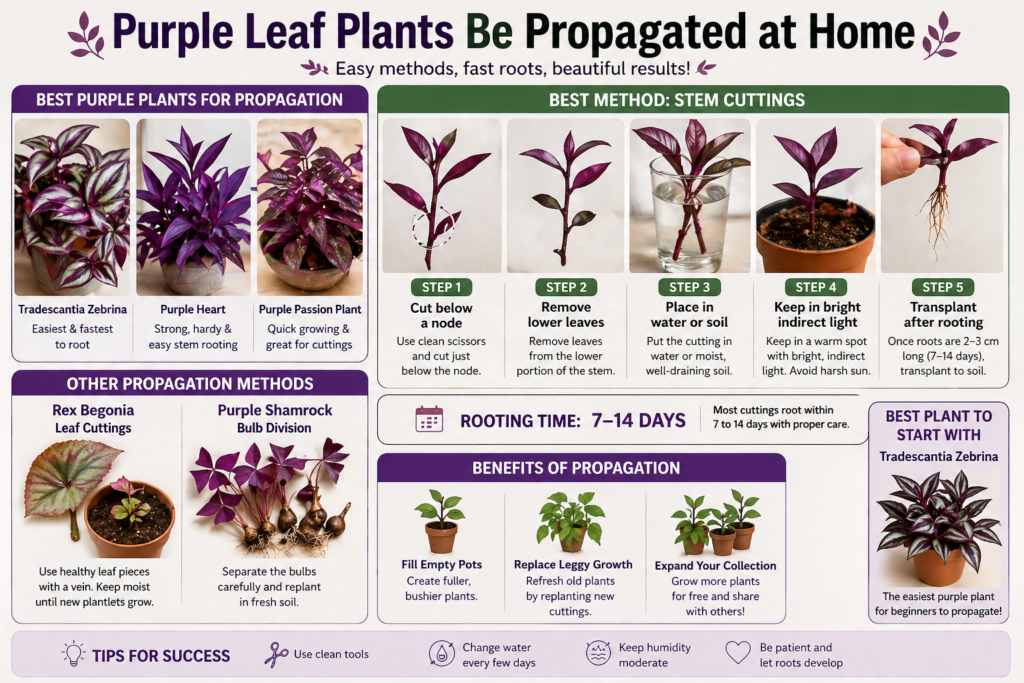
Yes.
Many purple plants propagate easily.
Best for propagation:
- Tradescantia Zebrina
- Purple Heart
- Purple Passion Plant
Best method:
Stem cuttings
Steps:
- cut below node
- remove lower leaves
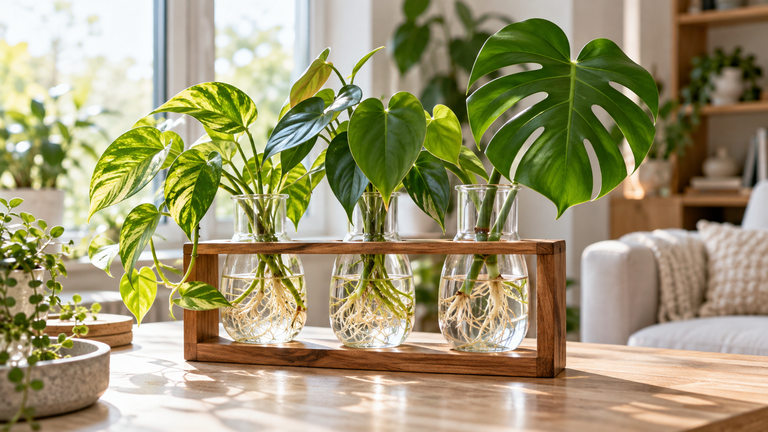
- place in water or soil
- keep in bright indirect light
- transplant after rooting
Rooting time:
7–14 days
Other methods:
Rex Begonia:
- leaf cuttings
Purple Shamrock:
- bulb division
Propagation helps:
- fill pots
- replace leggy stems
- expand collection
Tradescantia is the easiest to start with.
How Do Purple Leaf Plants Change With Seasons?
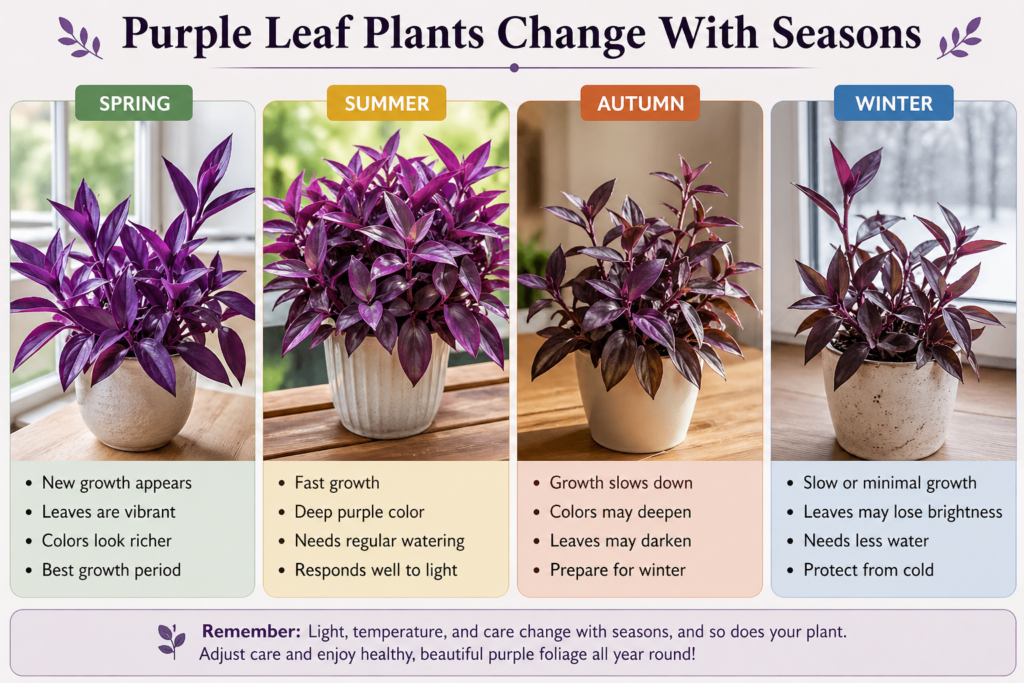
Indoor plants still respond to seasons.
Winter changes:
- slower growth
- lower water needs
- less fertilizer
- possible dormancy
Summer changes:
- faster growth
- higher watering needs
- more pruning
- stronger light demand
Winter care:
- reduce watering
- stop fertilizing
- increase light
- avoid drafts
Summer care:
- check soil often
- prune regularly
- fertilize monthly
- monitor pests
Adjust care with seasons.
Are Purple Indoor Plants Safe for Pets?
Not all.
Pet-safe options:
Calathea Dottie
Safer choice.
Use caution with:
- Tradescantia
- Purple Heart
Avoid with pets:
- Rex Begonia
- Purple Shamrock
Potential symptoms:
- drooling
- vomiting
- diarrhea
- mouth irritation
- lethargy
Safety tips:
- keep out of reach
- use hanging baskets
- monitor chewing
Safer does not mean edible.
Why Do Purple Leaves Turn Green?
Usually because of low light.
Main causes:
- weak light
- overwatering
- too much nitrogen
- old leaves
- poor drainage
Solutions:
- increase light
- prune weak stems
- reduce watering
- balance fertilizer
- rotate plant
If new growth turns green, improve light.
How Should You Fertilize Purple Foliage Plants?
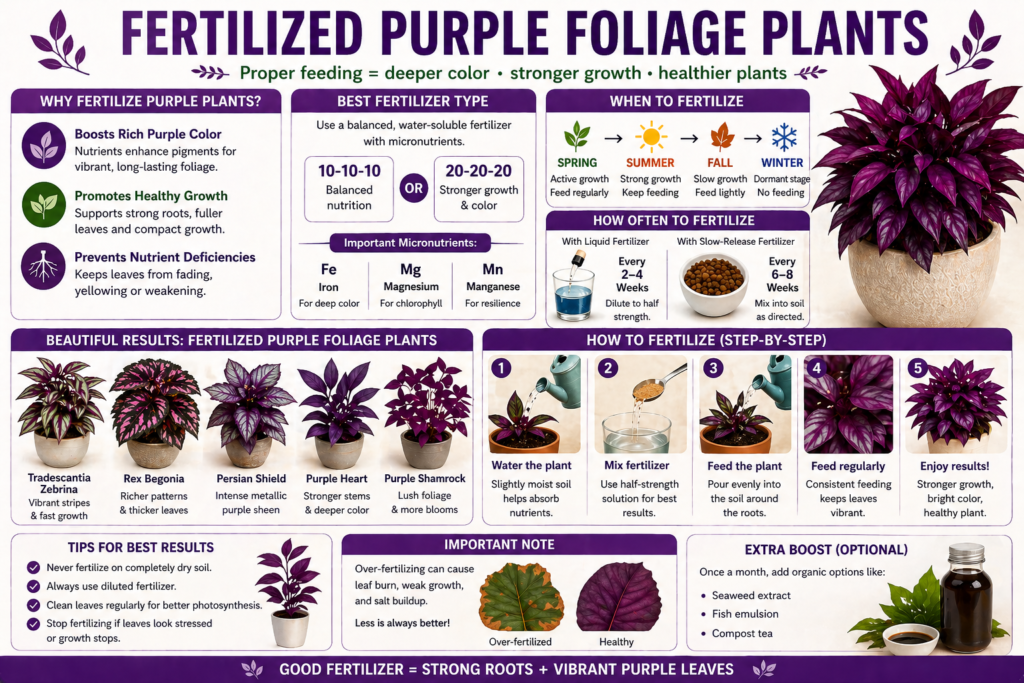
Purple foliage plants need moderate feeding.
Best fertilizer:
balanced liquid fertilizer
Examples:
- 10-10-10
- 20-20-20
Frequency:
every 4 weeks in spring and summer
Stop or reduce in winter.
Fertilizer rules:
- dilute to half strength
- water before feeding
- avoid dry soil feeding
- flush salts occasionally
Helpful nutrients:
- nitrogen
- potassium
- magnesium
- iron
Do not overfeed.
What Common Problems Affect Purple Houseplants?
Purple plants show stress clearly.
Main problems:
Root Rot
Cause:
overwatering
Signs:
- yellow leaves
- soft stems
- bad smell
Spider Mites
Cause:
dry air
Signs:
- webbing
- speckled leaves
Mealybugs
Signs:
- white cotton clusters
Leggy Growth
Cause:
low light
Crispy Edges
Cause:
dry air or sun stress
Fixes:
- improve light
- reduce watering
- raise humidity
- inspect weekly
Root health is the foundation.
What Mistakes Kill Purple Indoor Plants?
Most failures come from mistakes.
Biggest killers:
- overwatering
- low light
- no drainage
- oversized pots
- ignoring pests
- no pruning
Common beginner mistake:
Large decorative pots.
Problem:
too much wet soil
Better:
proper-sized pot with drainage.
Prevention:
- inspect weekly
- use correct soil
- monitor roots
- check light
Most plant failures start below the soil line.
How Do Purple Plants Improve Interior Design?
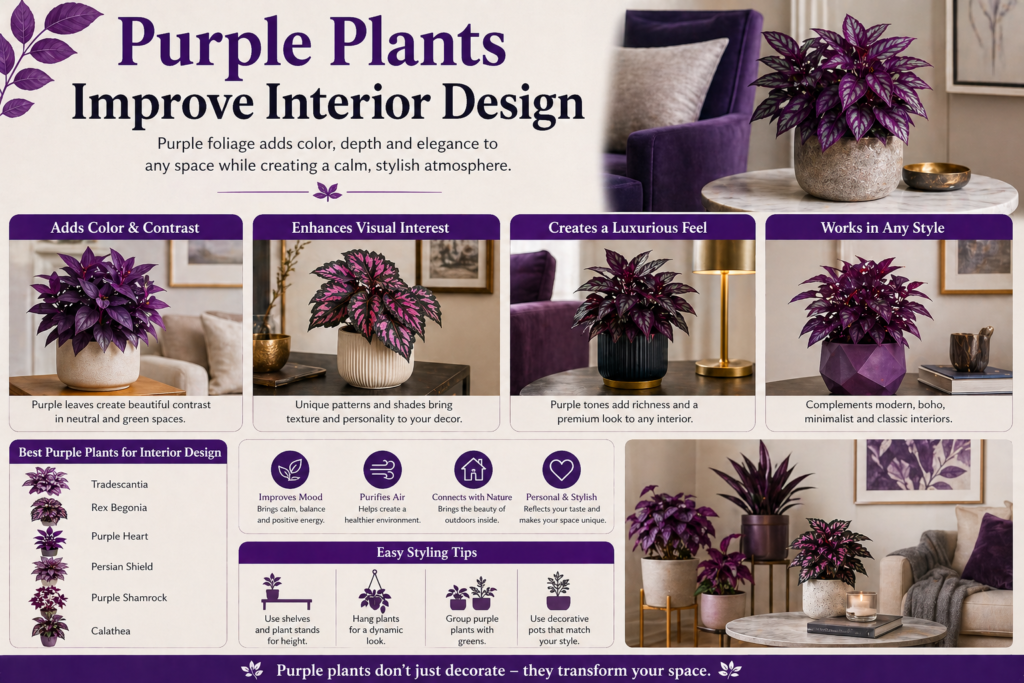
Purple plants add stronger contrast than green-only collections.
They improve:
- visual layering
- color contrast
- focal points
- shelf styling
Best pairings:
- purple leaves + white pots
- purple foliage + wood furniture
- purple + gold décor
- purple + lime green foliage
Best rooms:
- living room
- office
- bedroom
- bathroom
- kitchen
Best styling rule:
Use purple plants as accents, not overload.
One purple focal plant often looks better than five.
How Do You Choose Healthy Purple Plants When Buying?
Plant health matters more than size.
Check:
Leaves
Should be:
- firm
- colorful
- clean
Avoid:
- yellowing
- black spots
- severe damage
Stems
Should feel firm.
Avoid:
- mushy stems
Roots
Healthy roots:
- white
- cream
- tan
Avoid:
- dark roots
- foul smell
Pest check:
Look for:
- webbing
- sticky residue
- cottony bugs
Buying checklist:
- healthy roots
- strong stems
- no pests
- balanced soil moisture
Healthy smaller plants often adapt faster.
Which Purple Indoor Plant Should You Buy First?
Best overall first choice:
Tradescantia Zebrina
Why:
- easy care
- fast growth
- easy propagation
- strong color
Best by goal:
Easiest care:Tradescantia Zebrina
Strongest solid purple:Purple Heart
Best tabletop: Purple Shamrock
Best collector foliage:Rex Begonia
Best dramatic display: Persian Shield
Best pet-conscious choice:Calathea Dottie
If you are new, start with Tradescantia.
It teaches pruning, watering, and propagation with low risk.
Final Thoughts
Indoor purple leaf plants offer something unique that green houseplants cannot: bold foliage color without flowers. Whether you want trailing vines, dramatic metallic leaves, collector patterns, or pet-conscious decorative plants, there is a purple plant for almost every indoor environment.
For beginners, start with Tradescantia Zebrina.
For stronger color, choose Purple Heart.
For patterns, choose Rex Begonia.
For pet safety, choose Calathea Dottie.
For dramatic display, choose Persian Shield.
The key to success is simple:
strong light, healthy roots, balanced watering, and the right placement.
Faq section
Do purple leaf plants need more sunlight than green plants?
Usually yes. Purple pigmentation stays stronger in brighter indirect light.
Why are purple leaves fading?
Usually low light, overwatering, or nutrient imbalance.
Can purple plants live indoors permanently?
Yes. Many thrive indoors for years.
Which purple plant grows fastest?
Tradescantia Zebrina and Purple Heart.
Can purple plants survive low light?
Some can, but color weakens.
Can purple plants grow under grow lights?
Yes. Full-spectrum grow lights work well.
How often should I water purple plants?
When the top 1–2 inches of soil are dry.
Do purple plants need humidity?
Some do, especially Calatheas and Rex Begonias.
Why do purple leaves curl?
Usually low humidity, watering stress, or pests.
Can I propagate purple plants in water?
Yes. Tradescantia and Purple Heart root easily.
Are purple indoor plants toxic?
Some are. Begonias and Oxalis are more risky.
Which purple plant is safest for pets?
Calathea Dottie.
Which purple plant is best for hanging baskets?
Tradescantia Zebrina.
Can purple plants improve interior design?
Yes. They add contrast, color layering, and stronger focal points.
Myra is the founder and lead writer of Plantsaholic. She shares practical, research-backed advice on indoor plants, outdoor gardening, flowers, herbs, succulents, and everyday plant care. Her goal is to help gardeners of all experience levels grow healthier plants through simple, easy-to-follow gardening guides.