Most houseplants need watering every 7 to 14 days, but this is only a starting point. The real answer depends on plant species, soil type, pot material, room temperature, humidity, sunlight, airflow, and season. A tropical plant growing in summer may need water much sooner than the same plant in winter.
Many plant owners make one mistake: they water by calendar instead of checking the plant’s real condition. Houseplants do not follow fixed schedules. They respond to roots, soil moisture, light, and indoor climate.
The best rule is simple: Water when the plant needs it, not when the calendar says.
This guide explains how to check moisture, how often different houseplants need water, how seasons affect watering, and how to avoid overwatering or underwatering.
Why Is There No Perfect Houseplant Watering Schedule?
There is no perfect watering schedule because every houseplant uses water differently. A fast-growing tropical plant with large leaves needs more moisture than a drought-tolerant succulent. Even two plants of the same type can dry at different speeds if one is in bright light and the other is in shade.
Most “water once a week” advice fails because it ignores real conditions. A plant near a sunny window, heater, fan, or air conditioner will dry faster than one in a humid bathroom or low-light hallway.
Watering frequency changes because of:
- plant species
- pot size
- root density
- soil type
- drainage
- light exposure
- humidity
- season
Tropical houseplants such as pothos, monstera, philodendron, and peace lily usually prefer slightly moist soil. Succulents such as aloe, jade plant, and haworthia prefer dry cycles between watering.
Roots also matter. A root-bound spider plant may dry faster because there is less soil holding moisture. A plant in a large pot may stay wet longer because more soil stores more water.
Decision clarity: Never copy a watering schedule without adjusting for your plant, pot, soil, and room conditions.
How Can You Tell If Your Houseplant Actually Needs Water?
The best way to know if your houseplant needs water is to check the soil. Leaves can help, but they often show stress late. By the time leaves droop, curl, or turn brown, the plant may already be struggling.
The top of the soil can be misleading. Surface soil dries first because it touches air, while deeper soil may still be moist. Watering just because the top looks dry often causes overwatering.
Use these checks together:
- finger test
- pot weight
- leaf condition
- soil separation
- drainage behavior
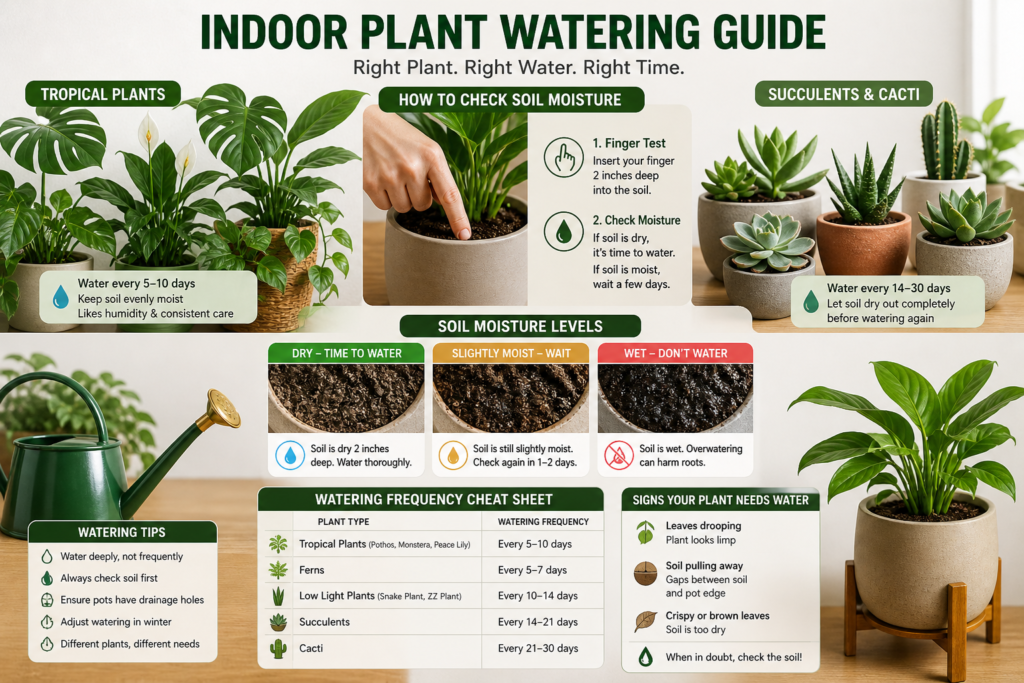
The Finger Test
Push your finger about 2 inches into the soil.
- Dry soil = water
- Slightly moist soil = wait
- Wet soil = do not water
For small pots, check about 1 inch deep. For large pots, check 2–3 inches deep.
Pot Weight Test
Lift the pot after watering and remember the weight. Lift it again after a few days. A dry pot feels much lighter. This method works well for snake plants, ZZ plants, and succulents because they do not always show thirst quickly.
Leaf Signals
Signs of thirst may include drooping, curling, wrinkling, crispy edges, or dull leaves. But overwatered plants can also droop, so always confirm with soil.
Soil Separation
If soil pulls away from the pot edges, it is extremely dry. Water may run straight through without soaking the roots. Use bottom watering or slow repeated watering.
Decision clarity: Soil condition is more reliable than leaf appearance.
Should You Water a Houseplant Immediately After Buying It?
Not always. Many nursery plants are watered before transport or sale, so the soil may already be moist. Watering again too soon can stress roots before the plant adjusts to your home.
A new plant is already dealing with changes in light, humidity, temperature, and airflow. The first goal is stability, not automatic watering.
Before watering a new houseplant, check:
- soil depth
- pot weight
- drainage holes
- leaf firmness
If the soil is moist, wait. If the soil is dry, water deeply and let excess water drain.
Nursery soil can also behave differently. Many nursery mixes contain moisture-retaining materials, so they may stay wet longer than expected.
During the first week:
- observe more
- water less aggressively
- keep the plant in stable light
- avoid repotting unless necessary
- watch for leaf drop or yellowing
Some leaf changes after purchase are adjustment signals, not always watering problems.
Decision clarity: Inspect new plants first. Do not water automatically.
How Often Should Different Types of Houseplants Be Watered?
Different plant groups need different watering patterns. Knowing the plant type is one of the fastest ways to improve watering accuracy.
A tropical plant with large leaves loses moisture faster than a cactus with thick water-storing tissue. Ferns dry quickly because they have delicate foliage. Succulents store water inside leaves and stems.
| Plant Type | Average Watering Frequency |
|---|---|
| Tropical plants | Every 5–10 days |
| Ferns | Every 4–7 days |
| Flowering plants | Every 5–7 days |
| Succulents | Every 14–21 days |
| Cacti | Every 21–30 days |
Tropical Plants
Pothos, monstera, philodendron, and peace lily usually prefer balanced moisture. Let the top 1–2 inches dry, then water.
Ferns
Boston fern and bird’s nest fern prefer more consistent moisture. They dislike fully drying out and often need water every 4–7 days.
Flowering Plants
Peace lily and African violet often need steady moisture, especially during blooming. They may need water every 5–7 days.
Succulents
Aloe, jade plant, and echeveria need full drying between watering. Water deeply, then let soil dry.
Cacti
Cacti need the least water. Many cactus deaths happen from overwatering, not underwatering.
Decision clarity: Identify the plant family first. It removes most watering guesswork.
Does Season Change How Often You Should Water?
Yes. Seasonal changes affect indoor plants even inside the home. Plants respond to daylight, temperature, humidity, and growth cycles. That means watering should change throughout the year.
Using the same watering schedule in every season is risky. Summer watering habits often cause root rot in winter. Very low winter watering can also stress tropical plants if the room is warm and dry.
How Spring Changes Houseplant Watering
Spring restarts growth. Longer daylight increases photosynthesis, roots become more active, and new leaves appear. Water demand begins increasing.
Signs your plant needs more frequent checking:
- new leaves
- new stems
- faster drying soil
How Summer Increases Watering Frequency
Summer usually creates the highest water demand. More light, heat, evaporation, and growth all increase watering needs. A monstera watered every 12 days in winter may need water every 6 days in summer.
- check soil more often
- watch AC drying effects
- increase humidity for tropical plants
Fall
Fall is a transition season. Growth slows, daylight weakens, and soil dries more slowly. Start extending watering intervals gradually.
Winter
Winter is when overwatering kills many plants. Growth slows, roots absorb less, and soil stays wet longer. A pothos watered every 7 days in July may need water every 15–18 days in January.
Decision clarity: Watering should follow plant growth, not the month on the calendar.
What Happens If You Overwater Houseplants?
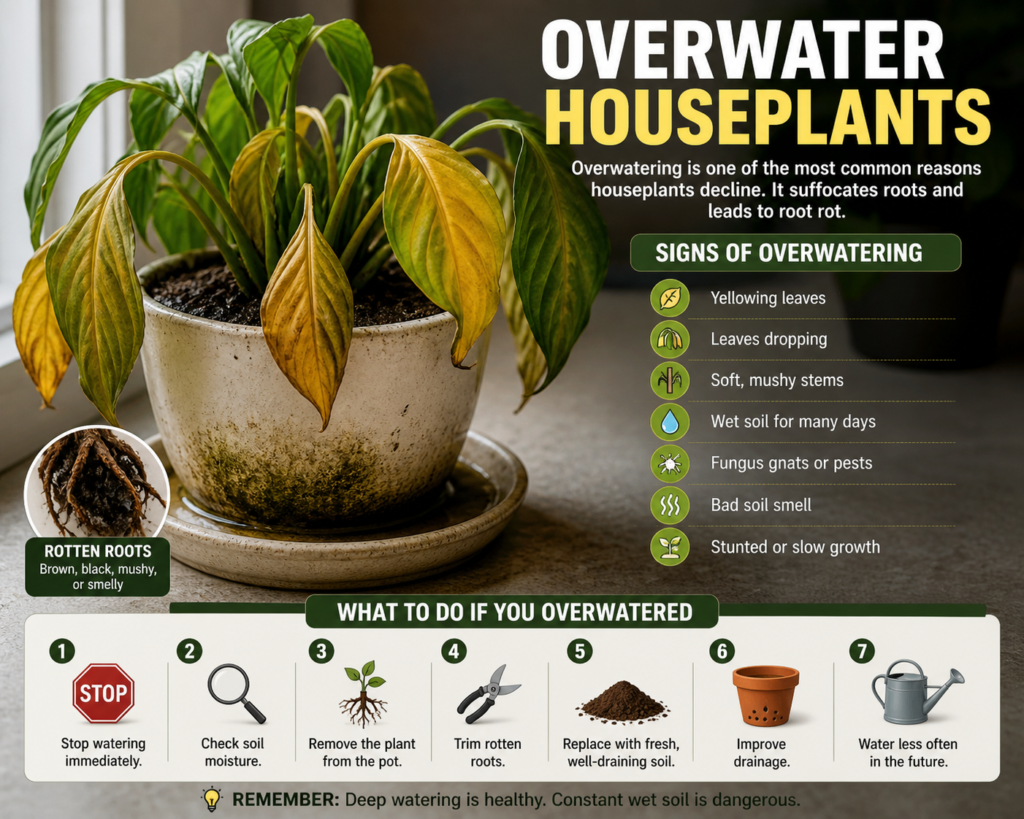
Overwatering is one of the most common reasons houseplants die. It usually happens with good intentions. Many owners think more water means better care, but roots need both water and oxygen.
Overwatering is not about giving too much water once. It is about watering too often before soil has time to dry properly.
When soil stays wet too long, air pockets fill with water. Roots lose oxygen, weaken, and become vulnerable to root rot.
Signs of overwatering include:
- yellow leaves
- wet soil for many days
- fungus gnats
- soft stems
- leaf drop
- slow growth
- bad soil smell
Healthy roots are firm and light-colored. Rotten roots are brown, black, mushy, or smelly.
If you catch overwatering early, recovery is possible.
How to Save an Overwatered Houseplant:
- Stop watering immediately.
- Check soil moisture.
- Remove the plant if soil stays wet too long.
- Trim rotten roots.
- Replace soggy soil.
- Improve drainage.
- Water less often going forward.
A peace lily with yellow leaves and wet soil is more likely overwatered than thirsty.
Decision clarity: Deep watering is healthy. Constant wet soil is dangerous.
Should You Water Houseplants After Repotting?
Usually yes, but carefully. Repotting disturbs roots, changes soil structure, and resets moisture behavior. Watering after repotting helps settle fresh soil around roots, but too much water can stress damaged roots.
Water after repotting if:
- the root ball is dry
- fresh soil is dry
- the plant was moved into better-draining mix
- roots need contact with new soil
Water lightly to moderately, then allow excess water to drain.
Wait or water less if:
- roots were damaged
- root rot was removed
- soil is already wet
- the plant is a succulent or cactus
After repotting:
- avoid fertilizer immediately
- keep light stable
- monitor drying speed
- check drainage
- avoid frequent watering
Fresh soil may dry differently from the old mix, so your old watering routine may no longer work.
Decision clarity: Repotting is a watering reset. Check root condition before deciding how much to water.
What Happens If You Underwater Houseplants?
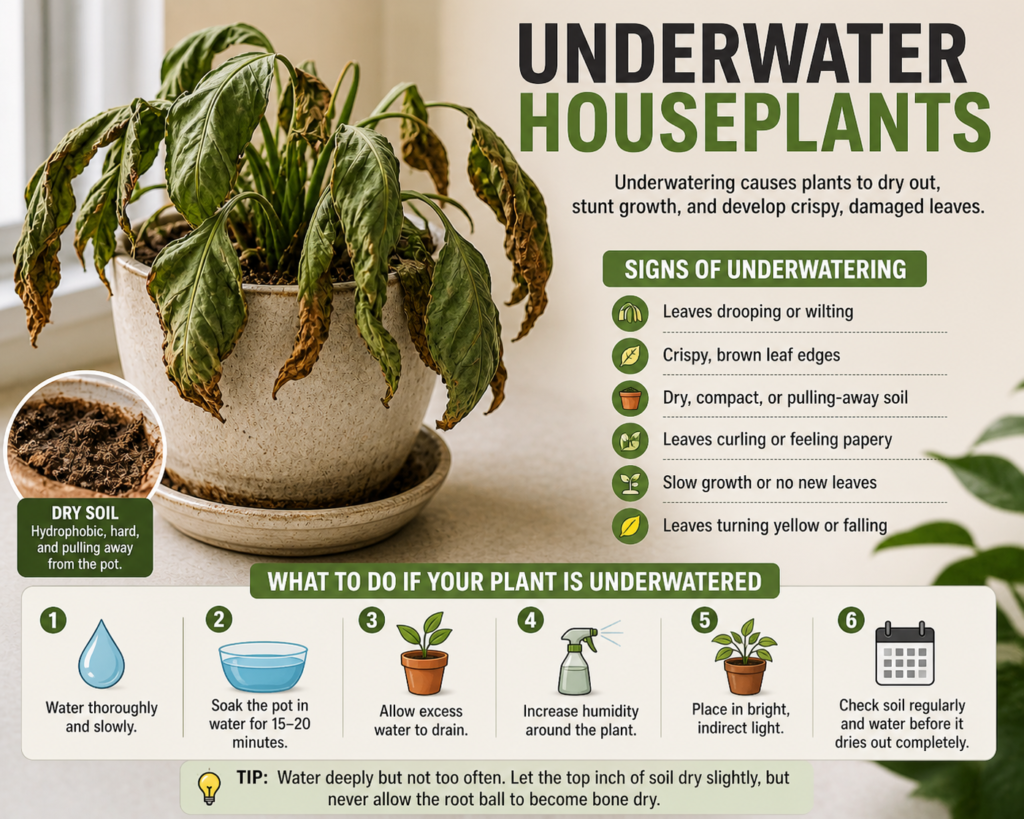
Underwatering deprives plants of the moisture needed for nutrient movement, cell pressure, and energy production. Without enough water, leaves lose firmness, growth slows, and roots become less efficient.
Underwatered plants often show faster visible symptoms than overwatered plants, but repeated dryness still causes long-term damage.
Signs of underwatering include:
- drooping with dry soil
- crispy leaf tips
- curled leaves
- wrinkled succulent leaves
- dull foliage
- soil pulling away from pot edges
Fine feeder roots dry first. These roots absorb water and nutrients, so repeated dehydration makes future recovery harder.
If soil becomes very dry and hard, normal watering may not work because water runs through the pot without soaking in.
Use bottom watering:
- Place the pot in shallow water.
- Let soil absorb moisture from below.
- Wait 20–30 minutes.
- Remove the pot.
- Let it drain fully.
Long-term underwatering may cause smaller leaves, weak stems, reduced flowering, and stunted growth.
Decision clarity: Dry cycles are healthy for succulents and cacti. Chronic neglect is not healthy for any plant.
How Do You Water Houseplants When You Go on Vacation?
Vacation watering depends on trip length, plant type, pot size, and room conditions. Many people overwater before leaving, but soggy soil can be more dangerous than temporary dryness.
Before leaving, water deeply only if the soil is already dry. Do not flood wet soil.
Helpful vacation steps:
- move plants away from strong direct light
- group plants together to increase humidity
- water dry plants thoroughly
- keep plants away from AC or heater vents
- use self-watering tools for longer trips
For trips under one week, many houseplants can survive with deep watering before leaving. Succulents, snake plants, and ZZ plants often need no special watering if they were recently watered.
For trips longer than 7 days, consider wick systems, water globes, self-watering spikes, or plant sitter instructions.
Avoid leaving plants sitting in water or giving the same instructions for every plant.
Decision clarity: Prepare plants based on plant type and trip length.
Does Pot Type Affect Watering Frequency?
Yes. Pot material changes how fast soil dries. Two identical plants can need different watering schedules if one is in terracotta and the other is in plastic.
Terracotta is porous. It pulls moisture from the soil and allows evaporation through the pot wall. This makes soil dry faster.
How Terracotta Pots Affect Watering Frequency:
- succulents
- cacti
- snake plants
- plants prone to overwatering
Plastic holds moisture longer because it does not breathe. It is useful for plants that prefer consistent moisture, such as ferns and many tropical plants.
How Plastic Pots Affect Watering Frequency:
- pothos
- peace lily
- ferns
- tropical foliage plants
Ceramic depends on finish. Glazed ceramic behaves more like plastic. Unglazed ceramic behaves more like terracotta.
Pot size also matters. Small pots dry faster. Large pots hold more soil and stay wet longer. Oversized pots can cause root problems because unused soil remains wet.
Always prioritize drainage holes. A pot without drainage can trap water and create root rot.
Decision clarity: Pot choice changes watering rhythm. Never ignore the container.
Do Self-Watering Pots Change How Often You Should Water?
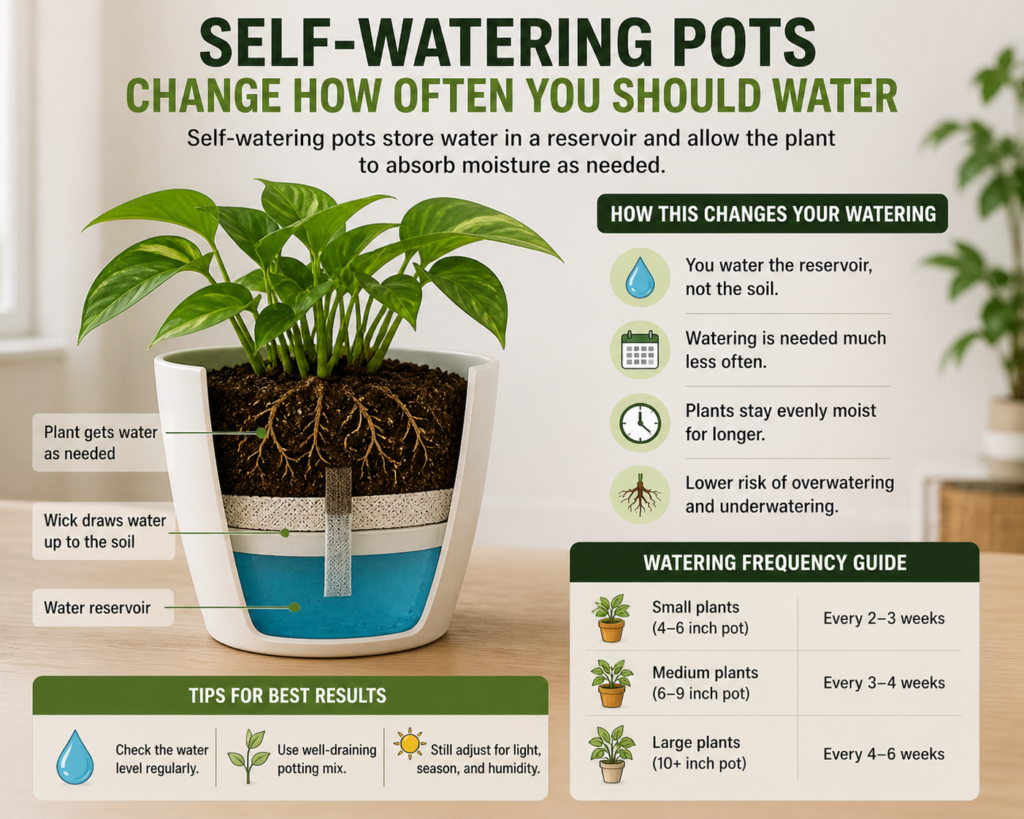
Yes. Self-watering pots reduce how often you add water because they supply moisture from a reservoir. Instead of water moving from the top down, plants absorb moisture upward as needed.
But self-watering pots do not remove responsibility. They change the delivery method, not the plant’s biology.
Which Houseplants Work Best in Self-Watering Pots?
- pothos
- peace lily
- Chinese evergreen
- some herbs
- moisture-loving tropical plants
Which Houseplants Should Avoid Self-Watering Pots?
- succulents
- cacti
- snake plants
- plants needing dry cycles
Self-watering pots can cause problems if the reservoir keeps soil constantly moist. This is especially risky for drought-tolerant plants.
Still monitor reservoir level, soil smell, algae buildup, root health, and leaf yellowing.
Decision clarity: Self-watering pots reduce labor, not observation.
What Is the Best Way to Water Houseplants?
The best method is deep watering followed by proper drainage. Deep watering hydrates the full root zone and encourages stronger roots. Small daily splashes usually only wet the surface and can create weak shallow roots.
Top Watering
Top watering is best for most houseplants. Water slowly over the soil surface until water drains from the bottom.
Best practice:
- water evenly
- avoid rushing
- let excess drain
- empty the saucer
Top watering also helps flush mineral salts from soil.
Bottom Watering
Bottom watering lets soil absorb moisture from below. It is useful for dry compact soil, African violets, seedlings, and plants that dislike wet leaves.
How to Bottom Water Correctly
- place pot in shallow water
- wait 20–30 minutes
- remove pot
- drain fully
Do not use bottom watering exclusively forever because salts can build up. Occasional top watering helps flush soil.
Soaking Dry Soil for Recovery
Soaking is best for severely dry soil that repels water. It should be used as a recovery method, not a daily habit.
Decision clarity: Water deeply, drain fully, then wait until the plant actually needs water again.
How Does Light Affect Watering Needs?
Light strongly affects watering because light controls growth. More light increases photosynthesis, growth, transpiration, and evaporation. That means plants in brighter spaces usually need more water.
A plant in low light grows slowly and uses less water. Soil stays wet longer, so overwatering risk increases.
Low-light plants such as snake plant and ZZ plant may need watering every 2–3 weeks in dim rooms. In brighter light, the same plants may dry faster.
Bright-light tropical plants such as monstera and pothos may need more frequent watering, especially near warm windows.
Window direction matters:
- south-facing windows dry plants fastest
- west-facing windows create hot afternoon drying
- east-facing windows give gentler light
- north-facing windows usually dry slowest
Direct sun can increase heat stress and dry soil quickly. Bright indirect light is usually safer for many tropical houseplants.
Decision clarity: Always consider plant placement before deciding watering frequency.
What Is the Best Watering Routine for Beginners?
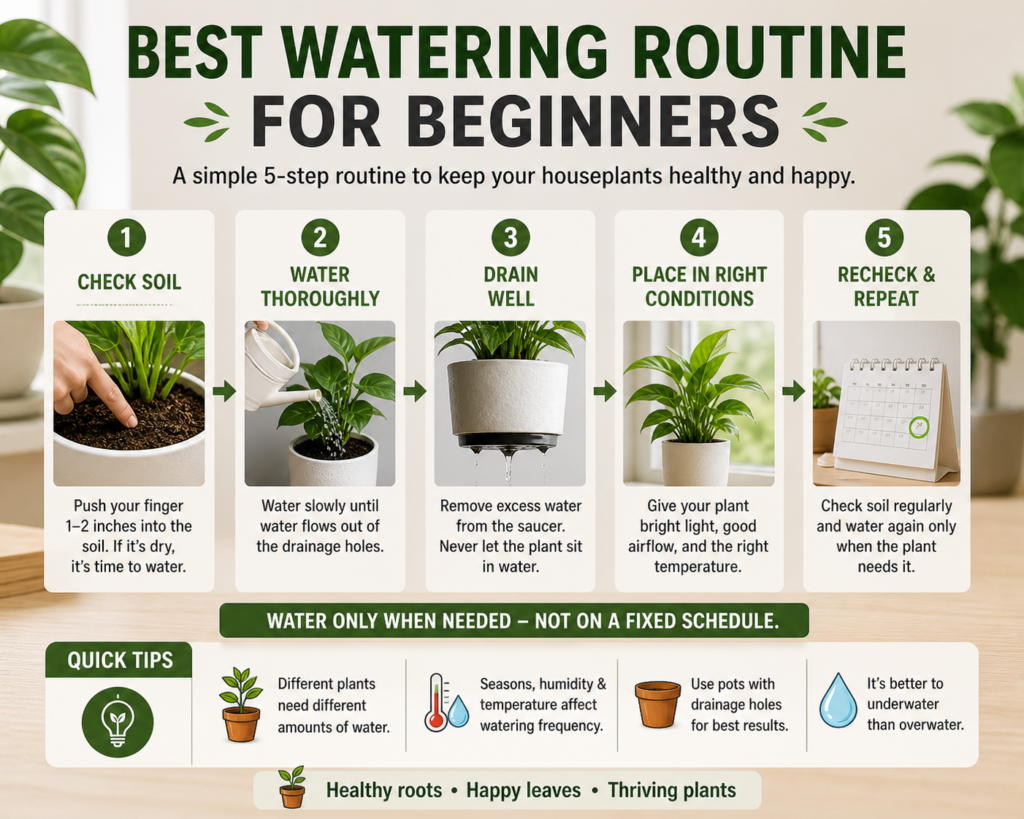
The best beginner routine is a checking routine, not a watering schedule. Instead of watering every Sunday, inspect plants every few days and water only when needed.
Every 3 days, check:
- soil moisture
- pot weight
- leaf firmness
- drainage tray
- light changes
Do not water every plant during each check. Some may need water. Others may not.
Once a week, inspect for:
- yellow leaves
- pests
- compacted soil
- slow drying
- roots circling the pot
- fungus gnats
Common beginner mistakes include watering on fixed dates, watering because topsoil looks dry, using pots without drainage, treating all plants the same, watering from guilt, and ignoring seasonal changes.
Most beginner plant losses come from overwatering, not underwatering.
Decision clarity: Build a habit of checking. Water only after diagnosis.
Overwatered vs Underwatered: Recovery Decision Guide
Overwatering and underwatering can look similar. Both can cause drooping, yellowing, and slow growth. The difference is usually in the soil.
| Symptom | Soil Condition | Likely Cause | Action |
|---|---|---|---|
| Yellow leaves | Wet | Overwatering | Wait |
| Drooping | Dry | Underwatering | Water |
| Drooping | Wet | Root stress | Check roots |
| Brown crispy tips | Dry | Underwatering | Rehydrate |
| Mushy stem | Wet | Overwatering | Inspect roots |
| Soil pulling away | Dry | Severe dryness | Bottom water |
| Fungus gnats | Wet | Too much moisture | Reduce watering |
For overwatering, stop watering, improve drainage, increase airflow, inspect roots if needed, and replace soggy soil.
For underwatering, water slowly, bottom water if soil is hard, resume consistent checks, and avoid sudden overcorrection.
Decision clarity: Treat the cause, not just the symptom.
Water Now or Wait? Quick Decision Table
Use this table before watering.
| Condition | Action |
|---|---|
| Soil dry 2 inches deep | Water |
| Soil slightly moist | Wait |
| Soil wet + yellow leaves | Wait |
| Dry soil + drooping | Water |
| Wet soil + drooping | Check roots |
| Soil shrinking from pot | Bottom water |
| Wet soil + fungus gnats | Reduce watering |
| Crispy tips + dry soil | Water |
| Soft stem + wet soil | Inspect roots |
Good watering decisions are condition-based. This system prevents emotional watering and reduces mistakes.
At plantsaholic, the best watering advice is simple: diagnose first, water second.
Real-World Case Study: Two Plants, Two Different Watering Needs
Two plants can live in the same home and still need very different watering schedules.
Plant A: Monstera
Placement: bright east-facing window
Pot: terracotta
Watering need: every 6–8 days
Why Monstera Needed More Water?
- large leaves
- active growth
- fast evaporation
- terracotta dries quickly
Plant B: Snake Plant
Placement: low-light hallway
Pot: plastic
Watering need: every 18–24 days
Why Snake Plant Needed Less Water?
- slow growth
- water-storing leaves
- low evaporation
- plastic holds moisture longer
Same home. Same owner. Different watering needs.
Decision clarity: Understand your plant’s system, not someone else’s schedule.
Final Answer: How Often Should You Water Your Houseplants?
Most houseplants need watering every 7–14 days, but that is only a rough guide. Tropical plants often need water every 5–10 days. Ferns may need water every 4–7 days. Succulents may need water every 14–21 days. Cacti may need water every 21–30 days.
The best method is to check the soil before watering.
Use these rules:
- water tropicals when the top 1–2 inches dry
- let succulents and cacti dry fully
- water less in winter
- water more during active summer growth
- use pots with drainage
- avoid watering by calendar
- adjust for light, humidity, and pot type
Healthy watering is not about doing more. It is about doing it at the right time.
FAQ Section
How often should you water houseplants on average?
Most houseplants need water every 7–14 days, but always check soil first.
Is it better to underwater or overwater houseplants?
Underwatering is usually easier to fix. Overwatering can cause root rot.
How do I know if my plant needs water or has root rot?
Dry soil with drooping means thirst. Wet soil with yellow leaves may mean root rot.
Should I water after repotting?
Usually yes, but lightly. Avoid heavy watering if roots are damaged.
Should I water a new plant immediately?
Not always. Check the soil first because nursery plants are often already watered.
How often should I water in winter?
Water less often in winter because plant growth slows and soil dries more slowly.
Do self-watering pots reduce watering frequency?
Yes, but they still need monitoring and are not ideal for succulents or cacti.
Can yellow leaves mean too much water?
Yes. Yellow leaves often mean overwatering when soil stays wet for several days.
Should soil dry completely before watering?
Succulents and cacti prefer full drying. Tropical plants usually prefer partial drying.
What is the biggest watering mistake?
Watering on a fixed schedule instead of checking soil moisture first.
Myra is the founder and lead writer of Plantsaholic. She shares practical, research-backed advice on indoor plants, outdoor gardening, flowers, herbs, succulents, and everyday plant care. Her goal is to help gardeners of all experience levels grow healthier plants through simple, easy-to-follow gardening guides.