Rare and unusual plant types are valued for their uncommon appearance, limited availability, dramatic foliage, unusual growth habits, or strong collector demand. These plants often feature oversized tropical leaves, metallic textures, rare variegation, sculptural forms, or carnivorous adaptations that make them visually different from traditional houseplants. As indoor gardening continues growing worldwide, rare plants have become major elements in modern interior design, collector culture, and botanical hobby communities.
What Makes a Plant Rare or Unusual?
A plant becomes rare or unusual for several different reasons. Some species are naturally uncommon because they grow only in isolated habitats such as cloud forests, tropical mountains, deserts, or remote rainforests. Others become difficult to find because they grow slowly, propagate poorly, or develop unstable mutations that are hard for growers to reproduce consistently.
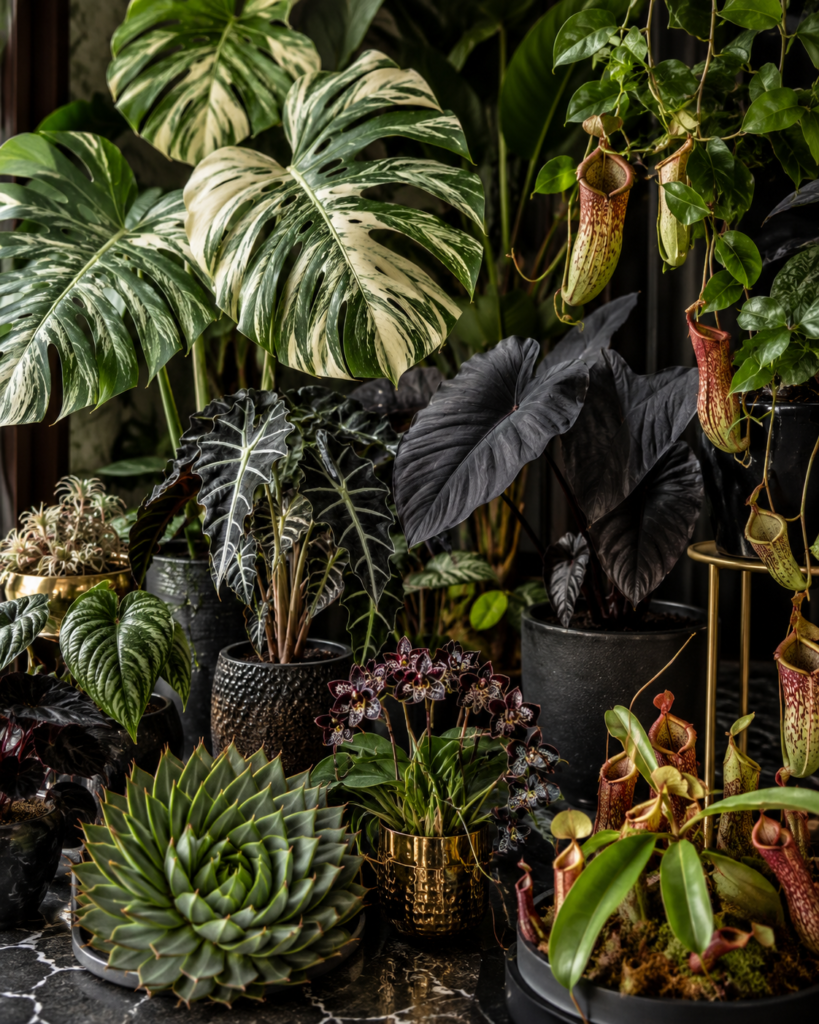
Plants with black foliage, giant leaves, fenestrations, or marbled variegation stand out from ordinary houseplants. Species such as Monstera Obliqua became famous because of their heavily perforated leaves, while Anthurium Veitchii attracts collectors with its enormous corrugated foliage.
Main Factors That Create Plant Rarity
- Slow propagation speed
- Limited greenhouse production
- Habitat destruction
- Import restrictions
- Unstable variegation genetics
- Specialized care requirements
- Difficult shipping conditions
- Strong collector demand
What Are the Main Categories of Rare and Unusual Plants?
Rare plants can be divided into several major categories based on foliage style, biological adaptation, growth habit, and collector demand. Understanding these categories helps collectors choose plants that fit their climate, care ability, and indoor environment instead of buying random trending species.
Plants such as Philodendron Pink Princess and Anthurium Warocqueanum became famous for velvet leaves, unusual coloration, and dramatic mature growth. Meanwhile, rare succulents and caudex plants attract collectors who prefer sculptural low-water plants.
Main Categories of Rare Plant Types
- Rare tropical foliage plants
- Variegated collector plants
- Carnivorous plants
- Rare succulents
- Caudex and bulb plants
- Black foliage plants
- Rare flowering species
- Rare trailing or climbing plants
Tropical foliage plants currently dominate indoor collector markets because they adapt well to decorative indoor spaces, while succulents and caudex plants often survive better in dry homes.
Decision clarity matters because different categories require completely different care conditions. Tropical plants usually prefer stable humidity and filtered light, while succulents require strong drainage and dry soil conditions.
Why Are Rare Plants Becoming So Popular?
Rare plants became popular because of collector demand and online visibility. Large tropical leaves, black foliage, unusual variegation, and sculptural forms create stronger visual contrast in modern interiors where statement plants act as focal points.
Social media accelerated this trend by exposing millions of people to rare aroids, unusual succulents, carnivorous plants, and collector foliage species that were once known mainly within botanical communities. Collector demand pushed prices higher for plants with slow propagation, unstable genetics, or limited commercial availability.
Main Reasons Rare Plants Became So Popular
- Indoor jungle design trends
- Collector culture and rarity appeal
- Pinterest and Instagram aesthetics
- Sustainable décor movements
- Social media hype cycles
- Slow propagation speed
- Import restrictions
- Limited commercial supply
Plants such as Philodendron Spiritus Sancti remain highly collectible because of genuine scarcity and limited propagation, while plants like Philodendron Pink Princess became heavily trend-driven despite increasing commercial availability.
| Plant Type | Truly Rare | Expensive Due to Hype | Easy to Propagate |
| Spiritus Sancti | Yes | Partial | No |
| Monstera Thai Constellation | No Longer Highly Rare | Yes Historically | Yes |
| Monstera Obliqua | Yes | Yes | Difficult |
| Pink Princess Philodendron | Moderate | Strongly Hype-Driven | Moderate |
Why Rare Plant Prices Sometimes Crash
Rare plant prices often collapse when commercial production catches up with collector demand. Once tissue culture laboratories and large nurseries begin mass production, availability increases rapidly and prices usually stabilize.
Plants that once sold for enormous prices eventually became accessible to ordinary hobbyists once growers scaled propagation successfully.
Common Reasons Rare Plant Prices Decline
- Tissue culture expansion
- Market oversaturation
- Declining collector hype
- Easier propagation methods
- Increased greenhouse production
- Trend replacement cycles
- Economic downturns
- Nursery competition
Rare plant markets often behave similarly to fashion or collectible industries where trends shift rapidly.
Decision clarity is important because rare plants should primarily be viewed as living collections rather than guaranteed investments.
Which Rare Indoor Plants Are Best for Beginners?
Many beginners assume rare plants are automatically difficult to maintain, but several unusual species adapt surprisingly well to indoor environments.
One excellent beginner plant is Monstera Thai Constellation. Its cream variegation creates a luxury tropical appearance while still maintaining relatively stable indoor growth.
Best Beginner-Friendly Rare Indoor Plants
- Raven ZZ Plant
- Whale Fin Snake Plant
- Philodendron Gloriosum
- String of Turtles
- Jewel Orchids
- Rare pothos varieties
- Hoya Kerrii
- Variegated Peace Lily cultivars
Beginners often struggle because they purchase highly sensitive species before understanding environmental stability. Thin-leaf tropical anthuriums and humidity-dependent philodendrons may struggle badly in dry homes.
Decision clarity matters because building experience gradually creates far better long-term success.
| Plant | Difficulty | Humidity | Light |
| Monstera Thai Constellation | Moderate | Medium to High | Bright Indirect |
| Raven ZZ Plant | Easy | Low to Medium | Low to Bright Indirect |
| Alocasia Dragon Scale | Moderate | High | Bright Indirect |
| Anthurium Warocqueanum | High | Very High | Bright Indirect |
| Hoya Compacta | Easy | Medium | Bright Indirect |
| Monstera Obliqua | High | Very High | Bright Indirect |
| Euphorbia Obesa | Easy | Low | Bright Direct to Bright Indirect |
What Should You Look for Before Buying Rare Plants?
Many collectors make expensive mistakes because they focus only on rarity while ignoring root health, acclimation stress, or environmental compatibility.
Plants with damaged roots may decline quickly even if the foliage initially appears healthy. Buyers should also understand whether a plant was tissue cultured, recently imported, or freshly propagated from a cutting.
Important Things to Check Before Buying Rare Plants
- Root health and stability
- Leaf damage or pest signs
- Humidity requirements
- Shipping distance and season
- Soil quality and drainage
- Nursery reputation
- Mature plant size
- Propagation origin
Acclimation failure is extremely common among imported collector plants, especially after long-distance shipping. Many tropical species arrive stressed and decline because collectors immediately repot them or change conditions too aggressively.
Decision clarity is essential because not every rare plant is suitable for every home. Buyers living in dry climates may succeed more with succulents or thick-leaf philodendrons than ultra-sensitive velvet anthuriums.
Which Rare Plants Are Actually Overrated?
Not every rare plant justifies its popularity, especially for average indoor growers. Some collector species receive enormous attention online despite being fragile, unstable, or difficult to maintain outside controlled greenhouse environments.
Certain velvet anthuriums and ultra-thin tropical foliage plants can become frustrating because they require stable humidity, careful watering balance, excellent airflow, and consistent temperatures. Highly unstable variegated plants may also disappoint buyers because new growth can revert partially or completely to green.
Why Some Rare Plants Become Overrated
- Social media exaggeration
- Unrealistic greenhouse photos
- Poor indoor adaptability
- Extreme humidity dependence
- Unstable variegation
- High shipping stress
- Slow juvenile growth
- Frequent pest sensitivity
What Are the Most Expensive Rare Houseplants?
Some rare houseplants became extraordinarily expensive because of limited availability, unstable genetics, collector obsession, or difficult propagation.
One of the most famous collector plants is Philodendron Spiritus Sancti.
Other historically expensive collector plants include:
- Monstera Obliqua
- Anthurium Warocqueanum
- Variegated Billietiae
- Variegated Alocasia Frydek
- Rare jewel orchids
- Mature imported bonsai
- Collector Anthuriums
Several factors influence rare plant pricing:
- Growth speed
- Variegation stability
- Collector demand
- Propagation difficulty
- Mature plant size
- Import restrictions
- Market hype cycles
Many plants once viewed as elite collector investments eventually became more affordable as production improved.
Which Rare Plants Have the Most Unusual Leaves?
Unusual foliage is one of the biggest reasons rare plants attract collectors worldwide. Some plants develop metallic textures, dramatic corrugation, black pigmentation, velvet surfaces, or extreme fenestration that looks almost artificial.
Anthurium Veitchii produces massive rippled foliage, while Alocasia Dragon Scale develops metallic textured leaves with raised venation.
Most Unusual Rare Plant Foliage Traits
- Velvet textures
- Metallic surfaces
- Black pigmentation
- Fenestrated leaves
- Silver veining
- Corrugated foliage
- Transparent leaf windows
- Iridescent coloration
Rare Plants Known for Extraordinary Leaves
- Philodendron Melanochrysum
- Black Velvet Alocasia
- Jewel Orchids
- Begonia Rex hybrids
- Philodendron Verrucosum
- Anthurium crystallinum
In indoor collecting, foliage usually matters more than flowers because leaves remain decorative year-round.
Are Variegated Plants Truly Rare?
Variegated plants display multiple colors or pigment patterns on their leaves. These patterns result from genetic mutations, chimeric growth, selective breeding, or viral influences.
Stable variegation is difficult to reproduce consistently in many species. Plants may revert to fully green growth if unstable genetics dominate new leaves.
Popular Variegated Collector Plants
- Variegated Monsteras
- Variegated Philodendrons
- Variegated Alocasias
- Variegated Hoyas
- Variegated Syngoniums
- Variegated String of Hearts
Variegation slows plant growth because lighter sections contain less chlorophyll for photosynthesis. Highly contrasting white variegation often weakens plants despite increasing collector demand.
How Tissue Culture Changed Variegated Plant Availability
Modern tissue culture changed the variegated plant market dramatically by allowing labs to mass-produce stable cultivars that were once available only through rare cuttings.
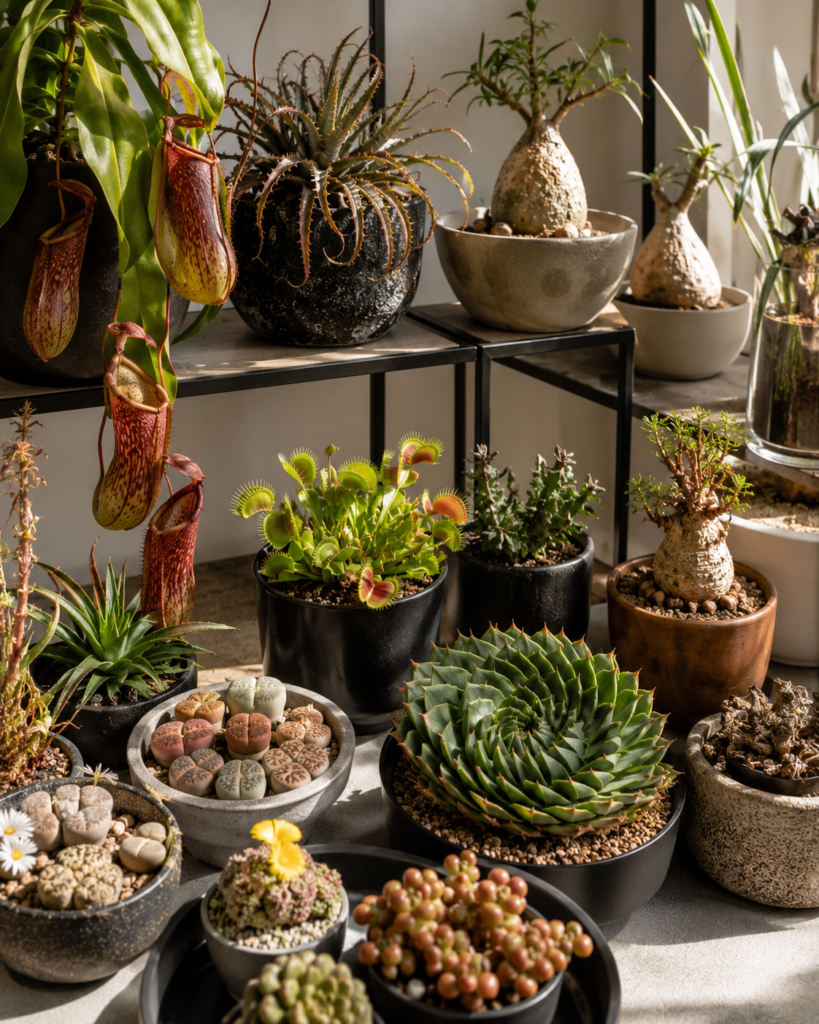
What Are the Most Unusual Succulent Plant Types?
Some rare succulents appear almost alien because of their unusual structure, texture, or growth habits.
Lithops is one of the most famous unusual succulents because its stone-like body evolved to blend into rocky desert environments. Another striking species is Trachyandra Tortilis, which develops curly spiral leaves resembling twisted ribbons.
Highly Unusual Succulent Plant Types
- Lithops
- Trachyandra Tortilis
- Euphorbia Obesa
- Conophytum
- Stapelia
- Boophane Disticha
- Pachypodium species
- Caudex succulents
Specialized Survival Traits of Rare Succulents
- Thick water-storing tissue
- Compact moisture-saving growth
- Camouflage coloration
- Hairy protective surfaces
- Spiral growth patterns
However, overwatering remains the most common care mistake.
How to Care for Rare Succulent Plants
- Bright light
- Minimal watering
- Strong drainage
- Mineral-rich substrate
- Good airflow
Which Rare Tropical Plants Thrive Indoors?
Many rare tropical plants adapt surprisingly well to indoor environments when provided with stable light, warmth, airflow, and balanced moisture.
Popular Rare Tropical Plants for Indoor Spaces
- Anthuriums
- Monsteras
- Philodendrons
- Alocasias
- Rare Hoyas
- Jewel Orchids
- Velvet-leaf climbers
Ideal Growing Conditions for Tropical Collector Plants
- Bright indirect light
- Warm temperatures
- Chunky airy soil
- Consistent moisture balance
- Moderate humidity
Despite their popularity, tropical plants still face indoor challenges such as dry HVAC air, poor airflow, and seasonal lighting changes.
How Climate Affects Rare Plant Success Indoors
Climate strongly affects whether rare plants thrive or struggle indoors. Tropical species evolved in warm humid forests with stable moisture and filtered light. Thin-leaf anthuriums and delicate philodendrons often struggle in homes with low humidity or strong HVAC airflow.
Common Indoor Climate Challenges for Rare Plants
- Dry climates increase leaf dehydration
- Cold climates reduce winter growth
- HVAC systems reduce humidity
- Dark winters reduce photosynthesis
- Apartments may limit airflow
- Hot summers increase watering needs
Indoor environmental stability often matters more than rarity itself when growing tropical collector plants.
| Plant Type | Dry Climate | Tropical Climate | Apartment Friendly |
| Raven ZZ Plant | Excellent | Good | Excellent |
| Hoya Compacta | Excellent | Good | Excellent |
| Monstera Thai Constellation | Moderate | Excellent | Good |
| Alocasia Dragon Scale | Moderate | Excellent | Good |
| Anthurium Warocqueanum | Poor | Excellent | Moderate |
| Euphorbia Obesa | Excellent | Moderate | Excellent |
| Monstera Obliqua | Poor | Excellent | Difficult |
What Are Carnivorous and Predator-Like Plant Types?
Carnivorous plants are among the most unusual plant categories because they actively trap and digest insects. These plants evolved in nutrient-poor soils where obtaining nutrients from prey became a survival advantage.
Venus Flytrap is one of the most recognizable carnivorous plants because of its snapping trap mechanism. Nepenthes species develop hanging pitchers filled with digestive fluid that trap insects.
Major Types of Carnivorous Plants
- Flytrap plants
- Pitcher plants
- Sundews
- Butterworts
- Bladderworts
Unique Adaptations Carnivorous Plants Developed
- Sticky insect-catching glands
- Trigger-sensitive traps
- Digestive enzymes
- Fluid-filled pitfall traps
- Vacuum-like underwater traps
How to Care for Carnivorous Plants Indoors
- Distilled or rainwater
- Nutrient-poor soil
- Bright light
- Mineral-free growing conditions
- Proper dormancy cycles
Which Rare Plants Are Worth Buying for Long-Term Collecting?
Not every expensive plant maintains long-term collector value. Some plants lose popularity rapidly once propagation increases availability, while others remain desirable because of unique growth habits, slow production, or botanical significance.
What Gives Rare Plants Long-Term Collector Value?
- Distinctive mature growth
- Strong visual identity
- Limited commercial production
- Stable collector interest
- Difficult propagation
- Historical significance
Rare Plants That Maintain Long-Term Popularity
- Anthurium Veitchii
- Spiritus Sancti
- Mature specimen bonsai
- Rare caudex plants
- Jewel orchids
- Large mature variegated monsteras
However, buyers should prioritize personal enjoyment rather than resale expectations.
Are Rare Plants Harder to Care For Than Common Plants?
Some rare plants are genuinely difficult, but rarity alone does not automatically mean high maintenance.
What Makes Rare Plants Difficult to Grow?
- Humidity requirements
- Root sensitivity
- Light sensitivity
- Temperature stability
- Pest susceptibility
- Watering balance
Thin-leaf tropical plants often require higher humidity than thick-leaf species. Meanwhile, some rare plants are surprisingly resilient. Raven ZZ plants, whale fin snake plants, and certain rare philodendrons tolerate normal indoor conditions quite well.
Common Care Mistakes Rare Plant Collectors Make
- Overwatering
- Using dense soil
- Insufficient light
- Poor airflow
- Constant environmental changes
Understanding a plant’s native habitat remains one of the most effective ways to improve care success.
How Can You Tell if a Rare Plant Is Authentic?
As plant collecting became more profitable, mislabeling and scams increased significantly. Many sellers incorrectly identify plants intentionally or accidentally, especially rare aroids and variegated species.
Authenticating rare plants requires careful evaluation of:
- Leaf shape
- Vein structure
- Growth habit
- Internode spacing
- Variegation pattern
- Mature characteristics
Monstera Obliqua is frequently confused with adansonii varieties because juvenile forms appear somewhat similar.
Signs of Trustworthy Rare Plant Sellers
- Clear mature plant photos
- Accurate botanical names
- Transparent propagation details
- Rooted specimen images
- Consistent reputation
- Realistic pricing
Collectors should understand the difference between stable variegation, sport variegation, reverted plants, and tissue-cultured specimens to avoid expensive mistakes.
What Problems Do Rare Plant Collectors Commonly Face?
One of the biggest problems collectors face is environmental mismatch. Plants adapted to tropical cloud forests often struggle in dry homes with inconsistent temperatures.
Common Problems Rare Plant Collectors Experience
- Pest outbreaks
- Root rot
- Humidity instability
- Poor lighting
- Shipping damage
- Overcrowded collections
- Impulse purchases
- Misidentified plants
Spider mites especially target thin-leaf tropical foliage plants in dry conditions.
Why Rare Plants Often Die After Shipping
Rare plants often struggle after shipping because they experience sudden environmental stress during transport. Temperature swings, darkness, poor airflow, and humidity changes weaken roots and foliage before the plant even arrives.
Common Shipping Problems Rare Plants Face
- Root rot from trapped moisture
- Leaf dehydration
- Cold or heat damage
- Sudden humidity drops
- Stem damage
- Acclimation shock
- Overwatering after arrival
Many rare plants die after shipping because buyers repot them too quickly. Newly shipped plants usually need time to recover before major environmental changes are made.
How to Help Rare Plants Recover After Shipping
- Stable warmth
- Indirect light
- Moderate humidity
- Patience during acclimation
- Careful watering
Collectors who understand post-shipping stress usually experience much higher long-term survival rates.
Which Rare Plants Work Best in Modern Interior Design?
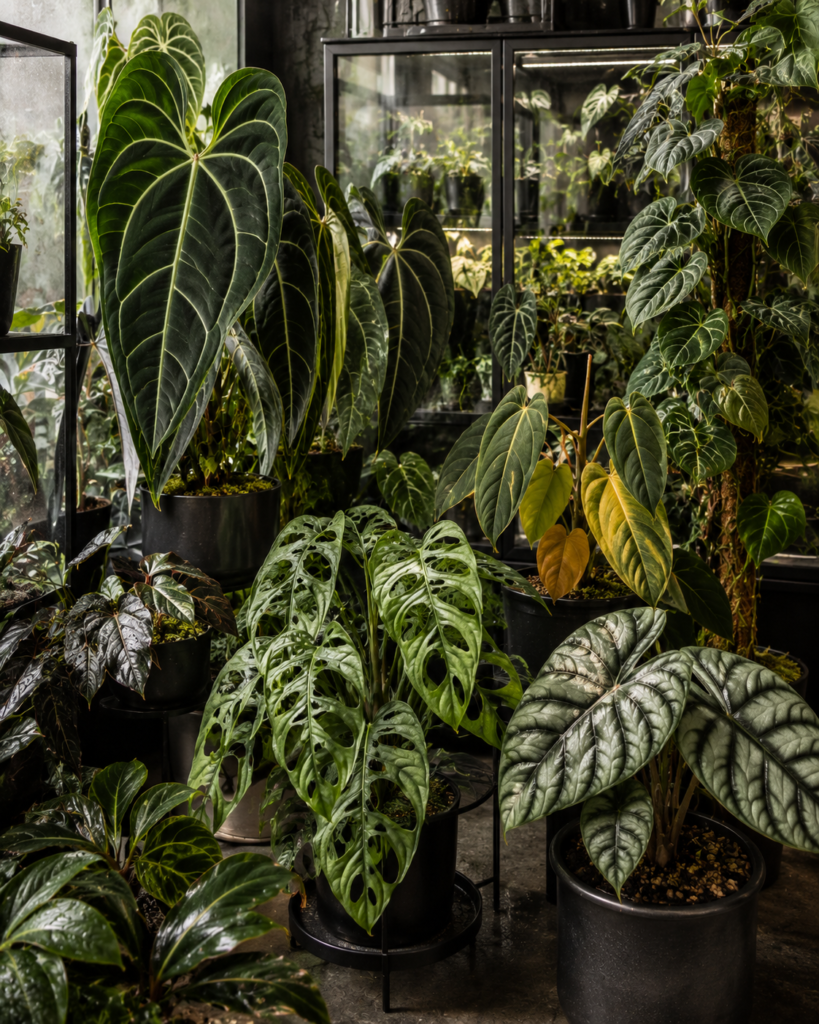
Rare plants became closely connected to modern interior design because they provide sculptural forms, texture contrast, and natural movement within minimalist spaces.
Rare Plants With Strong Architectural Structure
- Anthuriums
- Monsteras
- Large alocasias
- Tall cacti
- Black foliage plants
- Caudex plants
How Interior Designers Use Rare Plants
- Focal points
- Organic sculpture
- Texture layering
- Color contrast
- Vertical visual structure
Best Rare Plants for Minimalist Interiors
Rare plants work especially well in minimalist interiors because their sculptural shapes and dramatic foliage create visual impact without cluttering spaces.
- Raven ZZ Plant
- Anthurium Veitchii
- Whale Fin Snake Plant
- Monstera Thai Constellation
- Alocasia Dragon Scale
- Boophane Disticha
- Hoya Compacta
- Rare columnar cacti
Are Rare Plants Ethical and Sustainable to Buy?
Ethical sourcing became increasingly important as rare plant demand expanded globally. Some wild plant populations suffered from overcollection due to collector demand.
How Responsible Growers Produce Rare Plants
- Tissue culture
- Greenhouse propagation
- Seed-grown cultivation
- Nursery-raised stock
What Ethical Plant Collectors Prioritize
- Propagated specimens
- Reputable nurseries
- Conservation awareness
- Sustainable cultivation
Supporting responsible growers helps balance collector demand with botanical conservation.
Quick Rare Plant Recommendations by Situation
Choosing the right rare plant becomes easier when plants are matched to climate, experience level, and indoor conditions instead of trends alone.
Best Rare Plants for Beginners
- Monstera Thai Constellation
- Raven ZZ Plant
- Whale Fin Snake Plant
- String of Turtles
Best Rare Plants for Dry Homes
- Hoya Compacta
- Raven ZZ Plant
- Rare sansevierias
- Caudex plants
Best Rare Tropical Collector Plants
- Anthurium Warocqueanum
- Philodendron Spiritus Sancti
- Monstera Obliqua
- Velvet philodendrons
Best Low-Maintenance Rare Plants
- Whale Fin Snake Plant
- Hoya Kerrii
- Raven ZZ Plant
- Euphorbia Obesa
Best Rare Plants for Statement Foliage
- Anthurium Veitchii
- Monstera Thai Constellation
- Giant Alocasias
- Philodendron Melanochrysum
Final Thoughts on Rare and Unusual Plant Types
Rare and unusual plant types combine botanical fascination, interior design value, and collector culture into one rapidly growing category of indoor gardening. These plants attract attention because of extraordinary foliage, unusual growth habits, dramatic textures, or biological adaptations.
Successful collecting depends on understanding plant biology, environmental compatibility, and sustainable care. Some rare plants thrive indoors for years, while others require greenhouse-level attention that many collectors underestimate.
The most rewarding collections are usually built gradually through experience rather than impulse buying. Choosing plants that genuinely match a collector’s climate, lighting conditions, and care abilities creates healthier long-term results than simply pursuing the most expensive or viral species.
As propagation improves, many formerly inaccessible plants continue becoming more affordable and widely available.
FAQ Section
What makes a plant rare instead of just expensive?
A plant is truly rare when it is difficult to propagate, grows slowly, or exists in limited natural habitats. Expensive plants are sometimes only temporarily overpriced because of collector hype.
Which rare plants are easiest for beginners to grow indoors?
Monstera Thai Constellation, Raven ZZ Plant, and whale fin snake plants are among the easiest rare plants for beginners.
Why are variegated plants so expensive?
Variegated plants grow slower because lighter leaf sections contain less chlorophyll. Stable variegation is also harder to reproduce.
Are rare plants harder to care for than regular houseplants?
Not always. Some rare plants are highly adaptable indoors, while others require stable humidity and filtered light.
Which rare plants survive best in dry homes?
Plants with thicker leaves or succulent-like growth usually perform best in dry air. Rare hoyas and caudex plants tolerate lower humidity well.
Why do rare plant prices sometimes crash?
Prices often drop when tissue culture and large-scale propagation increase availability.
Are tissue-cultured rare plants less valuable?
Tissue-cultured plants are usually cheaper because they are mass produced, but they are often healthier and more stable.
Which rare plants are best for modern interior design?
Large tropical foliage plants such as Anthurium Veitchii and variegated monsteras work especially well in modern interiors.
Why do rare tropical plants struggle after shipping?
Shipping stress, darkness, and sudden humidity changes weaken plants during transport.
Are carnivorous plants difficult to grow indoors?
Carnivorous plants need distilled water, nutrient-poor soil, and strong light, but many can grow successfully indoors with proper care.
Myra is the founder and lead writer of Plantsaholic. She shares practical, research-backed advice on indoor plants, outdoor gardening, flowers, herbs, succulents, and everyday plant care. Her goal is to help gardeners of all experience levels grow healthier plants through simple, easy-to-follow gardening guides.