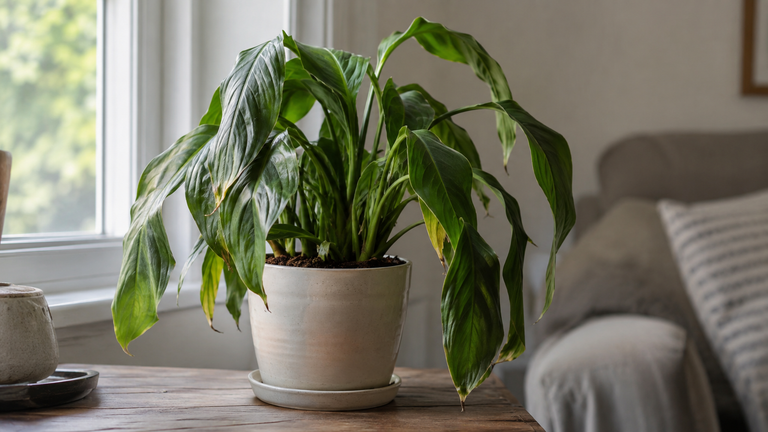
Plant leaves usually curl because of watering problems, heat stress, humidity loss, pests, poor lighting, root damage, or nutrient imbalance. Curl direction, leaf texture, color changes, and growth patterns help identify the exact issue. Fast diagnosis matters because prolonged curling weakens photosynthesis, slows growth, and increases long-term plant stress.
Indoor plants often show leaf curling earlier than outdoor plants because containers, artificial climate control, limited airflow, and inconsistent humidity create faster environmental fluctuations. Some plants curl dramatically after only minor stress changes, while others show gradual deformation over weeks.
Understanding why leaves curl is important because the symptom itself is not the disease. Plants curl leaves to reduce water loss, protect tissue from heat, respond to root pressure imbalance, or defend against environmental stress. The real solution depends on identifying the exact trigger before permanent damage spreads through the plant.
Quick Signs That Identify Why Plant Leaves Curl
Dry crispy curling usually points toward dehydration, heat stress, or low humidity, while soft downward curling often signals excess moisture or root oxygen problems.
Use this quick diagnosis guide before making environmental changes:
| Symptom Combination | Most Likely Cause |
| Dry upward curl + hot window | Heat stress |
| Soft downward curl + wet soil | Overwatering |
| Crispy edges + dry air | Low humidity |
| Twisted new growth | Pests |
| Curling + white soil crust | Salt buildup |
| Curling after repotting | Root disturbance |
Helpful early warning signs include:
- Curling only near windows
- Dry crispy leaf edges
- Sudden twisting in new growth
- Curling despite wet soil
- Brown tips with folded edges
- Curling after seasonal changes
Real-world diagnosis works best when multiple symptoms are evaluated together. Curling patterns combined with environmental context usually reveal the real stress source much faster than isolated leaf observation.
Why Are My Plant Leaves Curling?
Plant leaves curl because the plant is trying to protect itself from stress. In reality, overwatered roots can cause curling just as easily as dry soil.
Common causes of curling leaves include:
- Overwatering
- Underwatering
- Heat stress
- Low humidity
- Pest infestations
- Excessive direct sunlight
What Does Leaf Curl Direction Mean?
This is commonly seen during underwatering, excessive heat, low humidity, or direct sun exposure.
Overwatered roots lose oxygen access, which interrupts healthy water movement through the plant. As pressure regulation weakens, leaves begin folding downward or inward. This curling often feels softer and heavier than dehydration-related curling.
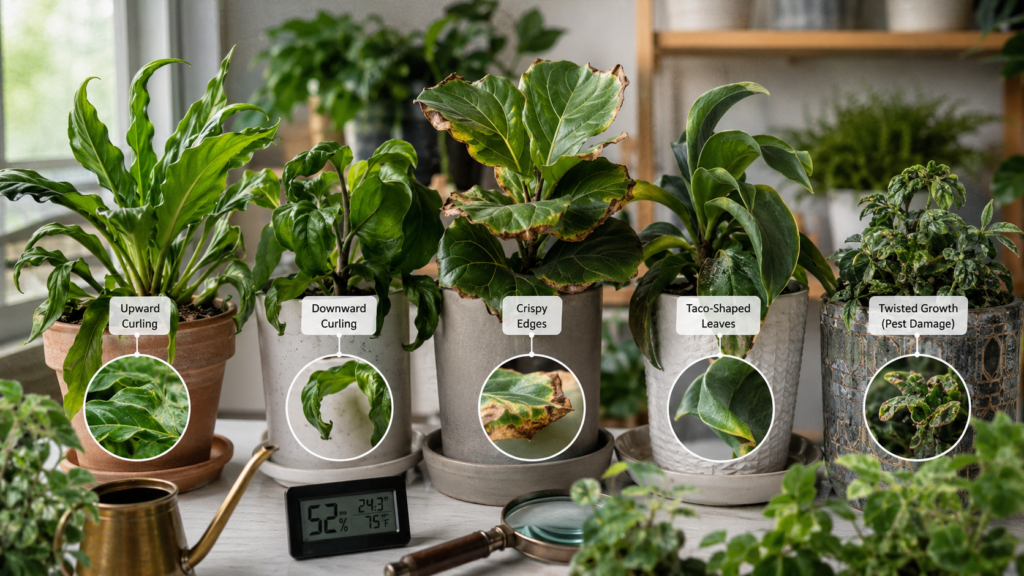
Different curl patterns usually mean different environmental triggers:
| Curl Pattern | Likely Cause |
| Upward dry curl | Heat or underwatering |
| Downward soft curl | Overwatering |
| Twisted growth | Pests or nutrient issues |
| Crispy edge curl | Low humidity |
| Taco-shaped leaves | Excess sunlight |
Can Overwatering Cause Plant Leaves to Curl?
Yes, overwatering is one of the most common reasons indoor plant leaves curl downward. When air pockets disappear inside constantly wet soil, root cells weaken and begin struggling to transport moisture effectively through the plant.
Why Overwatered Roots Cause Curling Leaves
Plant roots require oxygen to support cellular respiration and maintain internal energy production. When soil stays constantly saturated, the tiny oxygen pockets inside the potting mix collapse. This is why overwatered plants can appear wilted, curled, or droopy even while surrounded by wet soil.
Once root tissue starts deteriorating, the plant loses its ability to regulate moisture properly, creating soft downward curling throughout the foliage. Prolonged oxygen deprivation may also trigger root rot, yellowing leaves, and slowed growth.
Indoor Conditions That Increase Overwatering Risk
- Poor drainage pots
- Dense compacted soil
- Oversized containers
- Cold wet conditions
- Low winter light
- Poor airflow around roots
- Frequent watering schedules
Many indoor plants use water more slowly during winter or low-light conditions, but consistent watering schedules often leave roots sitting in wet soil for too long.
Helpful Signs of Overwatering
- Wet soil lasting several days
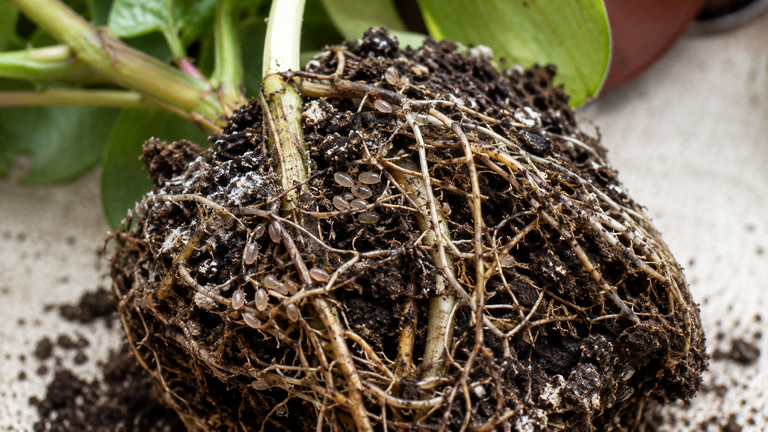
- Fungus gnats around containers
- Soft yellow curling leaves
- Moldy soil smell
- Mushy brown roots
Overwatering symptoms often begin below the soil surface, causing subtle curling, drooping, and leaf softening before severe yellowing or root rot develops.
Overwatering vs Underwatering Curling Symptoms
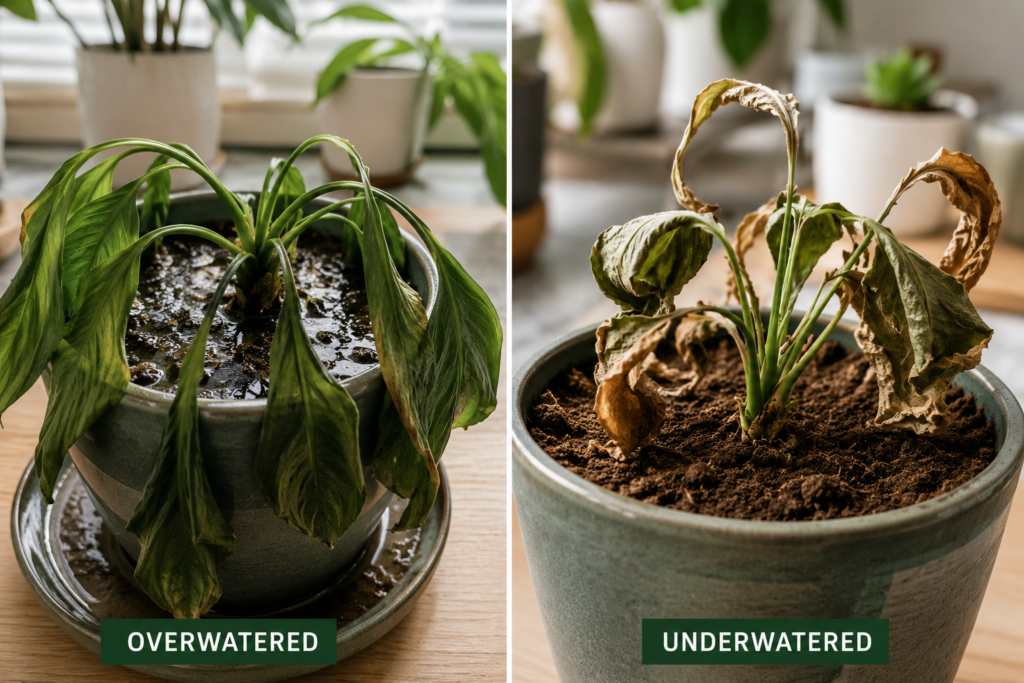
The biggest difference is usually leaf texture and soil behavior. Overwatered plants often develop soft flexible curling with persistently wet soil, while underwatered plants tend to show crispy curling with lightweight dry containers.
Accurate diagnosis becomes easier when soil moisture, root health, and environmental conditions are evaluated together instead of relying only on surface symptoms. If you are still unsure how to identify the difference correctly, the detailed comparison in Overwatering vs Underwatering Plants explains how soil moisture, root oxygen, leaf texture, and plant recovery patterns reveal the actual problem.
Key differences often include:
| Symptom | Overwatering | Underwatering |
| Leaf texture | Soft | Crispy |
| Soil condition | Wet | Dry |
| Pot weight | Heavy | Light |
| Root condition | Mushy | Dry/shrunken |
| Recovery speed | Slow | Often fast |
Decision clarity matters because incorrect treatment can accelerate stress quickly. Adding more water to an already saturated root system often worsens curling dramatically instead of helping the plant recover.
Does Underwatering Make Leaves Curl?
Underwatering commonly causes leaves to curl upward because the plant is trying to reduce moisture loss. As internal water pressure drops, leaf tissue begins folding inward or upward to conserve remaining hydration.
Several environmental factors accelerate underwatering indoors:
- Small containers
- Strong sunlight
- Low humidity
- Heating systems
- Fast-draining soil
- Rootbound conditions
Sometimes roots cannot absorb moisture effectively even when watering occurs regularly. Hydrophobic soil, salt buildup, severe root binding, or damaged roots can all create dehydration symptoms despite frequent watering.
Signs of underwatering often include:
- Dry crispy upward curl
- Lightweight containers
- Brown leaf tips
- Rapid perk-up after watering
- Soil shrinking from pot edges
Can Heat Stress Curl Plant Leaves?
Plants positioned near south-facing windows frequently struggle during summer afternoons because glass intensifies heat far beyond normal room temperature.
Heat stress worsens with:
- Low humidity
- Direct afternoon sun
- Dry indoor air
Common heat stress symptoms include:
- Upward taco curling
- Crispy edges
- Brown scorch patches
- Afternoon wilting
- Dry leaf margins
Does Low Humidity Cause Curling?
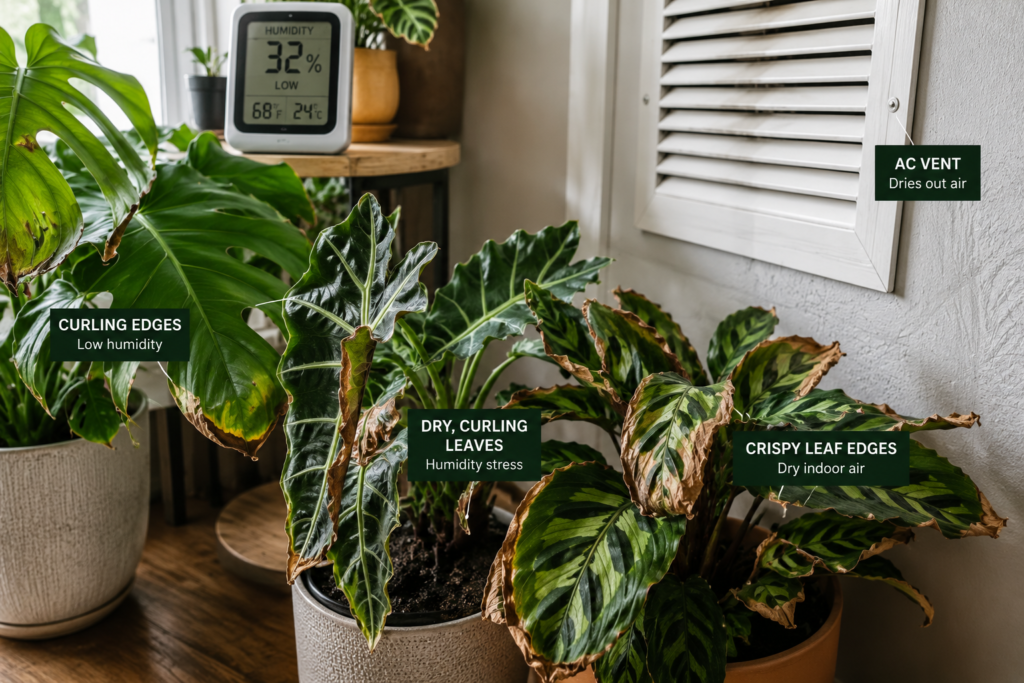
Tropical species like calatheas, prayer plants, ferns, and alocasias are especially sensitive because their thin leaves lose water rapidly in dry air.
Humidity-related curling often appears with:
- Crispy leaf edges
- Brown tips
- Thin curling margins
- Dry texture
- Curling despite moist soil
Indoor humidity becomes particularly problematic in rooms with:
- Central heating
- Air conditioning
- Strong ceiling fans
- Poor airflow
- Winter dryness
Long-term humidity improvement methods include:
- Humidifiers
- Plant grouping
- Reduced vent exposure
Why Do Plant Leaves Curl More During Winter?
Heating systems reduce humidity levels sharply, while shorter daylight hours slow plant growth and water usage.
Winter conditions also increase the risk of accidental overwatering because evaporation slows significantly indoors. Many plant owners continue watering on the same schedule used during summer, which leaves roots sitting in wet soil for longer periods. At the same time, cold drafts near windows and dry heater airflow create unstable conditions that many tropical plants struggle to tolerate.
Common winter stress factors include:
- Dry indoor heating
- Low humidity
- Reduced sunlight
- Cold drafts
- Slower evaporation
- Inconsistent watering routines
Why Tropical Plants Curl More in Dry Winter Air
Tropical species like calatheas, ferns, and prayer plants are especially sensitive because they evolved in stable rainforest climates with consistent warmth and humidity year-round.
Decision clarity matters because misting alone rarely fixes chronic dry-air stress. Sustainable humidity management creates healthier recovery than temporary surface moisture sprays.
Why Humidity Stress Gets Mistaken for Underwatering
Humidity-related curling frequently gets mistaken for underwatering because the visual symptoms overlap heavily. Tropical plants lose moisture rapidly in dry indoor air, which causes leaves to curl even when the root zone remains adequately moist. Many plant owners respond by watering more often, but excessive watering does not solve air moisture problems and may eventually damage the roots instead.
Understanding how humidity affects transpiration becomes extremely important for indoor tropical plant care. Plants naturally release moisture through microscopic pores called stomata. When indoor humidity drops too low, moisture escapes faster than roots can replace it, especially in species with thin delicate foliage. Learning how humidity levels affect transpiration, leaf edges, and moisture balance becomes much easier through a dedicated Houseplant Humidity Guide focused on ideal humidity ranges for different plant types.
Helpful humidity management strategies include:
- Using humidifiers
- Grouping plants together
- Moving plants away from vents
- Monitoring humidity levels
- Reducing strong airflow exposure
Indoor environments vary dramatically between seasons and rooms. A bathroom may support tropical plants easily, while a heated bedroom may remain too dry for healthy foliage without additional humidity support.
Which Pests Cause Curling Leaves?
In many cases, new leaves curl first because young tissue is softer and easier for pests to attack.
Aphids, spider mites, thrips, and broad mites are among the most common curling-related pests indoors. Spider mites create fine webbing and dry curling, especially in warm dry rooms. Thrips damage internal leaf tissue, leading to distorted or twisted growth that worsens over time.
Common pest-related curling symptoms include:
- Twisted new growth
- Sticky leaf residue
- Silver streaking
- Fine webbing
- Distorted leaf edges
- Tiny moving insects
Overfertilized plants are also more vulnerable because soft nutrient-rich growth attracts feeding insects.
Helpful pest clues include:
| Symptom | Possible Pest |
| Sticky leaves | Aphids |
| Fine webbing | Spider mites |
| Silver scars | Thrips |
| Distorted new leaves | Broad mites |
Can Too Much Sunlight Curl Leaves?
Sun-related curling often develops alongside faded color, crispy edges, brown scorch patches, or upward taco-shaped folding. South-facing and west-facing windows usually create the strongest stress because afternoon sunlight becomes extremely intense indoors.
Plants most vulnerable to sunlight curling include:
- Calatheas
- Prayer plants
- Ferns
- Fittonias
- Peace lilies
More tolerant species include:
- Snake plants
- Succulents
- Jade plants
- Cacti
Many indoor plant owners misunderstand bright indirect light and accidentally expose sensitive foliage to excessive direct sun. Tropical plants that evolved beneath forest canopies often tolerate brightness very well, but they struggle when harsh afternoon rays hit leaf surfaces directly for long periods. Learning how window direction, seasonal sunlight intensity, and filtered exposure affect indoor plants becomes much easier through a dedicated Bright Indirect Light Guide focused on healthy plant placement.
Light stress becomes more severe when combined with:
- Low humidity
- Heat buildup
- Dry soil
- Dark containers
- Poor airflow
Window glass can also magnify heat around the foliage, especially during afternoon hours.
Helpful sunlight adjustment strategies include:
- Moving plants farther from windows
- Using sheer curtains
Common signs of excessive sunlight include:
- Upward leaf curling
- Bleached fading
- Dry crispy patches
- Window-facing damage
- Heat buildup near glass
Decision clarity matters because many people misunderstand “bright indirect light.” Most indoor plants still need strong brightness, but filtered exposure works better than harsh direct afternoon rays for tropical foliage species.
Why Are My Plant Leaves Curling and Turning Yellow?
Leaf curling combined with yellowing usually signals deeper stress affecting both moisture regulation and nutrient transport inside the plant. When both symptoms appear together, root stress, overwatering, poor drainage, or prolonged environmental imbalance become much more likely than simple temporary dehydration alone.
As root function weakens, nutrient absorption slows and leaves begin yellowing while also curling downward. However, prolonged underwatering can eventually create similar symptoms because dehydrated roots struggle to move nutrients effectively through the plant.
Common causes include:
- Root rot
- Saturated soil
- Nutrient imbalance
- Salt buildup
- Cold wet conditions
- Chronic stress
Older leaves yellowing first often points toward watering or root-related stress, while distorted yellow new growth may suggest pests or nutrient transport problems. Plants suffering from severe environmental instability sometimes develop both simultaneously.
Diagnosis clues:
| Symptom Pattern | Most Likely Cause |
| Yellow + soft curl | Overwatering |
| Yellow + crispy edges | Heat or dryness |
| Pale curled new leaves | Nutrient imbalance |
| Curling + patchy yellowing | Root stress |
Why Are New Leaves Curling but Old Leaves Look Fine?
When only new growth curls, the problem often relates to pests, nutrient imbalance, environmental instability, or root stress affecting developing tissue.
Common causes include:
- Aphids
- Thrips
- Calcium deficiency
- Overfertilization
- Root damage
- Sudden humidity shifts
Calcium problems are especially important because calcium supports cell wall formation. New leaves may emerge distorted, folded, or twisted when calcium transport becomes disrupted.
Pest damage frequently targets fresh growth because soft tissue is easier to penetrate.
Signs the issue affects developing tissue specifically:
| Symptom | Likely Cause |
| Twisted new leaves | Pests |
| Small curled leaves | Nutrient issue |
| Deformed growth center | Thrips |
| Pale curled tips | Root stress |
| Tight folded leaves | Humidity fluctuation |
Older leaves staying healthy usually means the plant still has functional root reserves. Early intervention often prevents widespread damage.
Can Fertilizer Burn Curl Plant Leaves?
Yes. Excess fertilizer can damage roots and create leaf curling through salt accumulation and osmotic stress.
Fertilizer burn commonly causes:
- Curled tips
- Brown margins
- Crispy edges
- Yellowing
- Weak new growth
Several factors increase fertilizer burn risk:
- Frequent feeding
- Poor drainage
- Hard water use
- Winter fertilization
- Compact soil
- Sensitive tropical species
Salt buildup becomes especially problematic in containers because minerals cannot flush naturally like outdoor soil systems.
White crust on soil surfaces or pot rims often signals mineral accumulation.
- Diluted fertilizer strength
- Seasonal adjustment
- Periodic soil flushing
- Balanced nutrient formulas
Plants recovering from stress should rarely receive heavy fertilization immediately.
Why Do Indoor Plants Curl More Often Than Outdoor Plants?
Indoor plants experience more environmental instability than outdoor plants because container conditions change rapidly.
Indoor plants face several unique stressors:
- Dry HVAC air
- Limited airflow
- Artificial lighting imbalance
- Pot confinement
- Salt buildup
- Irregular watering patterns
Outdoor plants usually benefit from:
- Natural rainfall cycles
- Better root expansion
- Stable humidity
- Continuous airflow
- Microbial diversity
Winter heating produces warm temperatures combined with extremely dry air, which many tropical plants never experience naturally.
| Indoor Condition | Curling Risk |
| AC vent exposure | High |
| Small pots | High |
| Dry heated rooms | Severe |
| Inconsistent watering | High |
| Poor airflow | Moderate |
Can Root Problems Cause Curling Leaves?
Yes. Root problems commonly cause leaf curling because roots control water and nutrient transport throughout the plant. Damaged roots disrupt pressure balance inside leaves, leading to curling, drooping, or deformation.
Common root-related causes include:
- Root rot
- Root binding
- Soil compaction
- Poor drainage
- Mechanical root damage
Water sometimes runs around compacted roots instead of penetrating evenly.
Signs root problems may be causing curling:
- Wet soil + curling
- Slow growth
- Yellowing
- Wilting despite moisture
- Mushy roots
- Foul odor
Healthy roots should appear:
- Firm
- White or tan
- Slightly moist
- Fresh-smelling
Why Do Leaves Curl After Repotting?
Repotting temporarily stresses plants because roots become disturbed during the transition.
- Roots were damaged
- Soil moisture changed suddenly
- Humidity shifted
- Roots lost contact with surrounding soil
- Light exposure changed
Common repotting mistakes include:
- Oversized pots
- Dense soil mixes
- Immediate heavy fertilization
- Excess watering
- Root pruning shock
Signs normal repotting stress is improving:
- Curling stabilizes
- New growth appears
- Leaves stop worsening
- Soil dries evenly
Can Tap Water Cause Leaf Curling?
Yes. Poor water quality can contribute to curling, especially in sensitive tropical plants.
Common problematic substances include:
- Fluoride
- Chlorine
- Chloramine
- Calcium salts
- Magnesium buildup
Sensitive plants often react through:
- Brown tips
- Curling edges
- Mineral spotting
- Weak growth
Calatheas, spider plants, dracaenas, and prayer plants are particularly sensitive to fluoride and salt accumulation.
Signs water quality may contribute to curling:
| Sign | Water Issue Likelihood |
| White soil crust | High |
| Brown tips + curling | Moderate to high |
| Sensitive tropical species | Higher risk |
| Long-term container use | Higher risk |
How Can You Tell if Curling Is Serious?
Temporary environmental stress may resolve quickly, while progressive curling combined with discoloration often signals deeper problems.
Warning signs include:
- Rapid spreading
- Blackening tissue
- Stem collapse
- Severe yellowing
- Mushy roots
- Pest infestation
- Growth stoppage
Severe root or pest damage worsens continuously without intervention.
Helpful severity indicators:
| Severity | Signs |
| Mild | Minor edge curl only |
| Moderate | Curl + discoloration |
| Serious | Curl + rot or pests |
| Severe | Collapse and tissue death |
Can Curled Leaves Recover?
Recovery depends on how much structural tissue remains alive. Mildly curled leaves often flatten partially after environmental correction, while severely damaged tissue usually stays deformed permanently.
- Stress is identified early
- Roots remain healthy
- New growth stays normal
- Environmental conditions stabilize quickly
Severely crispy or necrotic areas rarely return to normal.
Typical recovery timelines:
| Cause | Recovery Window |
| Underwatering | Days |
| Humidity stress | 1–2 weeks |
| Heat stress | 1–3 weeks |
| Overwatering | Several weeks |
| Root rot | Variable |
Should You Remove Curled Leaves?
Slightly curled leaves still contribute energy through photosynthesis. Removing too many stressed leaves can weaken already struggling plants.
Leaves should usually stay unless they are:
- Mostly dead
- Crispy beyond recovery
- Diseased
- Severely infested
- Blocking airflow
How to Fix Curling Leaves Step by Step
The best recovery strategy focuses on diagnosis before treatment.
Step 1: Check Soil Moisture
Use finger testing or a moisture meter.
Step 2: Inspect for Pests
Examine:
- Leaf undersides
- Growth points
- Stem joints
Step 3: Evaluate Light
Look for:
- Window scorch
- Uneven growth
- Heat exposure
Step 4: Measure Humidity
Especially important for tropical plants.
Step 5: Inspect Roots
Check for:
- Rot
- Root binding
- Compaction
Step 6: Adjust Watering
Focus on consistency instead of rigid schedules.
Step 7: Stabilize Environment
Avoid sudden changes while the plant recovers.
Which Plants Are Most Sensitive to Leaf Curling?
Some plants respond dramatically to even minor environmental stress.
Highly sensitive plants include:
- Calatheas
- Prayer plants
- Ferns
- Alocasias
- Peace lilies
- Maidenhair ferns
Moderately tolerant plants:
- Monstera
- Philodendron
- Pothos
More resilient plants:
- Snake plants
- ZZ plants
- Succulents
Understanding species sensitivity helps prevent overreaction during minor stress events.
When Is Leaf Curling Normal?
Not all leaf curling indicates severe plant stress. Some plants naturally curl or reposition their leaves temporarily in response to changing light, heat, or moisture conditions throughout the day. Prayer plants and oxalis species, for example, naturally move their foliage as part of their normal daily rhythm. Mild temporary curling without discoloration, tissue damage, or growth decline is often harmless.
Plants also sometimes curl slightly during brief periods of heat or strong sunlight to conserve moisture. This temporary protective response usually resolves once temperatures cool or environmental conditions stabilize again. The key difference is whether the curling continues worsening or begins affecting overall plant health.
Normal temporary curling usually includes:
- No yellowing
- No crispy edges
- Healthy new growth
- Stable soil moisture
- No pest activity
Warning signs that curling is becoming serious include:
- Spreading discoloration
- Persistent deformities
- Soft collapsing
- leaves Growth slowdown
- Root odor or rot
Final Thoughts on Why Plant Leaves Curl
Leaf curling is a stress signal rather than a standalone disease.
The most effective diagnosis combines:
- Curl direction
- Texture
- Moisture level
- Environmental conditions
- Growth patterns
- Root health
Stable watering, proper humidity, balanced light, healthy roots, and good airflow create stronger long-term plant resilience.
Plants communicate through structure changes, and leaf curling is one of the clearest early warning systems indoor gardeners can learn to interpret.
FAQ SECTION
Why are my plant leaves curling but still green?
Green curling leaves usually indicate early environmental stress before severe damage begins. Common causes include low humidity, underwatering, heat stress, or excessive sunlight. Plants often recover quickly if conditions improve early.
Is leaf curling always caused by watering problems?
No. Leaf curling can also result from low humidity, pests, excessive sunlight, heat stress, fertilizer burn, or root problems. Watering is only one possible cause.
Why are my plant leaves curling and turning yellow at the same time?
Curling with yellowing often points toward overwatering, root stress, or nutrient imbalance. Soft yellow curling commonly happens when roots stay wet for too long.
Can low humidity really curl plant leaves indoors?
Yes. Dry indoor air increases moisture loss from leaves, especially in tropical plants like calatheas and ferns. This commonly causes crispy curling edges and brown tips.
Why do plant leaves curl more during winter?
Winter heating lowers humidity while reduced sunlight slows plant growth. This combination creates dry air stress and increases the risk of overwatering indoors.
Can too much sunlight curl leaves even indoors?
Yes. Strong direct sunlight through windows can overheat leaves and increase moisture loss. Tropical plants often curl upward when exposed to harsh afternoon sun.
Which pests commonly cause curling leaves?
Aphids, spider mites, thrips, and broad mites commonly cause curling by damaging leaf tissue and feeding on sap. Twisted new growth is often an early warning sign.
Why are new leaves curling while old leaves look normal?
New leaves are softer and more sensitive to stress. Pests, nutrient imbalance, humidity changes, and environmental instability commonly affect new growth first.
Can overwatering and underwatering both cause curling?
Yes. Overwatering usually causes soft downward curling with wet soil, while underwatering causes dry crispy upward curling with dry soil.
What is the fastest way to diagnose curling leaves?
Compare curl direction, leaf texture, soil moisture, and environmental conditions together. Multiple symptoms usually reveal the real problem faster than one symptom alone.
Myra is the founder and lead writer of Plantsaholic. She shares practical, research-backed advice on indoor plants, outdoor gardening, flowers, herbs, succulents, and everyday plant care. Her goal is to help gardeners of all experience levels grow healthier plants through simple, easy-to-follow gardening guides.