
Monarch butterfly plants are specific host and nectar plants that support the entire life cycle of monarch butterflies. The most important is Milkweed, which monarch caterpillars rely on exclusively. Nectar plants like Lantana and Coneflower provide energy for adult butterflies, helping them survive, reproduce, and migrate.
Monarch butterflies depend on a specific group of plants for survival. Without these plants, their life cycle cannot continue. This makes plant selection the most important factor in attracting and supporting monarch populations.
Creating a monarch-friendly garden is not just about planting flowers. It is about building a complete ecosystem that supports butterflies at every stage, from egg to adult.
What Are Monarch Butterfly Plants?
Monarch butterfly plants are plants that provide essential resources for monarch butterflies throughout their life cycle. These plants are divided into two main categories: host plants and nectar plants. Host plants support reproduction, while nectar plants provide food for adult butterflies.
The most critical role is played by host plants, where monarchs lay their eggs. Once the eggs hatch, caterpillars feed exclusively on these plants. Nectar plants then provide energy for adult butterflies, allowing them to fly, reproduce, and migrate.
Key characteristics of monarch butterfly plants:
- Support butterfly life cycle stages
- Provide food for caterpillars and adults
- Attract pollinators
- Promote biodiversity
- Easy to grow in gardens
These plants create a complete support system for monarch survival.
Why Milkweed Is Essential for Monarch Butterflies
Milkweed is the foundation of the monarch butterfly life cycle. It is the only plant on which monarch butterflies lay their eggs, and it is the sole food source for their caterpillars.
Milkweed contains natural compounds that make caterpillars toxic to predators. This provides protection and increases survival rates. Without milkweed, monarch populations cannot sustain themselves.
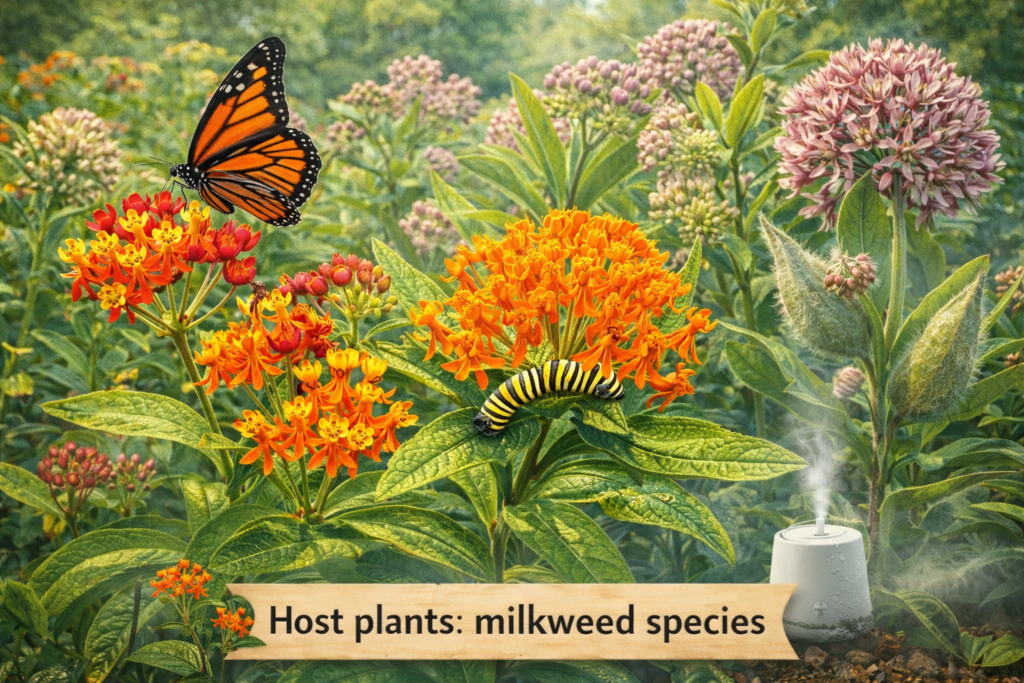
Importance of milkweed:
- Required for egg-laying
- Exclusive food source for caterpillars
- Provides chemical defense
- Supports full life cycle
- Essential for conservation
Milkweed is the core plant for monarch survival.
Best Nectar Plants for Monarch Butterflies
While milkweed supports the early stages of life, adult monarch butterflies rely on nectar plants for energy. These plants provide the sugars needed for flight, reproduction, and long-distance migration.
A variety of nectar plants ensures continuous blooming, providing a reliable food source throughout the season. This is especially important during migration periods.
Top nectar plants:
- Lantana: bright and long-lasting blooms
- Coneflower: durable and attractive flowers
- Zinnia: easy to grow and colorful
- Butterfly bush: highly attractive to butterflies
- Goldenrod: supports late-season feeding
Nectar plants provide energy for adult butterflies.
Monarch Butterfly Lifecycle (Step-by-Step)
Monarch butterflies follow a complete metamorphosis lifecycle that depends entirely on the right plants at each stage. The process begins when adult butterflies lay eggs exclusively on Milkweed. These eggs hatch into caterpillars, which immediately begin feeding on milkweed leaves.
The caterpillar stage is critical because it is the only time monarchs consume milkweed, gaining both nutrients and chemical protection. After growing, the caterpillar forms a chrysalis, where transformation into an adult butterfly occurs. Once emerged, the adult butterfly feeds on nectar plants and continues the cycle.
Lifecycle stages:
- Egg: laid on milkweed leaves
- Larva: caterpillar feeds on milkweed
- Pupa: chrysalis stage for transformation
- Adult: feeds on nectar plants
- Reproduction cycle repeats
Each stage depends on specific plants for survival.
How Monarch Migration Works
Monarch butterflies are famous for their long-distance migration, especially in North America. They travel thousands of kilometers between breeding and overwintering sites. This journey requires a continuous supply of nectar plants along their path.
Migration typically occurs seasonally, with butterflies moving to warmer regions during colder months. Along the way, they rely on flowering plants to provide energy for flight.
Migration features:
- Seasonal movement between regions
- Long-distance travel
- Dependence on nectar plants
- Multi-generational journey
- Requires habitat continuity
Migration depends on plant availability across regions.
Best Time to Plant Monarch Plants
Timing is crucial when planting monarch butterfly plants. Planting at the right time ensures that plants are mature when butterflies arrive for breeding and feeding.
Spring is generally the best time to plant milkweed and nectar plants, as it aligns with the start of the breeding season. However, planting schedules may vary depending on climate and region.
Planting timeline:
- Spring: plant milkweed for egg-laying
- Early summer: add nectar plants
- Late summer: support migration
- Fall: maintain blooming plants
- Adjust timing based on climate
Proper timing ensures continuous support for monarchs.
Native vs Non-Native Milkweed
Choosing between native and non-native milkweed species can significantly impact monarch populations. Native milkweed is adapted to local environments and supports natural migration patterns.
Non-native species may grow easily but can sometimes disrupt migration behavior or fail to provide the same ecological benefits. For this reason, native species are generally recommended.
Comparison:
- Native milkweed supports local ecosystems
- Non-native may disrupt migration
- Native plants require less maintenance
- Better adaptation to climate
- Supports biodiversity
Native plants provide better long-term ecological support.
Threats to Monarch Butterflies
Monarch butterflies face several threats that have led to declining populations. Habitat loss is one of the biggest issues, as urban development reduces the availability of milkweed and nectar plants.
Pesticides and environmental changes also impact survival rates. Understanding these threats helps gardeners take steps to protect butterflies.
Major threats:
- Habitat destruction
- Pesticide use
- Climate change
- Lack of milkweed
- Predators
Reducing these threats supports butterfly conservation.
How to Attract More Monarchs
Attracting more monarch butterflies requires more than just planting a few flowers. Creating a supportive environment increases the chances of butterflies visiting and reproducing.
Plant diversity, proper placement, and avoiding harmful chemicals all contribute to success. Providing water sources and shelter can also improve results.
Attraction strategies:
- Plant milkweed in clusters
- Use a variety of nectar plants
- Ensure continuous blooming
- Avoid pesticides
- Provide water sources
A well-planned garden attracts more butterflies consistently.
Small Space vs Large Garden Strategy
Monarch butterfly plants can be grown in both small and large spaces. Even a balcony or small garden can support butterflies if plants are selected and arranged correctly.
Large gardens allow for more diversity and layering, while small spaces require efficient use of available area. Container gardening can be effective in limited spaces.
Space strategies:
- Small spaces: use containers and compact plants
- Large gardens: create layered plant zones
- Focus on plant diversity
- Optimize sunlight exposure
- Maintain accessibility for butterflies
Any space can support monarchs with proper planning.
Healthy vs Unsuccessful Butterfly Garden
A healthy butterfly garden shows clear signs of activity and balance, while an unsuccessful one lacks butterfly presence or plant health.
Recognizing these differences helps you adjust your setup and improve results over time.
Visual indicators:
- Healthy: active butterflies and caterpillars
- Unsuccessful: no butterfly activity
- Healthy: strong plant growth
- Unsuccessful: weak or damaged plants
- Healthy: balanced ecosystem
Observation helps maintain a thriving butterfly habitat.
Types of Monarch Butterfly Plants (Host vs Nectar)
Understanding the difference between host and nectar plants is essential for creating a balanced butterfly garden. Both types serve unique roles and are necessary for supporting the entire life cycle.
Host plants focus on reproduction, while nectar plants support adult survival. A well-planned garden includes both types to ensure continuous butterfly activity.
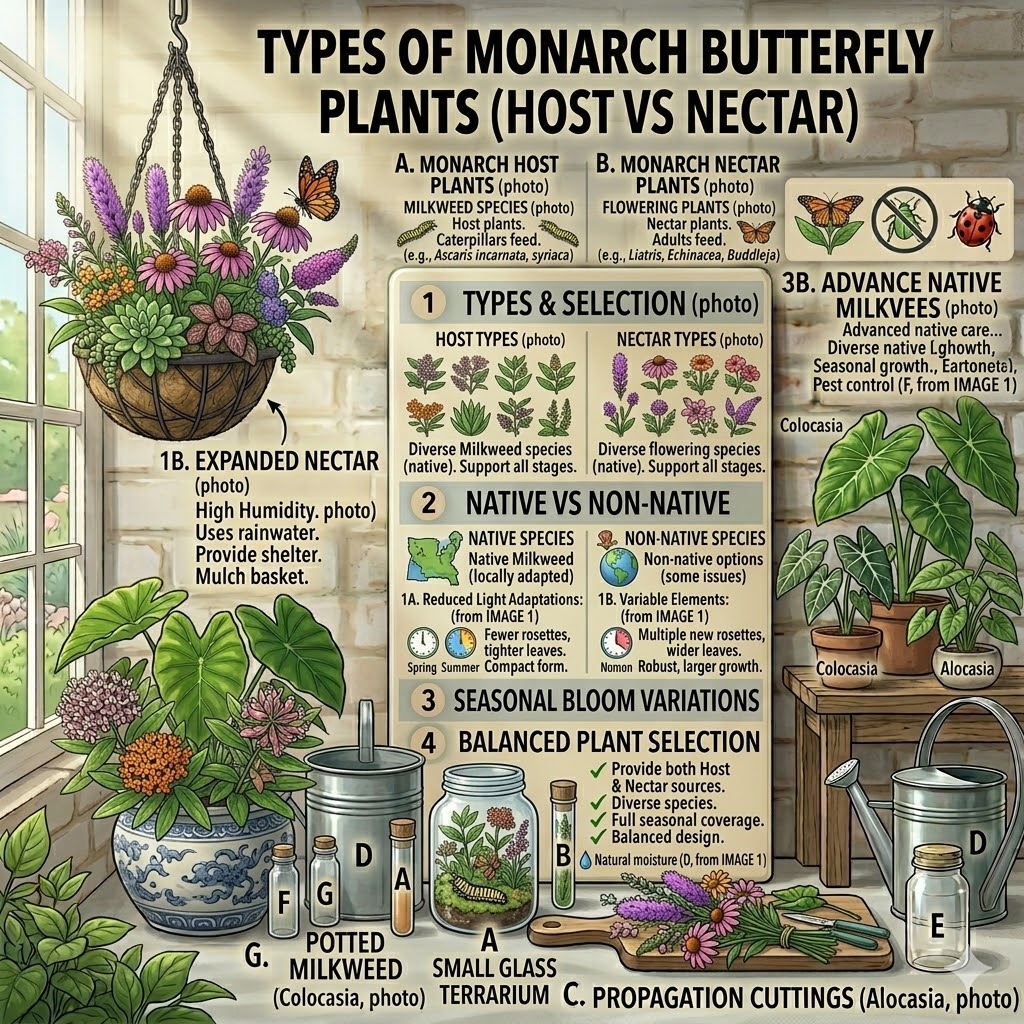
Plant categories:
- Host plants: milkweed species
- Nectar plants: flowering plants
- Seasonal bloom variations
- Native vs non-native species
- Balanced plant selection
Combining both types creates a complete butterfly ecosystem.
How to Create a Monarch Butterfly Garden
Creating a monarch butterfly garden involves selecting the right plants and arranging them to maximize visibility and accessibility for butterflies. The goal is to provide food, shelter, and breeding space.
Planting in clusters makes it easier for butterflies to locate plants. Continuous blooming ensures that food is always available.
Garden setup steps:
- Plant milkweed for caterpillars
- Add nectar plants for adults
- Group plants in clusters
- Ensure seasonal blooms
- Avoid pesticides
A well-designed garden supports every stage of the life cycle.
Light Requirements for Monarch Plants
Most monarch butterfly plants require full sunlight to thrive. Sunlight promotes strong plant growth and increases nectar production, making plants more attractive to butterflies.
Shaded environments may limit flowering and reduce the effectiveness of the garden. Ensuring adequate sunlight is essential for success.
Lighting guidelines:
- Provide full sun exposure
- Ensure 6–8 hours of sunlight daily
- Avoid heavily shaded areas
- Position plants for maximum light
- Monitor plant health
Sunlight enhances plant growth and nectar production.
Watering and Soil Needs
Monarch butterfly plants require balanced watering and well-draining soil. While they need consistent moisture, overwatering can damage roots and reduce plant health.
Soil enriched with organic matter supports growth and improves water retention. Maintaining proper soil conditions ensures that plants remain healthy and productive.
Watering and soil tips:
- Use well-draining soil
- Water regularly but moderately
- Improve soil with compost
- Adjust based on climate
- Maintain consistent moisture
Proper care ensures healthy and productive plants.
Common Problems and Fixes
Monarch butterfly plants can face issues such as pests, poor growth, or environmental stress. These problems can reduce the effectiveness of the garden if not addressed quickly.
Avoiding chemical pesticides is crucial, as they can harm both butterflies and caterpillars.
Common problems:
- Pest infestations
- Poor flowering
- Weak plant growth
- Overwatering issues
- Environmental stress
Fixes:
- Use natural pest control methods
- Improve soil quality
- Adjust watering
- Ensure proper sunlight
- Maintain plant health
Balanced care supports a thriving butterfly habitat.
Monarch Plants vs Regular Garden Plants
Monarch plants differ from regular garden plants because they serve a functional ecological role. While regular plants are often chosen for appearance, monarch plants are selected to support wildlife.
This makes them valuable for both gardening and conservation.
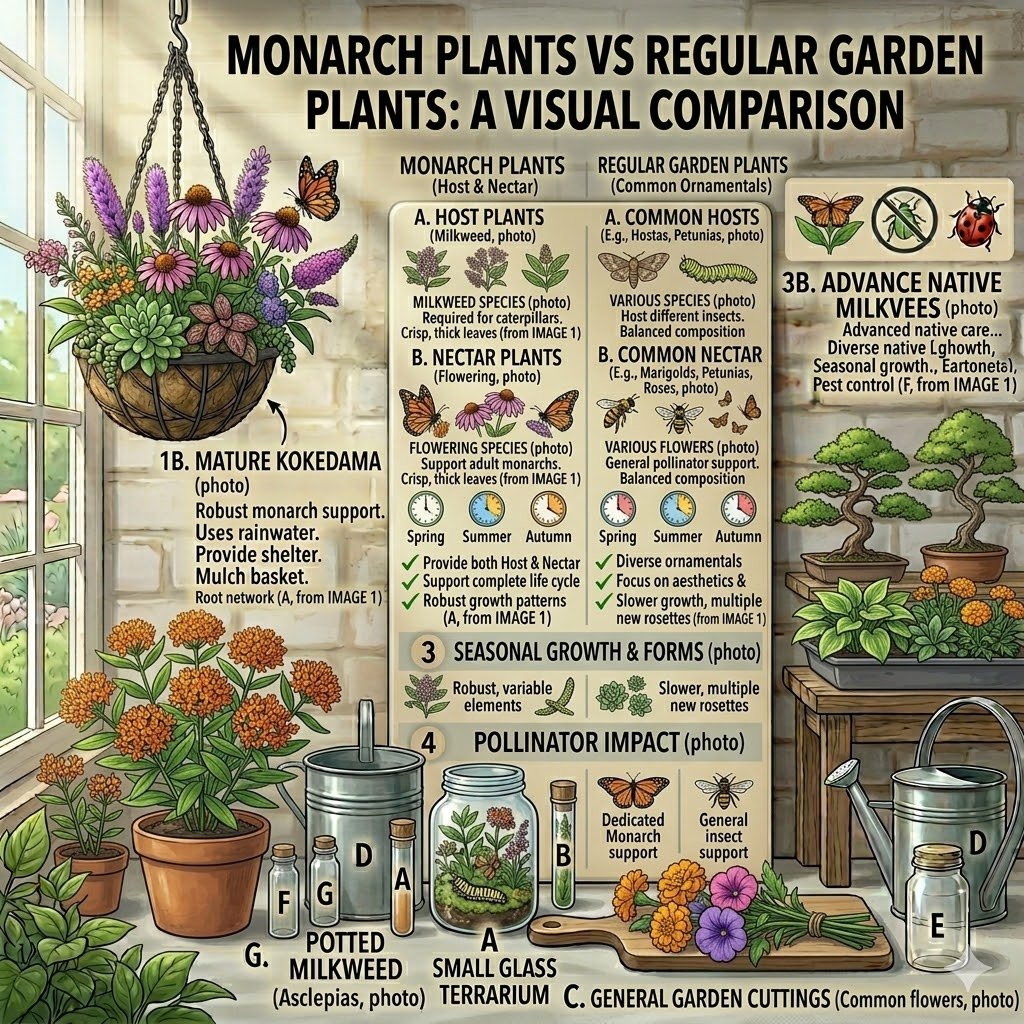
Comparison insights:
- Monarch plants support butterfly life cycle
- Regular plants focus on decoration
- Monarch plants attract pollinators
- Regular plants may not support wildlife
- Monarch gardens promote biodiversity
These plants combine beauty with ecological purpose.
Are Monarch Butterfly Plants Beginner-Friendly?
Monarch butterfly plants are beginner-friendly because many species are easy to grow and maintain. They adapt well to different climates and require basic care.
Starting with milkweed and a few nectar plants is an effective way to begin.
Beginner tips:
- Start with milkweed
- Choose easy nectar plants
- Avoid pesticides
- Maintain sunlight and water
- Expand gradually
Simple setups lead to successful butterfly gardens.
Expert Insight: Plants Support Life Cycles
Monarch butterfly plants are essential for maintaining butterfly populations. Without them, monarchs cannot reproduce or survive.
Right plants = complete life cycle
Balanced garden = thriving butterflies
Final Thoughts
Monarch butterfly plants offer a meaningful way to support nature while enhancing your garden. By choosing the right plants and maintaining proper care, you can create a space that supports both beauty and biodiversity.
FAQ Section
What plants attract monarch butterflies?
Milkweed and nectar-rich flowers.
Why is milkweed important?
It is the only host plant for monarch caterpillars.
Do monarch plants need full sun?
Yes, most require full sunlight.
Are they easy to grow?
Yes, many are beginner-friendly.
Can they grow in small spaces?
Yes, with proper planning.
