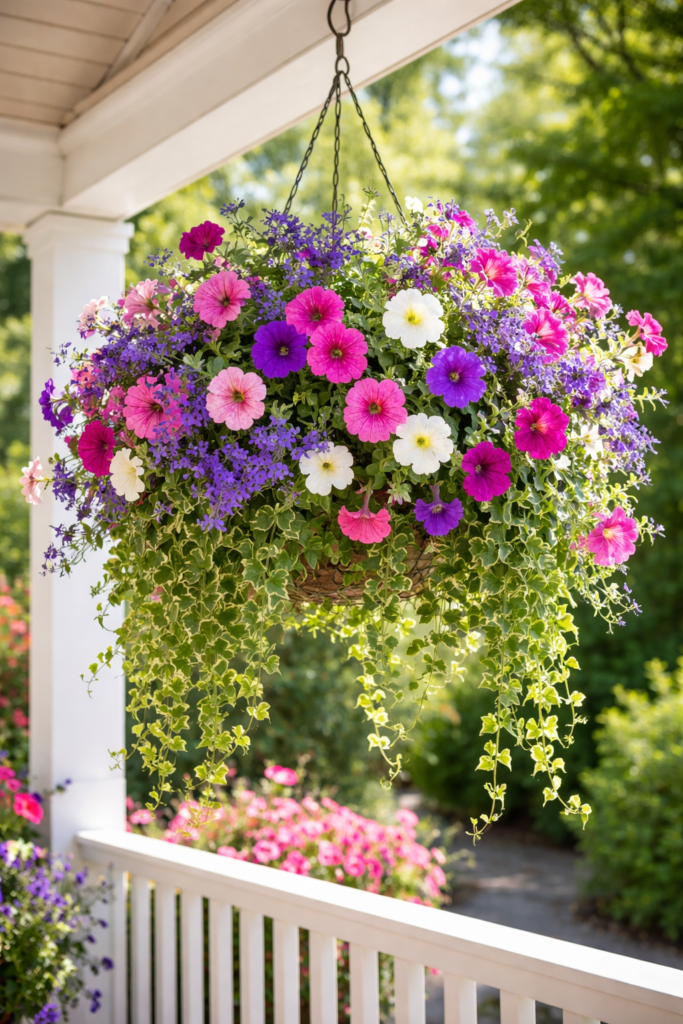
Hanging basket plants are trailing or compact plants grown in suspended containers to create vertical greenery. Popular options include Petunia, Lobelia, and Ivy. These plants require bright light, frequent watering, and well-draining soil, making them ideal for balconies, patios, and indoor decorative setups.
Hanging basket plants are one of the most effective ways to use vertical space in plant design. Instead of relying on floor or shelf space, they allow you to elevate greenery and create depth within a room or outdoor area. This makes them especially useful for small spaces where maximizing every inch matters.
Beyond practicality, hanging baskets introduce movement and softness through trailing foliage and cascading blooms. With proper selection and care, they can transform even the simplest space into a vibrant and layered environment.
What Are Hanging Basket Plants?
Hanging basket plants are plants specifically chosen for their ability to grow well in suspended containers. These plants typically have trailing, cascading, or compact growth habits that allow them to adapt to elevated conditions while maintaining visual appeal.
Unlike traditional potted plants, hanging plants are exposed to more airflow and light, which affects how they grow and how often they need care. Their roots dry out faster, and their positioning makes them more dependent on consistent maintenance. However, this also allows them to receive better light exposure, which can enhance growth and flowering.
Key characteristics of hanging basket plants:
- Trailing or cascading growth habit
- Adapted to elevated containers
- Faster drying soil conditions
- Require consistent care
- Provide vertical visual impact
Hanging basket plants create height, depth, and movement in plant design.
Best Hanging Basket Plants
Choosing the right plants is essential for creating a successful hanging basket. The best plants are those that either trail downward gracefully or remain compact while filling out the basket. Combining both types creates a balanced and visually appealing display.
A mix of flowering and foliage plants enhances color and texture. This combination ensures that the basket remains attractive even when flowers are not in bloom. Hardy and adaptable plants are often the best choice for long-term success.
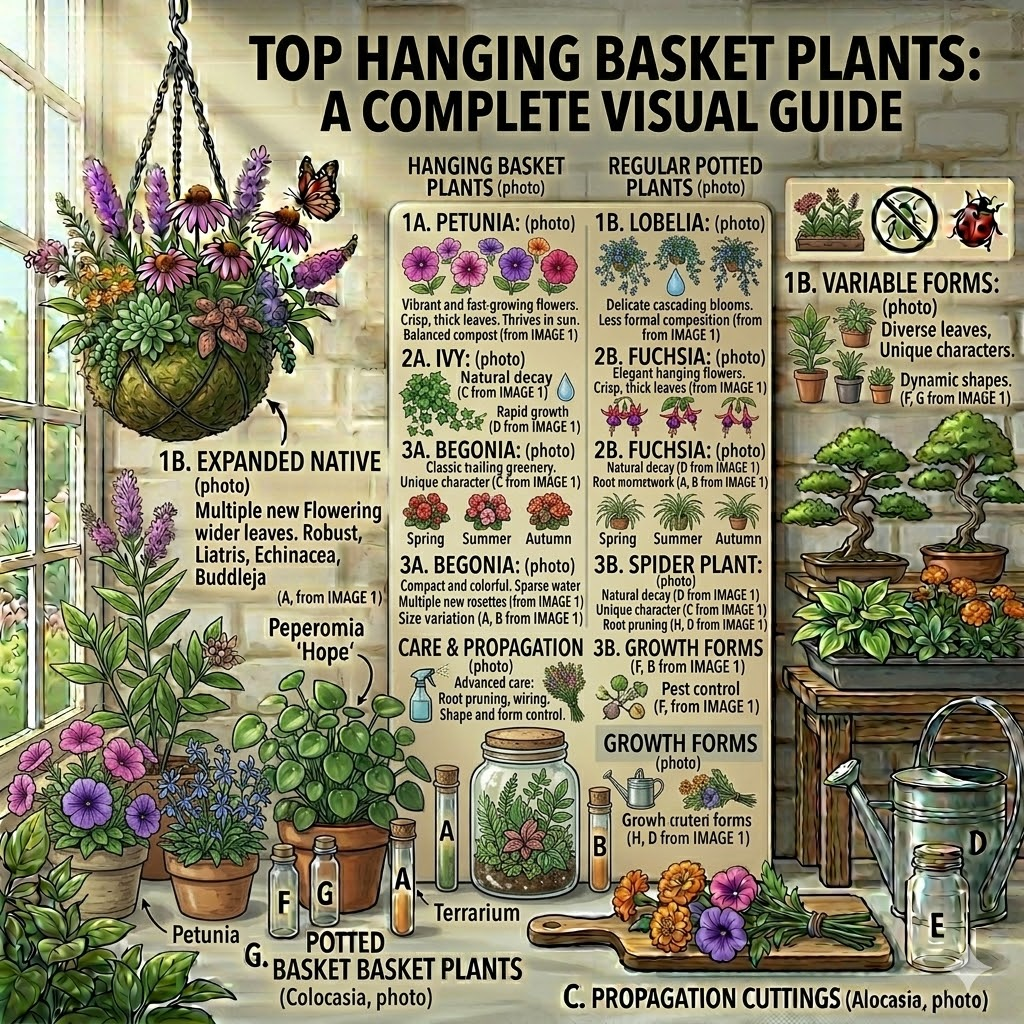
Top hanging basket plants:
- Petunia: vibrant and fast-growing flowers
- Lobelia: delicate cascading blooms
- Ivy: classic trailing greenery
- Fuchsia: elegant hanging flowers
- Begonia: compact and colorful
- Spider plant: easy indoor choice
The right mix creates fullness, color, and dynamic flow.
Types of Hanging Basket Arrangements
Hanging basket arrangements can vary depending on the desired style and plant combination. A well-designed arrangement ensures that the basket looks full from all angles and maintains visual balance.
Most successful arrangements follow a structured approach while still appearing natural. This includes placing focal plants in the center and trailing plants around the edges. The result is a layered design that feels organic yet intentional.
Arrangement styles:
- Flower-dominant baskets for vibrant color
- Foliage-based baskets for greenery focus
- Mixed arrangements for texture and depth
- Symmetrical designs for clean look
- Natural cascading designs for relaxed style
Arrangement determines the overall aesthetic and visual impact.
Light Requirements for Hanging Basket Plants
Light plays a crucial role in the health and appearance of hanging basket plants. Because they are elevated, they often receive more direct exposure to light than ground-level plants. This can be beneficial but also requires careful management.
Most hanging plants thrive in bright, indirect light, while some flowering varieties can tolerate partial sun. Too much direct sunlight can cause leaf burn, while insufficient light can reduce growth and flowering.
Lighting guidelines:
- Provide bright indirect light
- Allow partial sun for flowering plants
- Avoid intense midday sunlight
- Adjust placement based on species
- Monitor plant response
Proper lighting ensures healthy growth and consistent blooming.
Watering and Soil Needs
Hanging baskets dry out faster than regular pots due to increased airflow and exposure. This makes watering one of the most important aspects of care. Soil should remain moist but not soggy to prevent root issues.
Using a high-quality potting mix with good drainage helps maintain the right balance. Adding organic matter improves moisture retention while allowing excess water to drain.
Watering and soil tips:
- Water frequently, especially in warm weather
- Use well-draining soil mix
- Ensure baskets have drainage holes
- Check soil moisture daily
- Adjust based on climate conditions
Consistent watering supports healthy roots and vibrant growth.
Thriller–Filler–Spiller Method Explained
The thriller–filler–spiller method is the foundation of professional hanging basket design. Instead of randomly placing plants, this system creates structure, balance, and visual depth. It ensures that every basket looks full, dynamic, and intentional from all angles.
The “thriller” is the focal point, usually a taller or more striking plant placed in the center. The “filler” plants surround it, adding volume and density. The “spiller” plants trail over the edges, creating the cascading effect that defines hanging baskets. When used correctly, this method transforms a simple basket into a visually balanced display.
Thriller–filler–spiller breakdown:
- Thriller: central focal plant (height + structure)
- Filler: mid-sized plants (volume + fullness)
- Spiller: trailing plants (flow + movement)
- Maintain balance between all three roles
- Avoid overcrowding any single layer
This method creates professional-level plant arrangements.
Choosing the Right Basket Size & Depth
Basket size and depth directly impact plant health and growth. A shallow basket may look good initially but can restrict root development, leading to faster drying and weaker plants. Deeper baskets provide more soil volume, which improves water retention and nutrient availability.
Larger baskets also allow you to include more plants without overcrowding roots. However, the size must match the plant selection to maintain balance. Choosing the right basket is not just about aesthetics but also long-term plant health.
Basket selection guidelines:
- Use deeper baskets for better root growth
- Larger baskets retain moisture longer
- Match basket size to plant type
- Ensure proper drainage holes
- Avoid overcrowding small baskets
Basket size determines growth potential and maintenance needs.
Watering Balance System (Retention vs Drainage)
Hanging baskets require a precise balance between water retention and drainage. Because they are exposed to air on all sides, they lose moisture faster than regular pots. At the same time, poor drainage can lead to root rot.
The goal is to keep soil consistently moist without allowing water to accumulate. This requires a well-structured soil mix and a consistent watering routine. Observing how quickly the soil dries helps fine-tune your approach.
Watering balance strategy:
- Use moisture-retentive but well-draining soil
- Water thoroughly until excess drains out
- Avoid letting soil fully dry out
- Adjust frequency based on weather
- Check moisture daily in warm conditions
Proper balance prevents both drying and root damage.
Seasonal Hanging Basket Planting Guide
Hanging basket plants perform differently depending on the season. Understanding seasonal changes helps you choose the right plants and maintain consistent growth throughout the year.
Warm seasons are ideal for flowering plants, while cooler seasons may require hardier varieties. Rotating plants seasonally keeps your baskets fresh and productive.
Seasonal planting strategy:
- Spring: start with fresh plantings
- Summer: use heat-tolerant flowering plants
- Fall: transition to hardy plants
- Winter: use indoor-friendly species
- Adjust care based on temperature
Seasonal planning ensures year-round plant success.
Indoor vs Outdoor Hanging Basket Strategy
Hanging baskets behave differently indoors and outdoors due to variations in light, airflow, and humidity. Outdoor baskets are exposed to natural elements, while indoor baskets rely on controlled conditions.
Outdoor setups allow for more variety and growth, but require protection from extreme weather. Indoor setups need careful placement to ensure adequate light and airflow.
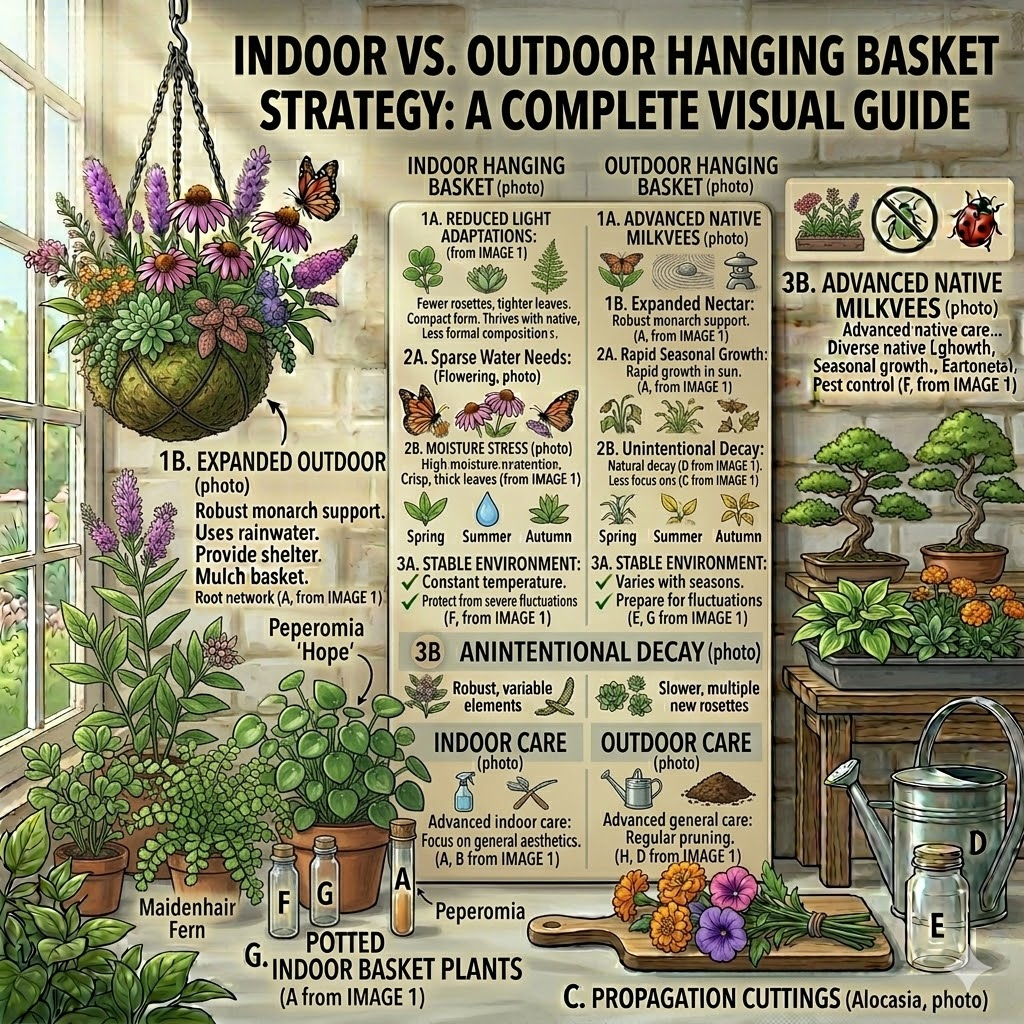
Indoor vs outdoor strategy:
- Outdoor: more sunlight and airflow
- Indoor: controlled environment
- Outdoor: faster drying soil
- Indoor: slower moisture loss
- Adjust plant selection accordingly
Environment determines care approach and plant choice.
How Wind & Heat Affect Hanging Plants
Wind and heat have a significant impact on hanging basket plants. Because baskets are elevated, they are more exposed to environmental factors. Wind increases evaporation, while heat accelerates soil drying.
This combination can lead to rapid dehydration if not managed properly. Positioning baskets strategically and adjusting watering routines helps reduce stress on plants.
Environmental impact factors:
- Wind increases moisture loss
- Heat accelerates drying
- Direct sun intensifies stress
- Exposure affects plant health
- Placement influences conditions
Managing exposure prevents rapid plant stress and decline.
Fertilizing Hanging Basket Plants
Hanging basket plants require more frequent fertilization than regular plants because nutrients are quickly depleted through watering. Without proper feeding, plants may show reduced growth and poor flowering.
Using a balanced fertilizer helps maintain plant health and supports continuous blooming. Regular feeding ensures that plants receive the nutrients they need to thrive.
Fertilization strategy:
- Use balanced liquid fertilizer
- Feed regularly during growing season
- Avoid over-fertilizing
- Monitor plant response
- Adjust based on plant type
Proper feeding ensures strong growth and vibrant blooms.
Healthy vs Failing Hanging Basket
Recognizing the difference between a healthy and failing hanging basket is essential for maintaining plant quality. Healthy baskets appear full, vibrant, and balanced, while failing baskets show signs of stress.
Regular observation helps identify issues early and allows for quick adjustments.
Visual indicators:
- Healthy: lush, full growth
- Failing: sparse or drooping plants
- Healthy: vibrant color
- Failing: yellowing leaves
- Healthy: consistent moisture
Early detection ensures long-term plant success.
How to Create a Hanging Basket Setup
Creating a hanging basket setup involves selecting the right container, plants, and arrangement style. A well-designed basket should look balanced, full, and visually appealing from all sides.
Start by choosing a sturdy basket with proper drainage. Fill it with quality soil and place a central plant to act as a focal point. Surround it with trailing plants to create a cascading effect.
Setup steps:
- Choose a durable hanging basket
- Add nutrient-rich potting mix
- Place a central focal plant
- Add trailing plants around edges
- Water thoroughly after planting
A structured setup creates balanced and attractive displays.
Common Problems and Fixes
Hanging basket plants can face several challenges due to their exposure and maintenance needs. Most issues arise from improper watering, light imbalance, or overcrowding.
Regular monitoring helps identify problems early and prevents long-term damage. Adjusting care routines ensures plants remain healthy and vibrant.
Common problems:
- Soil drying out too quickly
- Overwatering and root rot
- Poor flowering due to low light
- Pest infestations
- Overcrowded baskets
Fixes:
- Adjust watering frequency
- Improve drainage
- Increase light exposure
- Space plants properly
- Monitor regularly
Balanced care prevents stress and plant decline.
Hanging Basket Plants vs Regular Potted Plants
Hanging basket plants differ from regular potted plants in both care and function. Their elevated position exposes them to more air and light, which affects how quickly they dry out and how often they need watering.
While regular pots are easier to maintain, hanging baskets offer greater visual impact and design flexibility. They allow you to utilize vertical space effectively.
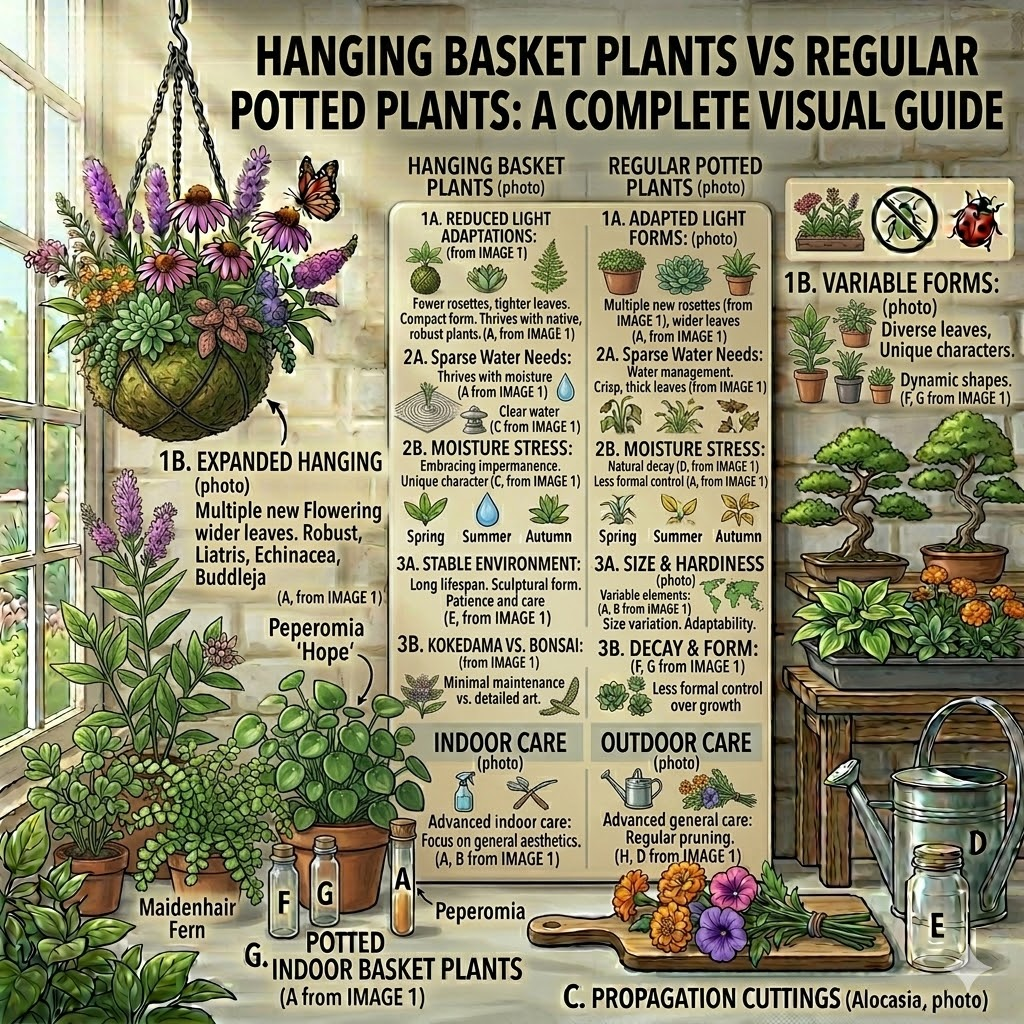
Comparison insights:
- Hanging plants dry faster
- Regular pots retain moisture longer
- Hanging plants add vertical interest
- Regular pots use floor space
- Hanging plants require more attention
The difference lies in care intensity and visual design.
Are Hanging Basket Plants Beginner-Friendly?
Hanging basket plants can be beginner-friendly if proper care routines are followed. Starting with hardy plants makes the process easier and more manageable.
Consistency is the key to success. Beginners should focus on watering, light, and plant selection to ensure healthy growth.
Beginner tips:
- Start with easy-care plants like petunias
- Monitor soil moisture regularly
- Avoid overcrowding
- Provide proper light conditions
- Maintain a consistent care routine
With consistency, they are easy and rewarding to grow.
Expert Insight: Height Creates Visual Impact
Hanging basket plants enhance plant design by introducing vertical elements. Their elevated placement draws attention and creates a layered environment that feels dynamic and lively.
Height adds dimension
Trailing growth adds movement
Final Thoughts
Hanging basket plants are a practical and stylish way to incorporate greenery into any space. Their ability to create vertical displays makes them ideal for both indoor and outdoor environments.
With the right plant selection and care routine, they can become a standout feature that adds beauty and life to your surroundings.
FAQ Section
What plants are best for hanging baskets?
Petunia, ivy, and lobelia are popular choices.
Do hanging plants need more water?
Yes, they dry out faster than regular pots.
Can they be used indoors?
Yes, many varieties adapt well indoors.
Are they easy to maintain?
Yes, with consistent care.
How often should I water them?
Usually more frequently than standard potted plants.
Myra is the founder and lead writer of Plantsaholic. She shares practical, research-backed advice on indoor plants, outdoor gardening, flowers, herbs, succulents, and everyday plant care. Her goal is to help gardeners of all experience levels grow healthier plants through simple, easy-to-follow gardening guides.