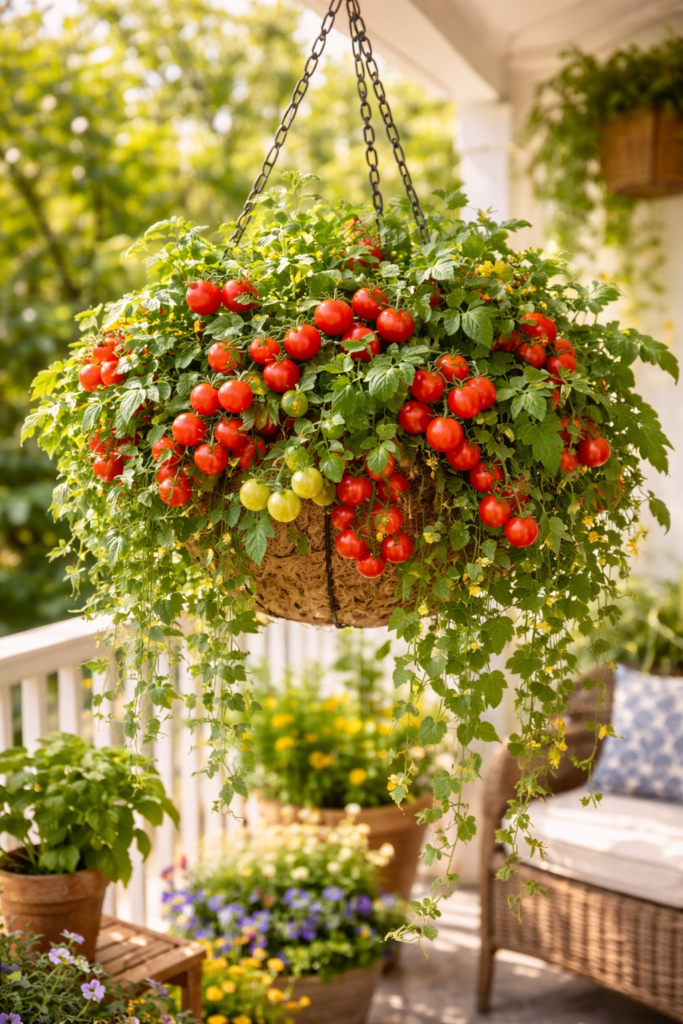
Hanging tomato plants are tomatoes grown in suspended containers, allowing vines to grow downward instead of upward. Compact varieties like Cherry tomato and Roma tomato are ideal. These plants require full sun, consistent watering, strong containers, and nutrient-rich soil to produce high yields in small spaces.
Hanging tomato plants offer a practical solution for growing fresh produce in limited spaces. By using vertical gardening techniques, you can grow tomatoes on balconies, patios, or even indoors with proper light. This method not only saves space but also improves airflow, reducing disease risks.
With the right setup and care, hanging tomatoes can produce impressive yields while adding visual appeal to your space.
What Are Hanging Tomato Plants?
Hanging tomato plants are tomato plants grown in suspended containers, allowing their vines to grow downward instead of climbing upward. This method eliminates the need for traditional supports like cages or stakes, making it ideal for small or urban spaces.
Unlike ground-grown tomatoes, hanging plants rely entirely on container conditions for nutrients and water. Their roots are confined, and their growth direction is influenced by gravity. This creates a unique growing environment that requires careful management but offers several advantages.
Key characteristics of hanging tomato plants:
- Downward-growing vines
- Space-saving vertical setup
- No staking or cages required
- Improved airflow around plants
- Easy access for harvesting
Hanging tomatoes maximize space efficiency while maintaining productivity.
Best Tomato Varieties for Hanging Baskets
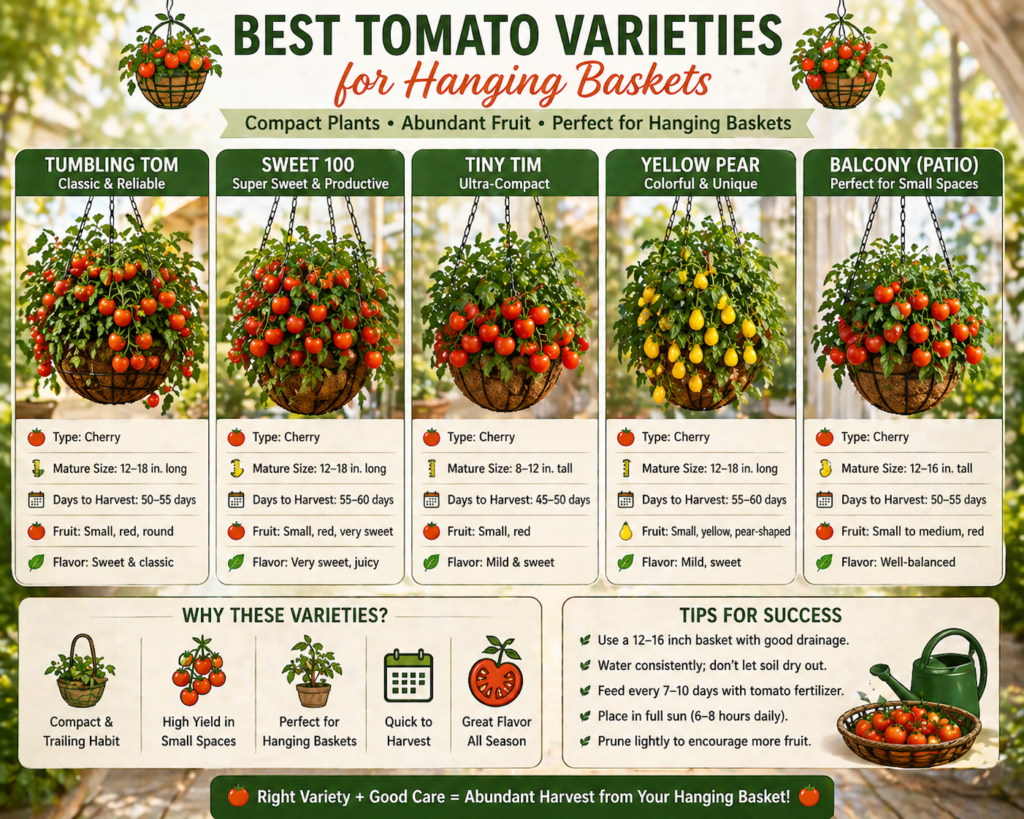
Selecting the right tomato variety is essential for success in hanging baskets. Compact and determinate varieties are best because they have controlled growth and produce manageable fruit sizes.
Larger indeterminate varieties can become too heavy and difficult to maintain in a suspended setup. Choosing lightweight, productive varieties ensures better results and less stress on the plant and container.
Best varieties:
- Cherry tomato: high yield and compact
- Roma tomato: versatile and manageable
- Tumbling Tom tomato: ideal trailing type
- Patio tomato: designed for containers
- Tiny Tim tomato: very compact growth
Choosing the right variety ensures balanced growth and consistent harvests.
Light Requirements for Hanging Tomato Plants
Light is one of the most critical factors for growing healthy tomato plants. Hanging tomatoes require full sun exposure to produce strong growth and abundant fruit. Ideally, they should receive at least 6–8 hours of direct sunlight daily.
Because hanging baskets are elevated, they often receive more light than ground-level plants. While this can be beneficial, it also increases water loss and requires careful monitoring.
Lighting guidelines:
- Provide full sun exposure
- Ensure 6–8 hours of direct light
- Avoid shaded areas
- Rotate baskets if needed
- Monitor plant response
Sunlight directly impacts fruit production and plant strength.
Watering and Soil Needs
Hanging tomato plants require more frequent watering than ground-grown plants because their containers dry out faster. Consistent moisture is essential to prevent stress and ensure steady fruit development.
The soil should be rich in organic matter and well-draining to support root health. A balanced soil mix helps retain moisture while allowing excess water to escape.
Watering and soil tips:
- Water daily in warm weather
- Use nutrient-rich soil mix
- Ensure proper drainage
- Avoid letting soil dry completely
- Adjust watering based on conditions
Proper watering ensures steady growth and healthy fruiting.
How to Create a Hanging Tomato Setup
Setting up a hanging tomato system requires careful planning to ensure stability and proper growth. The container must be strong enough to support soil, water, and the weight of mature plants.
Placement is also important. The basket should receive adequate sunlight and be positioned where it can hang securely without risk of falling.
Setup steps:
- Choose a sturdy hanging container
- Use high-quality potting mix
- Plant seedlings securely
- Hang in a sunny location
- Water thoroughly after setup
A strong setup ensures safe and productive growth.
Fertilizing Hanging Tomato Plants
Tomatoes are heavy feeders, especially when grown in containers. Hanging tomato plants require regular fertilization because nutrients are quickly washed out through frequent watering.
Using a balanced fertilizer helps maintain plant health and supports fruit production. Consistent feeding ensures that plants have the nutrients needed to grow and produce.
Fertilization tips:
- Use balanced liquid fertilizer
- Feed every 1–2 weeks
- Increase feeding during fruiting
- Avoid over-fertilizing
- Monitor plant response
Proper feeding supports high yields and strong plants.
How Root Space Affects Tomato Yield
Root space is the single most important factor controlling how much fruit a hanging tomato plant can produce. In hanging systems, roots are confined to a limited volume, which directly limits water uptake, nutrient absorption, and overall plant size. A small container may support plant survival, but it will restrict yield significantly.
Larger containers allow roots to expand, store more moisture, and access more nutrients. This leads to stronger growth, more flowers, and higher fruit production. When root space is limited, plants often produce fewer fruits and may show signs of stress earlier.
Root space guidelines:
- Minimum 10–15 liters soil per plant
- Larger containers = higher yield
- Deep baskets support better root growth
- Avoid overcrowding roots
- Use lightweight but spacious containers
More root space = more nutrients, more flowers, more tomatoes.
Determinate vs Indeterminate Tomatoes (Which to Choose)
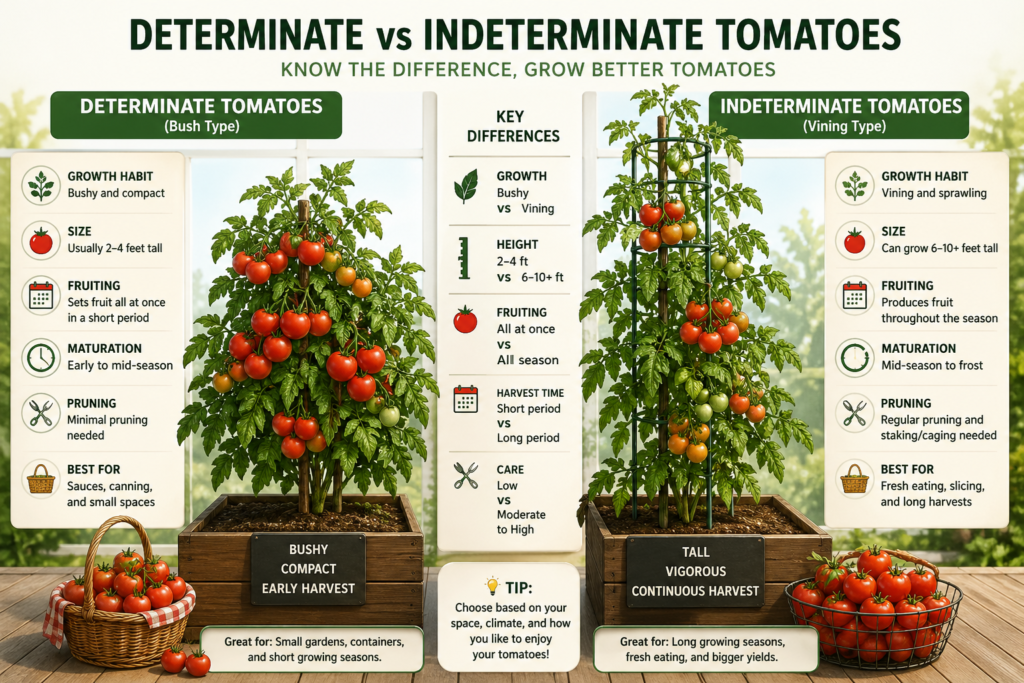
Understanding the difference between determinate and indeterminate tomatoes is critical for hanging systems. Determinate varieties grow to a fixed size and produce fruit all at once, while indeterminate varieties continue growing and producing over time.
For hanging baskets, determinate and compact trailing varieties are usually better because they remain manageable and do not overload the structure. Indeterminate varieties can become too heavy and difficult to control.
Key differences:
- Determinate: compact, controlled growth
- Indeterminate: continuous growth
- Determinate: ideal for hanging baskets
- Indeterminate: better for ground planting
- Choose based on space and support
Choosing the right type ensures manageable growth and consistent yield.
Pruning & Training Hanging Tomatoes
Pruning is essential for maintaining healthy hanging tomato plants and maximizing yield. Without pruning, plants may become overcrowded, reducing airflow and limiting fruit production.
Removing unnecessary shoots, known as suckers, helps redirect energy toward fruit development. Training the plant to grow in a controlled direction also improves structure and reduces stress on the container.
Pruning strategies:
- Remove excess suckers regularly
- Maintain 1–2 main stems
- Trim dead or weak growth
- Prevent overcrowding
- Support balanced growth
Proper pruning leads to better airflow and higher fruit production.
How Pollination Works in Hanging Tomatoes
Tomatoes rely on pollination to produce fruit, and in hanging systems, this process can sometimes be limited. Outdoor plants benefit from wind and insects, while indoor plants may require manual assistance.
Ensuring proper pollination increases fruit set and prevents flower drop. Simple techniques can significantly improve yield.
Pollination methods:
- Natural wind movement outdoors
- Insect pollination (bees)
- Gentle shaking of plants
- Manual pollination with brush
- Use of fans indoors
Good pollination ensures maximum fruit development.
Why Tomatoes Drop Flowers or Fruits
Flower and fruit drop is a common issue in hanging tomato plants and is usually caused by environmental stress. When conditions are not ideal, the plant may shed flowers to conserve energy.
Understanding the causes helps you prevent yield loss and maintain consistent production.
Common causes:
- Temperature fluctuations
- Poor pollination
- Water stress
- Nutrient deficiency
- Excessive heat
Prevention tips:
- Maintain stable conditions
- Ensure proper watering
- Improve pollination
- Provide nutrients
- Avoid stress
Stable conditions prevent yield loss and fruit drop.
Water Stress vs Overwatering Diagnosis
Water management is critical in hanging tomato systems. Both underwatering and overwatering can harm plants and reduce yield. The challenge is maintaining the right balance.
Underwatered plants wilt and produce fewer fruits, while overwatered plants may develop root rot and yellow leaves. Learning to identify symptoms helps maintain optimal conditions.
Water stress indicators:
- Wilting leaves = underwatering
- Yellow leaves = overwatering
- Dry soil = insufficient watering
- Soggy soil = poor drainage
- Slow growth = imbalance
Proper diagnosis ensures healthy growth and consistent production.
How Much Weight Can Hanging Systems Handle
Hanging tomato systems must support not only the plant but also soil, water, and developing fruit. As plants grow, their weight increases significantly, which can strain weak supports.
Choosing strong materials and secure hanging points is essential for safety and plant health. Failure to do so can result in damage or loss of the plant.
Weight considerations:
- Wet soil increases weight
- Fruit adds additional load
- Use strong hooks and chains
- Check support regularly
- Avoid overloading baskets
Strong support ensures safe and stable growth.
How to Maximize Yield in Hanging Tomatoes
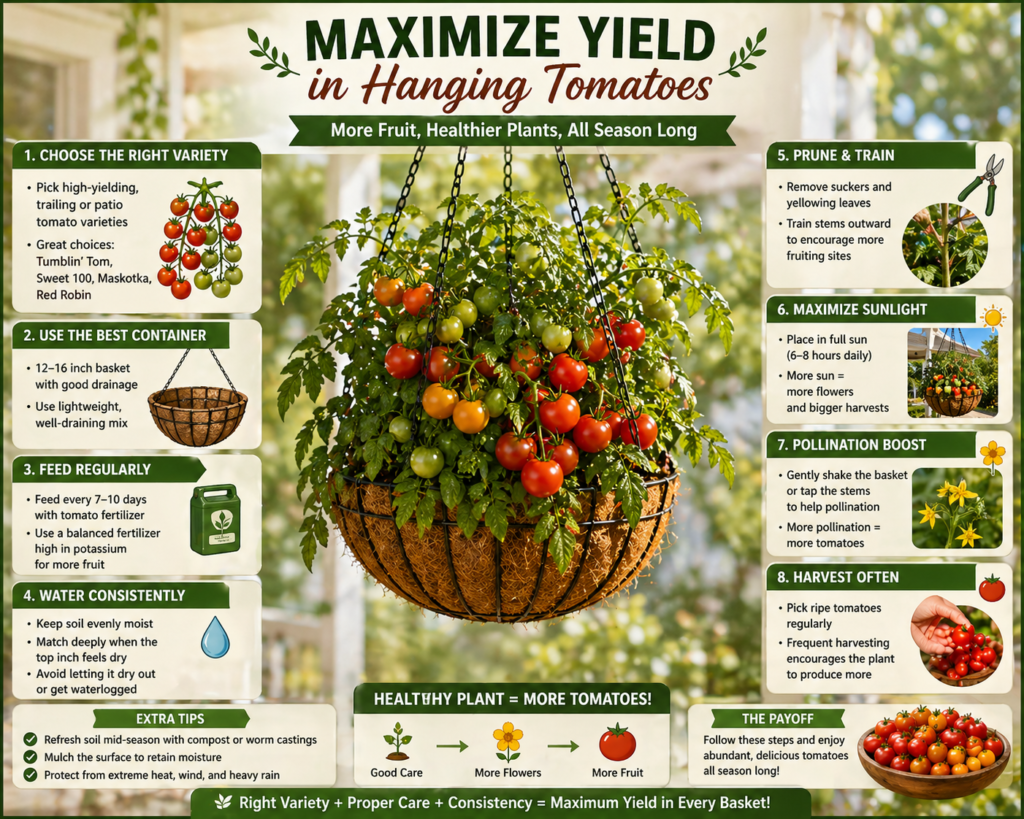
Maximizing yield requires combining all key factors, including light, water, nutrients, and plant management. A well-optimized system ensures that plants produce as much fruit as possible within their limited space.
Consistency is the most important factor. Small adjustments in care can lead to significant improvements in production.
Yield optimization tips:
- Use large containers
- Provide full sunlight
- Maintain consistent watering
- Fertilize regularly
- Prune and manage growth
Optimized care leads to maximum production in limited space.
Common Problems and Fixes
Hanging tomato plants can face several challenges, especially due to their exposure and container limitations. Most issues are related to water imbalance, nutrient deficiency, or environmental stress.
Recognizing these problems early helps maintain productivity and prevent plant decline.
Common problems:
- Dry soil and wilting
- Poor fruit production
- Yellowing leaves
- Pest infestations
- Root overcrowding
Fixes:
- Increase watering frequency
- Improve fertilization
- Adjust sunlight exposure
- Use natural pest control
- Repot if necessary
Proper care prevents yield loss and plant stress.
Hanging Tomatoes vs Ground-Grown Tomatoes
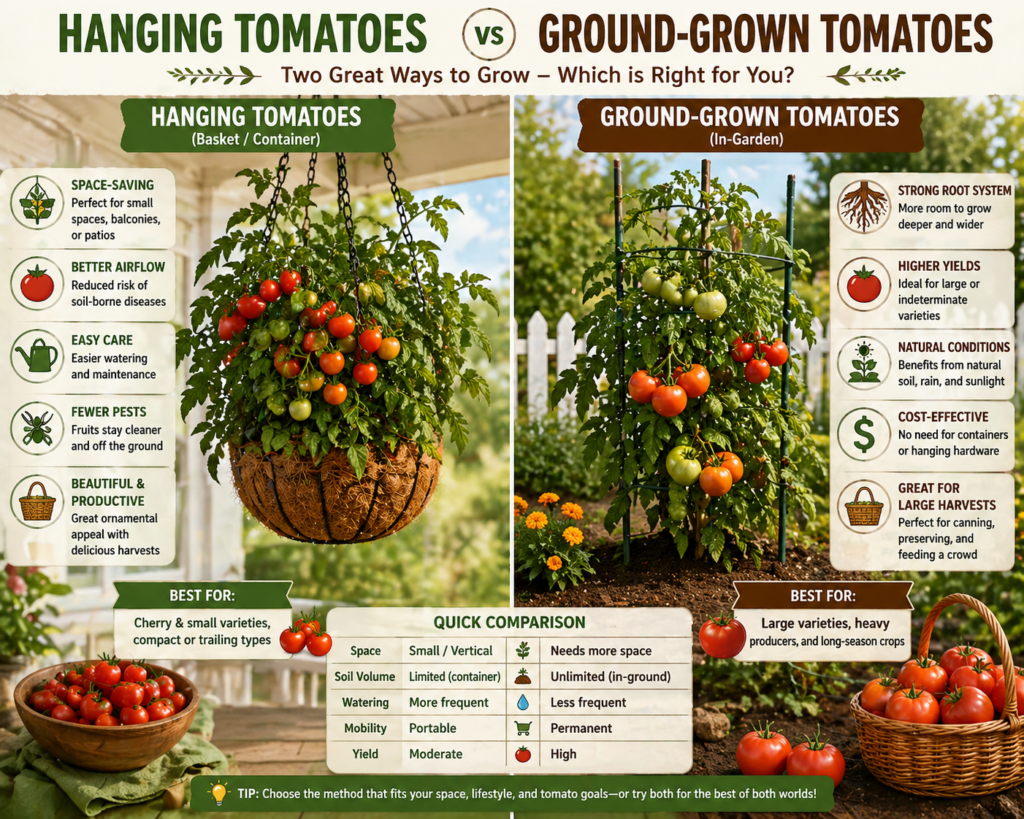
Hanging tomatoes differ significantly from ground-grown tomatoes in terms of growth, care, and maintenance. While ground plants benefit from stable soil and larger root space, hanging plants rely entirely on container conditions.
Despite requiring more attention, hanging systems offer unique advantages such as space efficiency and improved airflow.
Comparison insights:
- Hanging plants save space
- Ground plants grow larger
- Hanging requires more watering
- Ground retains moisture longer
- Hanging improves airflow
Each method offers unique advantages based on space and needs.
Are Hanging Tomato Plants Beginner-Friendly?
Hanging tomato plants can be beginner-friendly with the right approach. While they require more frequent watering, their compact size makes them manageable for small spaces.
Starting with easy varieties and maintaining a consistent care routine helps beginners achieve success.
Beginner tips:
- Choose compact varieties
- Maintain consistent watering
- Provide full sunlight
- Use quality soil
- Monitor plant health
With proper care, they are easy and rewarding to grow.
Expert Insight: Gravity Improves Growth
Growing tomatoes downward improves airflow and reduces contact with soil-borne diseases. This creates a healthier environment for the plant and can improve overall growth.
Downward growth reduces disease risk
Better airflow supports healthier plants
Final Thoughts
Hanging tomato plants are an efficient and visually appealing way to grow tomatoes in limited spaces. With proper care and setup, they can produce excellent yields while enhancing your space.
FAQ Section
What tomatoes grow best in hanging baskets?
Cherry and compact varieties.
Do hanging tomatoes need more water?
Yes, they dry out faster than ground plants.
Can they grow indoors?
Only with strong sunlight or grow lights.
Are they easy to maintain?
Yes, with consistent care.
How much sun do they need?
At least 6–8 hours daily.
Myra is the founder and lead writer of Plantsaholic. She shares practical, research-backed advice on indoor plants, outdoor gardening, flowers, herbs, succulents, and everyday plant care. Her goal is to help gardeners of all experience levels grow healthier plants through simple, easy-to-follow gardening guides.