Water quality affects houseplants more than many plant owners realize. Light, soil, fertilizer, and humidity matter, but the type of water you use can quietly influence root health, leaf quality, soil buildup, and long-term growth.
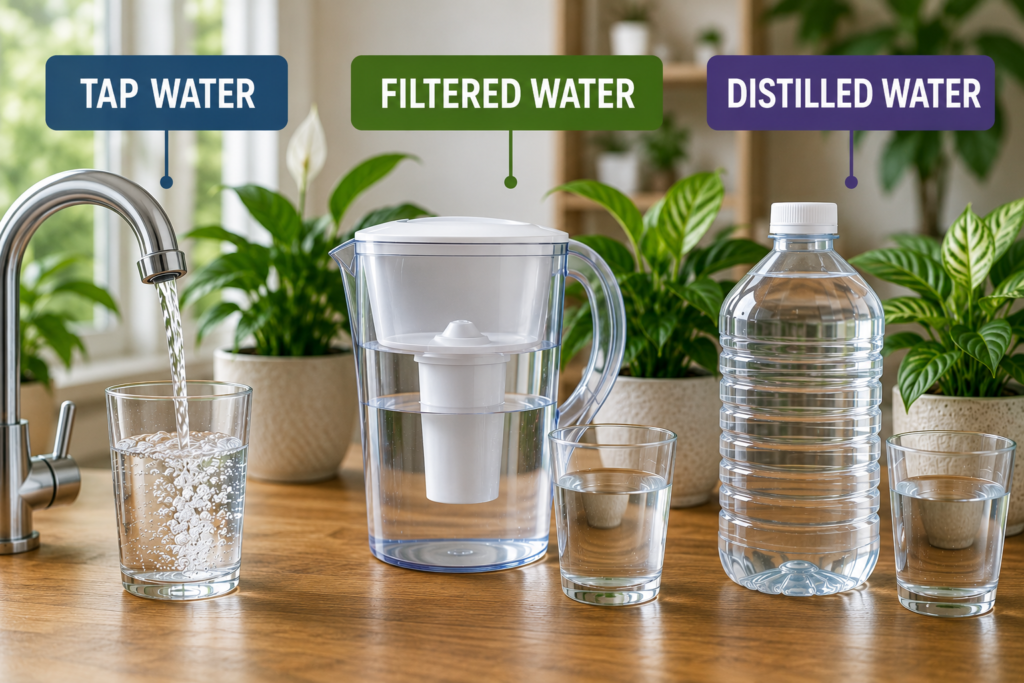
Tap water works for many common houseplants, but it may contain chlorine, chloramine, fluoride, calcium, magnesium, sodium, and dissolved salts. Filtered water removes many common irritants while keeping some helpful minerals. Distilled water removes almost everything, making it useful for sensitive plants but unnecessary for every plant.
The best water for houseplants depends on three things: your plant type, your local water quality, and whether your plant shows stress signs like brown tips, white soil crust, slow growth, or yellowing leaves.
For most houseplants, filtered water is the best overall choice. It offers a practical balance between cleanliness, cost, and mineral support. Distilled water is best for sensitive plants like Calathea, Spider Plant, Dracaena, orchids, and carnivorous plants. Tap water is fine for hardy plants if your water is not too hard and you flush the soil regularly.
What Makes Water Good or Bad for Houseplants?
Good water does more than hydrate a plant. It supports nutrient movement, root function, oxygen flow, and soil balance. When water contains excess minerals, fluoride, chlorine, or salts, the root zone slowly changes. This can affect how well the plant absorbs water and nutrients.
The biggest mistake is assuming water that is safe for people is automatically ideal for plants. Municipal water is treated for human safety, not plant root sensitivity. In outdoor soil, rain and drainage help wash minerals away. In indoor pots, buildup stays trapped.
Important water-quality factors include:
- Mineral content: Calcium and magnesium are useful in small amounts but harmful when they build up.
- Chlorine: Can evaporate if water sits out, but may still irritate sensitive plants.
- Chloramine: More stable than chlorine and does not disappear by sitting overnight.
- Fluoride: A common cause of brown tips in Spider Plant and Dracaena.
- pH: Most houseplants prefer slightly acidic to neutral water, around pH 6.0–7.0.
- Salt buildup: Excess salts damage roots and reduce water absorption.
If your plant keeps struggling despite correct light, soil, and watering frequency, water quality should be checked before changing fertilizer or repotting.
Is Tap Water Good for Houseplants?
Tap water is the easiest and cheapest option. Many houseplants grow well with it, especially hardy plants such as Pothos, Snake Plant, ZZ Plant, Monstera, Rubber Plant, and Chinese Evergreen. These plants usually tolerate moderate minerals better than sensitive foliage plants.
The problem is that tap water quality varies by location. One area may have soft, low-mineral water, while another may have hard water with fluoride, chloramine, sodium, or high dissolved solids. This means the same plant may thrive in one home and struggle in another.
Tap water can cause:
- White crust on soil
- Mineral rings on pots
- Brown leaf tips
- Slower growth
- Root stress
- Nutrient lockout
Tap water is acceptable if your plants are healthy, your water is not very hard, and you flush the soil occasionally. But if sensitive plants keep developing brown tips or soil crust appears quickly, filtered or distilled water is a better option.
What Is Hard Water and Why Does It Matter?
Hard water contains high levels of calcium and magnesium. These minerals are not always bad, but they accumulate quickly in pots. Indoor containers are closed systems, so minerals stay behind as water evaporates.
Over time, hard water can make soil denser and less breathable. Roots need oxygen as much as moisture. When mineral buildup affects drainage and airflow, roots struggle to absorb water properly.
Common signs of hard water include:
- White residue on soil
- Chalky stains on leaves
- White crust on terracotta pots
- Mineral rings in saucers
- Brown leaf tips
Hard water can also increase soil pH, making nutrients like iron and magnesium harder for plants to absorb. This creates symptoms that look like fertilizer deficiency, even when nutrients are present.
If your kettle or faucet builds limescale quickly, your tap water may also be hard enough to affect plants. Monthly soil flushing can help, but filtered water is better if buildup returns fast.
Does Chlorine or Chloramine Hurt Houseplants?
Chlorine is added to municipal water to kill harmful bacteria. In low amounts, most hardy plants tolerate it. However, chlorine can reduce soil microbial activity, especially in organic potting mixes. Beneficial microbes help break down organic matter and support nutrient availability.
A common solution is to let tap water sit uncovered for 12–24 hours. This allows some chlorine to evaporate. Many plant owners fill a watering can the night before and use it the next day.
But this does not work for chloramine. Chloramine is more stable and does not evaporate easily. If your city uses chloramine, resting water overnight will not solve the issue.
Plants that may react more strongly include:
- Calathea
- Prayer Plant
- Peace Lily
- Ferns
- Spider Plant
If your water contains chloramine, use a proper carbon filter, reverse osmosis water, or distilled water for sensitive plants.
Why Is Fluoride a Hidden Cause of Brown Leaf Tips?
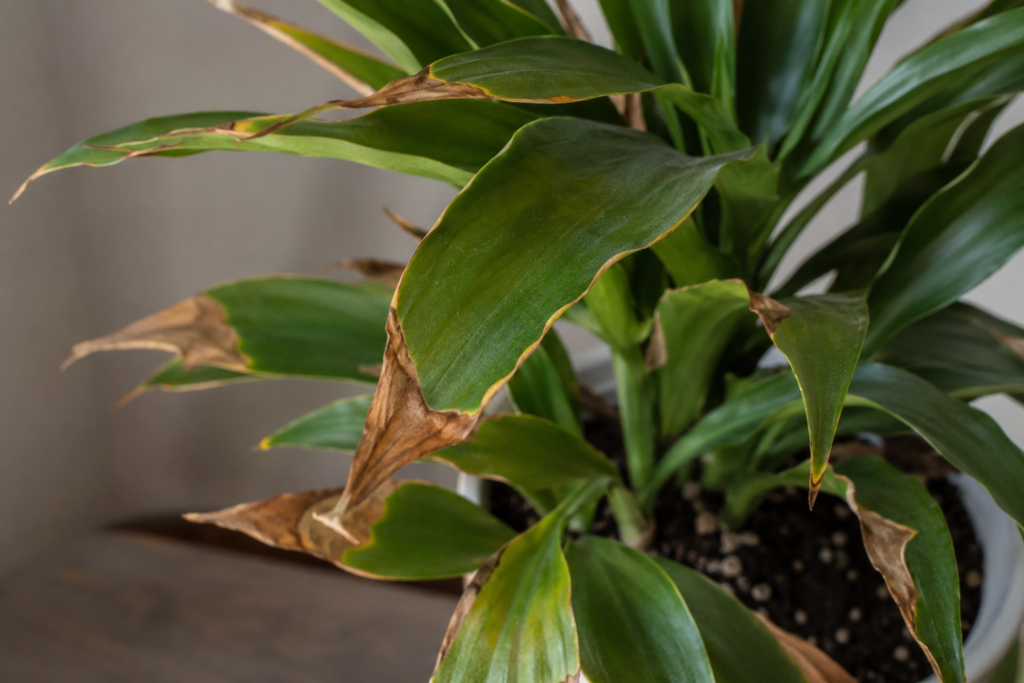
Fluoride is one of the most overlooked causes of leaf-tip burn. It does not evaporate, and it may not leave visible residue like hard water minerals. This makes it difficult to identify.
Fluoride damage usually appears as:
- Brown tips
- Crispy edges
- Dry margins
- Repeated tip burn even with correct watering
Sensitive plants absorb fluoride and accumulate it in leaf tips and edges. That is why plants may look otherwise healthy but still develop brown tips repeatedly.
Fluoride-sensitive plants include:
- Spider Plant
- Dracaena
- Prayer Plant
- Calathea
- Some palms
If these plants keep getting brown tips despite proper watering and humidity, switch to distilled, rainwater, or reverse osmosis water. New leaves are the best indicator of improvement because old damaged tips will not repair.
Is Filtered Water Better for Houseplants?
Filtered water is usually the best overall choice for most houseplants. It reduces many tap water problems without removing every mineral. This makes it more balanced than distilled water for general use.
Filtered water can reduce:
- Chlorine
- Some chloramine
- Sediment
- Heavy metals
- Some chemical residues
- Bad taste and odor
Filtered water is especially helpful for medium-sensitive plants such as Peace Lily, Philodendron, Anthurium, Monstera, and Boston Fern. It improves consistency and lowers hidden root stress.
The right filter depends on your water problem. Basic carbon filters help with chlorine and general impurities. Stronger filters or reverse osmosis systems are better for fluoride, chloramine, salts, and high mineral content.
For most plant owners, filtered water is the safest starting point. It is more affordable than buying distilled water regularly and more practical than collecting rainwater.
Is Distilled Water Better for Houseplants?
Distilled water is extremely pure. It contains almost no minerals, chlorine, fluoride, salts, or contaminants. This makes it excellent for plants that react badly to tap water.
Distilled water is best for:
- Calathea
- Prayer Plant
- Spider Plant
- Dracaena
- Orchids
- Carnivorous plants
- Sensitive cuttings
The downside is that distilled water contains no beneficial minerals. If used long-term, the plant depends more on fertilizer for nutrition. This is not a problem if you fertilize properly, but it can weaken growth if the plant receives no nutrients at all.
Distilled water is not necessary for every plant. Pothos, Snake Plant, ZZ Plant, and many common houseplants usually do not need it unless your tap water is very poor.
Use distilled water when sensitivity is high, fluoride damage appears, or mineral buildup keeps returning.
Filtered Water vs Distilled Water: Which Should You Choose?
Filtered water and distilled water both improve water quality, but they serve different purposes.
Filtered water is better for most houseplants because it removes many harmful substances while keeping some minerals. It is practical, affordable, and suitable for everyday watering.
Distilled water is better for sensitive plants because it removes almost everything. It is ideal when fluoride, salts, or hard water minerals are causing damage.
Quick comparison:
| Water Type | Best For | Main Benefit | Main Weakness |
|---|---|---|---|
| Tap water | Hardy plants | Cheap and easy | Can contain minerals and chemicals |
| Filtered water | Most houseplants | Balanced and practical | Filter strength varies |
| Distilled water | Sensitive plants | Very pure | No minerals |
| Rainwater | Tropical plants | Natural and soft | Must be collected cleanly |
| RO water | Rare/sensitive plants | Very consistent | More expensive |
Choose filtered water for balance. Choose distilled water for sensitivity.
Is Rainwater Good for Houseplants?
Rainwater is often excellent for houseplants because it is naturally soft and usually low in dissolved minerals. Many tropical plants evolved with rainwater, not treated tap water. This makes rainwater especially useful for Calathea, ferns, Monstera, orchids, and other tropical foliage plants.
Rainwater benefits include:
- No chlorine
- No fluoride
- Low mineral content
- Less salt buildup
- Better soil friendliness
However, rainwater must be collected properly. Avoid water from dirty roofs, polluted areas, rusty containers, or storage tanks with algae. Poorly stored rainwater can introduce bacteria or contaminants.
Rainwater is a great natural option if collected cleanly. If you cannot store it safely, filtered water is more reliable.
Can Bottled Water or Aquarium Water Be Used?
Bottled water can be used for houseplants, but the type matters. Purified bottled water is usually safe and behaves like filtered water. Distilled bottled water is best for sensitive plants. Spring water may contain minerals, which can be helpful in small amounts but may still cause buildup if used constantly.
Avoid bottled water with:
- Added electrolytes
- High sodium
- Artificial mineral enhancement
Aquarium water can also be useful if it comes from a healthy freshwater tank. It contains mild nutrients from fish waste, especially nitrogen compounds that support foliage growth. Many aquarium owners use old tank water on Pothos, Philodendron, and Monstera.
Do not use aquarium water if the tank contains:
- Saltwater
- Fish medication
- Algae treatments
- Chemical additives
Bottled water is best as a backup. Aquarium water is best as an occasional supplement, not a full-time replacement.
How Does Water pH Affect Houseplants?
Water pH affects nutrient availability. Even if fertilizer is present, roots may not absorb nutrients properly if pH is too high or too low. This is called nutrient lockout.
Most houseplants prefer water around:
- pH 6.0–7.0
When water is too alkaline, plants may struggle to absorb iron, magnesium, and other nutrients. This can cause pale leaves, yellowing, slow growth, and weak new foliage.
Plants that may react strongly include:
- Peace Lily
- Gardenia
- Ferns
- Calathea
If your plant looks nutrient-deficient but feeding is consistent, test water pH before adding more fertilizer. Adding fertilizer to a pH problem can increase salt buildup and make root stress worse.
What Is Salt Buildup and How Do You Fix It?
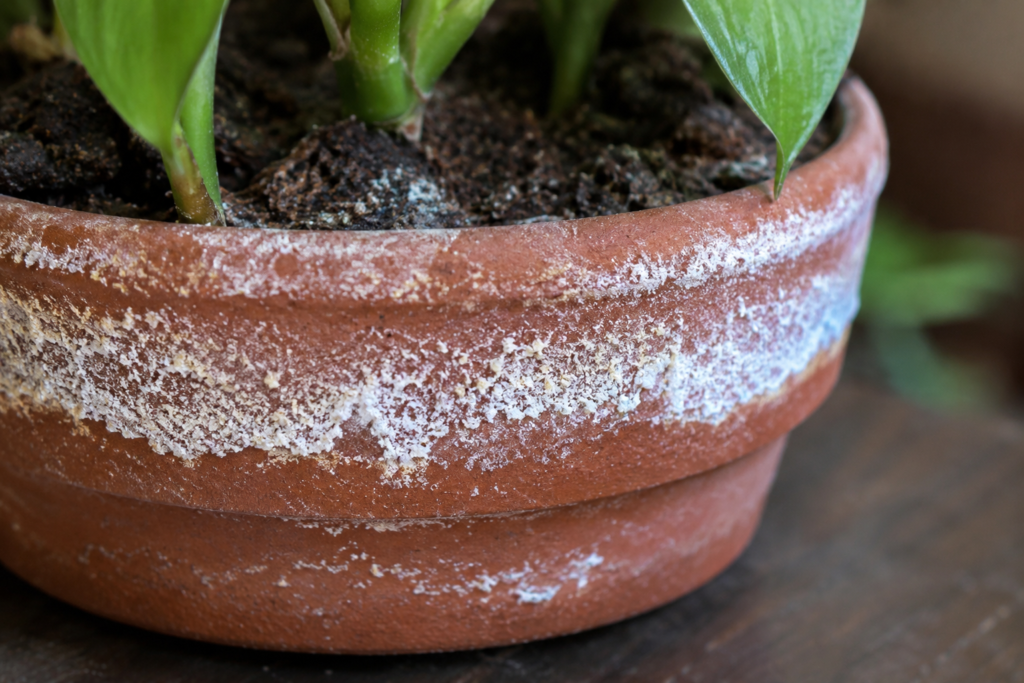
Salt buildup happens when dissolved minerals and fertilizer residues stay in the soil after water evaporates. Over time, salts collect around the roots and make water absorption harder.
This can create “false thirst.” The plant looks dry or wilted even when the soil is moist because roots cannot absorb water efficiently.
Signs of salt buildup include:
- White crust on soil
- White residue on pots
- Brown tips
- Leaf-edge burn
- Slow growth
- Soil hardening
The best fix is flushing. Run water through the soil until it drains freely from the bottom. This washes excess salts away.
Flush houseplant soil:
- Every 4–6 weeks if using tap water
- Every 6–8 weeks if using filtered water
- Less often if using distilled or rainwater
Flushing is maintenance, not only emergency care.
Does Pot Material Affect Water Quality Buildup?
Yes. Pot material changes how water and minerals behave inside the container.
Terracotta is porous, so moisture and minerals can move outward. This often creates white crust on the outside of the pot, but it may help reduce some pressure inside the soil.
Plastic pots hold moisture and salts longer. This can increase buildup if you use hard water or fertilize often.
Ceramic pots vary depending on whether they are glazed. Glazed ceramic behaves more like plastic, while unglazed ceramic behaves closer to terracotta.
Basic guide:
- Terracotta: dries faster, shows mineral residue clearly
- Plastic: holds moisture longer, may trap salts
- Glazed ceramic: attractive but less breathable
- Unglazed ceramic: moderate airflow and evaporation
If you use hard water, terracotta can help reveal mineral buildup early. If you use plastic pots, flushing becomes more important.
Is Softened Water Safe for Houseplants?
Softened water is not the same as naturally soft water. Traditional water softeners often replace calcium and magnesium with sodium. That sodium is not good for plants.
Sodium can damage roots, compact soil, and reduce water movement. Over time, this may cause browning edges, weak growth, wilting, and poor root health.
Avoid softened water for houseplants, especially sensitive plants like Calathea, Spider Plant, Dracaena, and ferns.
Better options include:
- Filtered water
- Distilled water
- Rainwater
- Reverse osmosis water
If your home uses a water softener, try to use water from a bypass tap, outdoor tap, filtered system, or collected rainwater instead.
Does Water Temperature or Timing Matter?
Water temperature matters because roots dislike sudden shock. Very cold water can slow root activity, especially in tropical plants. Hot water can damage root tissue.
The safest water temperature is room temperature, around:
- 65°F to 75°F
- 18°C to 24°C
Avoid using refrigerator-cold water or very cold winter tap water directly on tropical houseplants.
Morning is usually the best time to water because the plant can absorb moisture during active daytime growth. Evening watering is not always harmful indoors, but wet soil stays cool longer at night and may increase root issues in poor-draining pots.
Avoid ice cubes for most houseplants. They may seem convenient, especially for orchids, but they create localized cold stress. Room-temperature measured watering is safer and more natural.
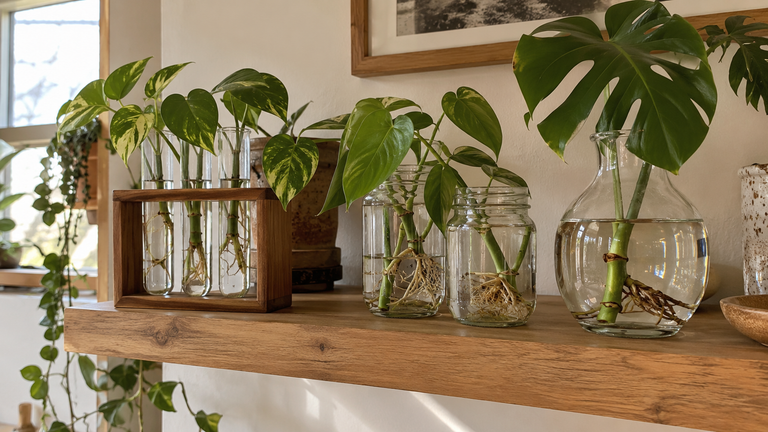
What Is the Best Water for Plant Propagation?
Propagation cuttings are more sensitive than mature plants. New roots are soft, thin, and easily stressed by chemicals, salts, or poor water quality.
Best water options for propagation:
- Filtered water
- Distilled water
- Rainwater
Filtered water works well for common cuttings like Pothos, Philodendron, and Monstera because it removes chlorine while keeping mild mineral support. Distilled water is better for rare or sensitive cuttings because it reduces fluoride and salt exposure.
Change propagation water regularly to prevent bacteria and keep oxygen levels stable. Cleaner water supports clearer jars, stronger roots, and better early growth.
For common cuttings, filtered water is usually enough. For sensitive cuttings, distilled water gives a safer start.
How Do You Fix Water-Damaged Houseplants?
Water-damaged plants can recover if the source of stress is corrected. The key is to focus on new growth, not old leaves. Brown tips and damaged edges rarely turn green again.
Steps to fix water-related damage:
- Check symptoms: Look for brown tips, white crust, slow growth, or yellowing.
- Flush the soil: Remove salts and mineral residue.
- Switch water source: Use filtered, distilled, rainwater, or RO water.
- Inspect roots: Remove rotten roots if needed.
- Trim damaged tips: Improve appearance, but avoid removing too much.
- Watch new growth: Healthy new leaves mean recovery is working.
Do not keep adding fertilizer if the issue is water quality. That can increase salt buildup and worsen stress.
Quick Water Decision Chart for Houseplants
| Plant Type | Best Water | Backup Option |
|---|---|---|
| Hardy beginner plants | Filtered | Tap |
| Tropical foliage plants | Filtered | Rainwater |
| Sensitive foliage plants | Distilled | RO water |
| Orchids | Distilled | Rainwater |
| Carnivorous plants | Distilled | RO water |
| Propagation cuttings | Filtered | Distilled |
Use tap water if your plant is hardy, your water is soft, and the soil is flushed regularly.
Use filtered water if your plant is moderately sensitive, your tap water is hard, or brown tips appear.
Use distilled water if your plant is highly sensitive, fluoride damage appears, or mineral buildup keeps returning.
When unsure, filtered water is the safest starting point for most houseplants.
Final Verdict: Tap, Filtered, or Distilled Water?
For most houseplants, filtered water is the best overall choice. It reduces common tap water problems while keeping some mineral support. It is practical, affordable, and suitable for most indoor plant collections.
Use tap water for hardy plants if your water is soft and your plants show no stress.
Use distilled water for sensitive plants, orchids, carnivorous plants, and plants with recurring brown tips.
Use rainwater if you can collect and store it cleanly.
Use reverse osmosis water for rare, expensive, or highly sensitive plant collections.
The best water is not always the purest water. It is the water your plant can absorb without stress.
FAQ Section
Is tap water bad for houseplants?
Tap water is not always bad, but it may contain chlorine, fluoride, and minerals. Hardy plants tolerate it better than sensitive plants.
Is filtered water better than tap water?
Yes. Filtered water reduces many impurities while keeping some useful minerals, making it ideal for most houseplants.
Should I use distilled water for all plants?
No. Distilled water is best for sensitive plants. Most common houseplants do well with filtered or good tap water.
What is the healthiest water for houseplants?
Filtered water is usually the healthiest overall. Distilled water and rainwater are better for sensitive plants.
Can hard water damage houseplants?
Yes. Hard water can cause mineral buildup, brown tips, nutrient lockout, and root stress over time.
Does letting tap water sit overnight help?
It helps chlorine evaporate, but it does not remove chloramine, fluoride, or minerals.
Is rainwater better than tap water?
Usually yes, if collected cleanly. Rainwater is soft and free from municipal chemicals.
Can I use bottled water for plants?
Yes. Purified or distilled bottled water is safe. Avoid bottled water with added minerals or sodium.
Is softened water safe for houseplants?
No. Softened water often contains sodium, which can damage roots and soil structure.
What water is best for Calathea?
Distilled water, rainwater, or reverse osmosis water is best because Calathea is sensitive to minerals and fluoride.
What water is best for Spider Plant?
Filtered, distilled, or rainwater is best because fluoride in tap water often causes brown tips.
How often should I flush houseplant soil?
Flush every 4–6 weeks if using tap water or fertilizer regularly.
Can aquarium water be used for houseplants?
Yes, if it is freshwater and chemical-free. Use it occasionally as a mild nutrient boost.
How do I know if water is hurting my plant?
Look for brown tips, white soil crust, slow growth, yellowing, or repeated stress despite correct care.
Myra is the founder and lead writer of Plantsaholic. She shares practical, research-backed advice on indoor plants, outdoor gardening, flowers, herbs, succulents, and everyday plant care. Her goal is to help gardeners of all experience levels grow healthier plants through simple, easy-to-follow gardening guides.