Celery is a cool-season vegetable that requires consistent moisture, nutrient-rich soil, and moderate temperatures to grow properly. It thrives in partial to full sunlight and takes around 3–4 months to mature, producing crisp, edible stalks when grown under stable conditions.
What Are Celery Plants?
Celery plants are leafy green vegetables grown primarily for their long, crunchy stalks, which are widely used in cooking, salads, and juices. Unlike many vegetables, celery has a shallow root system and high water demand, which makes it more sensitive to environmental changes. This is why beginners often find it challenging compared to low-maintenance crops.
Celery belongs to the Apiaceae family and shares similarities with parsley, carrots, and fennel. Its growth pattern is upright, with stalks forming tightly in clusters. The plant requires steady conditions throughout its life cycle to produce tender and flavorful stems rather than fibrous or bitter ones.
Key characteristics of celery plants:
- Tall, ribbed green stalks used as edible stems
- Slow-growing compared to leafy vegetables
- Requires consistent moisture and nutrient supply
- Sensitive to heat and drought stress
- Produces aromatic leaves along with stalks
Types of Celery Plants
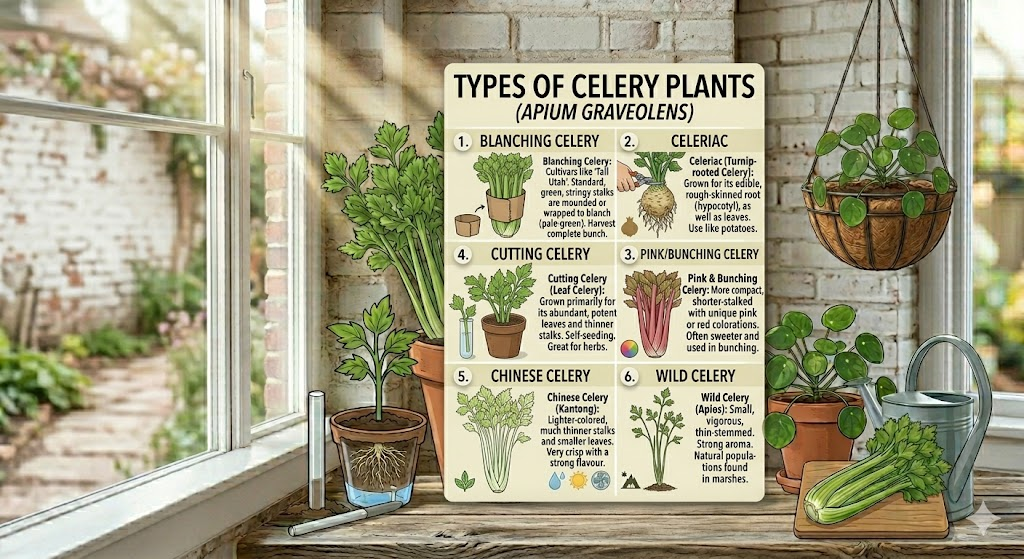
Celery plants come in several types, each suited for different growing conditions and culinary uses. Understanding the differences helps you choose the right variety based on your climate, maintenance level, and intended use. While all celery types share similar care requirements, their growth habits and flavors vary significantly.
The most common type is Pascal celery, which is widely available and used for its thick, crunchy stalks. Self-blanching celery is preferred by beginners because it requires less effort to maintain color and flavor. Celeriac, on the other hand, is grown for its root rather than stalks and is often used in soups and European dishes.
Main types of celery:
- Pascal celery: thick stalks, strong flavor, most common variety
- Self-blanching celery: lighter color, milder taste, easier to grow
- Celeriac: grown for edible root, not stalks
- Heirloom varieties: unique flavor profiles and growth traits
- Hybrid varieties: bred for disease resistance and higher yield
Ideal Growing Conditions for Celery Plants
Celery plants thrive in stable, moderate environments where temperature, moisture, and nutrients remain consistent. Unlike drought-tolerant plants, celery requires continuous access to water and fertile soil to maintain healthy growth. Sudden environmental changes can quickly affect plant quality, resulting in poor stalk development.
The ideal temperature range for celery is between 15°C and 21°C. It prefers cooler climates and struggles in extreme heat, which can cause bitterness and tough stalks. Sunlight is also important, but celery performs best with a balance of sun and partial shade, especially in warmer regions.
Ideal conditions for celery growth:
- Temperature: 15–21°C for optimal development
- Light: 5–6 hours of sunlight daily
- Soil: rich, organic, moisture-retaining soil
- Environment: stable and cool climate preferred
- Protection: avoid heat stress and sudden weather changes
How to Grow Celery Plants (Step-by-Step)
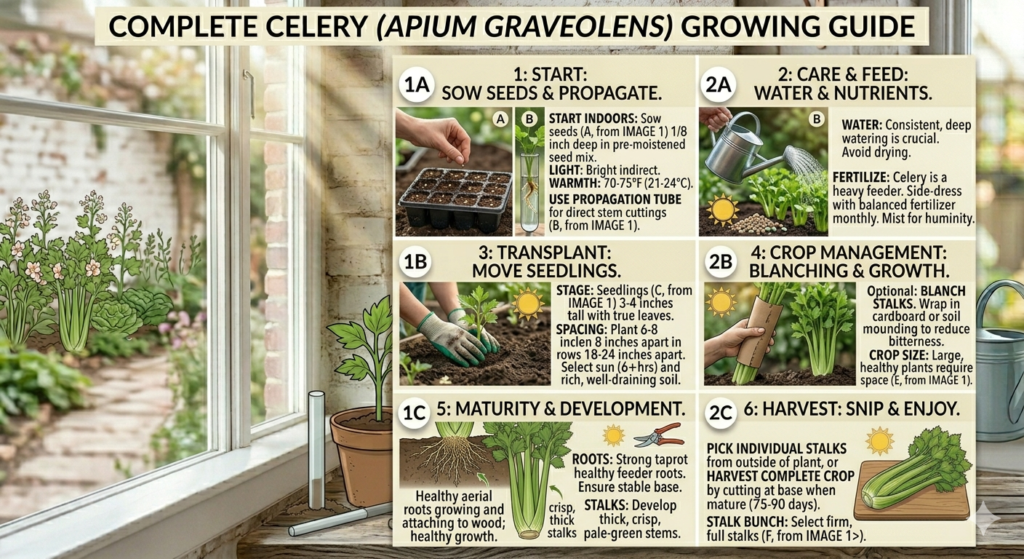
Growing celery requires a structured approach, starting with seed preparation and ending with proper transplanting. Since celery has a long growing period, starting seeds indoors is often necessary to ensure healthy early development. This gives the plant enough time to establish before being exposed to outdoor conditions.
Once seedlings are strong enough, they should be transplanted into well-prepared soil with adequate spacing. Proper spacing ensures airflow and prevents competition for nutrients. Throughout the growth cycle, consistent watering and feeding are critical to achieving thick, tender stalks.
Step-by-step celery growing process:
- Start seeds indoors 8–10 weeks before transplanting
- Use seed trays with light, moist soil
- Transplant when seedlings are strong and weather is mild
- Space plants 20–30 cm apart for proper growth
- Maintain consistent watering and fertilization
Watering Celery Plants (Most Important Factor)
Watering is the single most important factor in growing celery successfully. Unlike most vegetables, celery cannot tolerate dry soil at any stage of its growth. Even short periods of dryness can lead to tough, stringy, or bitter stalks, reducing the quality of the harvest significantly.
At the same time, overwatering can also create problems such as root rot and nutrient imbalance. The goal is to maintain consistently moist soil without waterlogging. This balance ensures that the plant continues steady growth and develops tender, juicy stalks.
Watering guidelines for celery:
- Keep soil consistently moist at all times
- Water deeply rather than frequently shallow watering
- Avoid letting soil dry completely
- Use mulch to retain soil moisture
- Ensure proper drainage to prevent root rot
How to Harvest Celery Plants
Harvesting celery correctly ensures the best flavor and texture. Celery plants typically reach maturity within 3 to 4 months, depending on the growing conditions. The timing of harvest plays a key role in determining the tenderness of the stalks.
There are two main harvesting methods. You can either harvest the entire plant at once or cut individual stalks as needed. The second method is more practical for home gardeners, as it allows continuous harvesting without removing the entire plant.
Harvesting methods:
- Cut the entire plant at the base when fully mature
- Harvest outer stalks individually for continuous use
- Use sharp tools to avoid damaging the plant
- Harvest before extreme heat for best flavor
- Store harvested celery in cool conditions
How to Regrow Celery from Store-Bought Stalks
Regrowing celery from store-bought stalks is one of the easiest and most popular gardening methods, especially for beginners. Instead of starting from seeds, you can reuse the base of a celery bunch and grow new leaves and stalks. This method is widely searched because it’s simple, cost-effective, and visually satisfying.
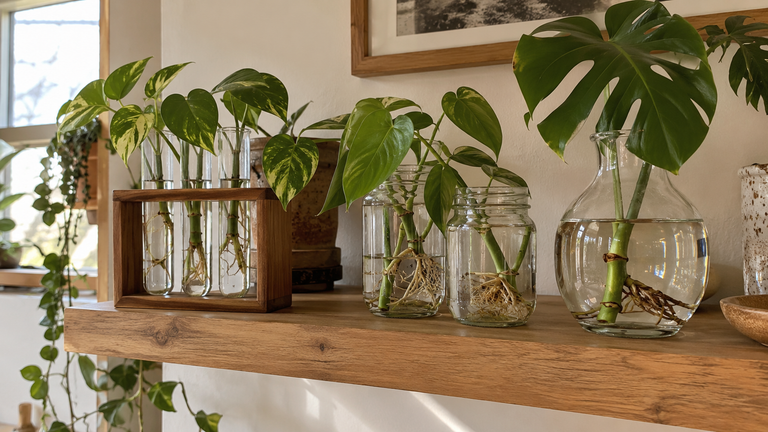
To regrow celery, cut off the base of the stalk (about 5–7 cm from the bottom) and place it in a shallow dish of water. Within a few days, new leaves will begin to grow from the center. Once roots start forming, the base can be transferred into soil for continued growth.
Steps to regrow celery:
- Cut the base of a fresh celery bunch
- Place it in a shallow bowl with water
- Keep in bright indirect sunlight
- Change water every 2–3 days
- Transplant into soil after roots appear
This method works best in warm, stable conditions and is ideal for indoor gardening.
How to Blanch Celery for Better Taste
Blanching is a technique used to improve the taste and texture of celery by reducing bitterness. It works by limiting sunlight exposure to the stalks, which prevents chlorophyll development and results in lighter, sweeter stems. This method is commonly used by experienced gardeners to produce high-quality celery.
Blanching is usually done 2–3 weeks before harvest. The outer leaves are gently gathered and tied together, or the stalks are covered with soil, cardboard, or special collars. This blocks sunlight and allows the inner stalks to become pale and tender.
Blanching methods:
- Tie outer stalks together with soft string
- Use cardboard or paper wraps around stems
- Gradually mound soil around the base
- Use self-blanching varieties for easier care
Proper blanching significantly improves flavor and reduces the strong, bitter taste often found in homegrown celery.
Celery Fertilizer Schedule (Simple Feeding Plan)
Celery is a heavy feeder, meaning it requires a steady supply of nutrients throughout its growth cycle. Without proper feeding, plants develop weak stalks and slow growth. A structured fertilizer schedule ensures consistent development and high-quality harvests.
The best approach is to use nitrogen-rich fertilizer regularly, as celery depends heavily on nitrogen for leafy growth. Organic compost can also be used to improve soil fertility over time. Feeding should begin early and continue until harvest.
Recommended fertilizer schedule:
- Week 1–2: Apply compost or balanced fertilizer
- Week 3–6: Use nitrogen-rich fertilizer every 2 weeks
- Week 7 onward: Continue feeding every 2–3 weeks
- Use liquid fertilizer for faster absorption
- Avoid over-fertilizing to prevent weak growth
Consistent feeding leads to thicker, healthier, and more flavorful celery stalks.
Best Companion Plants for Celery
Companion planting improves celery growth by enhancing soil health, repelling pests, and optimizing space. Celery benefits from being planted alongside certain vegetables and herbs that support its development and reduce pest issues naturally.
Some plants help protect celery from insects like aphids, while others improve soil nutrients. At the same time, there are plants that should be avoided because they compete for nutrients or hinder celery growth.
Best companion plants for celery:
- Onions: repel pests and improve plant health
- Leeks: reduce insect attacks
- Tomatoes: provide shade in hot climates
- Spinach: complements growth cycles
- Beans: enrich soil with nitrogen
Plants to avoid:
- Corn (competes for nutrients)
- Carrots (similar root competition)
- Parsley (same family, attracts pests)
Proper companion planting can significantly improve celery yield and plant health.
Expected Yield: How Much Celery Can You Grow?
Understanding yield expectations helps gardeners plan their planting space and harvest goals. Celery plants typically produce one main bunch per plant, but the actual yield depends on growing conditions, care consistency, and variety selection.
A single celery plant can produce a full cluster of stalks weighing around 500 grams to 1 kilogram. However, if you harvest stalks individually, the plant can continue producing for a longer period. Yield is highest when plants receive consistent water, nutrients, and moderate temperatures.
Celery yield factors:
- One plant = one full bunch (average yield)
- Continuous harvesting increases total output
- Rich soil improves stalk thickness
- Proper watering prevents bitterness
- Cooler temperatures enhance quality
With proper care, even a small garden can produce a steady supply of fresh celery.
Common Problems and Solutions
Celery plants are sensitive and can develop issues if conditions are not maintained properly. Most problems are directly related to watering, temperature, or soil quality. Identifying these issues early helps prevent long-term damage to the plant.
Common signs like yellow leaves, slow growth, or bitter stalks usually indicate environmental stress. Addressing these issues quickly ensures the plant returns to healthy growth and produces quality stalks.
Common celery problems:
- Bitter stalks: caused by heat stress or lack of water
- Yellow leaves: due to overwatering or nutrient deficiency
- Slow growth: poor soil or lack of nutrients
- Pests: aphids and slugs are common
- Weak stalks: inconsistent watering
Growing Celery in Containers
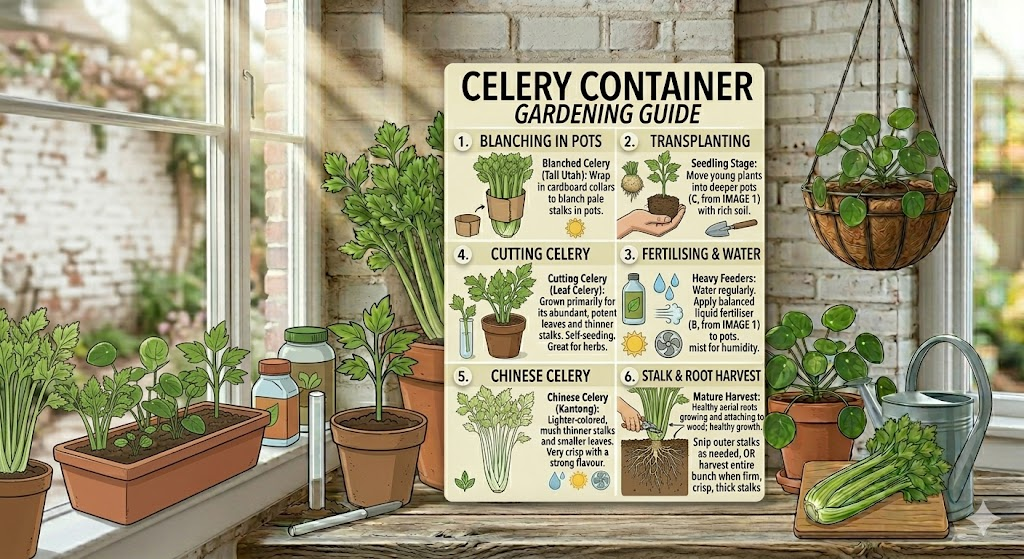
Celery can be grown successfully in containers if the right setup is used. This is a great option for people with limited space, such as balconies or small gardens. However, container-grown celery requires more attention because soil dries faster compared to ground planting.
Choosing the right container size is essential. Since celery has shallow roots but requires consistent moisture, the container must be deep enough to retain water while allowing proper drainage. Regular feeding is also necessary to maintain nutrient levels.
Container growing tips:
- Use a deep container with drainage holes
- Fill with rich, organic potting mix
- Water more frequently than ground plants
- Place in a location with adequate sunlight
- Fertilize regularly for better growth
Expert Insight: Why Consistency Determines Success
Celery is not a difficult plant, but it is unforgiving when conditions fluctuate. Unlike hardy vegetables, celery reacts quickly to stress, which directly affects the quality of the stalks. This makes consistency the most important principle in celery cultivation.
By maintaining steady moisture, stable temperature, and nutrient-rich soil, you create an environment where celery can grow without interruption. Once this balance is achieved, celery becomes predictable and productive.
Core success principles:
- Maintain consistent watering schedule
- Avoid sudden environmental changes
- Use nutrient-rich soil
- Monitor plant health regularly
- Focus on stability over rapid growth
Final Thoughts
Celery plants require more attention than many other vegetables, but the results are worth it. With proper care, you can grow fresh, crisp stalks that are far superior to store-bought options. The key is understanding the plant’s sensitivity and maintaining stable conditions throughout its growth cycle.
If you focus on consistency, proper watering, and nutrient-rich soil, celery becomes a rewarding crop. Once mastered, it can easily become a regular part of your home garden.
FAQ Section
What are celery plants?
Celery plants are cool-season vegetables grown for their edible stalks.
How often should celery be watered?
Soil should remain consistently moist at all times.
How long does celery take to grow?
It takes around 3–4 months to mature.
Can celery grow in pots?
Yes, with deep containers and proper care.
Why does celery taste bitter?
Due to heat stress or inconsistent watering.


Myra is the founder and lead writer of Plantsaholic. She shares practical, research-backed advice on indoor plants, outdoor gardening, flowers, herbs, succulents, and everyday plant care. Her goal is to help gardeners of all experience levels grow healthier plants through simple, easy-to-follow gardening guides.