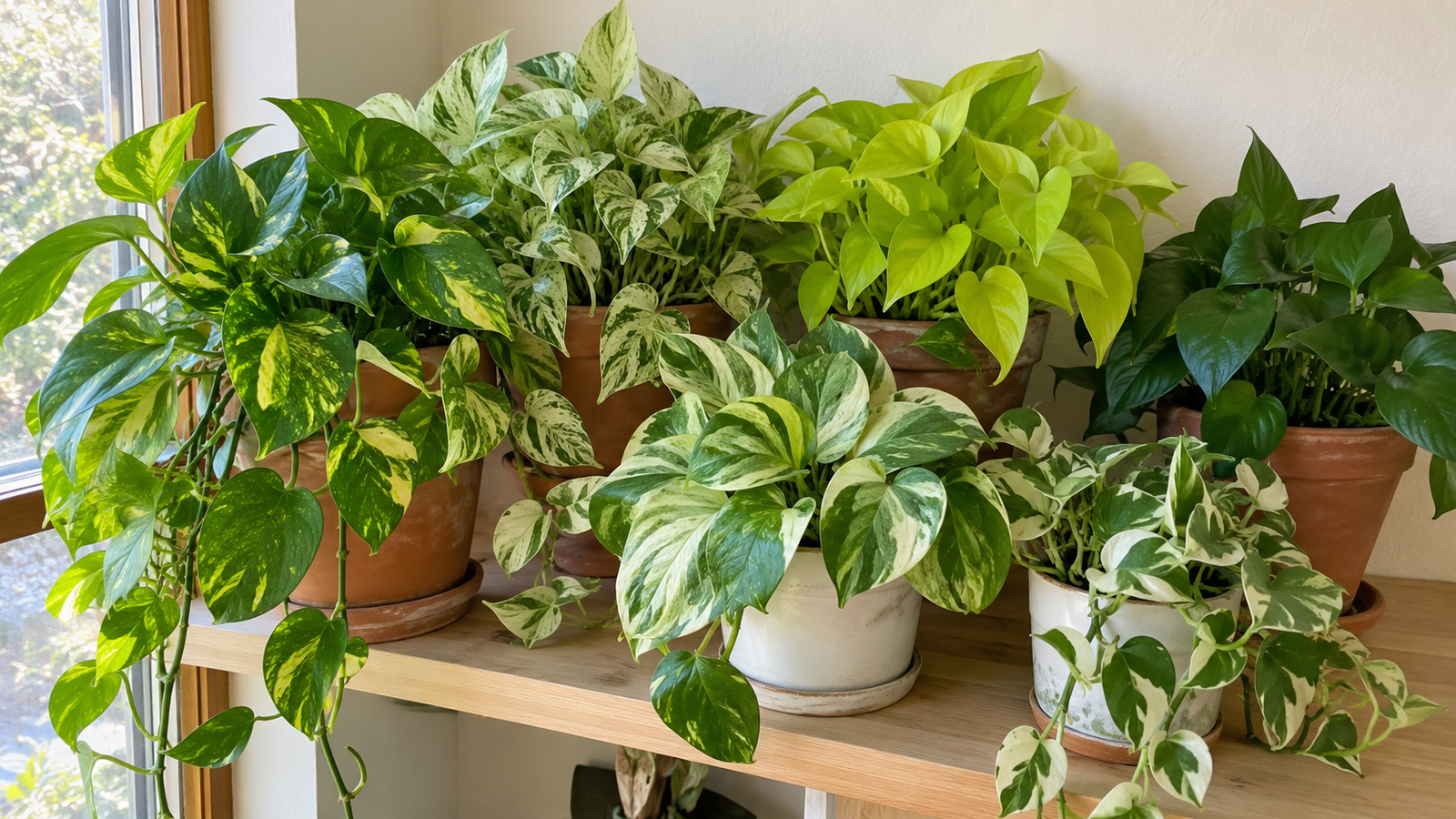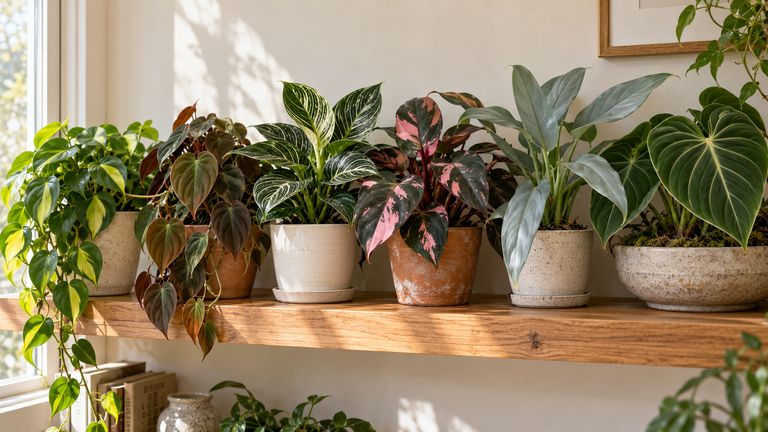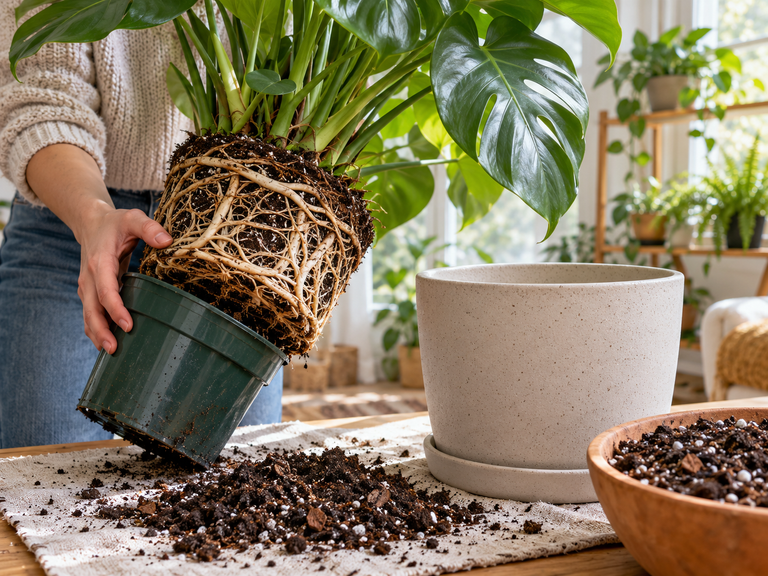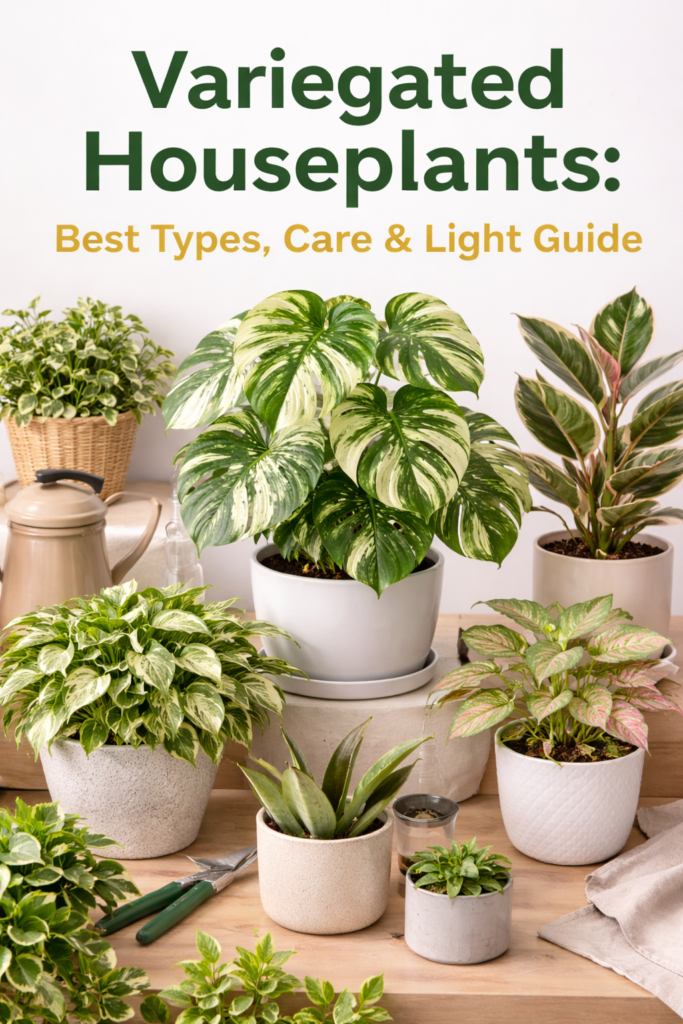
Variegated houseplants are indoor plants with multi-colored leaves, often showing white, yellow, or cream patterns alongside green. Popular types include Monstera albo, pothos, and calathea. These plants need bright indirect light and consistent care to maintain their variegation and healthy growth.
Variegated houseplants are among the most visually striking indoor plants. Their patterns, textures, and color contrasts instantly elevate any space, making them highly desirable for both beginners and collectors.
Unlike standard green plants, they require a bit more attention, but the visual reward is significantly higher.
What Are Variegated Houseplants?
Variegated houseplants are plants that display multiple colors on their leaves due to uneven distribution of chlorophyll. The lighter sections, often white or yellow, lack chlorophyll, which affects how the plant produces energy.
This unique feature makes them visually appealing but also slightly more delicate than fully green plants. Because part of the leaf cannot photosynthesize efficiently, the plant must rely more on proper light and care.
Key characteristics:
- Multi-colored leaves (green + white/yellow/cream)
- Reduced chlorophyll in lighter areas
- Slower growth compared to green plants
- Higher light requirement
- Strong decorative value
Why Do Variegated Plants Have Different Colors?
The color variation in variegated plants comes from genetic mutations or natural cell variations that affect chlorophyll production. These variations create patterns such as streaks, patches, or marbling.
From a biological perspective, variegation is a disadvantage because it reduces the plant’s ability to produce energy. However, in controlled indoor environments, this limitation can be managed with proper lighting and care.
Causes of variegation:
- Genetic mutation
- Chimeral cell structure
- Environmental influence (rare cases)
- Selective breeding in cultivated plants
- Reduced chlorophyll production
This is why variegated plants require more light than regular plants.
Best Variegated Houseplants
1. Monstera deliciosa variegata
A highly sought-after plant with bold white and green patterns.
Why it stands out:
- Large split leaves
- High visual impact
- Collector-level plant
2. Pothos
One of the easiest variegated plants to grow.
Popular varieties:
- Marble Queen
- Golden pothos
3. Calathea
Known for intricate patterns and decorative foliage.
4. Ficus elastica variegata
A bold indoor statement plant.
5. Syngonium podophyllum variegata
Fast-growing and adaptable.
6. Tradescantia
Colorful and beginner-friendly.
Types of Variegation (Important for Care)
Understanding variegation types helps prevent common issues like reversion.
Stable Variegation
This type remains consistent across new growth.
Unstable Variegation
Patterns may fade or revert to green over time.
Chimeral Variegation
Most visually striking but less stable.
Variegation insights:
- Stable types are easier to maintain
- Unstable types require more light
- Chimeral types are collector favorites
- Light directly affects pattern strength
Light Requirements for Variegated Plants
Light is the most important factor in maintaining variegation. Since lighter areas lack chlorophyll, the plant needs more light to compensate.
Too little light causes:
- Reversion to green
- Weak growth
- Loss of patterns
Too much direct sunlight can:
- Burn delicate leaf sections
Lighting guidelines:
- Bright indirect light is ideal
- Avoid harsh direct sun
- Place near windows
- Rotate regularly for even growth
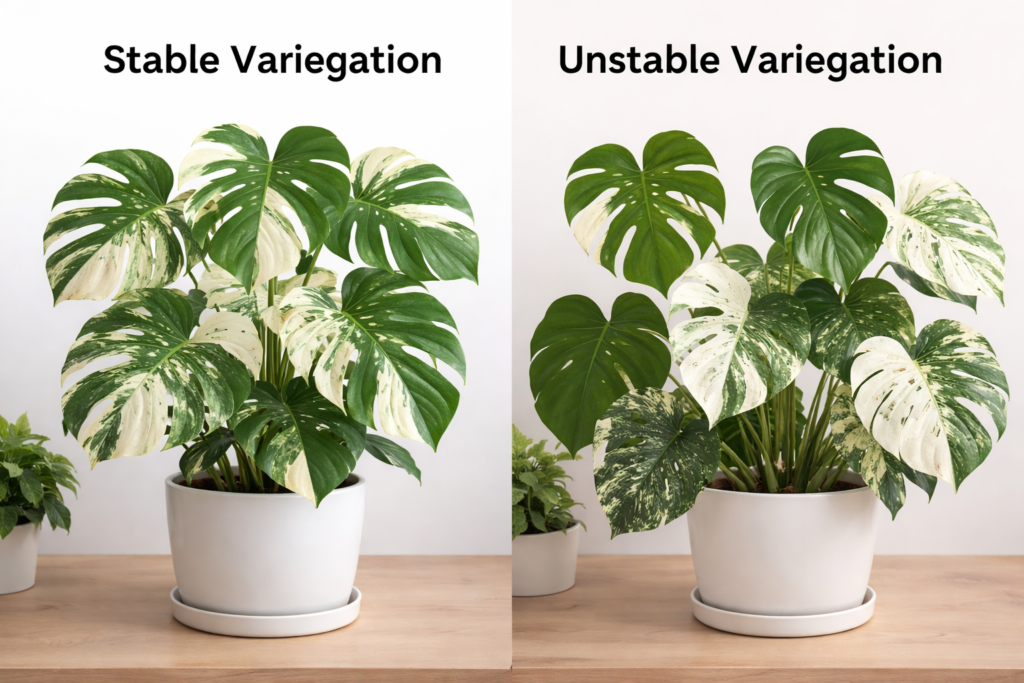
Stable vs Unstable Variegation (How to Predict It)
Variegation is not always permanent, and understanding its stability is critical for long-term success. Some plants maintain their patterns consistently, while others can lose variegation over time. This depends on the plant’s genetic structure and how chlorophyll is distributed within its cells.
Stable variegation is genetically fixed, meaning new growth continues to show consistent patterns. Unstable or chimeral variegation, however, is unpredictable and can revert to green if the plant prioritizes survival over aesthetics. This often happens in low-light conditions where the plant needs more chlorophyll to produce energy.
How to predict variegation stability:
- Stable plants show consistent patterns across new leaves
- Unstable plants produce mixed or changing patterns
- Green-dominant growth signals possible reversion
- High white or yellow areas indicate weaker stability
- Light conditions directly influence stability
Recognizing stability early helps you adjust care before losing variegation.
How to Fix Reverted Variegated Plants
Reversion is one of the most common problems with variegated houseplants. When a plant starts producing fully green leaves, it is attempting to increase its energy production. While this helps survival, it reduces the plant’s visual appeal.
The most effective solution is to prune back the reverted sections. Cutting below the last variegated node encourages the plant to produce new growth that retains its pattern. At the same time, improving light conditions helps prevent further reversion.
Steps to fix reversion:
- Identify fully green leaves or stems
- Cut back to the last variegated node
- Increase light exposure immediately
- Maintain stable watering and environment
- Monitor new growth closely
Early action is critical, delayed pruning can lead to permanent loss of variegation.
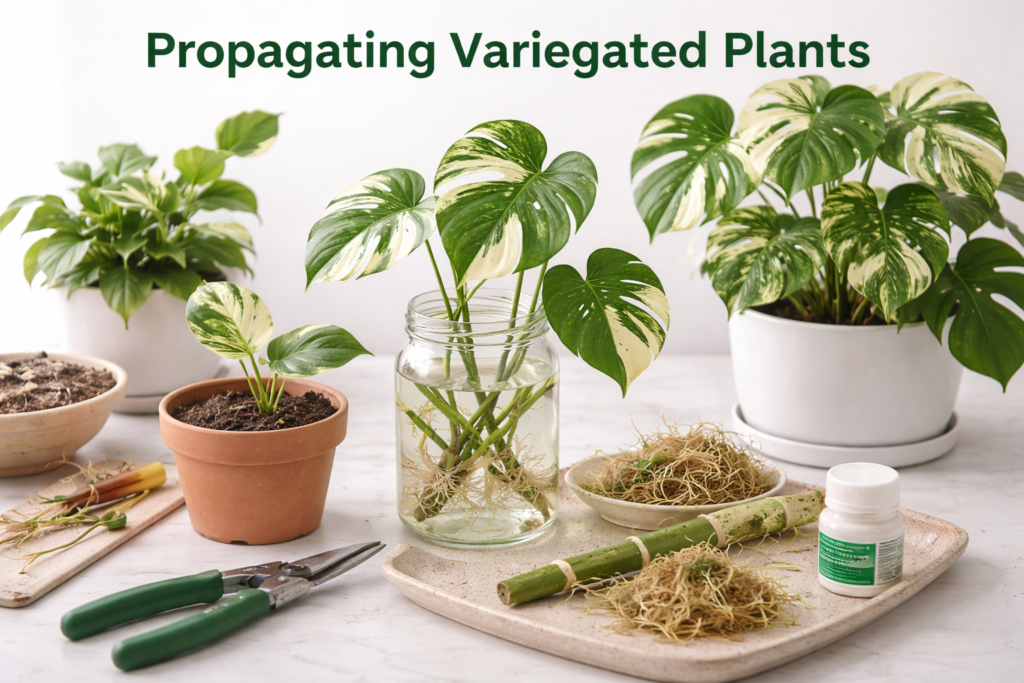
Propagating Variegated Plants (Will It Stay Variegated?)
Propagation of variegated plants requires careful selection because not all cuttings will maintain the same pattern. The variegation must be present in the node for it to carry into new growth. If a cutting comes from a fully green section, the new plant will likely remain green.
This makes propagation more selective compared to regular plants. You need to choose stems that show clear variegation and include healthy nodes. Even then, results can vary depending on plant type and environmental conditions.
Propagation rules for variegation:
- Always choose stems with visible variegation
- Ensure at least one healthy node is included
- Avoid fully green sections
- Use water or moss propagation for visibility
- Provide bright light during rooting
Variegation is not guaranteed unless the genetic pattern is preserved in the cutting.
Why Variegated Plants Grow Slower (Energy Explained)
Variegated plants grow slower because they operate with reduced energy efficiency. The lighter sections of the leaf lack chlorophyll, which is essential for photosynthesis. This means the plant has fewer resources to produce energy compared to fully green plants.
As a result, growth is naturally slower, and the plant becomes more sensitive to environmental stress. White or yellow areas are also more vulnerable to damage because they lack protective pigments. This is why variegated leaves burn more easily under direct sunlight.
Energy limitations explained:
- Less chlorophyll reduces energy production
- Growth rate is slower than green plants
- White areas are more sensitive to light
- Plants rely heavily on optimal conditions
- Stress impacts growth more quickly
Understanding this energy tradeoff explains most care requirements.
Exact Lighting Setup (Window + Direction Guide)
Lighting is the most important factor in maintaining variegation, but not all “bright light” setups are equal. The direction of the window and the intensity of light play a major role in how well a plant performs.
East-facing windows provide gentle morning light, which is ideal for most variegated plants. South-facing windows offer strong light but may require sheer curtains to prevent burning. North-facing windows often lack sufficient intensity, while west-facing windows can be too harsh in the afternoon.
Lighting setup guide:
- East window: best balanced light
- South window: strong light, use filtering
- West window: monitor for heat stress
- North window: may require grow lights
- Keep plants close to light source
Proper positioning ensures strong patterns without damage.
Why Variegated Plants Are Expensive
Variegated plants are often more expensive due to their rarity, slower growth, and propagation difficulty. Since they produce less energy, they grow more slowly, which limits supply compared to regular plants.
In addition, not all propagations are successful in maintaining variegation. This increases the effort required to produce consistent plants. Collector demand also drives prices higher, especially for rare or highly variegated specimens.
Factors influencing price:
- Slower growth rate
- Limited propagation success
- High demand from collectors
- Unique visual patterns
- Limited availability
The price reflects both rarity and production difficulty.
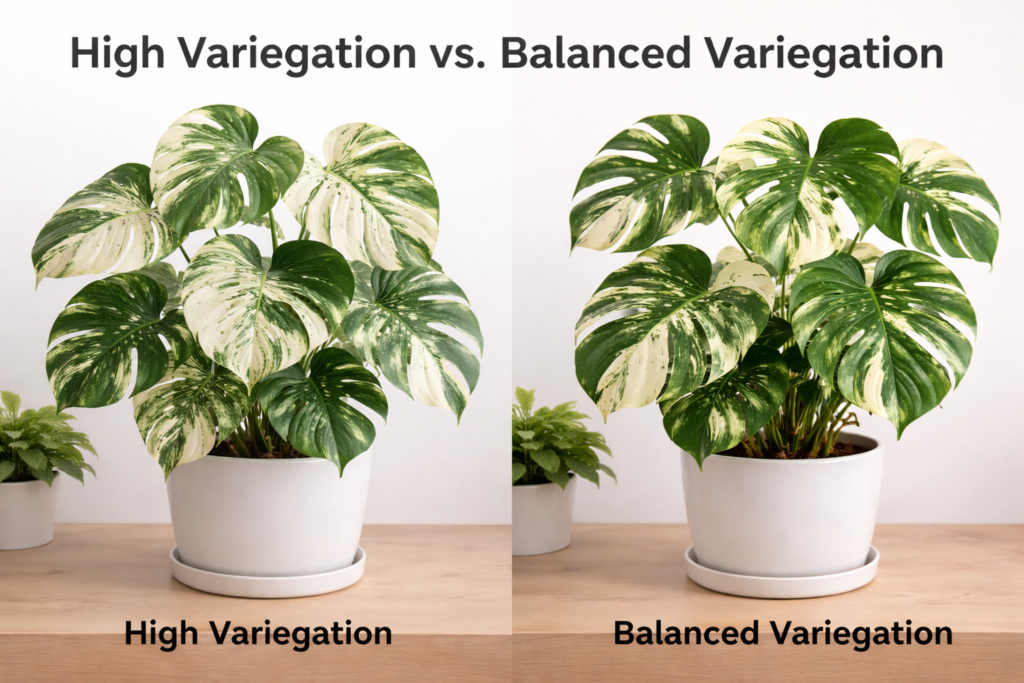
High Variegation vs Balanced Variegation (Visual Comparison)
Not all variegated plants are equal in appearance or health. Plants with high variegation have more white or yellow areas, making them visually striking but less stable. Balanced variegation provides a mix of green and lighter colors, offering both beauty and better growth.
Highly variegated plants are more prone to stress because they have less chlorophyll. Balanced plants are easier to care for and grow more consistently. Choosing the right balance depends on your experience level and care setup.
Comparison insights:
- High variegation: more white, slower growth
- Balanced variegation: better energy balance
- High variegation needs stronger light
- Balanced plants are more stable
- Collector plants often favor extreme patterns
Balance between beauty and stability determines long-term success.
Watering and Soil Needs
Variegated plants prefer consistent moisture but cannot tolerate overwatering. Their slower growth rate means they use water more slowly than regular plants.
Watering tips:
- Water when top soil dries slightly
- Avoid waterlogging
- Use well-draining soil
Ideal soil mix:
- Potting soil
- Perlite
- Bark for aeration
How to Keep Variegation Strong
Maintaining color is the main challenge with variegated plants. Without proper care, plants may lose their patterns and revert to green.
Best practices:
- Provide consistent bright light
- Prune green-only leaves
- Rotate plant regularly
- Maintain stable environment
- Avoid stress conditions
Light is the biggest factor controlling variegation.
Common Problems and Fixes
Reversion to Green
Cause:
Low light
Burnt White Areas
Cause:
Direct sunlight
Slow Growth
Cause:
Low energy production
Leggy Growth
Cause:
Insufficient light
Fixes:
- Adjust lighting
- Maintain watering balance
- Improve airflow
- Prune damaged leaves
Variegated vs Regular Houseplants
| Feature | Variegated Plants | Regular Plants |
| Growth Speed | Slower | Faster |
| Light Needs | Higher | Moderate |
| Appearance | Multi-colored | Green |
| Care Level | Moderate | Easy |
Are Variegated Plants Beginner-Friendly?
Some variegated plants are easy to manage, while others require more attention. Beginners should start with resilient species before moving to collector-level plants.
Beginner-friendly options:
- Pothos
- Tradescantia
- Syngonium
Advanced plants:
- Monstera albo
- Calathea varieties
Expert Insight: Why Light Controls Everything
Variegated plants depend heavily on light because of reduced chlorophyll. Without enough light, the plant compensates by producing more green leaves to survive.
More light = stronger patterns
Less light = greener leaves
Final Thoughts
Variegated houseplants combine beauty and complexity, making them one of the most rewarding indoor plant categories. With proper care, they maintain their striking patterns and become the centerpiece of any indoor space.
They require attention, but the visual impact makes them worth it.
FAQ Section
What are variegated houseplants?
Plants with multi-colored leaves caused by reduced chlorophyll.
Why do variegated plants need more light?
Because lighter areas cannot photosynthesize efficiently.
Can variegated plants turn green?
Yes, due to low light or stress.
Are variegated plants hard to care for?
Moderate difficulty depending on the species.
What is the best beginner variegated plant?
Pothos is the easiest option.
Myra is the founder and lead writer of Plantsaholic. She shares practical, research-backed advice on indoor plants, outdoor gardening, flowers, herbs, succulents, and everyday plant care. Her goal is to help gardeners of all experience levels grow healthier plants through simple, easy-to-follow gardening guides.