Indoor plant health starts at the roots. While many people focus on light, watering, and fertilizer, soil controls root survival, nutrient movement, oxygen flow, and water balance.
Many common plant problems begin below the soil surface. Poor soil can cause weak roots, slow growth, yellow leaves, and root rot long before symptoms appear above the pot.
This guide explains how indoor plant soil works, how to choose the right soil for different plant types, improve store-bought mixes, and identify soil-related problems before they damage plant health.
What Makes Soil Important for Indoor Plants?
Soil is the root ecosystem of an indoor plant. In containers, roots depend entirely on soil for water, oxygen, nutrients, and stability. If the soil is too dense, roots suffocate. If it stays wet too long, root rot begins.
Healthy soil creates the balance roots need: enough moisture to stay hydrated, enough airflow to breathe, and enough structure to stay stable while absorbing nutrients.
Real-world example: A healthy Monstera deliciosa placed in poor soil may stop producing new leaves even under perfect light because the roots cannot function properly.
Decision clarity: Soil is not just plant support—it is the foundation of plant health.
What Is the Best Soil for Indoor Plants?
The best soil for indoor plants balances moisture retention, drainage, aeration, and nutrients. Good soil should match the plant’s natural root behavior and watering needs.
Most indoor plants perform best in layered soil systems that combine moisture control, airflow, and structure. The right balance keeps roots healthy and growth stable over time.
Real-world example: A pothos in a mix of coco coir, bark, and perlite often roots faster than in dense peat-only soil because oxygen stays available around the roots.
Decision clarity: The best indoor soil is plant-specific, not universal.
What Is the Difference Between Potting Soil and Potting Mix?
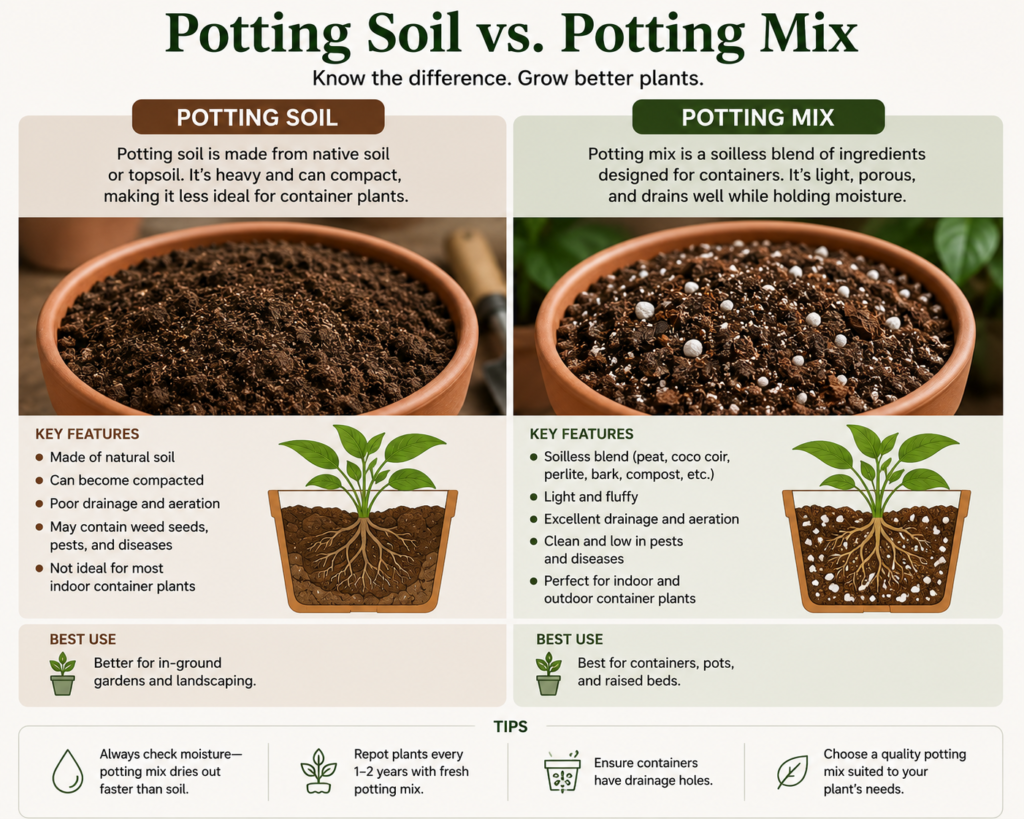
Potting soil and potting mix sound similar, but they are not the same. Potting soil may contain actual soil-based ingredients like compost or mineral matter, while potting mix is usually soil-free and engineered for container growing.
Potting mixes usually provide better drainage, structure, and airflow inside containers. Soil-free blends often use coco coir, bark, and perlite to improve root-zone performance and support healthier root growth.
Real-world example: A spider plant grown in a bark-perlite mix often develops stronger roots than in dense soil-based blends.
Decision clarity: For indoor plants, choose engineered structure over traditional soil.
Why Garden Soil Is Bad for Indoor Plants
Garden soil is designed for open outdoor ecosystems, not containers. In pots, it compacts quickly, traps water, reduces oxygen flow, and increases the risk of disease, pests, and root damage.
Unlike potting mixes, garden soil is too dense for container root systems. It does not maintain the airflow and drainage indoor plants need for healthy root development.
Main Problems With Garden Soil
- heavy compaction
- poor drainage
- pest introduction
- fungal contamination
- low oxygen flow
- unpredictable nutrient balance
Real-world example: A snake plant grown in garden soil often develops root rot because excess moisture cannot escape properly.
Decision clarity: Outdoor soil belongs outdoors. Indoor plants need container-specific soil.
What Are the Main Components of Indoor Plant Soil?
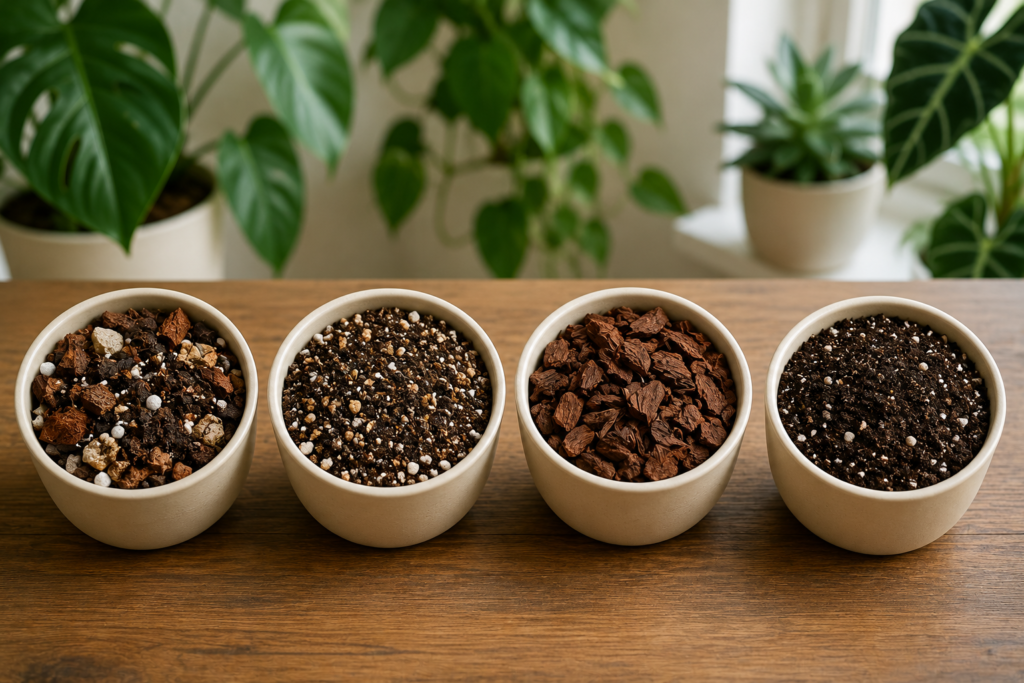
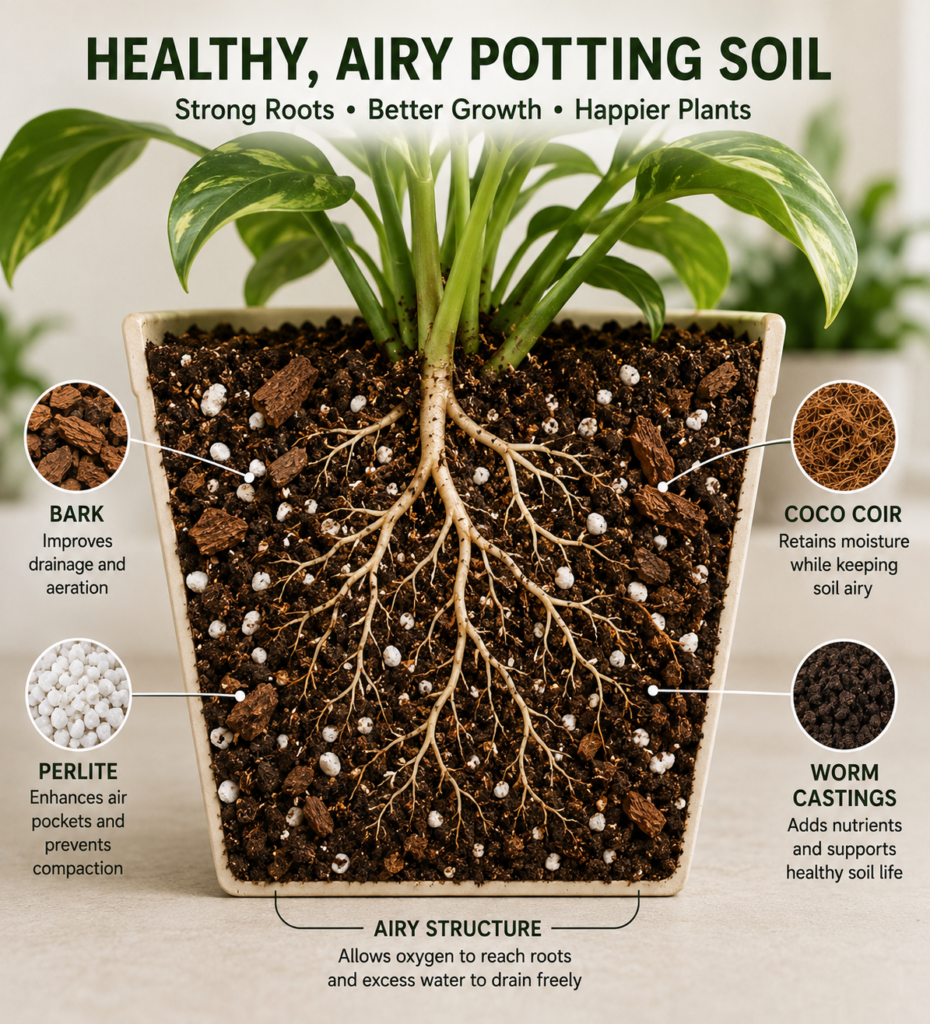
Indoor plant soil works because each ingredient serves a different purpose. Some ingredients hold moisture, some improve airflow, and others provide nutrients. The right combination creates a healthier root environment.
A strong soil mix usually starts with a base material like peat moss or coco coir. Aeration materials like perlite or bark improve airflow, while nutrient-rich ingredients like compost or worm castings support long-term plant growth.
Main Indoor Soil Ingredients
- peat moss
- coco coir
- perlite
- vermiculite
- pine bark fines
- compost
- worm castings
Real-world example: A simple bark, coco coir, and perlite mix often performs better than dense commercial soil because it keeps its structure longer.
Decision clarity: Ingredient quality matters just as much as the final soil mix.
How Does Drainage Affect Indoor Plant Health?
Drainage controls how water moves through the soil and how long roots stay wet after watering. Good drainage allows roots to absorb moisture while still keeping access to oxygen. Poor drainage traps water, removes air pockets, and creates conditions for root rot and fungal problems.
When soil stays wet too long, roots lose oxygen and begin weakening. This often leads to yellow leaves, slow growth, and root decay.
Signs of Poor Drainage
- wet soil for several days
- sour smell
- yellow leaves
- fungus gnats
- black roots
Real-world example: A peace lily in compacted peat may stay wet for 8–10 days, while the same plant in an airy bark-perlite mix may dry in 4–5 days.
Decision clarity: Drainage directly affects root survival and long-term plant health.
How Soil Affects Watering Frequency
Watering schedules often fail when soil behavior is ignored. Dense soil holds water longer, while airy soil dries faster. This directly changes how often a plant needs watering.
Fast-Draining Soil
- dries faster
- needs more frequent watering
- keeps roots oxygenated
Moisture-Retentive Soil
- stays wet longer
- reduces watering frequency
- can increase overwatering risk if too dense
Real-world example: A pothos in chunky soil may need water every 5 days, while the same pothos in dense peat may need water every 10 days.
Decision clarity: Water based on soil behavior, not the calendar.
How Important Is Aeration in Indoor Plant Soil?
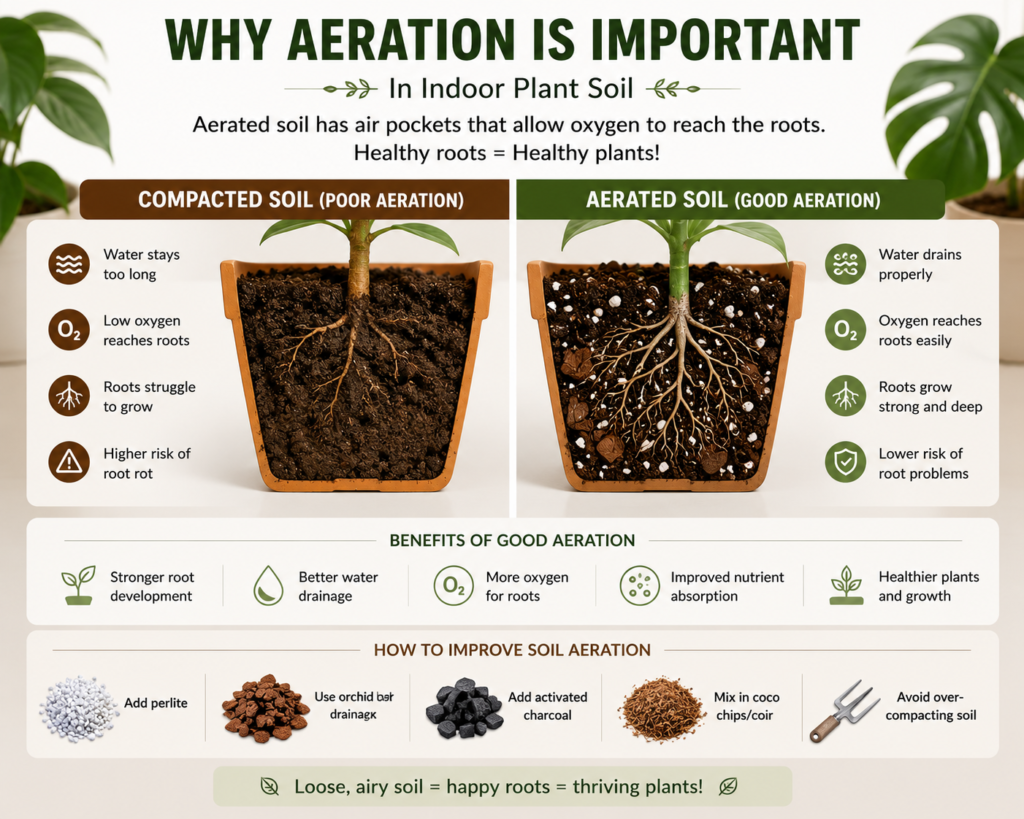
Aeration is how roots breathe. Roots absorb oxygen to produce energy and maintain healthy growth. Without enough oxygen, roots weaken, nutrient movement slows, and plant health declines. This makes aeration one of the most important hidden factors in soil quality.
Indoor containers depend entirely on soil ingredients for airflow. Materials like bark, pumice, and perlite create air pockets that keep roots oxygenated. As organic materials break down over time, those air pockets shrink and soil performance declines.
Best Aeration Materials
- perlite
- bark
- pumice
- lava rock
- coarse sand
Real-world example: A philodendron grown in airy bark-based soil often develops stronger roots than one in dense peat-heavy soil.
Decision clarity: Roots need oxygen as much as they need water.
What Soil pH Is Best for Indoor Plants?
Soil pH controls nutrient availability. Even when fertilizer is present, the wrong pH can block nutrient absorption. This is called nutrient lockout. Many plant owners add more fertilizer when the real issue is chemical imbalance in the soil.
Most indoor plants perform best in slightly acidic to neutral soil, usually between pH 5.5 and 7.0. This range supports better nutrient access and healthier root function.
Best pH Range by Plant Type
- tropical plants → 5.5–6.5
- general houseplants → 6.0–7.0
- acid-loving plants → 5.0–6.0
Plants Sensitive to pH
- calathea
- ferns
- peace lilies
Real-world example: A calathea with yellowing leaves may recover after correcting soil pH, even without changing fertilizer.
Decision clarity: Soil pH determines whether nutrients are actually usable by the plant.
Best Soil for Tropical Indoor Plants
Tropical indoor plants grow best in loose, moisture-balanced soil that holds water without becoming compact. Their roots need both hydration and airflow to stay healthy.
Plants like pothos, monstera, philodendron, and syngonium perform best in structured airy soil. Dense moisture-heavy soil can suffocate roots, while gritty succulent soil dries too quickly. Tropical plants need a balanced middle ground.
Recommended Tropical Mix
- 40% coco coir
- 25% bark
- 20% perlite
- 10% worm castings
- 5% charcoal
Benefits
- balanced moisture retention
- better root oxygenation
- microbial support
- stable drainage
Real-world example: A Monstera deliciosa in chunky aroid soil often develops thicker roots and larger leaves than in dense peat-heavy soil.
Decision clarity: Tropical plants need moisture balance, not moisture overload.
Best Soil for Succulents and Cacti
Succulents and cacti are adapted to dry environments where water drains quickly and roots go through short hydration cycles followed by dry recovery periods. Using tropical-style soil for succulents is one of the fastest ways to cause root failure.
Succulent roots are highly vulnerable to prolonged wetness because these plants already store water in their leaves, stems, or roots. If the soil stays wet too long, roots begin collapsing from lack of oxygen and fungal pressure. Their ideal soil should be gritty, mineral-rich, and loose.
Recommended Succulent Mix
- 40% cactus mix
- 30% perlite
- 20% pumice
- 10% coarse sand
Avoid These Mixes
- peat-heavy mixes
- compost-heavy blends
- moisture-rich tropical soil
Real-world example: A jade plant in dense peat soil may stay wet for a week and rot, while the same plant in mineral-rich gritty soil often roots stronger and recovers faster.
Decision clarity: Succulent roots need dry recovery time between watering.
Best Soil for Snake Plants
Snake plants store water in their leaves and rhizomes, so they need fast-draining soil and do not tolerate prolonged moisture. Wet soil is one of the most common causes of root and rhizome rot.
Snake plants perform best in fast-draining soil with enough structure to keep roots stable. The goal is to move water quickly while maintaining airflow around the root zone.
Recommended Snake Plant Mix
- 40% cactus mix
- 30% perlite
- 20% bark
- 10% coarse sand
Why It Works
- fast drainage
- strong aeration
- stable root support
- lower rot risk
Common Mistakes
- using tropical soil
- adding too much compost
- using no drainage material
Real-world example: Snake plants grown in bark-perlite soil often produce stronger rhizomes and more upright growth than those in peat-heavy mixes.
Decision clarity: Snake plants tolerate neglect better than wet roots.
Best Soil for Peace Lilies
Peace lilies need moisture-retentive but breathable soil. Soil that dries too fast or stays wet too long can cause stress, drooping, and root problems.
The ideal peace lily mix holds moisture evenly while allowing oxygen flow. It should keep hydration stable between watering without becoming waterlogged. Balance is the key to healthy roots.
Recommended Peace Lily Mix
- 50% coco coir
- 20% compost
- 15% perlite
- 10% bark
- 5% worm castings
Benefits
- stable moisture retention
- nutrient support
- moderate drainage
- better root oxygenation
Real-world example: A peace lily in a balanced coco coir mix often recovers from drooping faster than one in bark-heavy dry soil.
Decision clarity: Peace lilies prefer consistent moisture and balanced airflow over fast-drying soil.
Best Soil for Orchids
Orchid roots are very different from most indoor plants because many orchids are epiphytes. In nature, they attach to trees instead of growing in soil. Their roots absorb moisture from rain, humidity, and organic debris, which means dense potting soil can quickly suffocate them.
Orchid soil should prioritize airflow first and moisture second. The mix should hold some humidity while allowing roots to dry and breathe freely. Bark-based systems mimic their natural growing conditions best.
Recommended Orchid Mix
- bark chips
- charcoal
- perlite
- sphagnum moss
Benefits
- maximum airflow
- better drainage
- reduced root suffocation
- stable root support
Common Mistakes
- using all-purpose soil
- overpacking roots
- using too much moss
- poor ventilation
Real-world example: A Phalaenopsis orchid often thrives for years in bark mix but declines quickly in compact soil.
Decision clarity: Orchid roots need airflow like air roots, not dense soil.
Should You Make Your Own Potting Mix?
DIY potting mix gives better control over drainage, aeration, and moisture than generic commercial soil. It allows you to customize the root environment based on the plant’s specific needs.
Homemade mixes can also reduce long-term costs. Instead of buying multiple specialty blends, you can combine a few core ingredients and adjust the structure for different plant types.
Basic DIY Tropical Mix
- 40% coco coir
- 30% bark
- 20% perlite
- 10% compost
Benefits of DIY Soil
- lower cost
- better ingredient control
- customizable structure
- improved drainage
Real-world example: Plant collectors with large tropical collections often save money by mixing bark, coco coir, and perlite instead of buying premium blends.
Decision clarity: DIY soil is ideal for plant owners who want better control and long-term consistency.
How Often Should You Replace Indoor Plant Soil?
Indoor potting soil breaks down over time. Organic materials decompose, drainage slows, and aeration decreases. Even if the plant looks healthy, the soil may no longer function properly. This is one of the most overlooked parts of indoor plant care.
Replacing soil is not just about refreshing nutrients. It restores structure. Once soil becomes compacted, roots struggle with oxygen and water movement, and fertilizer cannot fix structural problems.
General Replacement Timeline
- fast growers → every 1 year
- moderate growers → every 2 years
- slow growers → every 2–3 years
Signs Soil Needs Replacement
- hard soil surface
- poor drainage
- roots circling the pot
- sour smell
- salt buildup
Real-world example: A pothos growing slowly despite regular fertilizer often recovers faster after fresh soil because root conditions improve.
Decision clarity: Replace soil for structure, not just nutrients.
Can You Reuse Old Potting Soil?
Old potting soil can be reused, but it should never be reused blindly. Over time, nutrients deplete, salts build up, and organic matter breaks down. Old roots, fungal spores, or pests may remain hidden inside.
Reuse works best when the previous plant was healthy. The soil should be cleaned, refreshed, and sometimes sterilized. Adding new structural materials helps restore drainage, aeration, and overall function.
Before Reusing Soil
- remove old roots
- loosen compacted areas
- sterilize if needed
- add fresh perlite
- add fresh bark
- add fresh compost
Do Not Reuse Soil If
- root rot was present
- fungal issues existed
- the soil smells bad
Real-world example: A reused tropical mix refreshed with bark and perlite often performs almost as well as fresh soil.
Decision clarity: Reuse soil carefully, not automatically.
How to Tell If Your Soil Is Hurting Your Plant
Soil problems often look like watering problems. Yellow leaves, drooping, and weak growth usually begin below the soil before becoming visible above it.
The fastest way to diagnose soil performance is by checking moisture behavior, smell, drainage speed, and root condition. Healthy soil feels loose, drains evenly, and supports firm white roots. Unhealthy soil feels dense, stays wet too long, smells sour, or attracts pests like fungus gnats.
Signs Your Soil Is Hurting Your Plant
- constant yellow leaves
- wet soil for too long
- slow growth
- fungus gnats
- sour smell
- compacted soil surface
- root rot smell
Real-world example: A philodendron losing leaves may seem underfed, but root inspection often reveals suffocation caused by compacted wet soil.
Decision clarity: Diagnose the soil before changing your watering routine.
How to Check Root Health When Changing Soil
Root inspection is one of the fastest ways to check whether the soil is supporting healthy plant growth. Healthy roots are usually white or cream-colored, firm, and actively branching. Damaged roots are often brown, black, mushy, or slimy.
A foul smell usually indicates bacterial or fungal decay, often linked to poor drainage or oxygen loss. Checking roots during repotting helps confirm whether the soil environment is helping or harming the plant.
What to Do If Roots Are Damaged
- trim dead roots
- sterilize tools
- remove rotten sections
- repot in fresh airy soil
Real-world example: A monstera with yellow leaves often reveals black, mushy roots during repotting, confirming that poor soil was the real problem.
Decision clarity: Root inspection removes guesswork and helps identify soil problems early.
Common Indoor Soil Mistakes
Most indoor soil mistakes happen because people assume all plants need the same root environment. Tropical plants, succulents, and orchids all have different root behaviors. Using one universal soil mix for every plant is a major cause of long-term decline.
Another common mistake is overusing compost or peat-heavy mixes. These materials hold moisture well but break down over time and reduce airflow. Oversized pots can also hold too much wet soil around roots, increasing the risk of rot.
Common Mistakes
- using garden soil indoors
- using one soil for all plants
- using no aeration materials
- using too much compost
- using too much peat
- repotting into oversized pots
- never replacing old soil
Hidden Mistakes
- packing soil too tightly
- watering too soon after repotting
- ignoring root condition
Decision clarity: Most indoor plant problems start with root-environment mistakes, not watering mistakes.
How to Improve Store-Bought Potting Soil
Store-bought potting soil is useful, but most mixes are generic. They are made for broad compatibility, not plant-specific optimization. Many commercial soils rely heavily on peat, which holds moisture well but can compact over time.
Improving store-bought soil is one of the easiest upgrades in indoor plant care. Adding bark, perlite, or compost can quickly improve drainage, aeration, and moisture control for better plant-specific performance.
Ways to Improve Store-Bought Soil
For drainage:
- add perlite
- add pumice
For aeration:
- add bark
- add lava rock
For moisture retention:
- add coco coir
For nutrients:
- add worm castings
- add compost
Decision clarity: Improving store-bought soil is often easier and more effective than replacing it completely.
Which Store-Bought Potting Soil Is Best? Which Store-Bought Potting Soil Is Best?
The best store-bought potting soil is the one with the right structure, not the strongest branding. Many brands use words like “premium” or “professional,” but the ingredient list tells the real story. Soil structure matters more than marketing.
A good indoor mix should feel airy, absorb water evenly, and drain without turning muddy. Visible aeration materials like bark or perlite are strong indicators of quality. Avoid overly fine or dense mixes.
Look For
- coco coir
- perlite
- bark
- compost
- worm castings
Avoid
- heavy peat dominance
- fine mud texture
- strong chemical smell
Real-world example: A bark-heavy tropical mix usually performs better than dense peat-only soil because it keeps better airflow and structure.
Decision clarity: Buy soil based on structure, not branding.
What Are the Best Ready-Made Soil Mixes for Indoor Plants?
Not every plant owner wants to make custom mixes. Ready-made soil blends can work very well if they match the plant’s root behavior. The goal is matching soil structure to root type.
Best Ready-Made Choices
For tropical plants:
- chunky aroid mix
- indoor tropical mix
For succulents:
- cactus mix
- mineral mix
For orchids:
- bark mix
- orchid blend
What to Check
- visible bark
- visible perlite
- loose texture
- fast drainage
Real-world example: A quality aroid mix can perform nearly as well as a homemade mix.
Decision clarity: Ready-made soil works when the structure matches root needs.
Best Soil Type by Plant Category
Choosing soil becomes easier when you compare root behavior instead of plant names. Different plant types evolved in different environments. Their soil should reflect that natural adaptation.
Use this quick soil comparison guide:
| Plant Type | Drainage | Moisture | Aeration | Best Base |
| Monstera deliciosa | medium-high | medium | high | coir + bark |
| Snake Plant | high | low | high | cactus mix |
| Peace Lily | medium | high | medium | coir + compost |
| Succulents | very high | low | high | mineral mix |
| Orchid | extreme | low-medium | extreme | bark |
Decision clarity: Soil selection becomes easier when you think in root patterns.
Final Decision: How to Choose the Best Soil for Indoor Plants
The best soil depends on how the plant’s roots naturally grow. Forest plants, desert plants, and epiphytes all need different root environments.
Matching that environment is the key to long-term plant health.
Instead of asking what the best soil is, ask better questions. Does the plant like constant moisture? Does it store water? Does it need airflow? Does it naturally climb? These questions reveal the correct soil type. Once you understand the plant’s natural root behavior, soil decisions become easier.
Quick decision model:
For tropical plants:
- balanced moisture
- bark
- coir
- perlite
For succulents:
- grit
- sand
- pumice
- fast drainage
For orchids:
- bark
- airflow
- moss
Real-world insight: The same watering schedule can succeed or fail depending entirely on soil structure.
Decision clarity: The best indoor soil is the one that matches root biology.
FAQs
What is the best soil for indoor plants?
The best soil is usually a balanced mix of Coco Coir, Perlite, bark, and organic matter. It should balance moisture, drainage, and airflow.
Can I use regular potting soil for indoor plants?
Yes, but it often needs extra bark or perlite for better drainage and aeration.
What is the difference between potting soil and potting mix?
Potting soil may contain actual soil, while potting mix is usually soil-free and better for indoor containers.
How often should I replace indoor plant soil?
Most indoor plants need fresh soil every 1–2 years depending on growth and soil breakdown.
Can I reuse old potting soil?
Yes, if it is refreshed and free of pests or disease.
Why does my soil stay wet too long?
Dense soil or poor drainage materials can trap water and reduce oxygen.
Is coco coir better than peat moss?
For many indoor plants, yes. It rewets faster and resists compaction better.
What soil is best for succulents?
Succulents need fast-draining gritty soil with perlite, pumice, or sand.
Myra is the founder and lead writer of Plantsaholic. She shares practical, research-backed advice on indoor plants, outdoor gardening, flowers, herbs, succulents, and everyday plant care. Her goal is to help gardeners of all experience levels grow healthier plants through simple, easy-to-follow gardening guides.