ndoor plants need more than water and soil to grow well. Their location inside your home directly affects how they absorb light, regulate moisture, build roots, and maintain healthy leaves. The best place to put indoor plants depends on matching plant biology with environmental conditions like light intensity, window direction, humidity, airflow, and stable temperatures.
Many people place plants where they look good instead of where they grow best. A stylish dark shelf may fit a room aesthetically, but it may weaken plant health over time. Plants are living systems, and placement controls how effectively they perform photosynthesis, which affects growth speed, leaf quality, root strength, and stress resistance.
Good Placement Often Creates
- larger leaves
- stronger stems
- healthier roots
- better leaf color
- faster growth
Poor Placement Often Causes
- yellow leaves
- stretched stems
- dry tips
- leaf drop
- weak growth
This guide explains where to place indoor plants for stronger long-term growth, fewer problems, and easier plant care.
Why Does Plant Placement Matter So Much?
Plant placement affects every biological process inside the plant. Light is the plant’s energy source, and placement controls how much usable energy the plant receives daily. Without enough light, even healthy plants in good soil eventually weaken because energy production drops.
Plants use light through photosynthesis to create food. That energy supports new leaves, stem growth, root development, and stress recovery. Poor placement reduces that energy supply, forcing the plant into survival mode instead of active growth.
Real-World Example
A Pothos placed in a dark hallway may survive for months, but the same plant near bright indirect light often grows faster, trails longer, and produces larger leaves. This shows how strongly placement affects plant performance.
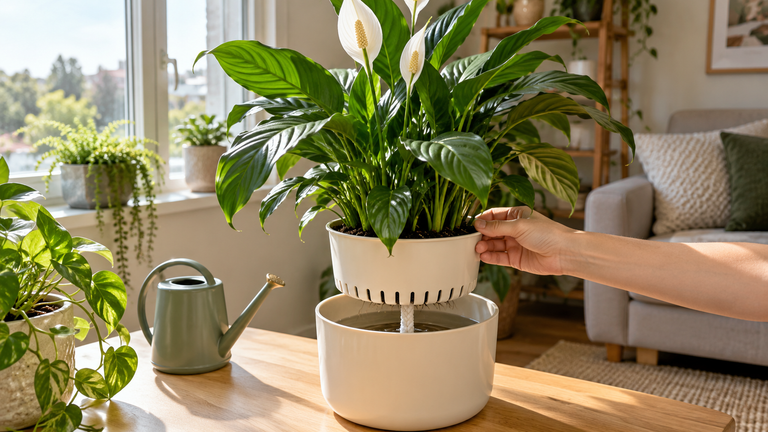
Many plant care problems start with poor location. A Peace Lily may stop flowering in low light even if watering is correct, but better light often restores flowering and stronger growth.
Before changing watering, fertilizer, or care routines, evaluate plant placement first because location often controls the outcome.
What Makes a Good Spot for Indoor Plants?
A good plant spot is more than just being near a window. It is a location where environmental conditions match the plant’s natural habitat. The best indoor plant placement combines usable light, stable temperatures, manageable airflow, and species-appropriate humidity.
Light quality matters most. Most indoor tropical plants prefer bright indirect light because it provides strong energy without harsh sunburn risk. Most tropical houseplants also grow best in stable temperatures between 18°C and 29°C, which supports healthy growth and stronger leaf development.
What Good Plant Spots Usually Provide
- natural daylight
- stable temperature
- balanced airflow
- suitable humidity
- easy plant access
Real-World Example
Calathea often performs better in a bathroom than in a dry bedroom because the higher humidity better matches its natural growing conditions.
The best plant spot is where the indoor environment closely matches the plant’s natural habitat and supports long-term healthy growth.
Where Should You Place Indoor Plants for the Best Growth?
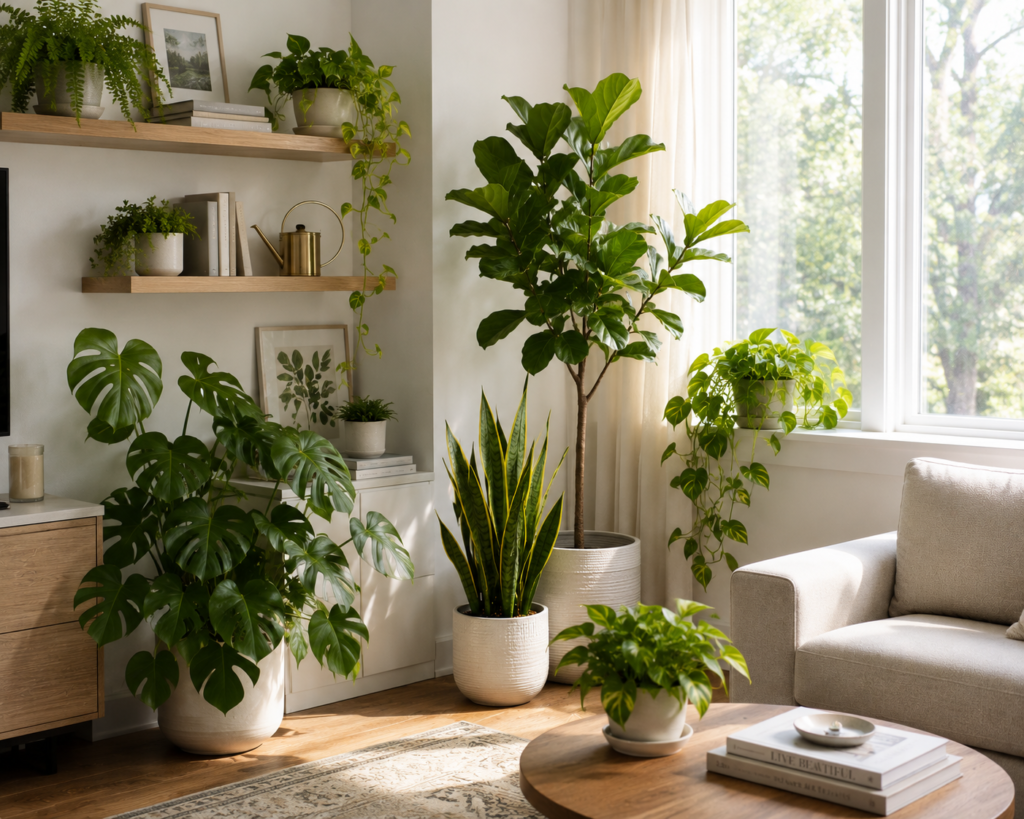
For most indoor plants, the best placement is near natural light but far enough to avoid harsh direct sun. Usually, this means placing them two to five feet from a bright window, which gives enough usable energy for healthy growth.
Strongest Indoor Plant Placement Zones
- east-facing windows
- filtered south-facing windows
- bright living rooms
- humid bathrooms
- bright kitchens
Plant species still matter because some need stronger light, while others tolerate lower light or need extra humidity support.
Plant Placement Examples
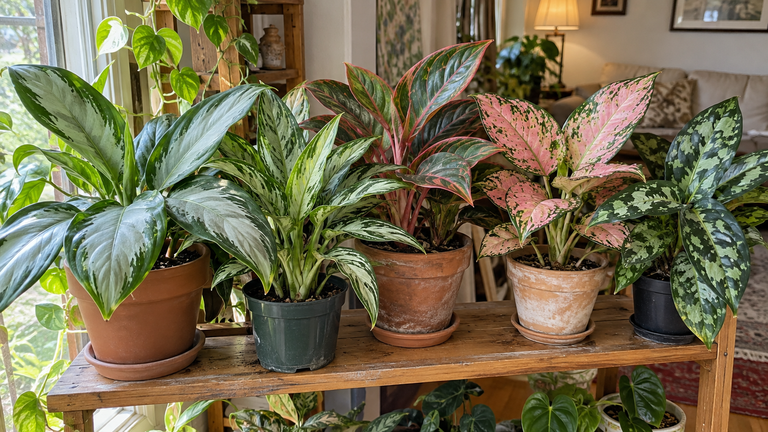
Monstera performs best in bright indirect light. Snake plants tolerate lower light more easily, while ferns usually need extra humidity support to stay healthy.
Real-World Example
A Monstera placed three feet from an east-facing window often develops larger leaves and stronger splits. The same plant placed deep inside a room usually grows smaller and slower, showing how placement affects plant quality.
Decision Order for Better Plant Placement
- Match light first
- Match humidity second
- Protect from temperature stress third
Following this sequence solves most indoor plant placement problems and improves long-term plant health.
How Light Controls Indoor Plant Growth
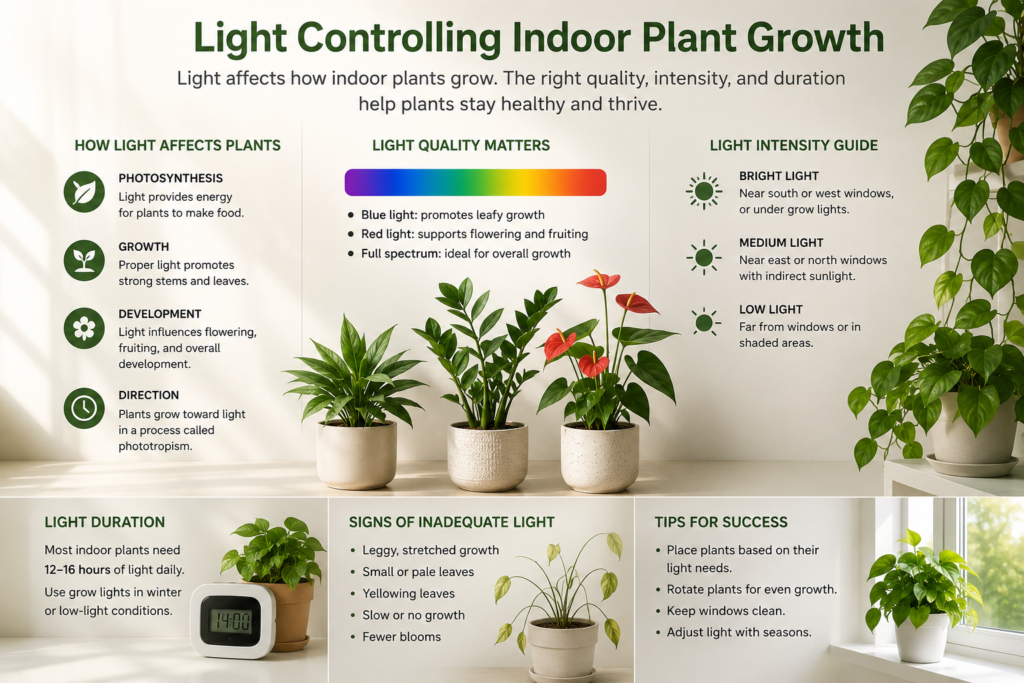
Light controls indoor plant growth more than any other care factor. Water keeps plants alive, but light controls how well they grow. Without enough light, plants slow their internal systems to conserve energy, which affects stem strength, root activity, and leaf production.
How Good Light Improves Plant Growth
- stronger stems
- better root growth
- healthier leaf production
- deeper leaf color
- better flowering
What Low Light Causes
- weak stems
- stretching
- pale leaves
- slow growth
- leaf drop
A common mistake is assuming a bright-looking room is bright enough for plants. It often is not, because human eyes adapt to lower light levels while plants cannot.
Real-World Example
A Peace Lily in weak light may stop flowering. When moved into stronger indirect light, flowering often returns, showing how strongly light controls plant behavior.
Decision Clarity
If plant growth slows, evaluate light first. Many indoor plant problems begin with poor light conditions before watering or nutrition becomes the issue.
What Is Bright Indirect Light for Indoor Plants?
Bright indirect light is strong natural light without harsh direct sun hitting the leaves for long periods. It is the ideal lighting condition for many indoor tropical plants because it provides strong energy while protecting foliage from heat damage and leaf burn.
Good Bright Indirect Light Spots
- near east-facing windows
- beside sheer-curtained south-facing windows
- bright reflective rooms
Poor Bright Light Examples
- dark corners
- blocked windows
- deep interior shelves
Plants That Prefer Bright Indirect Light
- Monstera
- Philodendron
- Pothos
- Peace Lily
Signs You Have Good Bright Indirect Light
- compact growth
- healthy green leaves
- regular new growth
- balanced watering needs
Signs of Too Much Direct Light
- scorched patches
- faded leaves
- crispy edges
Quick Light Test
If sunlight creates strong heat and sharp shadows on the leaves, it may be too strong. If plant growth stretches or becomes leggy, the light may be too weak.
The goal is balanced light energy, which is where most indoor plants grow healthiest and strongest.
Which Window Direction Is Best for Indoor Plants?
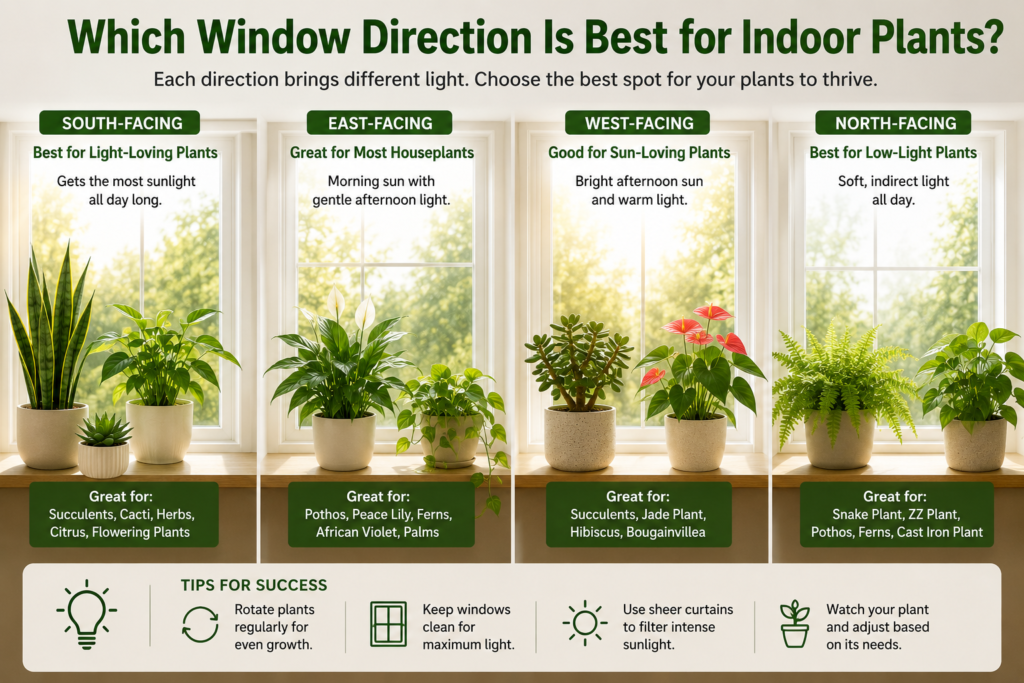
Window direction changes how much light indoor plants receive and how intense that light becomes throughout the day. This affects growth speed, leaf strength, water use, and flowering potential. Window orientation is one of the most important plant placement factors.
East-facing windows are usually the best option for most houseplants because they provide soft morning light and balanced brightness. South-facing windows provide stronger light for sun-loving plants, while north-facing windows offer softer but weaker light.
East-Facing Windows
East-facing windows provide gentle morning sunlight and balanced brightness, making them the safest option for most tropical houseplants.
- Monstera
- Pothos
- Philodendron
- lower burn risk
- steady growth
- balanced light
South-Facing Windows
South-facing windows provide stronger light and work best for plants that tolerate higher sun exposure.
- Fiddle Leaf Fig
- Bird of Paradise
- filtered light may still be needed
- monitor leaf burn regularly
North-Facing Windows
North-facing windows provide softer and weaker light, making them better for low-light tolerant plants.
- ZZ Plant
- Peace Lily
If you are unsure where to begin, east-facing windows are usually the safest and most balanced starting point for indoor plant placement.
How Far Should Indoor Plants Be from a Window?
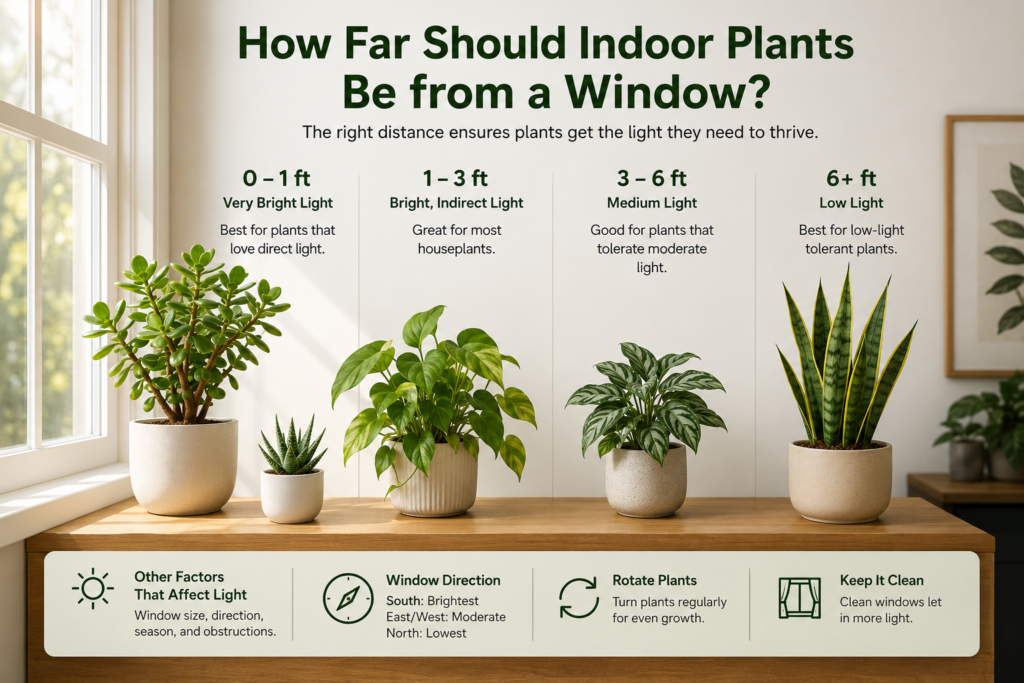
Distance from a window changes light intensity dramatically. A plant in the same room may still receive weak usable light if it is placed too far away. Light drops quickly indoors, so distance is an important part of plant placement strategy.
Basic distance zones include:
0–2 Feet from the Window
This is the high-light zone and works best for sun-loving plants.
- succulents
- cacti
- Aloe Vera
- Jade Plant
2–4 Feet from the Window
This is the bright indirect light zone and works best for most tropical indoor plants.
- Monstera
- Philodendron
4–8 Feet from the Window
This is the medium-light zone and works best for adaptable indoor plants.
- Pothos
- ZZ Plant
Real-world example: A pothos placed two feet from a bright window usually grows fuller and faster than the same plant placed seven feet away. Distance controls plant energy, so use it intentionally.
Which Room Is Best for Indoor Plants?
Different rooms create different growing environments. Light, humidity, airflow, and temperature vary throughout the home, so smart plant placement means matching room conditions with plant biology for stronger long-term growth.
Living Room
The living room is often the best plant room because it usually has larger windows and stronger natural light.
- Monstera
- Rubber Plant
Bedroom
Bedrooms usually provide stable temperatures and lower traffic, making them useful for adaptable indoor plants.
- Snake Plant
- Peace Lily
Bathroom
Bathrooms are ideal for humidity-loving tropical plants because of naturally higher moisture levels.
- Calathea
- Fern
Kitchen
Kitchens can offer warmth and moderate humidity, making them useful for herbs and smaller edible plants.
- Basil
- Mint
Choose indoor plant rooms based on environmental conditions and plant needs, not just available space.
Where Should You Put Indoor Plants in Small Apartments?
Plant placement in small apartments requires smarter space use because light zones are often limited and furniture can block usable daylight. In apartments, light access becomes the main growing resource, so vertical placement is usually the most effective strategy.
Best Space-Saving Plant Placement Ideas
- window shelves
- hanging baskets
- narrow plant stands
- wall-mounted shelves
- bathroom shelves
Best Apartment-Friendly Plants
- Pothos
- ZZ Plant
- Snake Plant
Real-world example: A one-window apartment can support multiple plants by creating shelf layers near the brightest window. This multiplies light efficiency and helps maximize available light instead of relying only on floor space.
How Does Humidity Affect Indoor Plant Placement?
Humidity directly affects leaf health, water balance, and stress resistance. Many indoor plants come from tropical regions where air moisture stays naturally high, so dry indoor air can create stress even when lighting conditions are good. Humidity is often the missing factor in indoor plant placement decisions. :contentReference[oaicite:0]{index=0}
Signs of Low Humidity Stress
- brown leaf tips
- curling leaves
- crispy edges
- weak leaf expansion
Benefits of Higher Humidity
- healthier leaves
- smoother growth
- stronger hydration balance
Humidity-Loving Plants
- Calathea
- Prayer Plant
- Fern
Dry-Air Tolerant Plants
- Snake Plant
- ZZ Plant
Bathrooms often improve humidity naturally, which makes them useful growing zones for tropical indoor plants. :contentReference[oaicite:1]{index=1}
What Is a Plant Microclimate?
A microclimate is the exact environmental zone around your plant. Even in the same room, temperature, humidity, airflow, and light intensity can change depending on placement. Understanding microclimates improves plant placement decisions. :contentReference[oaicite:2]{index=2}
Key Microclimate Factors
- window heat
- airflow strength
- humidity pockets
- wall temperature
- surface warmth
Microclimate Examples
- Near windows: brighter and warmer
- Near air conditioners: cooler and drier
- Near bathrooms: more humid
- Near heaters: hotter and drier
Real-world example: A Calathea placed in a bathroom often stays healthier than the same plant placed near an air conditioner because the microclimate provides better humidity stability. The room may be the same, but the growing conditions are not. Evaluate the exact plant zone to make better placement decisions. :contentReference[oaicite:3]{index=3}
Where Should You Avoid Putting Indoor Plants?
Knowing the best place for indoor plants matters, but knowing the worst places is equally important. Many plant problems start because the plant is placed in hidden stress zones that look harmless but create long-term environmental pressure. Plants can survive poor placement for weeks or months before visible damage appears, which makes diagnosis harder.
Places to Avoid
- beside heaters
- under air conditioner vents
- dark corners
- against cold winter glass
- near ovens
- beside frequently opened doors
Why These Locations Cause Problems
- heat stress
- dry air
- cold shock
- weak light
- unstable airflow
Real-world example: A Peace Lily placed near a heater may develop brown leaf edges even when watering is correct because the real problem is environmental stress.
Bad Placement Can Look Like
- underwatering
- nutrient deficiency
- disease symptoms
Before changing watering or feeding routines, evaluate plant placement first because correcting location often solves the problem faster.
Can Air Conditioning Harm Indoor Plants?
Yes. Air conditioning changes humidity and airflow patterns, which affects plant health. Many indoor plants struggle under direct AC exposure because moving cold air increases moisture loss. Plants prefer environmental stability, and direct AC airflow creates stress.
How Air Conditioning Affects Plants
- lowers humidity
- increases evaporation
- cools leaves too quickly
- disrupts water balance
Common AC Stress Signs
- brown tips
- curled leaves
- drooping
- slow growth
Plants Most Affected by AC
- Calathea
- Monstera
- Peace Lily
Safer AC Placement Tips
- keep plants 4–6 feet away
- avoid direct vent airflow
- place in balanced humidity zones
Air conditioning itself is not the problem. Direct airflow and reduced humidity are what create plant stress.
Can Heaters Damage Indoor Plants?
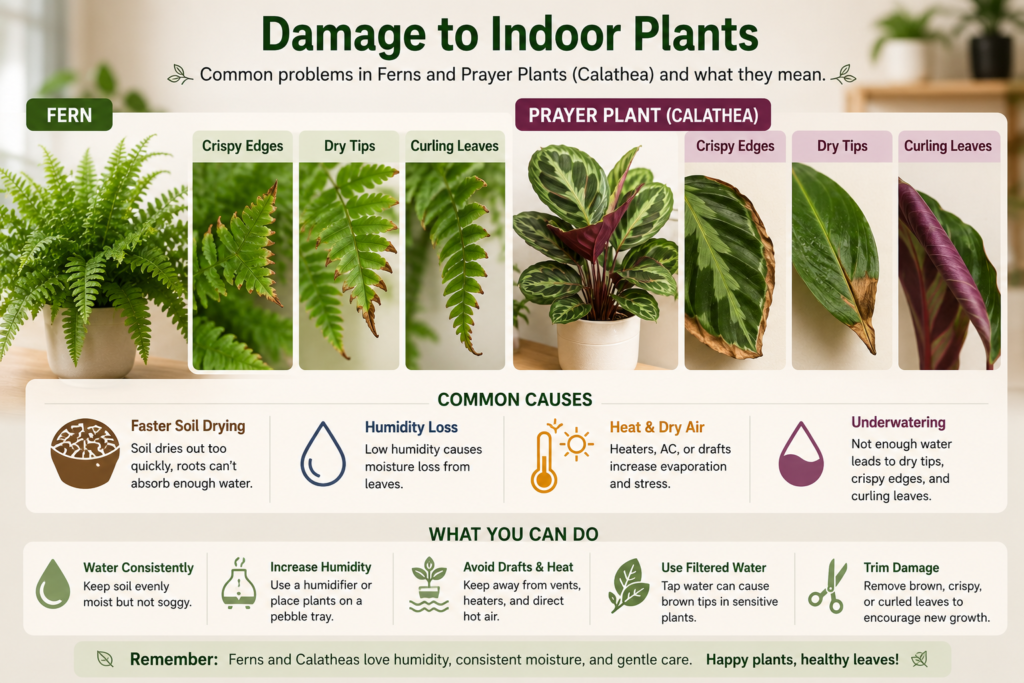
Yes. Heaters create intense dry heat that removes moisture from leaves faster than roots can replace it. This creates stress, especially in winter when indoor air is already dry. Dry heat is one of the most common hidden indoor plant stressors.
Common Signs of Heater Stress
- crispy edges
- dry tips
- curling leaves
- faster soil drying
- humidity loss
Plants Most Sensitive to Heater Damage
- Fern
- Prayer Plant
- Calathea
Keep indoor plants away from direct heat sources. Warmth can support plant growth, but dry forced heat can quickly damage leaves and create long-term stress.
Can Indoor Plants Live in Rooms Without Windows?
Yes, but there is a difference between surviving and thriving. Some indoor plants tolerate low light, but very few grow at their best without natural light. Low light reduces energy production, which slows plant growth and limits healthy development.
Low-Light Tolerant Plants
- ZZ Plant
- Snake Plant
- Cast Iron Plant
Common Low-Light Effects
- slower growth
- smaller leaves
- weaker stems
- lower water use
Low-light plants can survive darker spaces, but that does not mean they prefer them. Artificial support like grow lights often improves growth quality and long-term plant health.
Are Grow Lights Good for Indoor Plant Placement?
Yes. Grow lights help replace weak or missing natural light and are one of the best solutions for dark rooms, winter support, offices, or apartments with limited window access. Artificial light can transform weak placement zones and improve plant performance.
When Grow Lights Help Most
- dark apartments
- offices
- winter support
- shelf plant setups
- windowless rooms
Benefits of Grow Lights
- stable light schedules
- stronger growth
- better leaf production
- reduced stretching
Best Plants Under Grow Lights
- Pothos
- Philodendron
- Monstera
Good artificial light is often better than weak natural placement and can create more stable growing conditions for indoor plants.
Should You Move Indoor Plants with the Seasons?
Yes. Indoor light changes with the seasons, and a plant position that works in summer may become too weak in winter. Seasonal movement improves long-term plant health because static placement is not always ideal.
Winter Changes
- shorter days
- weaker sunlight
- colder windows
Summer Changes
- stronger sun
- longer days
- hotter glass
Seasonal Placement Adjustments
- move plants closer in winter
- protect from harsh summer sun
- adjust watering with light changes
- monitor leaf stress
Plants respond to seasonal light changes even indoors, so plant placement should adapt throughout the year for healthier growth.
Where Should You Put Indoor Plants in Winter?
Winter changes plant placement because daylight becomes shorter and weaker, while indoor heating lowers humidity and adds extra stress. A placement that works in summer may become too weak during winter.
Winter placement rules include:
- move plants closer to windows
- avoid cold glass contact
- avoid heater proximity
- increase humidity if needed
- reduce deep-room placement
Real-world example:
A Monstera that thrives four feet from a window in summer may need to move two feet closer in winter because light intensity becomes weaker.
Winter plant placement is about adapting to weaker light conditions, not changing the plant itself.
Where Should You Put Indoor Plants in Summer?
Summer creates stronger light, hotter windows, and increased leaf heat. Plant placement should protect leaves from excessive direct sun while preserving strong usable light. Summer placement is about controlling intensity, not reducing all light.
Summer placement strategies include:
- use sheer curtains
- move sensitive plants back slightly
- avoid hot west-facing glass
- rotate plants regularly
- monitor leaf temperature
Plants that adapt better to stronger summer light include:
- Snake Plant
- Aloe Vera
Some plants tolerate stronger summer light, while others need filtered protection. The goal is balance between strong energy and lower heat stress.
How Do You Know If Your Plant Placement Is Wrong?
Indoor plants usually show clear signs when placement is limiting their growth. Many plant owners blame watering, fertilizer, or pests first, when the actual issue is environmental placement. Plant behavior is often the first warning system, and learning to read it improves plant care decisions.
Common signs of poor plant placement include:
- stretched stems
- leaning toward windows
- pale leaves
- small new leaves
- slow growth
- leaf drop
These symptoms usually point to weak light, unstable airflow, or temperature stress.
Real-world example:
A Philodendron in weak light often develops longer gaps between leaves. This is called legginess and happens when the plant stretches toward available light.
Healthy placement creates fuller, tighter growth. Always look at new growth first, because it reflects the current environment more accurately than older leaves.
Why Are My Plant Leaves Turning Yellow in Their Current Spot?
Yellow leaves are one of the most common plant stress signals. Many people assume yellowing means watering issues, but poor placement is often the hidden cause. Weak light, dry airflow, and temperature stress can all trigger yellowing by reducing energy production and weakening chlorophyll retention.
Placement-related yellowing causes often include:
- low light
- heater stress
- air conditioner dryness
- cold drafts
- root slowdown
Real-world example:
A Peace Lily placed in a dark hallway often develops yellow lower leaves because weak light limits energy production and slows healthy growth.
Check plant placement before changing watering routines, because correcting location often solves the problem faster.
Best Plant Placement by Plant Type
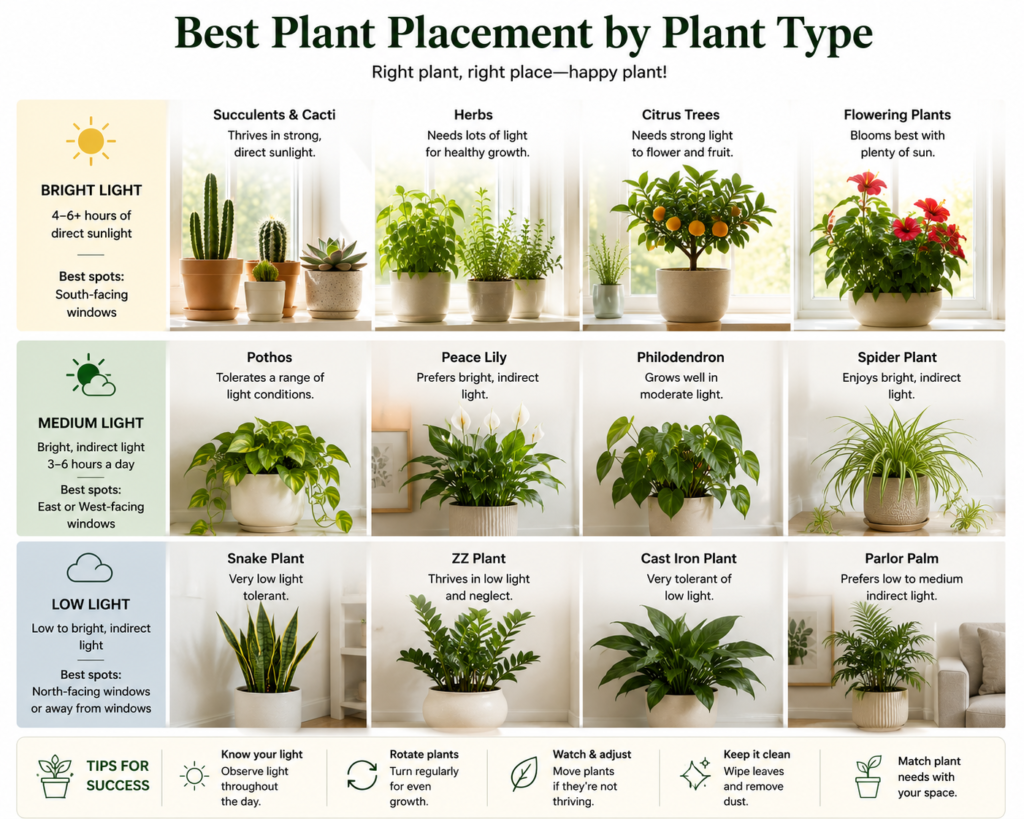
Different indoor plants have different environmental needs. Matching plant type with the correct placement improves growth, reduces stress, and supports healthier long-term development. Plant biology should guide placement, not habit.
Monstera
Monstera grows best in bright indirect light near east-facing windows or bright living rooms where light stays strong but filtered.
Snake Plant
Snake plants perform well in bedrooms, offices, or medium-light rooms and tolerate lower light better than most tropical houseplants.
Pothos
Pothos grow well on shelves, hanging baskets, or office spaces near natural light and adapt easily to changing indoor conditions.
Calathea
Calatheas perform best in humid bathrooms or soft-light spaces and should stay away from dry air, heaters, and air vents.
Species-based placement improves growth quality, leaf health, and long-term plant performance.
Quick Indoor Plant Placement Decision Table
A quick decision table simplifies plant placement by helping you match plant type with room conditions more accurately. Structured decisions improve plant health and reduce common placement mistakes.
| Plant | Best Room | Best Light |
| Monstera | Living room | Bright indirect |
| Calathea | Bathroom | Medium indirect |
| Snake Plant | Bedroom | Low to medium |
| Pothos | Office | Bright indirect |
| Peace Lily | Living room | Bright indirect |
| ZZ Plant | Office | Medium to low |
Key decision factors include:
- light access
- humidity
- airflow
- watering frequency
- temperature
Using a structured placement system removes guesswork and helps indoor plants grow in better long-term conditions.
Common Beginner Plant Placement Mistakes
Most beginner plant placement mistakes happen because plants are treated like decoration instead of living systems. Plants respond to environmental conditions first, while appearance should come second.
Choosing style over light
Dark aesthetic corners usually create weak growth.
Ignoring window direction
Window orientation changes plant energy.
Placing near vents
Air stress dries leaves.
Never rotating plants
Plants lean toward light through Phototropism. Rotation improves balance.
Ignoring seasonal changes
Light strength changes with the seasons, so plant placement should adjust to maintain healthy growth.
Small placement mistakes can create long-term stress, weaker growth, and reduced plant health over time.
Quick Indoor Plant Placement Checklist
Before placing any plant, use a simple checklist. This improves decision-making and reduces common mistakes.
Checklist:
- Is there enough natural light?
- What direction is the nearest window?
- How far is the plant from the window?
- Is there heater exposure?
- Is there AC airflow?
- Does humidity match the plant?
- Is there room for growth?
- Can you inspect it easily?
- Will winter change this light?
- Does the plant fit this room?
Simple checks prevent most placement mistakes.
Final Verdict: What Is the Best Place to Put Indoor Plants?
The best place to put indoor plants is where light, temperature, humidity, and airflow match the plant’s natural needs. For most tropical houseplants, this means bright indirect light near an east-facing window, usually 2–4 feet away.
That creates the strongest growth conditions.
The best placement usually provides:
- strong usable light
- stable temperature
- moderate humidity
- gentle airflow
- seasonal flexibility
For most houseplants, the safest formula is:
- bright indirect light
- stable warmth
- protected airflow
- species-matched humidity
Indoor plant success starts with location. Everything else builds on that.
FAQ section
What is the best room for indoor plants?
The living room is often best because it usually has larger windows and stronger light. The ideal room depends on the plant’s needs.
Which window is best for indoor plants?
East-facing windows usually provide the safest and most balanced light for most houseplants.
Can indoor plants survive in dark rooms?
Some low-light plants like Snake Plant and ZZ Plant can survive, but grow lights improve long-term health.
Should indoor plants be near windows?
Yes. Most indoor plants perform best when placed near usable natural light.
Can heaters damage houseplants?
Yes. Heaters create dry air and heat stress, which damages leaves.
Can air conditioners harm indoor plants?
Yes. Direct airflow lowers humidity and increases moisture loss.
Should I move indoor plants in winter?
Yes. Winter light weakens, so many plants need to move closer to windows.
How do I know if my plant needs better placement?
Signs include leggy growth, pale leaves, slow growth, and leaning stems.
Can indoor plants sit directly on window sills?
Some can, but sensitive plants may suffer heat or cold stress depending on the season.
Why do plants lean toward windows?
Plants naturally grow toward light through phototropism. Rotation helps balance growth.
Tools That Help You Place Indoor Plants Better
Simple tools make indoor plant placement easier and more accurate.
Helpful tools:
- light meter
- LED grow light
- hygrometer
- humidifier
- plant stand
These tools help measure light, monitor humidity, and improve placement flexibility.
A light meter can quickly reveal if a “bright room” is actually strong enough for plants like Monstera.
Better tools create better placement decisions.
Myra is the founder and lead writer of Plantsaholic. She shares practical, research-backed advice on indoor plants, outdoor gardening, flowers, herbs, succulents, and everyday plant care. Her goal is to help gardeners of all experience levels grow healthier plants through simple, easy-to-follow gardening guides.