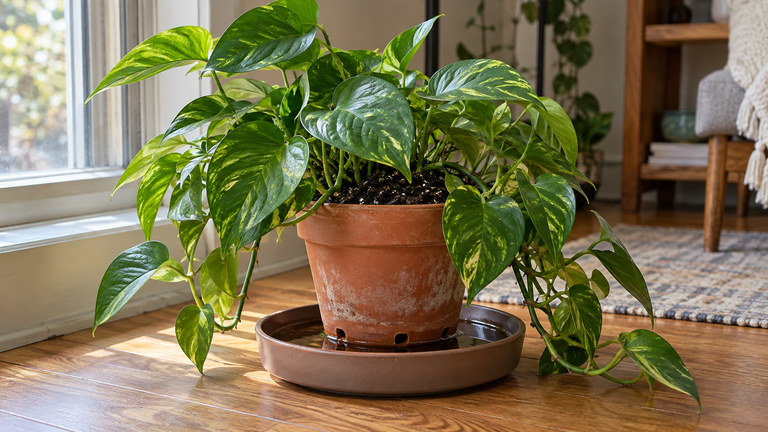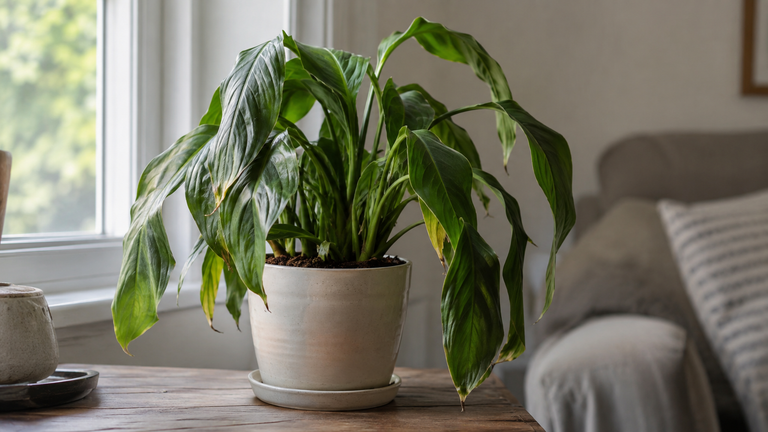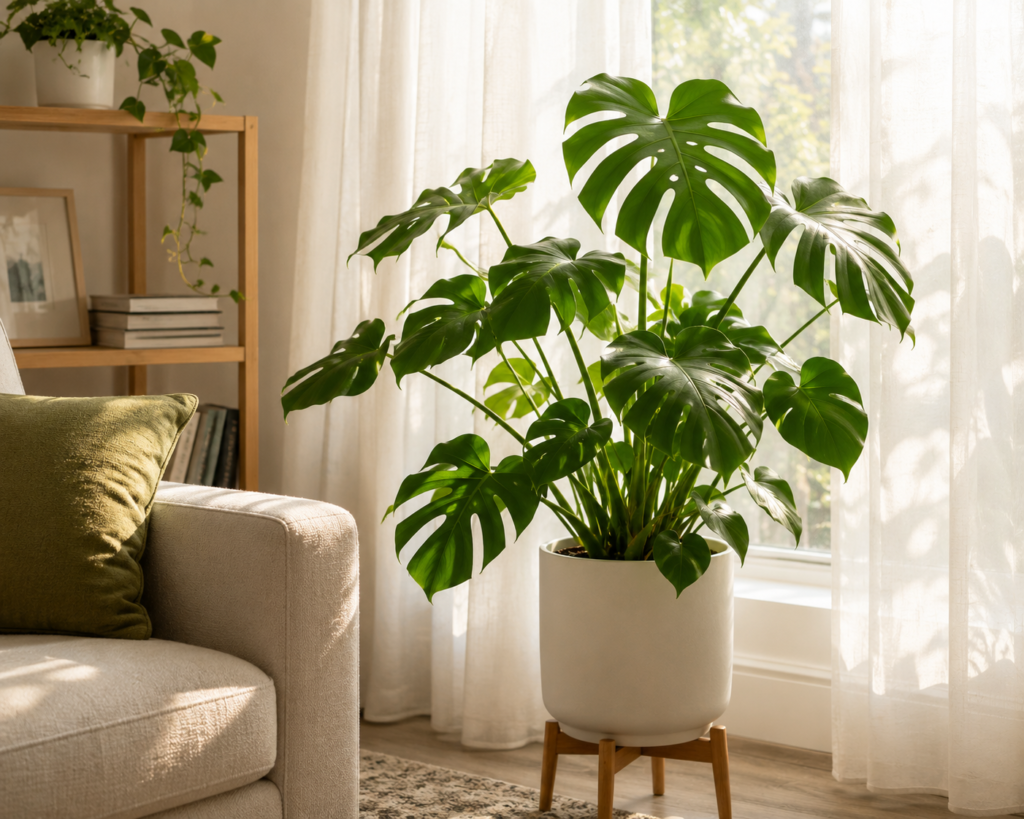
Bright indirect light means strong natural light reaches a plant, but the sun’s direct rays do not touch the leaves. It is one of the most important indoor plant care concepts because it affects growth speed, leaf size, watering frequency, root health, and long-term plant strength.
For most tropical houseplants, bright indirect light is the safest growth zone. It gives plants usable energy for Photosynthesis while reducing leaf burn, heat stress, and rapid soil drying. Many indoor plants evolved beneath tree canopies, where sunlight was naturally filtered.
Many beginners confuse a bright room with plant-usable light. A room may look bright to human eyes but still be too dim for healthy plant growth. Plants depend on measurable light intensity, not visual comfort.
A simple way to recognize bright indirect light:
- The room feels naturally bright
- The plant receives strong daylight
- No harsh sunbeam touches the leaves
- Shadows look soft, not sharp
- Leaves stay cool to the touch
Real-world examples include:
- a plant placed beside an east-facing window
- a plant near a south-facing window behind sheer curtains
- a plant beside a bright sun patch but not inside it
- a plant receiving reflected light from white walls
Why Do Plants Need Light in the First Place?
Light powers nearly every important biological process inside a plant, including leaf growth, root development, stem strength, flowering, and internal repair.
This energy production happens through Photosynthesis. During photosynthesis, plants use light, water, and carbon dioxide to create sugars. Those sugars become the plant’s internal energy supply.
When light is too weak, the plant’s entire system slows down. New leaves may become smaller, stems may stretch, roots may weaken, and water use may decrease.
Light supports:
Leaf Development
Strong light helps plants create larger, healthier leaves. For example, Monstera deliciosa often produces bigger leaves and stronger fenestration in bright indirect light.
Root Development
Roots depend on energy. Weak light can create weak root systems, making the plant less efficient at taking up water and nutrients.
Stem Strength
Light controls plant structure. When light is too weak, stems often stretch toward the nearest light source.
Flower Production
Flowering requires extra energy. Plants such as Spathiphyllum wallisii and Anthurium andraeanum often bloom better with stronger indirect light.
Plant care begins with energy. Light is the source of that energy.
Bright Indirect Light vs Direct Sunlight
Bright indirect light and direct sunlight are not the same. Direct sunlight means the sun’s rays physically touch the plant’s leaves. Bright indirect light means the plant receives strong brightness from the surrounding area, but the rays are filtered, reflected, or blocked.
This difference changes plant behavior. Direct sun is hotter, stronger, and faster at drying soil. Bright indirect light is cooler, safer, and more stable for most tropical houseplants.
| Factor | Bright Indirect Light | Direct Sunlight |
|---|---|---|
| Heat | Low to moderate | High |
| Burn risk | Low | High |
| Soil drying | Balanced | Fast |
| Tropical plant suitability | Excellent | Often risky |
| Growth support | Strong | Strong but stressful |
Examples:
- Calathea orbifolia often burns in direct sun
- Ficus lyrata grows well in strong indirect brightness
- Dracaena trifasciata tolerates stronger sun better than delicate tropicals
- Aloe vera prefers stronger direct exposure than most foliage plants
A south-facing window without curtains may be too harsh for many tropical plants. The same window with a sheer curtain may become ideal bright indirect light.
Bright Indirect Light vs Low Light
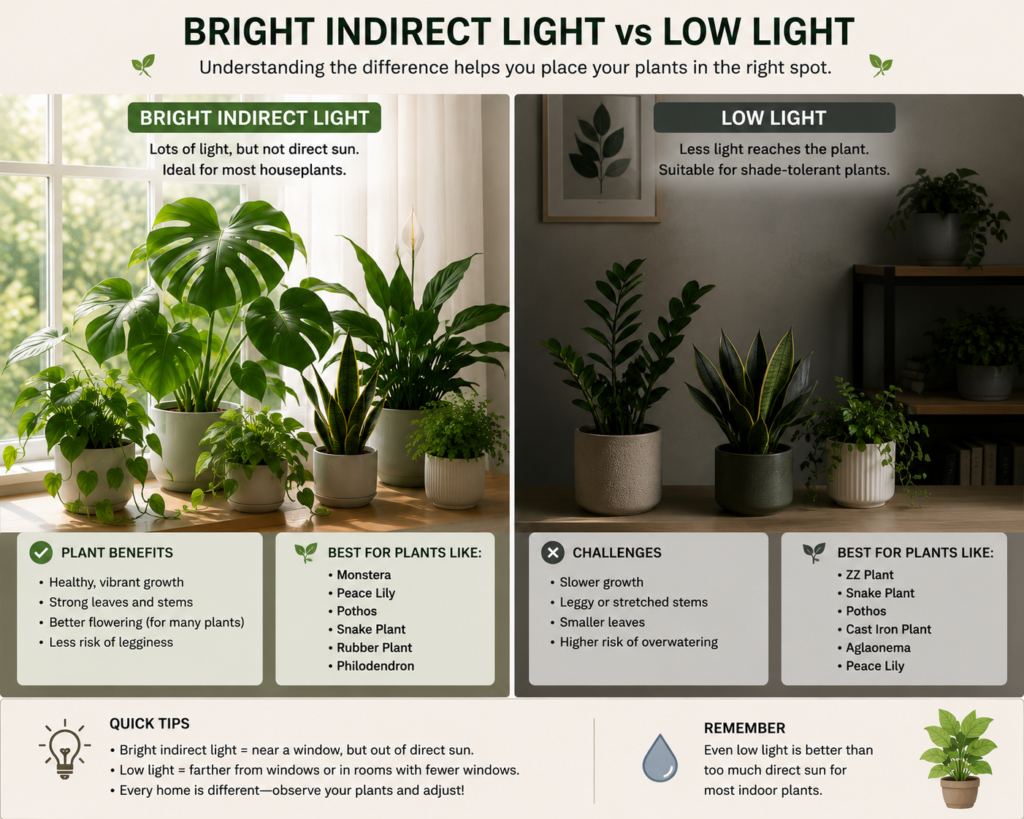
Low light and bright indirect light are often confused. Many people think a plant that tolerates low light prefers low light. That is usually not true.
Low light provides less energy. Bright indirect light provides enough energy for active growth while still protecting the plant from harsh direct sun.
Basic comparison:
- Low light = survival zone
- Medium light = maintenance zone
- Bright indirect light = growth zone
- Direct sunlight = high-intensity exposure
Approximate lux ranges:
- 50–250 lux = low light
- 250–1,000 lux = medium indirect light
- 1,000–5,000 lux = bright indirect light
- 10,000+ lux = direct sunlight
Low-light symptoms include:
- slow growth
- smaller leaves
- pale color
- weak stems
- leaning toward windows
- longer soil drying time
For example, Zamioculcas zamiifolia can survive low light, but it usually grows better in bright indirect light. Epipremnum aureum may survive in lower light, but stronger indirect light helps preserve variegation.
Survival and thriving are different. Bright indirect light usually supports thriving.
Understanding Light Intensity: Lux Explained
Lux measures how much light reaches a surface. For indoor plant owners, it is one of the easiest ways to remove guesswork from plant placement.
Bright indirect light usually falls between 1,000 and 5,000 lux.
Examples:
- Cloudy east-facing window: 800–2,000 lux
- Filtered south-facing window: 2,000–5,000 lux
- Direct sunbeam: 10,000–50,000 lux
- Dark corner: often below 250 lux
Ways to measure plant light:
- phone lux apps
- digital lux meters
- smart plant sensors
- repeated shadow tests
Lux readings explain why a plant near a window may thrive while the same plant across the room declines. Light intensity drops quickly with distance.
If a plant struggles and you are guessing about light, measure it before changing watering, fertilizer, or soil.
How Many Hours of Bright Indirect Light Do Plants Need?
Bright indirect light is not only about intensity. Duration matters too. A plant receiving strong light for only two hours may still struggle if its total daily light exposure is too short.
Most tropical houseplants perform best with 8–12 hours of bright indirect light per day. Some fast-growing or variegated plants may benefit from longer exposure, especially under grow lights.
General duration guide:
- Less than 4 hours = often insufficient
- 6–8 hours = acceptable for many plants
- 8–12 hours = ideal for most tropical houseplants
- 12+ hours = useful for grow lights and fast growers
Season affects duration. In winter, days are shorter and the sun angle is lower. Plants may slow down even when healthy.
Examples:
- Monstera deliciosa usually prefers longer bright exposure
- Epipremnum aureum adapts more easily
- Ficus lyrata often needs strong, consistent daylight
- Calathea orbifolia prefers brightness but not harsh sun
How to Identify Bright Indirect Light in Your Home
Identifying bright indirect light is one of the most practical skills for indoor plant care. Many plant problems begin with poor placement, not poor watering.
Bright indirect light means the plant is exposed to strong ambient daylight without direct sun rays landing on the foliage.
Use these tests:
Shadow Test
Look at the plant’s shadow.
- Sharp shadow = direct light
- Soft visible shadow = bright indirect light
- Weak or no shadow = low light
Hand Test
Hold your hand between the window and the plant.
- Clear hand outline = direct light
- Blurred hand outline = indirect light
- Barely visible shadow = weak light
Leaf Temperature Test
Touch the leaf surface.
- Cool leaves usually mean safer exposure
- Warm or hot leaves may mean direct sun or heat stress
Lux Test
A bright indirect zone usually reads 1,000–5,000 lux.
Growth Observation
Good light usually creates:
- active growth
- normal leaf size
- firm stems
- healthy color
- balanced shape
Sometimes the difference between safe light and damaging light is only a few inches.
What Does Bright Indirect Light Look Like in Real Life?
Bright indirect light usually looks like a bright room where the plant is fully illuminated but not sitting in direct sunlight.
A simple visual rule:
If sunlight creates a bright rectangle on the floor, that rectangle is direct light. The bright area beside the rectangle is usually bright indirect light.
Real-life examples:
- a plant beside an east-facing window
- a plant behind sheer curtains
- a plant near a south-facing window but outside the direct beam
- a plant close to a white wall reflecting daylight
- a plant on a shelf near a bright window
Visual clues include:
- soft shadows
- bright but cool leaves
- no harsh beam contact
- steady growth over time
Which Window Direction Gives the Best Bright Indirect Light?
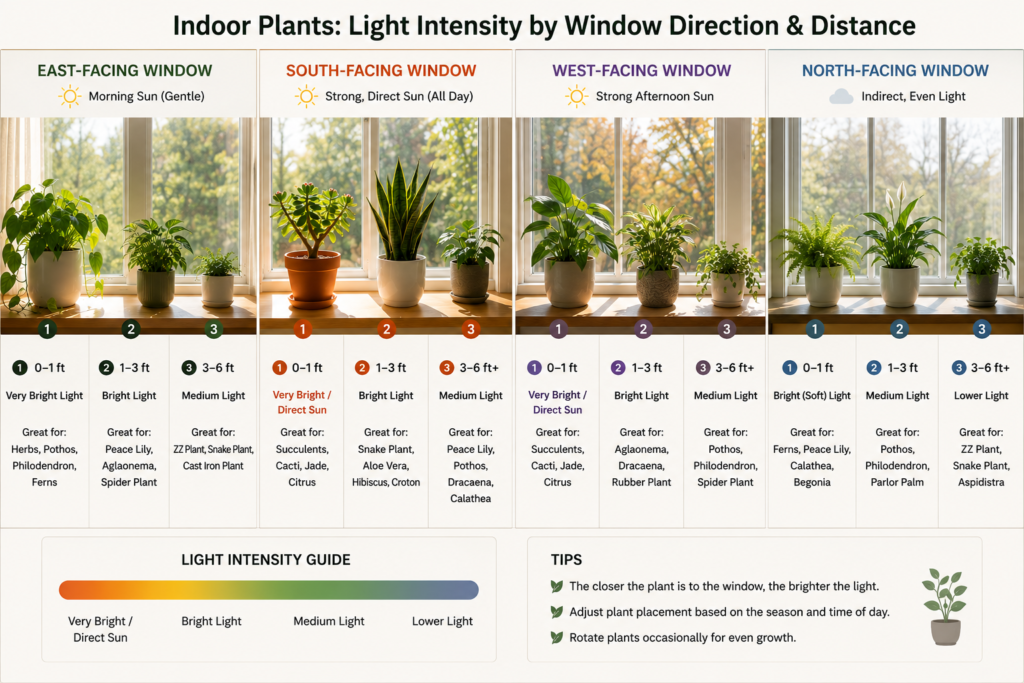
Window direction is one of the most important variables in indoor plant care. It affects intensity, duration, heat, and burn risk.
East-Facing Windows
East-facing windows are often the best beginner option. They provide morning light, which is softer and cooler than afternoon light.
Best for:
- Monstera deliciosa
- Philodendron hederaceum
- Maranta leuconeura
- many calatheas
South-Facing Windows
South-facing windows usually provide the strongest brightness. They are excellent for growth if the light is filtered.
Best with:
- sheer curtains
- side placement
- slight distance from glass
Good for:
- Ficus lyrata
- Anthurium andraeanum
- Monstera deliciosa
West-Facing Windows
West-facing windows receive stronger afternoon light. This light can be hot and stressful.
Better for:
- tougher plants
- plants placed farther back
- rooms with filtered curtains
North-Facing Windows
North-facing windows are usually weakest. They can work for tolerant plants but may not provide enough bright indirect light unless the room is very open and bright.
How Far Should Plants Be from a Window?
Distance controls intensity. Light drops quickly as a plant moves away from a window.
A plant one foot from a window may receive several times more light than a plant five feet away.
General distance guide:
- East-facing window: 1–4 feet
- South-facing window: 2–6 feet
- West-facing window: 3–8 feet
- North-facing window: 0–2 feet
Plant examples:
- Monstera deliciosa: 2–4 feet
- Calathea orbifolia: 3–5 feet
- Epipremnum aureum: 2–6 feet
- Ficus lyrata: closer to strong filtered light
- Zamioculcas zamiifolia: can sit farther away
Distance also depends on:
- curtain thickness
- window size
- outdoor trees
- neighboring buildings
- season
- glass tint
If growth slows, review distance before changing watering habits.
How Seasonal Changes Affect Bright Indirect Light
Indoor light changes throughout the year, even if the plant stays in the same spot.
Seasonal factors include:
- sun angle
- day length
- cloud patterns
- window heat
- room temperature
Winter
Winter usually means weaker light and shorter days. Plants may need to move closer to windows. Watering should often be reduced because soil dries more slowly.
Spring
Spring brings stronger light and renewed growth. This is a good time to reassess plant placement.
Summer
Summer light is stronger and hotter. Plants near west- or south-facing windows may need sheer curtains or extra distance.
Autumn
Autumn light begins declining. This is a good transition period before winter slowdown.
Seasonal checklist:
- reassess light monthly
- rotate plants
- adjust watering
- watch for leaf burn in summer
- watch for slow drying in winter
Static placement often creates seasonal problems.
Can Bright Indirect Light Change on Cloudy Days?
Yes. Bright indirect light changes on cloudy days.
Cloud cover scatters sunlight and reduces intensity before it enters your home. A window that gives strong bright indirect light on a sunny day may provide only medium light during cloudy weather.
Short cloudy periods usually do not harm plants. Long cloudy periods can slow growth, especially in winter or rainy seasons.
Weather effects:
- lower lux
- slower growth
- longer soil drying
- weaker new leaves
- reduced flowering
Helpful adjustments:
- move plants closer to windows
- clean window glass
- use grow lights during long cloudy periods
- reduce watering if soil stays wet longer
Cloudy days are normal. Repeated weak-light periods should be managed.
Does Window Glass Affect Plant Light?
Yes. Window glass affects plant light by reducing, filtering, and reflecting some sunlight before it reaches the plant.
Important variables:
- tint
- dust
- glass thickness
- double glazing
- UV coatings
- screen mesh
Effects of window glass:
- reduced intensity
- filtered UV
- changed heat buildup
- weaker winter light
- less usable brightness for demanding plants
A Ficus lyrata near tinted glass may receive less light than expected. A variegated plant behind dirty or coated glass may lose color because the light is weaker than it appears.
Window access matters, but window quality matters too.
Common Bright Indirect Light Mistakes
Most plant light problems come from wrong assumptions.
Mistake 1: Confusing Room Brightness with Plant Brightness
A room may look bright but provide weak plant-level light.
Mistake 2: Placing Plants Too Far Away
Distance weakens light quickly. A plant across the room may be in low light.
Mistake 3: Ignoring Seasons
A spot that works in spring may be too weak in winter or too hot in summer.
Mistake 4: Using Heavy Curtains
Heavy curtains may block too much light. Sheer curtains are better.
Mistake 5: Treating All Plants the Same
A Calathea orbifolia and Aloe vera do not want identical light.
Better light decisions reduce watering mistakes and growth problems.
Best Indoor Plants for Bright Indirect Light
Bright indirect light is ideal for many popular houseplants.
Monstera deliciosa
Larger leaves and stronger splits in bright indirect light.
Epipremnum aureum
Faster growth and stronger variegation.
Philodendron hederaceum
Fuller vines and healthier leaves.
Ficus lyrata
Needs stronger light and benefits from stable brightness.
Anthurium andraeanum
Flowers better in strong indirect light.
Calathea orbifolia
Prefers bright but filtered conditions.
Choose plants based on your home’s actual light.
Bright Indirect Light for Variegated Plants
Variegated plants usually need stronger light than solid green plants because their leaves contain less Chlorophyll.
Without enough light, variegated plants may:
- lose variegation
- grow more green leaves
- produce smaller leaves
- slow down
Best examples:
- variegated Monstera deliciosa
- variegated Epipremnum aureum
- variegated Philodendron hederaceum
Bright indirect light helps preserve color while avoiding burn.
Which Plants Do Not Prefer Bright Indirect Light?
Bright indirect light is excellent for many plants, but not all.
Lower-light tolerant plants:
- Zamioculcas zamiifolia
- Aspidistra elatior
- Dracaena trifasciata
Full-sun plants:
- Aloe vera
- Echeveria elegans
- Lavandula angustifolia
Wrong light placement can cause:
- stretching
- faded leaves
- weak stems
- poor flowering
Plant biology decides placement.
Can Grow Lights Replace Bright Indirect Light?
Yes. Grow lights can replace bright indirect light if they provide enough intensity, proper spectrum, and consistent duration.
Plants respond to usable energy, not whether the source is natural or artificial.
Grow lights are useful for:
- apartments
- dark rooms
- offices
- winter
- plant shelves
Good grow light features:
- full-spectrum output
- proper brightness
- timer compatibility
- correct distance
General use:
- 10–14 hours daily
- consistent schedule
- correct distance from leaves
A strong grow light can outperform a weak window.
How to Create Bright Indirect Light Artificially
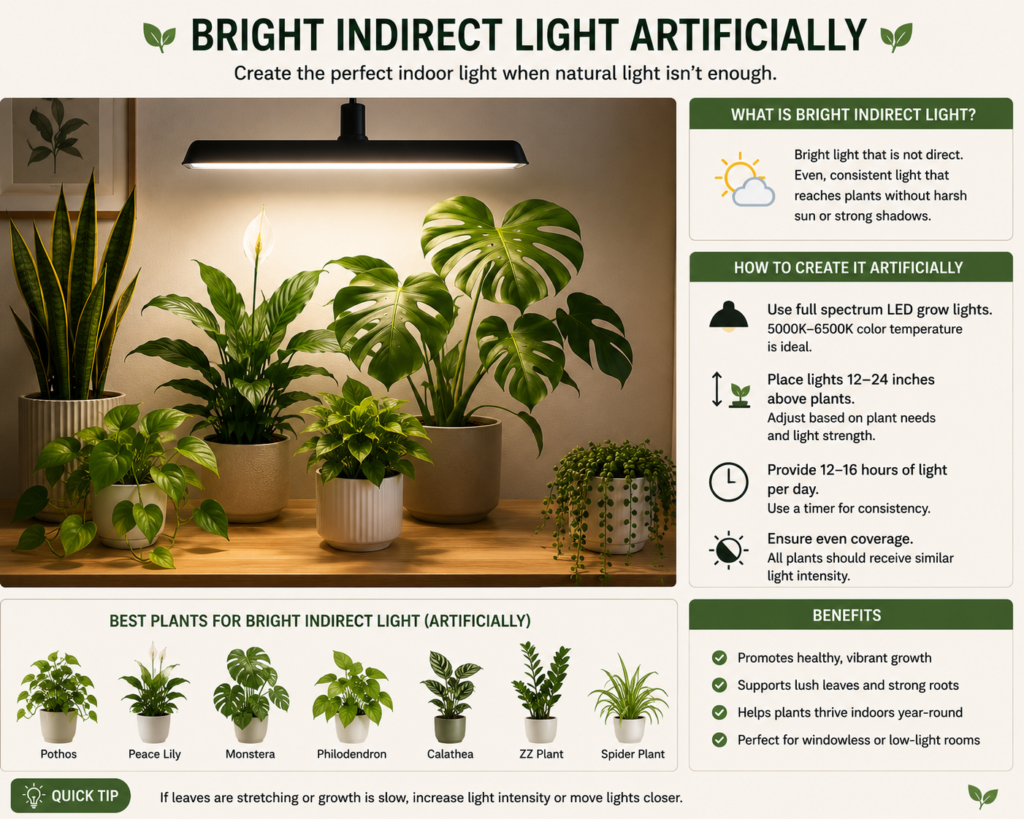
Not every home has perfect windows, but bright indirect light can be created.
Use Sheer Curtains
Sheer curtains soften harsh sun while keeping brightness.
Use Side Placement
Move plants beside windows instead of directly in front of harsh sunbeams.
Use Reflective Walls
White walls reflect daylight and brighten nearby plant zones.
Use Mirrors Carefully
Mirrors can redirect light but should not focus intense heat.
Add Grow Lights
Grow lights stabilize plant conditions when natural light is weak.
Small environmental changes can make a major difference.
Can Bright Indirect Light Be Too Weak?
Yes. Indirect light can still be too weak if brightness is reduced by distance, curtains, weather, glass, or obstacles.
Signs of weak indirect light:
- stretching
- leaning
- small leaves
- slow growth
- pale color
Fixes:
- move closer
- reduce obstructions
- clean glass
- add grow lights
- use reflective surfaces
Real Home Placement Strategies
Plant placement in real homes is rarely perfect. Furniture, wall angles, buildings, curtains, and room layout all change light.
Living Room
Usually best for large plants.
Good plants:
- Monstera deliciosa
- Ficus lyrata
Bedroom
Often softer light.
Good plants:
- Philodendron hederaceum
- Epipremnum aureum
Bathroom
Humidity helps tropical plants.
Good plants:
- Calathea orbifolia
- Maranta leuconeura
Kitchen
Morning light can be excellent.
Good plants:
- herbs
- pothos
- small philodendrons
Office
Often weak natural light.
Good plants:
- Zamioculcas zamiifolia
- Dracaena trifasciata
How to Troubleshoot Plant Light Problems
Plant problems often overlap. Yellow leaves, drooping, curling, brown edges, and weak growth can come from both watering and lighting issues.
Check light before changing care.
Troubleshooting checklist:
- How far is the plant from the window?
- Does it cast a soft shadow?
- Has the season changed?
- Are leaves smaller than before?
- Is the plant leaning?
- Is soil staying wet too long?
- Is the plant inside a direct sunbeam?
If needed, measure lux.
Bright indirect range:
1,000–5,000 lux
Light is usually the first variable to inspect.
Signs Your Plant Is Getting Too Much Light
Too much light often causes faster damage than too little light.
Signs include:
- brown patches
- crispy edges
- faded leaves
- curling
- rapid soil drying
Sensitive plants:
- Calathea orbifolia
- Maranta leuconeura
- Spathiphyllum wallisii
Fixes:
- move plant back
- add sheer curtains
- reduce afternoon exposure
Bright indirect light should strengthen leaves.
Signs Your Plant Is Getting Too Little Light
Low-light stress usually develops slowly.
Signs include:
- leggy stems
- smaller new leaves
- pale color
- slow growth
- leaning toward windows
This leaning response is Phototropism.
Fixes:
- move closer to window
- remove obstacles
- clean glass
- add grow lights
Weak light causes slow decline.
How Light Changes Watering Behavior
Light and watering are directly connected.
More light means:
- faster growth
- faster soil drying
- more water use
Less light means:
- slower growth
- slower drying
- less water use
- higher overwatering risk
A Ficus lyrata in bright indirect light may dry faster than the same plant in weak light.
Water according to:
- soil moisture
- light level
- season
- plant size
- pot type
Light controls water behavior.
Final Expert Recommendations
Bright indirect light is the best general target for most indoor tropical plants. It provides enough energy for active growth while protecting foliage from direct sun damage.
Best practices:
- learn your window directions
- use sheer curtains where light is harsh
- rotate plants weekly
- measure lux when unsure
- adjust placement seasonally
- match plant species to light level
- use grow lights in weak spaces
- watch plant behavior
Correct bright indirect light improves:
- leaf size
- root strength
- stem structure
- flowering
- variegation
- recovery speed
- watering accuracy
That is how indoor plants stay healthy.
FAQ: Bright Indirect Light for Plants
What is bright indirect light for plants?
Bright indirect light is strong natural light that reaches a plant without direct sun touching its leaves.
Is bright indirect light enough for most houseplants?
Yes. Most tropical houseplants grow best in bright indirect light.
Can bright indirect light come through curtains?
Yes. Sheer curtains diffuse direct sun and create excellent bright indirect light.
Can grow lights replace bright indirect light?
Yes. Full-spectrum grow lights can replace or supplement natural light.
How close should plants be to a window?
Most plants do well 1–6 feet from a window.
Is an east-facing window best?
For many tropical plants, yes.
Can direct sunlight damage indoor plants?
Yes. Many tropical plants burn under harsh direct sun.
Why is my plant stretching toward the window?
It likely needs more light.
Does cloudy weather affect bright indirect light?
Yes. Cloudy weather lowers light intensity.
Do variegated plants need more bright indirect light?
Usually yes.
Does window glass reduce light?
Yes. Glass can reduce intensity.
Can bright indirect light be too weak?
Yes. If the plant is too far from the window or light is blocked.

Myra is the founder and lead writer of Plantsaholic. She shares practical, research-backed advice on indoor plants, outdoor gardening, flowers, herbs, succulents, and everyday plant care. Her goal is to help gardeners of all experience levels grow healthier plants through simple, easy-to-follow gardening guides.