Watering is not just a routine—it is the core survival mechanism for plants, and misunderstanding it leads to the majority of plant failures. Many plant owners assume more water equals better growth, but in reality, plants depend on a precise balance between hydration and oxygen availability. When this balance is disrupted, the plant begins to show stress signals that are often misunderstood and misdiagnosed.
The real danger is not just watering incorrectly—it’s reacting incorrectly to symptoms. A drooping plant might be drowning or thirsty, yet most people respond with more water. This is where most plant damage becomes irreversible. Learning to interpret plant signals accurately gives you control, not just over survival, but over thriving growth and long-term plant health.
- Over 80% of plant problems come from watering mistakes
- Symptoms often appear late, after root damage begins
- Correct diagnosis saves plants quickly
- Wrong decisions accelerate decline
Before diagnosing watering problems, it’s important to know when your plant actually needs water—this guide shows the exact signs to look for.
Deeper Insight:
Think of watering as a dynamic relationship, not a task. Plants don’t follow human schedules—they respond to environmental conditions, soil structure, and internal health.
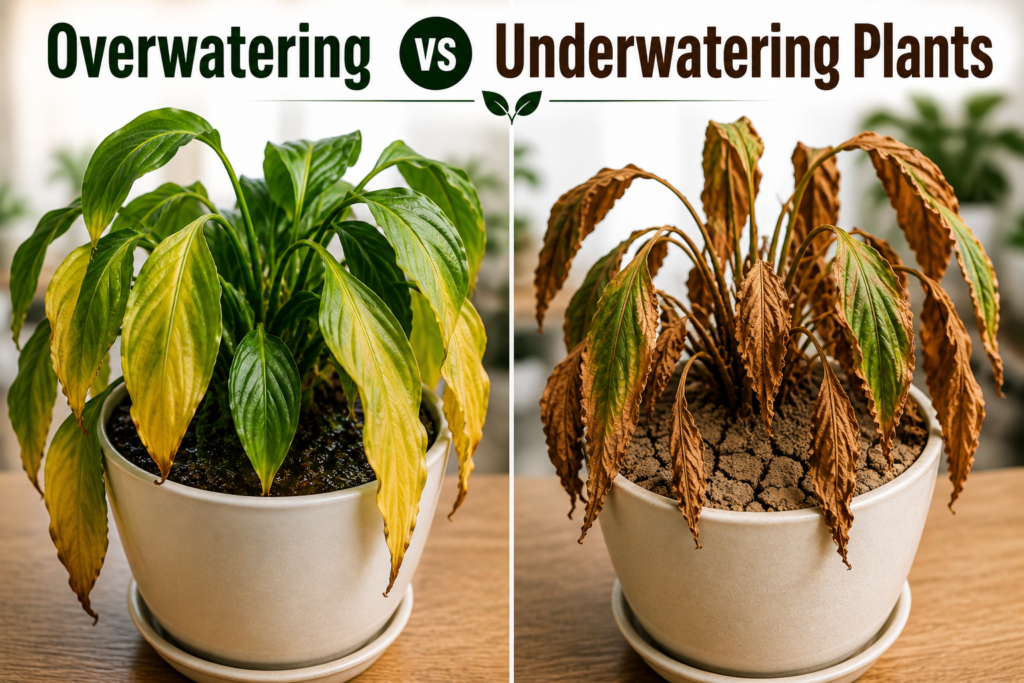
Overwatering vs Underwatering: A Clear Side-by-Side Comparison
The confusion between overwatering and underwatering exists because both disrupt plant function, yet their causes and outcomes are fundamentally different. Understanding their visible patterns alongside hidden root behavior allows you to diagnose accurately instead of guessing.
The key difference lies in how each condition affects the plant internally. Overwatering blocks oxygen and causes decay, while underwatering limits water availability but keeps the root system structurally intact. This distinction is critical because it determines whether the plant can recover quickly or requires intervention.
- Overwatering = oxygen deprivation + root rot
- Underwatering = dehydration + cell collapse
- Wet soil + decline = overwatering
- Dry soil + recovery after watering = underwatering
Real-World Decision Clarity:
When comparing both, always trust soil condition over leaf appearance. Leaves can mislead—but soil rarely does.
What Actually Happens Inside the Plant (Root-Level Science Explained Simply)
At the root level, plants operate like a biological exchange system, where water and oxygen must coexist. Roots absorb water while simultaneously respiring—taking in oxygen and releasing carbon dioxide. When soil becomes saturated, oxygen is displaced, creating an environment where roots cannot function properly.
In contrast, underwatering reduces water availability, but oxygen remains present. This allows roots to survive, even under stress. The plant begins conserving energy, slowing growth, and sacrificing older leaves, but the system remains functional—making recovery possible.
- Overwatering removes oxygen from soil
- Root rot organisms thrive in wet conditions
- Underwatering reduces turgor pressure
- Cells shrink, causing visible wilting
Deeper Insight:
Overwatering is not “too much water”—it is too little oxygen. This shift in perspective changes how you approach plant care completely.
How Different Plant Types React to Overwatering vs Underwatering
Different plant categories respond to watering stress in completely different ways, and ignoring this is one of the biggest reasons plant care advice fails beginners. A succulent and a tropical plant may show similar symptoms, but their internal tolerance levels are opposite. Understanding plant type behavior allows you to make accurate watering decisions instead of generic guesses.
For example, succulents store water in their leaves and stems, which makes them highly resistant to drought but extremely sensitive to excess moisture. Tropical plants, on the other hand, are adapted to consistent moisture and humidity, meaning they struggle much faster under dry conditions. This difference explains why one plant dies from overwatering while another declines from underwatering in the same environment.
- Succulents (e.g., snake plant, aloe): tolerate dryness, rot quickly in wet soil
- Tropical plants (e.g., pothos, monstera): prefer consistent moisture
- Ferns: highly sensitive to drying out, collapse quickly
- Cacti: require infrequent but deep watering
- Peace lilies: dramatic drooping when thirsty, quick recovery
Decision Clarity:
Always match watering strategy to plant type. If you treat all plants the same, you will always overwater some and underwater others.
Signs of Overwatering Plants (Detailed Breakdown)
Overwatering develops gradually, making it one of the most deceptive plant problems. Early signs are subtle and often ignored, leading to severe damage before intervention occurs. The most dangerous aspect is that the plant may appear thirsty even when the soil is saturated.
As root rot progresses, the plant loses its ability to absorb water, creating a paradox where the plant is surrounded by water but effectively dehydrated. This leads to worsening symptoms despite continued watering.
- Yellowing leaves starting from bottom
- Mushy stems or soft leaf tissue
- Persistent drooping with wet soil
- Foul smell from soil
- Fungus gnats or mold presence
Real-World Pattern:
If watering seems to make the plant worse, you are likely dealing with overwatering—not underwatering.
Signs of Underwatering Plants (Detailed Breakdown)
Underwatering is often overlooked because it feels less harmful than overwatering, but prolonged dryness can still cause structural damage to plants. The key difference is that underwatering damage is more visible and more reversible, giving you a better chance to act in time.
Plants under water stress begin conserving resources. They prioritize survival by reducing growth, shedding leaves, and limiting energy usage. This survival mode is your opportunity to intervene and restore health quickly.
- Crispy brown edges on leaves
- Leaves curling inward
- Soil pulling away from pot
- Lightweight pot
- Rapid recovery after watering
Decision Clarity:
If your plant improves within hours of watering, the issue was underwatering—this is one of the clearest diagnostic signals.
The Biggest Mistake: Following a Watering Schedule
Watering schedules create a false sense of control, but they ignore the dynamic nature of plant environments. Plants respond to light, humidity, airflow, and temperature—all of which change constantly. A fixed schedule cannot adapt to these variables.
Instead of schedules, successful plant care relies on observation and responsiveness. This shift from routine to awareness is what separates struggling plant owners from confident growers.
- Light levels affect water usage
- Soil type changes moisture retention
- Pot material influences drying speed
- Seasonal changes alter needs
Pro Insight:
Stop asking “When should I water?” and start asking “Does my plant need water right Now?”
Simple Decision Tree to Identify Overwatering vs Underwatering
Diagnosing plant issues becomes much easier when you follow a structured decision process instead of guessing. A simple decision tree removes confusion and allows even beginners to make accurate judgments quickly.
Start with the most reliable indicator: soil condition. Then move to plant response and symptom patterns. This layered approach ensures that you are not misled by surface-level signs like drooping or yellowing leaves.
- Is soil wet? → Yes → Overwatering likely
- Is soil dry? → Yes → Underwatering likely
- Does plant recover after watering? → Yes → Underwatering
- Does plant worsen after watering? → Yes → Overwatering
- Are roots mushy? → Overwatering confirmed
Deeper Insight:
Diagnosis should follow logic, not emotion. Plants don’t respond to care—they respond to conditions.
Decision Clarity:
If unsure, wait and observe. Overwatering damage is harder to reverse than underwatering.
How to Fix Overwatered Plants (Complete Recovery System)
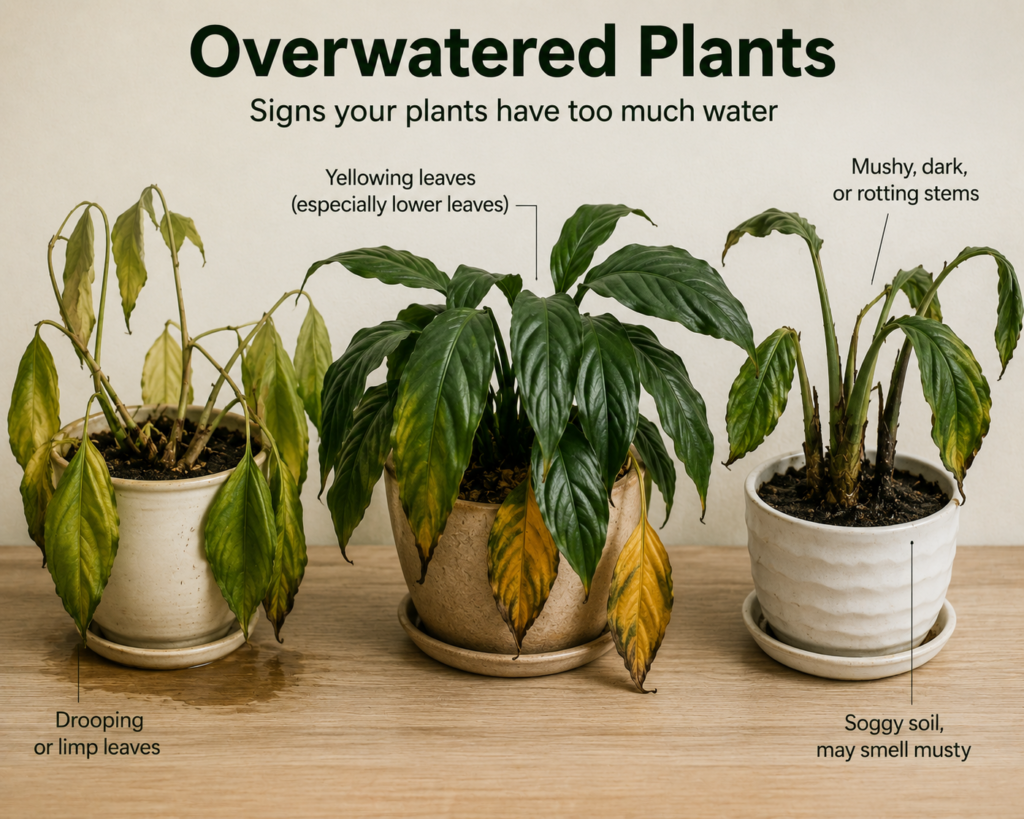
Fixing overwatering is about restoring oxygen to the root system. This requires removing the conditions that caused the problem and giving the plant a chance to rebuild healthy roots.
Immediate action is critical. The longer roots remain in saturated soil, the more extensive the damage becomes. Early intervention dramatically increases recovery chances.
- Remove plant from wet soil
- Trim damaged roots
- Repot in well-draining mix
- Improve airflow and light
- Pause watering until soil dries
Deeper Insight:
Recovery is not about adding nutrients—it’s about removing stress conditions first.
How to Fix Underwatered Plants (Fast Recovery Method)
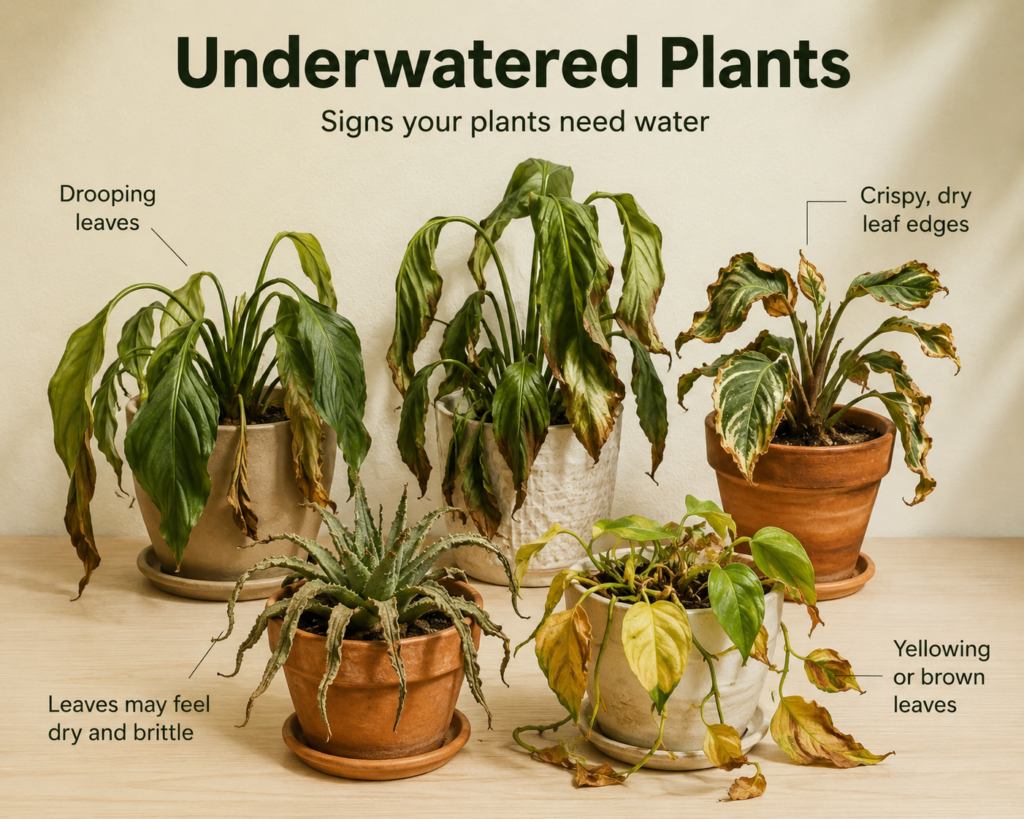
Underwatered plants respond quickly when properly rehydrated, but the method matters. Simply pouring water on dry soil may not be effective if the soil has become hydrophobic.
The goal is to fully saturate the root zone so the plant can restore internal pressure and resume normal function. This often requires soaking rather than surface watering.
- Water deeply until excess drains
- Use bottom watering for full saturation
- Soak soil if water runs through quickly
- Remove damaged leaves after recovery
Real-World Tip:
If water passes straight through the soil, it means the roots never received it—soaking is essential.
Environmental Factors That Affect Watering Needs
Watering needs are not fixed—they are heavily influenced by the surrounding environment. Two identical plants in different locations can require completely different care.
Understanding environmental impact allows you to anticipate changes instead of reacting to problems after they appear. This is where plant care becomes proactive rather than reactive.
- More light increases water demand
- Higher temperature accelerates drying
- Low humidity increases evaporation
- Airflow speeds up moisture loss
Decision Clarity:
Always adjust watering based on environment—not just plant type.
Indoor vs Outdoor Plant Watering Differences
Indoor and outdoor plants experience completely different environmental conditions, which directly impacts their watering needs. Applying the same watering strategy to both environments leads to incorrect care.
Indoor plants typically receive less light and airflow, causing soil to dry more slowly. Outdoor plants are exposed to sunlight, wind, and temperature fluctuations, which increase water evaporation and demand.
- Indoor plants: slower drying, higher overwatering risk
- Outdoor plants: faster drying, higher underwatering risk
- Rainfall affects outdoor watering
- Sun exposure dramatically increases water needs
Real-World Insight:
A plant that needs watering weekly indoors may need watering every 2–3 days outdoors.
Decision Clarity:
Always adjust watering strategy based on location—not just plant type.
How Soil Type Directly Controls Watering Success
Soil is not just a medium—it is the main regulator of water retention and oxygen flow, making it one of the most critical factors in preventing both overwatering and underwatering. Two plants receiving the same watering schedule can behave completely differently depending on the soil composition.
Well-draining soil allows excess water to escape quickly, maintaining oxygen levels around roots. Dense or compact soil holds water longer, increasing the risk of root rot. This is why many watering issues are not actually caused by watering frequency, but by soil structure that either traps or loses moisture too aggressively.
- Perlite: improves drainage and aeration
- Coco coir: retains moisture while staying airy
- Compost: adds nutrients but can hold water
- Sand: increases drainage but dries quickly
- Peat moss: retains moisture but can compact over time
Real-World Insight:
If your soil stays wet for days, your issue is not “watering too much”—it’s soil holding too much water.
Decision Clarity:
Adjust soil before adjusting watering frequency. Soil controls how often watering is needed.
Best Pot Types to Prevent Overwatering and Underwatering
The type of pot you use directly affects how quickly soil dries, which makes it a powerful tool for controlling watering mistakes. Many plant owners focus only on watering frequency, but pot material can either prevent or worsen overwatering and underwatering issues.
Terracotta pots are porous, allowing moisture to evaporate through the walls, making them ideal for plants prone to overwatering. Plastic pots retain moisture longer, which can benefit plants that prefer consistent hydration but can increase risk if overwatered. Ceramic pots fall somewhere in between, depending on glazing.
- Terracotta: breathable, reduces overwatering risk
- Plastic: retains moisture, good for thirsty plants
- Ceramic: balanced moisture retention
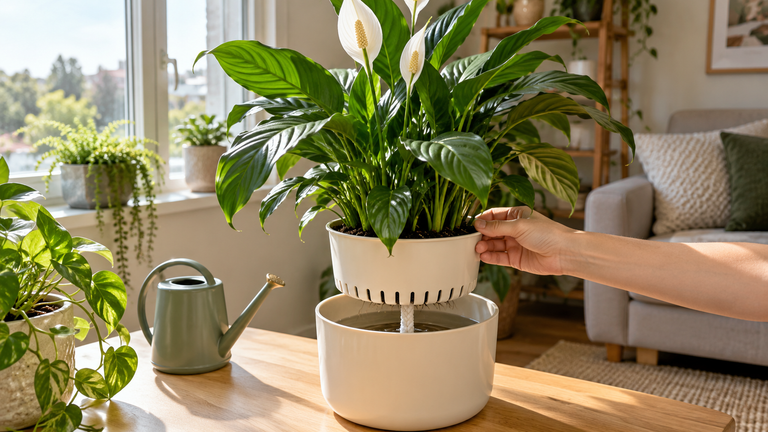
- Self-watering pots: controlled hydration system
- Pots with drainage holes: absolutely essential
Deeper Insight:
Pot choice is not aesthetic—it’s a watering control system.
Decision Clarity:
If you struggle with overwatering → switch to terracotta.
If you forget watering → use moisture-retaining pots.
Watering Frequency Guide by Season (Beginner-Proof Table)
Watering needs change significantly across seasons due to shifts in temperature, light, and humidity. Ignoring seasonal variation is one of the most common reasons plants get overwatered in winter and underwatered in summer. Plants are not static—they adapt to environmental cycles.
During summer, higher temperatures and longer daylight hours increase evaporation and plant activity, leading to higher water demand. In winter, growth slows down, light reduces, and soil dries much slower, meaning watering must be reduced accordingly.
| Season | Watering Frequency |
| Summer | Every 3–7 days |
| Winter | Every 10–21 days |
| Spring | Moderate (5–10 days) |
| Fall | Moderate (7–12 days) |
- Summer = high evaporation + active growth
- Winter = low evaporation + dormancy
- Spring/Fall = transition phases
- Indoor heating can increase dryness in winter
Real-World Insight:
Most plant deaths happen in winter due to overwatering, not neglect.
Decision Clarity:
Always adjust watering based on season—not habit.
How to Prevent Overwatering and Underwatering Permanently
Prevention is about building a system that naturally supports plant health without constant correction. This involves aligning soil, pot, environment, and watering habits into a balanced setup.
The goal is not perfection—it’s consistency and awareness. When your setup supports natural drying and proper hydration, most watering mistakes disappear.
- Use well-draining soil mixes
- Always choose pots with drainage
- Group plants by watering needs
- Monitor soil regularly
Pro-Level Insight:
A good setup reduces the need for perfect decisions. Prevention is smarter than recovery.
Does Water Quality Affect Plant Health?
Water quality plays a subtle but important role in plant health, especially over long periods. While most plants tolerate tap water, certain chemicals and mineral levels can affect soil structure and nutrient absorption.
Chlorine, fluoride, and hard water minerals can accumulate in soil, leading to leaf discoloration and reduced growth. Sensitive plants may show brown tips or slowed development due to poor water quality.
- Tap water: convenient but may contain chemicals
- Hard water: leaves mineral deposits
- Filtered water: better for sensitive plants
- Rainwater: natural and ideal
Deeper Insight:
Water is not just hydration—it is also a carrier of minerals and chemicals.
Decision Clarity:
If your plant shows unexplained leaf damage, consider water quality as a hidden factor.
Advanced Diagnosis: When Symptoms Are Confusing
Sometimes plants show mixed signals due to past stress or combined issues. This is where deeper observation and patience become essential.
Instead of reacting immediately, observe patterns over time. Plants communicate through changes, not single symptoms.
- Mixed symptoms often indicate past mistakes
- Root inspection gives the clearest answer
- Observe response after watering
- Avoid reacting impulsively
Expert Insight:
When unsure, wait and observe—overwatering damage is harder to reverse than underwatering.
Real-Life Case Study: Saving an Overwatered Indoor Plant
A real-world example helps translate theory into action. Consider a common scenario: a houseplant with yellow leaves and drooping stems. The owner assumes underwatering and increases watering frequency, making the condition worse over time.
Upon inspection, the soil is constantly wet, and the roots are found to be soft and dark—clear signs of overwatering. The recovery process begins by removing the plant, trimming damaged roots, and repotting it in well-draining soil. Within two weeks, new growth begins to appear.
- Initial symptoms: yellow leaves, drooping
- Mistake: increased watering
- Diagnosis: root rot due to overwatering
- Fix: root trimming + repotting
- Result: gradual recovery
Deeper Insight:
Misdiagnosis is more dangerous than the problem itself.
Decision Clarity:
Always confirm the cause before applying a solution.
Tools That Help You Water Plants Correctly
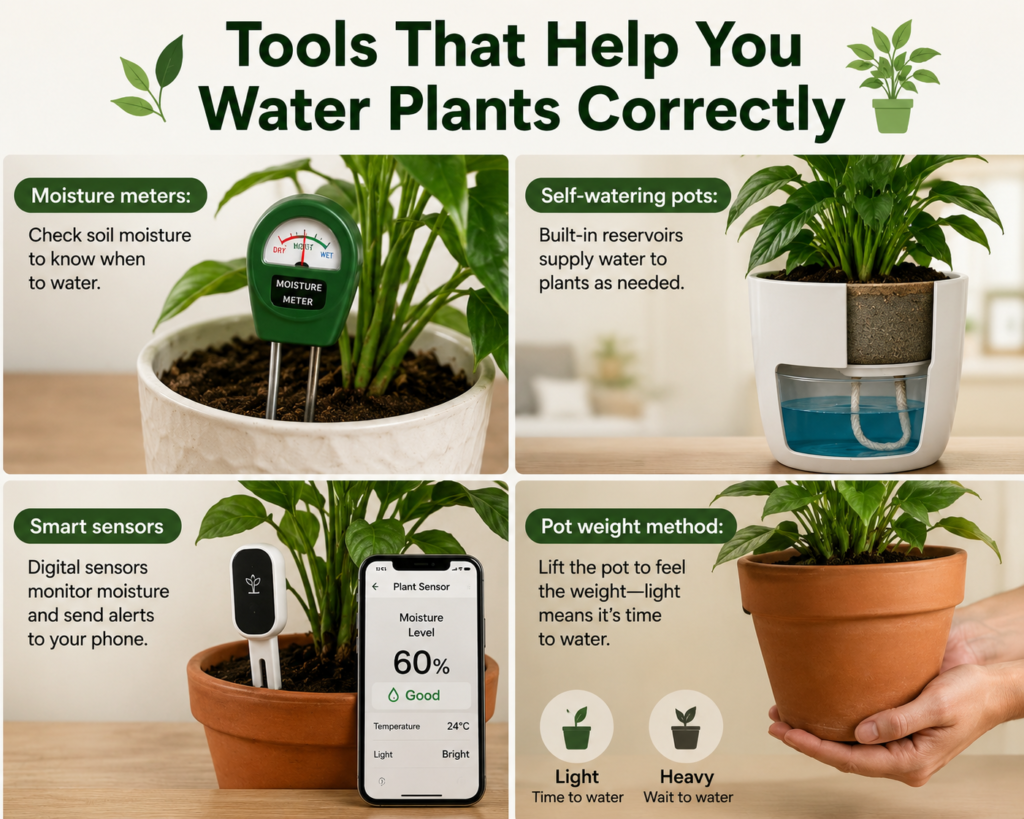
Using tools can significantly reduce guesswork and improve watering accuracy, especially for beginners. While experienced plant owners rely on observation, tools provide measurable data that helps build confidence.
Modern plant care tools are designed to simplify decision-making and prevent common mistakes. From moisture meters to self-watering systems, these tools act as support systems rather than replacements for plant knowledge.
- Moisture meters: measure soil moisture accurately
- Self-watering pots: regulate water supply
- Smart sensors: track environmental conditions
- Pot weight method: simple and effective manual technique
Real-World Insight:
Tools don’t replace skill—they accelerate learning.
Decision Clarity:
Use tools as guidance, but always combine them with observation.
Final Takeaway: The Golden Rule of Watering
Watering is not about frequency—it’s about timing and observation. Plants thrive when their environment supports natural balance, not forced routines.
Understanding the difference between overwatering and underwatering gives you control over plant health, turning guesswork into confidence.
- Overwatering kills roots slowly
- Underwatering stresses plants quickly
- Soil condition is your most reliable indicator
Golden Rule:
Always check the soil before watering—never rely on routine.
7 Most Common Watering Mistakes Beginners Make
Most watering problems are not due to lack of effort but due to incorrect habits that seem logical but are actually harmful. Recognizing these mistakes helps prevent recurring plant issues and builds long-term plant care confidence.
Beginners often rely on routines instead of observation, leading to repeated overwatering or underwatering cycles. Fixing these habits is more important than learning new techniques.
- Watering on a fixed schedule
- Ignoring drainage holes
- Using the wrong soil mix
- Overpotting plants (too much soil retains water)
- Not checking soil before watering
- Treating all plants the same
- Ignoring environmental changes
Real-World Insight:
Most plant problems are not plant problems—they are care pattern problems.
Decision Clarity:
Fix your watering habits once, and most plant issues disappear permanently.
FAQ SECTION:
How do I know if my plant is overwatered or underwatered?
Check the soil—wet soil means overwatering, dry soil means underwatering. Soil condition is more reliable than leaf symptoms.
Why do overwatered and underwatered plants both droop?
Both disrupt water movement—overwatering damages roots, while underwatering reduces water supply, causing similar drooping.
Can yellow leaves mean underwatering too?
Sometimes, but yellow leaves usually indicate overwatering. Underwatering more often causes brown, crispy edges.
How long does it take for an underwatered plant to recover?
Most plants recover within a few hours to 2 days after proper watering, depending on severity.
Can an overwatered plant recover completely?
Yes, if treated early before severe root rot develops. Advanced root rot reduces recovery chances.
Should I water plants on a fixed schedule?
No—always check soil moisture. Fixed schedules often cause overwatering in winter and underwatering in summer.
What does root rot look like?
Black, mushy, foul-smelling roots indicate rot, while healthy roots are white and firm.
Why is my plant drooping even though the soil is wet?
This is a sign of overwatering—damaged roots can’t absorb water even when it’s present.
What should I do if water runs straight through the soil?
The soil is hydrophobic—soak the pot in water for 20–30 minutes to fully rehydrate it.
Do different plants need different watering styles?
Yes—succulents prefer dry conditions, while tropical plants need consistent moisture.
Does pot type affect watering frequency?
Yes—terracotta dries faster, while plastic retains moisture longer and requires less frequent watering.
Is it better to overwater or underwater a plant?
Underwatering is safer since plants recover faster, while overwatering can cause root rot.
How do I check soil moisture without tools?
Insert your finger 1–2 inches into the soil—dry means water, moist means wait.
Does season affect how often I should water?
Yes—plants need more water in summer and less in winter due to slower growth.
How often should I water indoor plants?
Typically every 7–14 days, but always check soil instead of following a strict schedule.
Myra is the founder and lead writer of Plantsaholic. She shares practical, research-backed advice on indoor plants, outdoor gardening, flowers, herbs, succulents, and everyday plant care. Her goal is to help gardeners of all experience levels grow healthier plants through simple, easy-to-follow gardening guides.