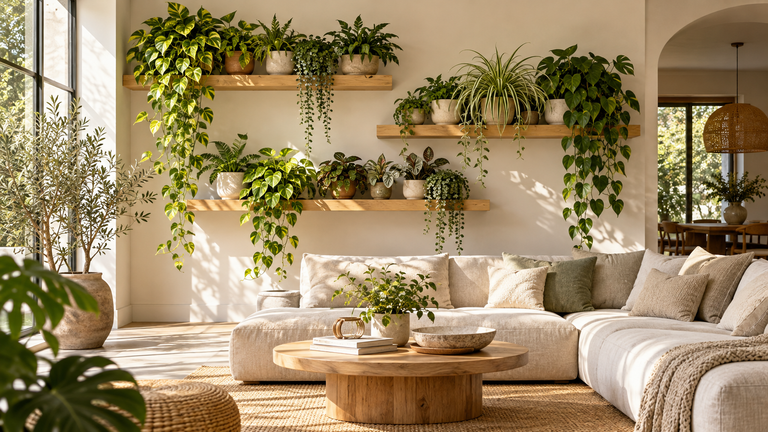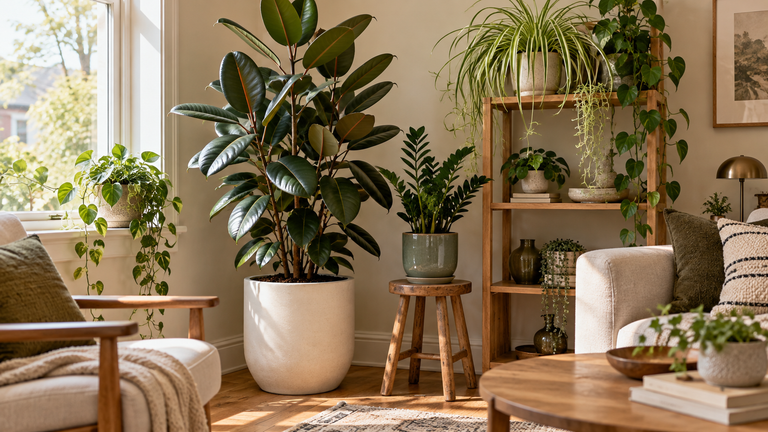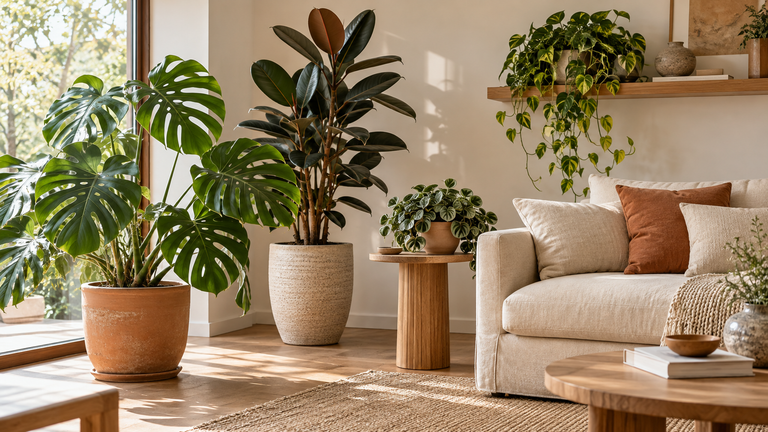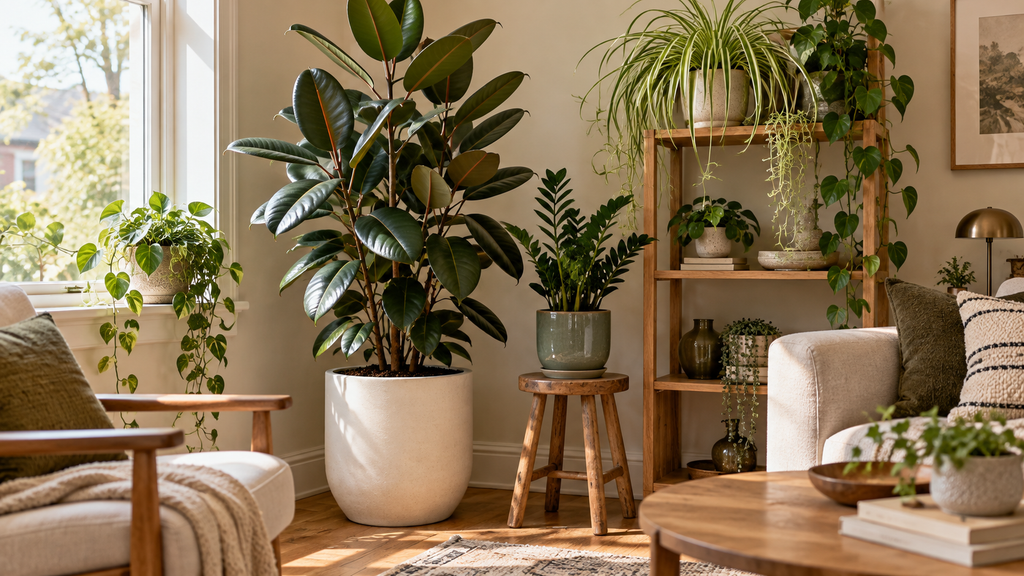
The best plant corner ideas begin with the conditions of your space, not the plants or stands you want to buy. Check usable light, measure the area, choose suitable growth habits, and arrange containers at different heights. Allow room for growth and maintenance.
At Plantsaholic, the 4L Corner Method—Light, Layout, Layers, and Lifestyle—helps connect good design with healthy plants. Use it to plan a sustainable arrangement.
Are Plant Corner Ideas Right for Your Space?
An empty corner is not necessarily suitable for live plants. Window corners may block doors; secluded corners may lack daylight.
Before shopping, check four conditions: usable light, unobstructed space, stable surfaces, and access for watering and cleaning. Notice nearby heating vents, air conditioners, radiators, and frequently opened doors. Drafts and temperature extremes also matter.
Classify your location as ready now, ready after adjustment, usable with a grow light, or unsuitable. Change layouts that block access.
How Do You Plan a Plant Corner?
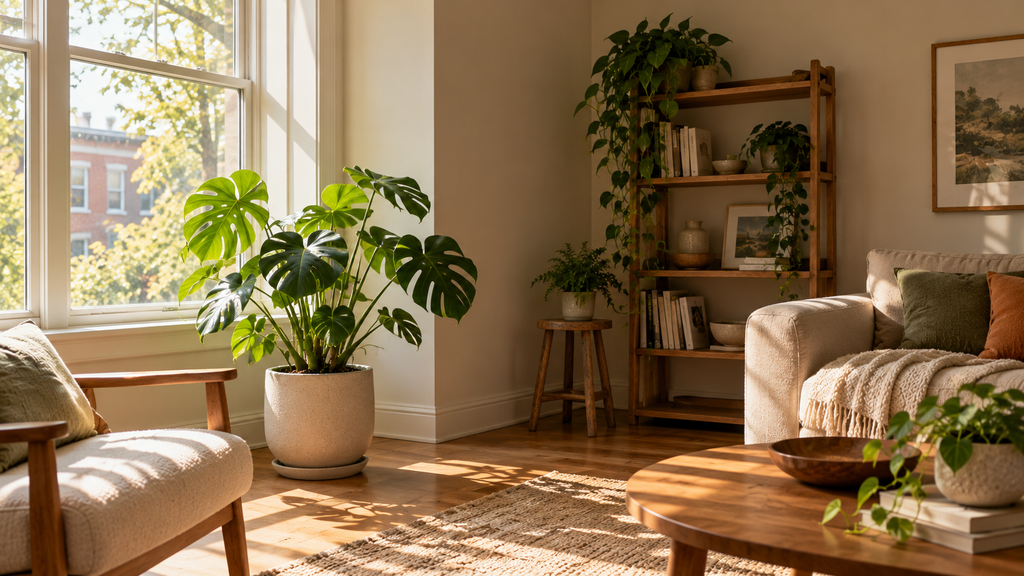
Apply the Plantsaholic 4L Corner Method before choosing species or decorative containers.
Light
Observe the proposed position in the morning, midday, and afternoon. Check light where the leaves will actually sit, because an upper shelf can receive more light than a shaded lower tier. Curtains, buildings, trees, and window distance alter exposure.
The University of Maryland Extension describes approximately 25–100 foot-candles as low light and 100–500 foot-candles as medium-bright light. Requirements vary by species. A light meter can assist; phone apps are less reliable for precise readings.
Low light means some usable light, not complete darkness. If the location is consistently too dim, select another position or plan supplemental lighting.
Layout
Measure the usable width, depth, and height. Open nearby doors, pull out drawers, move chairs, and check curtain clearance. Leave room to remove pots individually; keep each pot accessible.
Layers
Combine different growth habits rather than three similarly sized pots. One upright plant can anchor the floor, a compact plant can occupy a sturdy stool, and a trailing plant can soften a higher shelf. Keep foliage from shading its neighbors excessively.
Lifestyle
Consider pets, children, watering habits, travel, budget, and cleaning routines. Travelers may prefer fewer resilient plants; renters may prefer movable furniture.
Which Plant Corner Layout Works Best?
Choose the layout according to your main constraint. A vertical display saves floor area, while a single statement plant can suit a larger room without creating clutter.
| Corner condition | Suitable layout | Main limitation |
|---|---|---|
| Narrow floor area | Upright floor plant | Wide leaves may block movement |
| Wide empty corner | Floor anchor with smaller layers | Overcrowding |
| No usable floor area | Mounted shelf or hanging planter | Fixings and watering access |
| Rental home | Freestanding shelf or stool | Stability |
| Minimalist room | One statement plant | Correct proportions |
| Several small plants | Tiered stand | Uneven light between levels |
| Very dark corner | Grow-light-supported display | Fixture coverage and electricity |
Choose the simpler format when two options work equally well. Plan around mature foliage.
What Should You Measure First?
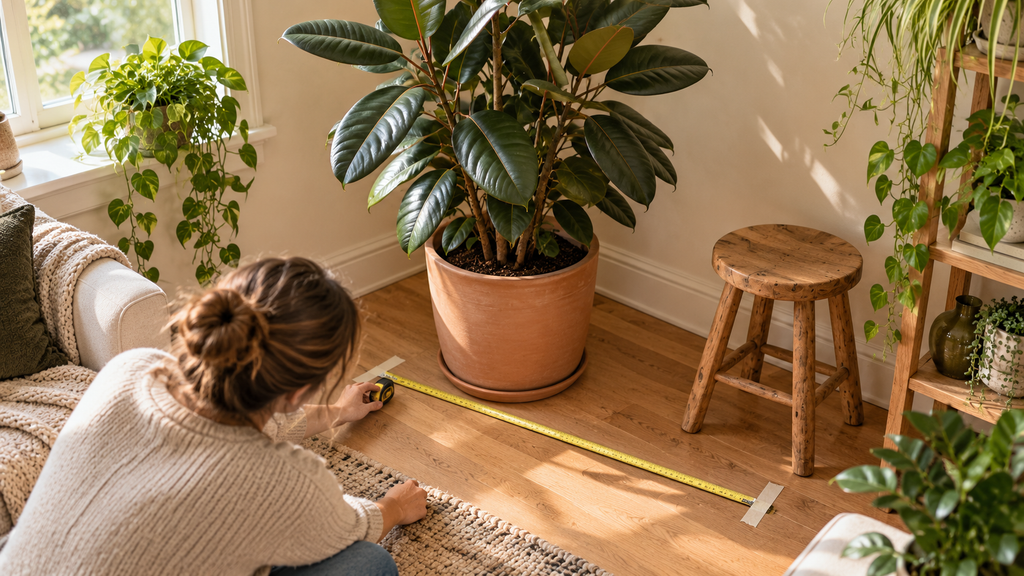
Measure more than the empty floor. Plants expand sideways, vines lengthen, and containers may eventually need replacing. The Growth Envelope Test helps you reserve enough room for future growth.
- Measure usable floor width, depth, and vertical clearance.
- Check the likely mature foliage spread of each species.
- Mark the proposed plant footprint with removable tape.
- Walk along normal routes and move nearby furniture.
- Check whether you can reach, inspect, and lift every container.
- View the arrangement from the room’s main seating position.
Example: Suppose a corner is 85 cm wide and 75 cm deep. A plant in a 28 cm pot looks small initially, but its foliage may eventually reach 65 cm across. If centered, that leaves about 10 cm on each side of the canopy. A second floor plant might crowd the space even though both pots technically fit.
This is an illustrative example, not a plant trial. Check actual mature sizes; mock up the arrangement before buying.
How Do You Create a Plant Corner?
Once the location passes the basic checks, build the arrangement from the largest element outward.
- Confirm the light. Choose plants that can grow at the proposed positions.
- Place the anchor. Set the main floor plant or stable display structure first.
- Add a middle layer. Elevate a compact plant on a suitable stool or stand.
- Introduce a trailing accent. Use a shelf only if it offers enough light and access.
- Check spacing. Prevent large leaves from shading smaller plants unnecessarily.
- Protect surfaces. Provide drainage and waterproof saucers or outer containers.
- Walk around the display. Make sure furniture, people, and pets can move safely.
- Leave open space. Plants will gradually occupy more room as they grow.
A floor plant and existing side table may be enough. Choose healthy placement before coordinating pot colors.
Which Plants Work Best in a Corner?
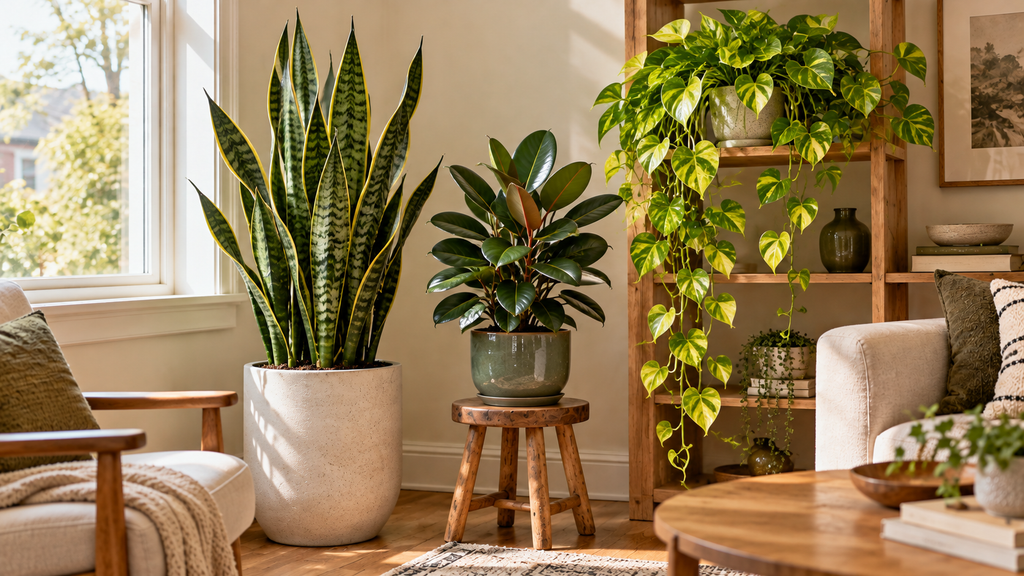
Choose growth habit first, then species. Upright plants suit limited width, compact plants fit raised surfaces, trailing plants suit shelves, and climbing plants need supports. Broad foliage works best where the canopy can expand without striking furniture.
| Plant | Typical indoor light | Growth habit | Useful role |
|---|---|---|---|
| Snake plant (Dracaena trifasciata) | Low to bright indirect | Upright | Narrow floor corner |
| ZZ plant (Zamioculcas zamiifolia) | Low to medium indirect | Upright, arching | Shaded floor display |
| Cast iron plant (Aspidistra elatior) | Low to medium indirect | Arching leaves | Daylit lower-light corner |
| Parlor palm (Chamaedorea elegans) | Medium indirect; tolerates lower | Fine, spreading fronds | Reading nook |
| Golden pothos (Epipremnum aureum) | Medium to bright indirect; tolerates lower | Trailing or climbing | Shelf or vertical support |
| Spider plant (Chlorophytum comosum) | Medium to bright indirect | Arching, cascading | Elevated stand |
| Baby rubber plant (Peperomia obtusifolia) | Medium to bright indirect | Compact | Stool or table |
| Rubber plant (Ficus elastica) | Bright indirect | Upright, broadening | Spacious living room |
Requirements vary by cultivar. Low-light survival can mean slow growth; do not put sun-loving plants in dim corners.
Narrow corners suit snake plants or compact ZZ plants. Shelves can hold pothos or spider plants; bright, wide corners can hold rubber plants.
Check pet safety separately from light. Snake plants and golden pothos are toxic to cats and dogs if eaten; cast iron plants, parlor palms, spider plants, and baby rubber plants are listed as non-toxic by the ASPCA. Verify the exact botanical identity before purchasing.
What Are the Best Indoor Plant Corner Ideas?
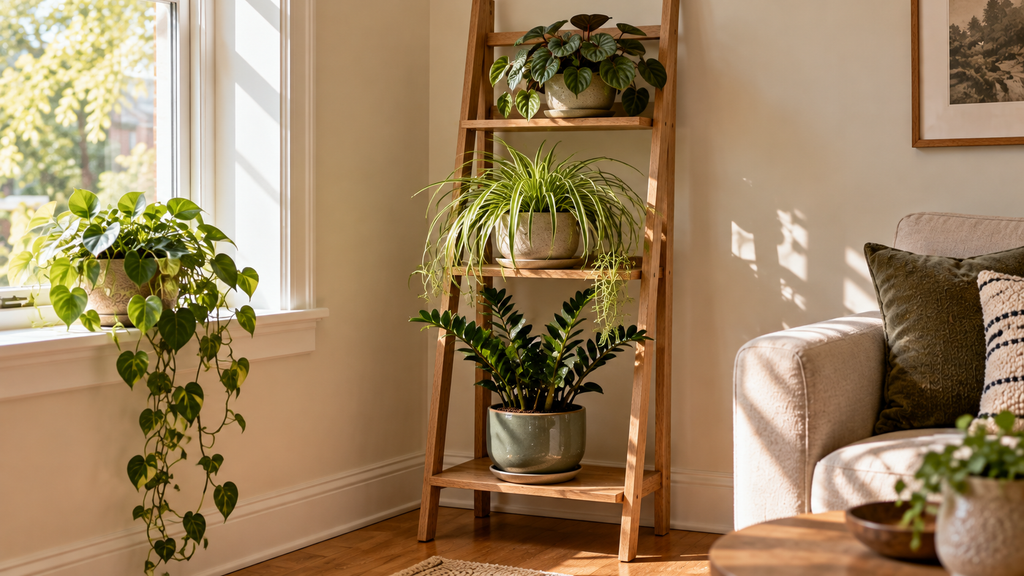
These layouts solve different space problems; choose the one that fits yours.
1. Tall Statement Corner
Place one large, healthy plant in a simple floor container. A rubber plant suits a bright room with ample width, while a snake plant offers a more upright silhouette. Repeat an existing room material for visual unity. Keep its mature canopy outside walking routes.
2. Three-Level Plant Cluster
Combine a floor anchor, a medium plant on a stool, and a small or trailing plant above. Vary foliage shape instead of choosing identical species. Position layers for light, not rigid symmetry.
3. Window Plant Corner
Use the usable space around a suitable window. Place larger foliage slightly away from the glass and smaller containers where their light needs are met. Check hot afternoon sun, cold glass, and curtains. Not every houseplant tolerates direct sun.
4. Ladder-Shelf Corner
A slim freestanding ladder shelf creates vertical display space without using an entire wall. Put heavier containers on appropriate lower tiers, check each shelf’s light, and follow the manufacturer’s anti-tip instructions. Keep every tier reachable.
5. Hanging Plant Corner
Use securely mounted hanging containers where the floor must remain clear. Spider plants add arching leaves and plantlets; pothos offers longer trailing vines but is unsuitable where pets can reach and chew it. Make watering safe and accessible.
6. Floating-Shelf Corner
Arrange compact plants on correctly installed shelves, leaving room above each pot for growth and removal. Peperomia works well as a compact accent under suitable light. Check the combined weight of watered containers and use wall fixings appropriate for the surface. Light varies between tiers.
7. Mirror and Plant Corner
A stable wall-mounted mirror can create visual depth behind a small foliage display. Coordinate the mirror frame with nearby furniture and choose a plant proportionate to the space. Reflections cannot replace grow lights; avoid glare.
8. Reading Nook
Pair a comfortable chair, reading lamp, and one plant that matches available light. A parlor palm can soften the edge of the seating area where space allows. Add a compact tabletop plant only if the table remains useful. Keep walkways clear.
9. Minimalist Corner
One appropriately sized plant is often enough. Choose an attractive growth habit and a container that echoes the room’s existing materials. Leave wall and floor space visible instead of filling it with tiny accents. Simple displays ease maintenance.
10. Indoor Jungle Corner
Group several compatible species at different heights for a fuller look. Include upright foliage, smaller forms, and perhaps a supported climber. Maintain air movement and keep each pot removable. Avoid shading lower foliage.
How Do You Style a Living Room Corner?
Living-room plant corners should support the way the room functions. Beside a sofa, one floor plant can balance furniture height; near a reading chair, a smaller companion can connect the greenery to the seating area. At the edge of a media unit, keep leaves clear of screens and electronics.
Look from the doorway and main seating position before deciding where the focal plant belongs. Relocate plants that interrupt sightlines or curtains.
Use the same design principles described in how to style indoor plants: repeat a few materials, vary foliage forms, and leave negative space. Prioritize practicality over pots.
How Do You Style a Small Plant Corner?
For a small apartment, prioritize vertical space and slim growth habits rather than the highest possible plant count. One upright floor pot may work better than a broad cluster. A compact plant on a stable stool introduces a second level without requiring a full shelving unit.
If the floor is unavailable, consider a safely supported hanging planter or small wall shelf. Renters can use movable furniture, provided it is stable and appropriate for watered container weights. Keep doors, drawers, windows, and curtains usable.
For a low-cost DIY plant corner, reuse a sturdy stool or table you already own. Match two or three containers by color or material rather than purchasing a complete display set. Avoid unstable stacks of wooden crates, particularly around children or animals.
A shelf is worthwhile only when it improves light distribution and access. For more display options, see indoor plant shelf ideas. Leave visible wall and floor space.
Should You Use a Shelf, Stand, or Floor Pot?
Use equipment to solve a specific problem, not because every plant corner needs dedicated furniture.
| Display | Best use | Check first |
|---|---|---|
| Floor pot | Large anchor plant | Footprint and flooring |
| Stool or small stand | One extra height level | Stability and load |
| Ladder shelf | Several smaller plants | Tier lighting and tipping |
| Floating shelf | Preserve floor space | Wall fixings and wet weight |
| Hanging planter | Open up narrow corners | Secure mounting and access |
| Side table | Integrate plants with furniture | Moisture-resistant surface |
A stable bench, existing side table, or narrow bookcase may replace a purpose-built stand. Check watered weight, drainage, foliage, and pets. Explore indoor plant stand ideas if you need to compare specific support styles.
How Do You Light a Dark Corner?
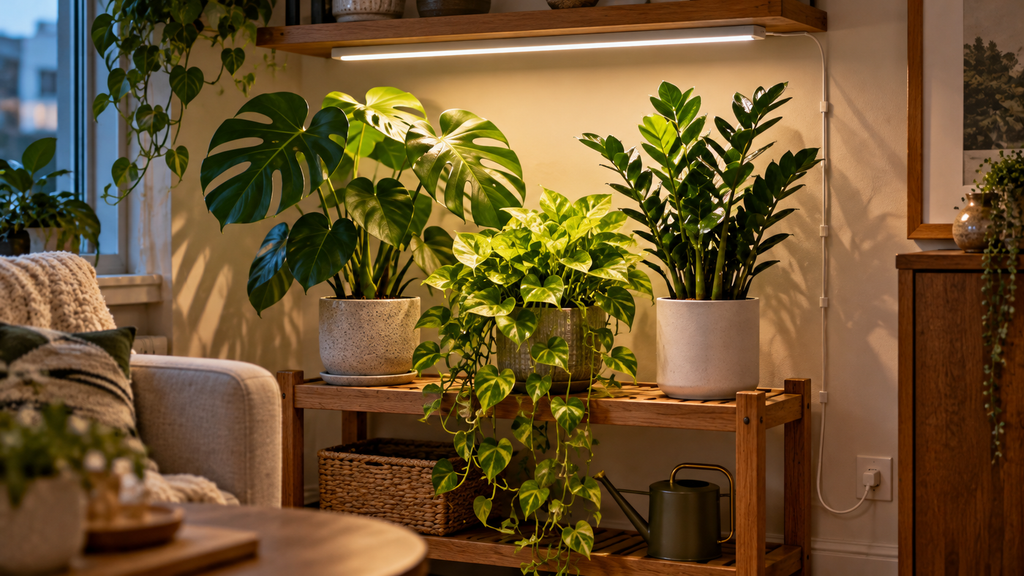
When natural light is inadequate, a properly chosen grow light can support live plants. Ordinary room lighting may look bright but deliver insufficient intensity at leaf level.
Choose an LED fixture based on its coverage, output, and manufacturer guidance. Position it so light reaches the foliage rather than simply illuminating the pot. Follow specified mounting distances and ensure taller plants do not block light from shorter ones.
For many indoor foliage plants, 12–14 hours of suitable artificial light daily is a reasonable starting point. Use a timer and provide regular darkness. Iowa State University Extension explains that light intensity, duration, and distance must work together; extra hours cannot always compensate for a weak lamp.
Monitor growth for several weeks. Stretched stems and weak leaves can signal insufficient light, while pale or scorched foliage may signal excess exposure or heat. Secure electrical cords and keep plugs away from watering spills. Mirrors do not replace grow lights.
How Do You Make a Plant Corner Pet-Safer?
Start with correctly identified species. Choose non-toxic options when pets can reach plants rather than assuming a raised shelf will always keep foliage safe. Spider plants, parlor palms, cast iron plants, and baby rubber plants are ASPCA-listed non-toxic choices for cats and dogs.
Keep heavy pots stable, secure tall furniture against tipping, and prevent access to fertilizers or pest-control products. Trailing vines can fall within reach even when the pot is mounted high. Non-toxic does not mean edible; chewing plant material can still cause an upset stomach.
If an animal eats a potentially toxic plant, contact a veterinarian or animal poison-control service promptly. Verify botanical identities.
How Do You Protect Floors and Furniture?
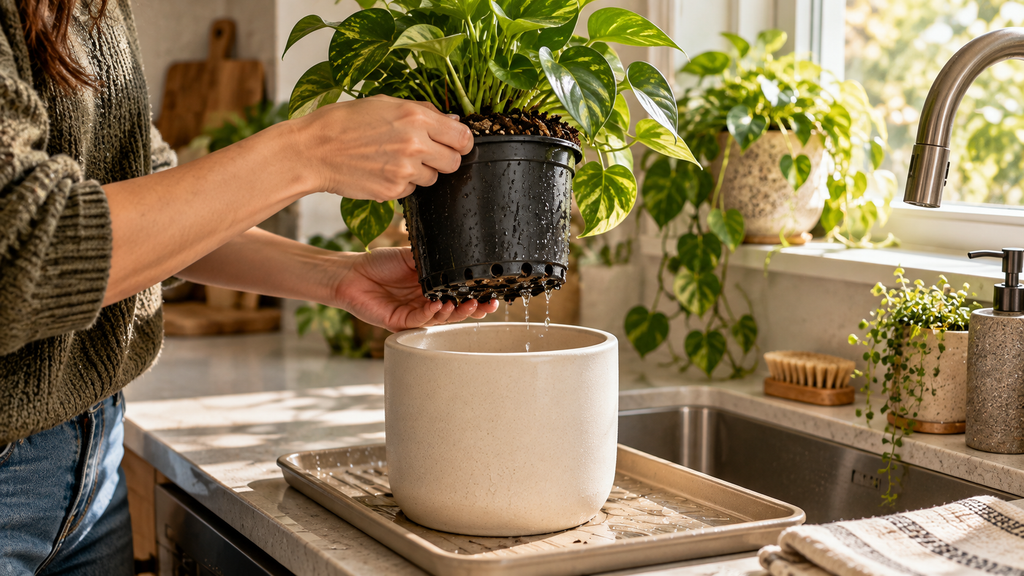
Most conventional houseplants benefit from containers that let excess water drain freely. Use a nursery pot with drainage holes inside a decorative cachepot, or place a waterproof saucer beneath a suitable pot. Empty collected water rather than allowing roots to remain submerged.
Protect wooden stools, cabinets, and floors with moisture-resistant barriers. When possible, move small plants to a sink for watering, let them drain, and return them afterward. Inspect beneath large containers for trapped moisture or marks.
A cachepot without drainage is not automatically suitable for direct planting. Penn State Extension recommends drainage holes, trays, and removal of excess water. Keep watering areas away from electrical fixtures and outlets.
Can You Create an Outdoor Plant Corner?
Yes. A balcony, patio, porch, or terrace can support a container cluster, tiered stand, trellis, herb arrangement, or seating area framed by foliage. Outdoor plant corner ideas require more attention to wind, rainfall, sun exposure, and seasonal temperatures than indoor layouts.
Choose species suited to your local climate, then match their mature size and root space to containers. On exposed balconies, lightweight tall stands can tip, while dark pots in intense sun may heat quickly. Check drainage after heavy rain and avoid leaving excess water against building surfaces.
Use this selection order: function → local climate → sun and wind → mature size → container → local restrictions. A plant thriving on a sheltered porch may fail on a windy rooftop. Ask local horticultural services when uncertain.
Why Is Your Plant Corner Struggling?
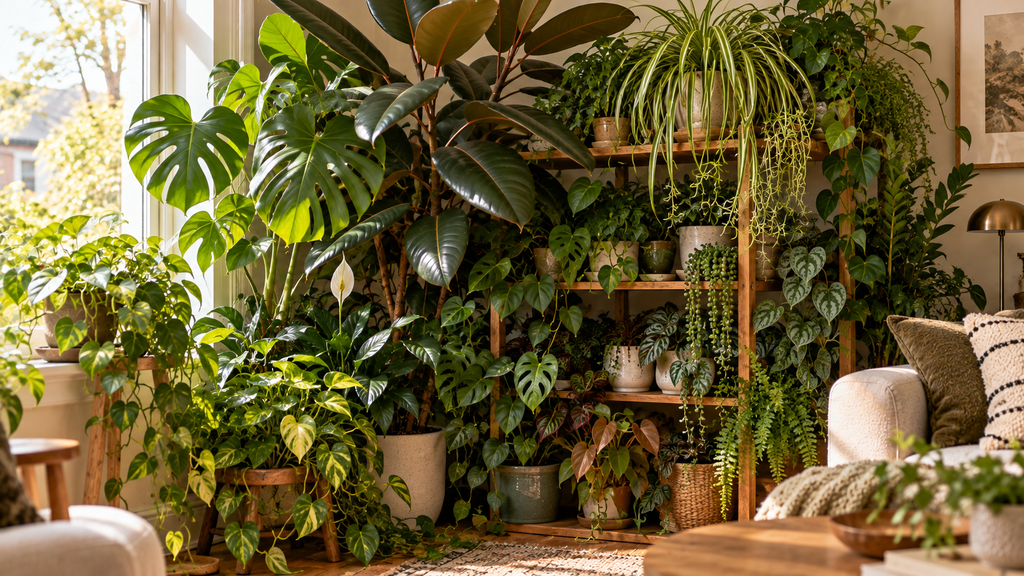
Diagnose the environment before adding fertilizer or replacing plants. Problems can arise from light, water, shading, poor access, or plants outgrowing their positions.
| Symptom | Check first | Sensible response |
|---|---|---|
| Plant leans strongly toward window | Light direction | Improve placement and rotate when appropriate |
| Stretched new growth | Light intensity | Increase suitable light |
| Lower leaves weaken | Mutual shading | Rearrange heights |
| Soil stays wet too long | Drainage, light, watering | Inspect roots and revise care |
| Leaf tips touch furniture | Mature spread | Move or reduce crowding |
| Watermarks appear | Overflowing saucer | Improve surface protection |
| Back plants are neglected | Poor access | Simplify the arrangement |
Symptoms are clues, not diagnoses. Check the plant’s specific needs and root condition before acting. For watering guidance, see how to water indoor plants properly.
How Do You Maintain a Plant Corner?
Treat each container as an individual plant, not part of one uniform watering schedule. Pot material, root size, species, temperature, and light all influence drying speed. Check the potting mix before watering and empty saucers after drainage.
During routine care, inspect leaf undersides and stems for pests, remove dead foliage, clean dust when appropriate, and confirm that vines or expanding canopies are not shading neighbors. Plants placed tightly together can conceal early pest problems, so allow room to inspect both sides of foliage. Shift plants gradually when seasons change rather than moving sensitive foliage suddenly into strong sun.
Revisit the Growth Envelope Test every few months. Repot when the plant and roots need it, not merely because a larger decorative container looks better. Simplify inaccessible arrangements.
What Are Common Plant Corner Questions?
How do you create a plant corner at home?
Choose a location with usable light and enough space for mature foliage. Arrange one anchor plant with optional smaller plants at different heights while maintaining watering access.
Which corner of a room is best for plants?
The best corner has sufficient light for the chosen species and does not block furniture or walking routes. Actual light at leaf level matters more than compass direction alone.
What plants work in a low-light corner?
Snake plants, ZZ plants, and cast iron plants can tolerate relatively low indoor light. They still need usable illumination and may grow slowly in shaded conditions.
Can plants survive in a corner without windows?
Yes, when an appropriately sized grow light supplies adequate illumination. Ordinary decorative lighting may not provide the intensity or duration houseplants need.
How many plants should a corner have?
One statement plant may be sufficient; three can provide varied heights. Choose the number according to mature foliage spread, light availability, and maintenance access.
What can replace a plant stand?
Use a stable stool, side table, bench, or suitable shelf. Check the weight of fully watered pots and protect surfaces from drainage.
How do you make a small plant corner look bigger?
Use slim upright foliage, elevate one compact plant, and leave visible floor and wall space. Avoid deep shelves or oversized containers that crowd walkways.
Which corner plants are safer for pets?
The ASPCA lists spider plants, parlor palms, cast iron plants, and baby rubber plants as non-toxic to cats and dogs. Verify the species and prevent chewing or tipping.
When does a plant corner need a grow light?
Consider one when available daylight is inadequate or plants repeatedly show weak, stretched growth. Choose a fixture and schedule suitable for the species rather than using light as decoration.
Why do plants struggle on lower shelves?
Upper plants and furniture can reduce the light reaching lower tiers. Check that each shelf receives suitable illumination and that its containers drain and remain accessible.
What Makes a Plant Corner Work Long Term?
The strongest plant corner ideas fit the environment and the household. Start with the Plantsaholic 4L Corner Method: Light determines which plants can grow; Layout determines what fits; Layers create visual balance; Lifestyle determines whether the display stays manageable.
Choose a suitable location, plan for mature foliage, protect surfaces, and leave room for routine care. A small arrangement that remains healthy and accessible is more successful than a crowded corner built only for its first photograph.
Myra is the founder and lead writer of Plantsaholic. She shares practical, research-backed advice on indoor plants, outdoor gardening, flowers, herbs, succulents, and everyday plant care. Her goal is to help gardeners of all experience levels grow healthier plants through simple, easy-to-follow gardening guides.