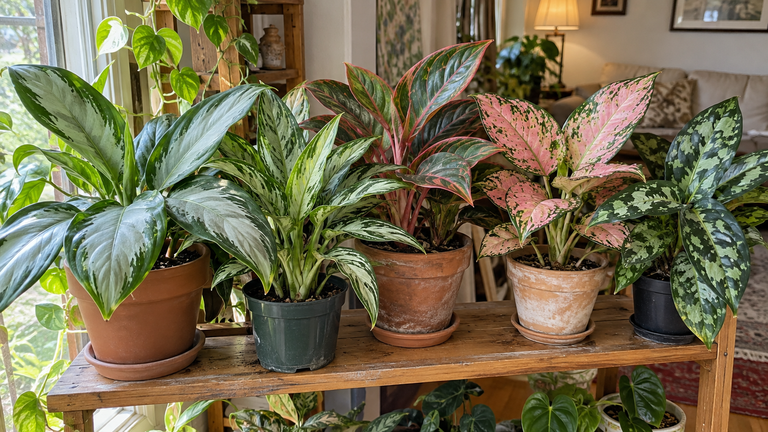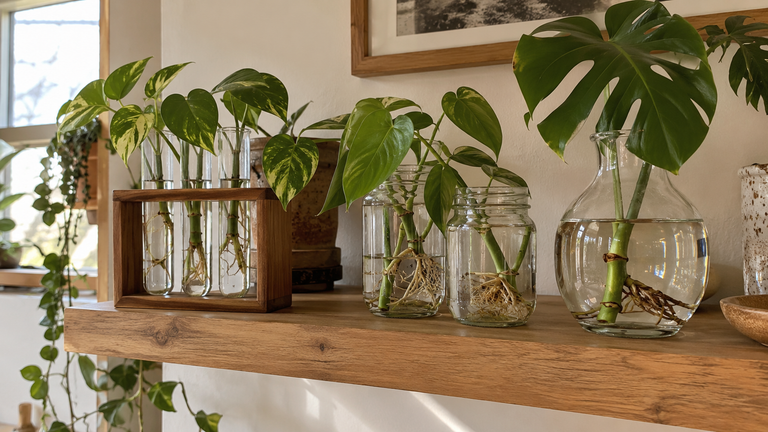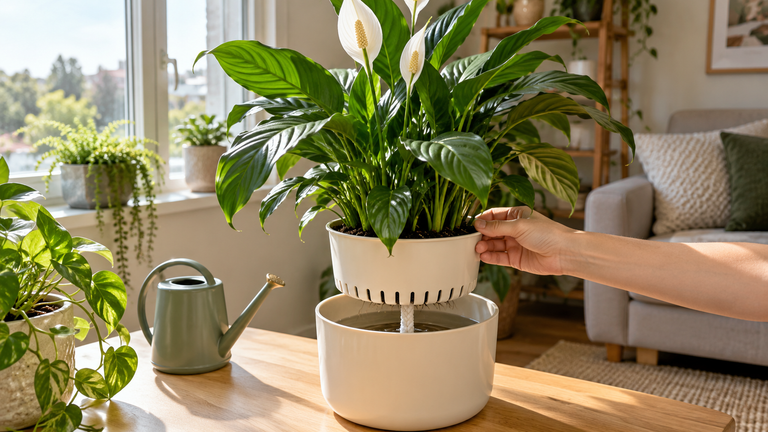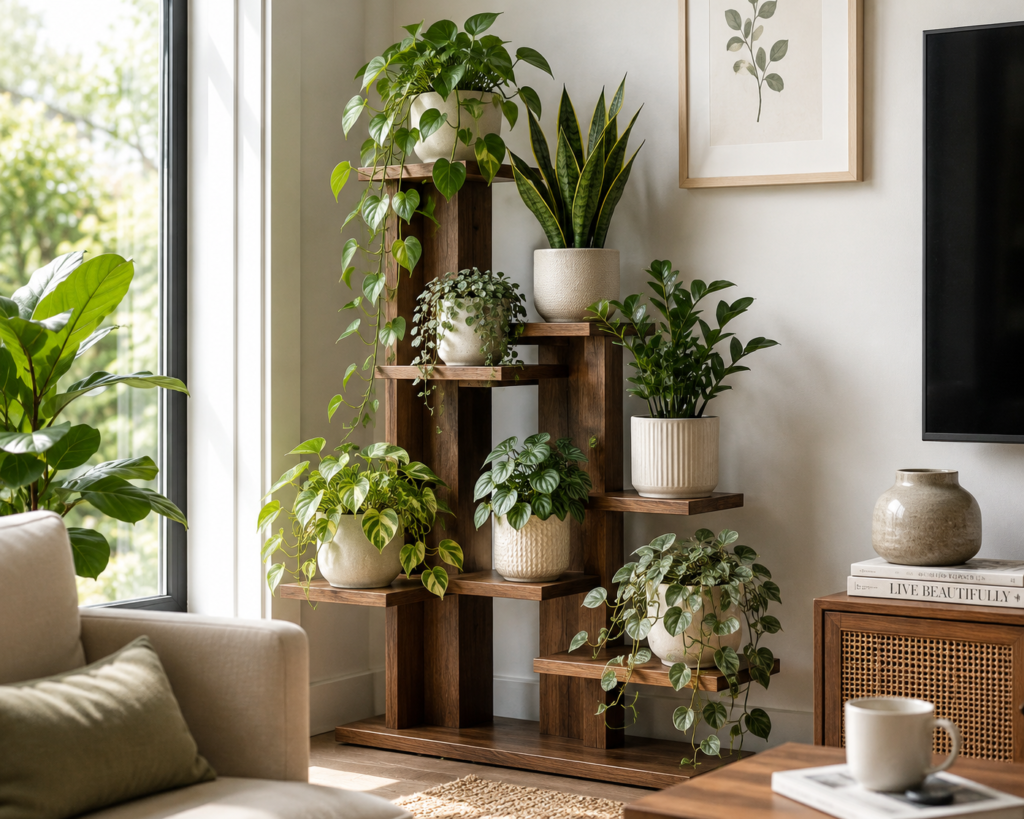
Indoor plant shelf ideas work best when they balance style with plant care. A good shelf should help your plants get enough light, airflow, drainage, and room to grow. It should also make watering, pruning, rotating, and pest checks easier.
Use window shelves for bright rooms, grow-light shelves for darker homes, ladder shelves for renters, floating shelves for small trailing plants, and tiered shelves for mixed houseplant collections. The best setup depends on your room, your light, and the plants you want to display.
For plantsaholic readers, the goal is simple: build an indoor plant shelf that looks good, keeps plants healthy, and fits your daily routine.
What Is an Indoor Plant Shelf?
An indoor plant shelf is a freestanding, wall-mounted, window, or tiered shelf used to display houseplants while organizing them by light, size, watering needs, and room placement.
A strong plant shelf works like a small indoor growing zone. It helps you place trailing plants high, compact plants at eye level, and heavier upright plants lower for balance. It also keeps plant care more organized.
Common indoor plant shelf types include:
- Tiered plant stands
- Ladder shelves
- Floating shelves
- Window shelves
- Corner shelves
- Bookcase displays
- Rolling carts
- Metal racks with grow lights
Use an indoor plant shelf when you want to save floor space, display several plants in one area, protect furniture with trays, or create a cleaner plant care system.
Best Indoor Plant Shelf Ideas
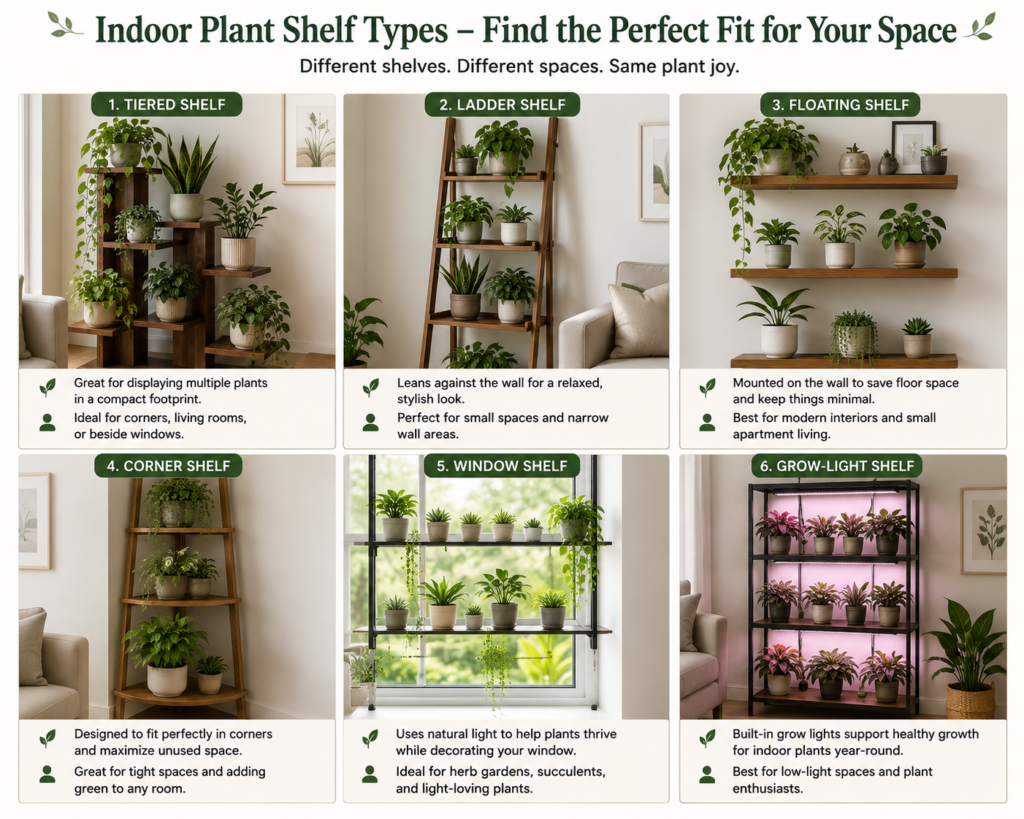
The best indoor plant shelf idea depends on your space and light. A tiered shelf is the most flexible choice because it gives several levels for different plant sizes. A window shelf works well for plants that need stronger natural light. A grow-light shelf is best for darker homes, offices, apartments, and winter care.
Best indoor plant shelf ideas include:
- Tiered shelf: Best overall for mixed houseplants.
- Window shelf: Best for herbs, hoyas, succulents, and bright rooms.
- Ladder shelf: Best for renters and beginners.
- Floating shelf: Best for small lightweight trailing plants.
- Corner shelf: Best for unused corners and small apartments.
- Grow-light shelf: Best for low-light rooms.
- Bookcase display: Best for mixing plants with decor.
- Rolling cart: Best for herbs, propagation, and flexible setups.
Choose a tiered shelf for the safest all-purpose option. Choose a grow-light shelf if the room is dim. Choose a wall or corner shelf if floor space is limited.
How to Choose the Right Plant Shelf
Start with light before style. A shelf may look perfect in a dark corner, but many houseplants will not grow well there unless you choose low-light plants or add grow lights. Watch how light changes in the room during the day before choosing the final shelf location.
Next, check shelf strength, depth, and water protection. Wet soil, ceramic pots, trays, and cachepots add more weight than many people expect. A plant shelf needs more support than a normal decor shelf.
Before choosing your shelf, check:
- Light level: Is the space bright, medium, low, or dark?
- Shelf strength: Can it hold watered pots safely?
- Shelf depth: Do pots sit fully on the shelf?
- Plant habit: Will plants trail, spread, climb, or grow tall?
- Water protection: Can you add trays, saucers, or cachepots?
- Access: Can you remove plants easily for watering?
- Safety: Is the shelf stable around pets, children, and walkways?
Quick material guide:
- Wood shelves: Warm and decorative, best for living rooms and bedrooms, but need trays or liners.
- Metal shelves: Strong, easy to clean, and best for grow-light setups or larger collections.
- Bamboo shelves: Lightweight and natural-looking, best for smaller displays.
- Acrylic shelves: Best near windows because they keep the look light and allow more visual openness.
- Glass shelves: Modern, but better for small plants because weight and cleaning become issues.
Choose the location first, then the shelf, then the plants.
What Shelf Size Do You Need?
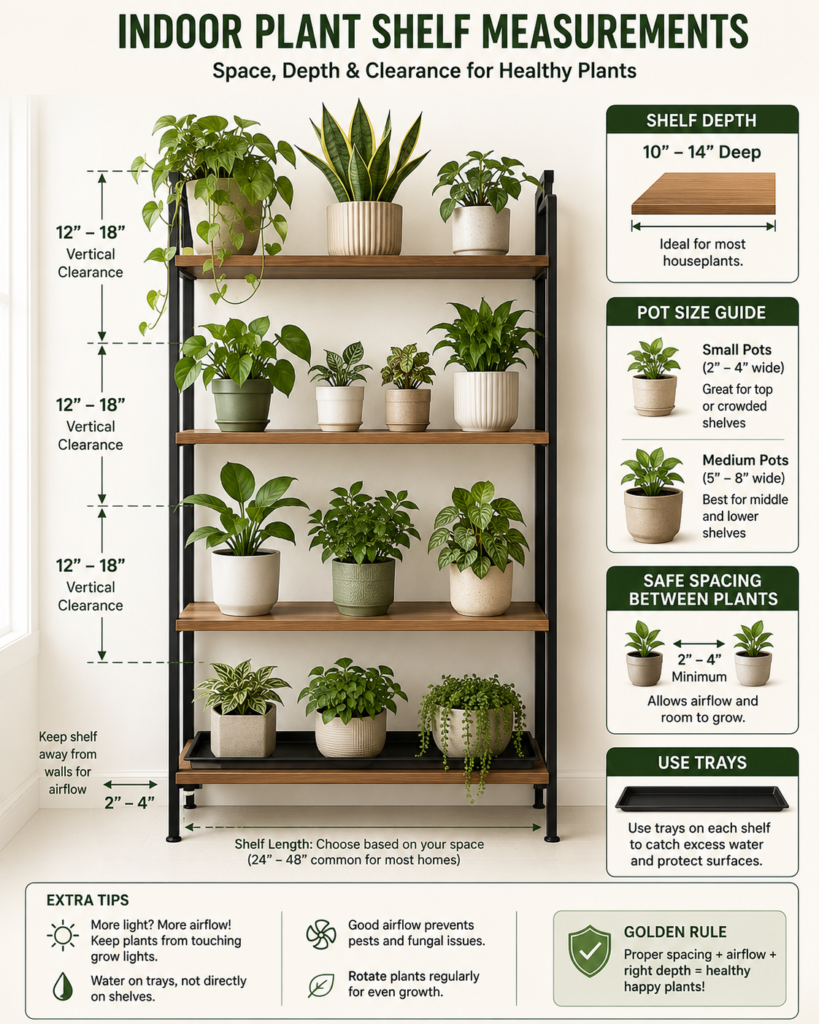
Most indoor plant shelves should be 10–14 inches deep with 12–18 inches of vertical clearance between levels. This size fits common small and medium pots while leaving room for saucers, trays, and future growth.
| Shelf Size | Best For | Avoid |
|---|---|---|
| 6–8 inches deep | Mini pots, propagation jars | Heavy pots |
| 8–10 inches deep | Small trailing plants | Large ceramic pots |
| 10–14 inches deep | Most indoor plant shelves | Overcrowding |
| 14–18 inches deep | Medium fuller plants | Weak wall shelves |
| 18+ inches deep | Large displays | Tight rooms |
A shallow shelf may look clean, but it can become unsafe if pots hang over the edge. Plan for the mature size of the plant, not just the size it is when you buy it.
Best Plant Shelf Ideas for Small Spaces
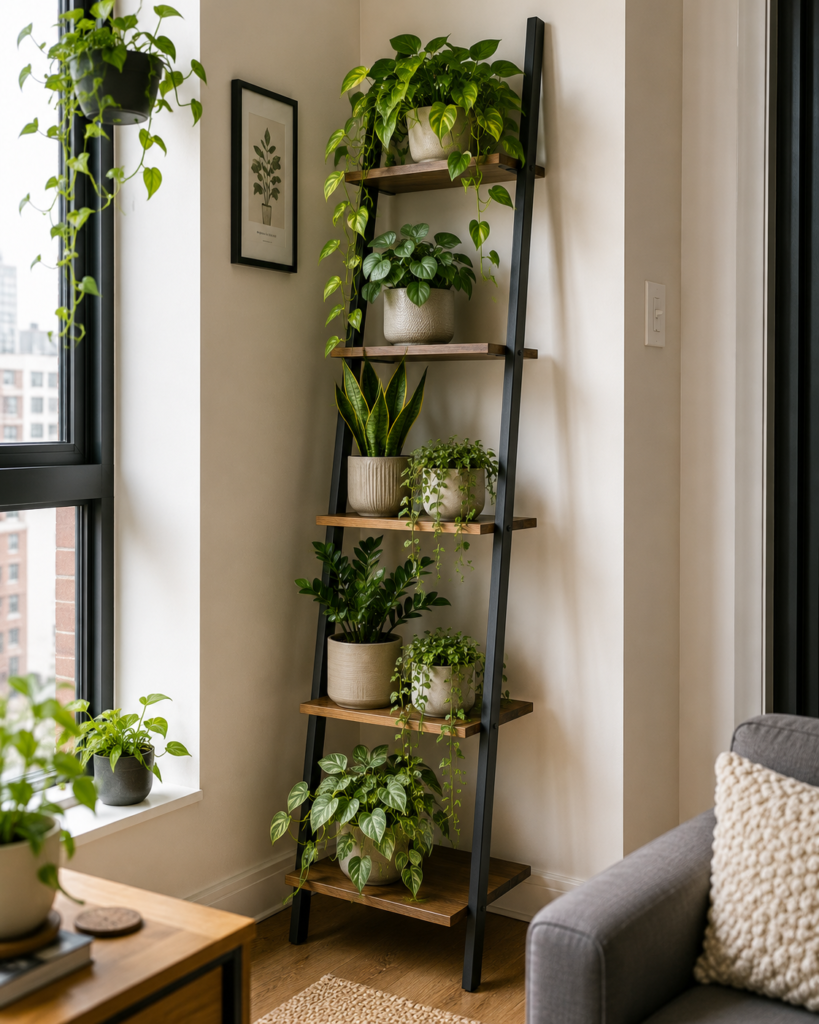
Small spaces need shelves that use vertical height instead of floor area. In apartments, studios, dorms, and narrow bedrooms, the best shelf is usually slim, tall, movable, or wall-based.
Best small-space shelf ideas:
- Narrow ladder shelf
- Corner plant shelf
- Rolling plant cart
- Window shelf
- Slim metal rack
- Floating shelf
- Hanging shelf
- Cube organizer with trays
For renters, freestanding shelves and rolling carts are usually better than permanent wall shelves. For dark apartments, use a slim metal rack with grow lights. For bright windows, use acrylic or narrow window shelves.
Avoid overcrowding. A few healthy plants with breathing room look better than too many plants fighting for light and airflow.
Are Grow-Light Plant Shelves Worth It?
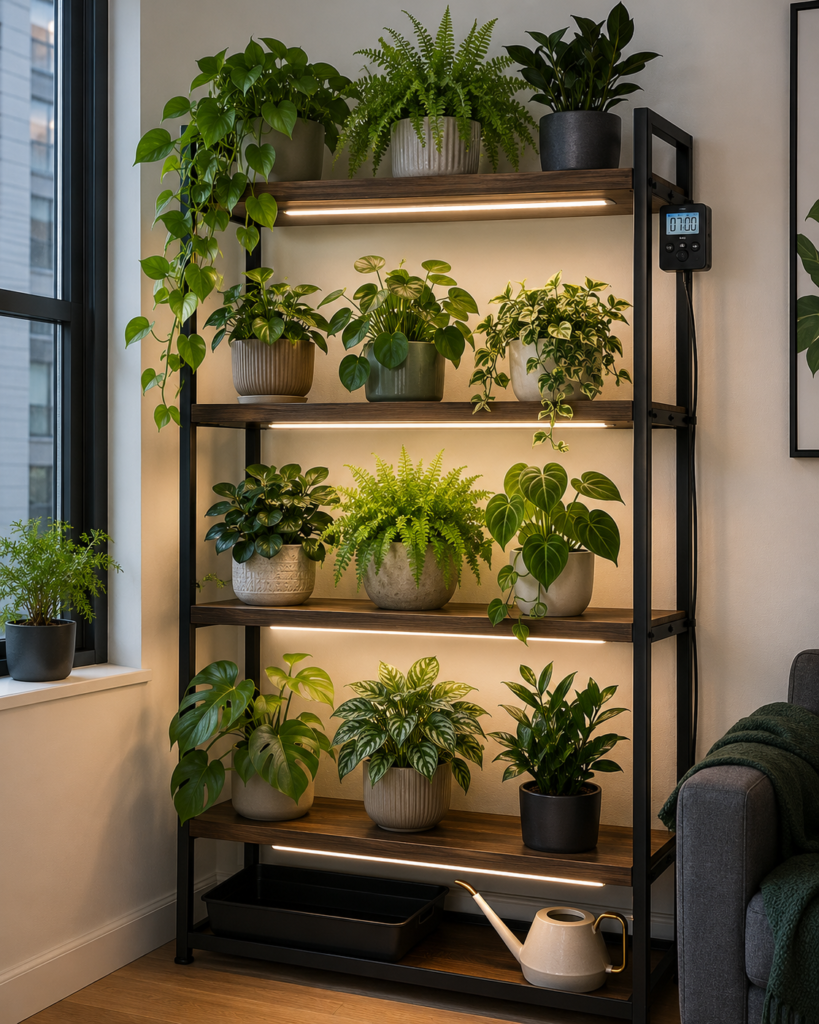
Grow-light plant shelves are worth it when your shelf is far from a window, placed in a dark room, used during winter, or located in a north-facing space. They help prevent weak, stretched, leaning growth.
Use a grow-light shelf when:
- Plants lean toward the window
- New growth is weak or stretched
- Variegated leaves lose color
- Leaves drop without a clear cause
- The shelf is far from natural light
- The room is shaded or north-facing
- You want herbs or propagation indoors
A good grow-light shelf includes LED bars, a timer, adjustable spacing, waterproof trays, and hidden cords. The goal is not to make your home look like a greenhouse. The goal is to give plants enough steady light to grow well indoors.
Best Plant Shelf by Light Level
Match the shelf to the room’s light before choosing plants.
| Light Situation | Best Shelf Idea | Best Plants | Tip |
|---|---|---|---|
| Bright east window | Window or tiered shelf | Pothos, hoya, peperomia | Rotate weekly |
| Bright south window | Filtered window shelf | Succulents, herbs, hoya | Watch for scorch |
| West window | Shelf set slightly back | Hoya, snake plant, pothos | Avoid harsh sun |
| North-facing room | Grow-light shelf | ZZ, snake plant, pothos | Add LED bars |
| Dark office | Metal rack with lights | Aglaonema, peperomia | Use timer |
| Bathroom with window | Rust-resistant shelf | Ferns, peace lily | Avoid raw wood |
Use window shelves for strong natural light, grow-light shelves for dim rooms, and low-light plants only where some usable light still exists.
Best Plants for Indoor Shelves
The best shelf plants are compact, trailing, slow-growing, or easy-care plants. Choose plants based on shelf light, size, watering needs, and mature growth.
Best trailing plants for top shelves:
- Pothos
- Heartleaf philodendron
- String of hearts
- Scindapsus pictus
- Hoya linearis
- Tradescantia
- Spider plant
Best compact plants for middle shelves:
- Peperomia
- Hoya
- Fittonia
- Pilea
- Small calathea
- Compact fern
Best sturdy plants for lower shelves:
- Snake plant
- ZZ plant
- Aglaonema
- Peace lily
- Cast iron plant
- Small dracaena
Use trailing plants high, compact plants in the middle, and heavier upright plants low.
How to Arrange Plants on a Shelf
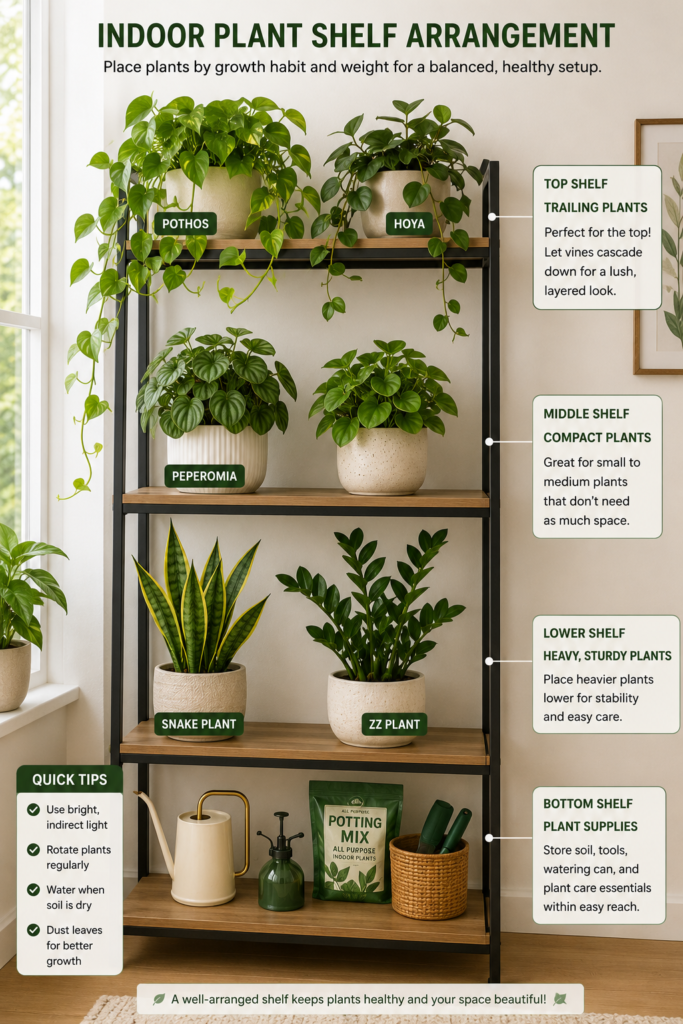
Arrange plants by light, weight, growth habit, and watering needs. A good layout should look natural but still support plant health.
Simple arrangement rules:
- Put bright-light plants closest to the window or grow light.
- Keep heavy pots on lower shelves.
- Place trailing plants on top.
- Keep compact decorative plants at eye level.
- Group plants with similar watering needs.
- Leave gaps for airflow and growth.
- Keep thirsty plants easy to reach.
Example layout:
- Top: pothos, string of hearts, small hoya
- Middle: peperomia, philodendron, pilea
- Lower: snake plant, ZZ plant, aglaonema
- Bottom: trays, watering can, pruning tools
If a plant starts stretching, leaning, or yellowing, move it. Plant health should guide the styling.
Best Plant Shelf Ideas by Room
Each room creates different growing conditions.
- Living room: Wide tiered shelf, ladder shelf, or bookcase display.
- Bedroom: Small ladder shelf or calm low-maintenance setup.
- Bathroom: Rust-resistant shelf with ferns, pothos, or peace lily if light is available.
- Kitchen: Herb shelf, rolling cart, or wall shelf near a bright window.
- Office: Compact shelf with ZZ plant, snake plant, pothos, or grow lights.
- Hallway: Narrow shelf with low-light plants and artificial lighting.
Avoid unfinished wood in bathrooms. Use washable pots and trays in kitchens. Keep bedroom shelves simple so they do not collect dust or feel crowded.
How to Prevent Water Damage
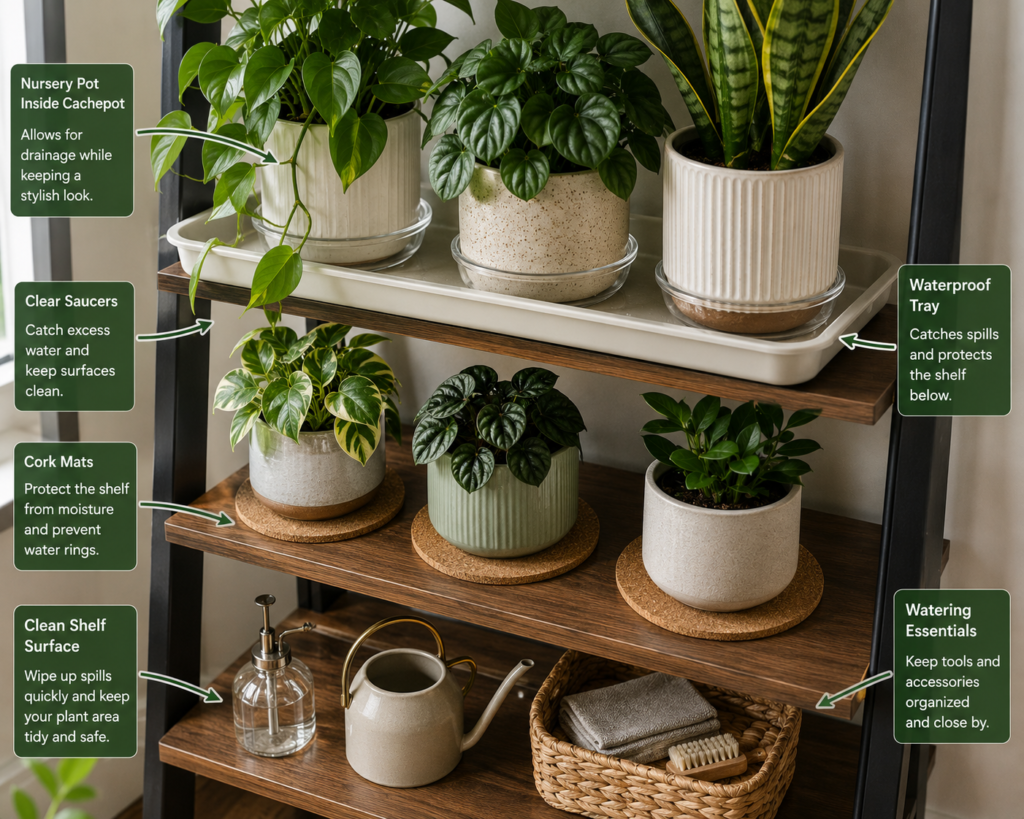
Water damage is one of the most common indoor plant shelf problems. Drips, wet saucers, and overflow can stain wood, swell particleboard, rust metal, and mark walls.
Best protection tools:
- Waterproof trays
- Saucers
- Cachepots
- Cork mats
- Silicone mats
- Acrylic liners
- Nursery pots with drainage
Safe watering routine:
- Check soil moisture.
- Remove the plant if possible.
- Water until excess drains.
- Let the pot drain fully.
- Wipe the bottom.
- Empty saucers.
- Clean spills immediately.
If the shelf is wood or bamboo, always use trays or cachepots. Decorative pots without drainage should usually act as outer pots, not direct planting pots.
Are Wall-Mounted Plant Shelves Safe?
Wall-mounted plant shelves are safe when installed correctly, kept within weight limits, and used for small or medium lightweight plants.
Wall shelves are best for:
- Small trailing plants
- Lightweight nursery pots
- Propagation jars
- Small hoyas
- Peperomia
- Air plants
Avoid wall shelves for:
- Large ceramic pots
- Heavy terracotta
- Oversized plants
- Tall unstable plants
- Plants pets or children may pull
Always check the weight rating, use proper anchors, and count the pot’s weight after watering.
Are Plant Shelves Safe for Pets and Kids?
Plant shelves can be safe when shelves are stable, heavy pots stay low, vines are kept out of reach, and plant toxicity is checked before placement.
Safety tips:
- Keep heavy pots on lower shelves.
- Keep fragile pots away from edges.
- Keep trailing vines out of reach.
- Anchor tall shelves if needed.
- Avoid glass shelves in busy areas.
- Keep tools and fertilizers away from children and pets.
- Check plant toxicity before buying.
For family homes, stable tiered shelves and corner shelves are safer than narrow unstable stands.
Which Shelf Type Is Best for You?
The best shelf type is the one that solves your biggest room problem. A renter may need a movable shelf. A dark office may need grow lights. A bright window may need a narrow acrylic shelf. A large collection may need a metal rack instead of a decorative stand.
| Situation | Best Shelf Type | Not Best For |
|---|---|---|
| Small apartment | Ladder shelf, corner shelf, rolling cart | Oversized wide shelves |
| Dark room | Grow-light shelf or metal rack | Window-only plants |
| Bright window | Acrylic window shelf or tiered shelf | Low-light plants in direct sun |
| Renter | Freestanding shelf or rolling cart | Permanent wall systems |
| Large collection | Metal rack or wide tiered shelf | Weak decorative shelves |
| Minimalist decor | Floating shelf with small plants | Heavy ceramic pots |
| Bathroom | Rust-resistant shelf | Unfinished wood |
| Beginner setup | 3-tier or 4-tier shelf | Complex wall systems |
Do not choose the shelf that only looks best in a photo. Choose the shelf that fits your light, plant size, room traffic, and care routine.
Best Plant Shelf Ideas by Budget
A good plant shelf does not need to be expensive. Stability, depth, and water protection matter more than price.
| Budget | Best Shelf Type | Best For |
|---|---|---|
| $0–$25 | Repurposed bookshelf, crates, risers | Small collections |
| $25–$75 | Rolling cart, ladder shelf, shoe rack | Beginners |
| $75–$150 | Tiered shelf, bamboo shelf, metal rack | Most homes |
| $150–$300 | Grow-light rack, large shelf | Low-light rooms |
| $300+ | Custom shelf or built-in system | Designed interiors |
For most homes, the best value is a stable tiered shelf or metal rack with trays.
Cheap DIY Plant Shelf Ideas
Cheap DIY plant shelf ideas work well when they are stable and protected from water.
Good DIY options:
- Small bookcase
- Rolling cart
- Stacked crates
- Acrylic windowsill risers
- Cube organizer
- Shoe rack
- Metal utility rack
- Pegboard with holders
- Thrifted ladder shelf
Useful upgrades:
- Waterproof liner
- Matching trays
- Clip-on grow lights
- Cable clips
- Cork or silicone mats
- Storage baskets
Always test stability before adding plants.
Plant Shelf Mistakes to Avoid
Avoid these common mistakes:
- Choosing location before checking light
- Overcrowding plants
- Putting heavy pots on upper shelves
- Using pots without drainage planning
- Letting saucers sit full of water
- Mixing plants with opposite watering needs
- Blocking airflow
- Ignoring pest checks
- Letting vines shade lower plants
- Using shallow shelves
Better habits:
- Rotate plants regularly.
- Keep heavy pots low.
- Group plants by watering needs.
- Clean trays monthly.
- Prune vines before they block light.
- Remove sick plants quickly.
If the shelf is hard to water, inspect, or clean, simplify it.
Best Plant Shelf Setup for Beginners
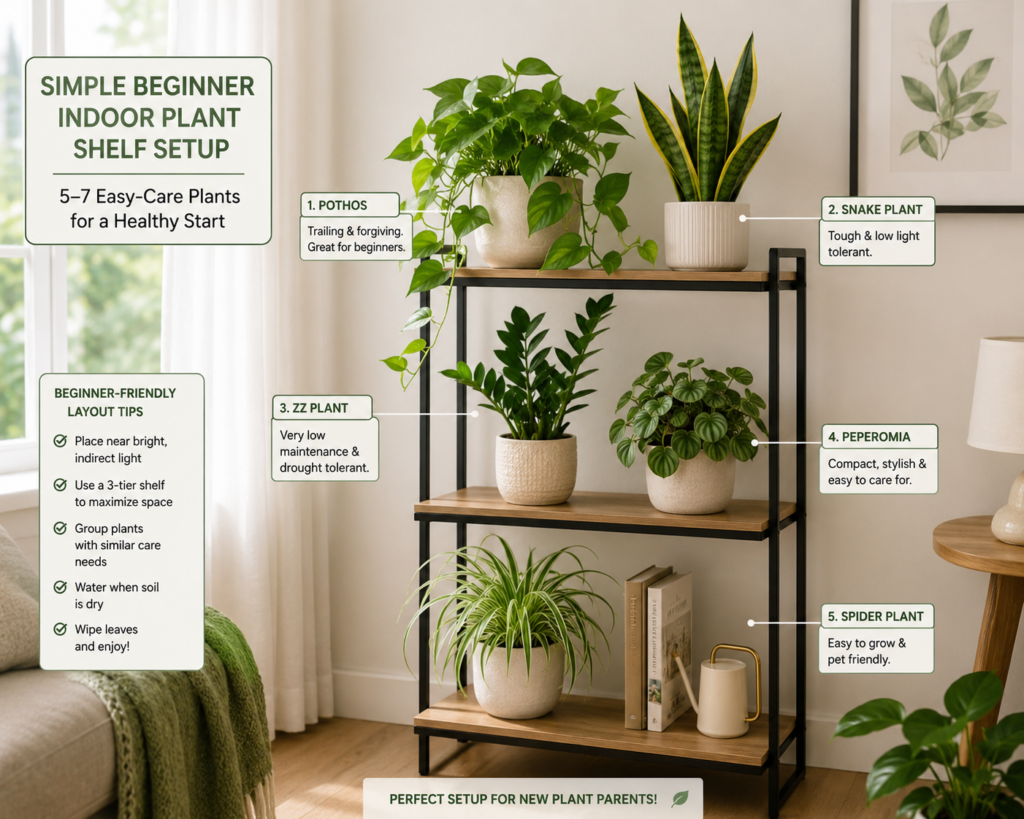
The best beginner setup is a stable 3-tier or 4-tier shelf near bright indirect light with 5–7 easy-care plants, trays, and a weekly check routine.
Best beginner plants:
- Pothos
- Heartleaf philodendron
- Snake plant
- ZZ plant
- Peperomia
- Spider plant
- Hoya
- Aglaonema
Beginner layout:
- Top: pothos and heartleaf philodendron
- Middle: peperomia, hoya, spider plant
- Lower: snake plant and ZZ plant
- Bottom: watering can, cloth, spare trays
Start small, learn your room’s light, then expand.
How Plant Shelf Types Compare
| Shelf Type | Best For | Main Advantage |
|---|---|---|
| Tiered shelf | Most homes | Flexible and balanced |
| Window shelf | Bright rooms | Strong natural light |
| Ladder shelf | Renters | Movable and stylish |
| Floating shelf | Small walls | Saves floor space |
| Corner shelf | Apartments | Uses dead space |
| Grow-light shelf | Dark rooms | Reliable light |
| Bookcase shelf | Decor displays | Blends plants with styling |
| Rolling cart | Flexible setups | Easy to move |
| Metal rack | Large collections | Strong and adjustable |
If you want one safe recommendation, choose a tiered shelf. If light is poor, choose a grow-light shelf.
Small Apartment Plant Shelf Example
A renter has a 90 cm wall beside an east-facing window. Morning light is good, but the room becomes dim later. The best setup is a narrow 4-tier metal shelf with trays and clip-on LED grow lights for the lower shelves.
Layout:
- Top: pothos and string of hearts
- Second: peperomia, hoya, philodendron
- Third: snake plant and ZZ plant
- Bottom: watering can, scissors, trays
This works because it uses vertical space, avoids drilling, keeps heavy plants low, adds light where needed, and keeps care tools nearby.
How to Style a Plant Shelf
Style should support plant health. A shelf can look beautiful and still fail if plants are crowded, shaded, or hard to water.
Good styling tips:
- Repeat pot colors.
- Mix leaf shapes.
- Vary plant height.
- Keep trailing plants high.
- Leave negative space.
- Use matching trays.
- Hide grow-light cords.
- Store tools in baskets.
Do not fill every inch. A shelf with breathing room usually looks better and stays healthier.
How to Test a Plant Shelf Setup
Before filling the shelf, test it like a real plant care station. Many shelf problems only appear after watering, moving pots, or letting plants grow for a few weeks.
Test checklist:
- Watch where light hits during the day.
- Place the heaviest watered pot on the lowest shelf.
- Press gently to check wobble.
- Add trays before adding all plants.
- Leave 2–4 inches between leafy plants.
- Make sure each plant can be removed.
- Check that vines will not shade lower plants.
- Confirm grow lights reach the intended shelves.
- Test watering one pot before watering the whole shelf.
The setup needs adjustment if pots hang over the edge, water sits on wood, the shelf wobbles, cords hang loosely, lower plants are shaded, or plants are hard to remove.
Plant Shelf Care Checklist
Weekly:
- Check soil before watering.
- Water only plants that need it.
- Rotate leaning plants.
- Empty standing water.
- Inspect for pests.
- Remove yellow leaves.
- Wipe spills.
- Check grow-light timers.
Monthly:
- Dust leaves.
- Clean trays.
- Prune vines.
- Rearrange plants as they grow.
- Check shelf stability.
- Wash cachepots.
- Isolate unhealthy plants.
Inspect weekly, then water based on soil moisture, plant type, season, and room conditions.
Final Tips for a Better Plant Shelf
The best indoor plant shelf combines style with light, drainage, safe weight placement, airflow, and a routine you can maintain.
Final rules:
- Choose light before choosing plants.
- Use tiered shelves for mixed collections.
- Use grow lights for dark rooms.
- Keep heavy pots low.
- Protect shelves with trays.
- Group plants by care needs.
- Leave room for airflow.
- Start small if you are a beginner.
A plant shelf should feel good to live with, not just good to photograph.
FAQs About Indoor Plant Shelf Ideas
What is the best shelf for indoor plants?
A stable tiered shelf is best for most homes because it offers multiple levels and works with trailing, compact, and heavier plants.
Can I use a normal bookshelf for plants?
Yes, if it is strong enough and protected with trays, saucers, or cachepots.
Do indoor plant shelves need grow lights?
Only when the shelf is far from a window, in a dark room, or used during low-light months.
What plants are best for indoor shelves?
Pothos, philodendron, hoya, peperomia, spider plant, snake plant, and ZZ plant are strong choices.
How should I arrange plants on a shelf?
Put trailing plants on top, compact plants in the middle, and heavy plants on lower shelves.
How deep should an indoor plant shelf be?
Most indoor plant shelves should be 10–14 inches deep.
Are floating shelves safe for plants?
Yes, for small lightweight plants when installed correctly and kept within weight limits.
What is the best indoor plant shelf for small apartments?
A narrow ladder shelf, corner shelf, rolling cart, or slim metal rack usually works best.
Why are plants dying on my indoor plant shelf?
Common reasons include poor light, overwatering, weak drainage, overcrowding, or mismatched plant needs.
Myra is the founder and lead writer of Plantsaholic. She shares practical, research-backed advice on indoor plants, outdoor gardening, flowers, herbs, succulents, and everyday plant care. Her goal is to help gardeners of all experience levels grow healthier plants through simple, easy-to-follow gardening guides.