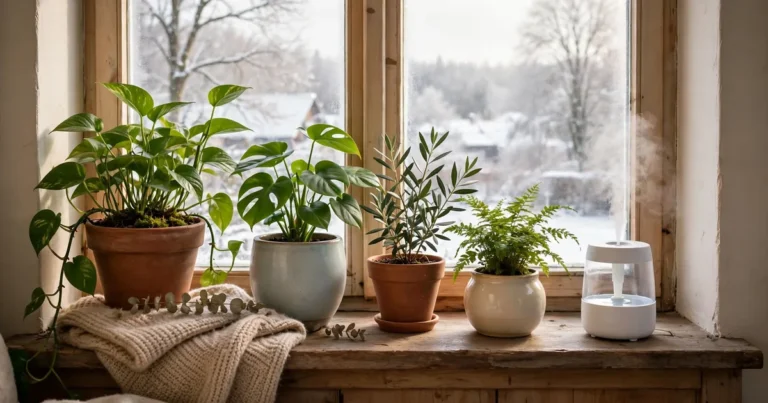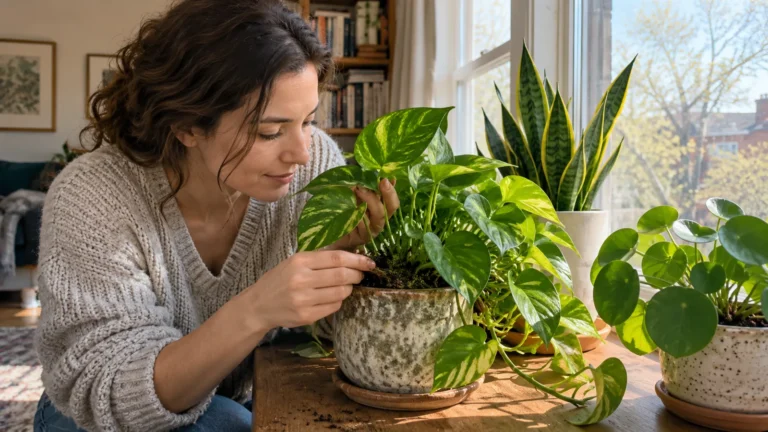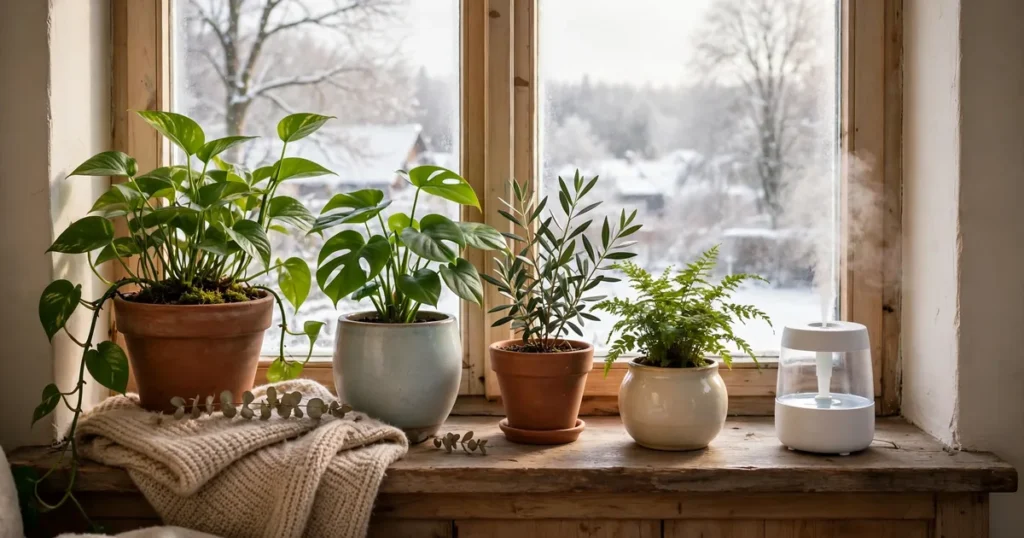
Winter changes how indoor plants live. Days get shorter, sunlight gets weaker, and heated rooms dry the air. Most houseplants grow more slowly, drink less water, and need less food. They are not failing. They are resting, and your routine should match that slower pace.
Why Winter Is Different for Indoor Plants
In summer, strong light drives fast growth. Plants use water quickly, grow new leaves, and recover easily from small mistakes. In winter, weaker light slows photosynthesis, the process plants use to turn light into energy. Growth slows down, and soil stays wet for longer.
Cold drafts, dry heating, and short days add more stress. A plant that looked full in October may drop a few leaves in December. In winter, the goal is not new growth. It is to protect roots, keep leaves healthy, and help the plant reach spring in good shape.
Give Your Plants More Light
Light is the most important winter change. A spot that was bright enough in summer may be too dark in winter. Move light-loving plants closer to your brightest window. A window with direct morning light or bright indirect light for most of the day works well. In Pakistan and South Asia, a south-facing window usually gives the best winter light.
Turn pots every week or two so all sides get light. Clean the leaves and window glass, because dust blocks light that plants cannot afford to lose. Wipe large leaves gently with a damp cloth. Keep leaves away from cold glass at night, as contact with a cold window can damage them.
If your home is dim, a simple full-spectrum LED grow light can help. Place it above the plant, not too close to the leaves. Run it for about 12 to 14 hours a day on a timer. Grow lights help herbs, succulents, and plants kept far from windows.
Water Less, and Always Check First
Overwatering is the most common winter mistake. When growth slows, roots use less water, and wet soil stays wet for much longer. Soggy roots get less oxygen, which can lead to root rot. Root rot is serious and hard to reverse.
Do not water on a fixed summer schedule. Push your finger about 2 to 3 centimetres into the soil first. Water only when it feels dry at that depth. For many houseplants, this means once every one to two weeks. Succulents, cacti, and snake plants may need water only once a month, depending on pot size and room temperature.
When you water, use room-temperature water. Water thoroughly until a little water drains from the bottom of the pot. Then empty the saucer so the plant is not sitting in water. Always use a pot with drainage holes. If the surface looks dry but deeper soil is still wet, wait a few more days.
Keep Temperatures Steady
Most common houseplants prefer daytime temperatures between 18 and 24 degrees Celsius. Tropical plants such as money plant, peace lily, and calathea dislike cold nights below about 10 degrees Celsius. They do not need frost to suffer. Repeated cold nights can damage leaves and roots.
Keep plants away from cold drafts near doors and poorly sealed windows. Also keep them away from radiators, gas heaters, and hot air vents. Sudden temperature changes stress plants and can cause leaf drop. A plant next to a heater dries out much faster, which can turn leaf edges brown and crispy.
Help With Dry Indoor Air
Heated indoor air is often much drier than plants prefer. Many houseplants, especially tropical types such as ferns, calatheas, and palms, do best at 40 to 50 percent humidity. In winter, heated homes can fall well below that level. Low humidity causes brown leaf tips, curling leaves, and slow growth.
A humidifier near your plants is the most effective solution. Grouping plants together also helps, because they release moisture into the air around each other. A pebble tray can raise humidity slightly around one plant. Place the pot on the pebbles, not in the water. Misting helps only for a few minutes, so focus on steady humidity instead.
Pause Feeding and Delay Repotting
Most houseplants are semi-dormant in winter and do not need much food. Feeding a plant that is barely growing can cause fertiliser salts to build up in the soil and burn roots. For most plants, stop feeding from late autumn until new growth appears in spring. If a plant is still growing under a grow light, a very weak feed once a month is enough.
Winter is also not the best time to repot. Roots grow slowly in cold, low-light conditions and take longer to settle into new soil. Unless a pot is broken or roots are badly rotted, wait until spring. In spring, growth returns and the plant can recover quickly.
Watch for Winter Pests
Warm, dry rooms are ideal for spider mites, and mealybugs also like indoor plants in winter. Check the undersides of leaves every week or two. Look for fine webbing, tiny moving dots, or cotton-like clusters. Check plants brought inside from outdoors carefully, because pests can spread quickly indoors. If you find pests, isolate the plant, wipe the leaves, and remove visible pests by hand. For larger problems, insecticidal soap or neem oil can help when used as directed on the label.
A Simple Weekly Winter Check
Once a week, check the soil before watering, look at the leaves for pests or dust, and turn the pots slightly. Move any plant that is too close to a heater or a cold draft.
Final Thoughts
Winter care is mostly about doing less, but doing it at the right time. Give plants more light, water only when soil is dry, keep temperatures steady, support humidity, and pause feeding until growth returns. These small, steady habits protect your plants through cold months and prepare them for healthy spring growth.