A few tiny black flies around your pots are annoying, but they are also a useful warning: the soil is staying wet for too long. Most fungus gnat problems can be fixed at home without harsh chemicals, if you treat both the flying adults and the larvae in the soil, and change the watering habit that brought them in.
What Are Fungus Gnats?
Fungus gnats are small, dark-winged flies, often compared to tiny mosquitoes. The adults are weak fliers and hover close to the soil surface, especially after watering. They do not bite people and they do not eat leaves. The damage is done by their larvae, tiny white worms with black heads that live in the top few inches of moist potting mix and feed on fungi, decaying matter, and fine root hairs. On a large, healthy plant, a small number may cause no harm, but on seedlings and cuttings they can slow growth and damage tender roots.
Why Do They Appear?
Fungus gnats appear where soil stays damp. Overwatering is the most common cause, followed by pots without drainage, heavy mix that holds water, and saucers left full after watering. Cool, low-light conditions in autumn and winter make it worse, because soil dries more slowly. They can also arrive with a new plant or a fresh bag of potting mix.
Step 1: Let the Soil Dry Out
Allow the top one to two inches of soil to dry completely between waterings. Push a finger into the mix before you water: if the top layer still feels damp, wait another day or two. Empty saucers after watering, so the plant is not sitting in water. Bottom watering can help, because it wets the lower mix while keeping the surface drier.
Step 2: Trap the Adults
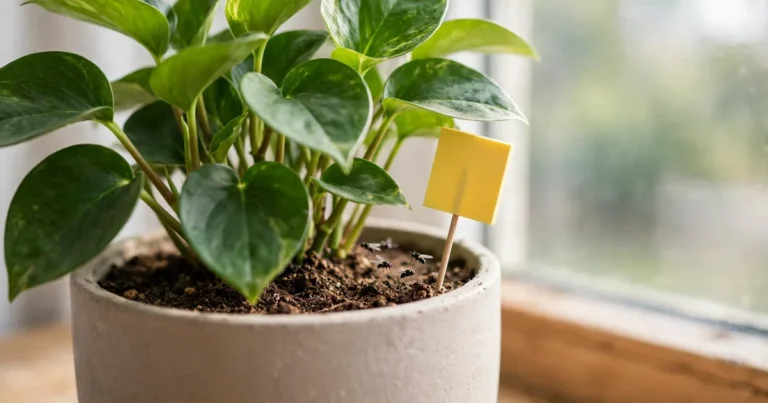
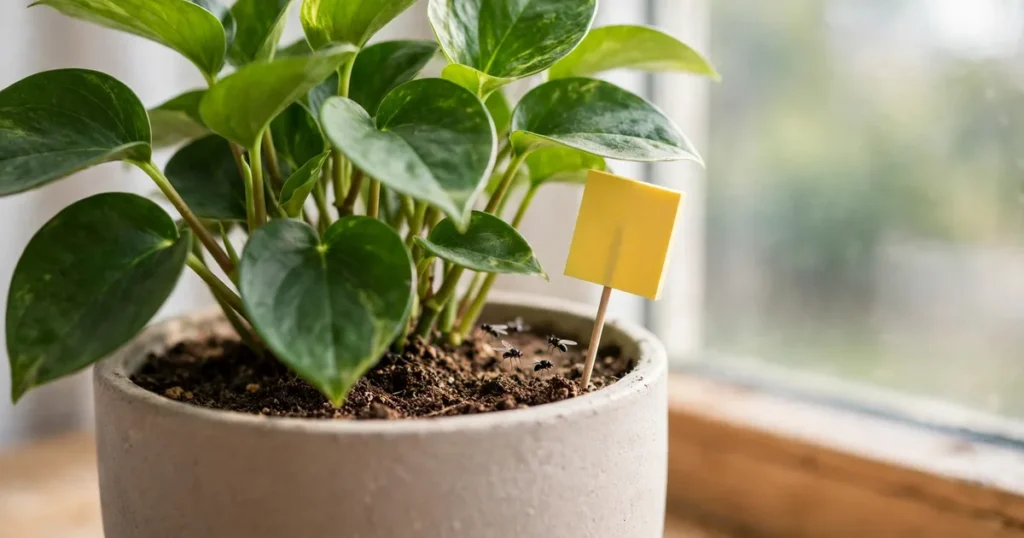
Yellow sticky traps catch flying adults and show you whether numbers are falling. Place them flat at soil level, with the yellow face just above the mix, because adults fly low and walk on the surface. One trap per small pot is usually enough, with two for a large planter. Replace traps every week. Traps alone will not end an infestation, because they do not touch eggs or larvae; their job is to stop adults laying more eggs while your soil treatment works.
Step 3: Treat the Larvae in the Soil
Larvae are the stage that matters most. Choose one main treatment and use it consistently for three to four weeks, because eggs keep hatching; the full life cycle runs about 18 to 30 days.
A Bti drench is the most targeted option. Bti (Bacillus thuringiensis israelensis) is a naturally occurring soil bacterium sold as mosquito bits or a gnat drench. When larvae eat it, it stops them developing, and it is considered safe for plants, pets, and people when used as directed. Soak the product in water as the label directs, water it into the soil, and repeat every five to seven days for three to four weeks.
A hydrogen peroxide drench is a fast, low-cost option. Mix one part standard 3% hydrogen peroxide with four parts water, and water the plant with it as normal. It fizzes on contact and kills larvae on contact, then breaks down into water and oxygen. Repeat weekly for two to three weeks, but do not use it too often, as repeated doses can disturb beneficial soil microbes.
A neem oil soil drench works more slowly. Mix it as the label directs, with a drop of mild liquid soap, and water it into the soil every seven to ten days for three to four weeks. Neem sprayed on leaves will not reach larvae in the soil. For a severe case, beneficial nematodes (Steinernema feltiae), watered into the soil, can also help.
Step 4: Block Egg-Laying and Repot if Needed
A thin layer of coarse sand, fine grit, or perlite, about half an inch deep, on the soil surface makes it harder for females to reach damp mix to lay eggs, and helps the surface dry faster. Remove dead leaves from the surface, because decaying matter feeds the fungi larvae eat. Repotting is a last step, not a first one. If the mix is old, sour-smelling, or stays wet for many days, replace the top layer with fresh, well-draining mix.
What Does Not Work Well
Apple cider vinegar traps are made for fruit flies, not fungus gnats. Fungus gnat adults are drawn to damp soil, not vinegar, so those traps catch very few of them. Cinnamon can slow fungal growth, but it works slowly and will not clear a moderate infestation on its own. Spraying the leaves also misses the problem, because the larvae live in the soil.
How Long Will It Take?
Expect three to four weeks of steady treatment before adult numbers fall to near zero. Eggs hatch within a few days, larvae feed for about two weeks, and new adults keep emerging while older ones are trapped. That is normal. Keep drying the surface, keep traps in place, and repeat the soil treatment until a full week passes with almost no new adults. If numbers are still high after a month, check every pot, including plants you thought were clear, as one damp pot can keep supplying adults to the whole room.
How to Stop Them Coming Back
Prevention is mostly watering and drainage. Use a free-draining mix, pots with drainage holes, and a routine based on soil moisture, not a fixed calendar. Water less in winter. Quarantine new plants for a week or two, and keep a yellow sticky trap in place as an early warning.
Dry the top soil, empty saucers, trap adults at soil level, treat larvae with a Bti drench every five to seven days for three to four weeks, and fix the watering habit. Then the gnats will have nowhere to breed.