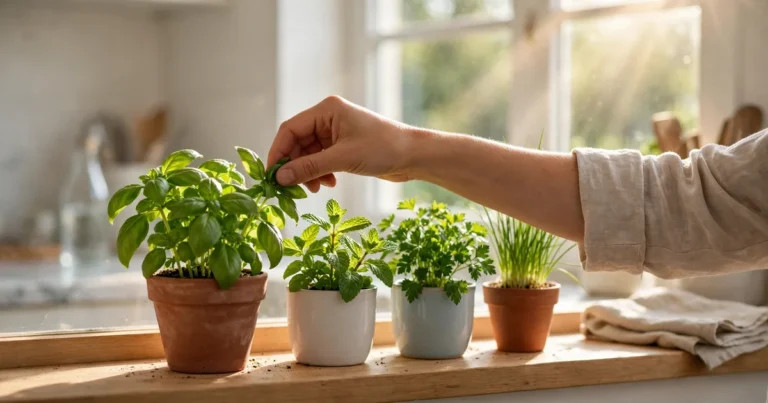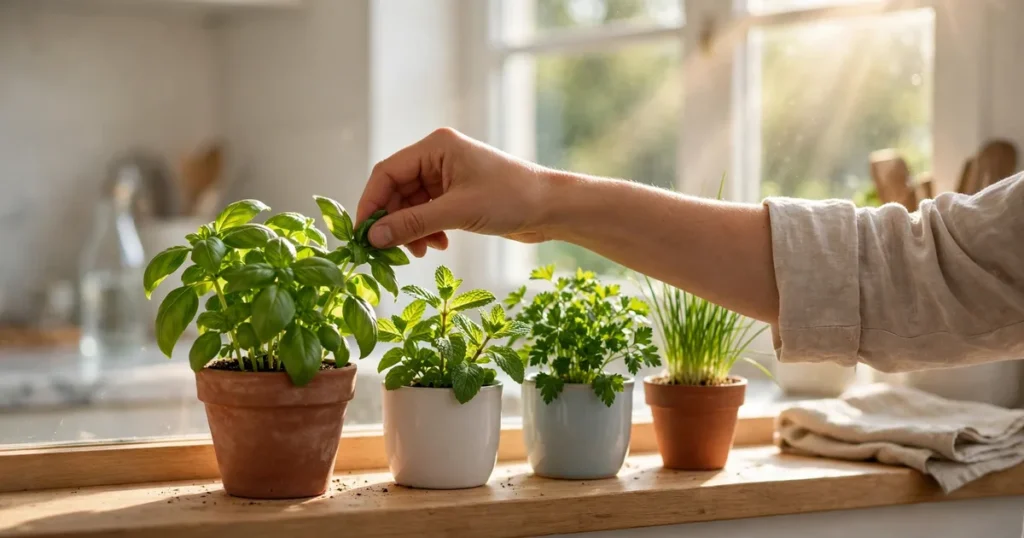
A pot of basil on the kitchen windowsill can change how you cook. You snip a few leaves for pasta, tea or soup, and the plant grows back. No garden is needed. Start small, with three to five easy herbs, strong light and pots that drain.
Start With the Easiest Herbs
Do not try ten herbs at once. Start with three to five that tolerate container life and beginner mistakes.
Basil grows fast and is very rewarding, but it needs warmth and bright light. It tells you when it is thirsty by drooping, then perks up after watering. Pinch the growing tips often to keep it bushy.
Mint is vigorous and hard to kill, but it must have its own pot. It spreads by runners and will smother anything sharing its soil. It tolerates partial shade better than basil, and likes steady moisture.
Parsley is slower to start, especially from seed, so buying a small plant is often easier. Flat-leaf parsley has the strongest flavour. It likes bright light and evenly moist soil, so harvest the outer stems first.
Chives are the toughest of the group. Snip the leaves close to the base and they regrow quickly. They tolerate cooler windowsills and less light than basil.
Thyme wants the driest, sunniest spot you have. It is slower to establish, so buy a plant rather than sowing seed, and let the soil dry more between waterings. Rosemary, oregano and cilantro are also popular, but they need more light or bolt quickly indoors, so save them for your second round.
What You Need to Start
Light is the single biggest factor. Most culinary herbs need four to six hours of direct sun a day, and basil needs six to eight. A south-facing window is ideal. East or west can work for mint and parsley, while a north-facing window will leave basil pale and leggy. Turn pots a quarter turn every few days so plants grow straight.
If your only window is dim, add a full-spectrum LED grow light for 12 to 16 hours a day, placed 6 to 12 inches above the leaves. For many kitchens, a grow light is the difference between a harvest and a decorative sprout.
Use pots 4 to 6 inches wide for a single herb, with drainage holes and a saucer underneath. Never use garden soil indoors. Use a light indoor potting mix, and add perlite for herbs like thyme that dislike wet roots.
Seed or Nursery Plant?
Both work, but they suit different beginners. A nursery plant gives you leaves to harvest within a week or two, and it is the safer choice for parsley, thyme and rosemary. Seeds are cheaper, and basil and chives germinate fairly quickly.
If you start from seed, sow thinly and thin crowded seedlings early. If you buy a supermarket pot, split it into two or three smaller pots straight away. Give each herb its own pot, because sharing means one plant is always too wet or too dry.
Watering Without Drowning Them
More indoor herbs die from overwatering than from neglect. Soggy soil starves roots of air, and the plant wilts in a way that looks like drought, so beginners water again and finish the job.
Check before you water. Push a finger about an inch into the mix. If it feels dry, water slowly from the top until a little runs out of the drainage holes, then empty the saucer after 15 to 30 minutes. If it feels damp, wait.
Group herbs by thirst. The thirsty group is basil, mint, parsley and chives: water when the top inch is dry. The dry group is thyme, rosemary and oregano: let the mix dry more, and water less often. In summer you may water every day or two. In winter, once a week or less is often enough.
Use room-temperature water. Feed lightly, with a liquid fertiliser at half strength every two to four weeks in spring and summer. Stop feeding in winter, and do not overfeed. Too much nitrogen dulls flavour.
Harvesting Keeps Plants Bushy
Regular harvesting shapes the plant and keeps it productive. Never strip a plant bare. Take no more than a third at any one time.
For basil, pinch a stem just above a pair of leaves. Two new stems will grow from that point. Remove flower buds as soon as they appear, because once basil flowers, the leaves turn bitter. For parsley, cut outer stems at the base and leave the centre to keep growing. For mint, pinch the tips to keep it compact. For chives, snip leaves about 2 cm above the soil. For thyme, cut soft new growth with sharp scissors.
Harvest in the morning, when leaves hold the most flavour, and use clean scissors.
Common Beginner Mistakes
Leggy, pale stems usually mean too little light. Move the plant to a brighter window or add a grow light, and pinch the tips to encourage branching.
Yellow leaves often mean wet soil or cold air. Check drainage, empty the saucer, and move the pot away from cold glass and radiators.
Herbs that bolt, or rush to flower, are usually too hot or too dry. Cilantro is the classic example. Harvest often, keep the soil evenly moist, and give it a little shade from the hottest afternoon sun.
Pests are usually mild indoors. Aphids can be rubbed off, and fungus gnats usually signal soil that is too wet. If a plant becomes tired, cut it back hard and move it to better light.
Start with basil, mint and parsley, and add more herbs once the first three are thriving. A sunny sill, pots that drain, and steady care are enough.