
Best Indoor Plants for Living Room Decor That Look Expensive but Are Easy to Grow
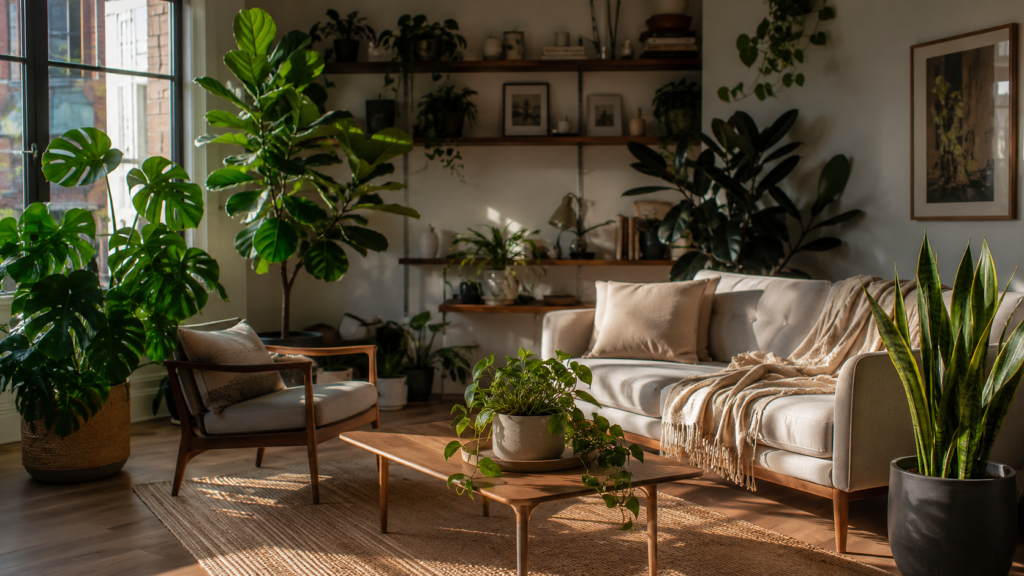
Indoor plants can completely transform a living room by adding texture, color, depth, and a more natural atmosphere. The best indoor plants for living room decor combine attractive foliage, manageable care needs, adaptability to indoor conditions, and compatibility with modern interior styles. Plants like Monstera Deliciosa, Snake Plant, ZZ Plant, and Fiddle Leaf Fig are […]
Best Place to Put Indoor Plants for Healthy Growth
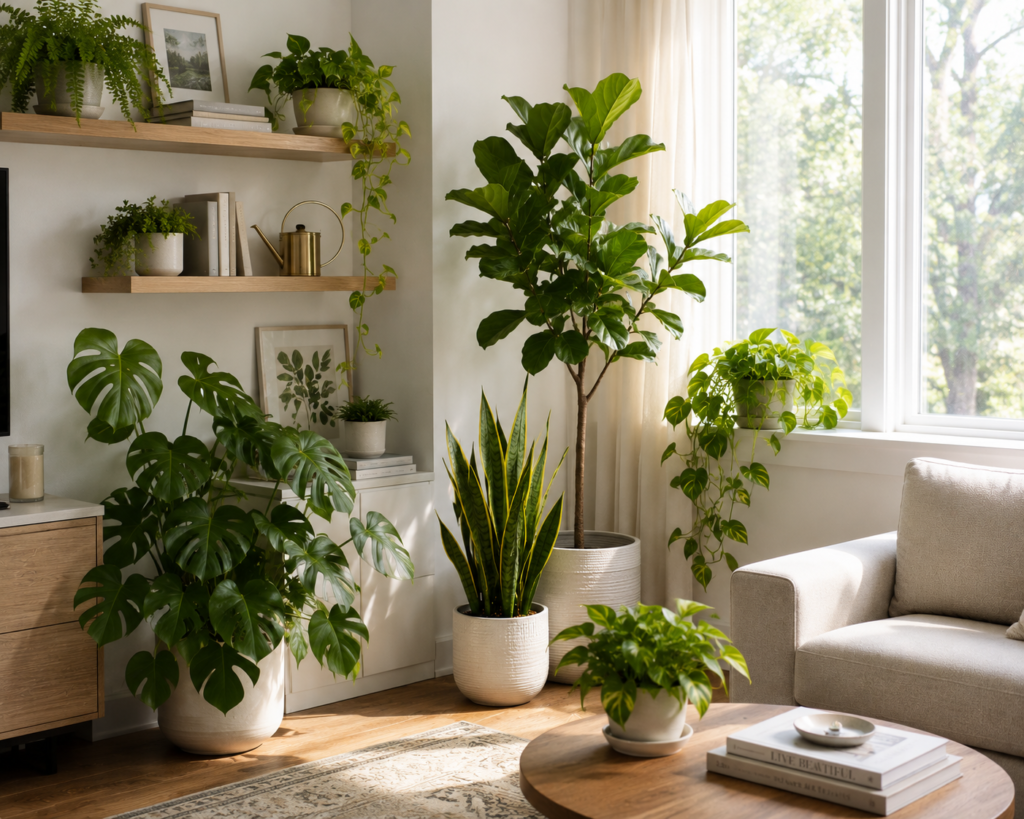
ndoor plants need more than water and soil to grow well. Their location inside your home directly affects how they absorb light, regulate moisture, build roots, and maintain healthy leaves. The best place to put indoor plants depends on matching plant biology with environmental conditions like light intensity, window direction, humidity, airflow, and stable temperatures. […]
Can Indoor Plants Survive in Low Light?
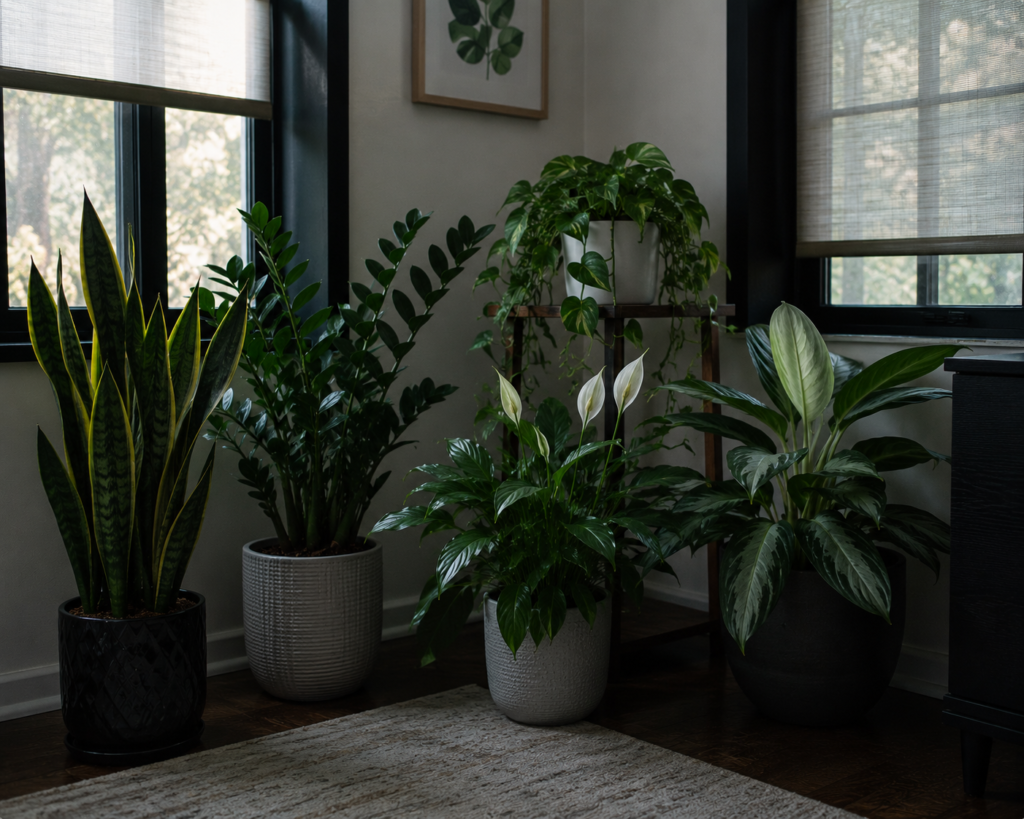
Yes, indoor plants can survive in low light, but survival and healthy growth are not the same thing. Many plant owners assume that if a plant remains green and alive, it must be doing well. In reality, plants often stay alive while operating in survival mode. Low light reduces the plant’s ability to perform Photosynthesis, […]
Best Water for Houseplants: Tap, Filtered, or Distilled?
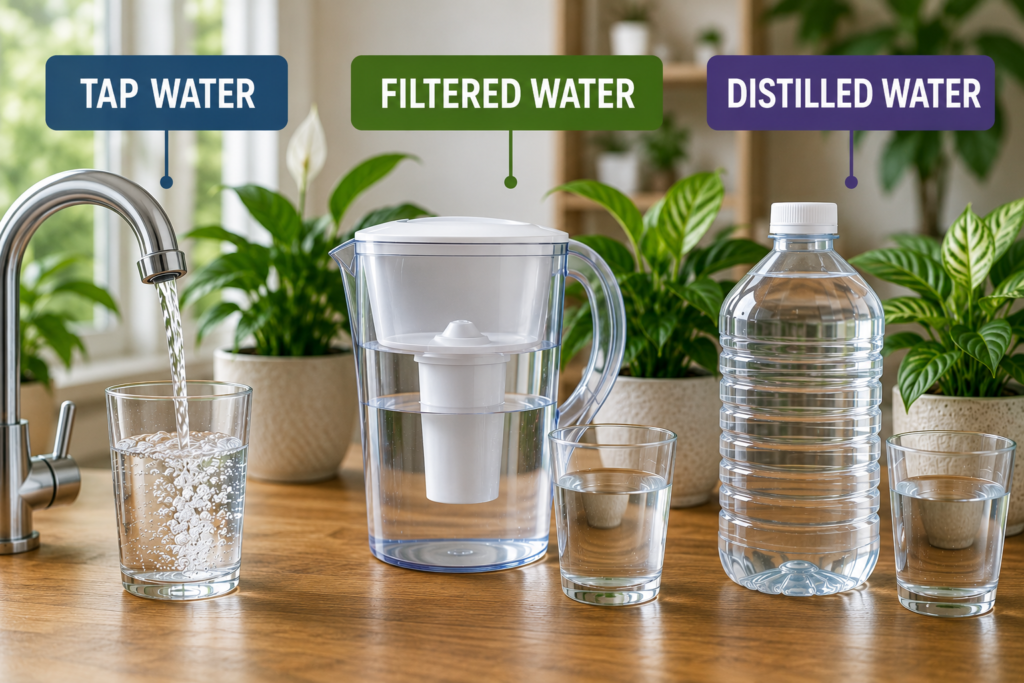
Water quality affects houseplants more than many plant owners realize. Light, soil, fertilizer, and humidity matter, but the type of water you use can quietly influence root health, leaf quality, soil buildup, and long-term growth. Tap water works for many common houseplants, but it may contain chlorine, chloramine, fluoride, calcium, magnesium, sodium, and dissolved salts. […]
Why Understanding Watering Mistakes Is the Most Important Skill in Plant Care
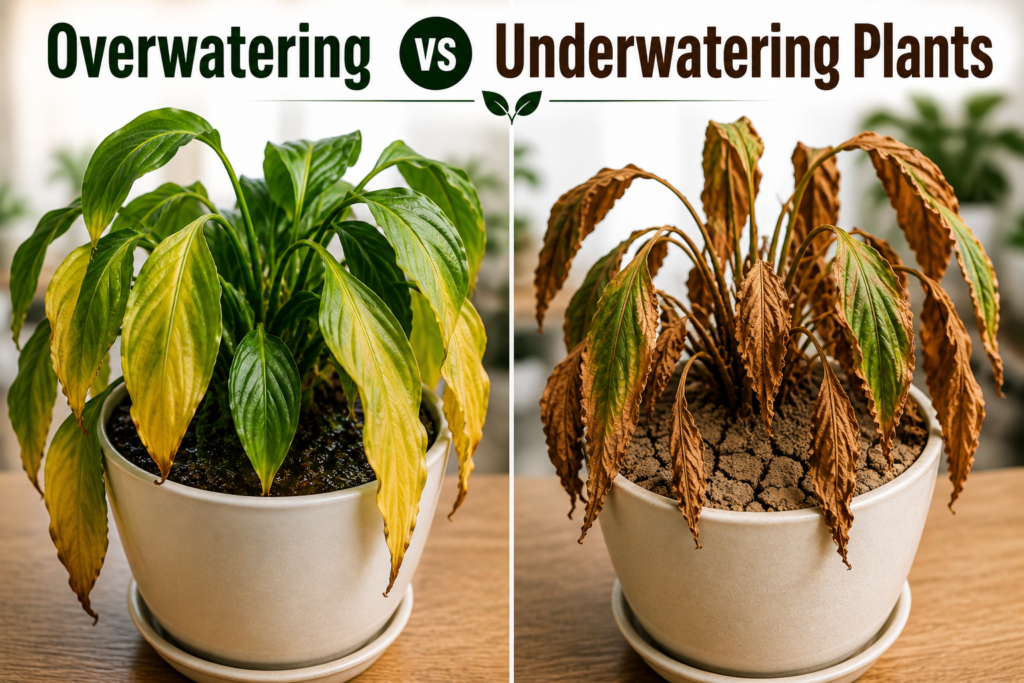
Watering is not just a routine—it is the core survival mechanism for plants, and misunderstanding it leads to the majority of plant failures. Many plant owners assume more water equals better growth, but in reality, plants depend on a precise balance between hydration and oxygen availability. When this balance is disrupted, the plant begins to show stress signals that are often misunderstood and misdiagnosed. The real danger is not just watering incorrectly—it’s reacting incorrectly to symptoms. A drooping plant might be drowning or thirsty, yet most people respond with more water. This is where most plant damage becomes irreversible. Learning to interpret plant signals accurately gives you control, not just over survival, but over thriving […]