A shaded outdoor space is not a problem to fix. It is a different kind of garden, and when it is planted well, it can look cooler, calmer and lusher than a sunny border. A north-facing balcony, a patio under a tree, or a garden beside a tall wall can all support strong growth, as long as you choose plants that actually prefer low light instead of forcing sun-lovers to survive in it.
In shade, leaves grow larger, colours look softer, and pots dry more slowly. Match each plant to the light it will really get.
What Shade Really Means
Plant labels use the word shade loosely, so check your space before you buy anything. Watch it for a day and notice when direct sun arrives, and for how long.
Deep shade means less than two hours of direct sun a day, often beside a north-facing wall or under dense evergreen cover. Partial shade means about three to six hours of sun, ideally in the morning, with shade in the hot afternoon. Dappled shade is filtered light that moves through tree leaves. It is brighter than it looks, and many plants do well in it.
Morning sun is usually gentler than afternoon sun. A plant that thrives with two hours of morning light may scorch in two hours of late-afternoon heat. If unsure, start with partial-shade plants.
Best Shade-Loving Plants for Gardens
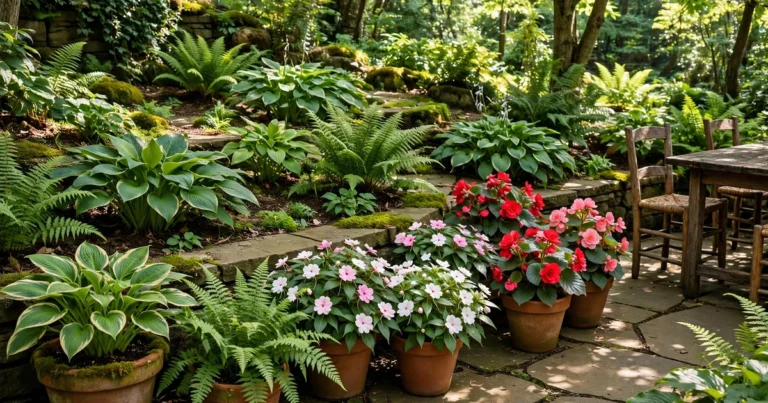
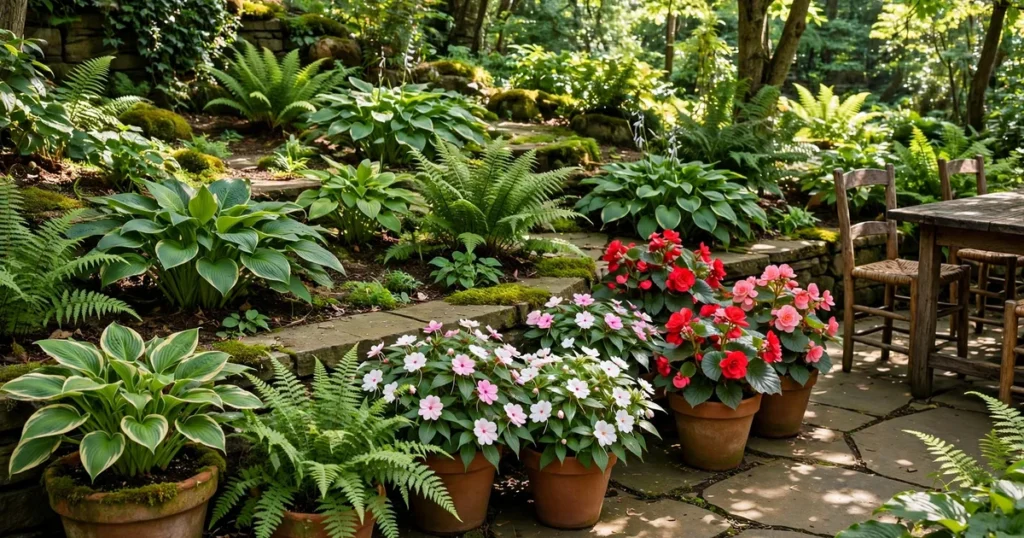
Hostas are the classic shade plant. Their broad leaves come in green, blue-green, gold and variegated forms, and they fill a border quickly. They prefer moist, rich soil and shelter from wind. Watch for slugs after rain.
Ferns add a soft, feathery texture that few other plants can match. Hardy garden ferns such as the lady fern and Japanese painted fern cope well with shade and cooler corners. They like humus-rich soil that stays lightly moist.
Astilbe brings colour to shade without needing bright sun. Its feathery plumes appear in pink, white, red and purple in summer, and its divided leaves stay attractive afterwards. Astilbe needs consistent moisture, so it suits a border that does not dry out completely.
Heuchera, often called coral bells, gives colour from leaves rather than flowers. Its foliage ranges from lime and amber to deep purple and near-black. It tolerates partial shade, needs good drainage, and is small enough to edge a path or fill gaps between larger plants.
Hydrangeas suit larger gardens with partial shade, especially where morning sun is followed by afternoon shade. They need plenty of water while they establish, and their large flower heads transform a border in summer.
Best Shade-Loving Plants for Balconies and Patios
Pots dry out faster than garden soil even in shade, so use a pot with drainage holes and check moisture with your finger before watering.
Impatiens are one of the most reliable flowering plants for shaded pots and hanging baskets. They flower for months in pink, red, white and orange, and they dislike drying out. Keep the compost evenly moist.
Begonias are another strong choice for patios. Fibrous begonias flower steadily with little fuss, while tuberous begonias give larger, showier blooms. Both prefer shelter from wind and heavy rain, which makes a covered balcony an ideal spot.
Fuchsias add an elegant, dangling shape to a shaded patio. Their two-tone flowers hang below the foliage and attract pollinators. They need regular watering in summer and a sheltered position.
Coleus and caladium are grown mainly for their leaves, and both bring bright colour to shade. Coleus comes in green, red, pink and near-black patterns, while caladium offers pale, pink and white leaves that glow in low light. Pinch coleus to keep it bushy; keep caladium warm in winter.
Planting and Care Basics for Shade
Most shade plants grow best in soil rich in organic matter, so mix compost into the planting hole and mulch to hold moisture, keeping mulch away from stems.
Water deeply rather than giving frequent light sprinkles. Deep watering encourages roots to grow downwards, while shallow watering leaves plants vulnerable in a dry spell. In shade, soil may look dry on top while still damp underneath, so check below the surface before watering again.
Feed lightly during the growing season. A balanced liquid feed every few weeks is usually enough for containers, and garden plants often need only an annual mulch of compost. Too much fertiliser in shade can produce soft, leggy growth that flops over.
Watch for slugs on soft-leaved plants and grey mould where air circulation is poor. Space plants well and remove dead leaves promptly.
Common Mistakes to Avoid
The most common mistake is planting a sun-lover in shade and hoping it will adapt. It may survive, but it will rarely flower well or look full. Another mistake is assuming shade means dry. Some shaded spots are dry under trees, where roots compete for water, while others stay wet. Check your soil, not just your light.
Avoid overcrowding on small balconies: three healthy plants in a large pot beat six struggling plants in a small one.
Choosing Plants for Your Space
For a garden border, start with structure: hostas, ferns and hydrangeas, then add astilbe and heuchera for colour. For a balcony or patio, start with impatiens, begonias or fuchsias, and add coleus or caladium for leaf colour.
If your space gets only deep shade, lean on foliage plants such as ferns, hostas and ivy. If it gets morning sun, you have more choice, and most of the flowering plants in this guide will perform well.
Once the right plants settle in, a shaded garden needs less watering and fuss than many sunny borders. Check local climate and nursery labels before planting.