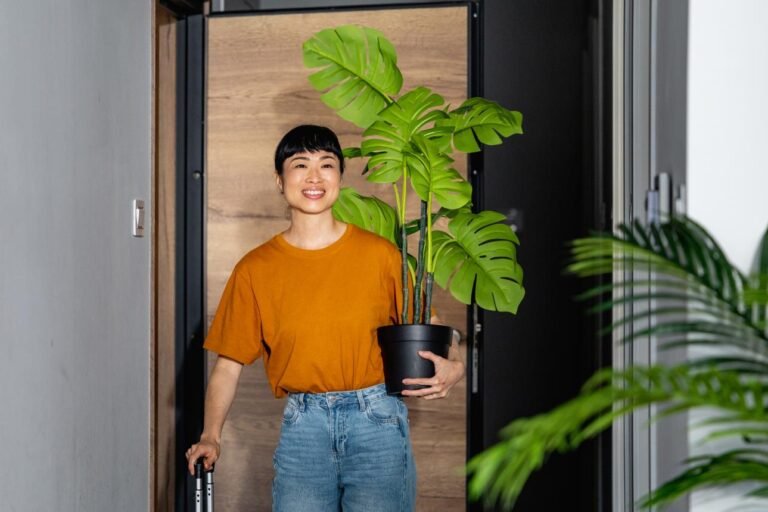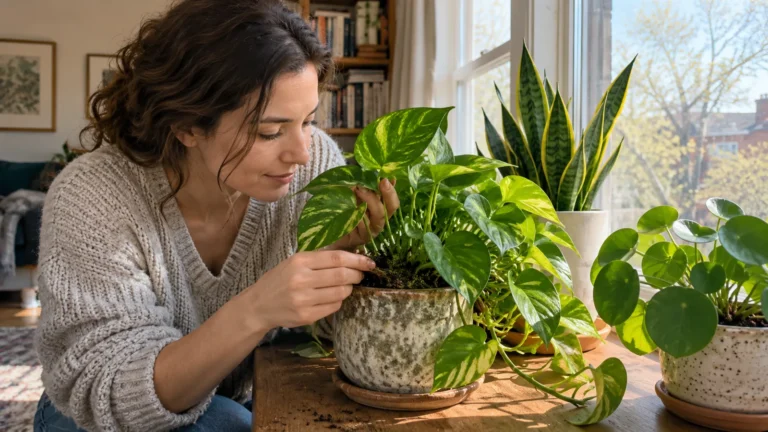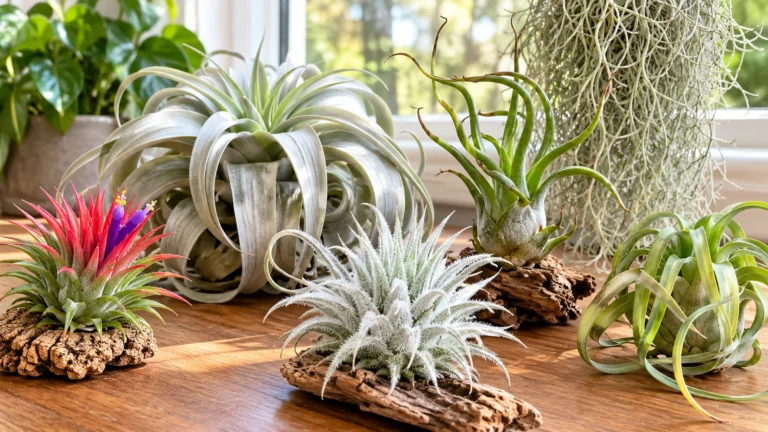
To bring outdoor plants inside safely, first decide what kind of move you are making: returning a houseplant that spent summer outdoors, overwintering a tender container plant, or digging a garden-grown plant. Then inspect for pests, clean or treat problems, acclimate the plant to lower indoor light, quarantine it, and adjust watering and care for indoor conditions.
The goal is not simply to carry a pot through the door. Outdoor and indoor environments differ in light, airflow, temperature, humidity, and how quickly soil dries. A successful move is a transition, not a one-day event.
What Type of Plant Are You Bringing Inside?
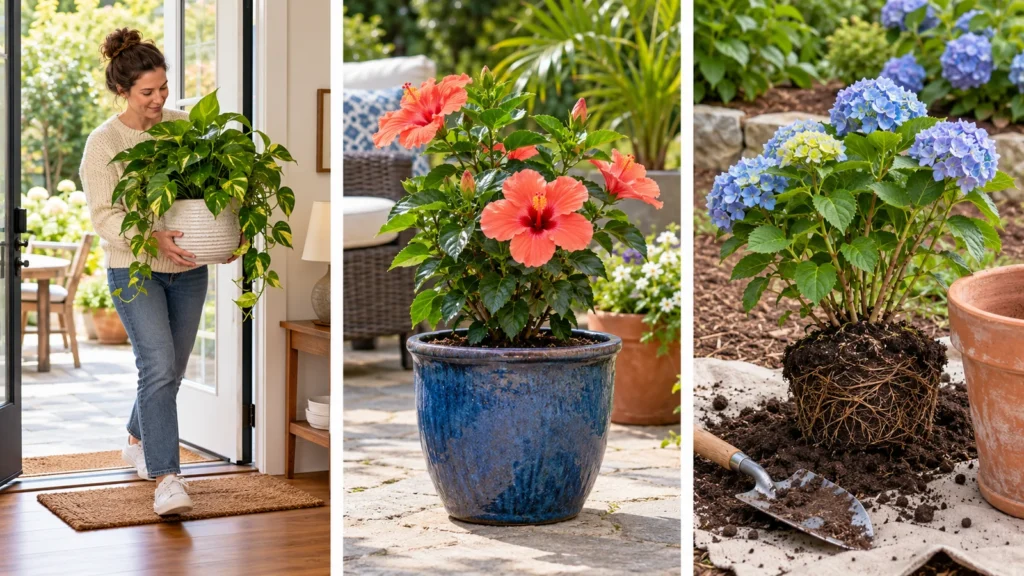
Identify the plant situation first because each move requires a different level of intervention.
A returning houseplant mainly needs inspection, cleaning, acclimation, and quarantine. A tender outdoor container plant also needs a realistic check of indoor light, space, and temperature. A garden-grown plant faces the greatest stress because it must also adapt to root disturbance and container culture.
Use this quick guide:
- Returning houseplant: focus on pests and acclimation.
- Tender potted plant: focus on indoor suitability and overwintering needs.
- Garden-grown plant: decide whether moving the whole plant is better than taking cuttings.
Making this distinction early prevents unnecessary repotting and helps you choose a realistic indoor-care plan.
Can You Bring Outdoor Plants Inside?
Yes, many outdoor plants can be brought indoors, but not every plant will function well as a houseplant.
Tropical foliage plants, tender perennials, herbs, succulents, and plants that already spend part of the year indoors are usually the best candidates. Hardy perennials or species needing intense sun or cold dormancy may be better left outside.
Before moving a plant, ask:
- Can I provide enough light indoors?
- Is there enough space for its mature size?
- Is the plant healthy enough to save?
- Can I provide the temperatures it needs?
- Does it require dormancy?
- Would taking cuttings be easier than keeping the mature plant?
The practical question is not only, “Can this plant survive indoors?” It is, “Can this plant remain reasonably healthy under the conditions I can provide?”
Should You Bring This Plant Inside?
Not every outdoor plant is worth bringing in. Before cleaning, treating, repotting, and making room for it, decide whether saving the whole plant is practical.
Bring the plant indoors when it is healthy, manageable in size, and suited to the light and temperature you can provide. A valuable tropical plant in a stable container may justify the effort. A severely infested, inexpensive plant placed beside a large collection of healthy houseplants may not.
Consider another strategy when:
- pest pressure is severe;
- indoor light will be far below the plant’s needs;
- the plant is too large for the available space;
- the species is easy to propagate;
- dormancy is a better overwintering method;
- the plant is already hardy in your climate.
The best decision combines plant biology, pest risk, available space, and your reason for saving it.
When to Bring Outdoor Plants Inside
Bring cold-sensitive plants inside before damaging cold arrives, not after the first frost.
Many tropical houseplants begin to struggle when nighttime temperatures approach roughly 40–50°F (4–10°C), although tolerance varies widely by species. For many tender tropicals, nights approaching about 50°F (10°C) are a useful signal to start preparing.
Use this order:
Plant tolerance → nighttime forecast → frost risk → move date
Starting early gives you time to inspect pests, clean pots, acclimate the plant to lower light, and prepare quarantine space instead of doing everything during an emergency cold snap.
Bring Indoors, Propagate, or Leave Outside?
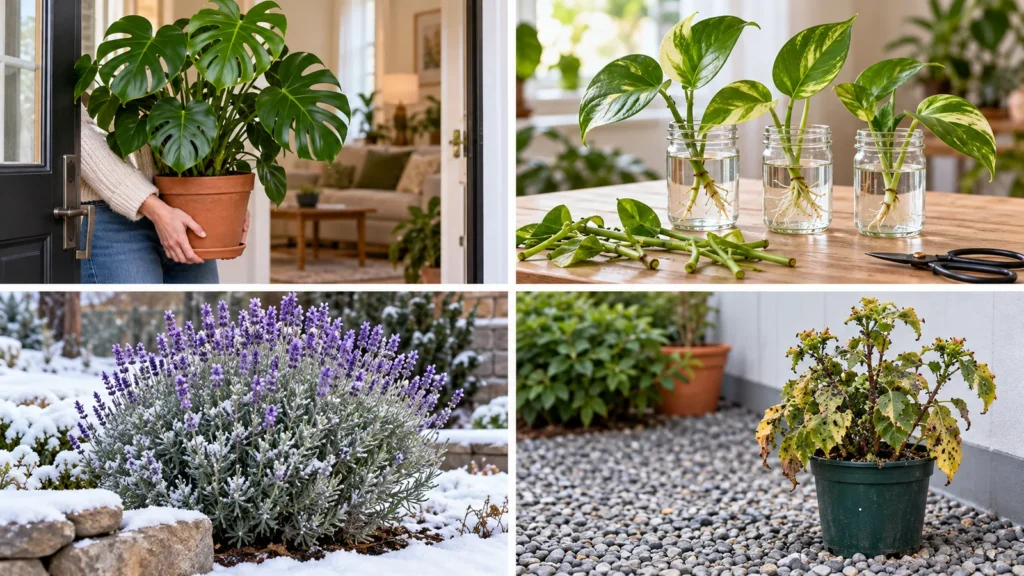
You do not always need to save the mature plant. Sometimes the best strategy is to preserve the cultivar through cuttings, allow dormancy, or leave a hardy plant outdoors.
| Plant situation | Best starting choice |
|---|---|
| Healthy houseplant returning from outdoors | Bring the whole plant inside |
| Manageable tender tropical | Overwinter indoors |
| Large plant that roots easily | Consider cuttings |
| Plant with a suitable dormancy strategy | Use species-appropriate dormancy |
| Hardy perennial | Usually leave outdoors |
| Severely infested low-value plant | Consider discarding |
| Plant requiring unavailable indoor light | Choose another strategy |
For example, a large coleus may be easier to preserve through cuttings, while a compact tropical already growing in a container may be worth bringing in intact.
How to Prepare Plants Before Bringing Them Inside
Preparation should start before the plant reaches your doorway.
Use this sequence:
- Assess the plant’s overall health.
- Remove dead or badly damaged material.
- Inspect leaves, stems, soil, and the pot for pests.
- Check drainage and the root zone.
- Clean the foliage and container.
- Treat confirmed problems when necessary.
- Begin reducing light gradually if possible.
- Prepare the indoor location and quarantine area.
Avoid stacking heavy pruning, repotting, pesticide treatment, and a dramatic environmental change unless each is necessary. If the plant is healthy and the pot is functioning well, keep the move simple.
How to Debug Plants Before Bringing Them Inside
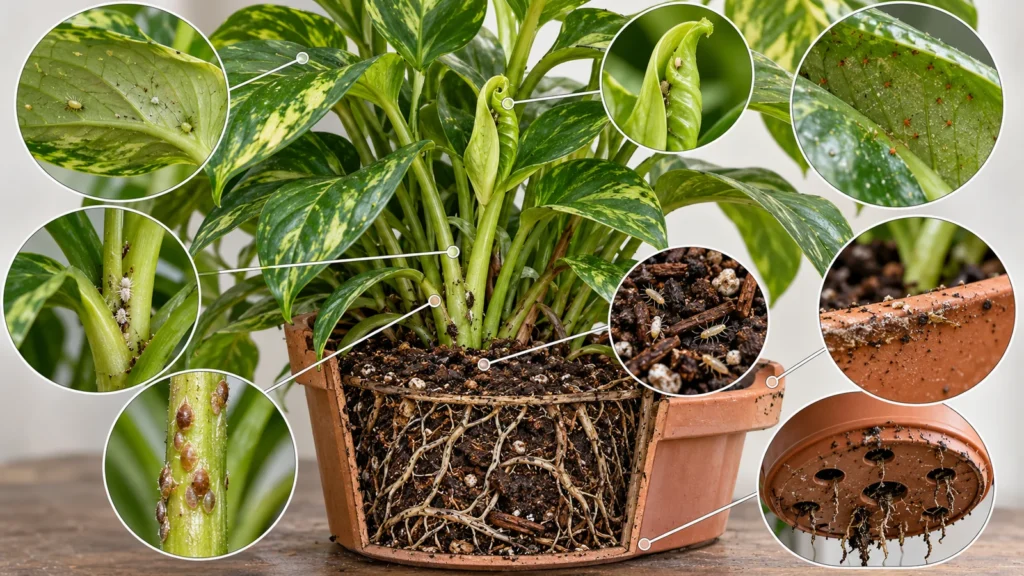
Debugging means reducing the chance of carrying outdoor pests into your houseplant collection.
Inspect more than the upper leaf surfaces. Many pests hide in protected areas where they are easy to miss.
Check:
- leaf undersides;
- new growing tips;
- leaf axils;
- stems and branch joints;
- the soil surface;
- the pot rim;
- the underside of the pot;
- drainage holes.
Look for fine webbing, sticky residue, cotton-like material, scale-like bumps, distorted new growth, stippled leaves, or visible insects.
A firm but plant-safe spray of water can remove debris and some exposed pests. Clean the outside of the pot too. Inspection lowers risk, but quarantine is still important because eggs or immature pests may remain hidden.
What to Do If You Find Pests
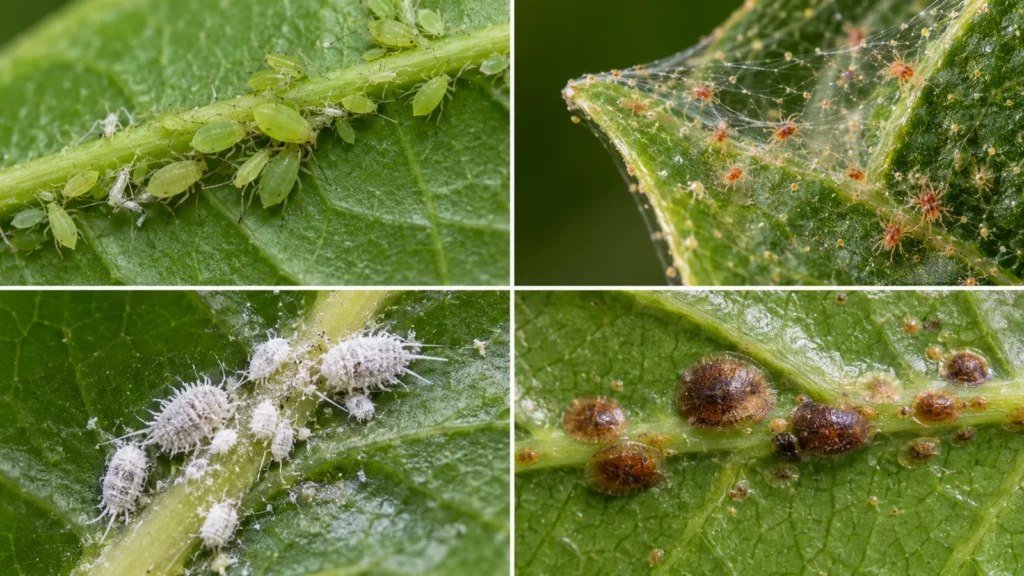
Finding pests does not automatically mean the plant must be discarded. The right response depends on the pest, the severity of the infestation, and the value of the plant.
For a small problem, start with the least disruptive option: rinse the plant, remove individual insects, prune badly affected material, and isolate it. Commercial insecticidal soap, horticultural oil, or some neem-based products may be appropriate for certain pests when used according to the label.
Do not treat household dish soap as formulated insecticidal soap. Household detergents may injure foliage and are not designed as plant pesticides.
Use this decision rule:
- No visible pest: inspect and clean.
- Small infestation: remove or rinse when practical.
- Confirmed pest: identify it and use an appropriate labeled treatment.
- Severe infestation: consider whether saving the plant is worth the risk.
Sometimes discarding one heavily infested plant is safer than exposing an entire indoor collection.
Should You Repot Before Bringing Plants Inside?
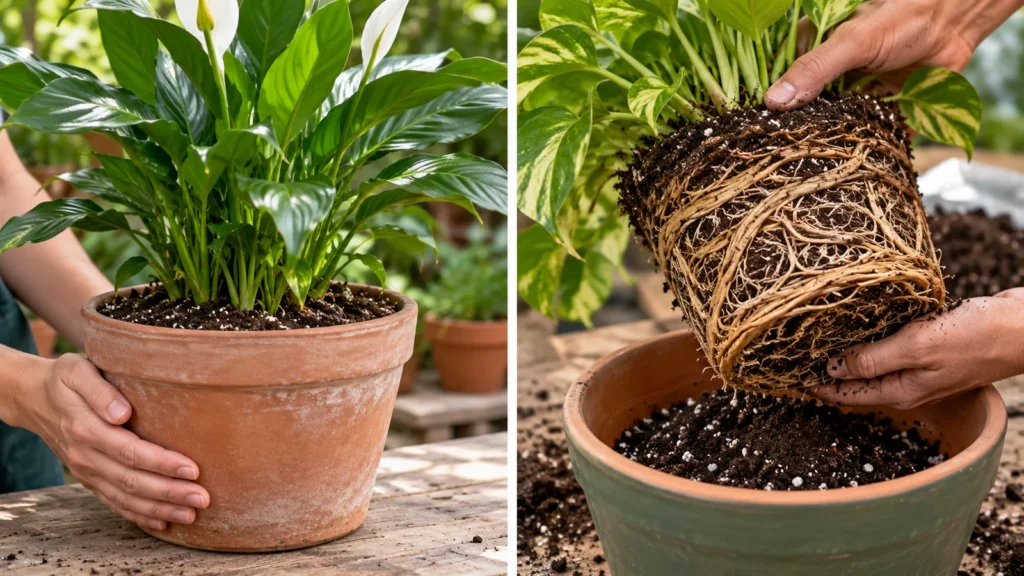
Usually, no. Repot only when there is a clear reason.
Leave the root system alone when the plant fits its container, drainage works, the growing medium is still functional, and there is no serious root-zone problem.
Repot when:
- roots are severely crowded;
- drainage is poor;
- the potting medium has broken down;
- a root-zone pest or disease requires intervention;
- a garden-grown plant must be moved into container culture.
Unnecessary root disturbance adds stress during an already demanding environmental transition. If a large plant propagates easily, taking cuttings may be more practical. Repot because the root zone needs intervention, not because the location is changing.
How to Move Garden Plants Indoors
Moving a plant from garden soil into an indoor container is more stressful than moving an existing potted plant.
Prepare the container before digging. Use a pot with drainage holes and suitable growing medium. Dig around the plant rather than directly beside the stem so you preserve as much healthy root mass as practical.
Then:
- Lift the plant carefully.
- Remove badly damaged material.
- Position it at an appropriate depth in the pot.
- Fill around the roots with suitable potting medium.
- Water thoroughly.
- Allow excess water to drain.
- Inspect again for pests.
- Begin acclimating it to indoor conditions.
For oversized or easy-to-propagate species, compare the effort of moving the entire plant with taking healthy cuttings instead. The less root disturbance you create, the easier the transition usually is.
How to Acclimate Outdoor Plants Indoors
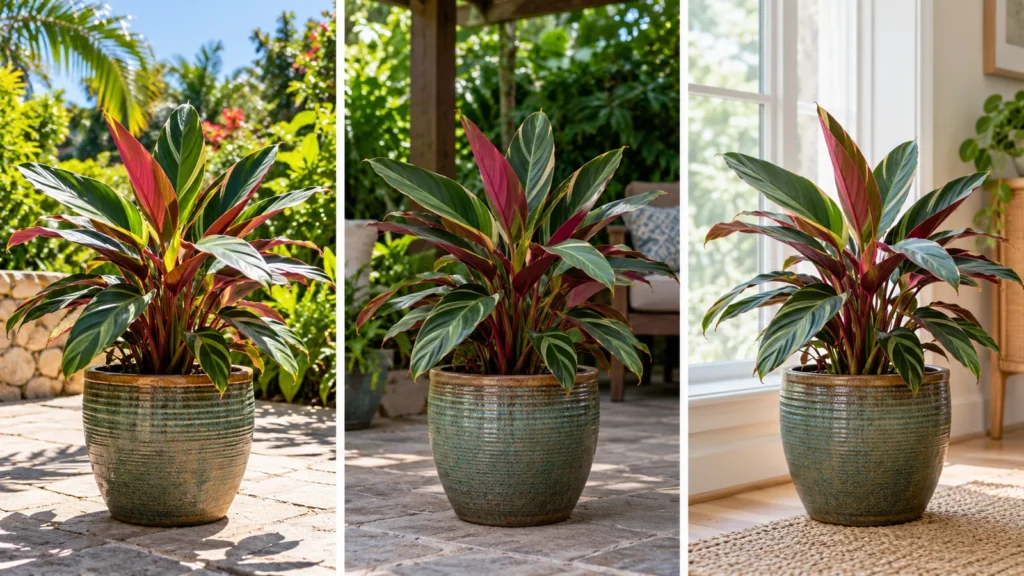
Light is often the biggest environmental change.
A room that looks bright to you can still be much darker than an outdoor patio. Moving a sun-grown plant straight into a dim room can trigger yellowing, leaf loss, or weak growth.
When possible, reduce the plant’s outdoor light gradually for about one to two weeks before the final move. Once indoors, place it according to its actual light requirement rather than where the pot looks best.
Pay attention to light, temperature, humidity, airflow, watering, and fertilizer. Use the brightest suitable location, avoid harsh vents or drafts, expect soil to dry more slowly, and do not force growth while the plant is adjusting.
Some leaf drop can occur during acclimation. What matters is whether the plant stabilizes or keeps declining.
How to Choose the Best Indoor Spot
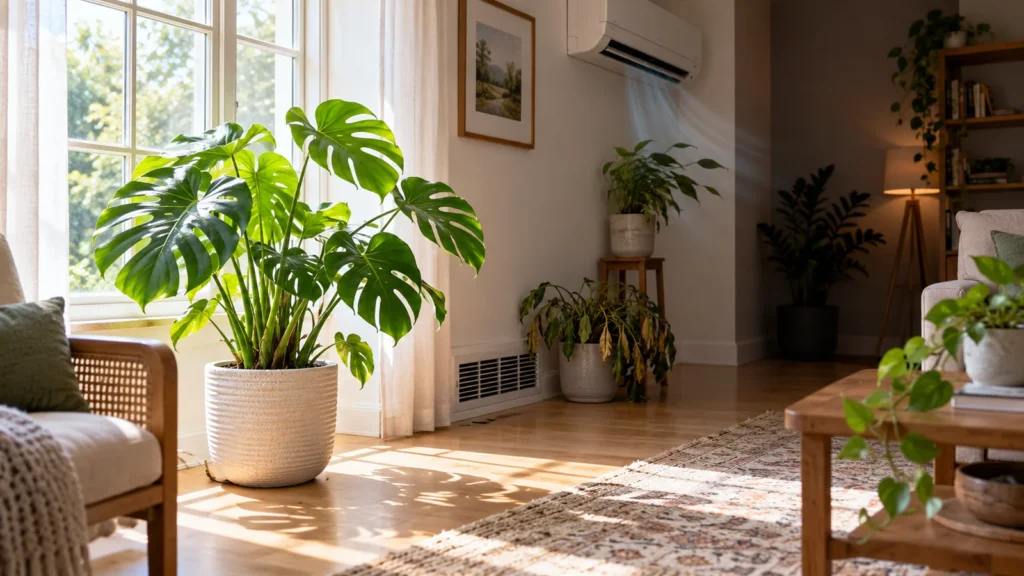
Choose the indoor location based on plant needs, not decoration.
| Factor | Common indoor change | Decision |
|---|---|---|
| Light | Usually lower | Window or grow light |
| Soil drying | Usually slower | Reduce watering frequency |
| Airflow | Often lower | Avoid stagnant placement |
| Temperature | More stable | Avoid vents and drafts |
| Humidity | Often lower | Match species needs |
| Space | More restricted | Keep, prune, or propagate |
The best indoor position is the place that creates the smallest damaging gap between the plant’s requirements and the room’s conditions.
How Long to Quarantine Plants Indoors
A practical quarantine period is about three to four weeks when space allows.
Keep the incoming plant away from established houseplants and inspect it regularly. Quarantine helps reveal pests that were not visible during the first inspection.
During quarantine:
- check leaf undersides;
- inspect new shoots;
- look for webbing;
- watch for sticky residue;
- examine stems;
- monitor the soil surface;
- remove fallen leaves.
Do not treat quarantine as a countdown. A plant with active pests at the end of four weeks is not ready to join the main collection.
End quarantine when repeated checks show no active pest problem and the plant appears environmentally stable.
What to Do During the First 30 Days
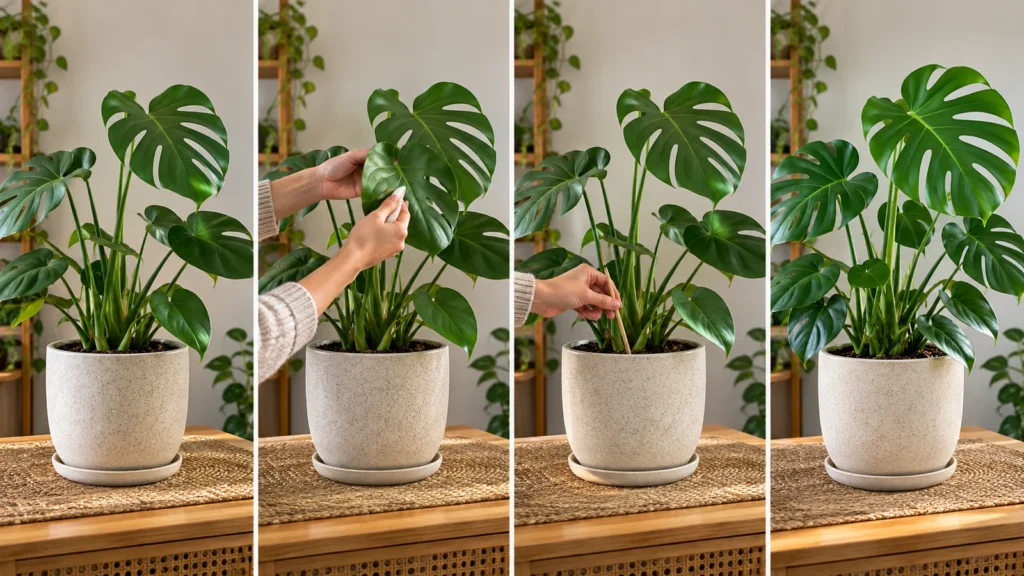
Use the first month indoors as a monitoring period.
Days 1–7
Keep conditions stable. Watch light response, soil moisture, wilting, and unusual leaf drop.
Week 2
Inspect new growth, stems, leaf undersides, and the soil surface again. Hidden pest populations may now be easier to detect.
Week 3
Ask whether the plant is stabilizing. Is leaf loss slowing? Is soil drying predictably? Are new pest signs appearing?
Week 4
Decide whether quarantine can end.
Good signs include:
- no active pest evidence;
- stable or improving foliage;
- predictable watering needs;
- appropriate indoor light;
- no unexplained ongoing decline.
The goal is stability, not immediate vigorous growth.
How to Care for Plants After Bringing Them Inside
Once the plant is indoors, reset the care routine.
Light
Match the species to the brightest appropriate location. Use supplemental lighting when natural indoor light is insufficient.
Water
Check the soil before watering. Lower light and weaker airflow often mean containers dry more slowly indoors.
Humidity
Match humidity to the plant instead of using one target for every species.
Temperature
Keep plants away from strong heating vents, air-conditioning outlets, and cold drafts.
Fertilizer
Feeding is often unnecessary when the plant is not actively growing.
Air Circulation
Avoid extremely stagnant locations, especially where many plants are grouped together.
The key is to stop treating the plant as if it were still outdoors.
How to Bring Outdoor Plants Inside for Winter
Winter moves need extra attention because colder nights arrive at the same time that indoor daylight is decreasing.
Before winter, check the plant’s cold tolerance, monitor nighttime forecasts, inspect for pests, and begin acclimation before damaging cold arrives.
Once indoors, many plants need less water than they did outside. Avoid maintaining a summer watering schedule when growth has slowed. Do not place plants directly beside heating vents or against very cold windows.
Some species grow actively through winter, while others perform better dormant or semi-dormant. Follow the plant’s biology rather than assuming every species needs a warm living room.
Why Is My Plant Struggling Indoors?
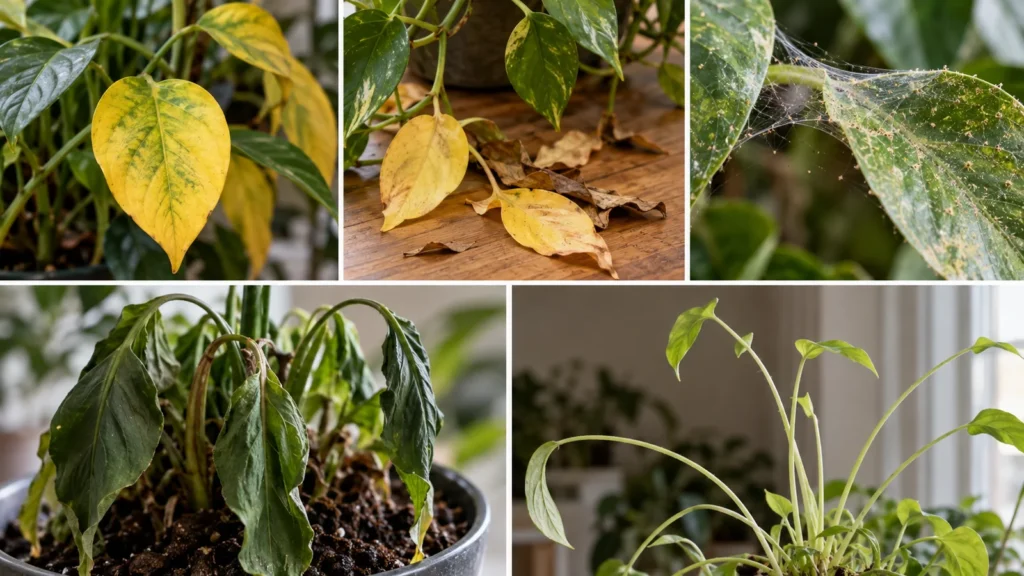
A struggling plant is giving you evidence. Diagnose the cause before adding more water, fertilizer, or pesticide.
| Symptom | Check first | Possible evidence | Decision |
|---|---|---|---|
| Leaf drop | Light change | Otherwise healthy plant | Improve placement and stabilize |
| Yellow leaves + wet soil | Watering | Slow-drying medium | Reduce watering frequency |
| Wilt + wet soil | Root condition | Poor drainage | Check roots |
| Fine webbing | Spider mites | Stippled leaves | Isolate and treat |
| Sticky leaves | Sap-feeding pests | Aphids, scale, mealybugs | Identify pest |
| Small flies | Soil moisture | Persistently wet mix | Check for fungus gnats |
| Weak stretched growth | Light | Healthy roots, no pests | Increase usable light |
Do not label every problem “transplant shock.” Continued decline, webbing, sticky residue, or persistently wet soil points to a more specific cause.
Use this order:
Pests → soil moisture → light → temperature → roots → nutrition
When Can Plants Go Back Outside?
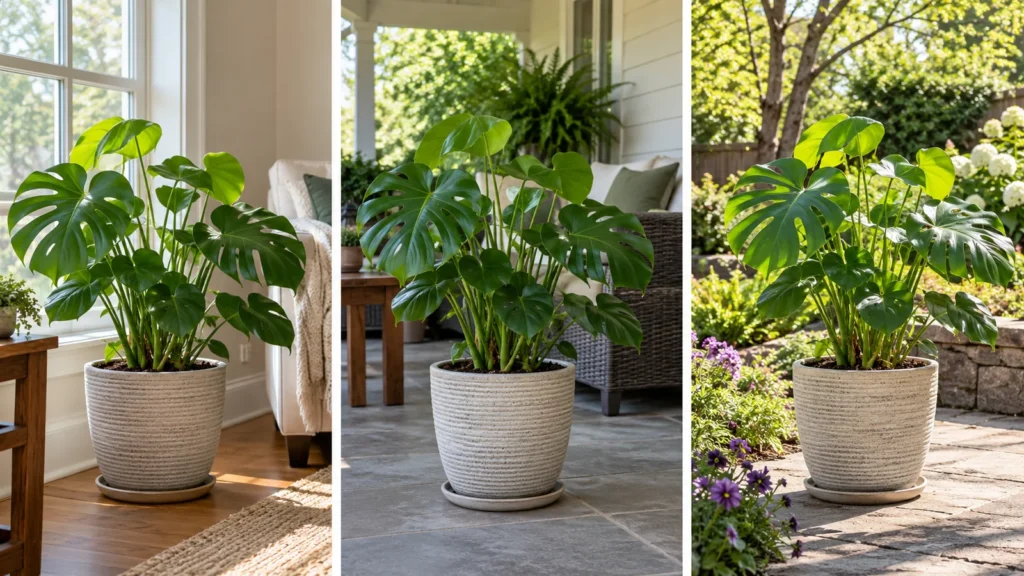
Move plants outside again when local conditions are suitable for the species, not simply because spring has arrived.
Check nighttime temperatures, frost risk, cold tolerance, wind exposure, and outdoor light intensity.
Start in a sheltered or shaded position and increase outdoor exposure gradually. Indoor-grown foliage can scorch when moved directly into strong sun, even if the species normally prefers bright light.
Watering may also need to increase because outdoor containers often dry faster in stronger light, warmer temperatures, and moving air.
For a global audience, use this sequence:
Plant tolerance → local forecast → frost risk → sheltered position → gradual sun exposure
Avoid universal advice such as “put plants outside in May.” Climate and season timing vary widely.
Outdoor-to-Indoor Plant Checklist
Before moving the plant, confirm the following.
Decide
- Is the plant worth bringing indoors?
- Should you keep the whole plant, propagate it, use dormancy, or leave it outside?
- Can your home provide enough light and space?
Prepare
- Check nighttime temperatures.
- Inspect leaves and stems.
- Check soil and drainage holes.
- Remove dead material.
- Clean the container.
- Treat confirmed pest problems.
Move
- Acclimate to lower light.
- Choose the correct indoor location.
- Avoid unnecessary repotting.
- Keep incoming plants separate.
Monitor
- Recheck for pests.
- Adjust watering.
- Watch leaf response.
- Monitor the first 30 days.
- End quarantine only when the plant is stable.
Return Outside
- Wait for species-appropriate temperatures.
- Check frost risk.
- Reintroduce outdoor light gradually.
Conclusion
Successfully bringing outdoor plants inside is less about one trick and more about managing a change in environment.
First identify what type of move you are making. Then decide whether the plant should come inside, inspect it carefully, treat real problems rather than spraying automatically, adjust its light and watering, and monitor it during the first month.
The simplest rule is:
Do not simply move the plant—transition it.
That approach reduces pest risk, unnecessary stress, and care mistakes while giving worthwhile plants a better chance of remaining healthy indoors.
Frequently Asked Questions About Bringing Outdoor Plants Inside
What temperature should you bring outdoor plants inside?
For many tropical plants, begin preparing when nighttime temperatures approach 50–55°F (10–13°C). Always check the plant’s individual cold tolerance rather than relying on one universal temperature.
How do you bring outdoor plants inside without bugs?
Inspect the leaves, stems, soil, pot rim, and drainage holes before moving the plant. Clean it, treat confirmed pests if necessary, and quarantine it away from established houseplants.
Do you have to spray plants before bringing them indoors?
No. Inspect first and treat only when a pest problem is identified. Rinsing or manual removal may be enough for a small infestation.
Can I use dish soap to debug plants?
Household dish soap is not the same as insecticidal soap and may damage plants. Use a properly labeled plant treatment when insecticidal soap is appropriate.
Should I repot before bringing plants inside?
Usually not. Repot only when root crowding, poor drainage, deteriorated potting medium, or another root-zone problem makes it necessary.
How long should you quarantine outdoor plants?
About three to four weeks is a useful guideline. Continue quarantine if active pests or unexplained plant decline are still present.
Why is my plant dropping leaves indoors?
A sudden change in light, humidity, temperature, or watering can cause temporary leaf drop. Persistent decline should be checked for pests, root problems, or unsuitable conditions.
How often should I water after bringing plants inside?
Water according to soil moisture and the plant’s needs rather than its previous outdoor schedule. Many plants dry more slowly indoors.
Should I fertilize immediately after bringing plants indoors?
Usually no. Wait until the plant is actively growing before resuming fertilizer, especially when winter light has slowed growth.
Do outdoor plants need a grow light indoors?
Some do. Plants accustomed to strong outdoor light may need supplemental lighting when natural indoor light is insufficient.
Can every outdoor plant become a houseplant?
No. Some plants require more light, space, dormancy, or environmental conditions than a home can provide.
Is it better to bring the whole plant inside or take cuttings?
Bring the whole plant when it is healthy, manageable, and suited to indoor conditions. Consider cuttings when the mature plant is too large or easy to propagate.
Can you bring outdoor plants inside during summer?
Yes. Plants can be moved indoors temporarily during heat, storms, or other problems, but longer stays require adjustments to light, temperature, and watering.
How long does a plant take to adjust indoors?
Adjustment often takes several weeks and can continue for one to two months. Keep conditions stable while monitoring pests, watering, and leaf response.
What if I find bugs after bringing the plant inside?
Separate the plant from your other houseplants and identify the pest. Treat according to the pest and inspect nearby plants for signs of spread.
When can I put my plants back outside?
Move plants outside after temperatures are safe for the species and damaging frost is no longer a concern. Reintroduce outdoor sunlight gradually to reduce leaf scorch.
Myra is the founder and lead writer of Plantsaholic. She shares practical, research-backed advice on indoor plants, outdoor gardening, flowers, herbs, succulents, and everyday plant care. Her goal is to help gardeners of all experience levels grow healthier plants through simple, easy-to-follow gardening guides.