The best indoor plant stand ideas make houseplants easier to display, care for, and enjoy without wasting floor space. Choose a low pedestal for one large plant, tiered shelving for a collection, or a narrow tower for a corner. Whatever the style, prioritize stability, light, and room to grow.
A stand can organize pots or activate a corner, but cannot fix poor light, drainage, or inadequate support. Start with the plant and location; choose the finish last.
Which Indoor Plant Stands Work Best?
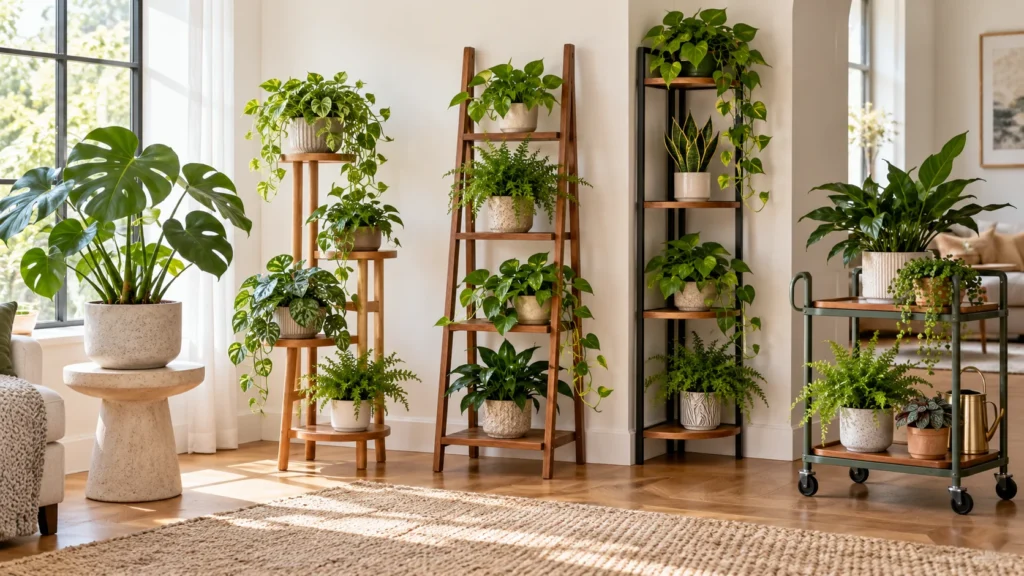
Choose by pot size, plant shape, and room use. This comparison narrows your options.
| Your situation | Best starting option | Why it works |
|---|---|---|
| One large plant | Low, broad pedestal | Supports a substantial pot without unnecessary height |
| Several small pots | Tiered wooden or metal stand | Organizes plants vertically |
| Unused corner | Corner tower | Uses space that furniture often leaves empty |
| Narrow wall | Ladder shelf | Adds levels with a relatively shallow footprint |
| Heavy ceramic planter | Low, load-rated platform | Keeps weight near the floor |
| Plants you move often | Rolling cart with locking casters | Makes rearranging and cleaning easier |
| Changing collection | Nesting or modular stands | Adapts to different pot sizes |
| Tight budget | Strong stool or side table | Repurposes furniture you already own |
More shelves do not always mean more usable space. Count positions with enough foliage clearance and watering access.
How Do You Choose a Plant Stand?
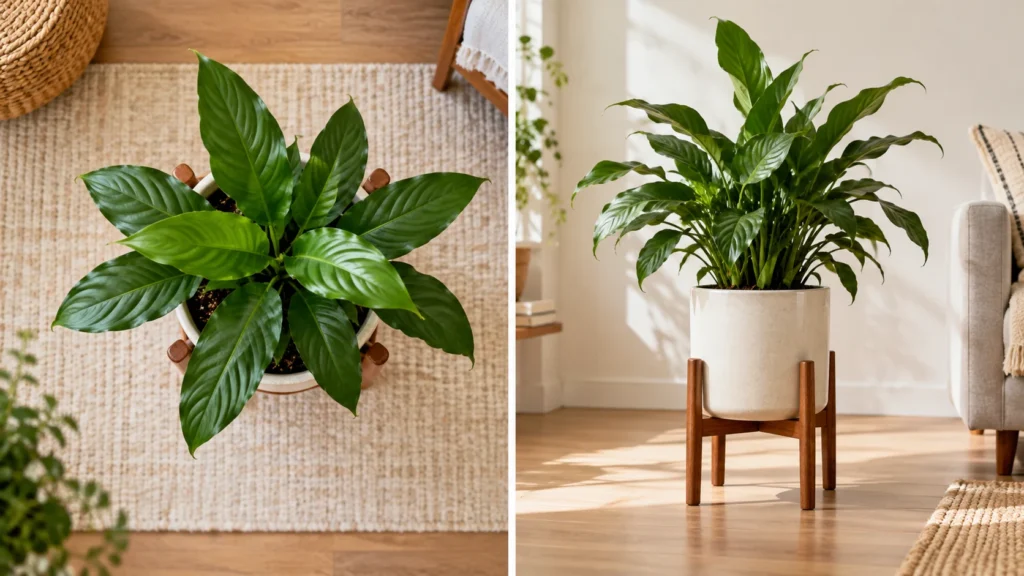
Use five checks: space, load, light, access, and growth. Compare actual specifications rather than staged photographs.
Measure the usable space
Measure the floor area and foliage spread. Keep doorways, curtains, drawers, and walking routes clear.
Check the pot base, not just the diameter printed on the planter listing. A pot with a 22 cm base needs a platform that securely supports that base; an 18 cm platform is not suitable. Round and curved stands may have less usable surface than their overall dimensions suggest.
Check the fully watered weight
Include the container, plant, potting mix, and water retained after watering. This is the weight the stand must support during normal use.
Ceramic pots can be heavier than plastic ones. Compare the total with per-shelf and overall load ratings. Keep heavy pots low and centered.
Check light at leaf level
Shelves receive different light levels, even beside one window. Check direction, curtains, obstructions, and distance from glass. The University of Maryland Extension light guide explains how these factors change indoor light intensity.
A stand helps only when its position suits the plant. Raising a succulent into brighter light may help; placing a shade-tolerant plant in harsh afternoon sun may not. Check the location through the day.
Check care access and future growth
You should be able to lift out a pot, water it, empty its saucer, inspect leaves, and wipe spills without dismantling the display.
Leave room for the next pot size and spreading leaves.
Worked sizing example: A 90 cm-tall plant on a 70 cm stand creates an approximately 160 cm-high display, before allowing for any extra foliage growth. Assess that final height beside the sofa or window, not the stand height alone.
What Are 25 Indoor Plant Stand Ideas?
These 25 ideas include practical uses and limitations.
1. Low Wooden Pedestal
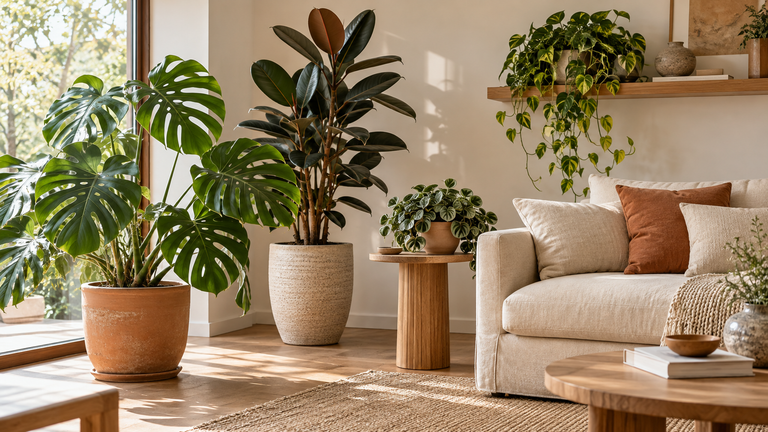
A broad wooden pedestal makes a mature monstera, rubber plant, or palm feel intentional without lifting an already tall plant too high. Choose a level top and solid base that supports the planter completely.
Best for: statement floor plants. Watch for: top-heavy plants and water-sensitive finishes.
2. Round Single-Pot Stand
A small circular stand suits a medium peperomia, peace lily, or snake plant beside a chair or window. It gives one pot visual separation from nearby furniture.
Best for: a single compact display. Watch for: narrow tops that cannot fully support the pot base.
3. Mid-Century Raised Planter
A planter held within four simple wooden legs suits modern and retro rooms. The open frame lifts foliage while keeping the floor visible.
Best for: a medium, bushy plant. Watch for: loose joints, unsupported pot shapes, and excessive height.
4. Broad Low Platform
A low platform offers a practical home for a wide ceramic container that would be awkward on a tall pedestal. Use a waterproof tray for floor protection.
Best for: heavy planters. Watch for: platform strength and uneven floor contact.
5. Side-Table Plant Stand
A sturdy side table works as a plant stand and still blends with existing furniture. Keep the pot clear of lamps and books.
Best for: living rooms with limited spare space. Watch for: finish damage from water and unstable lightweight tables.
6. Tiered Wooden Stand
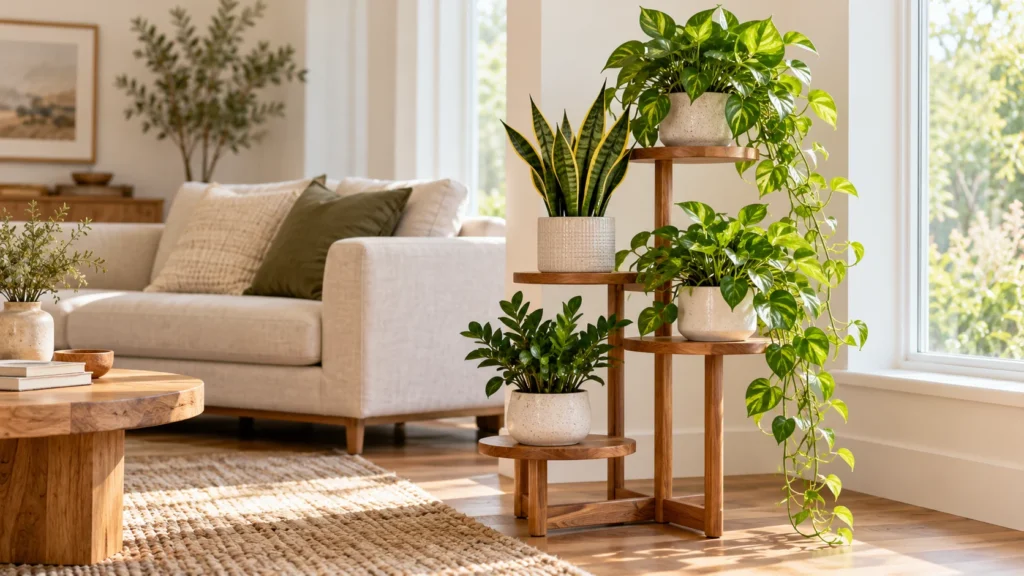
Different shelf heights allow upright plants above and trailing plants along the edges. Wood adds warmth to a neutral room and coordinates with furniture.
Best for: several small and medium pots. Watch for: narrow shelf spacing, pooled water, and poorly supported joints.
7. Slim Metal Tiered Stand
An open metal frame adds plant levels without visually filling the room. It suits areas where wood shelving feels bulky.
Best for: compact contemporary interiors. Watch for: rust-prone finishes, weak welds, and unclear weight ratings; metal alone does not guarantee strength.
8. Ladder Plant Stand
A ladder-style display uses a tall section of wall, with wider shelves often positioned lower down. It suits plants that need their own shelf rather than one crowded surface.
Best for: blank walls. Watch for: wall clearance and securing the unit as directed by its maker.
9. A-Frame Plant Shelf
An A-frame forms a wider base with stepped shelves, creating room for larger pots below and lighter pots above. Its shape accommodates varied foliage heights.
Best for: collections with varied pot sizes. Watch for: a footprint wider than the photograph suggests.
10. Mixed-Height Pedestals
Two or three individual stands create a layered grouping without connecting every plant to one structure. Move individual stands as light needs change.
Best for: flexible styling around a window. Watch for: too many separate bases creating trip hazards or clutter.
11. Corner Plant Tower
A corner-specific tower turns an unused angle into a vertical display. Quarter-circle or triangular shelves can follow the walls while leaving the room center open.
Best for: bright, unused corners. Watch for: lower shelves receiving too little light and leaves rubbing against walls.
12. Compact Vertical Tower
A narrow freestanding tower stacks small planters in a limited footprint without needing a corner. Keep every pot reachable.
Best for: studio apartments and offices. Watch for: a high center of gravity; position larger pots at the bottom.
13. Narrow Ladder Shelf
A very slim ladder shelf can use the gap beside a cabinet or along a short wall. Use small trailing plants.
Best for: awkward narrow spaces. Watch for: inadequate room for leaves and difficulty retrieving pots from closely spaced shelves.
14. Window-Height Plant Bench
A low bench across a window can display several pots together while keeping taller foliage out of the upper glass area. Group plants by light needs.
Best for: broad, bright windows. Watch for: heating vents, curtains, condensation, and water reaching the bench surface.
15. Floating Plant Shelf
A wall-mounted shelf clears the floor entirely and displays a few lightweight planters. Use appropriate hardware for the wall construction and anticipated load.
Best for: rooms with almost no spare floor area. Watch for: unsuitable fixings, water runoff, and difficult overhead watering.
16. Nesting Plant Stands
A set of nesting stands can sit together at staggered heights or spread across the room. Rearrange them as plants grow.
Best for: renters and frequently restyled rooms. Watch for: small platforms and stands that become unstable when separated.
17. Rolling Plant Cart
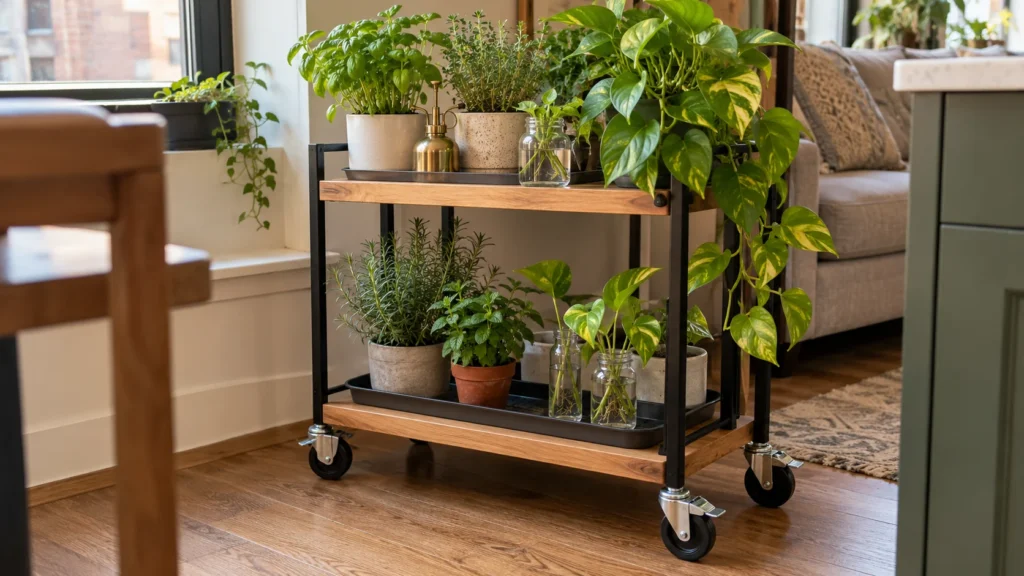
A wheeled cart holds propagation jars, herbs, and smaller plants that need occasional repositioning. Shelves also provide space for a small watering can or tray.
Best for: movable collections. Watch for: caster load ratings, wheel locks, floor transitions, and the weight shifting while moving.
18. Modular Plant Display
Separate cubes or stackable units let you create a low, wide arrangement now and adjust it later. Use only configurations approved by the product maker.
Best for: collections with changing pot sizes. Watch for: unsecured stacking and concentrated weight on a single module.
19. Tabletop Plant Risers
Small risers create height variation on a desk, console, or windowsill without another floor-standing item. Pair a compact upright plant with a low trailing one.
Best for: small pots and cuttings. Watch for: overcrowded surfaces, slipping saucers, and blocked workspace.
20. Low Movable Bench
A lightweight but sturdy bench can group medium plants and be repositioned during cleaning or seasonal changes. Unlike a tall shelf, it keeps pots within easy reach.
Best for: broad floor areas with several plants. Watch for: leg strength and the total weight of watered pots.
21. Repurposed Stool
A solid stool gives one plant a quick height boost without buying dedicated plant furniture. A simple wood or metal stool can look deliberate beside a reading chair.
Best for: budget displays. Watch for: wobbling legs, rounded seats, and finishes damaged by moisture.
22. Strong Wooden Crate
A structural wooden crate can raise a planter slightly or create a rustic base. Use a stable face and waterproof tray.
Best for: low-cost, low-height arrangements. Watch for: decorative crates with thin slats or weak fasteners that cannot support heavy pots.
23. Console-Table Display
A console supports a small coordinated group of plants while leaving the floor beneath relatively open. Mix leaf shapes without overcrowding.
Best for: bright entryways and living rooms. Watch for: dim corridors, fragile tops, and dripping water near other objects.
24. Bookshelf Plant Zone
Dedicate one or two open bookshelf levels to compact plants, ideally near usable daylight. Place containers on protective trays and keep books away from runoff.
Best for: integrated plant-and-book displays. Watch for: dark interior shelves and weight limits not intended for wet ceramic containers.
25. DIY Short Wooden Riser
A simple, low wooden riser can fit an unusually shaped pot or exact window-side gap. Use sound materials, secure joints, and a level support surface.
Best for: custom dimensions and simple woodworking. Watch for: attempting a tall or heavy-duty structure without appropriate design and testing.
Which Stands Suit Living Rooms?
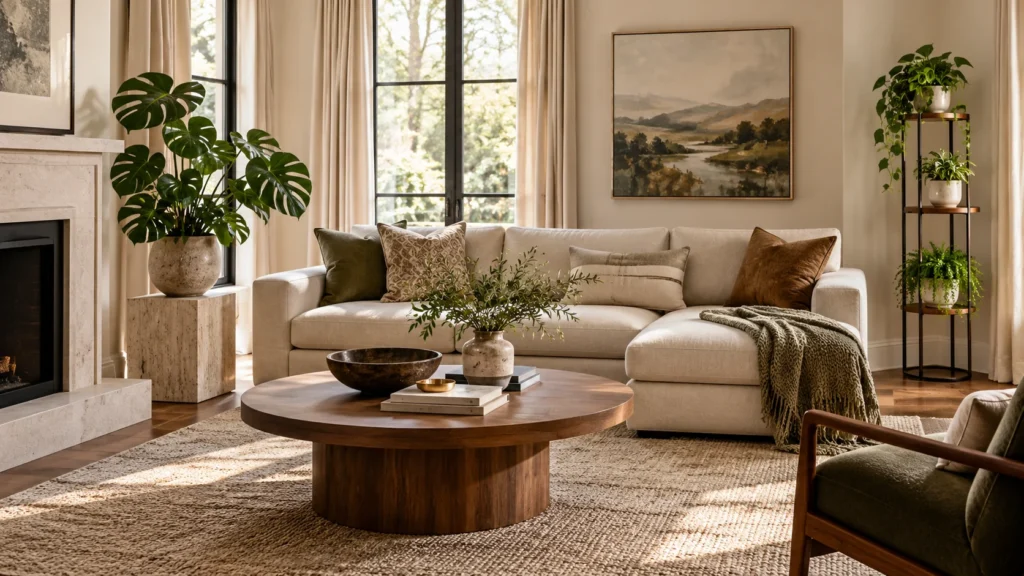
In a living room, plant stands need to complement seating and leave natural walking routes clear. One substantial plant on a low pedestal often works better than several small stands around a crowded sofa. Use corner towers only where light is suitable.
Beside a sofa, choose a design whose leaves will not brush people whenever they sit down. Near a large window, use staggered stands to keep foliage at different heights without filling the entire glass area. Match one stand material to an existing finish, such as a wood coffee table or metal lamp, for a quieter arrangement.
Check the view from the doorway. Move stands that block sightlines, curtains, or cleaning routes.
Which Indoor Plant Stand Ideas Save Space?
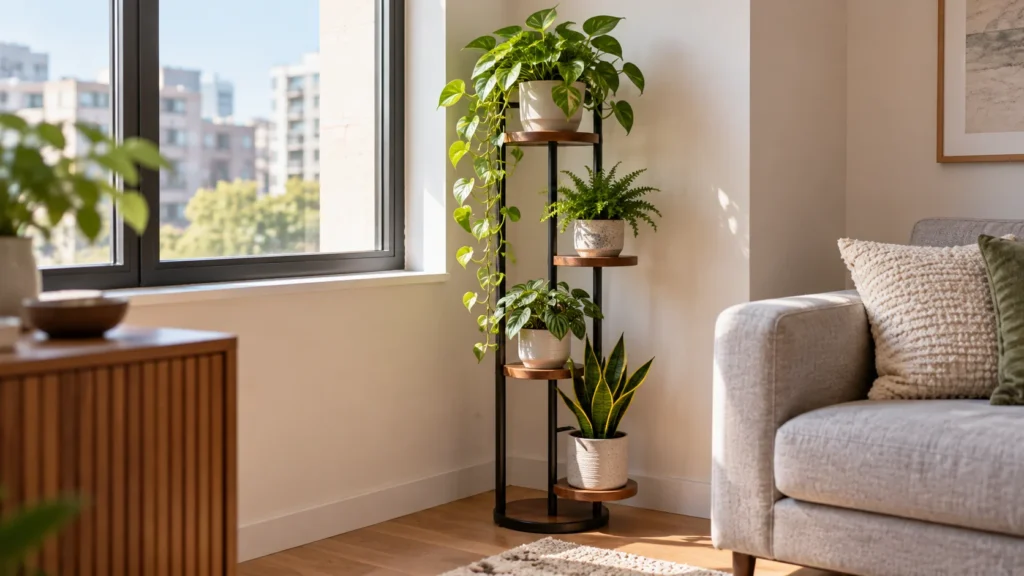
Small rooms benefit most from using corners, wall height, and existing surfaces. A vertical tower holds several small pots where a row of floor planters would take up too much room. A floating shelf removes the floor footprint but demands correct installation.
| Space problem | Suitable option | Important trade-off |
|---|---|---|
| Empty bright corner | Corner tower | Check light on the lower tiers |
| Narrow wall | Ladder stand | Leave room for foliage spread |
| No free floor | Wall shelf | Confirm wall and hardware capacity |
| Wide window | Low bench | Do not obstruct curtains or vents |
| Available desk | Tabletop risers | Keep pots small and manageable |
| Layout changes | Nesting stands or cart | Maintain stable, clear walkways |
Avoid narrow stands that crowd foliage. Measure leaf spread and watering access.
Which Plant Stand Materials Are Best?
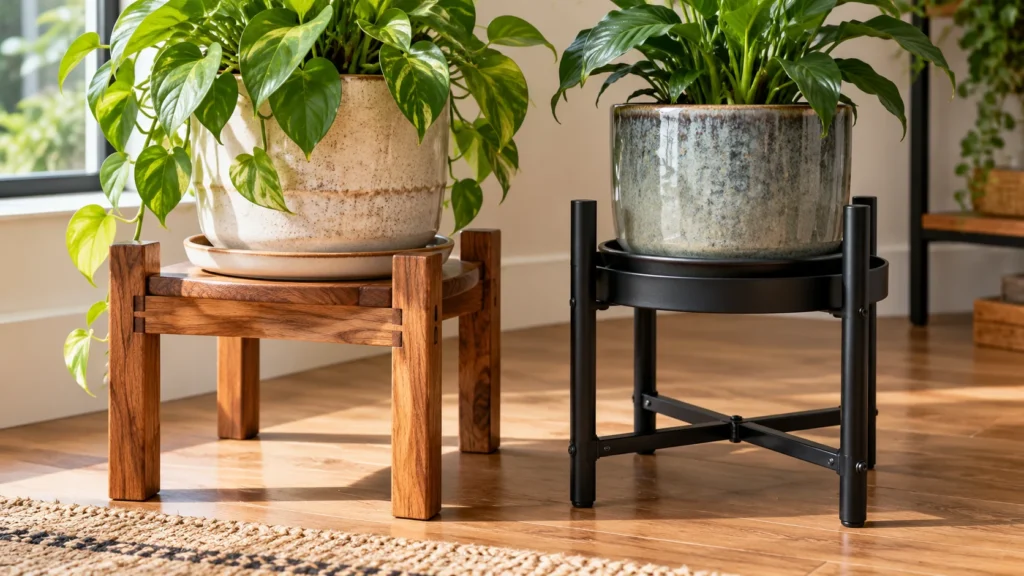
Wood, metal, bamboo, and woven designs all work indoors when their construction suits the load. Material appearance alone cannot establish strength; joints, platforms, fasteners, and the manufacturer’s ratings matter.
| Material | Main advantage | Main limitation |
|---|---|---|
| Wood | Warm, furniture-like appearance | Can stain or swell with repeated moisture |
| Metal | Open, visually light frames | Rust or weak connections on poor-quality models |
| Bamboo | Natural look, often lightweight | Capacity and joint quality vary |
| Rattan or woven finish | Soft decorative texture | May need a separate rigid pot-support surface |
| Mixed wood and metal | Flexible styling | Strength depends on the connections |
Use saucers or waterproof trays under draining pots and remove excess water promptly. If a stand is positioned beside a window or humidifier, inspect finishes and joints more often. Prioritize construction over material claims.
Where Should You Place Plant Stands?
Put stands where the foliage receives appropriate light, not just where the room appears attractive. Lower shelves can be shaded by upper foliage; corners several feet from windows may be dimmer than expected. Rotate a plant when appropriate, but never rely on rotation to correct consistently inadequate light.
Keep displays clear of doors, heating vents, strong cooling drafts, and frequently used walkways. Check floor level and stability in the exact intended position. Thick carpet may let narrow legs sink unevenly; a rigid, level floor generally makes stability easier to assess.
If children or pets could pull or climb a tall unit, assess tip-over risk and follow the manufacturer’s wall-restraint instructions. The CPSC recommends anchoring tip-prone household furniture.
Avoid accessible trailing cords when grow lights are fitted, and keep electrical equipment protected from watering spills.
Can You Use Plant Stand Alternatives?
Yes. A sturdy stool, bench, side table, console, or bookshelf can display indoor plants when it is structurally suitable. Reuse furniture only when it safely supports watered pots.
Repurposing does not remove the need to check weight, support area, and moisture protection. Decorative crates and thin-legged tables are poor substitutes for load-rated stands when pots are heavy. Ornament furniture may not support heavy planters.
Can You Make a DIY Plant Stand?
DIY makes sense when you need a short riser, straightforward bench, or unusual dimension that ready-made furniture does not provide. For a simple riser, measure the pot base, choose suitable lumber and fixings, build a level platform, and check that the finished structure sits firmly on the floor.
Protect the finished wood from watering spills and test stability before adding the plant. Avoid tall, wall-mounted, wheeled, or multi-tier projects unless you have reliable plans and the skills to follow them. For substantial loads, a rated commercial design is easier to evaluate.
How Do You Fix Plant Stand Problems?
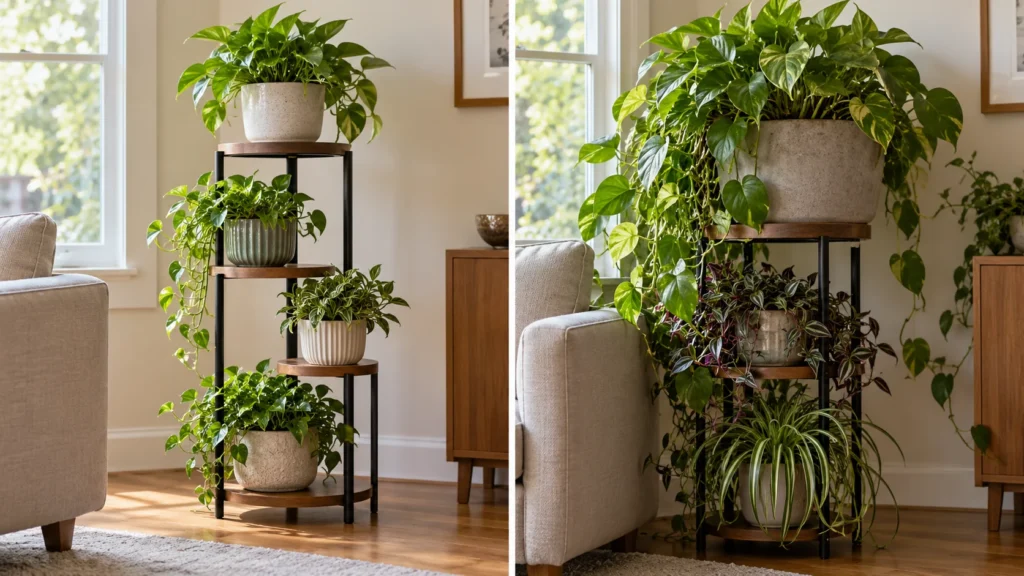
Most problems become apparent after pots are watered, moved, or allowed to grow. Fix the cause rather than disguising the symptom with extra decoration.
| Problem | Likely cause | What to do |
|---|---|---|
| Wobbling | Uneven floor, loose joints, high load | Level the stand, check fasteners, and lower the weight |
| Pot overhang | Platform too small | Choose a larger support |
| Leaves hit shelf | Inadequate clearance | Move the pot to a more open tier |
| Plant leans to window | Uneven light | Reassess the position and available light |
| Water marks | Uncontained drainage | Add a suitable tray and clean spills promptly |
| Difficult watering | Shelves too crowded | Remove or redistribute pots |
| Blocked walkway | Excess footprint or foliage | Relocate or use a slimmer arrangement |
A plant has outgrown its stand when its next pot no longer fits, its leaves block access, or its height makes the display unstable. A rubber plant that was manageable as a young specimen may eventually need a low, wide support. Treat persistent wobbling, damaged joints, or insecure mounting as reasons to stop using the stand until corrected.
What Should You Check Before Buying?
Before ordering, compare the stand’s usable platform dimensions, per-tier capacity, overall load limit, shelf spacing, base width, and assembled footprint with your plants. Look for clear assembly instructions, suitable floor contact, protective finishes, and reliable return terms or warranty information where provided.
For carts, check that the casters lock and the product is rated for movement under load. For wall-mounted or tall shelving, follow the manufacturer’s fixing and anchoring instructions. If specifications are missing for a heavy planter, choose a better-documented stand instead of guessing.
Final check: Can you place the watered pot securely, reach it for routine care, and leave room for the foliage to grow? If all three answers are yes and the stand meets its load requirements, its style can be the final deciding factor.
What Are Common Plant Stand Questions?
How tall should an indoor plant stand be?
Choose the height from the plant’s final display position, not the stand alone. Tall floor plants usually need low support, while compact plants can benefit from elevation near a suitable window.
How can I tell if a plant stand is strong enough?
Compare the manufacturer’s load rating with the entire fully watered pot weight, including soil and container. Check that the base fits securely and the stand remains level.
Should heavy plants go on the bottom tier?
Generally, yes. Lower placement keeps more weight close to the floor and helps limit top-heavy arrangements, provided the bottom shelf is rated for the load.
Do indoor plant stands help plants get more light?
Sometimes. Raising foliage may move it into better light, but the result depends on the window, distance, shade, and plant species. Elevation alone is not a guarantee.
How many plants can a tiered stand hold?
As many as its individual shelf ratings, platform sizes, and foliage clearance safely allow. An advertised six-pot capacity does not mean six mature plants will fit comfortably.
How do you water plants on a tiered stand?
Use drainage saucers or waterproof trays and empty excess runoff. Remove small pots for sink watering when that is easier and safer than reaching between shelves.
Are plant stands safe on carpet?
They can be if the stand stays level and stable under its full load. Thick carpet is a concern for tall units with narrow feet; test the actual location.
How do you stop a plant stand from wobbling?
Check the floor, joints, fasteners, and weight distribution. Move heavier pots lower, but stop using the stand if it remains unstable or damaged.
What is a plant stand versus a plant caddy?
A stand primarily elevates or displays a pot. A caddy is a low wheeled base designed mainly to move a container; check its load and wheel ratings.
Can you attach grow lights to a plant stand?
Yes, if the frame and mounting method are suitable. Secure cables, follow the light manufacturer’s clearance guidance, and keep electrical parts away from water.
Choose an indoor plant stand by matching the pot, weight, available light, and care routine to the room. A useful stand supports healthy plant placement and safe access first; its shape and finish should make that practical arrangement look at home.

Myra is the founder and lead writer of Plantsaholic. She shares practical, research-backed advice on indoor plants, outdoor gardening, flowers, herbs, succulents, and everyday plant care. Her goal is to help gardeners of all experience levels grow healthier plants through simple, easy-to-follow gardening guides.