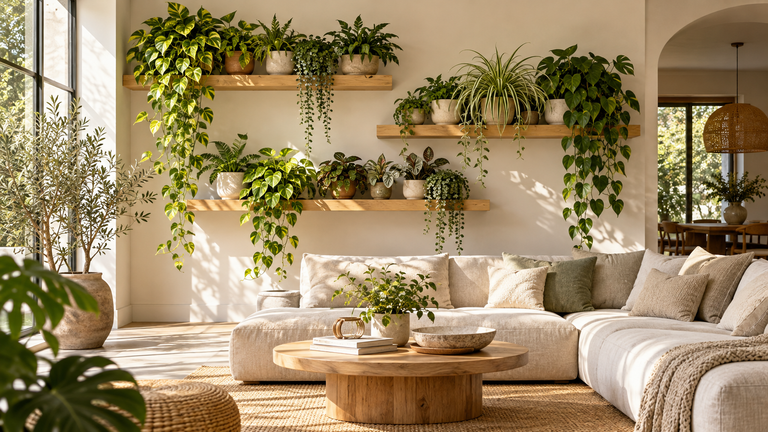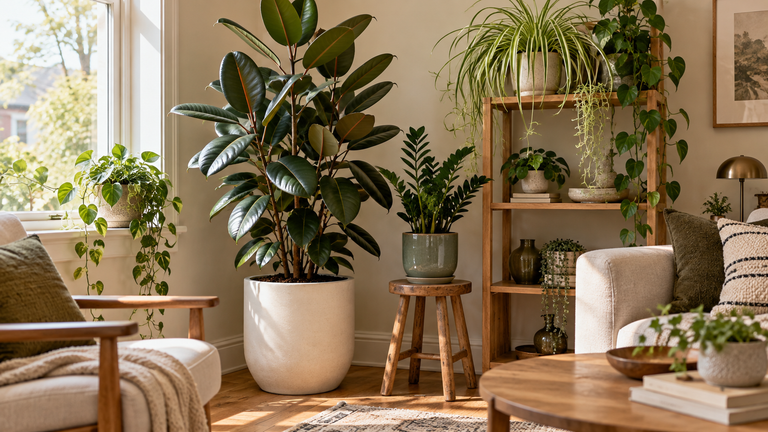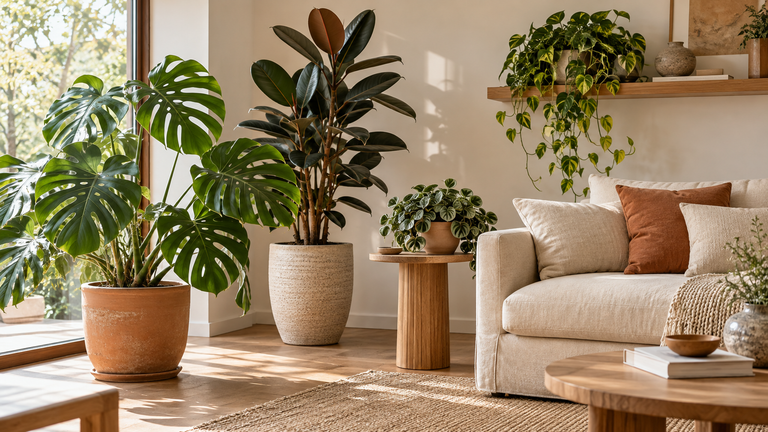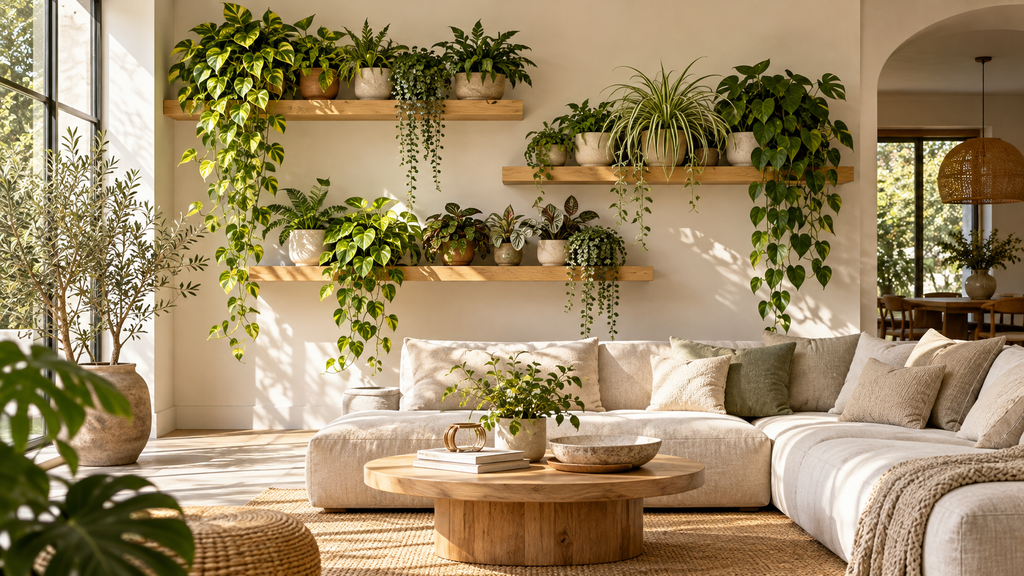
Plant wall decor ideas can transform a plain wall into a green focal point without taking up valuable floor space. Floating shelves, wall planters, climbing vines, and vertical gardens all work when the design matches your available light, wall structure, and maintenance routine.
This Plantsaholic guide covers 18 attractive designs, suitable houseplants, safer mounting, drainage, DIY projects, and everyday care. Start small: healthy plants in accessible containers usually look better than an elaborate display that’s difficult to maintain. Use the room-by-room comparison to shortlist designs before buying shelves or planters.
What Is a Plant Wall?
A plant wall displays greenery vertically using shelves, hanging containers, trellises, or planting modules. A living wall generally uses integrated planting cells, sometimes with irrigation. Vertical garden is a broader term for upward-growing arrangements indoors or outside; a preserved moss wall contains decorative, non-growing material.
| Type | Best use |
|---|---|
| Shelves or hanging pots | Flexible indoor decoration |
| Climbing trellis | Training vines upward |
| Modular living wall | Large, planted features |
| Preserved moss | Spaces unsuitable for live plants |
Removable pots are easier for beginners to maintain than integrated systems.
What Are the Best Plant Wall Decor Ideas?
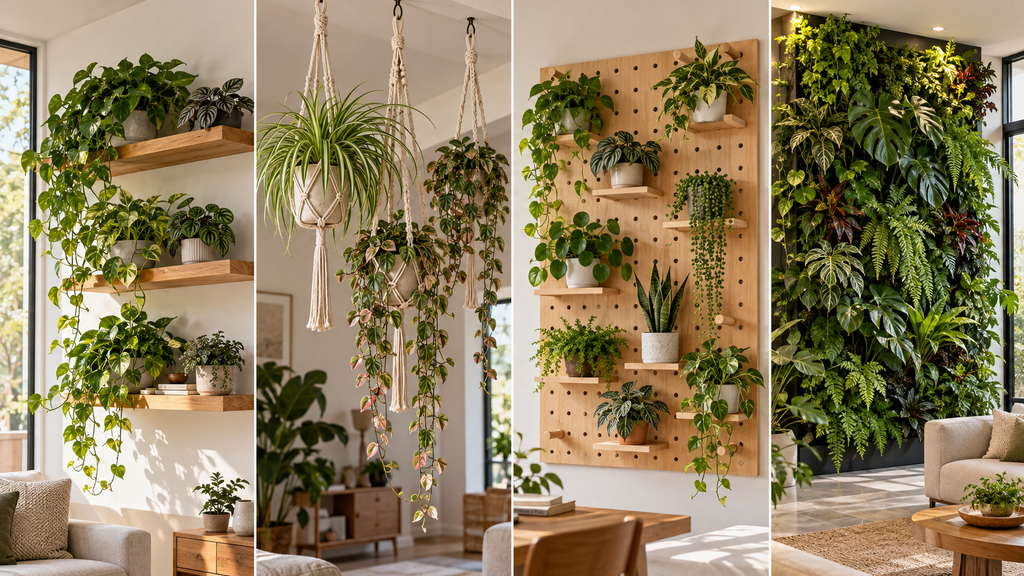
Match your design to available light, wall space, and the weight of watered pots. Before buying anything, decide whether you want a few decorative accents or a dense green feature. Separate containers are simpler to rearrange; integrated systems are harder to change once installed.
Which Plant Wall Design Is Best for Your Space?
| Space or need | Practical design |
|---|---|
| Small living room | Staggered floating shelves |
| Rental apartment | Stable freestanding ladder |
| Bright kitchen | Individual herb planters |
| Home office | Adjustable pegboard |
| Narrow wall | Vertical plant rail |
| Large feature wall | Modular living wall |
| No suitable daylight | Grow lighting or preserved greenery |
1. Floating Shelves With Trailing Plants
Place pothos or trailing hoya near a shelf edge and compact peperomia in the center. Two or three shelves add greenery without crowding a room. Use appropriately supported brackets and removable pots for watering.
2. Staggered Plant Wall Shelves
Position shelves at different heights rather than in one straight row. Combine bushy foliage with cascading vines and repeat one planter finish. Leave clearance for mature leaves, pruning, and removing containers.
3. Wall-Mounted Ceramic Planters
Arrange small ceramic wall pockets in a row or loose triangle. Peperomias and compact hoyas suit many such displays. Check the load capacity: ceramic and wet growing media are heavy, and pots must not leak onto the wall.
4. Macramé Hanging Plant Wall
Suspend spider plants or trailing hoyas in woven holders at staggered heights. Natural cotton suits relaxed interiors. Ensure the cord grips each pot securely and the supporting hooks are correctly installed; keep plants out of walkways.
5. DIY Pegboard Plant Wall
A sturdy pegboard offers adjustable hooks and miniature shelves. Combine small foliage plants with propagation tubes for a useful office display. Verify the board, accessories, and fixings are rated for watered containers.
6. Metal Grid Plant Wall
A metal grid suits modern interiors. Use rated holders for lightweight pots and gently guide vines through openings; decorative mesh should not bear heavy loads.
7. Wooden Slat Plant Wall
Wooden slats frame green foliage. Fix shelves to structural supports behind the slats, protect wood from spills, and leave some texture visible.
8. Modular Indoor Living Wall
Connected planting cells provide dense coverage. Group plants with compatible needs; assess irrigation, waterproofing, saturated weight, lighting, and maintenance access before installation.
9. Fabric Pocket Plant Wall
Fabric pockets hold compact plants, but wet media adds weight and may leak. Indoors, use a purpose-built system with waterproofing and drainage collection.
10. Glass Propagation Wall
Mount secure glass vessels with suitable pothos or philodendron cuttings. Keep rooting nodes below water and foliage above it. Rinse cloudy vessels and pot up rooted cuttings when appropriate. See how to propagate pothos for more detail.
11. Decorative Climbing Plant Trellis
Train pothos, syngonium, or climbing philodendron along a separate trellis with soft ties. Prune excessive growth and prevent aerial roots from attaching directly to fragile paint or wallpaper.
12. Air Plant Wall Art
Display Tillandsia on cork, wood, or suitable open holders. Air plants need appropriate light, watering, and airflow despite growing without conventional potting mix. Make each one removable so it can be watered and dried correctly.
13. Kitchen Herb Plant Wall
Place basil, parsley, chives, or thyme in separate draining pots near strong natural light. Many culinary herbs need supplemental grow lighting indoors. Keep planters clear of stovetop heat and cooking grease.
14. Corner Ladder Plant Display
A purpose-built ladder shelf provides a rental-friendly vertical arrangement without wall drilling. Position heavier containers lower down and trailing plants above. Secure the unit against tipping where necessary.
15. Botanical Gallery Wall
Combine botanical prints with two or three small living wall planters. Matching frame finishes or pot colors unify the design. Keep water away from artwork, and leave room to lift pots out.
16. Window-Side Vertical Plant Rail
A rated rail beside a window displays several small plants in limited horizontal space. Check direct afternoon sun, access to curtains and handles, and seasonal light changes.
17. Bathroom Plant Wall
Bright, ventilated bathrooms may suit Boston ferns on moisture-resistant shelving. Humidity cannot replace daylight; inspect for trapped water.
18. Preserved Moss Wall Art
Framed preserved moss creates botanical texture without watering. It is treated material, not a living plant. Follow care instructions and avoid excess moisture or exposure that could damage its appearance.
How Do You Decorate a Wall With Plants?
Measure space and light before choosing shelves and foliage; allow for mature growth.
Step 1: Measure the Wall and Nearby Furniture
Mark furniture, sockets, doors, and shelf positions with paper templates. Leave clearance to remove pots.
Step 2: Evaluate Natural and Artificial Light
Observe the position during the day and across seasons. Strong sun can scorch sensitive foliage; insufficient light causes weak growth. Use suitable grow lighting where necessary.
Step 3: Select the Right Display Structure
Choose shelves for pots, trellises for climbers, or freestanding units when drilling is restricted.
Step 4: Combine Different Foliage Shapes
Mix one trailing species with compact or arching foliage. Repeat planter materials, but allow open space between leaves and containers.
Step 5: Install Hardware Securely
Match structural fixings to the supporting wall and full wet weight. Follow product instructions; seek qualified advice for uncertain or heavy installations.
Step 6: Protect the Wall From Water
Use draining pots within waterproof holders; remove and drain them before replacing.
What Does a Practical 120 cm Plant Wall Layout Look Like?
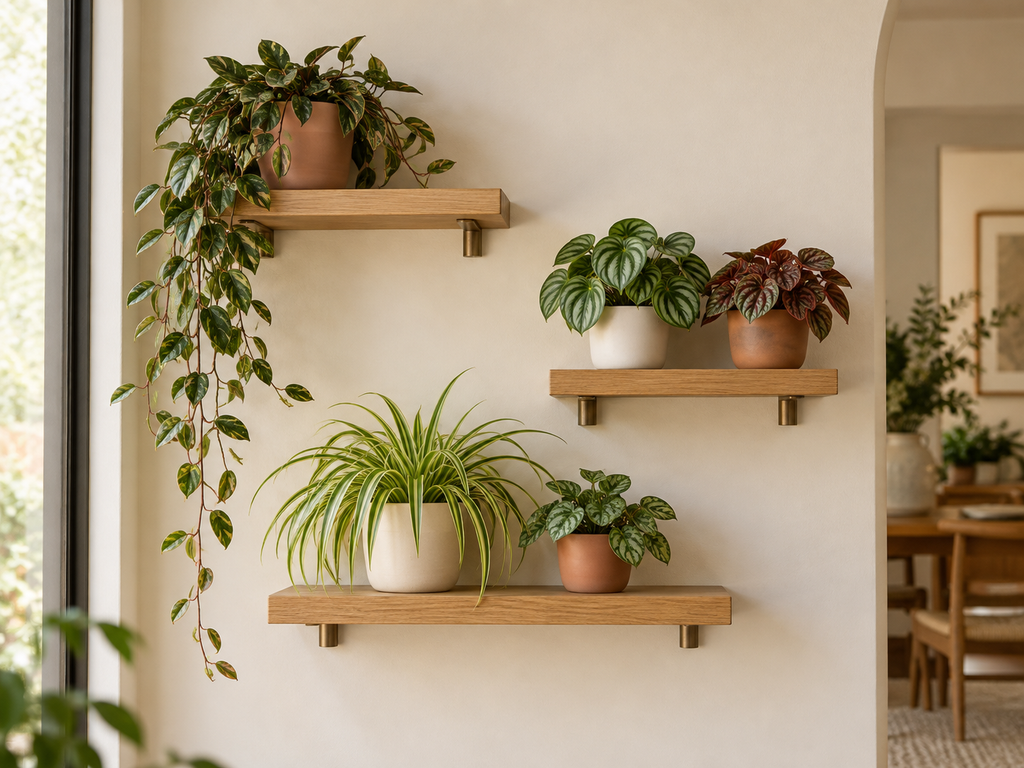
A 120 × 100 cm example wall could hold three staggered shelves: 40 cm upper-left, 35 cm middle-right, and 45 cm lower center-left.
| Shelf | Position measured from top | Suggested plants |
|---|---|---|
| Upper, 40 cm | Surface about 26 cm down | Trailing hoya |
| Middle, 35 cm | Surface about 55 cm down | Two small peperomias |
| Lower, 45 cm | Surface about 82 cm down | Spider plant and compact foliage |
Allow clearance for 10–12 cm pots and mature leaves. These are visual dimensions, not structural specifications; begin with fewer plants if crowded.
Which Plants Are Best for Indoor Walls?
Match trailing, compact, or climbing species to your light, watering needs, and pets. Leaf shape also changes the look: small leaves feel delicate, arching foliage adds fullness, and thick leaves create strong silhouettes. Choose mature plant dimensions, not just the size shown in a nursery pot.
| Plant | Growth style | General light preference |
|---|---|---|
| Golden pothos | Trailing/climbing | Low to bright indirect |
| Heartleaf philodendron | Trailing/climbing | Indirect |
| Spider plant | Arching | Moderate to bright indirect |
| Hoya carnosa | Trailing/climbing | Bright indirect |
| Peperomia obtusifolia | Compact | Moderate to bright indirect |
| Boston fern | Bushy | Filtered; consistent moisture |
| String of hearts | Fine trailing | Bright light |
Which Indoor Plant Combinations Work Best Together?
Pair spider plant, peperomia, and Hoya carnosa for contrasting shapes, or pothos, philodendron, and satin pothos for trailing foliage. Separate pots allow individualized watering.
Which Wall Plants Are Safer for Pets?
The ASPCA lists spider plants, Hoya carnosa, and Peperomia obtusifolia as non-toxic to cats and dogs. Golden pothos and many philodendrons contain irritating compounds if chewed. Verify species names; even non-toxic leaves can upset a pet’s stomach.
How Do You Style a Living Room Plant Wall?
Choose one focal area and coordinate planters with the room instead of covering every surface.
Above a Sofa
Avoid heavy or breakable planters directly above people. Place larger plants beside the sofa and use lightweight botanical artwork above it.
Beside a Television
Keep pots beside rather than over electronic equipment. Trim vines away from screens, cables, vents, and outlets.
Above a Console Table
Stagger two or three shelves above a console and add one larger pot on the table. Matching wood or ceramic tones create cohesion.
In a Small Living Room
Use a narrow plant rail or stable ladder shelf near adequate daylight. Select compact plants that leave walkways clear.
What Works for Small or Low-Light Walls?
Small, dim walls suit compact plants. Pothos and heartleaf philodendron tolerate lower light but may become sparse; no plant grows indefinitely in darkness.
How Can You Check Whether a Wall Gets Enough Light?
Observe window direction, curtains, nearby buildings, and seasonal light. A room can feel bright to people while a wall several metres from its window receives little usable light. Compare growth over several weeks, especially in winter.
| Condition | Best response |
|---|---|
| Bright indirect light | Choose appropriately suited foliage plants |
| Modest daylight | Try low-light-tolerant species |
| Harsh afternoon sun | Protect sensitive leaves |
| Little useful daylight | Add suitable grow lighting |
| No grow lighting or daylight | Choose preserved or artificial greenery |
Long stems, smaller leaves, or leaning growth may indicate insufficient light. Check other conditions too; see low-light indoor plants.
How Do You Hang Plants on a Wall?
Choose rated brackets, rails, or shelves that suit your wall and full wet load.
What Should You Check Before Mounting a Plant Wall?
- Confirm the wall is sound and identify suitable fixing points.
- Account for shelf, bracket, container, growing-medium, and water weight.
- Check all hardware and accessories are rated for the installation.
- Ensure pots cannot slide or tip.
- Keep containers away from beds, seating, and electrical fittings.
Which Wall Type Is Best for Hanging Plants?
Wall materials need different installation methods. Drywall may need attachment to framing or suitable rated anchors; plaster requires attention to the underlying structure; brick and concrete need compatible masonry fixings. On tile, protect waterproofing and assess the supporting wall rather than the tile alone.
| Wall type | Main consideration |
|---|---|
| Drywall | Framing or appropriate rated fixings |
| Plaster | Brittle finish and underlying supports |
| Brick or concrete | Sound material and compatible anchors |
| Tile | Substrate and waterproofing integrity |
| Uncertain or damaged | Investigate before mounting |
Check for concealed wiring and pipes. Projecting shelves increase leverage on fixings. Weighing watered pots estimates load but does not establish wall capacity; consult an installer when uncertain.
How Do You Choose Wall Planters?
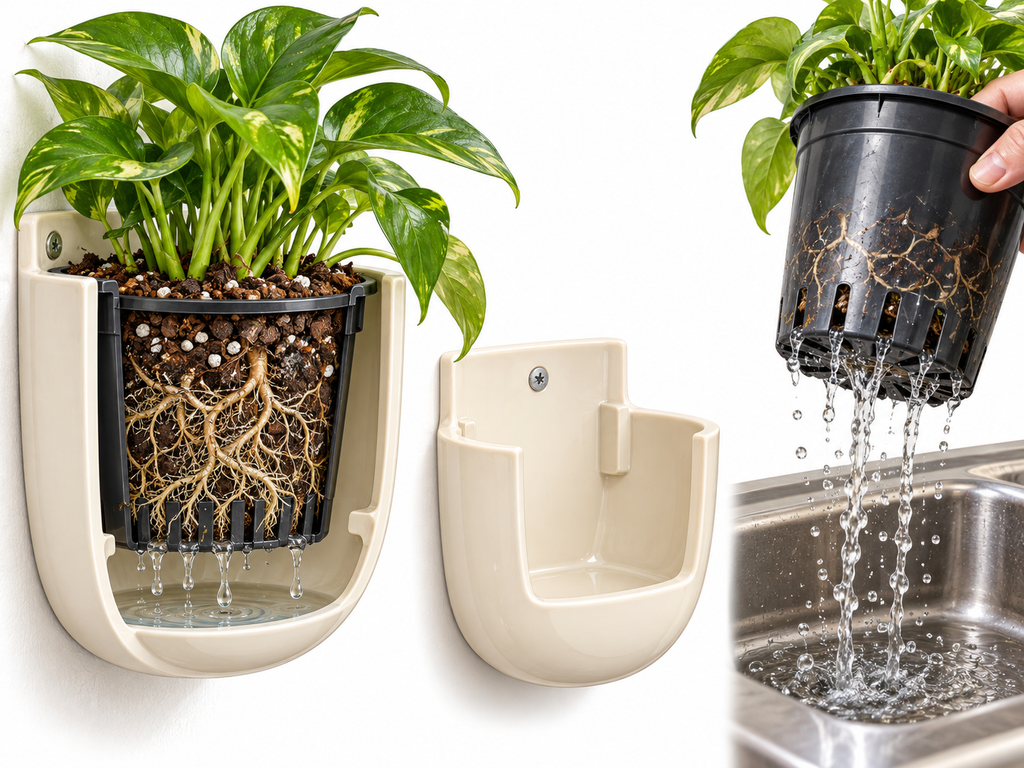
Choose by weight and drainage: plastic is light; ceramic heavier; porous terracotta dries faster; untreated metal may corrode.
| Drainage method | Best use |
|---|---|
| Removable pot inside waterproof holder | Individual indoor displays |
| Drainage pot and emptied saucer | Accessible shelves |
| Integrated irrigation and collection | Modular living walls |
| Watertight glass vessel | Suitable cuttings in water |
Gravel beneath potting mix cannot replace a drainage opening. Protect wall surfaces and regularly empty collected water.
What Are Easy DIY Plant Wall Ideas?
Start with a small, safely installed arrangement using removable pots.
What Supplies Do You Need for a Beginner DIY Plant Wall?
Gather shelves, rated brackets and fixings, a tape measure, level, two or three plants, draining pots, and waterproof holders.
DIY Project 1: Wooden Shelf Plant Wall
- Measure the wall and mark shelf positions.
- Preview spacing with paper templates, including mature foliage clearance.
- Identify structural fixing points and suitable hardware.
- Install brackets as instructed and securely mount level shelves.
- Confirm stability before adding any containers.
- Arrange one trailing and two compact plants in removable pots.
Keep heavy pots away from occupied seating and beds.
DIY Project 2: Glass Propagation Station
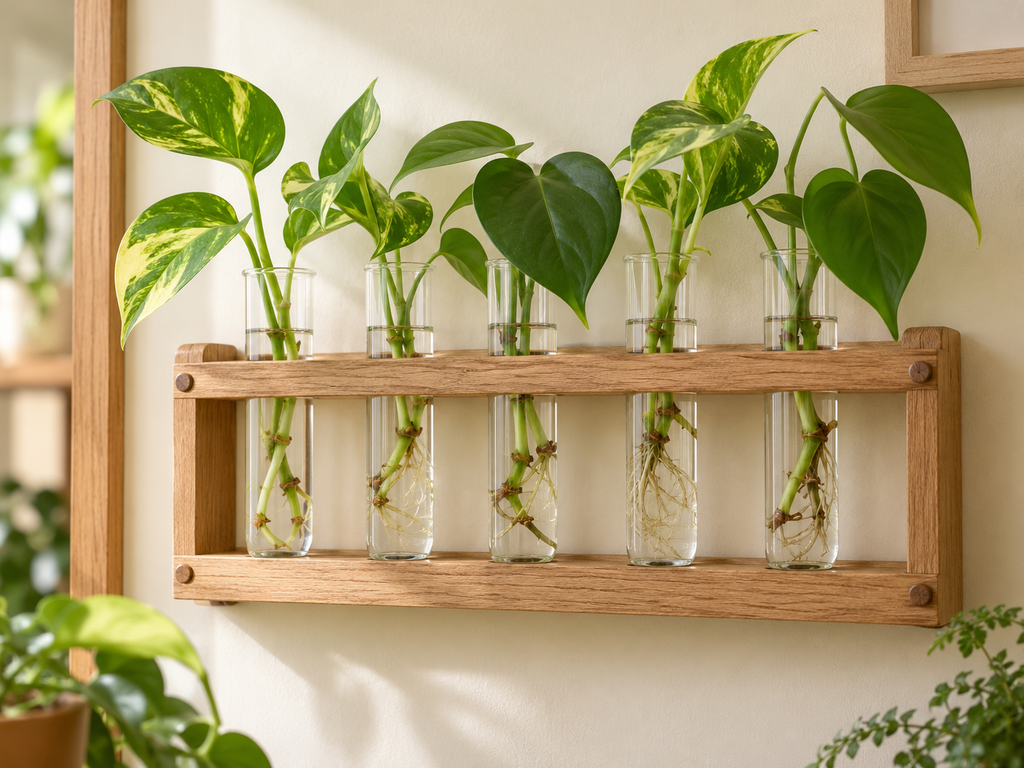
Mount secure glass holders in suitable indirect light. Insert healthy pothos or philodendron cuttings with rooting nodes below water and leaves above it. Change cloudy water, clean glass, and pot rooted cuttings when appropriate. A more detailed setup appears in propagation station ideas.
DIY Project 3: Hanging Plant Rail
Mount a rated rail using compatible structural fixings. Add two or three lightweight planters at staggered heights. Verify stability and leave space for removing containers and moving through the room.
How Can You Test a New Plant Wall Before Expanding It?
Photograph a two- or three-plant display, then monitor light, foliage, watering access, leaks, and movement for two weeks.
| Check | Record |
|---|---|
| Light | Direct sun and shaded periods |
| Moisture | Drying rate and watering dates |
| Plants | Wilting, yellowing, new growth |
| Wall | Water stains or condensation |
| Hardware | Movement or deterioration |
Two weeks reveals immediate issues but cannot prove long-term growth or structural safety. Recheck through seasonal changes.
What Can Replace Hanging Baskets?
Instead of baskets, try floating shelves, ceramic wall pockets, propagation vessels, plant rails, or stable ladder units. Compare drainage, light, and support; a narrow shelf with three plants may look less cluttered.
What Are the Best Outdoor Plant Wall Ideas?
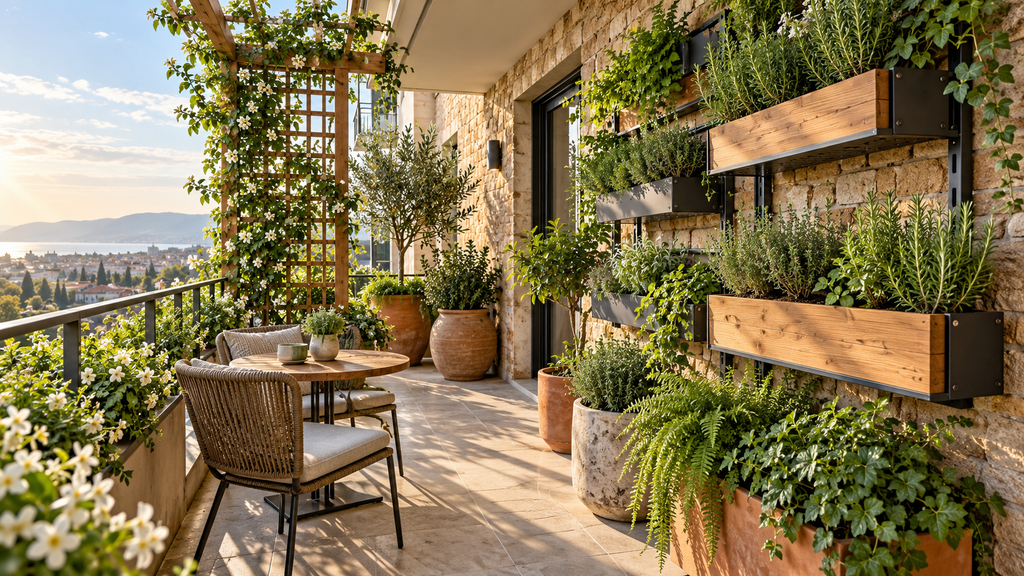
Use climate-suitable plants and weather-resistant hardware for sun, wind, and rain.
Balcony Plant Wall
Choose secure planters, check building rules and wind exposure, and prevent irrigation runoff reaching neighbors or walkways.
Outdoor Climbing Plant Wall
Train suitable vines on independent trellises. Research mature size and possible invasiveness, and protect gutters and windows.
Outdoor Herb Wall
Grow thyme, rosemary, or other locally suitable herbs in separate draining pots. Small containers may dry quickly during hot or windy weather.
Modular Outdoor Living Wall
Large systems need structural assessment, irrigation, reliable drainage, and maintenance access. Consider professional installation.
How Do You Maintain a Plant Wall?
Check moisture individually; rotate pots, prune vines, inspect pests, and clean surfaces. Leaves close to one another can conceal pests, while dense vines make watering difficult. Remove containers periodically to check the back of the display and examine roots when persistent decline suggests a potting problem.
How Should You Water Different Plant Wall Systems?
Check each pot before watering. Remove it, water over a sink, drain, and return to its holder. Macramé planters can also be removed; modular walls follow system instructions. Clean propagation tubes regularly and water air plants by species.
Never leave nursery pots sitting in collected water. The University of Maryland Extension’s houseplant watering guidance recommends watering according to plant needs and emptying saucers.
How Do You Troubleshoot an Unhealthy Plant Wall?
| Problem | First check |
|---|---|
| Long, weak stems | Insufficient light |
| Yellow leaves | Moisture, roots, drainage |
| Crispy edges | Dryness or environmental stress |
| Constantly wet mix | Drainage and root condition |
| Pests | Identify organism and isolate if needed |
| Water stains | Leaking or trapped water |
| Leaning holder | Remove load; assess installation |
Check conditions before changing several care factors simultaneously.
How Much Does a Plant Wall Cost?
Costs vary by region, hardware, plants, and lighting; shelves generally cost less than modular walls.
| Design | Relative setup cost |
|---|---|
| Propagation station | Low |
| Floating shelves or macramé | Low to moderate |
| Pegboard | Moderate |
| Wooden feature wall | Moderate to high |
| Modular living wall | High |
How Do You Calculate a DIY Plant Wall Budget?
List two shelves, suitable fixings, three plants, three nursery pots, three waterproof holders, and growing medium, plus optional installation or lighting.
Total = supports + plants and containers + supplies + installation or lighting. Compare local prices and never compromise on hardware.
What Plant Wall Mistakes Should You Avoid?
- Wrong light: Match species to the actual growing location.
- Overcrowding: Allow space for mature foliage and watering.
- Weak supports: Verify fixings and complete wet load.
- Poor drainage: Remove standing water and inspect for dampness.
- Uncontrolled vines: Prune growth away from electrics and fragile finishes.
A manageable display of healthy plants beats a large installation that’s difficult to maintain.
What Else Should You Know About Plant Walls?
1. What Is the Easiest Indoor Plant Wall for Beginners?
Two or three small plants on a secure shelf offer flexible styling and easy watering access.
2. Which Indoor Plant Is Best for Hanging Over a Wall?
Golden pothos produces cascading vines. Spider plants and trailing hoyas are alternatives for suitable light.
3. What Kind of Plants Can You Hang on a Wall?
Trailing vines, spider plants, peperomias, hoyas, and air plants all suit certain wall displays.
4. Can You Hang Plant Pots Directly on Drywall?
Yes, when suitable fixings or structural framing support the full wet load.
5. How Can You Hang Plants Without Drilling?
Choose stable freestanding shelves, ladder units, or suitable rated tension systems.
6. Where Should You Put a Plant Wall in a Living Room?
Choose an accessible, adequately lit wall beside a window or above a console.
7. Can You Make a Plant Wall Without Sunlight?
Suitable grow lights can support plants; otherwise use preserved or artificial greenery.
8. How Do You Water Wall Plants Without Damaging the Wall?
Remove pots, water over a sink, drain thoroughly, and replace them in waterproof holders.
9. Can You Hang Plants Above Your Bed?
Avoid heavy or breakable pots directly overhead; use adjacent walls or botanical artwork.
10. Do Indoor Plant Walls Attract Insects?
Houseplants can develop pests. Inspect new plants and avoid persistently saturated potting mix.
11. Which Hanging Wall Plants Are Safer for Pets?
Spider plants, Hoya carnosa, and Peperomia obtusifolia are ASPCA-listed non-toxic options.
12. Can Climbing Plants Damage Indoor Walls?
Adhesive roots may mark painted surfaces; use trellises or suitable clips.
13. How Many Plants Do You Need for a Small Plant Wall?
Three to five small plants generally provide variety while leaving room for growth.
14. Are Indoor Plant Walls Suitable for Rentals?
Yes. Use stable freestanding displays and check tenancy rules before drilling.
15. How Do You Make a Plant Wall Look Expensive?
Coordinate materials and colors, leave open space, and keep the foliage healthy.
16. What Can Replace Living Plants on a Wall?
Preserved moss, artificial vines, and botanical prints provide decorative alternatives.
17. What Can You Use Instead of Hanging Plant Baskets?
Try floating shelves, plant rails, wall pockets, propagation vessels, or ladder shelves.
18. How Much Does a DIY Plant Wall Cost?
It varies with plants and hardware; small shelf displays usually cost less than modular systems.
How Do You Start Your First Plant Wall?
Choose a suitably lit position and start with a secure shelf or stable freestanding display holding two or three compatible plants. Use removable pots, manage drainage, and watch plant growth before expanding.
A healthy, secure, easy-to-water display is better than one you cannot maintain.
Myra is the founder and lead writer of Plantsaholic. She shares practical, research-backed advice on indoor plants, outdoor gardening, flowers, herbs, succulents, and everyday plant care. Her goal is to help gardeners of all experience levels grow healthier plants through simple, easy-to-follow gardening guides.