The best propagation station ideas combine suitable plant cuttings, removable vessels, enough root space, and bright indirect light. Beginners can start with simple glass jars, while wall-mounted stations save space and large, stable vases suit bigger cuttings. Always choose the propagation method and vessel around the plant rather than the décor.
Quick Propagation Station Selector
Before choosing a design, match the station to the cutting, available space, and maintenance you can realistically provide.
| Your Situation | Best Station Direction | Main Advantage | Watch Out For |
|---|---|---|---|
| First-time propagator | Glass jars on a tray | Easy and inexpensive | Unstable containers |
| Small vine cuttings | Test tubes or small jars | Compact and organized | Narrow openings |
| Large Monstera cutting | Wide heavy vase | Stability and root space | Top-heavy foliage |
| Several varieties | Multi-vessel station | Easy labeling | Crowding |
| Small apartment | Wall or vertical station | Saves space | Weak mounting |
| Dark room | Shelf with grow light | Better light control | Poor lamp position |
| Occasional propagation | Reused jars | Low cost | Narrow-neck bottles |
| Décor-focused setup | Wooden vessel stand | Attractive and practical | Fixed vessels |
Propagation stations combine plant care with indoor décor, but appearance should come after function. Clear vessels make roots easy to monitor, while organized holders keep cuttings together.
This Plantsaholic guide focuses on the decisions that matter most: whether a station suits your cutting, which design fits your space, what plants work well, where to place it, how to maintain it, and when rooted cuttings should move on.
What Is a Propagation Station?
A propagation station is a setup used to hold plant cuttings or other propagating material while roots and new growth develop. Indoor versions usually use jars, bottles, or test tubes filled with water, but a station can also hold perlite, propagation mix, or another suitable medium.
The station itself is not a propagation method. It simply keeps propagating material organized, stable, visible, and easy to maintain. The biological method depends on the plant: some root from nodal stems, others from leaves, plantlets, offsets, divisions, or rhizomes.
A practical station should provide:
- A stable base, frame, tray, or shelf
- Removable vessels
- Enough space for roots
- Easy cleaning and inspection
- Suitable light
- Adequate spacing between cuttings
Clear glass is popular because it lets you watch roots develop and spot cloudy water or decay early. Still, expensive equipment is unnecessary. A clean jar in the right location can perform the same basic job as a designer test-tube stand.
Are Propagation Stations Right for Your Cutting?
A propagation station is useful only when the plant part you have can produce a new plant using the chosen method. Before putting a stem or leaf into water, identify the plant and confirm which tissue is capable of regeneration.
This prevents a common mistake: treating every attractive leaf or stem like a pothos cutting. A pothos stem with a viable node differs from a detached leaf that lacks the structures needed to form a complete plant. African violets can reproduce from suitable leaves, while spider plants naturally produce plantlets.
Before using a station, ask:
- What plant is this?
- What plant part do I have?
- Can it form a complete new plant?
- Is water suitable for this species?
- Would a solid medium work better?
- Can the future roots leave the vessel safely?
- Is this temporary rooting or long-term water culture?
Use another method when the species repeatedly rots in water, naturally propagates by division or offsets, needs to callus first, or performs more reliably in a solid medium. The station should support the correct method, not dictate it.
Which Propagation Station Fits Your Space?
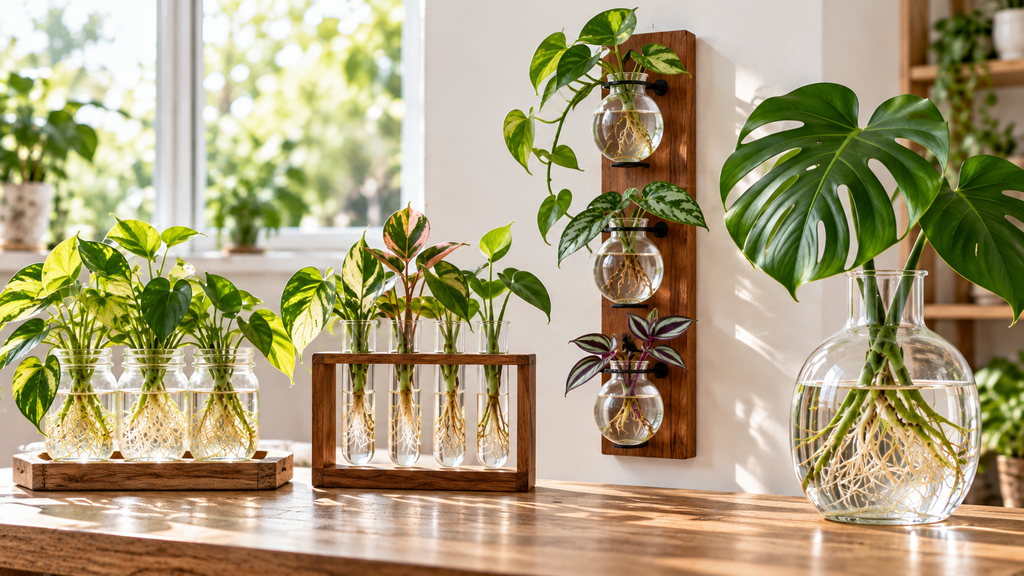
The right station depends on what the cutting needs and what the room can support. A compact test-tube holder may suit small pothos cuttings but become unstable with a large Monstera leaf. A wall-mounted station may save shelf space yet fail if the wall is too dark.
Choose in this order:
Match the vessel to the cutting. Small vine cuttings can use narrow removable vessels. Large leafy cuttings need wider, heavier containers. Avoid narrow-neck bottles if you expect a branching root system.
Match the station to the room. Use tabletop setups for flexibility, wall-mounted designs for limited horizontal space, vertical racks for narrow rooms, and grow-light shelves where natural light is poor.
Reject a design when:
- Roots could become trapped
- Containers cannot be removed individually
- The station becomes unstable when full
- Foliage will overlap heavily
- The location has unsuitable light
- Cleaning requires dismantling the setup
- Spilled water could damage nearby items
The most practical station may be simpler than the most decorative one, but it will be easier to maintain.
Best Propagation Station Ideas for Indoor Plants
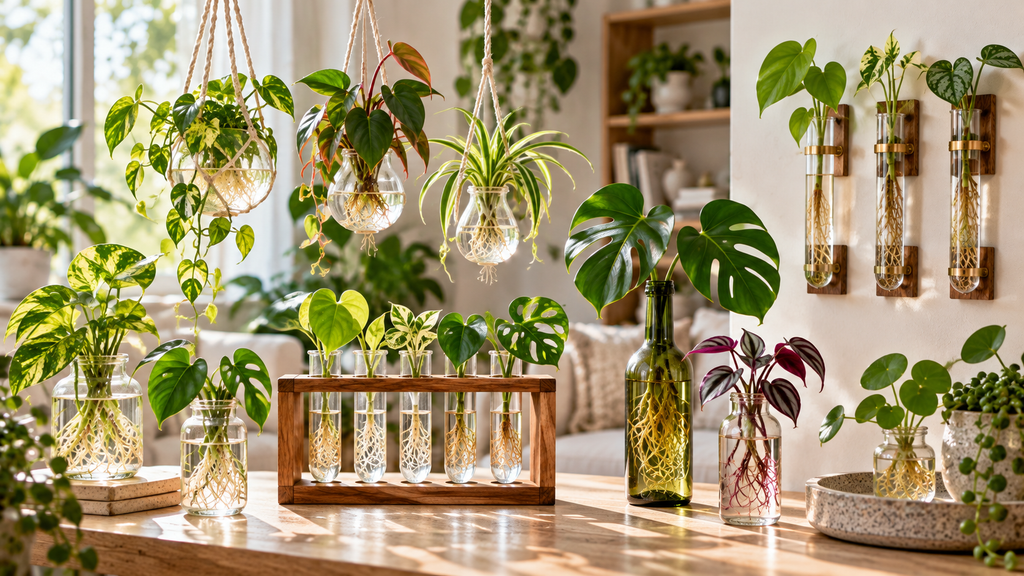
The strongest propagation station ideas for indoor plants combine usable root space, removable vessels, easy cleaning, and a design suited to the cutting.
1. Mason Jar Propagation Station
Mason jars are inexpensive, stable, reusable, and roomy enough for many common cuttings. They are especially useful when roots would quickly outgrow a test tube.
Best for: beginners and medium-to-large cuttings.
Main limitation: uses more shelf space.
2. Wooden Test-Tube Stand
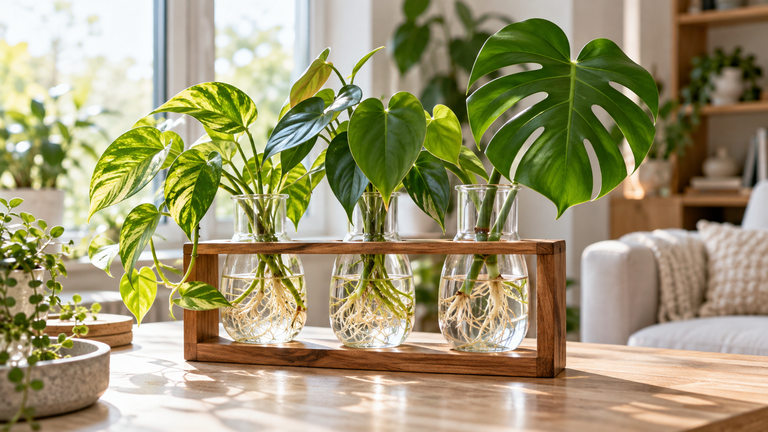
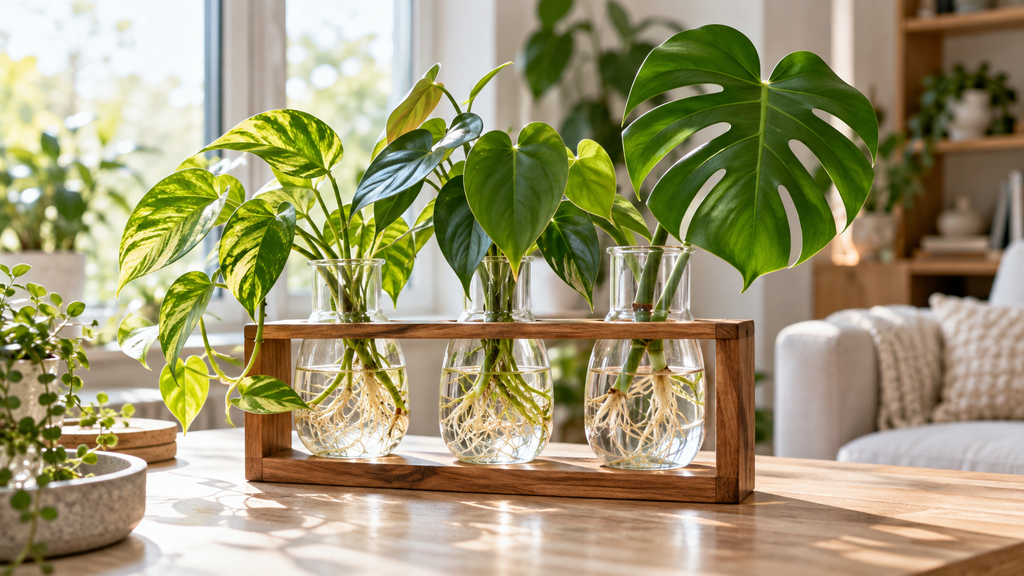
A wooden block with removable glass tubes creates the classic propagation-station look and keeps small cuttings separated.
Best for: pothos, philodendron, Tradescantia, and décor-focused setups.
Watch out for: roots outgrowing narrow tubes.
3. Wall-Mounted Propagation Station
A wall-mounted station saves horizontal space and works well in small apartments. The mounting system must safely support the frame, glass, water, and foliage.
Avoid when: the wall is too dark or difficult to reach.
4. Hanging Propagation Station
Suspended glass vessels create a light, decorative display that suits trailing plants. Keep the station low enough to maintain and away from busy walkways.
5. Windowsill Propagation Station
A narrow tray of jars can turn a bright windowsill into a practical station. Avoid locations where intense direct sun heats small vessels for long periods.
6. Recycled Glass Bottle Station
Clean beverage bottles, spice jars, and small vases make low-cost propagation vessels. Check the neck width before use so future roots will not become trapped.
7. Floating-Shelf Propagation Station
A floating shelf lets you combine jars, tubes, and larger vessels instead of using one container size. Protect the shelf from repeated spills.
8. Vintage Spice-Rack Station
A sturdy spice rack can become a tiered propagation display with removable vessels. Check its weight capacity before filling every level.
9. Picture-Frame Propagation Wall
A deep frame fitted with lightweight vessels turns cuttings into wall art. Keep containers small and mount the frame securely.
10. Magnetic Mini Station
Magnetic vessel holders create a flexible display on compatible metal surfaces. Use only secure holders designed for the weight of filled containers.
11. Large Monstera Vase Station
A wide, heavy-bottomed vase is often better than test tubes for a substantial Monstera cutting. It gives roots more room and reduces tipping.
12. Minimalist Scandinavian Station
Pale timber, clear glass, and a few well-spaced cuttings create a clean display. Negative space also makes inspection and cleaning easier.
13. Boho Wood-and-Rope Station
Natural timber, rope, and clear glass suit trailing foliage and relaxed interiors. Keep absorbent rope away from standing water.
14. Desktop Propagation Station
A compact two- or three-vessel station can fit on a desk. Verify that the location receives enough plant-usable light rather than judging brightness by eye alone.
15. Vertical Station for Small Apartments
A narrow rack can hold several rows of vessels while using little horizontal space. Leave enough distance between levels to prevent shading.
16. Grow-Light Propagation Shelf
A grow-light shelf is useful where natural light is weak or inconsistent. It also creates one dedicated area for regular propagation.
17. IKEA Propagation Station
A ready-made IKEA propagation set can suit users who want an organized display without woodworking. Availability and specifications vary by country, so check your regional store.
18. Mixed Propagation-and-Houseplant Shelf
Integrate cuttings into an existing plant shelf instead of creating a separate station. Fresh cuttings, rooted cuttings, and established plants can occupy different levels.
Good styling should make propagation easier. Keep vessels removable, leave room around foliage, avoid dark locations chosen only for appearance, and let healthy roots remain part of the display.
Which Plants Work in Propagation Stations?
Propagation stations work best with plants and plant parts known to respond well to the selected rooting method. Instead of asking only which plants can go in water, ask which plant part is being propagated and whether water makes sense for it.
Common examples include pothos, heartleaf philodendron, Monstera, Tradescantia, coleus, spider plant plantlets, Hoya, African violet, snake plant, ZZ plant, and jade. However, their propagation methods are not identical.
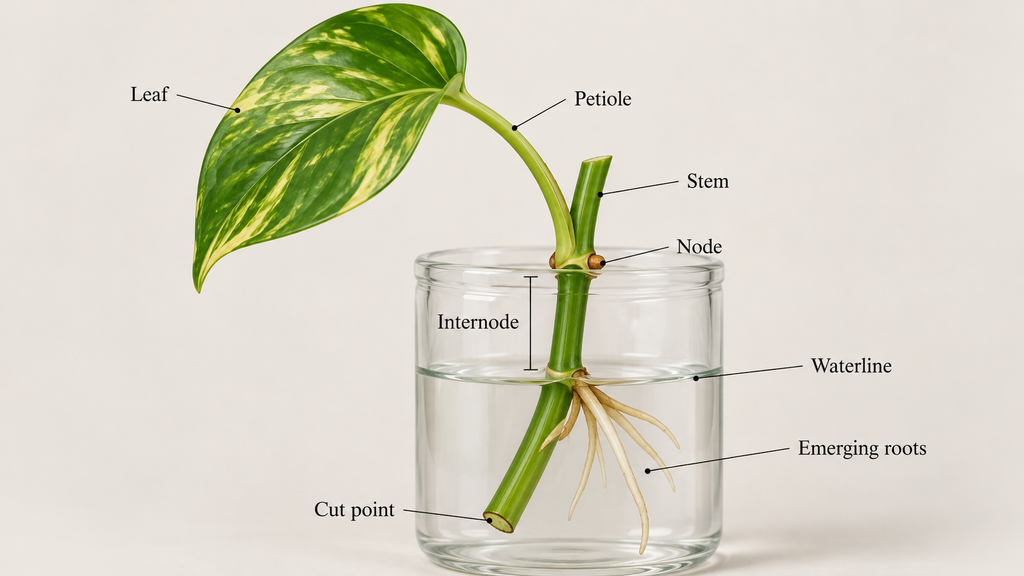
For many vining houseplants, nodal stem cuttings work well because nodes contain growing tissue. But not every propagation method needs a node. Some plants can reproduce from leaves, roots, plantlets, offsets, or divisions.
The useful question is: what structure does this species need to produce a complete new plant?
When Should You Use Another Propagation Method?
Use another propagation method when water does not match the biology of the plant or the plant part you have.
Some plants develop more reliably in a solid propagation medium. Others naturally multiply through divisions, offsets, rhizomes, bulbs, seeds, layering, or grafting.
Consider another method when:
- Woody material repeatedly rots in water
- A succulent or cactus cutting needs to callus
- The plant naturally produces divisions or offsets
- Species-specific guidance favors a different method
- The cutting lacks the correct propagating tissue
- Repeated water attempts fail despite suitable conditions
For example, a pothos cutting may adapt readily to water, while a jade cutting may benefit from a different process. Treating both cuttings identically simply because you own a propagation station ignores the biological difference between them.
Water vs Propagation Medium: Which Is Better?
Neither water nor a solid propagation medium is always better.
Water is excellent for monitoring roots and works well with plants that root readily in it. Perlite, propagation mix, or another aerated medium may be more suitable when the species performs better outside standing water or when you want roots to develop in conditions closer to their future potting environment.
Choose water when:
- The species commonly roots in water
- Visible root monitoring is useful
- The cutting fits the vessel properly
- You can maintain clean conditions
- The cutting will eventually be transplanted
Consider another medium when water repeatedly causes rot, species-specific guidance recommends something else, or greater root aeration is helpful.
The best medium is the one that suits the species and your final growing goal.
How to Make a DIY Propagation Station
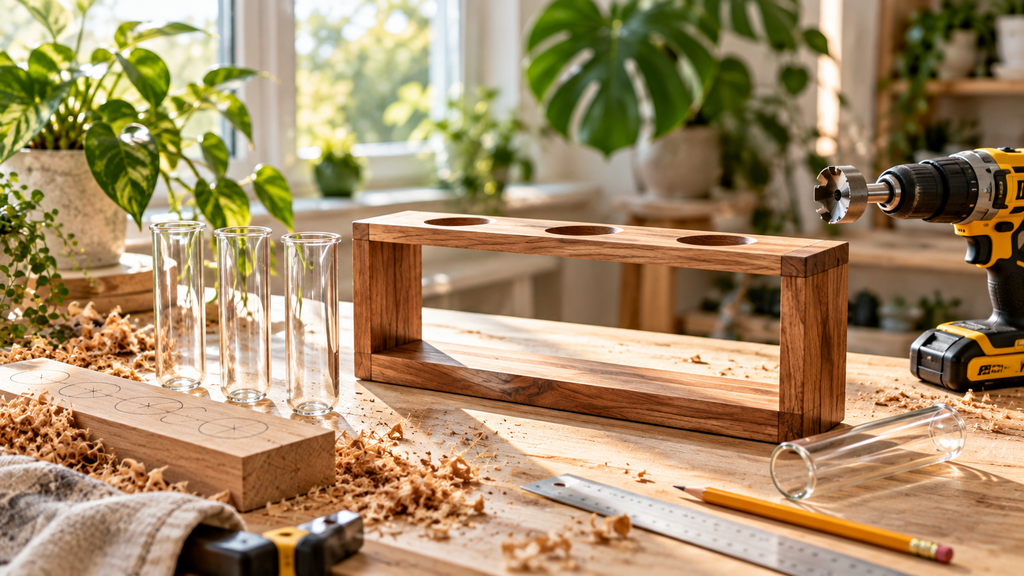
A simple homemade propagation station can be made with a wooden board or block and removable glass vessels. Prioritize stability, correct vessel fit, enough room for foliage, and easy cleaning.
Before building, confirm that each vessel can be removed, future roots can leave the opening, the holder remains stable when full, and the station fits its intended location.
Step 1: Choose the vessels
Select the glass first and measure its actual diameter instead of copying someone else’s dimensions.
Step 2: Plan the spacing
Leave room for leaves as well as glass. A station can look well spaced when empty but become crowded once cuttings are inserted.
Step 3: Mark and drill
Mark each opening carefully, clamp the wood, and use tools safely. If you are not comfortable with woodworking, jars on a tray are a perfectly good alternative.
Step 4: Sand and protect the wood
Smooth the openings and edges. A suitable finish can make spills easier to wipe away.
Step 5: Test the station
Fill every vessel with water before adding plants. Check for wobbling, tipping, poor access, spill risk, and insufficient foliage clearance.
Step 6: Add healthy cuttings
Use clean tools and healthy parent material. Remove unnecessary leaves that would remain underwater, then place the station where conditions suit the plant.
Where Should You Put a Propagation Station?
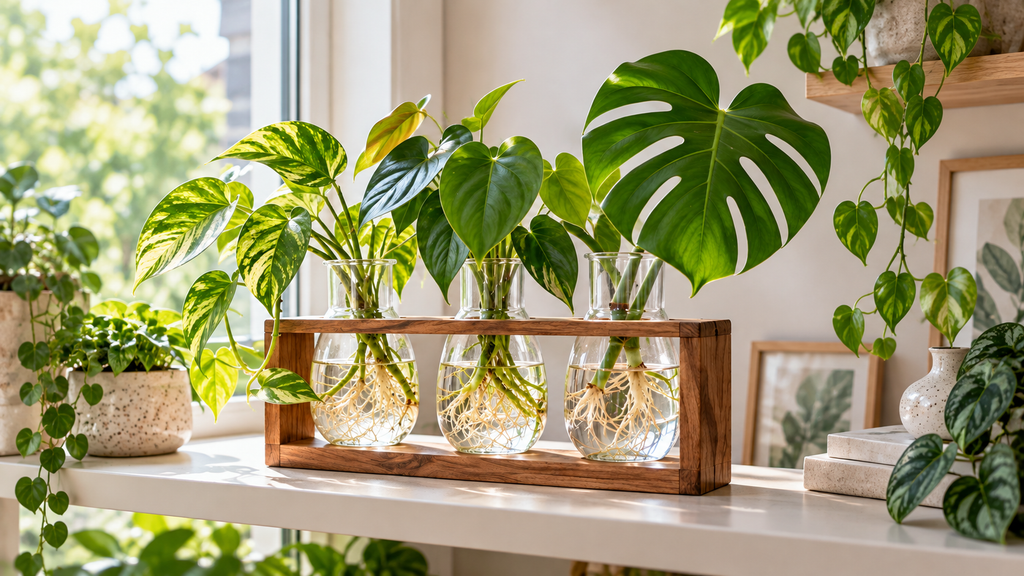
Place a propagation station where it receives suitable light, stable temperatures, and easy maintenance access.
For many common houseplants, bright indirect light is a useful starting point. Avoid relying on one global rule such as always using an east-facing window because latitude, season, buildings, curtains, trees, glazing, and distance from the window all affect real light levels.
Check six things:
- Light: useful brightness without prolonged harsh exposure
- Heat: glass should not become excessively hot
- Drafts: avoid repeated airflow from air conditioners, fans, and exterior doors
- Stability: consider pets, children, curtains, and top-heavy foliage
- Access: every vessel should be removable
- Spill risk: avoid placing water above electronics or moisture-sensitive surfaces
Before permanently mounting a station, place an ordinary jar in the intended location for several days. Observe light, heat, accessibility, stability, and evaporation first.
How to Maintain a Propagation Station
Propagation stations need simple but consistent maintenance.
Keep vessels clean, top up water when evaporation exposes tissue that should remain submerged, and change water when it becomes cloudy, dirty, or unpleasant-smelling.
For ordinary stem propagation, keep unnecessary foliage above the waterline. Submerged leaves can decay and reduce water quality.
Label similar plants if cultivar identity matters. Several pothos, philodendron, or Hoya varieties can look similar as small cuttings.
Inspect stems as well as roots. Healthy tissue should usually remain firm. Soft, collapsing, slimy, or foul-smelling tissue suggests a problem.
Avoid overcrowding. Too many cuttings create tangled roots, overlapping foliage, harder cleaning, and more difficult monitoring.
Why Is Your Propagation Station Failing?
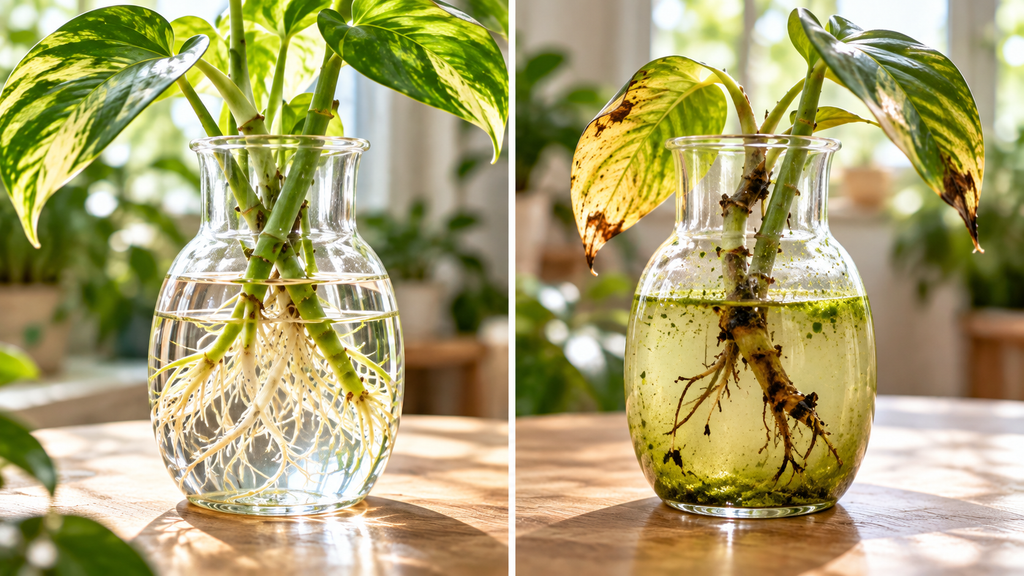
When a cutting struggles, diagnose the symptom before applying a fix. Cloudy water, algae, slow rooting, yellow leaves, and soft stems do not all mean the same thing.
Cloudy water often comes from decomposing material or microbial buildup. Remove dead leaves, inspect the stem, clean the vessel, and refill it.
Algae can develop when light reaches nutrient-containing water. Clean the vessel and review light exposure without moving the plant into complete darkness.
If there are no roots, check whether the species suits water propagation, whether the cutting contains the right tissue, whether the stem remains healthy, whether the temperature and light are appropriate, and whether the plant simply needs more time.
A soft or mushy stem often indicates deterioration. Remove affected tissue if healthy material remains and restarting the propagation still makes sense.
If a cutting wilts after transplanting, young roots may be adjusting to a different growing environment. Maintain suitable moisture and avoid repeatedly disturbing the roots.
The solution to repeated failure is not always more frequent water changes. Sometimes the correct decision is to change the propagation method.
When Should Cuttings Leave the Propagation Station?
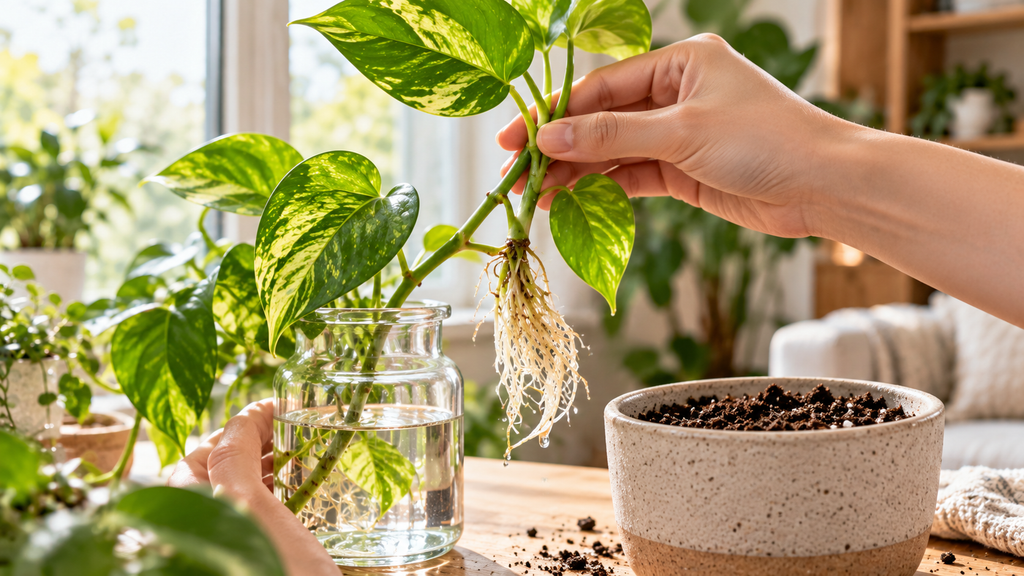
A cutting should leave the propagation station once it develops a healthy young root system capable of establishing in its next growing medium.
Do not keep cuttings in water solely because long roots look attractive. Extremely long or tangled roots can become difficult to remove from narrow vessels and harder to position in potting mix.
Signs a cutting may be ready include:
- Several healthy roots where appropriate
- Continued active root development
- Firm stem tissue
- Reasonably healthy foliage
- Enough roots to anchor in the destination medium
- A vessel beginning to feel crowded
Avoid using one universal root-length rule for every plant. Species, cutting size, root structure, and final growing medium all affect timing.
Think of the propagation station as a nursery stage, not automatically a permanent growing system.
DIY vs Ready-Made Propagation Stations
A DIY propagation station is best when you want low cost, flexible vessel sizing, custom spacing, or a design tailored to your room. A ready-made station is better when convenience, coordinated appearance, and immediate setup matter more.
Neither option makes a cutting root better by itself.
Choose DIY when you already have jars or glassware, need unusual vessel sizes, want custom spacing, or enjoy making plant-care equipment.
Choose ready-made when you want fast setup, matching containers, a polished gift, or a coordinated display without tools.
An IKEA propagation station may be useful if you want a finished system without construction. Check your regional IKEA site because availability and specifications vary by country.
Before buying any station, ask whether the vessels are removable, wide enough for root removal, easy to clean, stable when full, and large enough for your preferred cuttings.
Build for customization. Buy for convenience.
Propagation Station FAQs
What can I grow in a propagation station?
Pothos, philodendron, Monstera, Tradescantia, Hoya, coleus, and spider plant plantlets are common choices. Always confirm the correct plant part and method.
Which plants should not be propagated in water?
Some woody plants, succulents, cacti, and division-based plants may perform better with another method or medium.
Do all plant cuttings need a node?
No. Many stem cuttings need a node, but some plants propagate from leaves, offsets, plantlets, roots, or divisions.
Where should I put a propagation station?
Use a bright, stable location with easy access. Avoid very dark areas, strong heat, and harsh prolonged direct sun.
How often should you change propagation water?
Change it when it becomes cloudy, dirty, or develops an odor. Top it up when evaporation lowers the level too far.
Is clear glass better for propagation?
Clear glass makes roots, algae, and water condition easier to monitor, but transparency is not essential.
Are narrow-neck bottles good for propagation?
They can work for small cuttings, but roots may become trapped. Wider openings are usually easier to clean and empty.
Can several cuttings share one jar?
Yes, if the jar is large enough. Separate vessels make labeling, monitoring, and preventing tangled roots easier.
How long do cuttings take to root?
Rooting time varies by species and conditions. Some plants root within weeks, while others take considerably longer.
Why is my cutting not growing roots?
It may lack the correct tissue, need more time, or have unsuitable light, temperature, or rooting conditions.
Can propagated cuttings live in water permanently?
Some can, but temporary propagation and permanent water culture are different systems with different care requirements.
Is a propagation station worth buying?
It can be useful for frequent propagation or organized displays. For occasional use, simple glass jars may be enough.
Final Thoughts
The best propagation station is not the one with the most tubes, the highest price, or the most dramatic wall display. It is the one that matches the plant, gives the cutting enough room, sits in an appropriate location, and remains easy to clean and inspect.
Use this decision order whenever you build or buy one:
Plant → plant part → propagation method → vessel → space → location → maintenance → transplant.
For beginners, a few clean glass jars on a stable tray are usually enough. As your plant collection and propagation habits grow, you can move to test-tube stands, wall-mounted systems, larger vessels, or a dedicated propagation shelf.
Most importantly, let the plant determine the setup. A healthy cutting in a simple jar is a better propagation station than an elaborate display using the wrong plant material, poor light, or impractical containers.
Myra is the founder and lead writer of Plantsaholic. She shares practical, research-backed advice on indoor plants, outdoor gardening, flowers, herbs, succulents, and everyday plant care. Her goal is to help gardeners of all experience levels grow healthier plants through simple, easy-to-follow gardening guides.