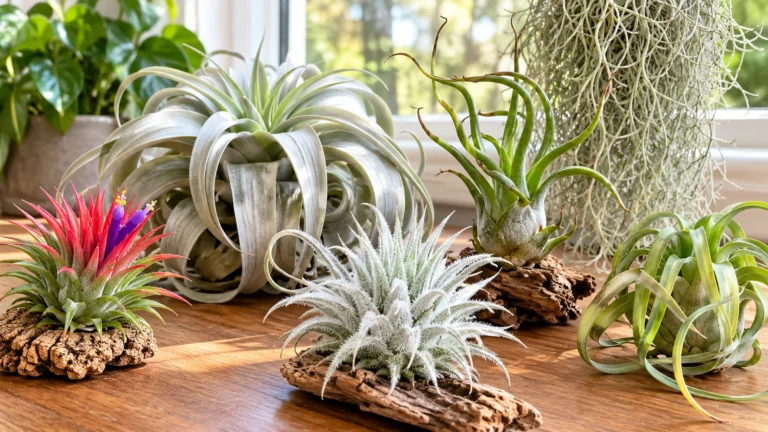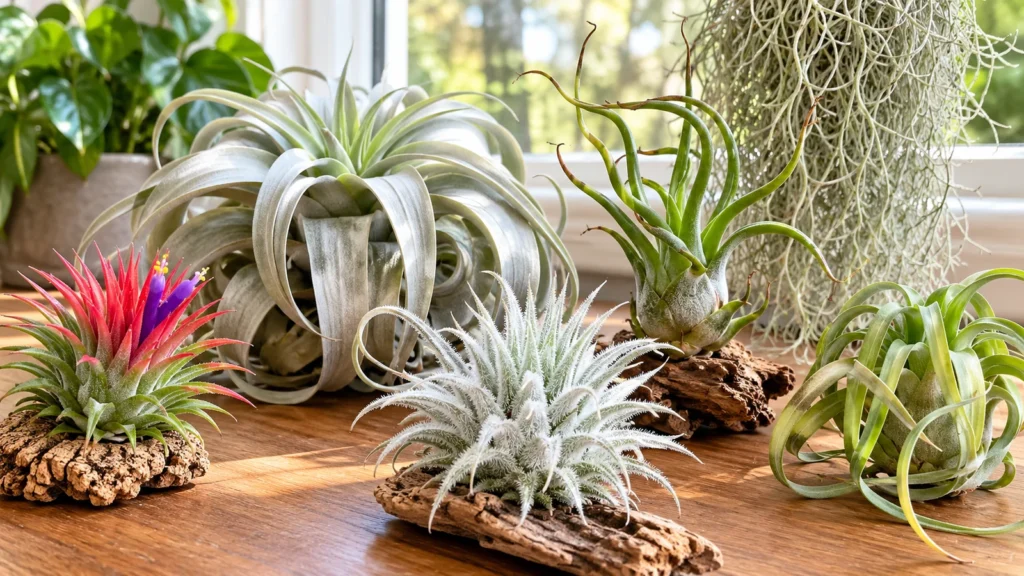
Air plant types range from tiny, red-blushing Tillandsia ionantha to wide, silver-leaved Tillandsia xerographica. These soil-free bromeliads differ in leaf shape, mature size, moisture tolerance, and growth habit. The best choice depends on your light, watering routine, and display space, not just appearance.
This Plantsaholic guide compares 18 recognizable varieties, explains how to identify similar species, and shows how to adapt care to the plant you actually own.
| Your priority | Best starting choice | What to look for |
|---|---|---|
| First air plant | T. ionantha | Small, pointed rosette |
| Statement centerpiece | T. xerographica | Broad silver curls |
| Unusual twisted leaves | T. streptophylla | Wide curling ribbons |
| Fuzzy foliage | T. tectorum | Dense white leaf scales |
| Hanging display | T. usneoides | Long trailing strands |
What Are the Main Air Plant Types?
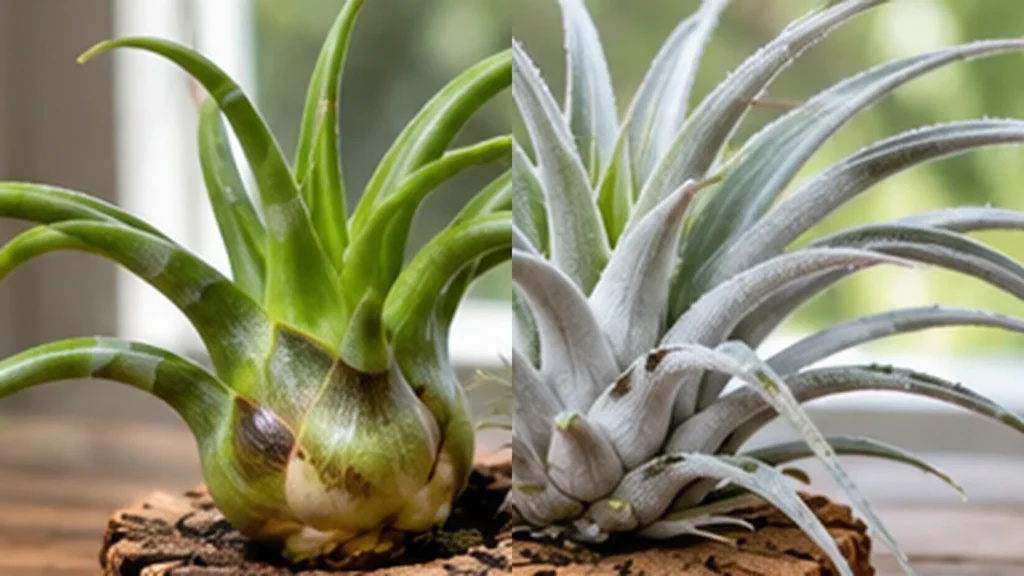
Tillandsia is a genus in the bromeliad family. Kew’s Plants of the World Online currently recognizes 700 accepted species. Most familiar ornamental air plants are epiphytes, growing attached to trees without feeding on them; others are lithophytes, growing on rocks. Their roots mainly anchor them, while leaf scales called trichomes collect water and dissolved nutrients.
What Are Mesic Air Plants?
Mesic Tillandsia typically come from environments with relatively reliable moisture. They often look greener and smoother, although appearances overlap. T. bulbosa, T. stricta, and T. brachycaulos are useful examples. They generally appreciate regular hydration, filtered light, and enough air movement to dry between waterings.
What Are Xeric Air Plants?
Xeric types are adapted to relatively dry or exposed habitats. Many, including T. xerographica, T. tectorum, and T. harrisii, have silvery foliage with more conspicuous trichomes. They may tolerate longer dry intervals, but xeric does not mean never water. Check each species rather than using leaf color as a complete care prescription.
Which 18 Air Plant Types Are Popular?
These 18 Tillandsia offer contrasting shapes, textures, and display possibilities. They are familiar ornamental choices, not a verified sales ranking. Botanical names are given where possible; one widely used nursery name has an updated taxonomic treatment.
1. Tillandsia Ionantha — Blushing Air Plant
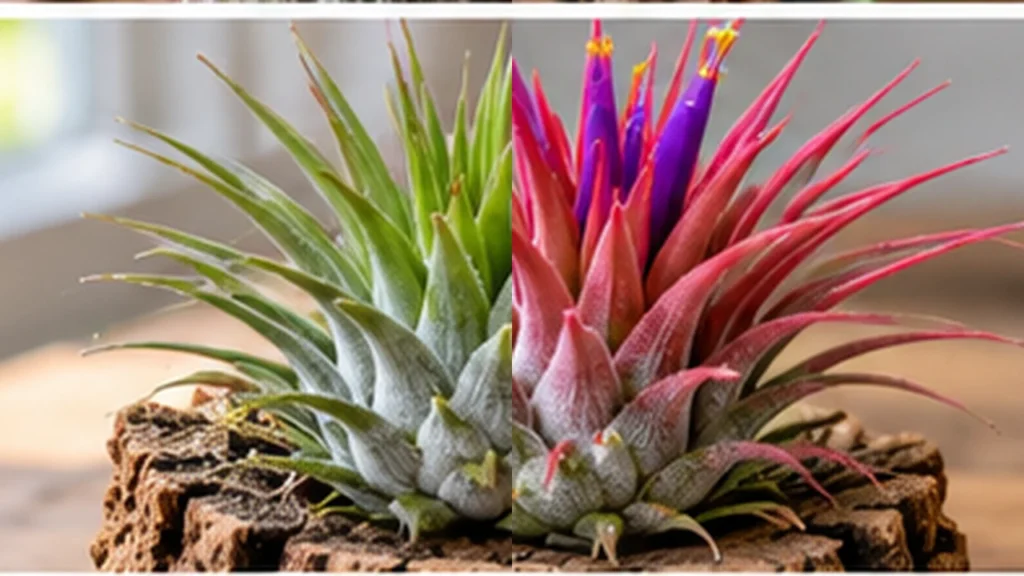
A small rosette of narrow, pointed leaves identifies T. ionantha. Green or silvery foliage can turn vivid pink or red near flowering, followed by purple blooms. Its compact form works on a cork mount or bright office shelf. Provide bright filtered light, adequate wetting, and complete drying. Named selections include ‘Fuego’, valued for red color, and ‘Druid’, known for its pale flowers and yellowish blush.
2. Tillandsia Xerographica — Queen of Air Plants
T. xerographica forms a wide, symmetrical rosette with broad, curling silver-gray leaves. It is an excellent large centerpiece where its foliage will not be crushed. Give it bright, diffused light and generally less frequent hydration than greener species. After immersion, turn it upside down and remove water between overlapping leaves. Drying the center is particularly important for preventing crown problems.
3. Tillandsia Caput-Medusae — Medusa’s Head
Curving, tentacle-like leaves rising from an inflated base give T. caput-medusae its recognizable silhouette. The apparent bulb is formed by overlapping leaf sheaths, not a conventional storage bulb. It often looks silver-green rather than glossy green. Provide bright indirect light, wet the leaves appropriately, and drain its hollow-looking base carefully. Avoid closed containers that trap moisture around the sheaths.
4. Tillandsia Bulbosa — Bulbous Air Plant
T. bulbosa combines glossy, dark green leaves with narrow, twisting tips and a swollen-looking base. Compared with caput-medusae, it usually appears smoother and greener. It can suit a relatively humid room that also receives sufficient light. Hydrate regularly when needed, then tilt and shake the plant to release droplets held inside the overlapping leaves.
5. Tillandsia Stricta — Upright Air Plant
T. stricta grows as a compact rosette of slim, upright or gently arching leaves. Its green to gray-green foliage may be accompanied by striking pink flowering bracts. It suits a small display and is reasonably approachable for new growers. Provide bright indirect light and regular but not constant moisture. An open mount makes it easier to inspect the center after watering.
6. Tillandsia Brachycaulos — Red-Blushing Air Plant
Broad, smooth, arching leaves distinguish T. brachycaulos from the smaller, spikier ionantha. Its foliage can become pink or red as it approaches flowering. Use filtered light and consistent hydration, then let it dry. Do not move it abruptly into intense sunlight in an attempt to force red coloration; sudden exposure can scorch its leaves.
7. Tillandsia Tectorum — Fuzzy Air Plant
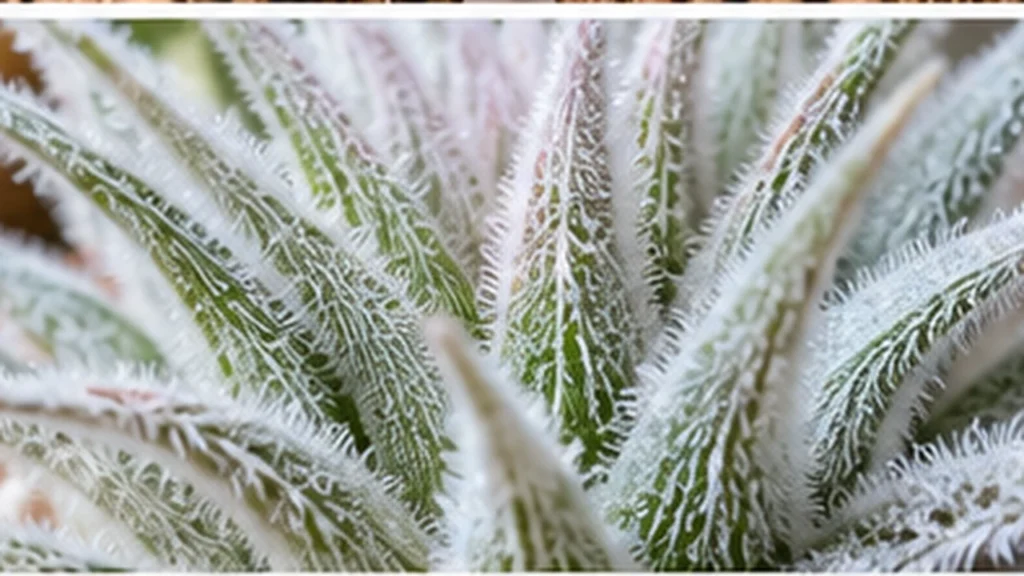
Dense white trichomes give T. tectorum its unmistakably woolly, frosted appearance. Its silvery leaves help differentiate it from smoother green species. This type prefers bright, airy conditions and careful watering, rather than routinely lengthy soaks. Let moisture evaporate promptly and never rub or scrub the white surface coating, which is part of the living leaf.
8. Tillandsia Streptophylla — Curly Air Plant
T. streptophylla produces broad ribbon-like leaves that twist into loose loops or tight curls. Leaf curling can change with hydration, so shape alone should not be treated as a thirst meter. It differs from xerographica in its more twisting, less uniformly silver form. Give it bright filtered light and drain the overlapping leaf bases after wetting.
9. Tillandsia Aeranthos — Flowering Air Plant
Narrow, firm leaves and a tidy rosette identify T. aeranthos. Mature plants may produce contrasting pink bracts and violet-purple flowers. It can develop clusters through offsets, making it attractive on hanging mounts. Provide bright light, appropriate watering, and circulation through the clump. Do not let the interior remain damp after immersion.
10. Tillandsia Usneoides — Spanish Moss
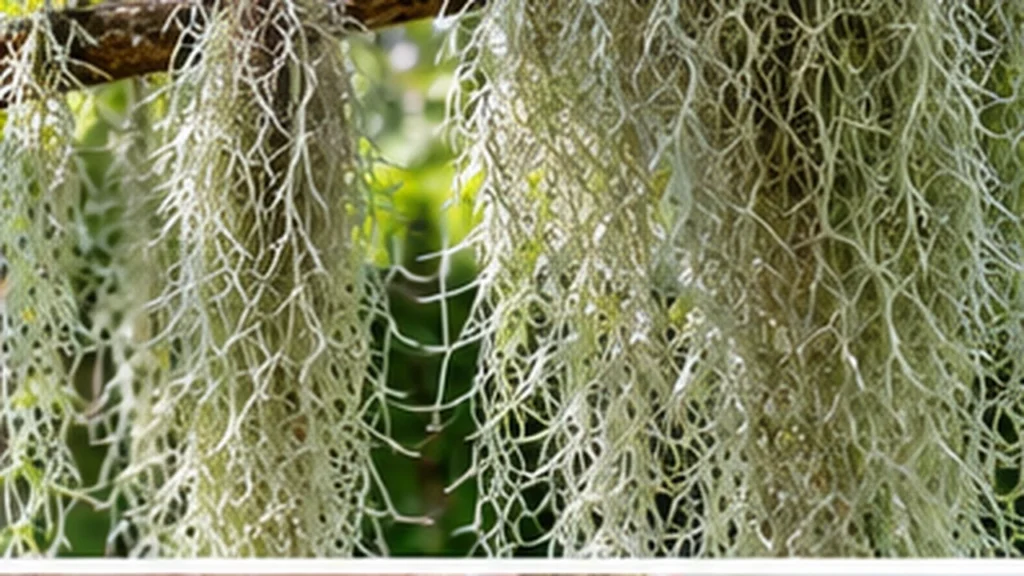
Spanish moss forms long curtains of delicate gray-green strands rather than a conventional rosette. Despite its name, T. usneoides is a flowering bromeliad, not a moss. Hang it where filtered light and airflow reach its full length. Water sufficiently for the growing environment and allow strands to dry rather than packing them into a damp decorative bowl.
11. Tillandsia Harrisii
T. harrisii makes an open, symmetrical rosette of broad, gently curved silver leaves. It is a useful choice for a bright room with relatively dry air. Its trichome-covered foliage looks soft but should be handled gently. Provide periodic hydration, filtered light, and thorough drying. Verify responsible sourcing when purchasing internationally.
12. Tillandsia Juncea
Long, narrow, nearly rush-like leaves make T. juncea one of the easiest varieties to recognize by silhouette. It provides vertical height without occupying much shelf width. Place it where its tips will not be bent against a wall or window. Give it bright filtered light and regular hydration followed by airflow.
13. Tillandsia Fuchsii
T. fuchsii develops extremely fine leaves that radiate outward into a rounded, airy tuft. This delicate structure looks attractive on a small hanging holder but can be crushed by tight displays. Use bright, diffused light and gentle handling. After watering, ensure air passes through the fine foliage so the center does not stay wet.
14. Tillandsia Magnusiana
T. magnusiana forms a soft-looking silver cluster of slender leaves. Compared with upright juncea, its foliage creates a fuller, feathery outline. It works well in a suspended or open tabletop display. Provide filtered light, suitable hydration, and airflow; avoid enclosing its fine leaves in humid glass containers.
15. Tillandsia Pruinosa
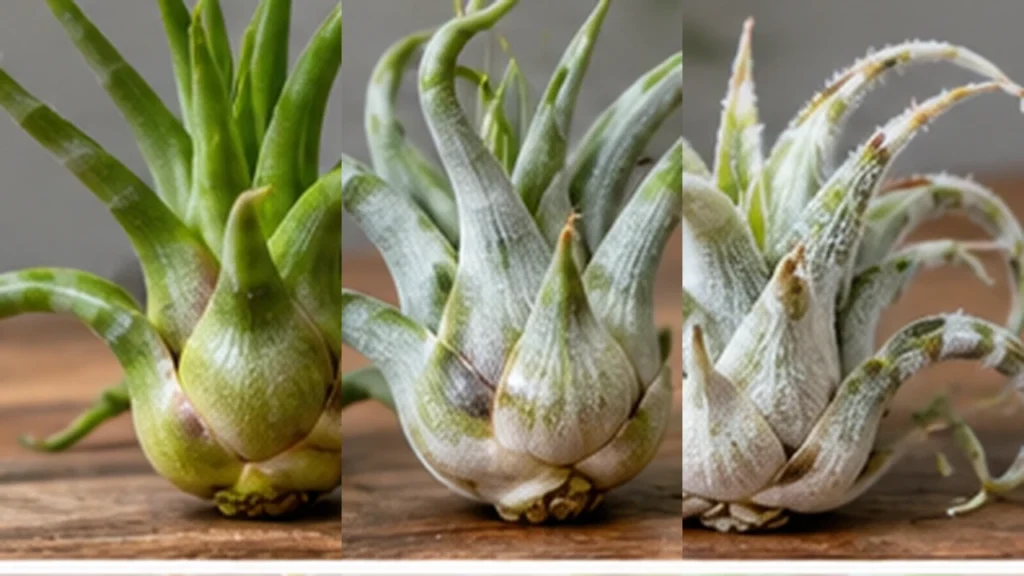
T. pruinosa resembles other bulbous air plants but often carries a noticeably frosted trichome coating. Its twisting leaves emerge from swollen, overlapping sheaths. Compare it with the darker, smoother bulbosa and the more silver-green caput-medusae. After watering, tip it downward and remove water that could collect at the base.
16. Tillandsia Funckiana — Nursery Name
Plants sold as T. funckiana feature narrow pointed leaves arranged along elongated, sometimes branching stems, and may produce red flowers. Kew currently treats Tillandsia funckiana as a synonym of Tillandsia andreana. The older name remains common in shops. Keep the trade name in buying notes, but use the accepted name when checking botanical databases.
17. Tillandsia Capitata
T. capitata develops a relatively broad rosette of arching green leaves, sometimes blushing peach or reddish near flowering. Its open shape offers a useful contrast to narrow-leaved juncea and compact ionantha. Provide bright indirect light, water according to the room’s conditions, and allow the base to dry before replacing it on a stand.
18. Tillandsia Fasciculata — Cardinal Air Plant
T. fasciculata can become a substantial rosette with firmer, longer leaves and showy flowering structures. It needs more space than most miniature varieties and a mount strong enough to support mature growth. Give it bright filtered light and good air movement. Select a display that stays practical when the plant increases in size.
How Do You Identify Air Plant Types?
Start with leaf width, shape, trichome coverage, and base structure. Flowers offer additional clues, but commercial hybrids and young plants can resemble more than one species. If you cannot confirm a name, label the specimen Tillandsia sp. rather than guessing.
| Visible clue | Likely species | Check before deciding |
|---|---|---|
| Small pointed rosette | Ionantha | Red blush may appear near bloom |
| Broad, silver, symmetrical curls | Xerographica | Wide open rosette |
| Smooth green swollen base | Bulbosa | Narrow twisting foliage |
| Silvery tentacles above swollen base | Caput-medusae | Overlapping leaf sheaths |
| Very fuzzy white leaves | Tectorum | Dense trichomes, not paint |
| Broad twisting ribbons | Streptophylla | Curls vary with moisture |
| Upright rush-like foliage | Juncea | Long narrow leaves |
| Cascading gray strands | Usneoides | Hanging, branching growth |
How Do You Separate Similar Species?
Bulbosa, caput-medusae, and pruinosa all have inflated-looking bases. Compare surface texture: bulbosa is typically shiny green, caput-medusae more silvery, and pruinosa visibly frosted. Xerographica usually spreads into a wide silver rosette; streptophylla makes broader twisting loops. Ionantha generally has a smaller, sharper rosette than brachycaulos.
Color is an unreliable clue on its own. Red blush may signal flowering, but artificial dyes can create unnatural metallic patches or uneven color on trichomes. Request an unedited photo and botanical label when shopping online.
Which Air Plants Are Best for Beginners?
Ionantha, stricta, aeranthos, and harrisii are sensible starters because their shapes are recognizable and their plants can be inspected easily. Xerographica also suits beginners with bright space and a careful drying routine; its larger size does not make it automatically easier.
For a three-plant collection, choose ionantha for compact growth, stricta for flowering interest, and harrisii for silver foliage. Avoid starting with many plants that need different watering methods. Learn how each reacts to your windows, heating, and airflow first.
| Home condition | Consider | Important limitation |
|---|---|---|
| Bright, relatively dry room | Xerographica, harrisii | Still need hydration |
| Bright, moderately humid room | Stricta, bulbosa | Drain leaf bases carefully |
| Small bright shelf | Ionantha, fuchsii | Keep mounts removable |
| Suspended position | Usneoides, aeranthos | Water and dry the full clump |
| Wide tabletop | Xerographica, fasciculata | Allow mature growth room |
How Do You Care for Air Plant Types?
Most indoor Tillandsia require bright filtered light, suitable moisture, and dependable airflow. The key difference is how readily each species loses water and how easily its leaves trap droplets. Avoid treating every air plant as though it needs an identical weekly soak.
How Much Light Do Air Plants Need?
Bright indirect light is a safe starting point for most varieties. An east-facing window often supplies gentle morning light in the Northern Hemisphere; a brighter window may need a sheer curtain. Silver xeric types commonly tolerate brighter exposure than delicate green types, but acclimate plants gradually. Bleached or crispy patches suggest excessive sun or heat. Dark, windowless rooms need a suitable grow light, not a decorative lamp alone.
How Should You Water Air Plants?
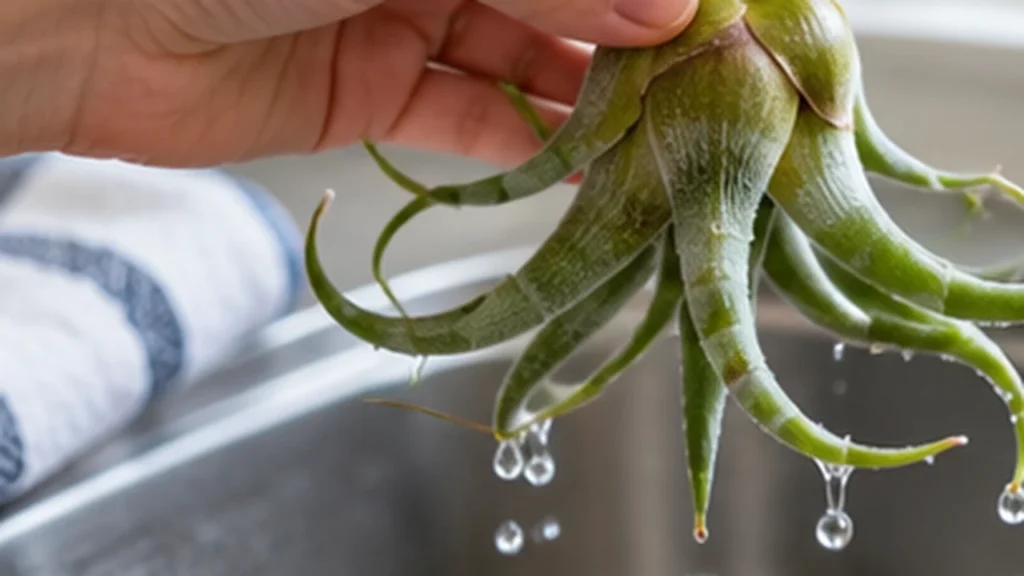
Open-rosette plants can often be immersed briefly, while bulbous plants and heavily fuzzy tectorum benefit from more cautious wetting. There is no single scientifically established interval for all 18 species. The RHS recommends frequent immersion in some active-growth conditions; NC State gives xerographica a much longer interval, illustrating why generalized schedules conflict.
Use this practical routine:
- Examine leaf firmness, normal curl, and room conditions before watering.
- Hydrate the foliage using a method appropriate to the species.
- Shake off excess droplets and hold rosettes or pseudobulbs downward.
- Leave plants in moving air until the crown and leaf bases are dry.
- Return them to open displays only after moisture has cleared.
A useful target is drying within roughly four hours, where conditions allow. Do not soak or spray a plant late in a cold evening if it will remain wet overnight. Clean rainwater or suitable low-mineral water helps avoid deposits; avoid sodium-softened water.
How Does Care Change by Season?
In warm, dry weather, higher evaporation can increase water demand. In cool or humid rooms, drying takes longer, so allow more time between wettings. Many common indoor species prefer temperatures around 18–27°C (64–81°F), though individual limits vary. Protect them from frost, cold glass, heaters, and direct air-conditioning blasts. In winter, provide adequate light and water early in the day.
Do Air Plants Need Fertilizer or Soil?
Most ornamental Tillandsia do not need potting soil; wet mix around their bases can cause decay. Their roots mainly fasten them to a surface. Optional dilute bromeliad or epiphyte fertilizer may support growth during active periods, but excessive concentration can damage foliage. Follow a suitable product label, and do not fertilize a visibly stressed or rotting plant.
How Should You Display Air Plants?
Choose untreated wood, cork, inert stones, or open holders that let air reach the leaves. A mount should release the plant easily for watering and inspection. Avoid sealing Tillandsia inside glass terrariums or gluing them where water becomes trapped. Keep broad xerographica on a stable stand, small ionantha on individual mounts, and Spanish moss suspended where its strands can spread.
Humidity does not compensate for darkness. A bathroom suits bulbosa only if it receives adequate light and has reliable ventilation. For more ideas about selecting houseplants according to available space, see Plantsaholic’s types of indoor plants guide.
How Do Air Plants Flower and Reproduce?
Most individual Tillandsia rosettes flower once, then produce pups, or small offsets, near the parent. The original rosette gradually ages while its offspring continue growing. A flowering air plant is not necessarily dying from poor care.
Leave pups attached for a fuller cluster, or separate them carefully when they reach around one-third to one-half of the parent’s size. Some species take years to mature. Appropriate light, hydration, and stable conditions support flowering, but no fertilizer or watering trick guarantees immediate blooms.
Why Are Air Plant Leaves Turning Brown?
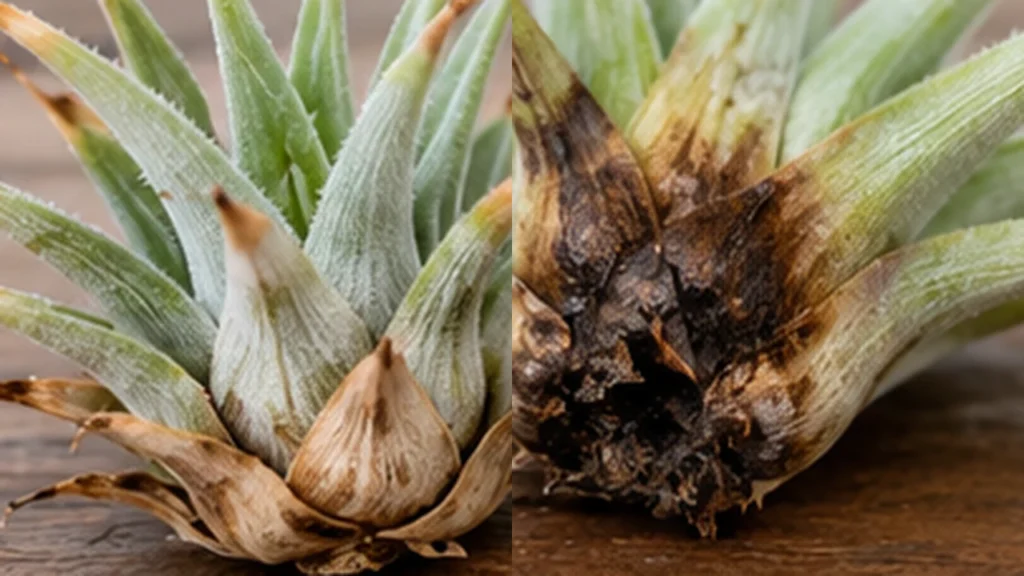
Brown tissue does not always mean dehydration. Compare the texture, location, and progression of damage before changing care.
| Symptom | Possible explanation | First action |
|---|---|---|
| Dry brown tips | Dryness, heat, salts, aging | Check light and watering history |
| Tighter-than-normal curls | Possible water stress | Compare with normal species shape |
| Pale crispy patches | Sun or heat damage | Move to filtered light |
| Soft black base | Possible rot | Stop water trapping; inspect center |
| Firm papery outer sheaths | Normal aging | Leave or remove only if loose |
| Cottony white clusters | Possible mealybugs | Isolate and inspect carefully |
If the center pulls apart or smells unpleasant, substantial rot may already be present; simply soaking the plant will not repair dead tissue. If only tips are dry, avoid overcorrecting with daily watering. Plantsaholic’s brown leaf tips guide explains additional causes, although Tillandsia have different root and soil requirements from potted houseplants.
How Do You Choose Healthy Air Plants?
Inspect for firm leaves, an intact center, and no soft dark patches. Confirm the scientific name and expected mature size; a miniature plant and a young large species may look deceptively similar. Ask whether bright colors are natural or sprayed, and check shipping protection and arrival policies. Unpack promptly, then acclimate new plants in filtered light before increasing exposure.
Buy nursery-propagated specimens from reputable sellers. Tillandsia harrisii, T. kammii, and T. xerographica appear in CITES Appendix II trade listings; international transactions may require appropriate documentation. Verify current national rules and phytosanitary requirements rather than assuming every online listing is compliant.
Do Air Plants Purify Indoor Air?
Tillandsia photosynthesize and release oxygen, but a small decorative collection has not been shown to provide meaningful room-scale air purification. Laboratory pollutant uptake does not establish that plants can replace ventilation or air filtration in homes. Spider plants, snake plants, pothos, peace lilies, and rubber plants are also often advertised as air purifiers, but should be selected for their ornamental and growing qualities, not as substitutes for effective air cleaning.
What Are Common Air Plant Types FAQs?
Which air plant is easiest for beginners?
Tillandsia ionantha is a good first choice because it stays compact and is easy to inspect. Stricta and aeranthos also suit beginners with adequate light and drying.
How many air plant types exist?
Kew’s Plants of the World Online lists about 700 accepted Tillandsia species. Nursery catalogs also contain cultivars, hybrids, and synonyms.
Which air plant gets the biggest?
Xerographica and fasciculata can form substantial mature rosettes. Give either a spacious, stable support rather than a tiny holder.
Which air plant needs the least water?
Xerographica often tolerates longer dry intervals than greener species. Actual watering needs depend on warmth, light, humidity, and airflow.
Can air plants grow without sunlight?
They do not require direct sunlight, but they need adequate light for photosynthesis. A suitable grow light can replace insufficient window light.
Do air plants need daily misting?
Not routinely. Water thoroughly using a suitable method, then let the plant dry. Misting alone may not provide enough hydration in dry conditions.
Can air plants live in closed terrariums?
Closed terrariums usually restrict airflow and retain moisture. Open holders are safer, especially for species with overlapping leaf bases.
Are air plants toxic to cats and dogs?
Common ornamental Tillandsia are generally considered low toxicity. Chewing foliage or swallowing decorative mounts can still cause problems.
Do air plants flower more than once?
Most individual rosettes flower once. The pups they produce can mature and flower later, allowing the clump to continue.
Can air plants live permanently in water?
No. Common ornamental Tillandsia require drying and airflow between waterings. Continuous submersion can damage their tissues.
Why is my air plant turning red?
Some varieties develop red or pink foliage near flowering. Artificial dye and sun injury can also affect color, so check the plant’s condition.
Are air plants parasites?
No. Epiphytic Tillandsia attach to trees for support without directly taking food from the host. Their foliage collects moisture and nutrients.
Which Air Plant Type Should You Choose?
Choose ionantha for a compact beginner plant, xerographica for broad silver foliage, tectorum for a fuzzy texture, streptophylla for curls, or usneoides for hanging strands. Match the type to your available light and drying conditions before choosing a decorative holder.
Sources and Editorial Method
This guide draws on Kew’s Tillandsia taxonomy, the RHS air plant care guide, NC State’s xerographica guidance, the CITES-listed species register, and published indoor-air-quality research. It summarizes published information rather than claiming original growing trials. Names and import requirements may change; verify uncommon plants against current botanical and regulatory records.

Myra is the founder and lead writer of Plantsaholic. She shares practical, research-backed advice on indoor plants, outdoor gardening, flowers, herbs, succulents, and everyday plant care. Her goal is to help gardeners of all experience levels grow healthier plants through simple, easy-to-follow gardening guides.