Brown spots on plant leaves are areas of injured or dead tissue caused by watering problems, unhealthy roots, fungal or bacterial disease, pests, strong sunlight, fertilizer salts, chemical exposure, temperature stress, or physical damage. The quickest way to identify the cause is to compare the spot’s texture, position, border, rate of spread, and the condition of the soil and roots.
Dry, crispy marks usually suggest moisture, heat, humidity, or salt stress. Soft, water-soaked, or rapidly enlarging lesions require closer checks for root damage or infection. Existing brown tissue normally remains damaged, but correcting the underlying cause can stop new spots and protect healthy growth.
Diagnose Brown Spots on Plant Leaves in 60 Seconds
Start with the appearance of the damage, then check the root zone and recent care.
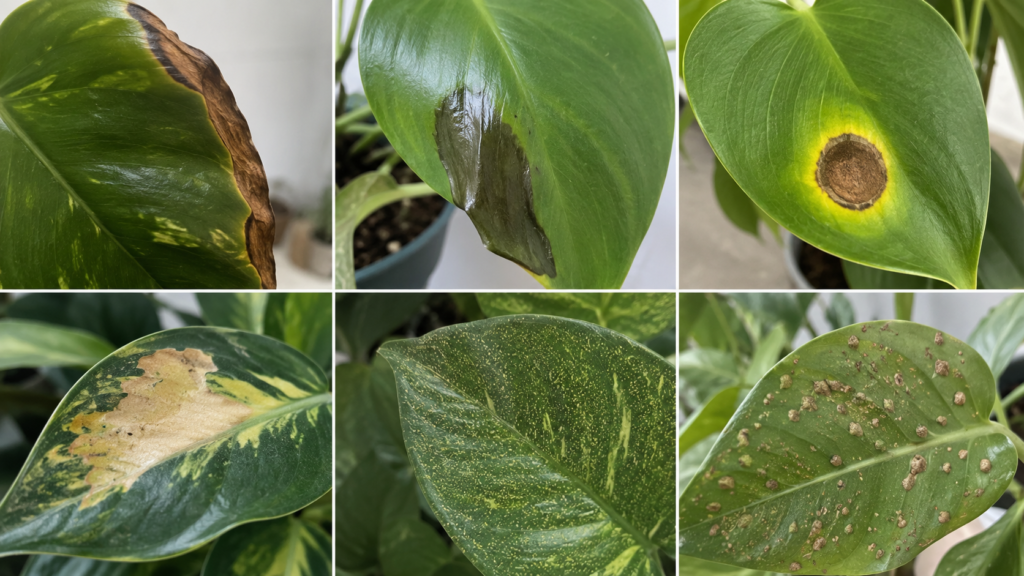
- Crispy tip or margin: Check underwatering, low humidity, heat, or fertilizer salts.
- Soft dark patch with wet soil: Check drainage, soil odor, and root texture.
- Water-soaked spot with a yellow halo: Keep the foliage dry and investigate leaf disease.
- Bleached tan patch on one side: Check for direct sunlight, hot glass, or grow-light exposure.
- Tiny pale dots becoming bronze: Inspect for spider mites or thrips.
- Raised corky bumps underneath leaves: Check for edema or scale insects.
- One fixed tear, crease, or bruise: Monitor for physical damage.
- Several rapidly spreading lesions: Isolate the plant temporarily and inspect it closely.
Do not diagnose the plant from one clue alone. The strongest conclusion comes from matching the visible pattern with soil moisture, recent care changes, pest evidence, and the speed at which the damage is developing.
Brown Spots, Brown Tips, or Black Spots?
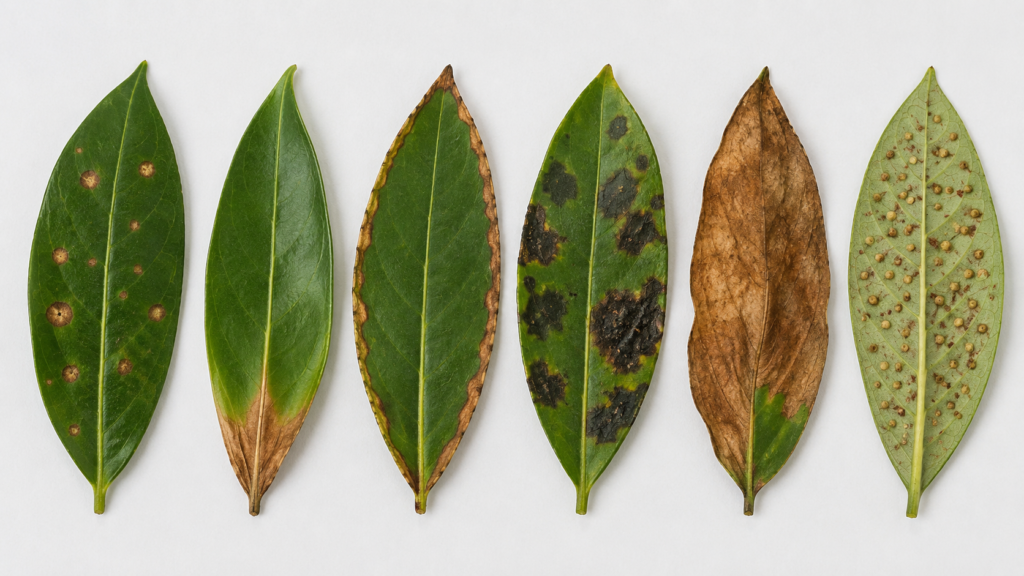
These symptoms overlap, but they do not always have the same cause. Separate brown spots often point toward disease, pests, sunburn, chemical injury, or root stress. Brown tips and edges more commonly suggest inconsistent watering, low humidity, heat, or salt buildup. Black, soft, or collapsing tissue is more urgent because it may indicate cold injury, decay, or advanced infection.
| Symptom | First diagnostic direction |
|---|---|
| Separate brown spots | Disease, pests, sunburn, chemicals, or root stress |
| Brown tips | Humidity, watering consistency, or salts |
| Brown edges | Drought, heat, or root injury |
| Black spots | Infection, cold damage, or decay |
| Entire brown leaf | Root failure, severe drought, or aging |
| Raised underside bumps | Edema or scale insects |
A crispy tip rarely needs fungicide, while a spreading water-soaked lesion should not be dismissed as dry air.
How This Guide Diagnoses Brown Spots
A reliable diagnosis uses several signals rather than one visual symptom:
- Texture: Crispy, soft, mushy, raised, corky, or water-soaked
- Position: Tips, margins, center, underside, old leaves, or new growth
- Border: Yellow halo, dark ring, bleached center, or sharp edge
- Progression: Stable, slowly expanding, or rapidly spreading
- Soil and roots: Dry, compacted, waterlogged, healthy, or decaying
- Recent changes: Watering, light, fertilizer, sprays, transport, or temperature
- Pest evidence: Webbing, black specks, sticky residue, insects, or distorted growth
Visual symptoms can narrow the possibilities, but they cannot always identify a particular fungal or bacterial pathogen. Valuable plants with persistent or spreading lesions may require professional testing.
Is the Damage Active or an Old Scar?
An old mark caused by transport, bruising, sun exposure, or one missed watering may remain visible for the life of the leaf without threatening the plant. Active damage behaves differently.
Look for spots that enlarge within 24–72 hours, new lesions on healthy leaves, expanding yellow borders, soft tissue, rapid leaf loss, webbing, sticky residue, or sour-smelling soil. Similar symptoms appearing on nearby plants also increase concern about pests or disease.
Photograph the affected leaf beside a ruler and compare it after 24 to 48 hours. If the mark remains unchanged and new growth is healthy, avoid unnecessary repotting, spraying, or fertilizing. If lesions are spreading, isolate the plant while keeping it in suitable light and temperature.
Overwatering and Root Stress
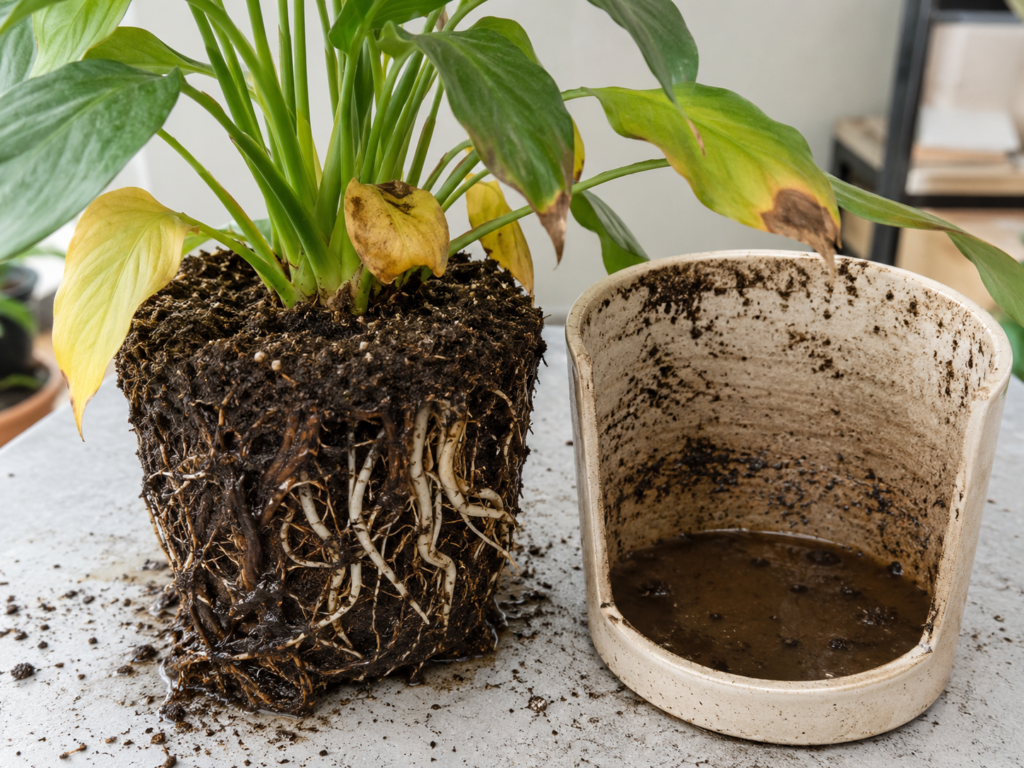
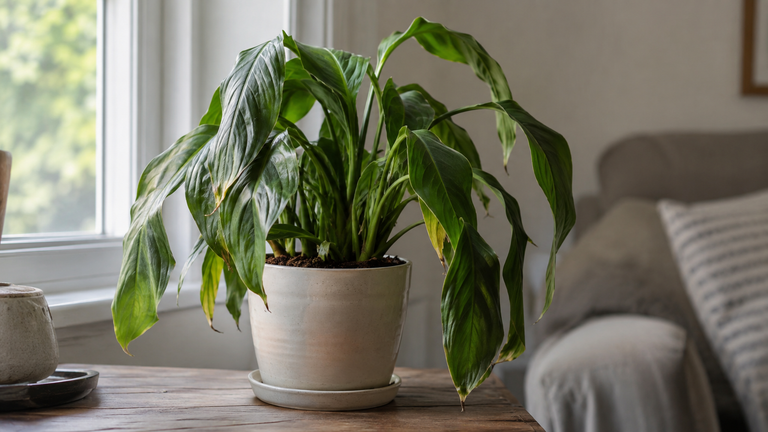
Overwatering causes brown spots by keeping the root zone short of oxygen. Fine roots lose function, and the plant may wilt, yellow, or develop soft dark patches even though the soil is wet.
The problem is usually excessive watering frequency, poor drainage, dense potting mix, low light, cool temperatures, or an oversized container rather than the amount used during one proper watering.
Signs of excessive moisture include:
- Drooping despite wet soil
- Yellow lower leaves
- Soft, dark, or translucent patches
- Soil remaining wet for many days
- Water trapped inside a decorative pot
- Sour or decaying odor
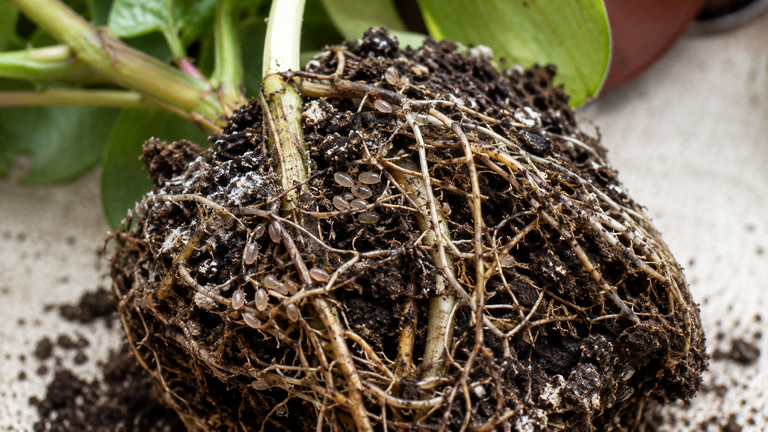
- Brown, black, slimy, or hollow roots
Check below the surface because the topsoil may feel dry while the lower root zone remains saturated. Empty standing water and confirm that the drainage holes are open.
If the roots are firm, let the mix dry to the level appropriate for the species. If the roots are soft or rotten, remove damaged tissue with clean tools and repot the plant into fresh, suitable mix.
Do not repot every plant with one brown spot. Root intervention is justified only when evidence from the soil or roots supports it.
Underwatering or Inconsistent Watering
Underwatering normally causes dry, crisp, or papery browning at the tips and margins. The pot may feel unusually light, the soil may pull away from the sides, and water may run through gaps without wetting the center of the root ball.
Common signs include curled or brittle leaves, repeated wilting, crispy lower foliage, and drooping that improves after watering. Inconsistent watering can create the same damage when the plant repeatedly becomes severely dry and is then saturated.
Rehydrate very dry soil slowly in several passes. Bottom watering can help a dry root ball absorb moisture evenly, but remove the pot once the mix is moist and empty any remaining water.
Do not increase watering simply because the leaves are brown or drooping. Overwatering can produce similar symptoms, so check the root zone before changing the watering routine.
Fungal Leaf Spot
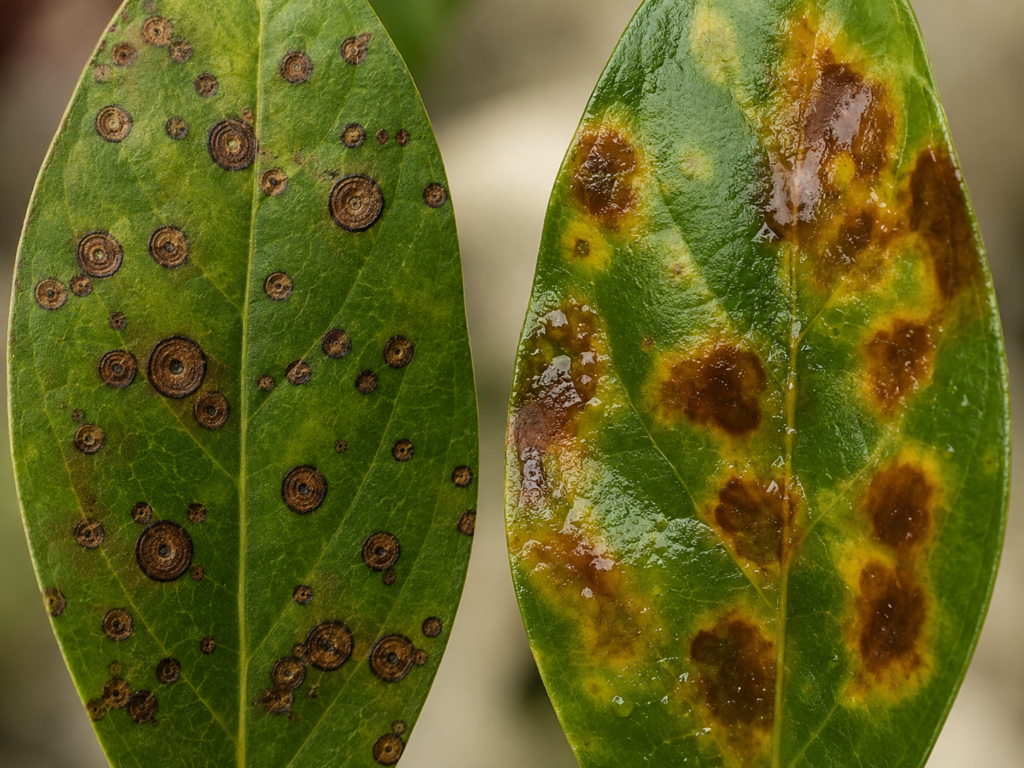
Fungal leaf spot may produce tan, reddish-brown, dark brown, or nearly black lesions. Spots can enlarge, merge, develop concentric rings, or contain tiny dark structures.
Fungal disease becomes more likely when:
- Similar lesions appear on several leaves
- Foliage remains wet for long periods
- Plants are crowded together
- Water splashes between pots
- Humidity remains high with little airflow
- Dead foliage remains on the soil
Remove heavily affected leaves with clean tools, keep the foliage dry, improve spacing, and clear plant debris. Avoid removing most of the plant’s green tissue.
Fungicide should not be the first response to every brown mark. It will not correct bacterial disease, sunburn, root damage, pest feeding, chemical injury, or salt buildup. Use a properly labeled product only when fungal disease is reasonably supported by the symptoms.
Bacterial Leaf Spot
Bacterial leaf spot often begins as water-soaked, greasy, or translucent areas that later become brown or black. Some lesions develop yellow halos and expand rapidly under warm, wet conditions.
Bacterial disease is more likely when lesions begin wet-looking, enlarge quickly, merge into larger patches, or spread after prolonged leaf wetness. Sticky or slimy material may appear in some cases.
Isolate the plant, keep the leaves dry, remove badly affected foliage, and disinfect tools. Avoid handling healthy plants after touching wet damaged leaves.
If lesions continue spreading despite dry foliage and improved airflow, professional diagnosis may be necessary. Visual symptoms alone cannot always separate bacterial disease from fungal or environmental damage.
Sunburn, Heat and Sudden Light Changes
Sunburn creates pale, bleached, tan, or brown papery patches, usually on the side receiving the strongest light. It commonly appears after a plant is moved closer to a window, placed near hot glass, taken outdoors, or moved beneath a stronger grow light.
Reduce harsh exposure and reintroduce stronger light gradually. Do not move the plant directly into deep shade because inadequate light can slow recovery and keep the soil wet longer.
Sunburned tissue will not turn green again. Recovery is shown when the damaged area stops expanding and new leaves emerge normally.
Chemical and Spray Damage on Plant Leaves
Chemical injury can resemble disease, pest damage, or sunburn. It may appear as droplet-shaped spots, irregular blotches, scorched margins, bleached areas, or distorted new leaves.
Possible causes include:
- Leaf-shine products
- Window-cleaner drift
- Fertilizer splashes
- Neem or horticultural oils
- Insecticidal soap
- Alcohol
- Concentrated pesticides
- Homemade soap or vinegar mixtures
A product that is normally safe may still burn foliage when applied too strongly, under direct sunlight, during high heat, or while the plant is drought-stressed.
Stop using the suspected product. If new spots continue appearing without another exposure, investigate disease, pests, roots, and soil moisture.
Fertilizer Burn, Hard Water and Salt Buildup
Fertilizer and mineral salts accumulate as water evaporates or is absorbed. High salt levels damage fine roots and may cause brown tips, margins, wilting, yellowing, and weak growth.
Warning signs include:
- White crust on the soil or pot
- Repeated brown tips
- Wilting despite moist soil
- Slow growth
- Damaged root tips
- Frequent fertilizer applications
Pause feeding while the plant is stressed. If the soil drains well and the roots are healthy, flush the mix slowly and allow the excess water to drain. Do not flush already saturated soil; repotting may be safer.
Plants such as dracaena, calathea, prayer plants, and spider plants may be sensitive to mineral buildup. However, check fertilizer strength, root health, watering consistency, and humidity before blaming tap water alone.
Can Nutrient Deficiency Cause Brown Spots?
Nutrient deficiency can contribute to browning, but isolated spots rarely identify a specific missing nutrient. Deficiencies more commonly cause patterned yellowing, pale new growth, distortion, or weak development.
Do not add fertilizer solely because a leaf has brown spots. Unhealthy roots or unsuitable soil pH may prevent nutrient uptake even when nutrients are already present.
Pest Damage That Turns Brown
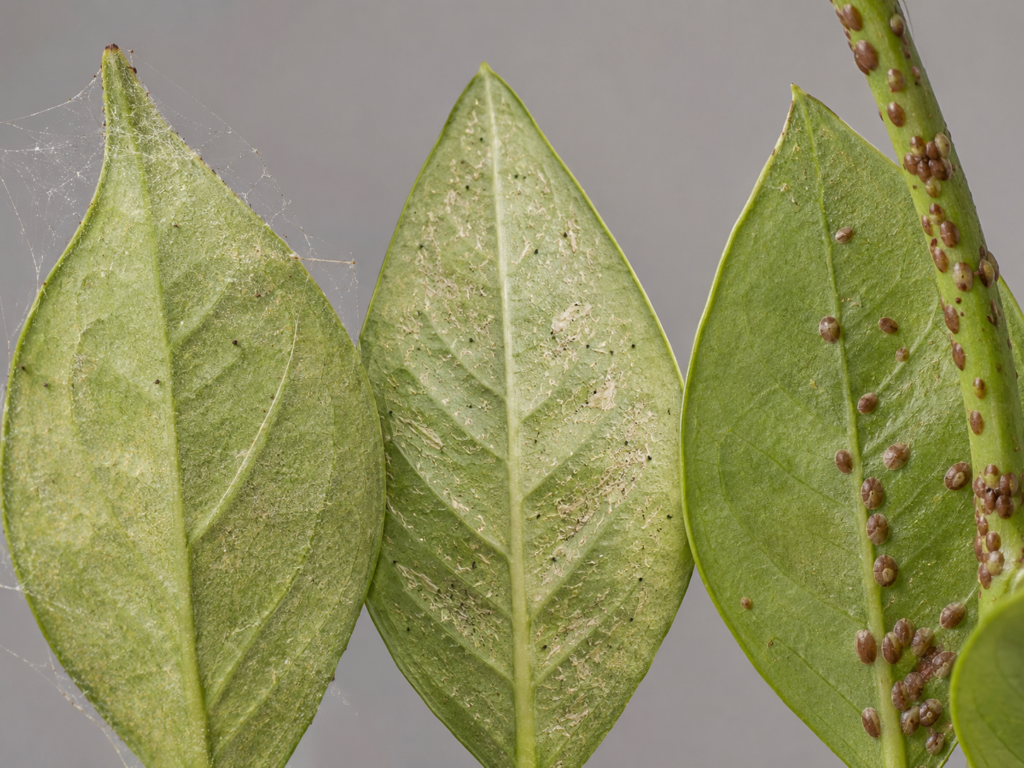
Pest damage often begins as pale, silver, or stippled marks and later becomes bronze, dry, scarred, or brown. Inspect leaf undersides, growing points, flowers, and stem joints.
Spider Mites
Spider mites cause fine pale stippling, bronzing, dryness, and webbing. Tap the foliage over white paper to look for tiny moving specks.
Thrips
Thrips leave silvery scars, black waste specks, brown patches, and distorted new growth. Inspect folded leaves, flowers, and tight growing points.
Scale Insects
Scale insects resemble raised brown bumps attached to leaves or stems. Soft scale may produce sticky honeydew and dark sooty mold.
Isolate an infested plant and identify the pest before choosing treatment. Random spraying can damage foliage without controlling hidden insects or eggs.
Low Humidity, Cold Damage and Drafts
Low humidity usually causes crispy tips and margins rather than soft circular lesions. A humidifier, stable watering, and suitable placement are more effective than frequent misting.
Cold injury can create irregular brown, black, translucent, or collapsed areas after contact with cold glass, outdoor transport, or an air-conditioning vent. Move the plant to a stable temperature appropriate for the species.
Do not respond to cold damage by watering more frequently. Cold-stressed plants may use water more slowly, increasing the risk of saturated soil.
Edema, Physical Damage and Natural Aging
Edema
Edema occurs when roots absorb water faster than the leaves release it. It produces raised blisters or corky brown bumps, often on leaf undersides. Reduce watering frequency and improve environmental stability.
Physical Damage
Bruising, tearing, rubbing, pets, transport, or damage during unfurling can leave fixed brown scars. These marks are usually irregular and do not spread.
Natural Aging
One or two old lower leaves may yellow, develop brown areas, and fall naturally. Widespread decline, damage to new growth, or stopped growth points toward a broader problem.
What Not to Do When Leaves Develop Brown Spots
Avoid reacting to one spot with several treatments at once.
Do not immediately:
- Water because the plant is drooping
- Repot because one leaf is marked
- Apply fungicide without evidence
- Spray pesticide without identifying pests
- Mist suspicious lesions
- Fertilize a stressed plant
- Use vinegar, dish soap, alcohol, or baking soda
- Remove every spotted leaf
- Change soil, light, water, fertilizer, and humidity together
Use one evidence-based correction at a time unless the plant has severe root rot, a collapsing stem, or a major pest infestation.
How to Stop New Brown Spots
Follow this sequence:
- Isolate the plant when pests or spreading disease are possible.
- Inspect both leaf surfaces, stems, growing points, soil, and drainage holes.
- Check moisture below the soil surface.
- Empty trapped drainage water.
- Inspect the roots when the soil stays wet, smells sour, or the plant wilts.
- Keep foliage dry when fungal or bacterial disease is possible.
- Pause fertilizer while the plant is stressed.
- Correct excessive light gradually.
- Remove seriously damaged or heavily infested tissue.
- Monitor new growth for two to four weeks.
Record watering, fertilizer use, plant location, and symptom changes. The goal is to determine whether the chosen correction stops new damage.
Should You Cut Off Leaves With Brown Spots?
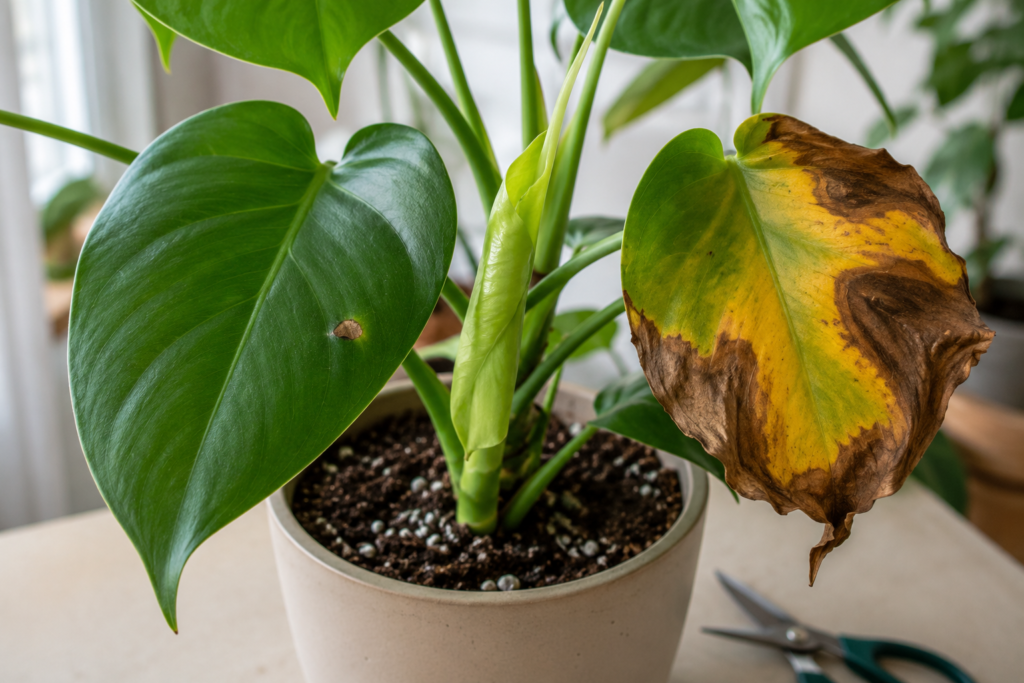
You do not need to remove every spotted leaf. A mostly green leaf can still photosynthesize and support the plant.
| Leaf condition | Action |
|---|---|
| Small stable spot | Keep and monitor |
| Cosmetic brown tip | Trim if desired |
| Old sunburn patch | Keep if mostly green |
| Rapidly expanding lesion | Diagnose and consider removal |
| Soft or rotting leaf | Remove |
| More than half dead | Remove if enough healthy foliage remains |
| Heavily pest-infested | Remove if it meaningfully reduces pests |
Use clean scissors and avoid cutting deeply into healthy tissue. Pruning improves sanitation or appearance, but it does not correct the underlying cause.
How Long Does Recovery Take?
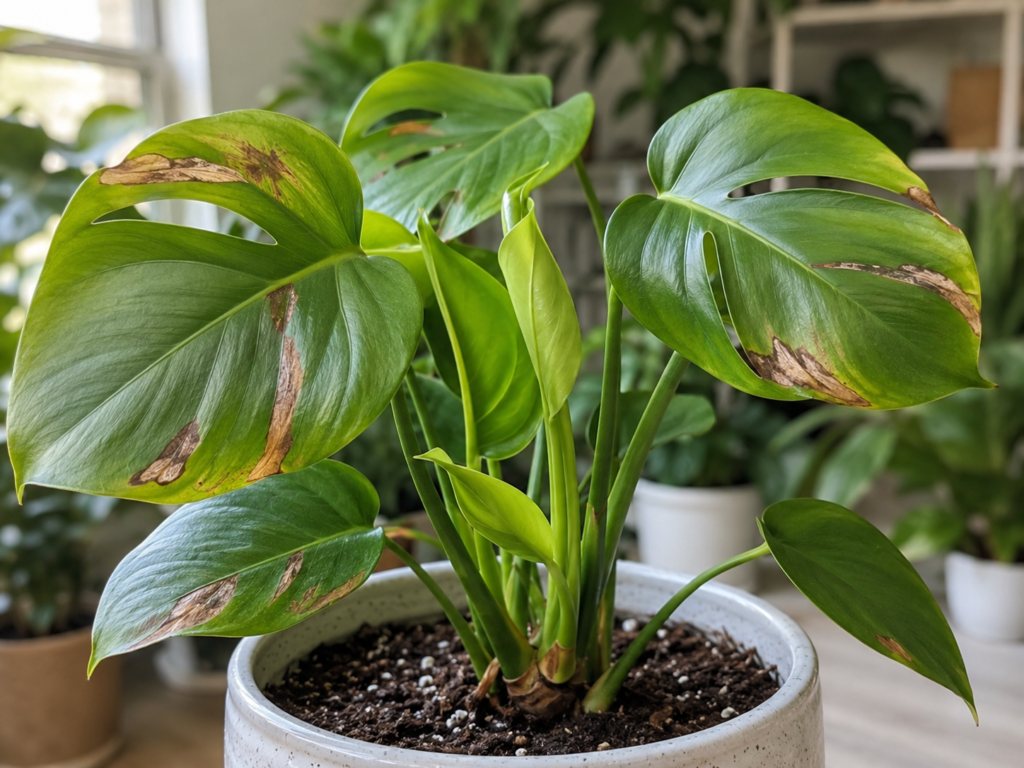
Minor stress may stabilize within days, while root damage or a serious infestation may take weeks or months. Existing brown tissue usually remains.
Positive signs include:
- Spots stop expanding
- New lesions stop appearing
- Leaf loss slows
- Roots remain firm
- Soil dries at a healthier rate
- New leaves emerge without damage
If new spots continue appearing after two to four weeks, reassess the diagnosis. More than one problem may be present, such as root stress combined with pests or salt buildup combined with low humidity.
Brown Spots on Common Houseplants
| Plant | Common causes | First check |
|---|---|---|
| Monstera | Overwatering, sunburn, pests, bruising | Soil and leaf undersides |
| Pothos | Root stress, inconsistent watering, cold | Drainage |
| Philodendron | Moisture stress, disease, pests | New growth |
| Fiddle leaf fig | Watering changes, roots, sunburn | Spot position and soil |
| Peace lily | Dryness, salts, strong light | Tips and moisture |
| Calathea | Humidity, minerals, mites | Margins and undersides |
| Dracaena | Salts, dryness, sun | Fertilizer and water |
| Spider plant | Minerals, inconsistent watering | Repeated tip browning |
| Rubber plant | Wet soil, cold, bruising | Soil and window contact |
| Snake plant | Excess moisture, cold, edema | Leaf base |
| Jade plant | Edema, wet soil, sunburn | Leaf undersides |
| Peperomia | Overwatering, edema, cold | Soft or raised spots |
Species tendencies guide the first inspection but do not replace diagnosis. A calathea with crispy edges may need higher humidity, while one with stippling and webbing needs pest control.
When to Discard or Propagate a Plant With Brown Spots
Most plants can recover, but severe rot, recurring disease, or a widespread infestation may make propagation or disposal more practical.
| Plant condition | Best decision |
|---|---|
| One or two stable damaged leaves | Keep and monitor |
| Healthy roots with old spots | Keep |
| Localized root damage | Trim and repot |
| Healthy stem above root rot | Propagate |
| Repeated disease despite sanitation | Seek diagnosis or discard |
| Heavy pests across most foliage | Compare treatment effort and risk |
| Soft rot through the crown or stem | Discard |
| Rare or expensive plant | Seek professional help first |
Take cuttings only from firm, symptom-free tissue. Discard the plant when no healthy growing point remains or when it presents a serious risk to the rest of the collection.
Prevent Brown Spots From Returning
Use stable, responsive care rather than a rigid routine:
- Check the soil before watering
- Use pots with working drainage
- Choose suitable potting mix
- Empty standing water
- Keep foliage dry when disease is a concern
- Leave space for airflow
- Acclimate plants gradually to stronger light
- Fertilize according to instructions
- Inspect new plants before grouping them
- Clean cutting tools
- Review new growth weekly
New leaves provide the best evidence that current care is working. Old scars may remain, but clean new growth shows that the underlying problem has been corrected.
FAQs
What Causes Brown Spots on Plant Leaves?
Brown spots can result from watering problems, root damage, disease, pests, sunburn, fertilizer salts, cold, or chemical injury. Check the spot’s texture, location, spread, and soil condition before treating it.
Do Brown Spots Mean Overwatering?
Not always. Overwatering is more likely when the soil remains wet, lower leaves yellow, roots smell unpleasant, and the spots are soft or dark.
Can Brown Spots Turn Green Again?
No. Brown tissue is normally permanently damaged. Recovery is shown when old spots stop spreading and healthy new leaves appear.
Should I Cut Off Spotted Leaves?
Remove leaves that are mostly dead, rotting, heavily infested, or covered with spreading lesions. Keep mostly green leaves with small, stable spots.
What Causes Brown Spots With a Yellow Halo?
Yellow halos may occur around fungal or bacterial spots, but they do not prove infection. Check whether lesions are water-soaked, expanding, or appearing on several leaves.
Are Brown Spots Contagious?
Only spots caused by pests or infectious disease are contagious. Sunburn, low humidity, fertilizer damage, edema, and physical injury do not spread.
Should I Repot the Plant?
Repot only when there is evidence of root or soil trouble, such as soft roots, compacted soil, blocked drainage, sour odor, or severe salt buildup.
Should I Use Fungicide?
Do not use fungicide unless fungal disease is reasonably suspected. It will not fix pests, bacterial disease, root damage, sunburn, or salt injury.
When Should I Discard the Plant?
Discard it when rot has spread through the crown, no healthy growing point remains, or a severe disease or infestation threatens nearby plants.
Final Diagnosis Checklist
Before treating brown spots on plant leaves, ask:
- Is the tissue crispy, soft, water-soaked, sunken, or raised?
- Are the spots on tips, margins, centers, undersides, old leaves, or new growth?
- Is there a yellow halo, dark border, webbing, residue, or black speckling?
- Are the spots stable or spreading?
- Is the root zone dry, appropriately moist, or continuously wet?
- Did the plant recently experience stronger light, fertilizer, cold, transport, spray, or relocation?
- Are pests, unhealthy roots, or similar symptoms present on nearby plants?
Choose the smallest correction supported by the evidence. Avoid changing every care factor at once. The strongest sign of recovery is healthy new growth.
Sources and Horticultural References
Support factual claims with university extension, plant-pathology, and integrated pest-management resources. Useful references include the University of California Integrated Pest Management program, University of Maryland Extension, Clemson Cooperative Extension, Iowa State University Extension, UMass Extension, and the University of Minnesota Extension.
Editorial methodology: Plantsaholic compares visible symptom patterns with root-zone conditions, recent environmental changes, pest evidence, and established horticultural references. Visual symptoms can narrow possible causes, but laboratory testing may be required to confirm a specific fungal or bacterial pathogen.

Myra is the founder and lead writer of Plantsaholic. She shares practical, research-backed advice on indoor plants, outdoor gardening, flowers, herbs, succulents, and everyday plant care. Her goal is to help gardeners of all experience levels grow healthier plants through simple, easy-to-follow gardening guides.