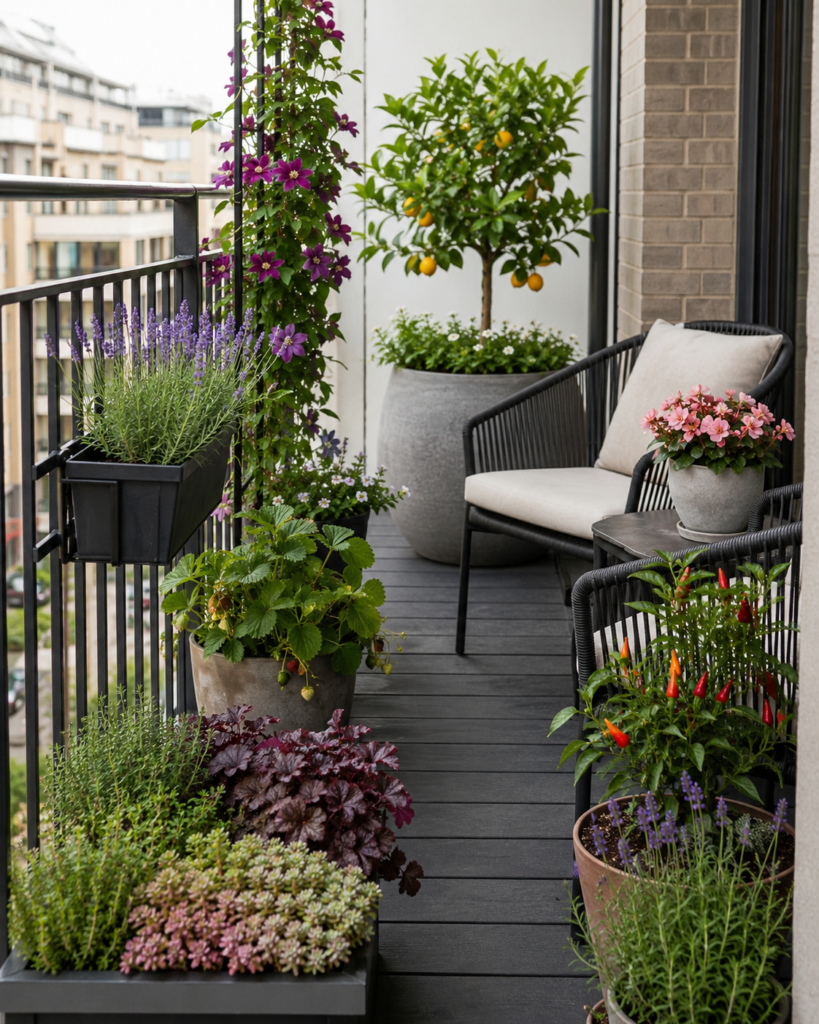
The best outdoor plants for small spaces stay manageable at maturity, fit containers or narrow beds, and match the light, climate, wind, and moisture of the location. Strong choices include lavender, thyme, sedum, heuchera, begonias, strawberries, compact vegetables, clematis, and selected dwarf shrubs or trees. The key is to choose by mature size and growth habit, not by how small a plant looks when you buy it.
Best Outdoor Plants for Small Spaces at a Glance
Use this table as a quick starting point, then check the mature size and local requirements of the exact cultivar you plan to buy.
| Plant | Light | Habit | Pot Need | Best Use | Fit Score |
|---|---|---|---|---|---|
| Lavender | Full sun | Mounded | Medium | Flowers + fragrance | 9/10 |
| Thyme | Full sun | Low | Small | Herbs + edging | 10/10 |
| Sedum | Sun | Compact | Small–medium | Hot, dry spaces | 10/10 |
| Dianthus | Sun | Mounded | Small–medium | Compact flowers | 9/10 |
| Moss rose | Full sun | Trailing | Small | Hot balconies | 9/10 |
| Heuchera | Part shade | Mounded | Medium | Foliage color | 9/10 |
| Compact fern | Shade | Arching | Medium | Shady corners | 8/10 |
| Begonia | Part shade | Compact | Small–medium | Shade flowers | 9/10 |
| Brunnera | Shade/part shade | Mounded | Medium | Bright foliage | 8/10 |
| Compact sedge | Part shade | Arching | Medium | Texture | 8/10 |
| Basil | Sun | Upright | Small–medium | Edible herb | 9/10 |
| Strawberries | Sun | Trailing | Small–medium | Fruit | 9/10 |
| Leaf lettuce | Sun/part shade | Low | Small | Quick harvest | 9/10 |
| Bush tomato | Full sun | Upright | Large | Container crop | 8/10 |
| Compact pepper | Full sun | Upright | Medium–large | Patio vegetable | 8/10 |
| Clematis | Varies | Climbing | Large + support | Vertical flowers | 8/10 |
| Climbing beans | Full sun | Climbing | Medium–large | Vertical food | 8/10 |
| Dwarf citrus | Bright sun | Upright/tree | Large | Fruit + structure | 7/10 |
The fit scores are Plantsaholic editorial ratings that compare how efficiently each option uses limited space.
Plantsaholic 5-Factor Small-Space Plant Test
Before buying any plant, check five things: Space, Sun, Root Room, Exposure, and Maintenance. A young nursery plant may look perfect now but become too wide, too thirsty, or too demanding after it matures.
1. Space
Check mature width as carefully as height. Make sure the plant will not block doors, paths, seating, railings, or access to neighboring pots. Upright plants can often fit better than low shrubs that spread outward.
2. Sun
Observe how much direct sunlight the area actually receives. A west-facing balcony may get intense afternoon sun, while a covered porch can remain relatively shaded.
Think in terms of:
- Full sun
- Partial sun
- Bright shade
- Deep shade
3. Root Room
Small top growth does not always mean a small root system. Make sure the container provides enough depth, width, drainage, and stability for healthy growth.
4. Exposure
Balconies and rooftops may face stronger wind, reflected heat, frost, heavy rain, or rapid drying. These conditions can matter as much as sunlight.
5. Maintenance
Be realistic about watering, feeding, pruning, repotting, pest checks, and winter protection.
Quick score:
5/5: Excellent fit
4/5: Good fit
3/5: Conditional
0–2/5: Choose another plant
Plantsaholic rule: Fit the plant to the space instead of forcing the space to fit the plant.
How to Choose Plants for Small Spaces
A narrow upright plant may use less floor area than a low shrub that spreads widely, so mature habit matters more than nursery-pot size.
Always compare:
- Mature height and spread
- Upright, trailing, mounding, or climbing habit
- Root requirements
- Sunlight
- Water needs
- Local climate
- Pruning needs
For edible crops, sunlight is especially important. Oregon State University Extension notes that fruiting vegetables such as tomatoes, peppers, and beans generally perform best with about 6–8 hours of direct sunlight, while leafy and root crops can tolerate some light shade.
Container size matters too. Herbs and lettuce can grow in modest pots, while tomatoes, peppers, shrubs, and small trees need more root room. For an international audience, local climate and the exact cultivar should always override a generic recommendation.
Best Full-Sun Plants for Small Spaces
Sunny balconies and patios can support fragrant, colorful plants, but containers also dry faster in bright conditions. Choose compact plants that naturally tolerate strong light.
1. Lavender
Lavender provides fragrance, flowers, pollinator value, and attractive foliage from one plant. Select a compact cultivar and give it excellent drainage.
Best for: Sunny patios, entrances, balconies
Skip when: Conditions stay wet or deeply shaded
2. Thyme
Thyme combines edible leaves, fragrance, and a very small footprint. It works well in herb pots, along container edges, or near a kitchen door.
Best for: Maximum usefulness from minimal space
3. Sedum
Compact sedums suit hot, exposed areas where containers may dry quickly. Their fleshy leaves store moisture, making them a strong lower-maintenance option.
Best for: Hot balconies, roof gardens, sunny patios
4. Dianthus
Dianthus can provide flowers and fragrance without the width of a flowering shrub. Compact types work well near entrances, seating areas, or the edges of sunny containers.
5. Moss Rose
Moss rose stays low and performs well in hot, bright conditions. Its trailing habit works particularly well in hanging pots and container edges.
Quick Full-Sun Decision
- Fragrance: Lavender
- Edible value: Thyme
- Heat tolerance: Sedum
- Compact flowers: Dianthus
- Very hot containers: Moss rose
If you often miss watering, thyme and sedum are usually more realistic than moisture-demanding flowers.
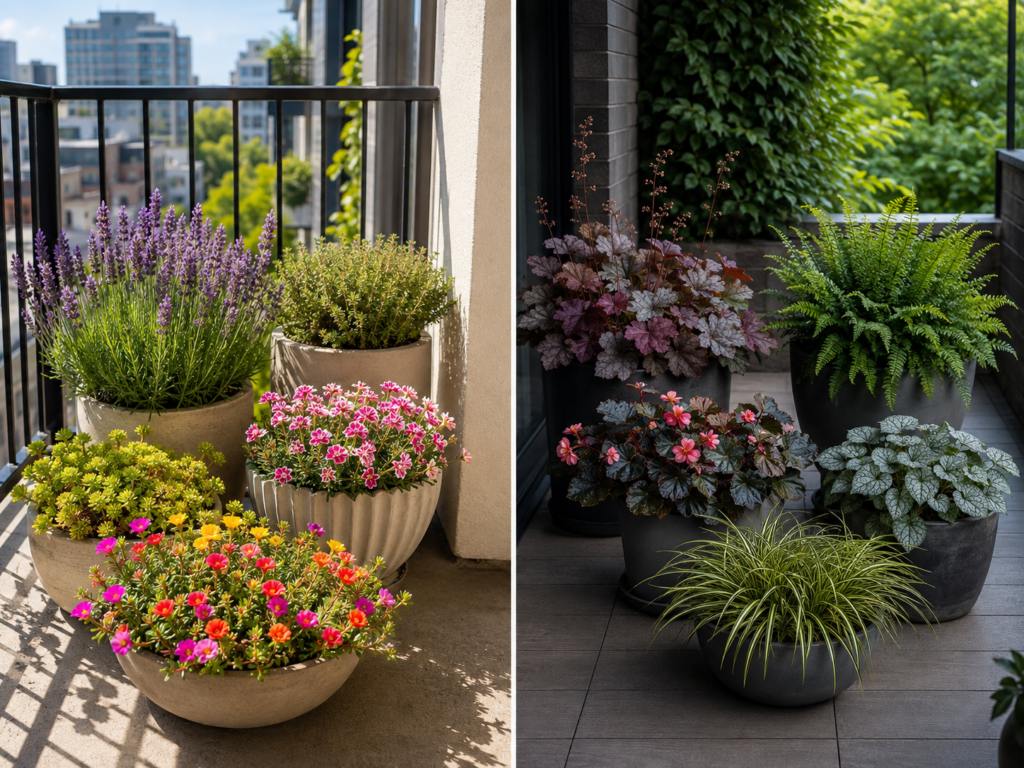
Best Shade Plants for Small Spaces
In lower light, foliage color, texture, and plant form can provide more reliable interest than flowers alone. First identify whether the site has partial shade, bright shade, or deep shade.
6. Heuchera
Heuchera offers long-lasting foliage in green, lime, bronze, burgundy, silver, and darker tones. Its mounded habit suits containers well.
Best for: Colorful foliage in shaded patios and balconies
7. Compact Ferns
Compact ferns soften hard surfaces and add lush texture. Choose smaller varieties suited to the moisture and climate conditions of your space.
8. Begonias
Begonias can provide flowers or decorative foliage in suitable shade. Select the type according to whether you want upright flowers, trailing growth, or foliage color.
9. Brunnera
Brunnera works well in cooler, partially shaded locations. Silver-patterned cultivars can brighten dark corners but are less suitable where heat and dryness are difficult to control.
10. Compact Sedge
Compact sedges provide movement, texture, and structure without adding much visual bulk.
Quick Shade Decision
- Foliage color: Heuchera
- Texture: Fern
- Flowers: Begonia
- Bright patterned foliage: Brunnera
- Movement: Compact sedge
For a simple shaded container, combine one foliage plant + one textural plant + one flowering plant.
Edible Plants for Small Outdoor Spaces
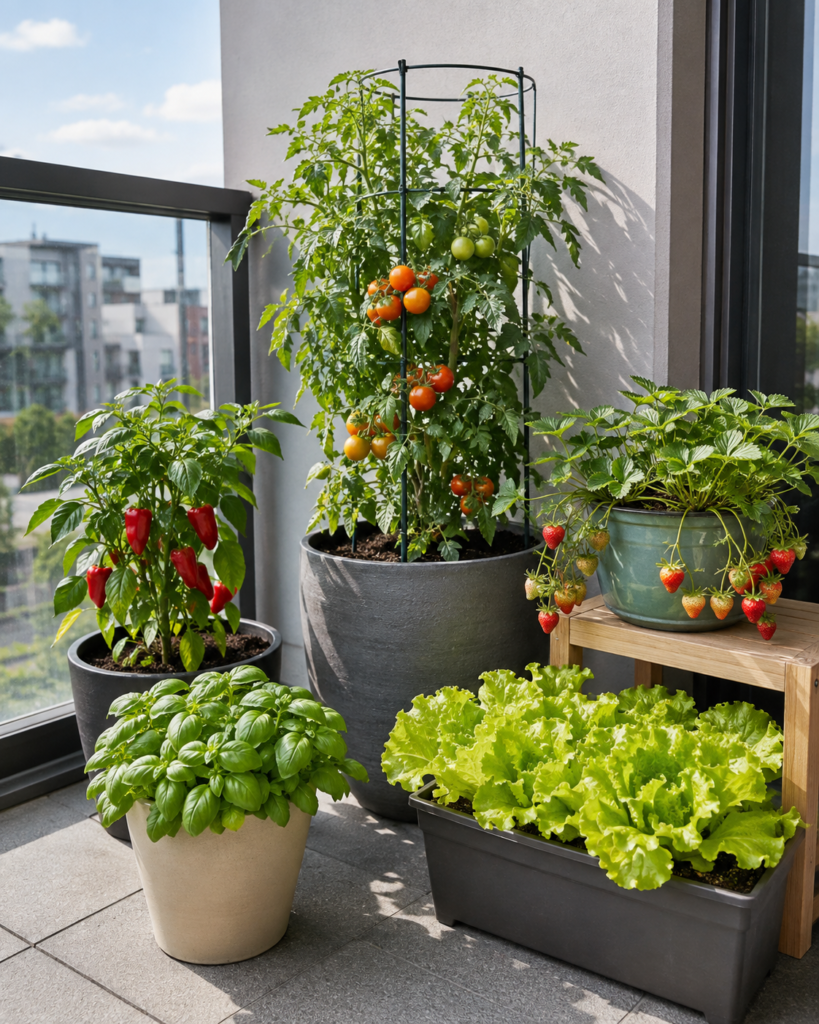
The most efficient small-space food crops provide repeated harvests, grow vertically, trail over container edges, or remain compact.
Oregon State University Extension includes herbs, lettuce, tomatoes, peppers, carrots, beans, strawberries, kale, chard, and spinach among crops suitable for containers.
Small-Space Edible Strategy
Choose by purpose:
- Repeated harvest: Herbs and leaf lettuce
- Fruit + decorative value: Strawberries
- Vertical crop: Climbing beans
- Sunny crop: Compact peppers
- Focal vegetable: Bush tomato
A manageable balcony setup might include one compact tomato, one pepper, one herb container, strawberries, and seasonal lettuce.
11. Basil
Basil provides repeated harvests from a small pot. Place it near the kitchen if possible so regular harvesting is easy.
12. Strawberries
Strawberries make good use of container edges because leaves and fruit can extend outward or downward. They suit pots, hanging baskets, railing planters, and raised containers.
13. Leaf Lettuce
Leaf lettuce can be harvested gradually and generally tolerates less sunlight than fruiting crops.
14. Bush Tomatoes
Choose patio, bush, dwarf, or determinate tomatoes rather than vigorous types that become difficult to control. Give them strong light and enough root room.
15. Compact Peppers
Compact peppers grow mainly upward, making them useful where width is limited. They still need strong light, consistent moisture, and an appropriately sized container.
Plantsaholic rule: Grow what you actually eat. A frequently used herb may be more valuable than a novelty crop that occupies an entire pot.
Vertical Plants That Save Floor Space
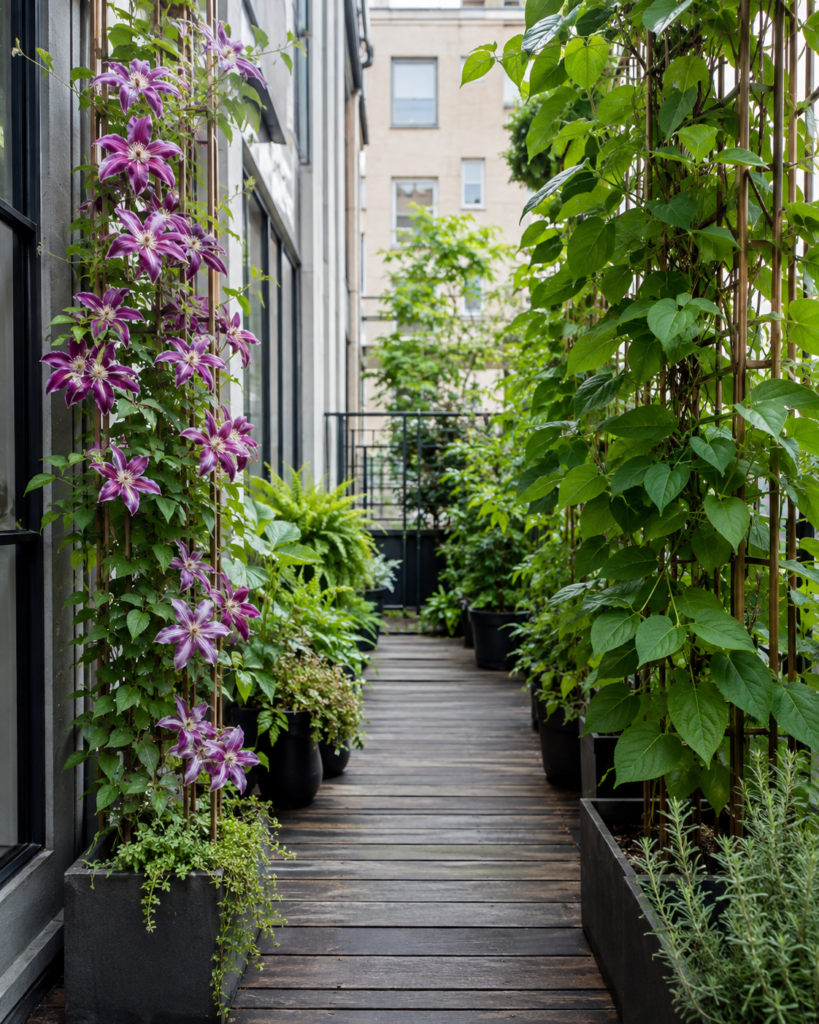
Walls, fences, railings, and trellises can add flowers, food, or privacy without taking over seating and walking areas.
16. Clematis
A moderately sized clematis can provide flowers from a relatively narrow footprint. It still needs adequate root space, secure support, and a cultivar matched to your climate and available height.
17. Climbing Beans
Climbing beans combine edible production with vertical growth. A narrow planter with a trellis can use space more efficiently than a sprawling crop occupying the same floor area.
Should You Grow Up or Out?
Choose vertical plants when:
- Floor space is scarce
- A secure support is available
- Privacy is needed
- Growth remains accessible for pruning or harvesting
Avoid climbers that will block windows, reduce airflow, overload weak supports, or require constant pruning.
One controlled vertical feature is usually better than covering every wall.
Compact Shrubs and Small Trees
A small garden can include one woody plant for structure if its roots and mature width suit the available space.
Bonus: Dwarf Hydrangea
A compact hydrangea can provide a major flower display from one container. It works best where you have room for a medium-to-large pot and want one strong seasonal focal point.
Remember that “dwarf” means smaller than the standard form, not necessarily tiny.
18. Dwarf Citrus
In suitable climates, dwarf or grafted citrus can combine:
- Fruit
- Fragrant flowers
- Glossy foliage
- Vertical structure
Container culture may also allow tender citrus to be moved into protection during colder periods.
Bonus: Compact Evergreen
A climate-appropriate compact evergreen can provide year-round structure and winter interest. One permanent evergreen paired with seasonal flowers or herbs can make a small garden feel established without filling it with permanent shrubs.
Other possibilities may include dwarf conifers, bay, Japanese maples, compact evergreen shrubs, or trained fruit trees, depending on local climate.
Best Plants by Small-Space Type
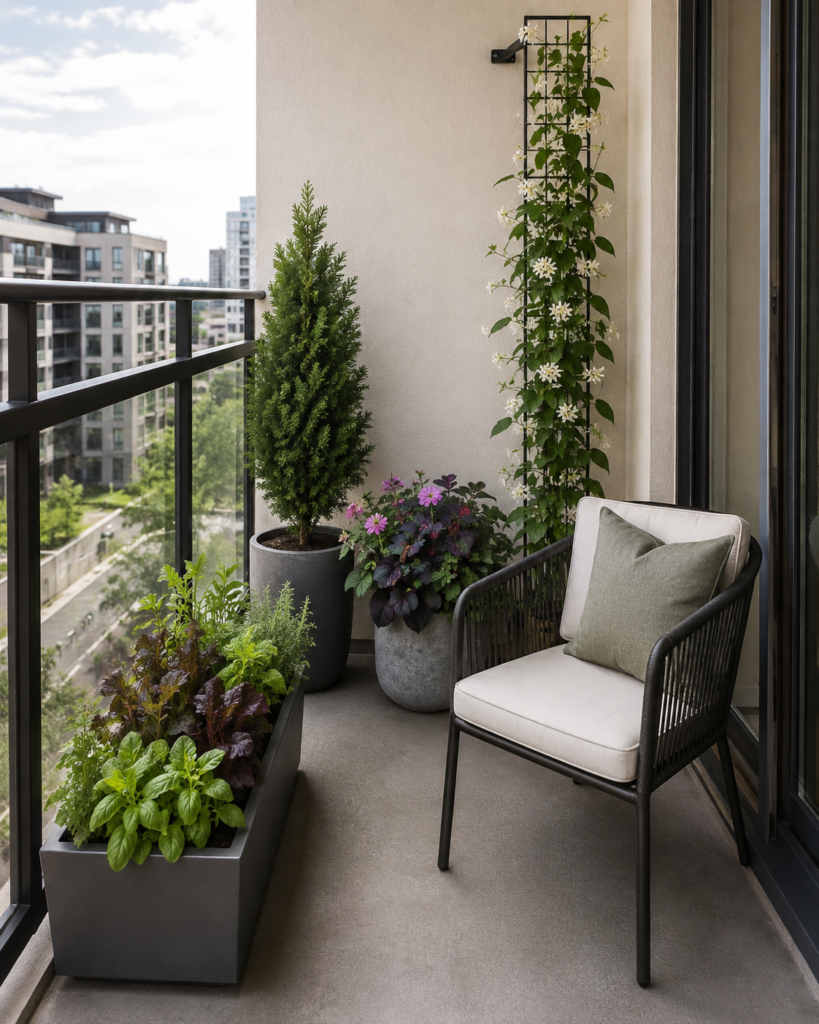
Choose plants according to the main limitation of the space first.
| Space | Main Priority | Good Choices |
|---|---|---|
| Sunny balcony | Heat + wind | Lavender, thyme, sedum |
| Shaded balcony | Shade tolerance | Heuchera, fern, begonia |
| Small patio | Multi-purpose plants | Dwarf citrus, herbs, strawberries |
| Narrow garden | Upright growth | Clematis, compact grasses |
| Window box | Modest roots | Thyme, lettuce, strawberries |
| Vertical wall | Upward growth | Clematis, climbing beans |
Small Balcony
Use fewer, more purposeful containers. A practical layout could include one structural plant, one flowering or foliage plant, one edible plant, and one trailing or vertical feature.
Small Patio
Use three levels:
Tall focal plant → medium plant → low/trailing plant
Example: Dwarf citrus + lavender + thyme
Narrow Garden
Prioritize upright shrubs, climbers, espalier fruit, compact grasses, and low edging plants. Avoid broad shrubs where they reduce walking width.
Window Box or Railing
Useful choices include thyme, lettuce, strawberries, begonias, herbs, and seasonal trailing flowers. Secure elevated containers properly.
Common Small-Space Planting Mistakes
Most problems begin with plant selection rather than care.
Avoid:
- Buying according to current nursery size
- Using containers that are too small
- Ignoring balcony wind
- Overcrowding
- Mixing plants with very different water needs
- Choosing overly vigorous climbers
- Filling every open corner
- Ignoring container weight
- Choosing only for flowers
The best question to ask before buying is:
Will this plant still make sense here after it reaches maturity?
If the answer is uncertain, choose a more predictable option.
Choose the Right Containers
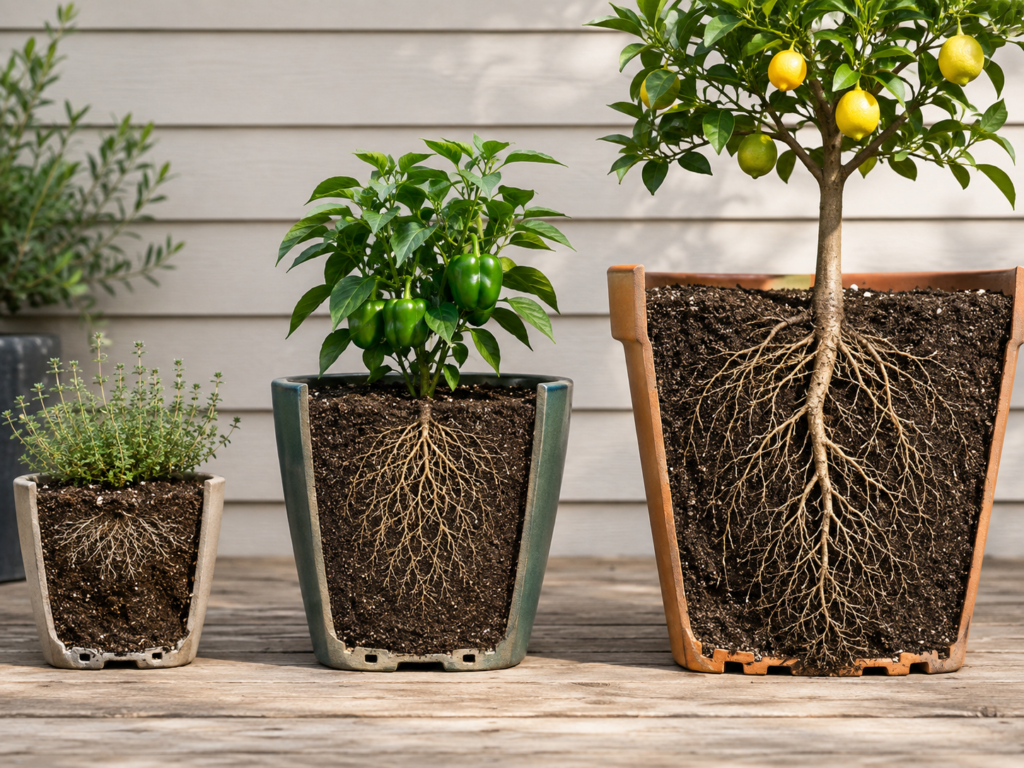
Containers affect drainage, root growth, moisture, and stability.
Drainage
Outdoor pots should allow excess water to escape. Poor drainage can contribute to waterlogged roots, weak growth, and yellow foliage.
Pot Size
Use practical categories:
Small: Thyme, herbs, lettuce, small annuals
Medium: Strawberries, compact perennials, some peppers
Large: Tomatoes, dwarf hydrangeas, citrus, shrubs, small trees
Do not choose the smallest container that can temporarily hold the plant. Choose one that supports healthy growth.
Weight
On balconies, consider the combined weight of the pot, wet growing medium, plant, water, and nearby furniture.
Container Material
- Terracotta: Attractive but dries faster
- Plastic: Lighter and retains moisture longer
- Fiberglass: Useful where lower weight matters
- Metal: May heat strongly in sun
- Glazed ceramic: Decorative but often heavy
Use a quality container-growing medium rather than dense garden soil.
Easy Care for Small-Space Plants
Watering
Check the growing medium instead of watering only by calendar. Water needs change with heat, wind, pot size, plant size, sunlight, and container material.
Feeding
Feed according to the plant rather than giving every pot the same treatment.
Pruning
Prune to remove dead growth, maintain suitable climbers, and reduce crowding. Do not rely on constant severe pruning to force a naturally large plant into a tiny space.
Root Crowding
Possible warning signs include:
- Rapid drying
- Roots emerging through drainage holes
- Weak growth
- Reduced flowering
Repot or divide where appropriate.
Five-Minute Routine
Regularly:
- Feel the soil
- Remove dead leaves
- Check for pests
- Harvest herbs
- Inspect supports
- Check drainage
Short, consistent maintenance is usually easier than rescuing stressed plants later.
Plants to Avoid in Tiny Spaces
Fast Spreaders
Plants spreading aggressively through runners, rhizomes, or heavy self-seeding can quickly dominate a narrow bed.
Large Shrubs
Do not judge shrubs by their purchase size. Mature plants may block doors, windows, paths, or seating areas.
Vigorous Trees
A container does not permanently turn every large tree into a small tree. Choose species and cultivars suited to long-term container culture.
Uncontrolled Climbers
Before planting, check mature height, spread, support needs, pruning requirements, and final weight.
High-Maintenance Plants
A plant needing constant watering or complicated winter protection may not fit your lifestyle.
Final Fit Check Before You Buy
Ask:
- Does the mature size fit?
- Is the sunlight correct?
- Is there enough root room?
- Can it tolerate local exposure and climate?
- Can you manage the maintenance?
If one major answer is no, choose another plant.
Which Small-Space Plant Should You Choose?
Choose according to your main goal:
- Low-maintenance sun: Thyme or sedum
- Fragrance: Lavender
- Shade foliage: Heuchera
- Shade flowers: Begonia
- Edible herb: Basil or thyme
- Trailing edible: Strawberries
- Sunny vegetable: Compact pepper
- Container tomato: Bush tomato
- Vertical flowers: Clematis
- Vertical food: Climbing beans
- Flowering focal shrub: Dwarf hydrangea
- Fruit + structure: Dwarf citrus
- Year-round structure: Compact evergreen
For a very small area, use three layers:
- One structural or vertical plant
- One flowering or foliage plant
- One edible or trailing plant
This gives the garden height, interest, and function without overcrowding.
Frequently Asked Questions
What are the best outdoor plants for small spaces?
Lavender, thyme, sedum, heuchera, begonias, strawberries, compact vegetables, and manageable climbers are strong choices. Match each plant to mature size, sunlight, climate, and container space.
What outdoor plants grow well in small pots?
Thyme, herbs, lettuce, strawberries, compact annuals, and small perennials can grow well in modest pots. Larger vegetables, shrubs, and trees need more root room.
What are the best low-maintenance plants for small spaces?
Thyme, sedum, and suitable lavender cultivars are strong choices for sunny, well-drained areas. Even low-maintenance container plants still need occasional watering and care.
What plants work on a sunny balcony?
Lavender, thyme, sedum, dianthus, moss rose, strawberries, and compact peppers are useful options. Also consider wind, heat, and rapid container drying.
What plants work on a shaded balcony?
Heuchera, compact ferns, begonias, brunnera, and sedges can work well in suitable shade. Match the plant to whether the space has partial, bright, or deep shade.
Can vegetables grow in small outdoor spaces?
Yes. Herbs, lettuce, peppers, compact tomatoes, strawberries, beans, kale, and other crops can grow in suitable containers.
How can I add privacy without losing floor space?
Use a trellis, controlled climber, or narrow upright plant instead of a broad shrub. Vertical growth provides screening while preserving floor area.
How many plants should I put in a small outdoor space?
There is no fixed number. Leave enough room for mature growth, airflow, walking, seating, watering, and easy maintenance.
Final Thoughts
Small outdoor spaces require smarter plant selection.
Choose plants according to mature size, sunlight, root room, exposure, climate, and maintenance, then make sure every plant serves a purpose through flowers, food, fragrance, foliage, privacy, or structure.
A few well-matched plants will usually create a stronger garden than many crowded pots.
Use the Plantsaholic 5-Factor Test before buying:
- Space
- Sun
- Root Room
- Exposure
- Maintenance
The final rule is simple:
Fit the plant to the space instead of forcing the space to fit the plant.
Sources & References
This guide is informed by established horticultural guidance from:
- Royal Horticultural Society (RHS)
- Oregon State University Extension Service
- University of Minnesota Extension
The Plantsaholic 5-Factor Small-Space Plant Test and the fit scores are editorial decision tools designed to help readers compare plant suitability more clearly.
Always verify the exact cultivar’s mature dimensions, climate tolerance, and growing requirements before planting.
Myra is the founder and lead writer of Plantsaholic. She shares practical, research-backed advice on indoor plants, outdoor gardening, flowers, herbs, succulents, and everyday plant care. Her goal is to help gardeners of all experience levels grow healthier plants through simple, easy-to-follow gardening guides.