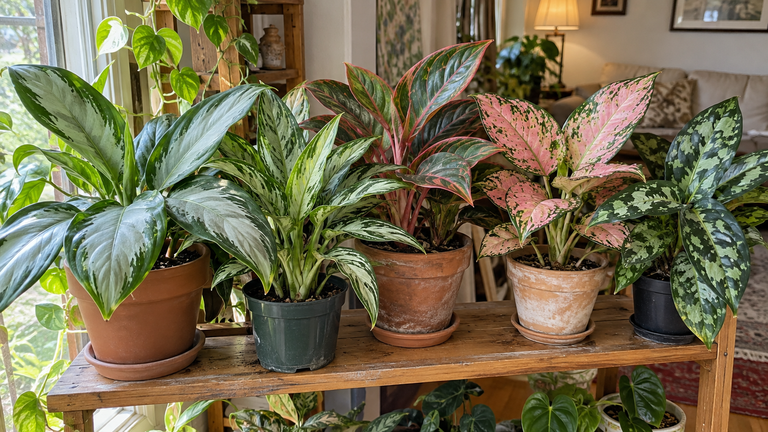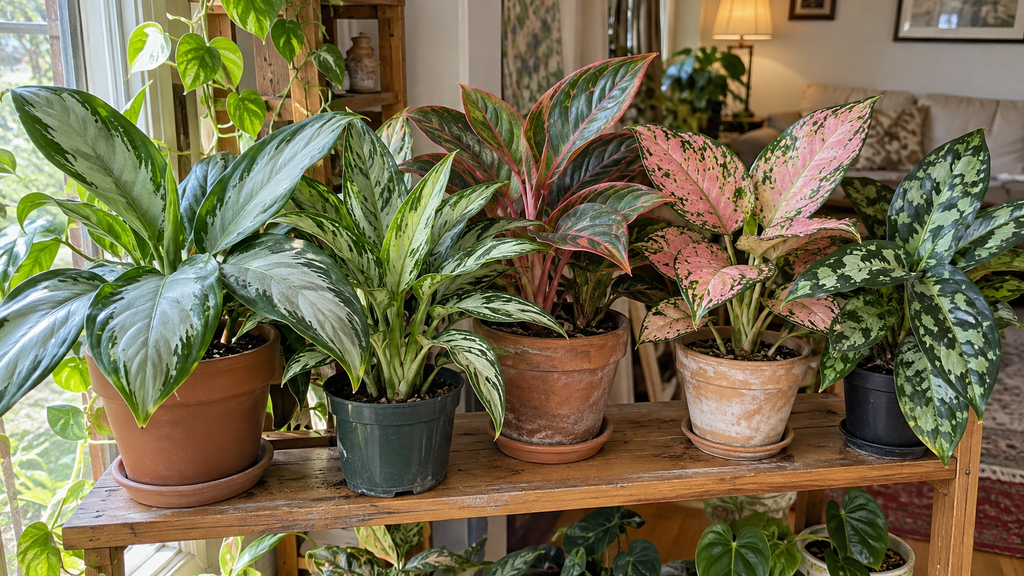
Aglaonema varieties include green, silver, pink, red, and white Chinese evergreens grown for their patterned foliage. Popular choices include ‘Silver Bay’, ‘Maria’, ‘Silver Queen’, ‘Siam Aurora’, and ‘Pink Dalmatian’. The best variety depends on available light, space, leaf color, and growing experience.
This Plantsaholic guide compares 35 named types, explains how to identify look-alikes, and covers care, longevity, buying decisions, and common problems.
What Are Aglaonema Varieties?
Aglaonema is a genus of perennial plants in the Araceae family, native to tropical Asia and New Guinea. Kew’s Plants of the World Online recognizes 26 accepted botanical species; nurseries sell many more cultivated selections and hybrids.
What Makes Aglaonema Varieties Different?
Leaf color, shape, variegation, veins, petioles, and growth habit distinguish varieties. ‘Silver Bay’ has broad silver centers, while ‘Siam Aurora’ has red leaf margins. Some form clumps; others become upright.
Are Aglaonema and Chinese Evergreen the Same Plant?
Yes. Chinese evergreen is the common name for Aglaonema, not a particular cultivar. Check nursery labels.
How Are Aglaonema Varieties Named and Verified?
A species is a botanical taxon; a cultivar is a cultivated selection. Trade labels and synonyms can complicate identification. Horticultural sources associate ‘Maria’ with ‘Emerald Beauty’, but similar spellings such as ‘Cecilia’ and ‘Cecelia’ should not automatically be equated. A. pictum ‘Tricolor’ is a cultivated form associated with camouflage leaves; A. tricolor is a separately accepted species. Check grower labels before assigning names.
Which Aglaonema Varieties Are Best?
For beginners, ‘Silver Bay’ and ‘Maria’ offer attractive foliage and manageable care. ‘Siam Aurora’ provides red margins, ‘Lady Valentine’ provides pink patches, and A. pictum ‘Tricolor’ appeals to collectors. Check grower records for confirmation.
Green and Silver Aglaonema Varieties
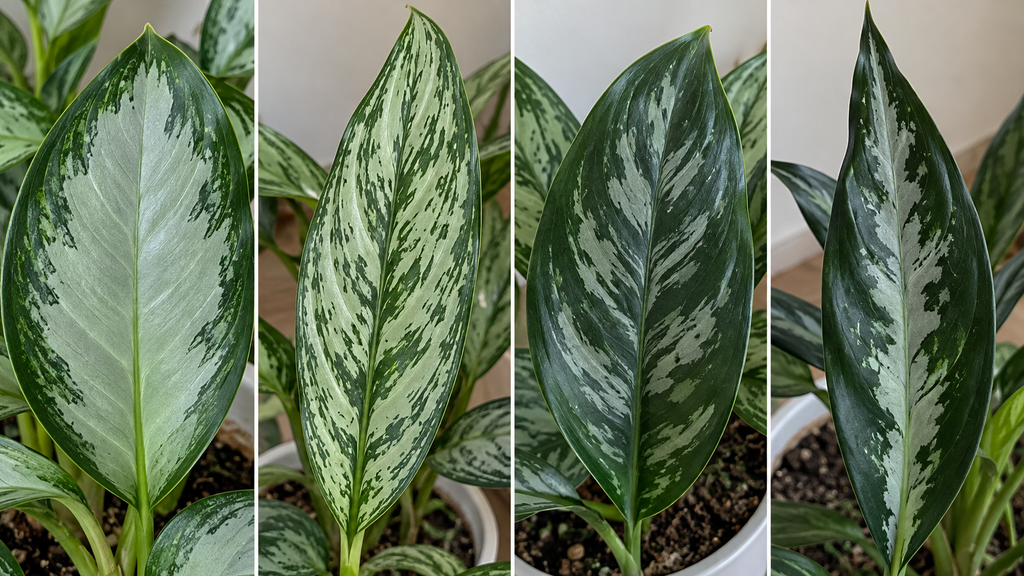
These classic selections tolerate relatively low light, although adequate illumination supports stronger growth.
1. Aglaonema ‘Silver Bay’
Broad oval leaves carry large silvery-gray centers bordered by dark green. Basal shoots form a full clump. Best for: beginners and medium displays. Avoid permanently wet soil.
2. Aglaonema ‘Silver Queen’
Narrower leaves show irregular silver-green striping. Best for: offices and traditional collections. It is notably sensitive to chilling; protect it from cold windows.
3. Aglaonema ‘Maria’
Dark green foliage has soft, feathered gray-silver markings. Best for: relatively shaded rooms and shelves. Its compact form suits smaller spaces.
4. Aglaonema ‘Golden Bay’
Broad leaves feature pale centers and deeper green borders. Multiple basal shoots create dense growth. Best for: bushy displays and larger decorative pots.
5. Aglaonema ‘Romeo’
Long, narrow leaves are predominantly silver with darker green markings. Best for: slender arrangements and contrasting foliage textures.
6. Aglaonema ‘Queen Juliana’
Predominantly green foliage creates a restrained tropical appearance. Best for: neutral interiors and balancing colorful houseplants.
7. Aglaonema ‘Nicole’
Medium-green leaves feature a broad central silver stripe. Best for: clear, two-tone foliage. Check several leaves when identifying it.
8. Aglaonema ‘Cecilia’
Wide silvery-green leaves display green speckling. Best for: bright-looking tabletop arrangements. Verify labels because similarly spelled names exist.
9. Aglaonema ‘Slim Jim’
Long, exceptionally narrow green-variegated leaves accompany pale stems. Best for: upright mixed displays where contrasting leaf shape matters.
10. Aglaonema ‘Edgy White’
Dark green leaves show contrasting white margins and pale stems. Best for: white-and-green arrangements. Protect pale sections from harsh sunlight.
11. Aglaonema ‘Jubilee’
Deep green leaves bear substantial central silver streaks. Best for: larger upright displays. Supply adequate filtered illumination.
12. Aglaonema ‘Jubilee Petite’
Compact plants have pale-centered leaves with darker margins. Best for: desks, shelves, and small containers.
13. Aglaonema ‘Black Lance’
Narrow lance-shaped foliage has a jagged silver band surrounded by dark green. Best for: vertical displays. Keep away from cold drafts.
14. Aglaonema ‘Stripes’
Distinct pale bands follow the leaf veins. Best for: structured, striped foliage. Compare mature leaves in natural indirect light.
15. Aglaonema ‘Tigress’
Green leaves feature elongated lighter streaks. Best for: subtle patterned collections. Confirm the label because striped selections can resemble each other.
Red, Pink, and Cream Aglaonema Varieties
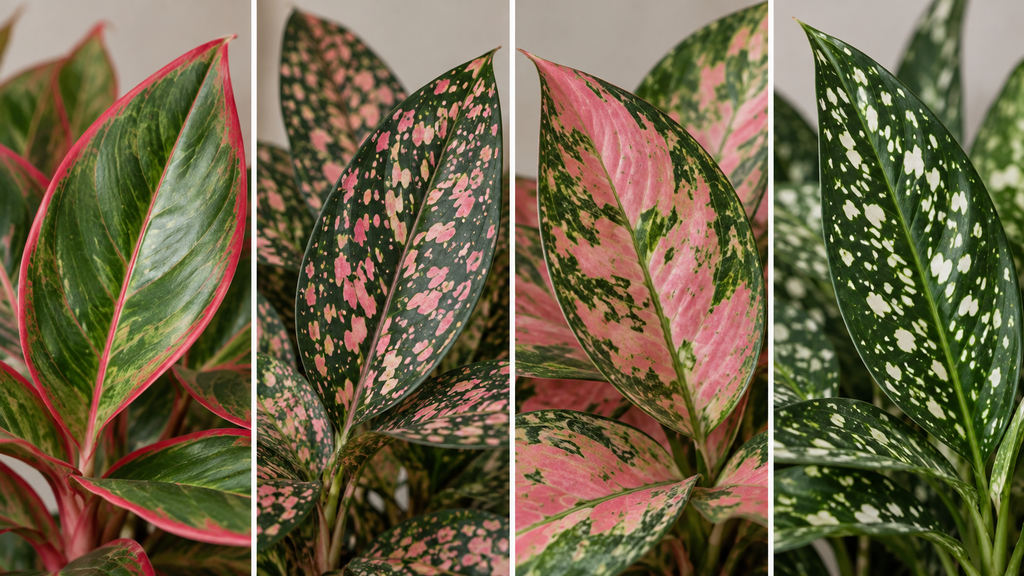
Colorful hybrids provide year-round interest. Most benefit from medium to bright indirect light; intense direct sunshine can scorch leaves.
16. Aglaonema ‘Siam Aurora’ (Lipstick Type)
Pointed green leaves have vivid red edges, veins, and sometimes petioles. Best for: red foliage. Often sold as Lipstick Aglaonema.
17. Aglaonema ‘Pink Dalmatian’
Dark green leaves are scattered with irregular pink spots. Best for: speckled pink foliage. Spot density varies between leaves.
18. Aglaonema ‘Pink Siam’
Soft green and chartreuse leaves carry gentle pink margins. Best for: pastel arrangements. Check retail identification carefully.
19. Aglaonema ‘Anyanmanee’
Broad green leaves feature large dusty-pink patches. Best for: bold pink displays. Compare photographs of the actual specimen.
20. Aglaonema ‘Georgi’s Ruby’
Green foliage combines red and chartreuse markings. Best for: multicolored focal points beside darker houseplants.
21. Aglaonema ‘Golden Fluorite’
Chartreuse leaf surfaces carry contrasting red and pink accents. Best for: luminous yellow-green displays under filtered light.
22. Aglaonema ‘Lemon Pie’
Bright chartreuse leaves show softer green markings. Best for: lime-colored arrangements. Its natural pale color is not necessarily yellowing damage.
23. Aglaonema ‘Red Emerald’
Dark green leaves contrast with reddish veins and golden-amber speckles. Best for: green foliage with warm-colored accents.
24. Aglaonema ‘Two Tone Moonstone’
Irregular cream, pink, and green patches create pastel variegation. Best for: soft multicolored displays; avoid scorching direct sun.
25. Aglaonema ‘Ultra Pink’
Broad reddish-pink leaves retain contrasting darker green borders. Best for: a dramatic pink focal plant.
26. Aglaonema ‘Watermelon Unakite’
Rich pink foliage bears scattered green markings and may have deeper pink undersides. Best for: predominantly pink collections.
27. Aglaonema ‘White Calcite’
Dark green lance-shaped leaves display separate bright white spots. Best for: white-speckled foliage rather than silver-centered patterns.
28. Aglaonema ‘Sparkling Sarah’
Cream and pink variegation decorates green leaves; pink stems add another distinguishing characteristic. Best for: multicolored displays.
29. Aglaonema ‘Wishes’
Pink-to-red foliage retains contrasting green areas. Best for: year-round warm coloring. Assess several mature leaves before purchase.
30. Aglaonema ‘Lady Valentine’
Broad pink regions mingle with green patches and margins. Best for: pink decorative arrangements and gifts.
Rare and Botanical Aglaonema Varieties
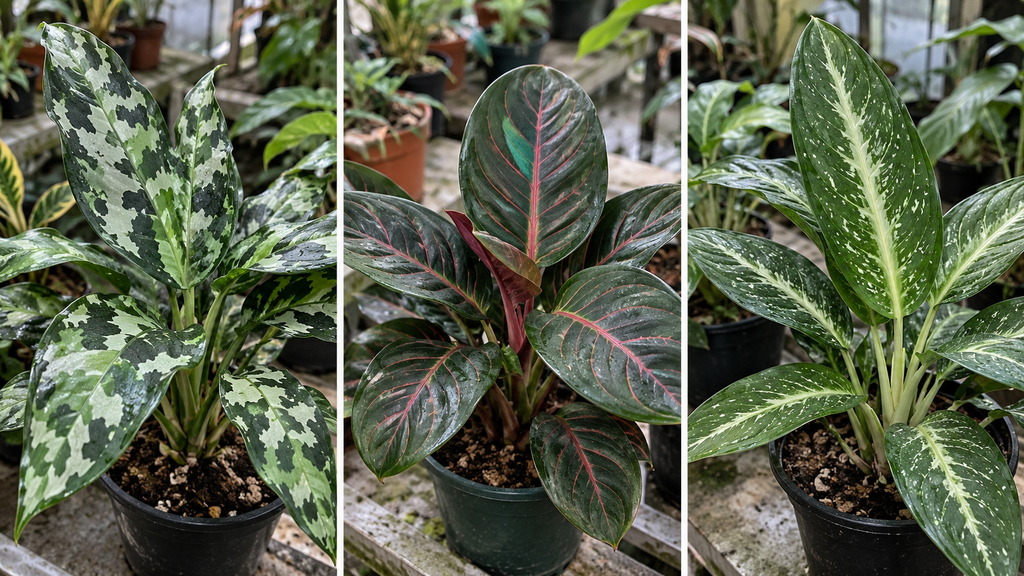
Unusual natural forms interest collectors; retail scarcity does not mean a plant is endangered.
31. Aglaonema pictum ‘Tricolor’
Three shades of green and silver create irregular camouflage patches. Best for: collectors who can provide stable warmth, filtered light, and healthy roots.
32. Aglaonema rotundum
Relatively rounded dark green leaves feature striking reddish or pinkish veins. Best for: botanical collections with stable tropical conditions.
33. Aglaonema costatum
Green foliage displays a conspicuous pale midrib, sometimes with light spotting. Best for: species collections. Additional traits are needed for confident identification.
34. Aglaonema modestum
Mostly green elongated leaves grow on stems that may become exposed with age. Best for: classic, understated foliage displays.
35. Aglaonema nitidum
Glossy elongated leaves may be plain green or show pale markings. Best for: larger botanical plant displays.
How Can You Compare All 35 Aglaonema Varieties?
Use these markings to narrow identification before checking verified images:
| Leaf characteristic | Possible varieties |
|---|---|
| Broad silver centers | Silver Bay, Golden Bay |
| Feathered silver patterns | Maria, Silver Queen |
| Narrow striped foliage | Black Lance, Slim Jim |
| Red or pink margins | Siam Aurora, Pink Siam |
| Broad pink patches or spots | Lady Valentine, Pink Dalmatian |
| White spotting | White Calcite |
| Camouflage patterns | Pictum Tricolor |
| Rounded leaves, red veins | Rotundum |
How Can You Tell Similar Aglaonema Varieties Apart?
‘Silver Bay’ has broader silver centers than ‘Silver Queen’; ‘Maria’ shows feathered gray markings. ‘Pink Dalmatian’ has separate spots, while ‘Lady Valentine’ usually has larger pink patches. ‘Black Lance’ has a jagged silver stripe; ‘Slim Jim’ is narrower and green-variegated. Compare three mature leaves, their petioles, and the nursery label before deciding.
Which Other Aglaonema Varieties Are Worth Knowing?
Additional cultivated selections include ‘Cutlass’ (narrow leaves), ‘Chocolate’ (dark foliage with reddish veins), ‘Harlequin’ (multicolored markings), ‘Emerald Bay’ (gray-green centers), ‘Maria Christina’, ‘White Lance’, ‘Red Zircon’, and ‘Spring Snow’. Their availability and labeling vary regionally. These supplement rather than replace the featured 35.
Which Aglaonema Suits Your Home?
Choose by usable light, mature size, and decorative preference. ‘Silver Bay’ suits beginners; ‘Maria’ tolerates shade; ‘Siam Aurora’ and ‘Ultra Pink’ favor brighter filtered light. Match the plant to its room.
Which Aglaonema Is Best for Small Rooms?
‘Jubilee Petite’ is compact; ‘Maria’ can suit shelves. Allow enough width for mature leaves, not just space for the nursery pot.
How Big Do Different Varieties Grow?
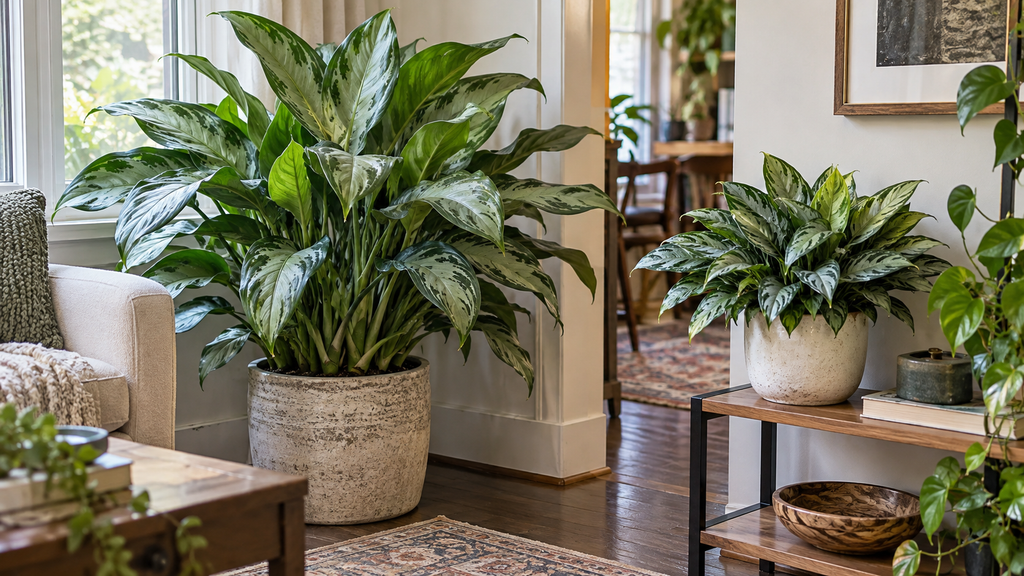
Many common indoor plants reach roughly 30–90 cm (1–3 feet), although size varies with cultivar and care. ‘Silver Bay’ can become broad and bushy; ‘Jubilee Petite’ remains relatively compact.
Aglaonema Variety Comparison Chart
| Situation | Recommended variety | Reason |
|---|---|---|
| First plant | Silver Bay | Adaptable growth |
| Lower-light office | Maria | Shade tolerance |
| Compact shelf | Jubilee Petite | Smaller habit |
| Red leaf margins | Siam Aurora | Vivid edging |
| Pink display | Lady Valentine | Large pink areas |
| Collector display | Pictum Tricolor | Camouflage foliage |
How to Identify Aglaonema Varieties?
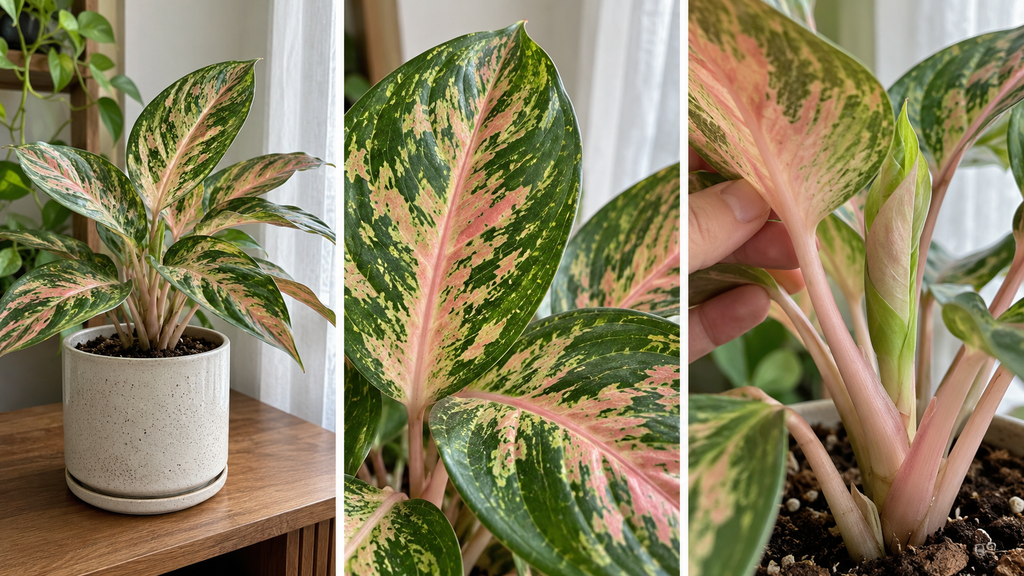
Examine mature leaf patterns, shape, venation, stem colors, and growth habit. Compare broad silver-centered leaves with narrow lance-shaped types, and note pink or red petioles. Similar hybrids may remain unidentified without grower records.
Can Aglaonema Variegation Change or Revert?
Light and maturity can change how colorful new leaves appear. Greener foliage is not necessarily genetic reversion; true reversion involves stable changes in growing tissue. Monitor successive leaves before concluding the cultivar has changed.
Confirm the Botanical or Cultivar Name
Check Kew for accepted species and UF/IFAS for documented cultivars. Retain original nursery labels, especially for rare plants.
How Can You Distinguish Aglaonema From Dieffenbachia?
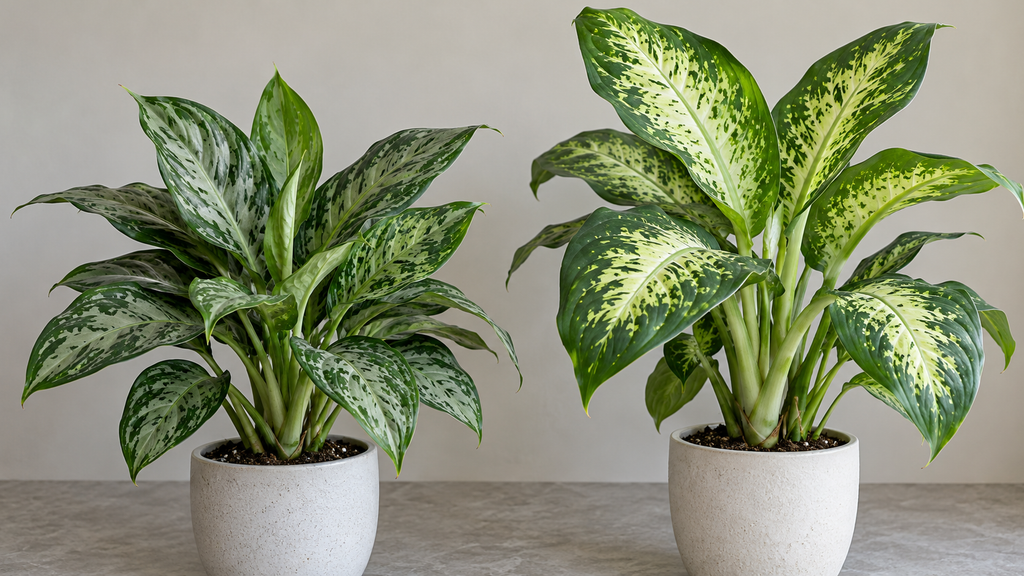
Both belong to Araceae. Aglaonema often has around five to eight prominent lateral veins, whereas Dieffenbachia generally has more numerous lateral veins. Growth habit and verified labels provide additional clues; vein counts are not absolute.
How Can You Use Pictures to Identify Aglaonema Varieties?
Photograph the entire plant, several mature leaves, leaf markings, petioles, and new foliage under consistent diffused light. Compare authenticated specimens, not oversaturated marketing images or AI-generated illustrations. Ask sellers for photos of the actual plant.
What Is the Rarest Aglaonema?
There is no universally rarest Aglaonema. Regional nursery supply, propagation, and demand determine market scarcity. Commercial rarity should not be confused with a species’ conservation status.
Why Is Aglaonema pictum Tricolor Popular?
Its irregular three-tone camouflage leaves distinguish it from common silver cultivars. Purchase well-rooted specimens with reliable identification.
Which Other Aglaonemas Are Uncommon?
A. rotundum, specialist botanical species, and certain limited-production hybrids may be harder to find locally. Availability changes as nurseries increase production.
How Can You Buy Rare Aglaonemas Safely?
Verify identity, current specimen photographs, root establishment, seller policies, and shipping protection. International purchases may require phytosanitary documents.
Is Aglaonema High Maintenance?
Most established Aglaonemas are low-maintenance when provided with filtered light, warmth, suitable moisture, and drainage. Tolerating poor conditions is not the same as thriving.
What Light Does Aglaonema Need?
Provide low to bright indirect light according to the cultivar. Diffuse intense sun and avoid permanent darkness.
Which Aglaonema Varieties Keep Their Color in Lower Light?
‘Maria’, ‘Silver Bay’, and ‘Silver Queen’ are useful in relatively shaded interiors. Colorful hybrids generally need brighter indirect light. Small new leaves, stretched stems, and reduced coloration can suggest inadequate illumination.
How Often Should You Water Aglaonema?
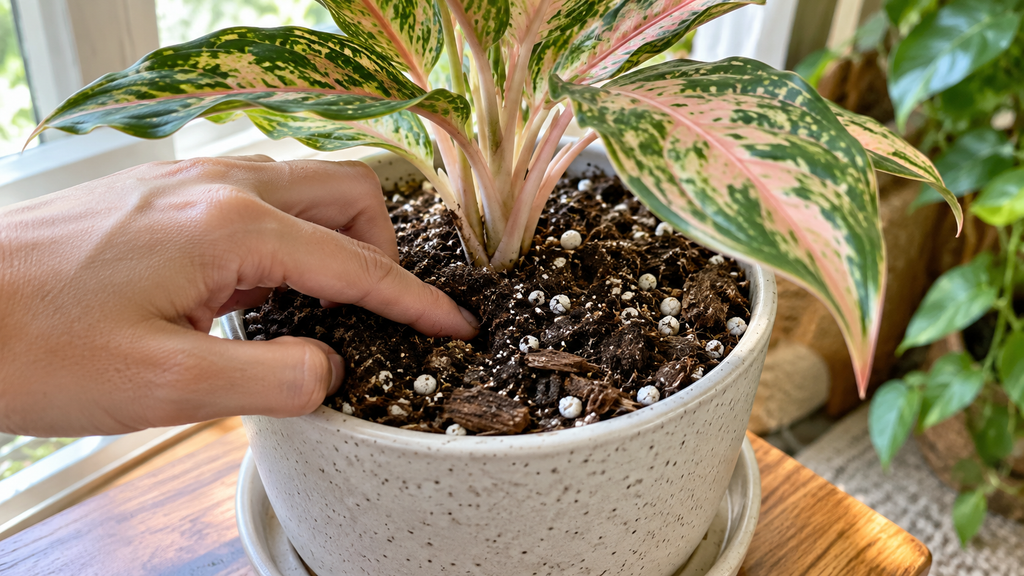
Check the upper 2–5 cm (1–2 inches) of soil, plus deeper moisture in large containers. Water thoroughly when appropriate and drain excess water. Reduce frequency when light and temperatures decline.
What Temperature and Humidity Are Best?
Many cultivars grow comfortably around 18–29°C (64–84°F). Protect against chilling and drafts. Ordinary household humidity suits many common selections.
What Soil Is Best for Aglaonema?
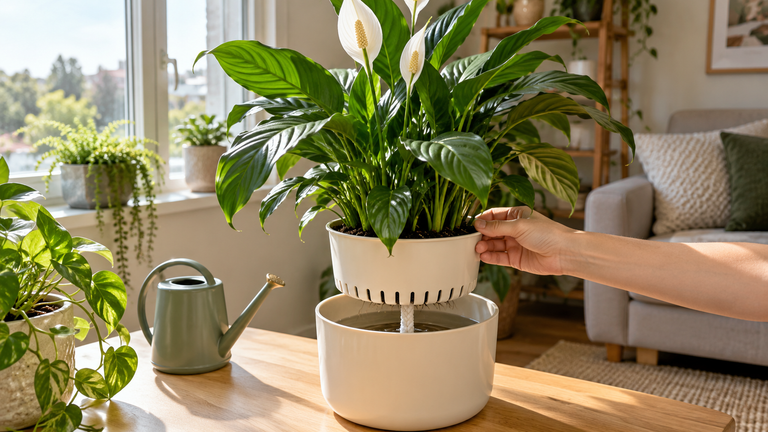
Use airy, moisture-retentive potting medium with drainage, optionally amended with perlite and fine bark. Avoid prolonged saturation.
Does Aglaonema Need Fertilizer?
Apply balanced houseplant fertilizer moderately during active growth, following the label. Too much fertilizer can harm roots and brown leaf tips.
How to Make Aglaonema Grow Faster?
Healthy growth depends on brighter filtered light, stable warmth, airy growing medium, and suitable moisture. Use balanced fertilizer sparingly during active growth; repot only when roots crowd the container. Established basal shoots naturally make some cultivars fuller. Heavy feeding cannot compensate for cold, darkness, or root damage.
How Fast Does Aglaonema Normally Grow?
Aglaonema grows slowly to moderately, with differences between cultivars and seasons. There is no reliable universal monthly leaf count; evaluate root health and normal new foliage instead.
When Should You Propagate Aglaonema Instead of Repotting?
Repot for root crowding or deteriorated medium. Propagate stem cuttings with viable nodes when renewing leggy plants or making duplicates. Divide clumps only where shoots have adequate roots.
How Long Does Aglaonema Live?
Aglaonema is perennial and may live a decade or longer under suitable care, but no reliable species-wide average lifespan exists.
What Determines Aglaonema Lifespan?
Root health, suitable light, consistent moisture, warmth, and pest control influence longevity. Prevent waterlogging and severe chilling.
Why Do Older Aglaonemas Become Leggy?
Lower leaves naturally age, exposing stems. Insufficient light can increase stretching. Root healthy cuttings to renew an older specimen if necessary.
What Is Lipstick Aglaonema?
Lipstick describes red-edged Chinese evergreens, often ‘Siam Aurora’. Look for green pointed leaves with red margins, veins, and petioles; similar cultivars exist. Give bright filtered light, warmth, and moisture-balanced soil. Verify the nursery label before assuming a precise identity.
Are There 120 Aglaonema Varieties?
Lists of 120 types may combine species, cultivars, hybrids, trade names, and synonyms. Kew recognizes 26 botanical species, not 120.
Why Do Aglaonema Lists Have Different Counts?
Nurseries use regional labels, new hybrids appear, and alternative names may be counted twice. Prioritize verified identities rather than inflated lists.
How Many Aglaonema Varieties Should You Collect?
Start with plants your space and light can support. A smaller, well-identified collection is preferable to many stressed or mislabeled specimens.
Where to Find an Aglaonema Varieties PDF?
A printable identification checklist helps compare names, leaf patterns, and light preferences when shopping or organizing plants. A Plantsaholic download should link to an actual website-hosted file, not a placeholder.
What Should an Aglaonema Identification PDF Include?
Include species or cultivar names, dominant colors, leaf shapes, distinguishing patterns, light guidance, verified photos, and space to record nursery labels.
What Are Common Aglaonema Problems?
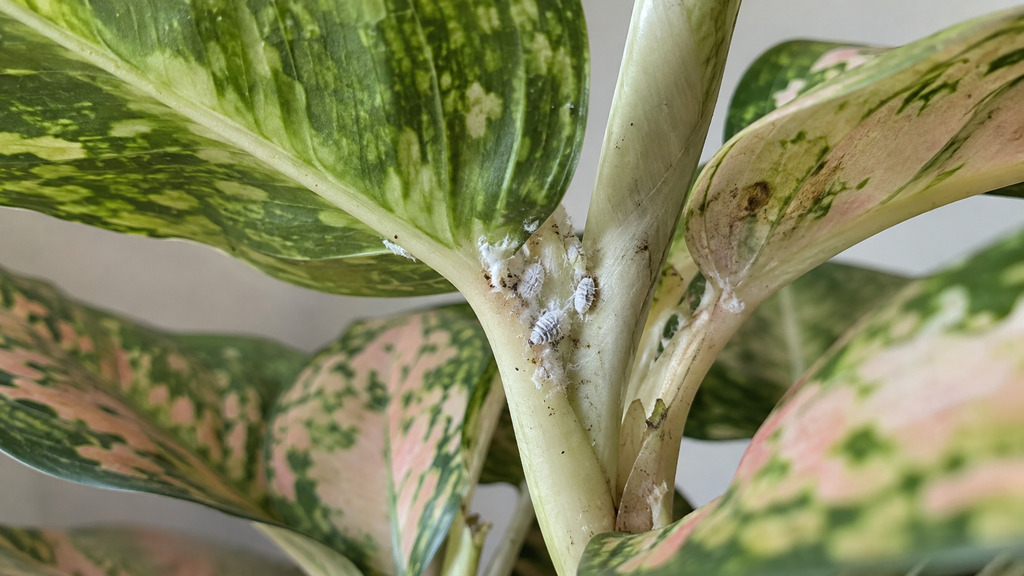
Yellow leaves, drooping, brown tips, fading, and insect damage have several possible causes. Brown tips may indicate fertilizer salts or dry air; spider mites cause fine stippling, while mealybugs form cotton-like clusters. Inspect soil, roots, light, temperature, and pests before choosing treatment.
Why Are Aglaonema Leaves Turning Yellow?
One yellow older leaf may indicate normal aging. Multiple yellow leaves with consistently wet soil suggest root stress. Check drainage and root firmness before watering again.
Aglaonema Troubleshooting Chart
| Symptom | Check first | Next step |
|---|---|---|
| Yellow leaves, wet soil | Root health | Improve drainage |
| Drooping, dry soil | Moisture level | Water appropriately |
| Drooping, wet soil | Damaged roots | Inspect root system |
| Brown tips | Water and fertilizer | Correct contributing stress |
| Faded pink foliage | Light exposure | Increase indirect light gradually |
| Cotton-like insects | Mealybugs | Isolate and treat |
Is Aglaonema Toxic to Pets and Children?
Yes. Insoluble calcium oxalate crystals can irritate the mouth and throat when leaves or stems are chewed. The ASPCA lists Chinese evergreen as toxic to cats and dogs.
What Happens if a Pet Eats Aglaonema?
Drooling, oral pain, swelling, vomiting, or difficulty swallowing may occur. Remove access and promptly contact a veterinarian or animal poison-control service. Breathing difficulty requires urgent care; do not induce vomiting without professional instructions.
How Can You Display Aglaonema Safely?
Keep plants and fallen leaves out of reach. Cats can climb shelves, so households with plant-chewing pets may prefer nontoxic alternatives.
How to Choose an Aglaonema?
Buy a plant with firm leaves, stable stems, healthy roots, and a reliable label. Match mature size and lighting needs to its intended location.
How Can You Recognize a Healthy Aglaonema?
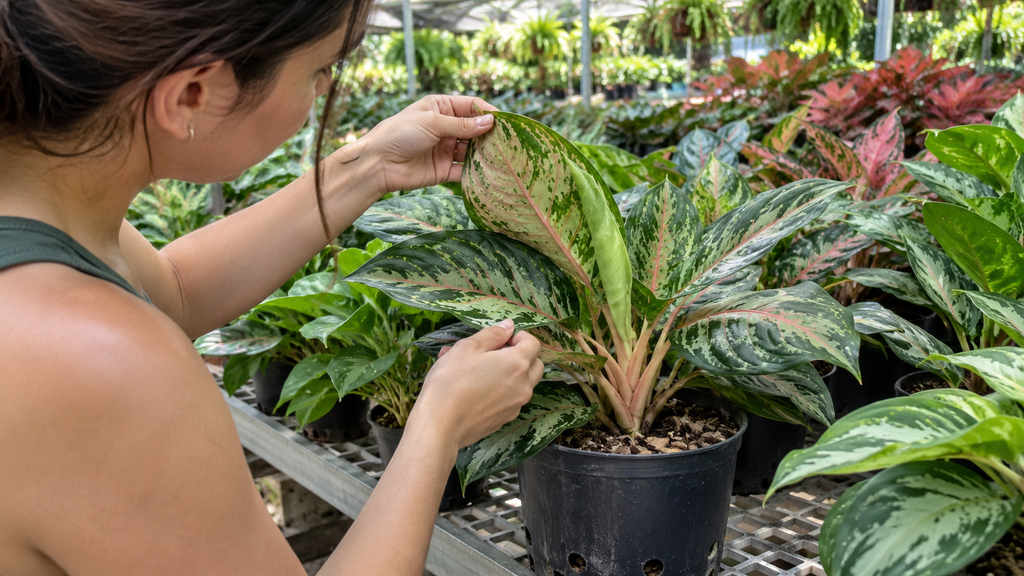
Inspect leaf undersides for pests and look for healthy new growth. Avoid collapsing stems, extensive discoloration, or persistently soggy soil.
Should You Buy a Small or Mature Plant?
Small plants are economical and space-saving, while mature specimens show clearer patterns and offer immediate decorative impact. Check eventual size.
What Should You Check When Buying Rare Varieties?
Request actual specimen photographs, confirm established roots and naming, and review seller policies. Check import rules for international orders.
How Can You Acclimate a Newly Purchased Aglaonema?
Inspect for pests, isolate initially, provide stable indirect light, and check soil moisture before watering. Avoid immediate heavy fertilizer or unnecessary repotting. Give shipped plants time to stabilize.
Aglaonema Varieties FAQs
1. What Are the Best Aglaonema Varieties for Indoor Plants?
‘Silver Bay’, ‘Maria’, and ‘Silver Queen’ suit many homes; ‘Siam Aurora’ and ‘Pink Dalmatian’ offer colorful options for brighter filtered light.
2. Which Aglaonema Is Best for Beginners?
‘Silver Bay’, ‘Maria’, and ‘Silver Queen’ are dependable choices when given drainage, warmth, and adequate indirect light.
3. Which Aglaonema Has the Most Pink Leaves?
‘Ultra Pink’, ‘Lady Valentine’, and ‘Anyanmanee’ often feature extensive pink areas. ‘Pink Dalmatian’ has smaller pink spots.
4. How Can I Identify an Aglaonema Species or Variety?
Compare mature leaf shape, variegation, veins, petioles, and reliable nursery records. Similar hybrids may remain difficult to distinguish.
5. What Is the Rarest Aglaonema Variety?
There is no universally rarest type. A. pictum ‘Tricolor’ is collectible, but scarcity varies by market.
6. What Is the Average Lifespan of an Aglaonema Plant?
Healthy specimens may live a decade or longer, although no universal average lifespan is established.
7. Can Aglaonema Grow in a Bathroom?
Yes, if it stays warm and receives sufficient natural or artificial growing light. Humidity cannot replace light.
8. Can You Propagate Aglaonema in Water?
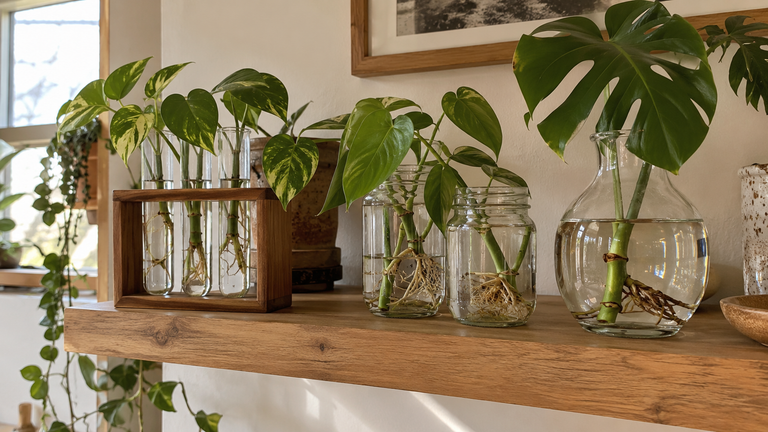
Yes. Stem cuttings with viable nodes can root in clean water before transfer into suitable potting mix.
9. Why Is My Red Aglaonema Turning Green?
Insufficient light may reduce new-leaf coloration; maturity and genetics also matter. Improve filtered light gradually.
10. Do Aglaonema Plants Produce Flowers?
Yes. Flowers form on a spadix surrounded by a spathe, although foliage is the main attraction.
11. Can Aglaonema Grow Outdoors?
Yes, in warm, shaded tropical conditions. Protect container plants from cold in temperate climates.
12. How Often Should Aglaonema Be Repotted?
Repot when roots are crowded or potting medium deteriorates. Many established plants do not need annual repotting.
13. Are There Really 120 Aglaonema Varieties?
Large lists combine commercial names and botanical species. Kew recognizes 26 accepted species; some lists double-count trade names.
14. What Is Aglaonema Lipstick?
Lipstick usually describes red-edged Chinese evergreens such as ‘Siam Aurora’. Verify the cultivar label.
Which Aglaonema Should You Choose?
For an adaptable first plant, select ‘Silver Bay’ or ‘Maria’. Choose ‘Siam Aurora’ for red edges, ‘Lady Valentine’ for pink foliage, or A. pictum ‘Tricolor’ for collector interest. Prioritize verified identification, suitable indirect light, healthy roots, and enough space for mature growth. Explore Plantsaholic’s indoor plant guides for detailed cultivar care.

Myra is the founder and lead writer of Plantsaholic. She shares practical, research-backed advice on indoor plants, outdoor gardening, flowers, herbs, succulents, and everyday plant care. Her goal is to help gardeners of all experience levels grow healthier plants through simple, easy-to-follow gardening guides.