The best propagation station ideas pair healthy cuttings with stable vessels, suitable light, and enough room for new roots. Glass jars work well for beginners, while wall displays save counter space and wide vases support larger stems. Explore 18 useful designs, plus straightforward advice on choosing, building, maintaining, and transplanting cuttings.
Which Propagation Station Should You Choose?
Choose the station around the plant. Small pothos cuttings fit removable tubes; leafy Monstera stems need wide, weighted containers. Check lighting, cleaning access, and whether roots can leave without breaking.
| Your situation | Suitable station | Main trade-off |
|---|---|---|
| First attempt | Wide-mouth mason jars | Occupies shelf space |
| Several small vines | Wooden test-tube stand | Limited water volume |
| Large stem cutting | Heavy glass vase | Needs a stable surface |
| Small apartment | Wall-mounted holder | Requires secure fixings |
| Bright windowsill | Jars on a tray | Direct sun can heat water |
| Dim room | Grow-light shelf | Needs equipment and safe wiring |
| Tight budget | Reused jars | Bottle openings vary |
Start with one or two containers. A manageable setup is better than one that traps roots.
What Are the 18 Best Propagation Station Ideas?
These ideas range from reused jars to built-in shelves. Favor removable vessels, stable supports, and easy cleaning.
1. Mason Jar Propagation Station
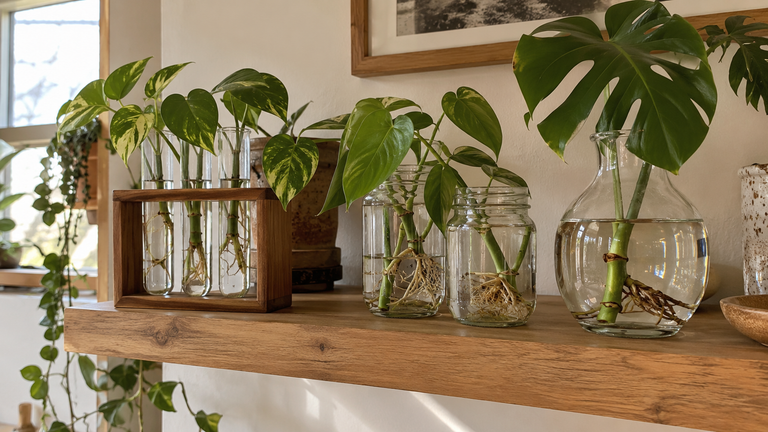
Arrange three wide-mouth jars on a waterproof tray near a bright window. Add compatible nodal cuttings, keeping leaves out of the water. Wide openings make new roots visible and easy to remove when transplanting.
Best for: Beginners, pothos, and Tradescantia. Watch out for: Crowded jars and unstable shelf edges. For cutting preparation, see how to propagate pothos.
2. Wooden Test-Tube Stand
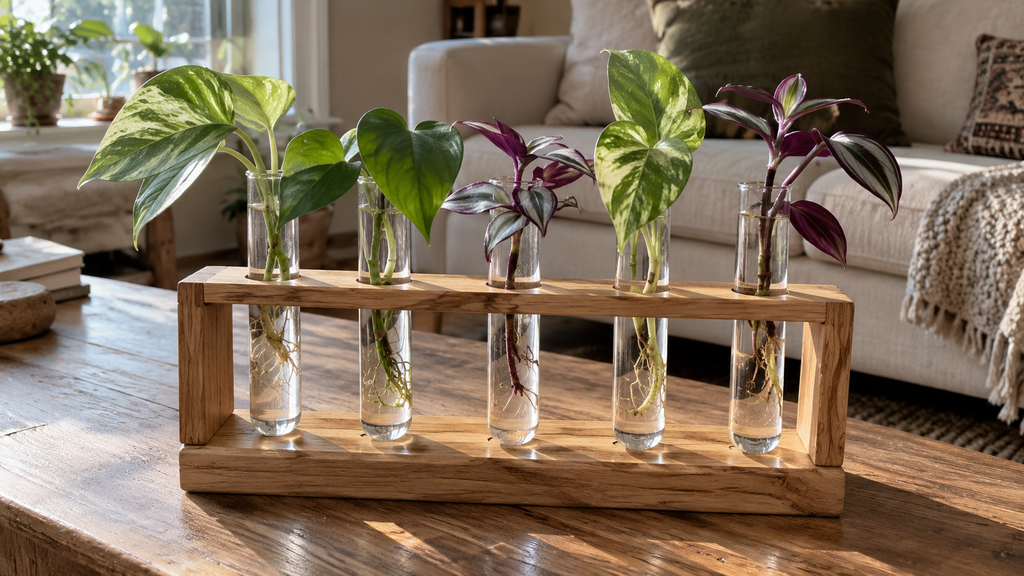
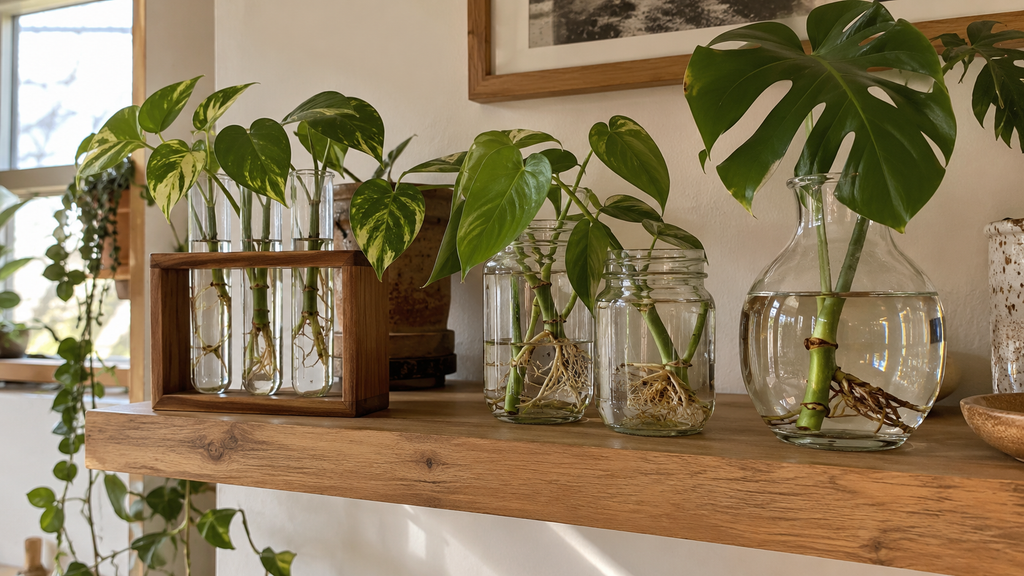
A holder with three to five removable tubes organizes small cuttings. Use healthy stems from heartleaf philodendron, pothos, or Tradescantia. Allow enough spacing to lift each tube without snagging neighboring leaves.
Best for: Compact displays and individual cuttings. Watch out for: Rapid evaporation and roots growing wider than the openings.
3. Wall-Mounted Propagation Station
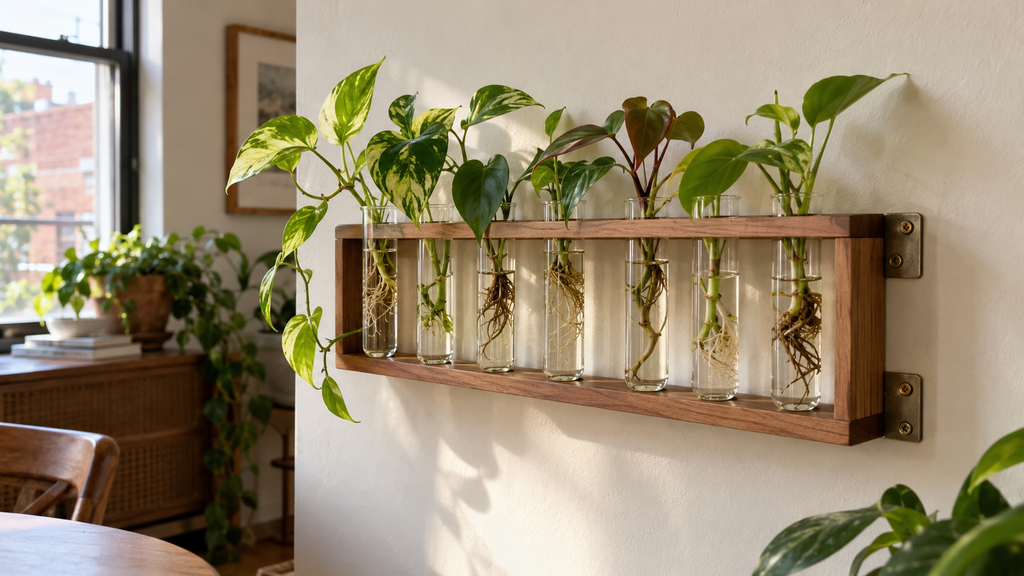
Mount a holder with individual removable vessels on a wall that receives suitable light. It frees counter space. Select anchors appropriate for the wall and the combined weight of the frame, glass, water, and plants.
Best for: Apartments and narrow rooms. Watch out for: Weak fixings, inaccessible tubes, and spills over furniture.
4. Hanging Propagation Station
Hang lightweight vessels from a properly secured rail, using holders that keep the glass upright. Trailing vines create a cascading effect. Position the display low enough to inspect and refill every vessel safely.
Best for: Decorative vertical space. Watch out for: Swinging containers, curtains, and fragile hooks.
5. Windowsill Propagation Station
Place a shallow waterproof tray with two or three stable jars on a wide windowsill. Soft daylight helps rooting and makes water checks convenient. Shift the jars back or filter sunlight if the glass becomes hot.
Best for: Bright kitchens and bedrooms. Watch out for: Narrow ledges, direct summer sun, and cold winter glass.
6. Recycled Glass Bottle Station
Group clean spice jars, bottles, or bud vases on a tray. Varying heights create interest, but opening width matters more than appearance. Choose containers that allow branching roots to come out without tearing.
Best for: Low-cost and reused-material displays. Watch out for: Narrow necks and top-heavy bottles.
7. Floating-Shelf Propagation Station
Use a properly supported shelf with a protective tray underneath the vessels. Mix wider jars for substantial stems with narrow containers for small vine cuttings. Keep leaves from blocking neighboring cuttings.
Best for: Collections with several cutting sizes. Watch out for: Water-damaged wood and shelves loaded beyond their rating.
8. Vintage Spice-Rack Station
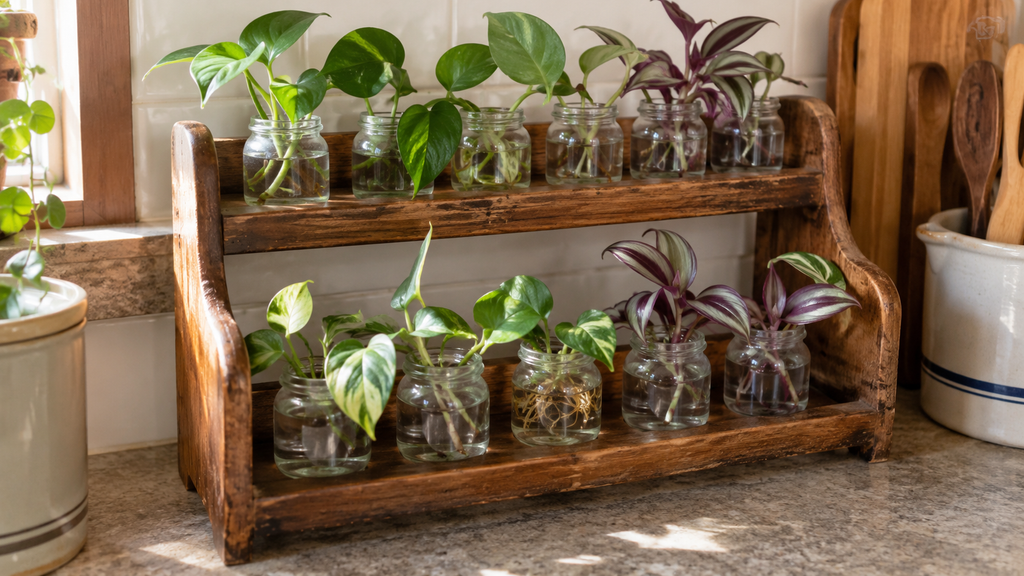
A sturdy spice rack can hold multiple small jars in a compact tiered layout. Measure existing openings before selecting the glass, and test the loaded rack before installing plants. Loose joints or rusty supports make an attractive secondhand rack unsuitable.
Best for: Upcycled décor. Watch out for: Poor-fitting jars and unsupported water weight.
9. Picture-Frame Propagation Wall
Fit a deep, rigid frame with secure clips for lightweight removable tubes. Space the holders so foliage can spread and each tube lifts out without disturbing others. Attach the frame with hardware designed for its total filled weight.
Best for: Botanical wall art. Watch out for: Decorative frames that cannot safely support glass and water.
10. Magnetic Mini Station
Use small magnetic vessel holders on a compatible steel panel. Rearrange cuttings without drilling new holes. Test each magnet with its full water load before adding a plant, preferably over a protected surface.
Best for: Flexible, small displays. Watch out for: Slipping magnets and falling containers.
11. Large Monstera Vase Station
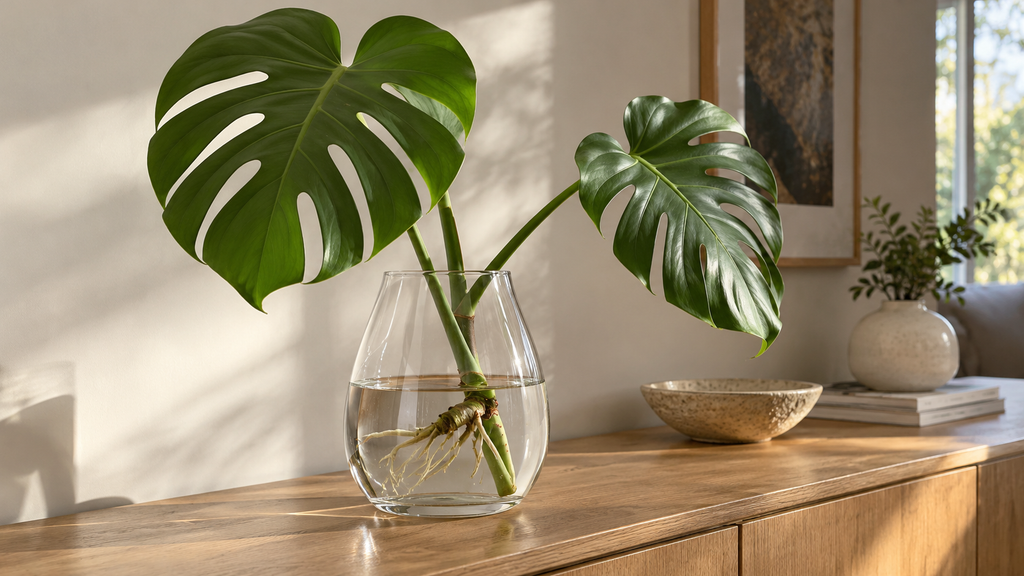
Support a Monstera stem cutting in a wide, heavy-bottomed vase. The cutting needs a viable node: a detached leaf without the correct stem tissue cannot grow into a complete new plant. Leave space for roots and choose a position where heavy foliage cannot tip the vase.
Best for: Large tropical cuttings. Watch out for: Top-heavy leaves and narrow openings.
12. Minimalist Scandinavian Station
Pair pale wood with two or three clear vessels and generous space between stems. Golden, Neon, and Marble Queen pothos provide contrasting foliage. See these pothos varieties when planning a foliage mix.
Best for: Clean, modern interiors. Watch out for: Choosing tiny decorative tubes purely for appearance.
13. Boho Wood-and-Rope Station
Use natural timber, securely attached rope, and removable glass holders for a handmade display. Keep rope away from water and verify that connections support filled vessels.
Best for: Warm, natural-material interiors. Watch out for: Damp rope and unstable suspension.
14. Desktop Propagation Station
Set one or two small jars inside a shallow waterproof tray on a desk that receives appropriate light. Use compact cuttings rather than large foliage that may catch sleeves or cables. Keep the tray away from keyboards, power outlets, and the desk edge.
Best for: Home offices. Watch out for: Spills and insufficient daylight.
15. Vertical Station for Small Apartments
A narrow freestanding rack can hold several rows of jars while using little floor space. Leave enough height to remove vessels and keep upper leaves from shading lower plants. Anchor tall racks if needed.
Best for: Growing collections in limited rooms. Watch out for: Overcrowding and difficult upper-level access.
16. Grow-Light Propagation Shelf
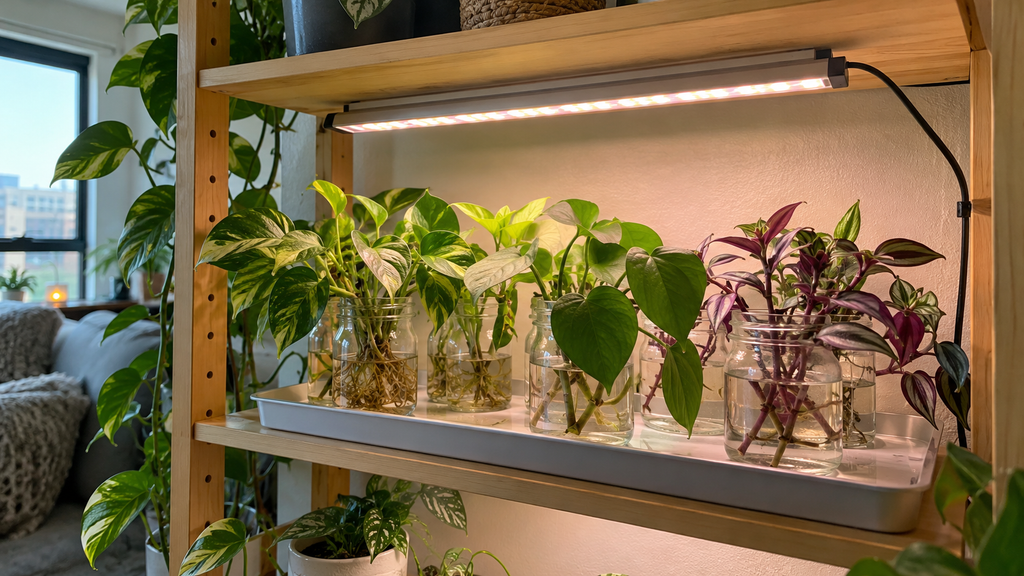
Use a suitable plant light above a shelf of labeled vessels when natural daylight is weak. Follow the manufacturer’s distance and duration guidance, then watch the plants for heat or light stress. Route electrical cords away from water and spills.
Best for: Dim rooms and regular propagation. Watch out for: Poor lamp placement and wet electrical connections.
17. IKEA VATTENKRASSE Propagation Station
The IKEA VATTENKRASSE set pairs five removable glass vases with a metal tray. Its listed overall size is approximately 26 × 8 × 10 cm, with small vessels better suited to compact cuttings than thick Monstera stems. Check local availability.
Best for: Coordinated, ready-made displays. Watch out for: Limited root capacity.
18. Mixed Propagation-and-Houseplant Shelf
Reserve one section of an existing plant shelf for jars and another for established potted plants. Place jars away from drainage runoff and keep new cuttings accessible for inspection. Only group plants when the shelf’s light conditions meet their different needs.
Best for: Existing houseplant collections. Watch out for: Overlapping foliage and messy watering.
What Is a Propagation Station?
A propagation station is a dedicated place for rooting plant cuttings or holding plantlets before they move to another growing medium. It commonly consists of jars, test tubes, or vases, sometimes supported by wooden, metal, or wall-mounted holders.
The station organizes cuttings but cannot replace biological requirements. Successful setups provide stable containers, appropriate light, enough room for developing roots, and access for cleaning. Water-filled glass is popular because growth is visible, but some stations hold perlite, moss, or potting mix instead.
Is Your Cutting Suitable for Propagation?
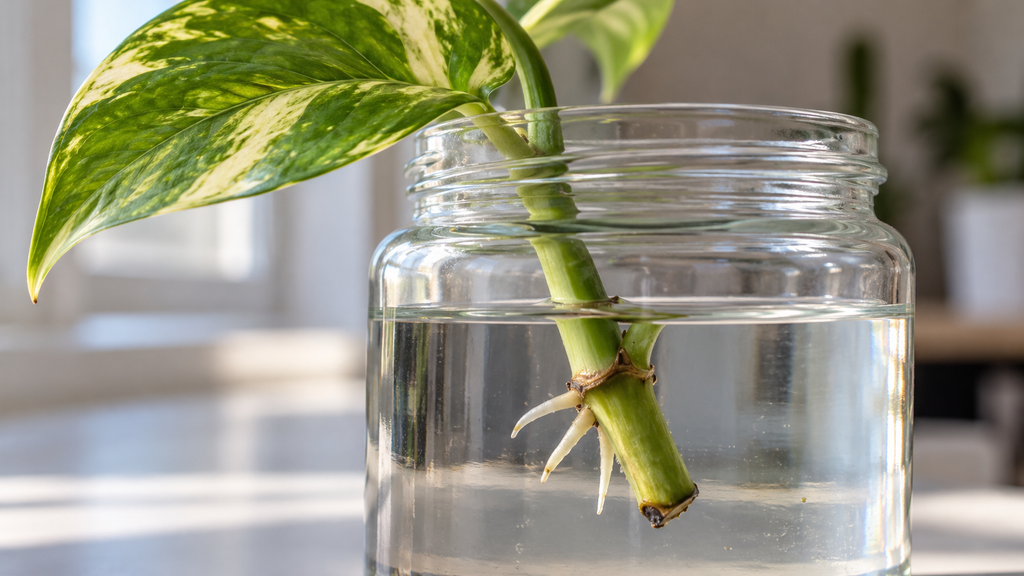
First identify the plant and the material you have. A pothos stem usually needs a viable node, whereas a spider plant can produce a new plant from an attached plantlet. African violets can grow from suitable leaf cuttings. These differences determine whether a water jar makes sense.
Check the species, the correct propagating tissue, and the recommended rooting medium before filling a vessel. Remove leaves that would remain submerged, use clean cutting tools, and avoid damaged or diseased stems. If a plant repeatedly rots in water, change the method rather than repeating the same attempt.
Which Station Fits Your Space?
Start with the size of the cutting and the light available, then choose the holder. A large cutting needs a wider, heavier vessel; short vine stems can use tubes. A dark wall is not a good location simply because it looks attractive.
How Can You Test a Propagation Station?
Fill all the containers before adding plants. Check whether the holder wobbles, whether one vessel can be removed without disturbing the others, and whether future roots can pass through the openings. Allow room for leaves, labels, and cleaning.
For mounted systems, calculate the combined loaded weight and follow the hardware’s specifications. A station that is unstable when full fails the practical test, regardless of its appearance.
Which Plants Work Best in Propagation Stations?
Common vining houseplants are convenient water-rooting candidates, but not every plant or cutting works the same way. This table connects the plant part to a sensible station rather than assuming every leaf can root.
| Plant | Correct material | Practical vessel | Key consideration |
|---|---|---|---|
| Pothos | Stem with node | Jar or tube | Keep node in water |
| Heartleaf philodendron | Nodal stem | Jar or tube | Keep leaves dry |
| Tradescantia | Stem cutting | Small jar | Inspect frequent growth |
| Monstera | Stem with node | Heavy, wide vase | Stabilize large leaves |
| Spider plant | Plantlet | Jar or small pot | Can root in potting mix |
| African violet | Leaf with petiole | Small vessel | Different from nodal stems |
| Snake plant | Leaf section | Jar or rooting tray | Some variegation may be lost |
| ZZ plant | Suitable leaf or stem | Small container | Rooting may be slow |
| Jade plant | Leaf or stem | Solid-medium tray | Avoid persistent wetness |
If you are propagating climbing or trailing species, the vine plant propagation guide explains why cutting placement and nodes matter.
When Should You Use Another Method?
Choose another method when water does not suit the species or available plant material. Succulent stems may need to callus before rooting in a free-draining medium; plants that form offsets or divisions are often easier to multiply that way. Woody cuttings may also require species-specific media or conditions.
Water changes cannot fix missing propagating tissue. Match the technique to the plant before choosing the decorative station.
Water or Rooting Medium: Which Is Better?
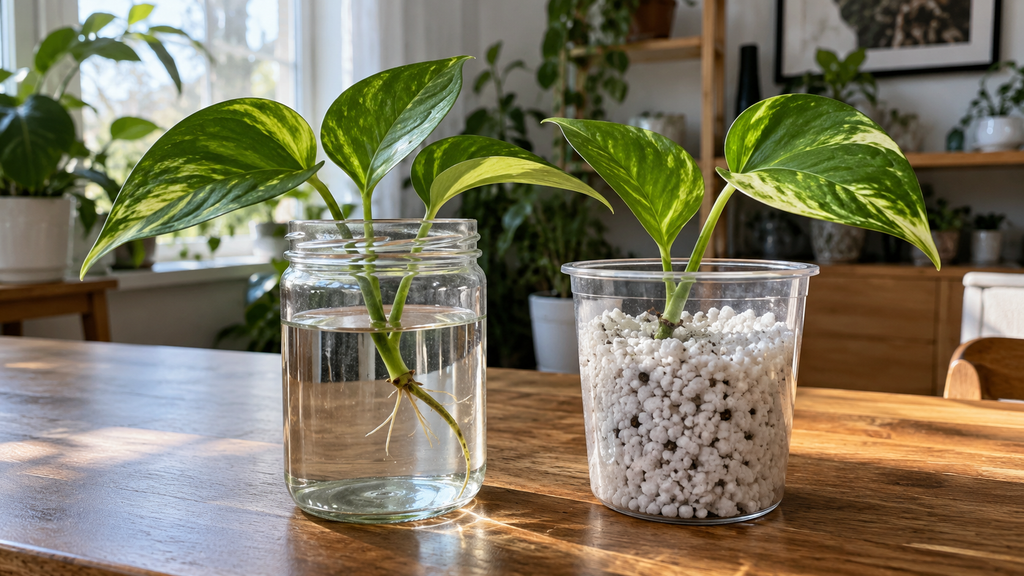
Water makes developing roots easy to observe and simplifies inspection. A suitable solid medium can provide moisture together with air around roots and may reduce adjustment when the plant moves to its permanent pot. Neither is best for every species.
| Factor | Water | Perlite or suitable propagation mix |
|---|---|---|
| Root visibility | High | Limited |
| Maintenance | Check and replace water | Monitor moisture and drainage |
| Decorative appearance | Clear display possible | Usually less transparent |
| Potting transition | Roots may need adjustment | Often more direct |
Select water for plants known to root well in it. Consider a solid medium when the species prefers it or when repeated attempts in water cause deterioration.
How Do You Make a DIY Propagation Station?
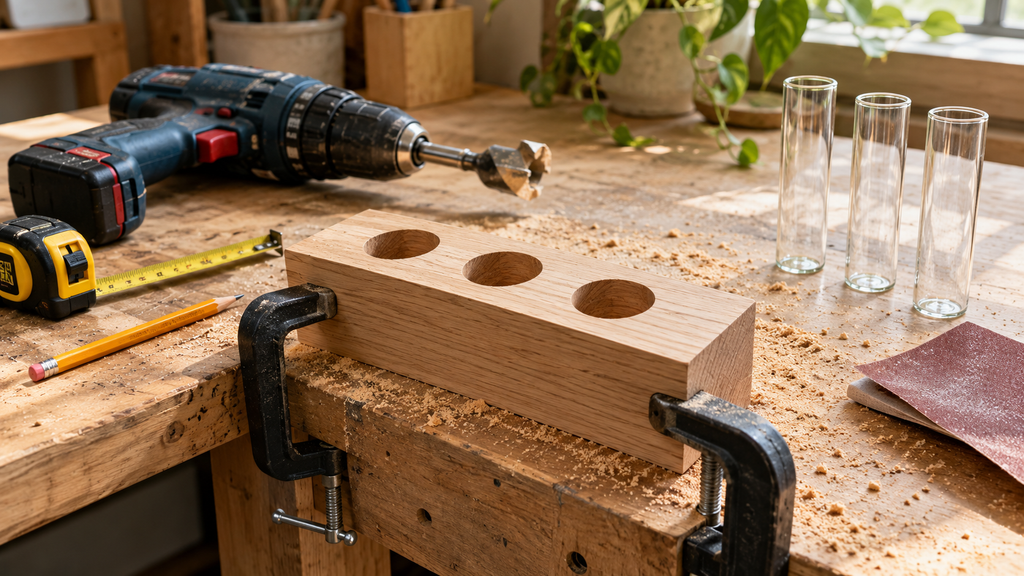
Build a simple wooden holder around the vessels you already own. You need a stable wood block, three to five removable glass tubes, measuring tape, pencil, suitable drill bit, clamps, and sandpaper. An appropriate protective wood finish is optional.
Step 1: Choose the Vessels
Measure each vessel’s outside diameter and check that its opening allows roots to be removed.
Step 2: Plan the Spacing
Mark locations that leave room for leaves as well as glass. Check the layout with empty vessels first.
Step 3: Mark and Drill
Clamp the wood securely and drill openings that support the vessels without forcing them. Follow tool safety guidance.
Step 4: Sand and Protect the Wood
Smooth the openings and edges. Apply a suitable finish if occasional splashes are likely.
Step 5: Test the Station
Fill every vessel and inspect stability, access, and balance before adding plants.
Step 6: Add Healthy Cuttings
Use clean tools and viable plant material. Keep unnecessary foliage above the waterline, and place the finished station in suitable light.
How Can You Make a No-Drill Propagation Station?
For an easier alternative, set three clean wide-mouth jars on a waterproof tray. Measure jar diameters and leave clearance for removal. For example, three 8 cm-wide jars, two 3 cm gaps, and 3 cm clearance at each end require 36 cm of usable tray width.
Fill the jars, check stability, label the cuttings, and position the tray in appropriate light. This example is a spacing calculation, not a universal requirement; measure your own containers.
Where Should You Place a Propagation Station?
Bright indirect light and stable temperatures suit many common tropical cuttings. Avoid hot windows, cold drafts, heating vents, and locations where people or pets may knock over glass. The best window depends on latitude, season, nearby buildings, and curtains, not just compass direction.
Check light where the leaves sit, not only where the base stands. In darker rooms, use a suitable grow light and keep its electrical connections away from water. Test locations with an ordinary jar before mounting.
How Do You Maintain a Propagation Station?
Inspect vessels every few days, especially narrow tubes that lose water quickly. Keep the necessary rooting tissue submerged, remove leaves that decay underwater, and clean containers when water becomes cloudy or develops an odor.
Iowa State University Extension recommends replacing water once or twice weekly for stem cuttings rooted in water. Treat that as a starting routine and respond sooner if the water becomes dirty.
Check stems for mushiness, roots for healthy growth, and labels for accuracy. Avoid packing many cuttings into one vessel: tangled roots are harder to remove and inspect. Use clean tools when trimming damaged tissue.
Why Is Your Propagation Station Failing?
Failures usually involve unsuitable cutting tissue, decaying plant material, inappropriate light, or an overcrowded vessel. Diagnose the visible problem before changing several conditions at once.
| Symptom | Possible cause | Useful response |
|---|---|---|
| Cloudy water | Decomposing leaves or debris | Clean vessel and replace water |
| Green algae | Light and nutrients in water | Clean, reduce excess light |
| No roots | Wrong tissue or slow species | Verify plant and wait appropriately |
| Soft stem | Possible rot | Remove damaged material if salvageable |
| Yellow leaves | Stress or normal aging | Check water, light, and tissue |
| Tangled roots | Container too small | Move or transplant carefully |
Green algae does not automatically mean roots are rotting. Rot usually involves soft, collapsing, or foul-smelling tissue. If healthy stems remain firm but have not rooted, review the species’ normal rooting pace before discarding the cutting.
When Should You Transplant Cuttings?
Move a cutting when it has a healthy young root system ready for its next medium. For many common stem cuttings, roots around 2.5 cm (1 inch) long are a useful starting point, although species and cutting size matter more than one fixed measurement.
How Do You Transfer Water-Rooted Cuttings to Soil?
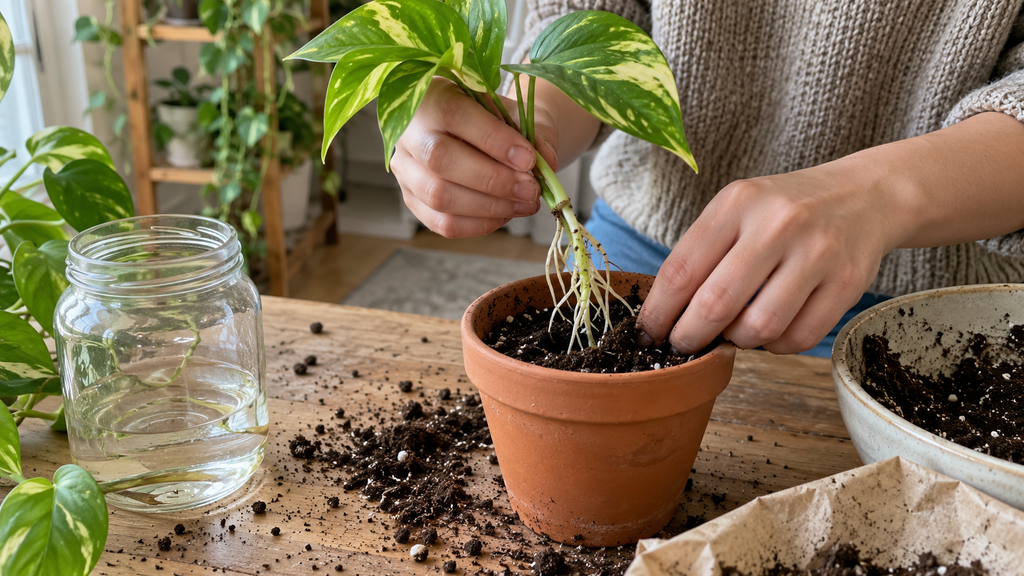
- Prepare a small pot with drainage holes and suitable potting mix.
- Moisten the medium and let excess water drain.
- Lift the cutting carefully without pulling its delicate roots.
- Make a hole large enough to position roots without sharply folding them.
- Settle the mix gently around the cutting and water as appropriate.
- Keep it in suitable indirect light while roots adjust to the new environment.
Why Do Some Cuttings Wilt After Transplanting?
Water-developed roots may need time to adjust to a solid medium. Maintain appropriate moisture without waterlogging the pot, and avoid strong sunlight or repeated root disturbance. Worsening collapse or a soft stem suggests a problem needing investigation.
Later, use the indoor plant repotting guide to decide when the established plant needs a larger container.
DIY or Ready-Made: Which Is Better?
Choose DIY when you want to reuse jars, accommodate unusual cutting sizes, or control the spacing. Ready-made sets suit people who value quick assembly and a coordinated appearance. Neither option automatically produces healthier roots.
| Consideration | DIY | Ready-made |
|---|---|---|
| Cost | Can be inexpensive | Usually higher |
| Vessel size | Adjustable | Often fixed |
| Setup | May require tools | Usually immediate |
| Repairs | Parts often replaceable | Product-dependent |
Before buying, check whether the vessels lift out, whether roots can pass through the openings, and whether the holder stays stable when filled. A clean household jar can be enough for occasional propagation.
Propagation Station FAQs
How Long Do Cuttings Take to Root in a Propagation Station?
Some easy-rooting cuttings show roots within one to three weeks; others take longer. Timing depends on the species, temperature, light, and cutting health.
Can You Use Tap Water in a Propagation Station?
Yes, many common houseplants root in tap water. If local water contains excessive salts or a plant is sensitive, consider a suitable alternative.
Can Different Plant Cuttings Share the Same Jar?
Yes, if they have compatible needs and enough space. Separate jars make plant identification, inspections, and root removal easier.
Do You Need Rooting Hormone for a Propagation Station?
Usually not for pothos, Tradescantia, or heartleaf philodendron. Some more difficult species benefit from species-appropriate treatments.
Should You Add Fertilizer to Propagation Water?
Fresh cuttings generally do not need added fertilizer while forming roots. Permanent water culture may require properly managed nutrients.
Is Clear Glass Better Than Colored Glass?
Clear vessels make roots and water conditions easier to see. Opaque containers can also work and may reduce algae by limiting light in the water.
How Do You Prevent Algae in Propagation Jars?
Remove debris, clean vessels, replace dirty water, and avoid excessive direct sunlight. An opaque container may help if algae keeps returning.
Can You Use a Propagation Station During Winter?
Yes, but cooler temperatures and weaker daylight may slow roots. Provide suitable warmth and light, away from cold drafts.
Can Plant Cuttings Stay in Water Permanently?
Some plants can grow in water long-term with suitable nutrients and maintenance. Temporary rooting in plain water is not the same as permanent water culture.
Are Propagation Stations Safe Around Cats and Dogs?
Safety depends on the plant. Pothos is toxic to cats and dogs, while spider plants are classified as non-toxic by the ASPCA. Secure glass vessels and keep toxic plants inaccessible.
The best station matches the plant, keeps roots accessible, and fits your maintenance routine. Start simple, then upgrade only when extra vessels or shelving solve a genuine need.
Myra is the founder and lead writer of Plantsaholic. She shares practical, research-backed advice on indoor plants, outdoor gardening, flowers, herbs, succulents, and everyday plant care. Her goal is to help gardeners of all experience levels grow healthier plants through simple, easy-to-follow gardening guides.