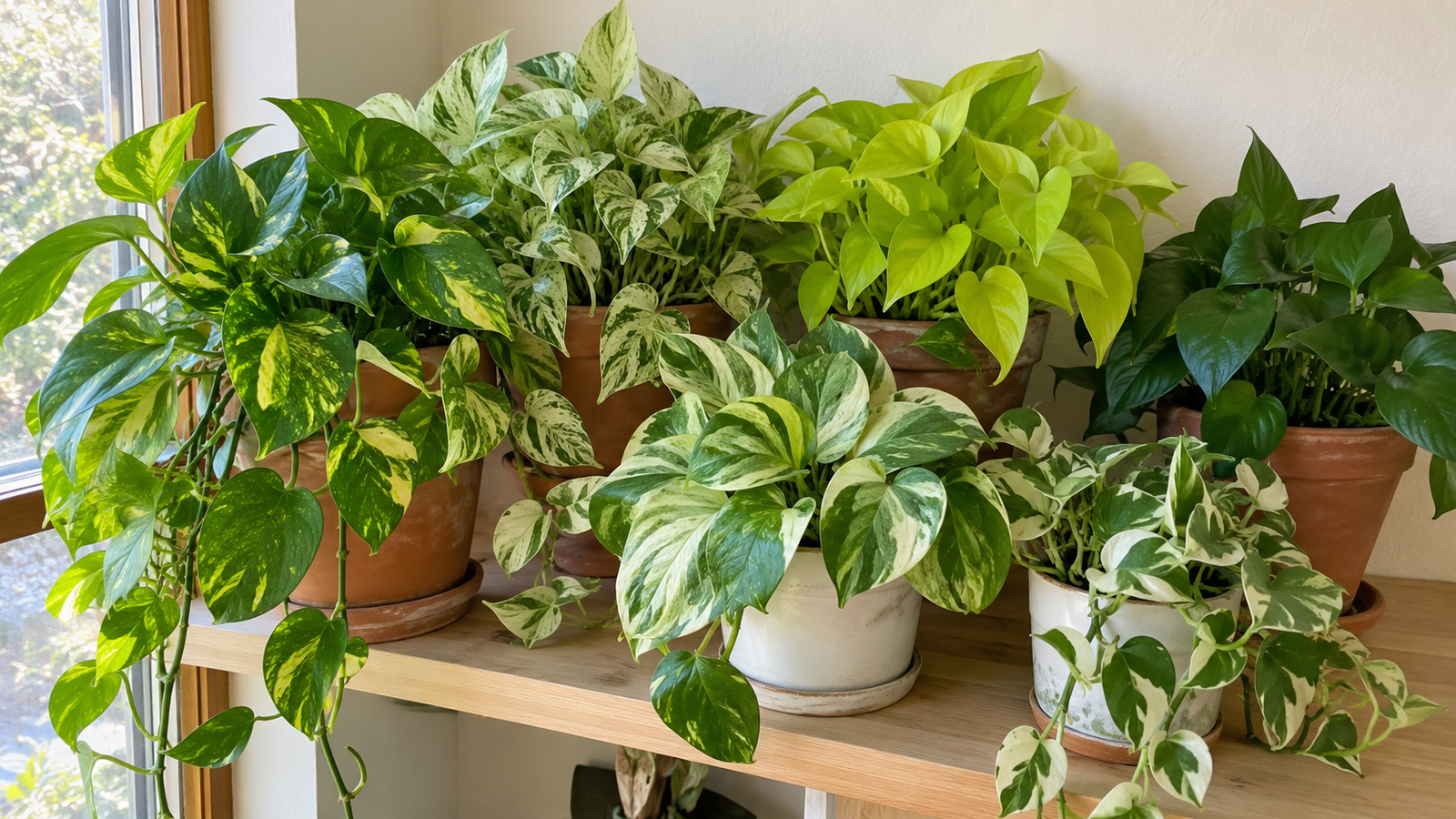
Pothos varieties range from golden-splashed vines to compact white-variegated plants and silver-blue climbers. Most familiar houseplant types are sold as Epipremnum aureum cultivars; Cebu Blue and Baltic Blue belong to Epipremnum pinnatum. Compare leaf color, pattern, shape, and growth habit to tell them apart.
This Plantsaholic guide covers 16 recognizable types, reliable identification clues, practical room choices, and common mistakes.
Pothos Varieties Comparison
Golden Pothos is a dependable beginner choice; Marble Queen and Manjula offer dramatic cream patterns; Neon adds bright lime color. Use this table to narrow down a plant before examining its leaves closely.
| Variety | Distinctive characteristic | Best use |
|---|---|---|
| Golden | Green with yellow-gold splashes | Beginner collection |
| Marble Queen | Fine cream-white marbling | Bright indoor display |
| Neon | Mostly uniform chartreuse | Color contrast |
| Jade | Solid deep green | Less-bright room |
| Manjula | Broad, often wavy, cream-green leaves | Decorative foliage |
| N’Joy | Crisp green-white sections | Small shelf |
| Pearls and Jade | Pale patches with gray-green flecks | Compact collection |
| Global Green | Dark margins, lighter centers | Subtle pattern |
| Jessenia | Green and chartreuse marbling | Lime-toned foliage |
| Hawaiian | Golden-like yellow markings | Vigorous climbing display |
| Lemon Meringue | Dark centers, yellow-green margins | Two-tone accent |
| Glacier | Compact, silvery white-green pattern | Desk plant |
| Shangri-La | Repeated curled or folded leaves | Unusual form |
| Cebu Blue | Narrow, silver-blue juvenile leaves | Climbing support |
| Baltic Blue | Darker blue-green, developing splits | Mature foliage |
| White-variegated E. pinnatum | Elongated leaves with white patches | Collector display |
Treat the table as a screening tool, not proof of cultivar identity, especially for commercially inconsistent names.
16 Popular Pothos Varieties
1. Golden Pothos
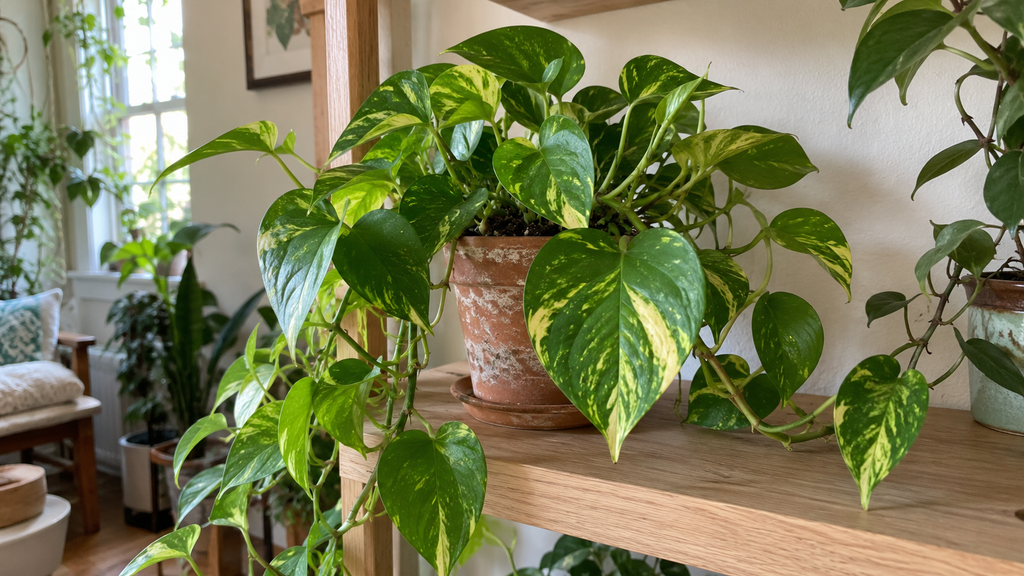
Golden Pothos has glossy, heart-shaped green leaves with irregular yellow-gold streaks or splashes. The pattern differs between leaves, making it easy to confuse an unusually yellow specimen with plants sold as Hawaiian.
It trails attractively from shelves but can also climb. Brighter indirect light usually preserves stronger markings, while very dim conditions can produce greener growth. Identification clue: irregular gold on green, not uniformly lime foliage.
2. Marble Queen Pothos
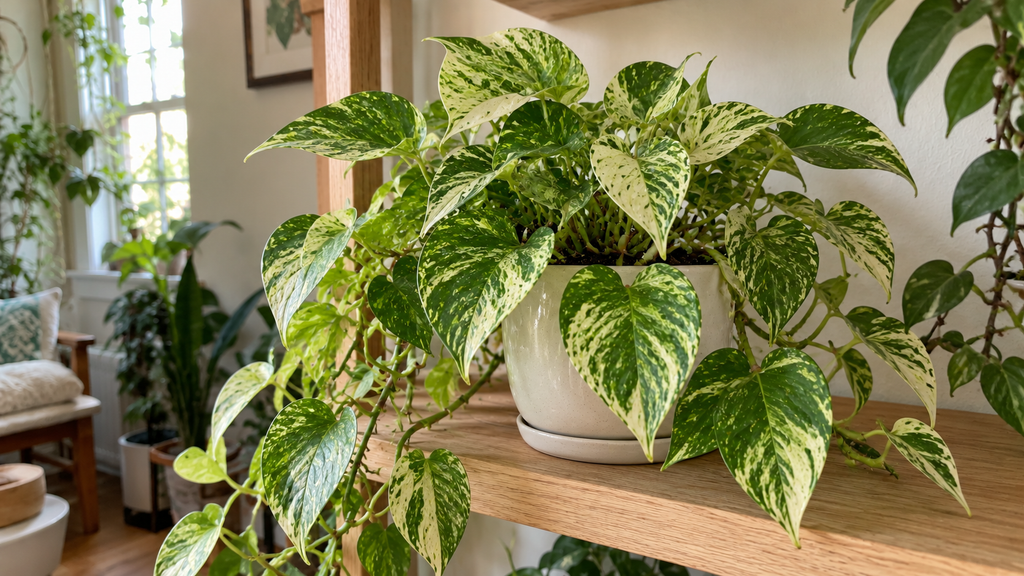
Marble Queen carries intricate cream-white marbling across a green leaf, often resembling scattered brushstrokes. Some leaves are mostly cream; others retain more green. The extent of white alone is not a dependable way to identify a separate cultivar.
Provide bright filtered light and avoid scorching afternoon sun. Identification clue: fine, widely distributed marbling rather than the large blended blocks typical of Manjula.
3. Neon Pothos
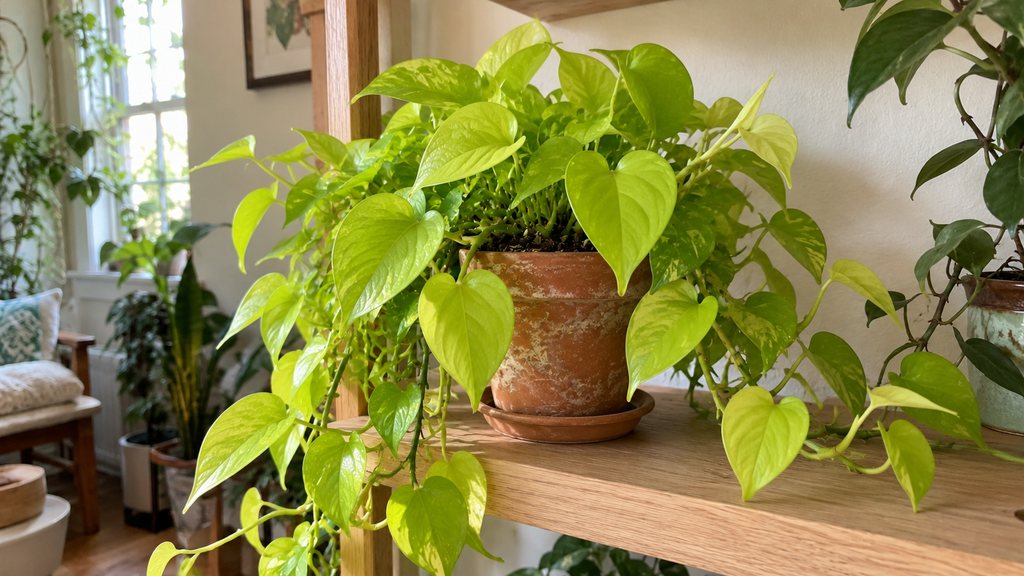
Neon Pothos has luminous chartreuse leaves, generally without contrasting patches. Newly opened foliage can appear almost yellow-green before deepening with age.
Consistent indirect light helps maintain compact, healthy vines. Identification clue: predominantly uniform bright lime-green leaves.
4. Jade Pothos
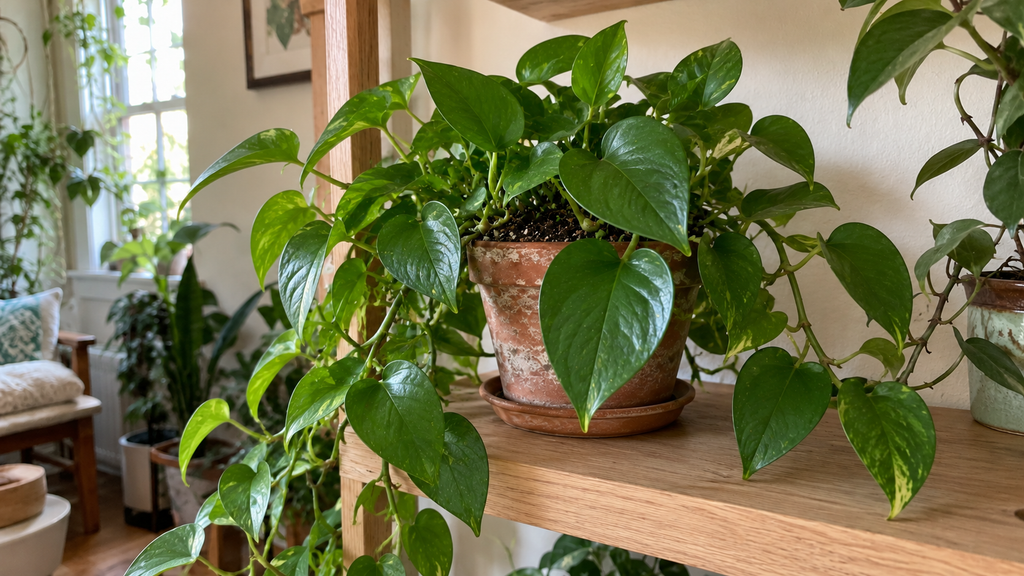
Jade has solid dark-green leaves and little decorative variegation. Because its appearance does not rely on pale tissue, it is a sensible choice for a moderately shaded indoor position.
It still needs usable daylight; surviving dim conditions is different from growing vigorously. Identification clue: repeatedly deep-green heart-shaped leaves without yellow, cream, or silver patterns.
5. Manjula Pothos
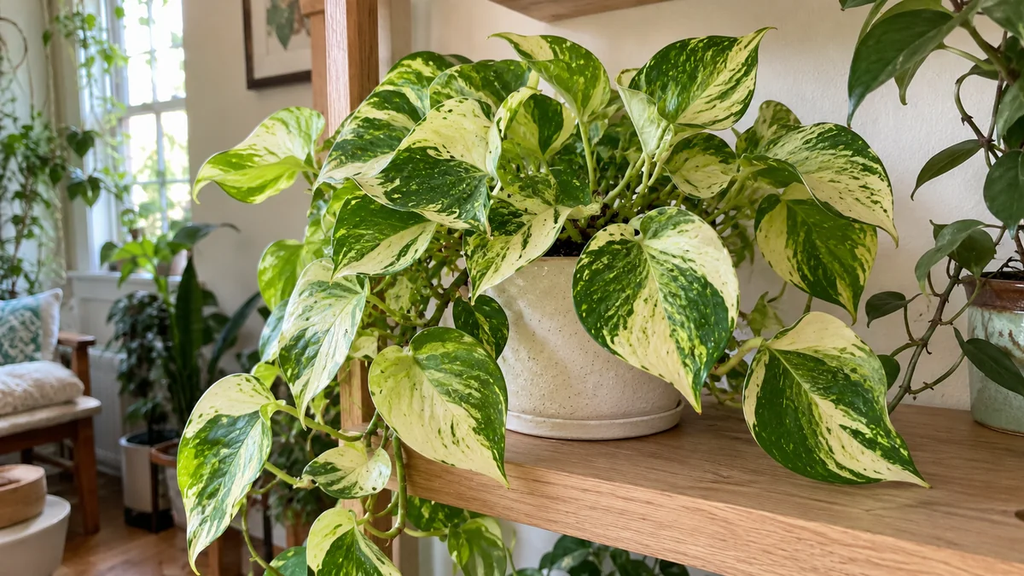
Manjula usually has broad leaves with gently undulating edges and large cream, pale-green, and darker-green patches. The colors often blend rather than forming tiny flecks. Leaf width and waviness help separate it from Marble Queen.
Its documented cultivar denomination is ‘HANSOTI14’, bred by Ashish Hansoti. Identification clue: broad, slightly wavy leaves with bold blended patterns, repeated across the vine.
6. N’Joy Pothos
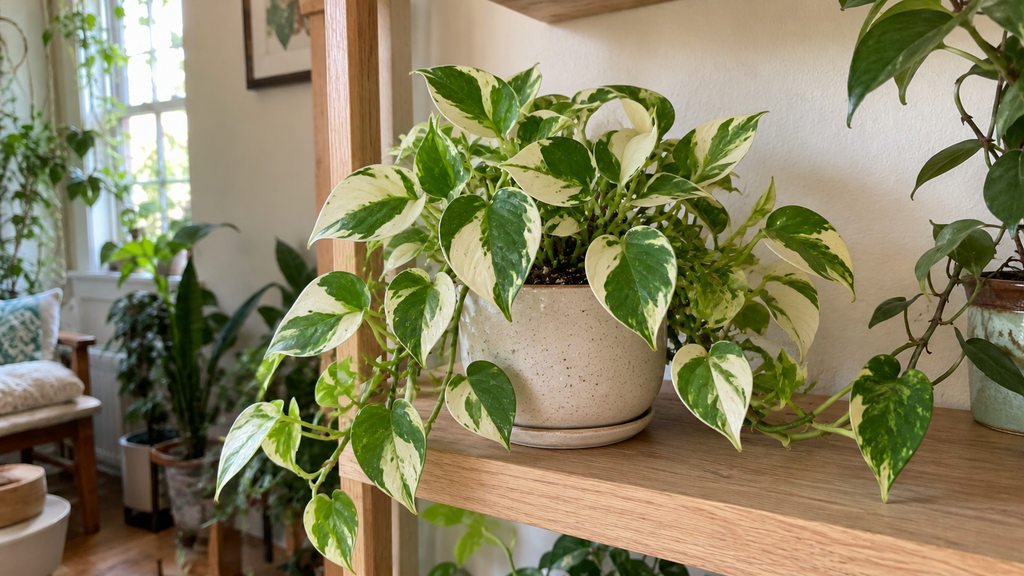
N’Joy typically produces compact leaves with relatively crisp green-and-white areas. Compared with Pearls and Jade, the pale sections often look cleaner and less speckled, although individual leaves vary.
Identification clue: clear pale sections with comparatively little internal mottling.
7. Pearls and Jade pothos
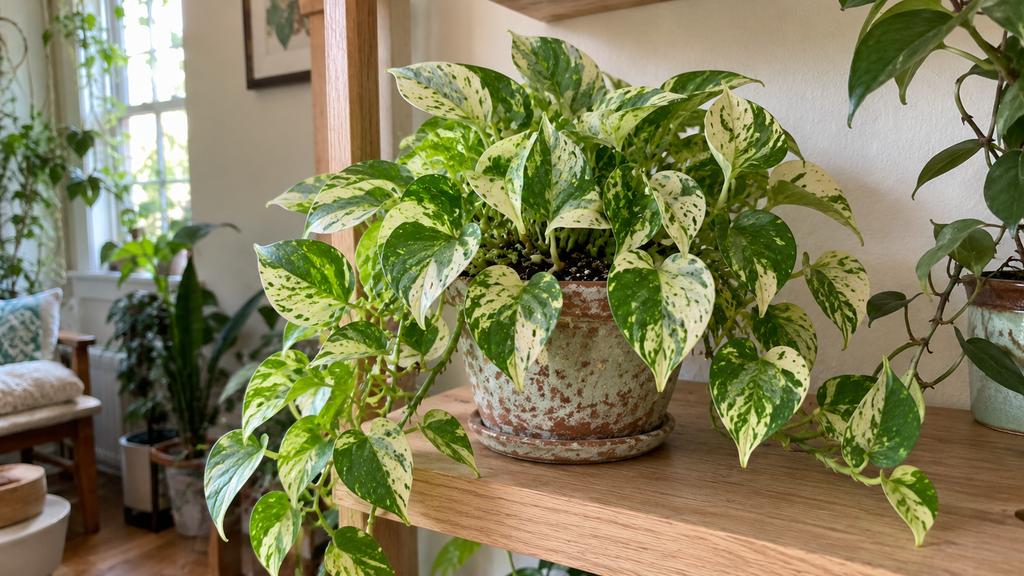
Pearls and Jade is a University of Florida selection derived from Marble Queen material. White, green, and gray-green areas form irregular patches, sometimes with tiny flecks within the pale sections.
The University of Florida reports mature leaves averaging roughly 7–8 cm long and 4–5 cm wide in its documented conditions. Identification clue: small foliage with noticeably flecked pale areas; measurements are supporting evidence, not a universal rule.
8. Global Green Pothos
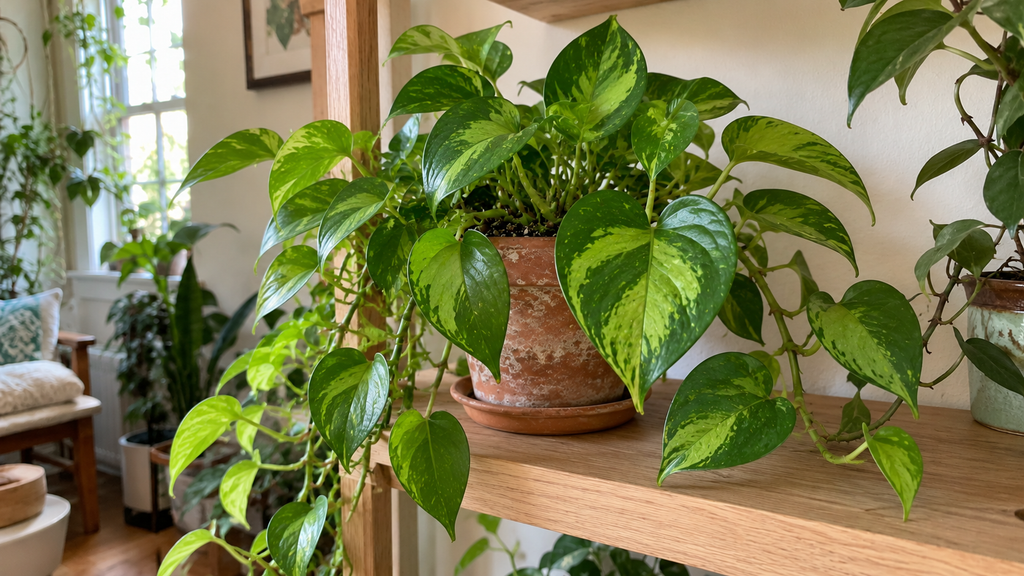
Global Green displays green-on-green variegation. Darker margins typically frame lighter centers, creating a quieter pattern than heavily white-variegated varieties. Look at several leaves because changing light can reduce the apparent contrast.
Identification clue: darker-green borders surrounding a lighter central zone.
9. Jessenia Pothos
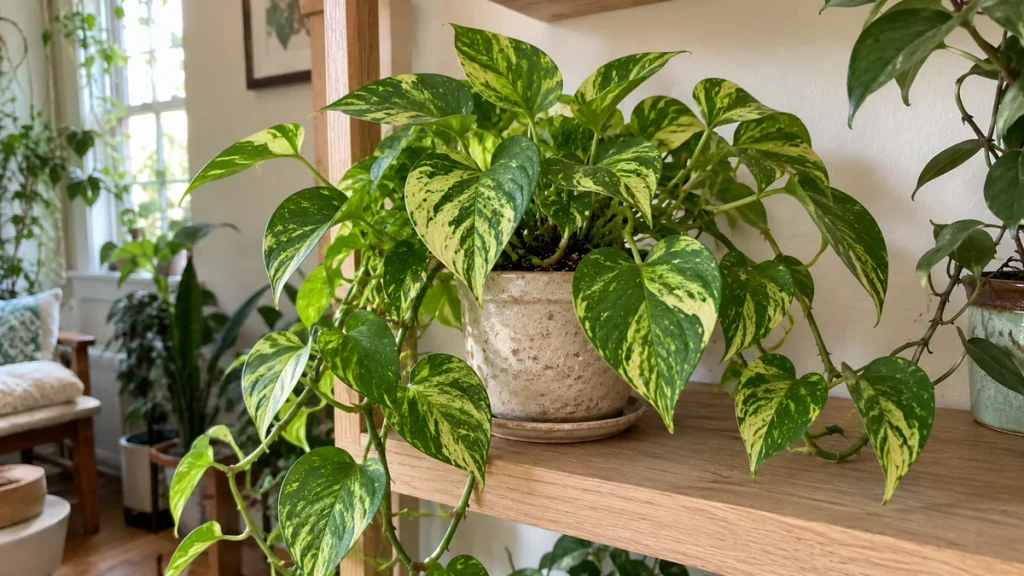
Jessenia combines medium-green leaves with irregular chartreuse marbling. It may resemble Golden Pothos, but its paler areas usually look lime-green rather than distinctly yellow-gold.
Identification clue: a green-and-lime marbled effect, not plain chartreuse or cream-white variegation.
10. Hawaiian Pothos
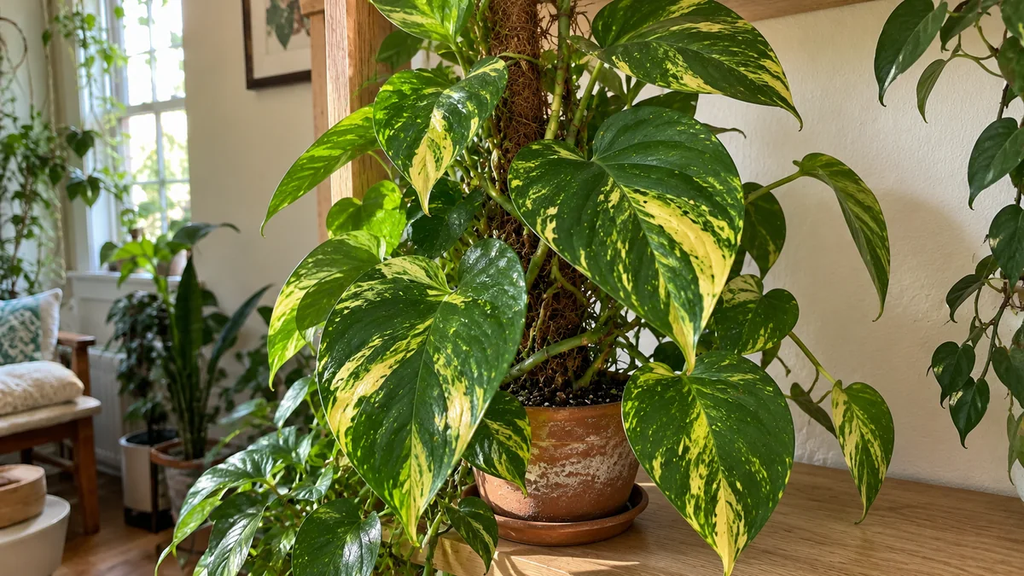
Plants sold as Hawaiian are commonly described as vigorous, with conspicuous yellow variegation and relatively large leaves. Yet Golden Pothos can produce very large foliage when grown upward and given time to mature.
Because the appearance overlaps, do not pay extra based on leaf size alone. Identification clue: Golden-like markings together with credible original nursery labeling.
11. Lemon Meringue Pothos
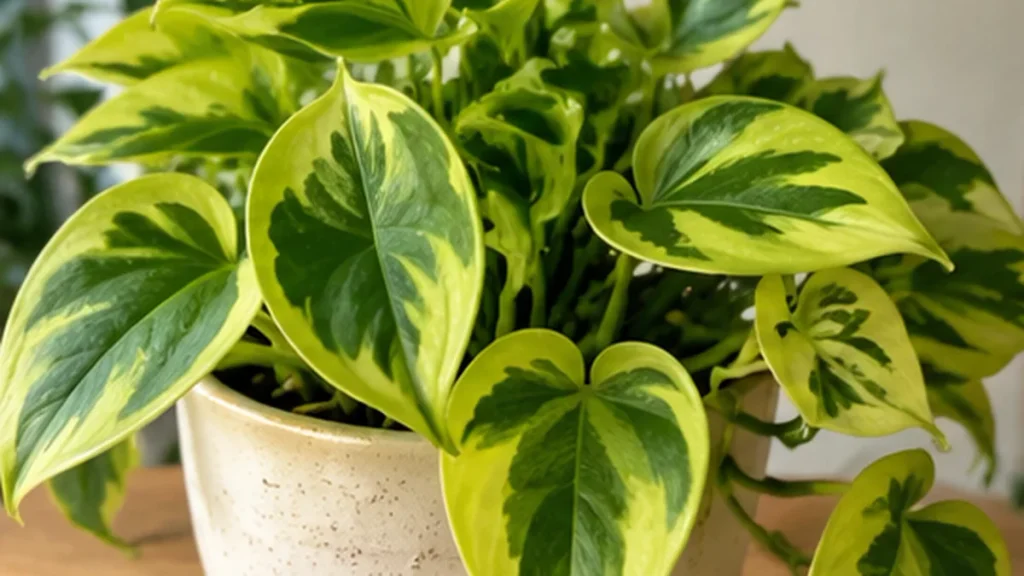
Lemon Meringue generally carries dark-green centers and lighter yellow-green margins. That distribution contrasts with Global Green, whose borders are usually darker than its central leaf areas.
Identification clue: a repeating pale border surrounding a darker center.
12. Glacier Pothos
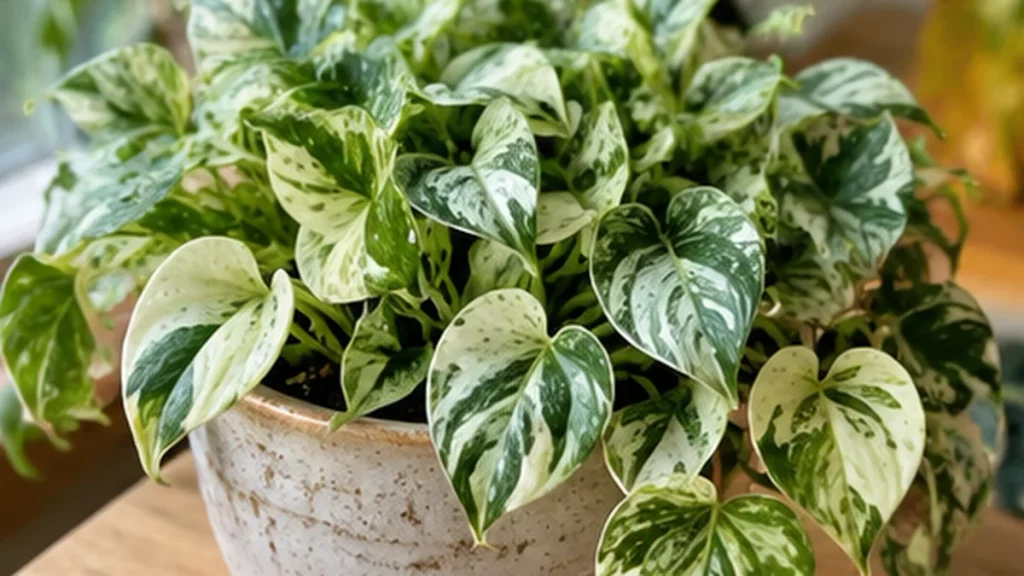
Glacier is a trade name associated with compact leaves carrying green, white, and sometimes silvery-gray tones. It can look very similar to N’Joy or Pearls and Jade, and sellers do not always use the name consistently.
Identification clue: compact multitone foliage, with the original nursery label carrying particular weight.
13. Shangri-La Pothos
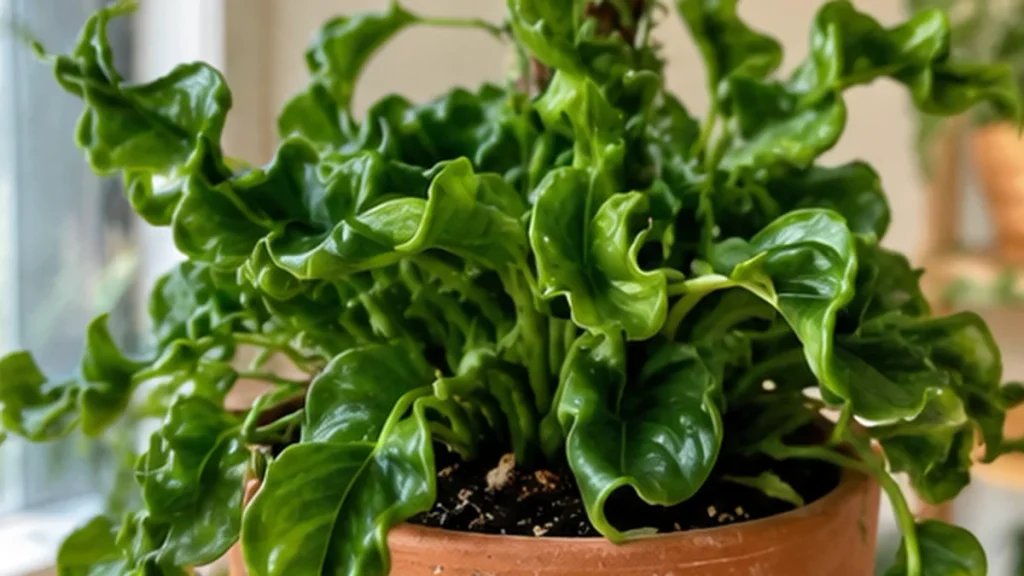
Shangri-La is notable for leaves that remain curled, partly folded, or unusually textured. The distinctive shape occurs repeatedly on healthy growth rather than appearing as one isolated damaged leaf.
Identification clue: consistent leaf folding across several healthy stems.
14. Cebu Blue Pothos
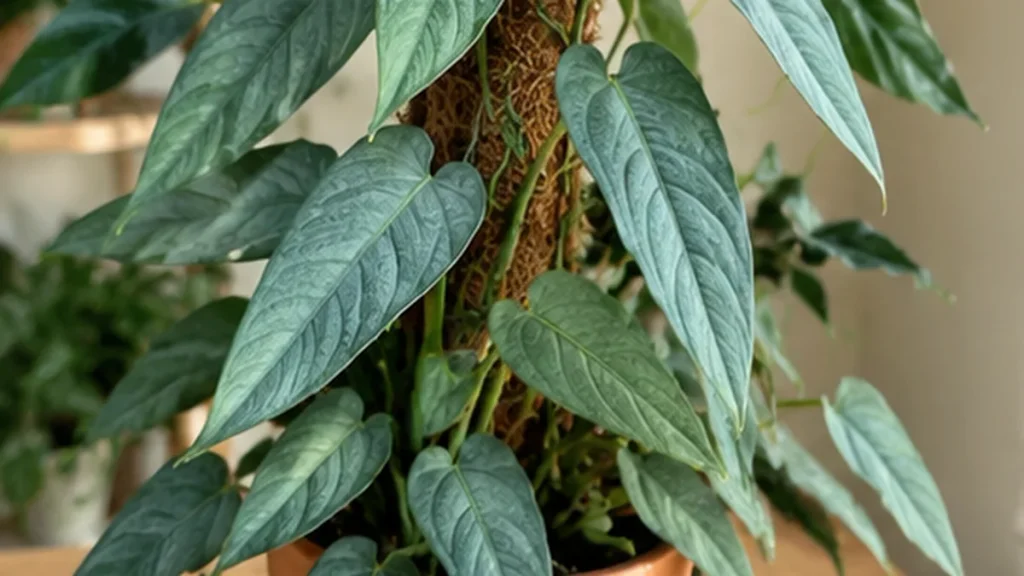
Cebu Blue belongs to Epipremnum pinnatum. Juvenile leaves are narrower and more elongated than typical heart-shaped E. aureum foliage and often have a silvery-blue cast.
On a climbing support, mature leaves may become larger and increasingly divided. Identification clue: slender blue-silver juvenile leaves, with splits possible as the vine matures.
15. Baltic Blue Pothos
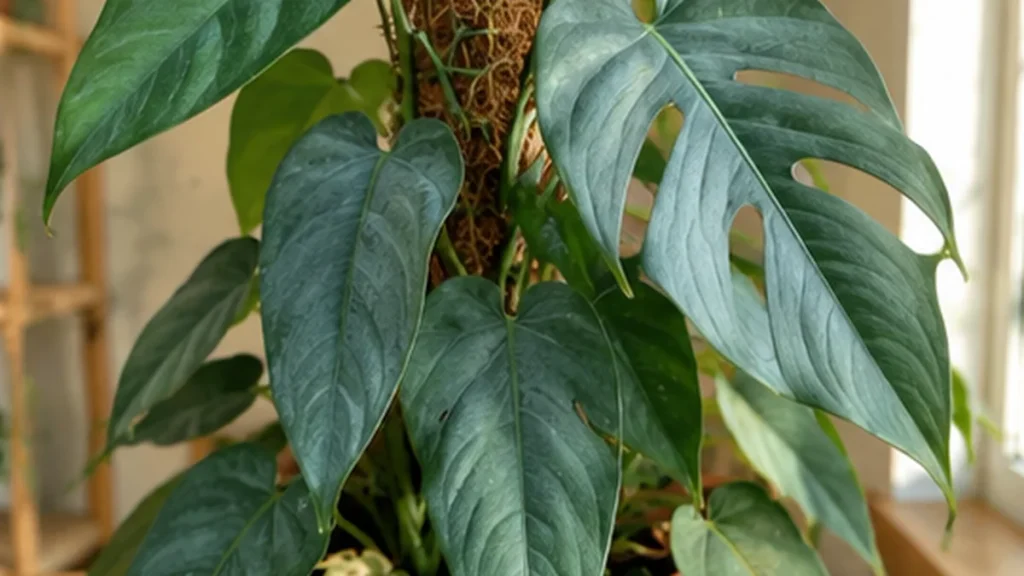
Baltic Blue is another E. pinnatum selection, generally darker and greener-blue than Cebu Blue. It is valued for developing leaf splits comparatively early under suitable growing conditions.
Juvenile leaves may overlap visually with Cebu Blue, so examine mature growth where available. Identification clue: dark blue-green foliage and a tendency toward divided leaves.
16. White-Variegated Epipremnum pinnatum
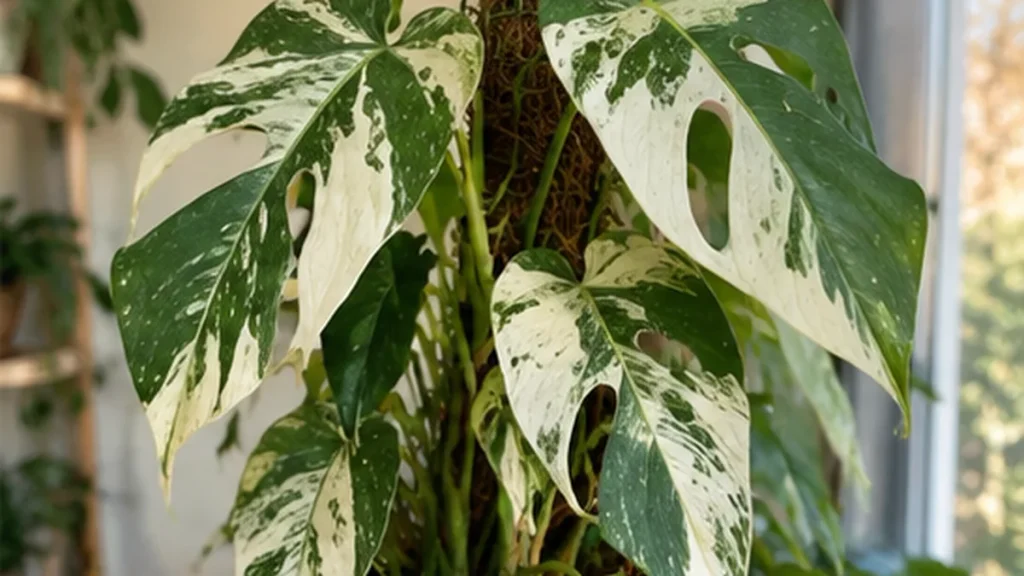
White-variegated E. pinnatum plants may be sold as Albo Pothos. They usually bear elongated foliage marked with irregular cream or white patches; mature climbers can develop divided leaves.
“Albo” describes coloration and does not always identify one standardized cultivar. Identification clue: an elongated E. pinnatum leaf shape combined with repeated white markings and reliable labeling.
How Many Pothos Varieties Are There?
There is no fixed count of houseplant cultivars. The Royal Botanic Gardens, Kew recognizes 15 accepted species in Epipremnum, but species and nursery selections are different categories. Golden, Neon, and Marble Queen are familiar cultivated forms, not three separate botanical species.
A species is a botanical classification; a cultivar is a selected cultivated form; a trade name may be a commercial label with less consistent usage.
Why Do Some Pothos Have Different Botanical Names?
Cultivar documentation and retail labels sometimes disagree. Manjula’s original U.S. plant patent PP27,117 lists Epipremnum pinnatum ‘HANSOTI14’, whereas commercial listings commonly place Manjula under E. aureum. Check the original name and breeder documentation rather than treating every label difference as a new plant.
How to Identify Pothos Varieties
A reliable identification combines at least three recurring traits across several fully expanded, healthy leaves. Use this five-step process rather than matching one attractive photograph.
Step 1: Examine the Main Leaf Color
Solid chartreuse suggests Neon; deep green suggests Jade. Yellow-gold splashes suggest Golden or Hawaiian, while silver-blue elongated leaves point toward Cebu Blue. White-green foliage requires closer comparison because several cultivars share those colors. Check leaves in natural light rather than beneath colored indoor bulbs.
Step 2: Compare Variegation Patterns
Fine cream marbling suggests Marble Queen; broad blended patches suggest Manjula. Clean green-white blocks favor N’Joy, while gray-green flecks within pale areas favor Pearls and Jade. Global Green typically has darker edges; Lemon Meringue generally has lighter edges.
Step 3: Check Leaf Shape and Margins
Manjula often has broad, slightly wavy margins. Cebu Blue carries narrow juvenile leaves, and Shangri-La has consistently folded blades. Mature climbing vines can produce much larger or divided foliage, so leaf size alone is unreliable.
Step 4: Examine Several Healthy Leaves
Inspect three or more mature leaves from different stems. Note repeated color distribution, flecking, margins, and stem growth. One pale or misshapen leaf may reflect temporary conditions, not cultivar identity.
Step 5: Check the Original Plant Label
A documented breeder name, reliable grower tag, or specialist nursery record is stronger evidence than an online resemblance. If two identities remain equally plausible, leave the label provisional.
Commonly Confused Pothos Types
Manjula vs Marble Queen Pothos
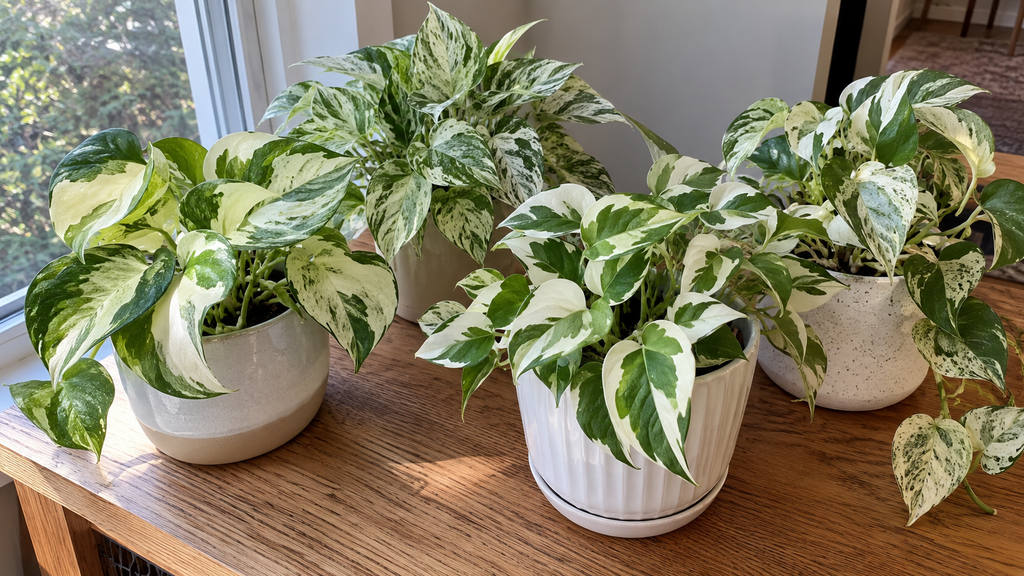
Manjula generally has wider, often wavy leaves with broad blended cream-green areas. Marble Queen usually has finer white marbling distributed through the blade. Judge several leaves, not merely how white the newest leaf appears.
N’Joy vs Pearls and Jade Pothos
N’Joy commonly shows relatively clean white-green blocks. Pearls and Jade often carries green or gray flecks within pale sections. University of Florida cultivar documentation supports the latter’s compact size and intricate mottling; a reliable label remains useful.
Golden vs Hawaiian Pothos
Both can show vivid yellow markings. Hawaiian is marketed for vigorous, often larger foliage, but mature Golden can look similar when climbing. Provenance is more dependable than size or intensity of yellow alone.
Cebu Blue vs Baltic Blue Pothos
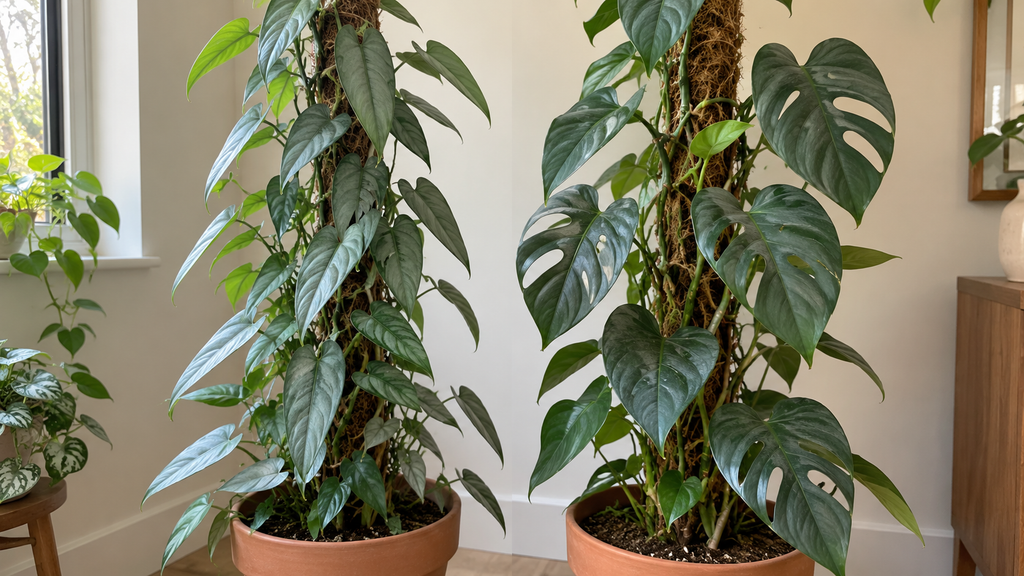
Cebu Blue usually has a stronger silver-blue cast and narrower juvenile leaves. Baltic Blue is generally darker and may develop mature splits sooner. Both are E. pinnatum, so judge several leaves and the plant’s growth stage.
Marble Queen vs Snow Queen Pothos
Snow Queen is often marketed as a particularly pale pothos, yet Marble Queen can also produce nearly white leaves. Without trustworthy cultivar provenance, a higher percentage of white does not prove a separate genetic identity.
Variegation vs. Leaf Damage
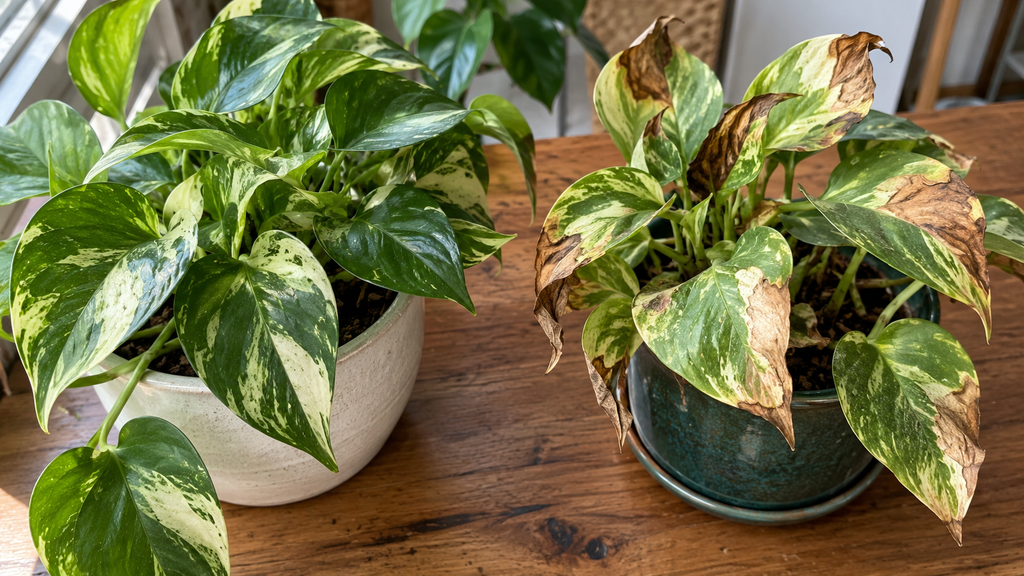
Variegation is a repeated pigmentation pattern on otherwise healthy foliage. Damage more often appears suddenly, spreads irregularly, or leaves tissue brittle. Inspect the whole plant before assuming a striking pale patch is a rare mutation.
| Observation | Possible cause | Useful check |
|---|---|---|
| Firm cream patches repeated on leaves | Normal variegation | Compare mature leaves |
| New tan, crispy spots | Sun scorch | Review direct sunlight |
| Fine pale dots and webbing | Spider mites | Inspect undersides |
| Silvery scars and dark specks | Thrips | Check for insects |
| Yellowing with wet mix | Root stress | Examine moisture and roots |
| Greener new foliage | Less light or reversion | Track subsequent leaves |
What Does Healthy Variegation Look Like?
Healthy white or yellow sections remain part of firm leaf tissue. Their edges can be irregular without indicating disease. Compare similar leaves on variegated houseplants before interpreting unfamiliar markings.
Why Are New Pothos Leaves Turning Green?
Low light can reduce visible variegation, but genetics and growing-point changes also matter. Give the plant suitable indirect light and assess several new leaves. An existing green leaf does not automatically regain white tissue when lighting improves.
Can Pest Damage Look Like Variegation?
Yes. Thrips may leave silvery feeding scars; spider mites can cause tiny pale spots. Webbing, distorted leaves, insects, or worsening damage distinguish these symptoms from a stable decorative pattern.
Best Pothos Varieties by Room
Choose according to the light a plant will actually receive, not simply its appearance in a nursery. Bright variegated selections tend to hold their patterns best with appropriate indirect light.
| Room or goal | Good options | Important consideration |
|---|---|---|
| Softer indirect light | Jade, Golden | Growth may be slower |
| Bright filtered window | Marble Queen, Manjula, N’Joy | Protect pale tissue from scorching |
| Small shelf | N’Joy, Pearls and Jade | Monitor drying in small pots |
| Hanging basket | Golden, Neon, Marble Queen | Trim and rotate trailing vines |
| Supported climber | Cebu Blue, Baltic Blue | Mature leaves may divide |
Which Pothos Is Best for Lower Light?
Jade and Golden are reasonable choices, but neither thrives in darkness. Place them near available daylight; if new leaves shrink or internodes lengthen, improve lighting. See indoor plants for north-facing windows for other suitable options.
Which Pothos Is Best for Hanging Baskets?
Golden, Marble Queen, and Neon form attractive trailing vines. Keep the basket accessible for watering, ensure drainage, and prune excessively long stems when a fuller silhouette is preferred.
Which Pothos Is Best for Climbing?
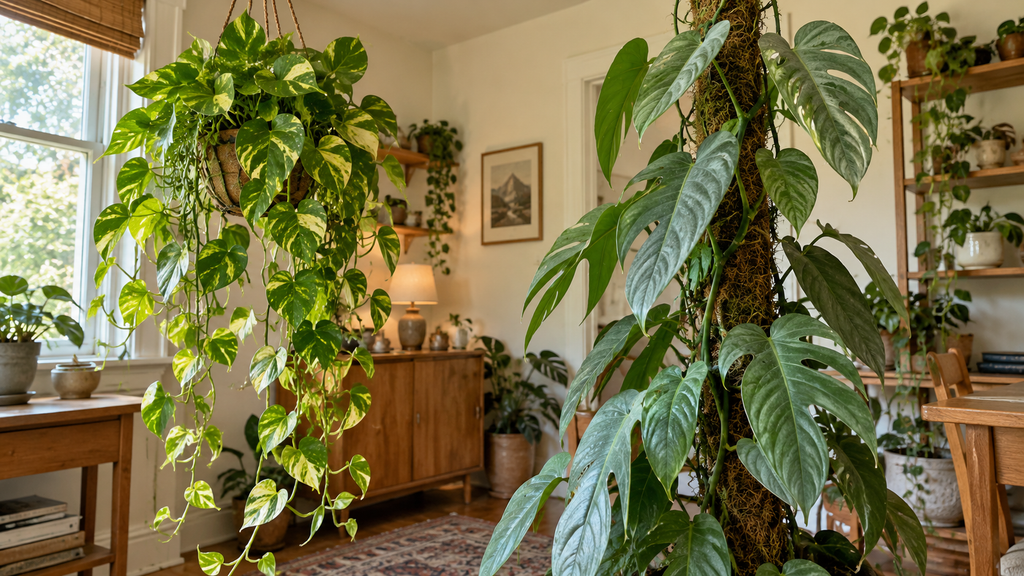
Cebu Blue and Baltic Blue are particularly rewarding on a moss pole or plank. Attach stems gently and allow growth to establish. Larger, divided leaves develop with maturity and suitable conditions; a support alone does not guarantee fenestration.
How to Verify Rare Pothos
Before paying a collector price, ask for photographs of the exact plant, not a stock specimen. Check multiple leaves, firm stems, healthy growth points, and the undersides for pests. Confirm the botanical name and cultivar denomination against documented grower or breeder records where available.
When Is Pothos Identification Uncertain?
Keep the name provisional if the plant has only one useful leaf, is severely stressed, or could match several similar selections. Healthy new growth often supplies better evidence than an older damaged leaf.
Rare Pothos Varieties
No variety is universally the rarest. Availability depends on region, production, demand, and whether a name identifies a verifiable cultivar.
Distinguish specialist-only, limited-release, and regionally uncommon plants from those merely advertised as “rare.” Names such as Harlequin are used in commerce, but the name alone cannot verify a unique cultivar. Buy for documented identity, healthy roots, and appealing foliage, not scarcity claims.
Plants Mistaken for Pothos
Is Satin Pothos a True Pothos?
No. Satin Pothos generally means Scindapsus pictus, which belongs to a different genus. Its matte green leaves often feature silver spots or patches.
How Is Heartleaf Philodendron Different?
Heartleaf Philodendron (Philodendron hederaceum) is another trailing aroid. Its emerging leaves have protective cataphylls, whereas pothos shows a different leaf-emergence structure and often grooved petioles. Compare stems and developing leaves, not heart shape alone.
Pothos Care Differences
How Much Light Do Pothos Need?
Moderate to bright indirect light suits most varieties. Very pale plants often benefit from brighter filtered exposure, while harsh direct afternoon sunlight can scorch leaves. Penn State Extension notes that prolonged low light may reduce distinctive coloring or foliage quality.
How Often Should You Water Pothos?
Water when the upper potting mix begins to dry, checking moisture rather than following a fixed calendar. Use a free-draining container and never leave roots constantly saturated. Yellowing alongside persistent wetness warrants investigating root rot.
What Temperature and Humidity Do Pothos Prefer?
Typical warm indoor conditions are suitable; Penn State Extension recommends roughly 60–80°F (16–27°C). Protect vines from cold drafts and heating vents. Average household humidity is usually adequate, although abrupt environmental changes can affect foliage.
Can All Pothos Varieties Be Propagated?
Most familiar selections root from healthy stem cuttings containing a viable node. A leaf without stem-node tissue will not establish a complete new vine. For water and potting-mix methods, see how to propagate pothos.
Are Pothos Varieties Pet-Safe?
No. Epipremnum plants contain irritating calcium oxalate crystals. The ASPCA identifies Golden Pothos as toxic to cats and dogs; chewing can cause drooling, oral pain, vomiting, or swallowing discomfort. Keep pots and trailing vines inaccessible, and contact a veterinarian if a pet chews the plant or develops symptoms.
Pothos Varieties FAQs
How Many Different Types of Pothos Are There?
There is no fixed cultivar count. Kew recognizes 15 accepted Epipremnum species, while nurseries sell many named cultivated forms.
What Are the Most Common Pothos Varieties?
Golden, Marble Queen, Neon, Jade, Manjula, N’Joy, Pearls and Jade, and Global Green are familiar choices.
How Can I Identify Which Pothos Variety I Have?
Compare several leaves for color, pattern, shape, and margins; use a reputable original label when similar cultivars overlap.
Which Pothos Variety Is Easiest to Grow?
Golden Pothos is forgiving and vigorous in ordinary indoor conditions. Jade is another practical beginner option.
Which Pothos Variety Is Best for Low Light?
Jade and Golden tolerate softer indirect light, but both need sufficient brightness to grow well.
Which Pothos Variety Grows the Fastest?
Golden and Jade are often vigorous; actual growth depends on light, warmth, nutrients, roots, and maturity.
Which Pothos Varieties Have White and Green Leaves?
Marble Queen, Manjula, N’Joy, Pearls and Jade, and Glacier are sold with contrasting pale and green foliage.
What Is the Difference Between Manjula and Marble Queen Pothos?
Manjula often has broad, wavy leaves and large patches; Marble Queen generally has finer marbling.
How Can You Tell N’Joy From Pearls and Jade Pothos?
N’Joy usually has cleaner white patches. Pearls and Jade often has gray-green flecks within pale areas.
Are Snow Queen and Marble Queen Pothos the Same?
The names can overlap commercially. A very white Marble Queen leaf alone does not prove a separate cultivar.
What Is the Rarest Pothos Variety?
There is no universal answer. Availability changes by region and nursery, and cultivar identity should be verified.
Why Is My Variegated Pothos Turning Green?
Low light, normal variation, or reversion may be involved. Review growing conditions and observe subsequent leaves.
Do Different Pothos Varieties Need Different Care?
Their basic needs are similar. Strongly variegated plants may require brighter indirect light to maintain healthy patterns.
Is Cebu Blue a True Pothos?
Yes. Cebu Blue is an Epipremnum pinnatum selection rather than a cultivar of E. aureum.
What Is the Difference Between Cebu Blue and Baltic Blue Pothos?
Cebu Blue looks more silvery; Baltic Blue is generally darker and may develop splits earlier.
Which Pothos Varieties Can Develop Split Leaves?
Cebu Blue and Baltic Blue can develop divided mature leaves, especially when supported and given favorable conditions.
Is Satin Pothos a Real Pothos Variety?
No. Satin Pothos usually refers to Scindapsus pictus, a plant in a different genus.
Are All Pothos Varieties Toxic to Cats and Dogs?
Treat all Epipremnum pothos as unsafe for pets; chewing can cause painful mouth irritation and vomiting.
Correct the botanical naming inconsistenciesAdd an original visual identification key
Myra is the founder and lead writer of Plantsaholic. She shares practical, research-backed advice on indoor plants, outdoor gardening, flowers, herbs, succulents, and everyday plant care. Her goal is to help gardeners of all experience levels grow healthier plants through simple, easy-to-follow gardening guides.